Girlfriend, 27, Says She Won’t Work After Marriage, Leaving Her Boyfriend Worried About Their Financial Future

A 28-year-old man is worried about his future after his 27-year-old girlfriend told him she does not want to work after marriage. They have been together for two years and are planning an inter-caste, inter-state marriage in India. But their plans have become stressful after they started arguing about jobs and money.
The man respects his girlfriend’s decision. He knows it is her choice whether she wants to work or stay at home. Still, he feels they should talk about money and share their financial responsibilities before getting married. He earns a good salary, but he also pays monthly loan EMIs and is building a small house for his parents.
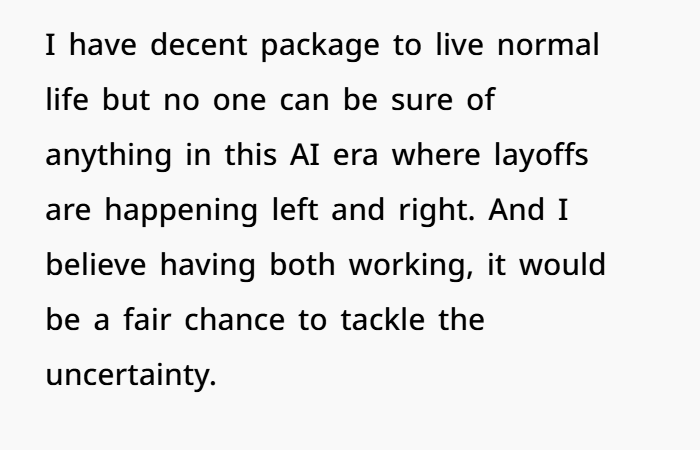
His biggest worry is their financial future. With companies cutting jobs and AI changing the job market, he feels that depending on one salary could be risky. He believes having two incomes would help them manage household expenses, save money, and feel more secure if something unexpected happens.
Unfortunately, his girlfriend sees the conversation differently. She believes he may be trying to avoid marriage or that his feelings for her have changed. Now, he is questioning whether he was wrong to bring up her career plans before their wedding.


A Marriage Plan That Suddenly Became Complicated
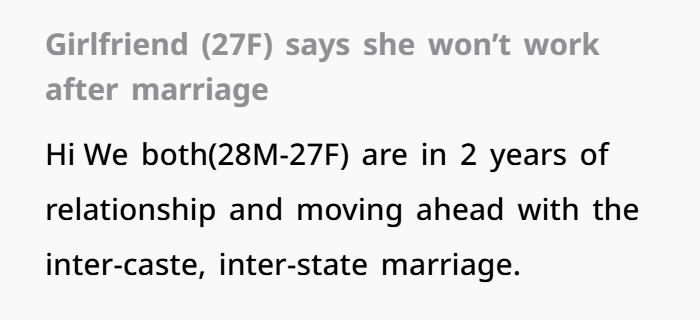
The couple had been together for two years and was preparing to take the next big step in their relationship.
Their marriage would bring together two people from different castes and different states. They were already moving forward with those plans when a conversation about their future created an unexpected problem.
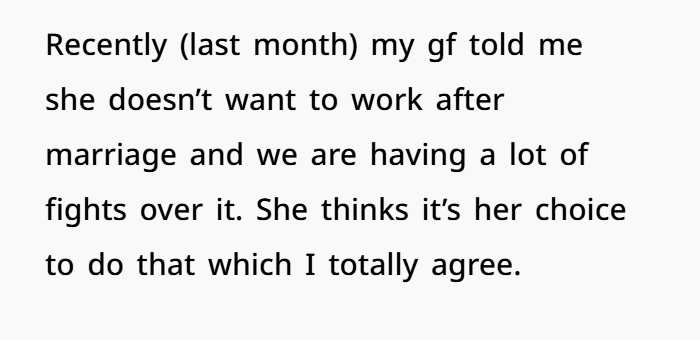
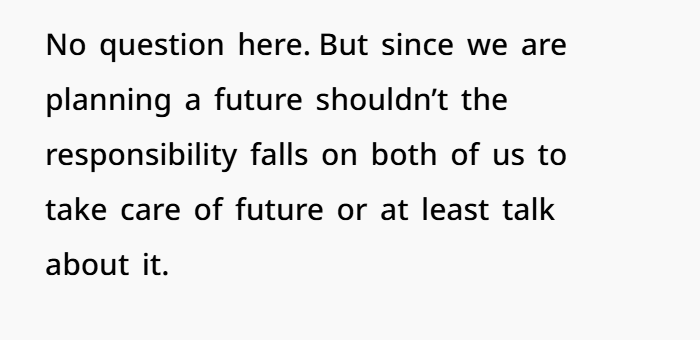
About a month before sharing his story on Reddit, the 28-year-old man learned that his girlfriend did not want to continue working after marriage.
For him, this was not a small decision. It could change how they would manage household expenses, savings, and other financial needs for years to come.
He did not believe his girlfriend should be forced to work. In fact, he made it clear that he respected her choice.
What troubled him was the idea of making such a major decision without properly discussing how it would affect their married life.
He Was Not Against Her Choice, but He Wanted to Talk About Money
The boyfriend believed that marriage should involve shared planning, especially when it comes to money.
He was not asking his girlfriend to give up her personal freedom. He simply wanted them to discuss how they would handle their future if only one person earned an income.
This is a common concern for couples preparing for marriage. According to the Consumer Financial Protection Bureau, understanding household expenses, debt, and savings can help people make better financial decisions.
For this couple, the issue was about more than who would bring home a paycheck.
They needed to understand what each person expected from marriage. His girlfriend appeared comfortable with the idea of not working, while he felt safer knowing they could depend on two incomes.
Neither preference automatically makes someone wrong. But the difference could become a serious problem if they cannot agree on a plan.
His Girlfriend Thought He Was Trying to Avoid Marriage
The situation became more upsetting when his girlfriend questioned why he had suddenly brought up the subject.
Instead of seeing it as a conversation about financial planning, she believed he might be looking for a reason to delay or avoid their marriage.
She also questioned whether he truly loved her.
That reaction left the boyfriend frustrated. From his point of view, discussing career plans was a normal part of preparing for married life.
He was thinking about practical issues, such as job security, household expenses, and long-term financial stability.
His girlfriend, however, appeared to connect the discussion with his commitment to their relationship.
This difference in how they understood the conversation led to repeated fights.
Research from the Gottman Institute, which studies relationships and marriage, often explores how couples can handle disagreements by understanding the feelings and needs behind each person’s position.
In this case, the boyfriend wanted reassurance about their financial future. His girlfriend seemed to want reassurance that he was still committed to marrying her.
Both concerns mattered, but the couple was struggling to discuss them without another argument.
He Earns Enough, but Job Security Still Worries Him
The boyfriend explained that he has a decent salary and can afford a normal lifestyle.
But earning enough money today does not mean someone will always have the same financial comfort.
His biggest fear is the uncertainty surrounding jobs, especially with artificial intelligence changing the way many companies work.
He pointed to layoffs happening across different industries and worried that depending on one income could put their future at risk.
His concern has some real-world background. The U.S. Bureau of Labor Statistics has examined how AI could affect different careers. Its research shows that some jobs may change as technology improves, although the long-term effects remain uncertain.
For the boyfriend, having two working partners would offer another layer of financial protection.
If one person lost their job, the other person’s income could help cover basic needs while they figured out what to do next.
Of course, a dual-income marriage does not guarantee financial security. But he believed it would give them a better chance of handling unexpected problems.
His Family Responsibilities Made the Decision Even Harder
There was another important reason behind his worries.
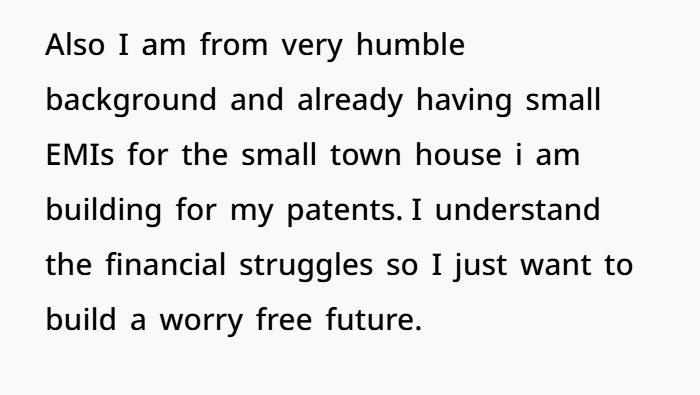
The boyfriend came from a humble family background and understood what it felt like to struggle with money.
He was also building a small house for his parents in his hometown.
That meant he already had monthly EMI payments to manage.
These existing financial commitments made him think carefully about taking on the full cost of married life.
He wanted to support his parents while also building a comfortable future with his girlfriend.
It was not simply about wanting more money. He wanted a life where unexpected expenses would not turn into a constant source of stress.
Managing home loan EMIs, debt repayment, and household expenses can be difficult when several financial responsibilities come together.
The Consumer Financial Protection Bureau also explains that clear conversations about financial support within families can help prevent misunderstandings and money-related stress.
In his situation, the boyfriend was already balancing family responsibilities with plans for a new marriage.
Taking on another major financial commitment without discussing it first was something he did not feel comfortable doing.
A Single-Income Marriage Was Not the Future He Had Imagined
The couple’s disagreement also raised a bigger question about what marriage should look like.
Some couples prefer a traditional arrangement where one partner earns money and the other manages the home.
Others feel more comfortable when both partners have careers and contribute financially.
Neither arrangement is automatically better. Much depends on income, personal goals, family responsibilities, and what both people agree to.
But there is a major difference between choosing a single-income marriage together and finding out that one partner has already made that decision.
The boyfriend appeared to be struggling with that difference.
He had imagined a future where both partners could work and help each other through difficult times.
His girlfriend had a different plan.
The original Reddit post did not explain why she wanted to stop working. It also did not say whether she planned to manage the household full-time, take a career break, or return to work later.
Those missing details matter because her reasons could help explain why the subject had become so sensitive.
Why Financial Compatibility Matters Before Marriage
Love can bring two people together, but their expectations about money can shape everyday married life.
A couple may agree on where they want to live and how they want to spend time together. Yet they may have completely different ideas about saving money, supporting parents, or building careers.
These differences often become clearer when marriage plans turn serious.
The Gottman Institute’s research-based guidance on financial disagreements explains that money arguments are not always about the amount being spent or saved.
Sometimes, money represents something much deeper, such as safety, freedom, or personal dreams.
That idea fits this couple’s situation.
For the boyfriend, two incomes seemed to represent safety and peace of mind.
For his girlfriend, the choice not to work after marriage may have held a different personal meaning, although she did not explain that meaning in the account he shared.
Understanding those reasons could make the conversation less painful for both of them.
The Bigger Problem Was How They Handled the Disagreement
One of the most troubling parts of the story was not the girlfriend’s decision itself.
It was how quickly a discussion about career plans turned into questions about love and commitment.
The boyfriend wanted to talk about financial planning before marriage. His girlfriend believed the discussion meant he might not want to marry her.
As a result, neither seemed to be getting the reassurance they needed.
According to the Gottman Institute’s advice on ongoing money disagreements, couples can make progress by listening to the deeper reasons behind each other’s views instead of focusing only on winning an argument.
For this couple, that could mean discussing their future household budget, monthly EMI payments, emergency savings, and expectations about financial support.
It could also mean giving the girlfriend space to explain why she no longer wants to work after marriage.
These conversations may be uncomfortable, but avoiding them would not make the differences disappear.
He Turned to Reddit Because He Was Unsure What to Do Next
After repeated arguments, the boyfriend shared his situation with the RelationshipIndia Reddit community.
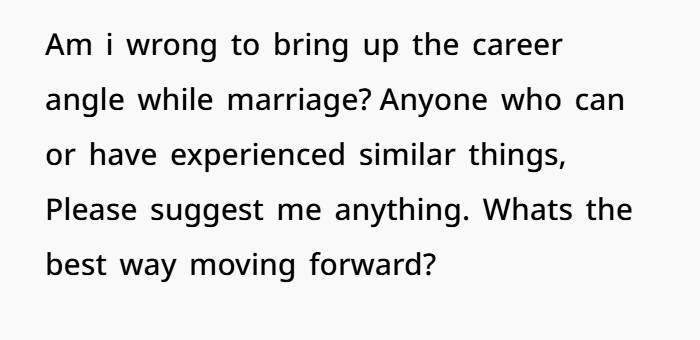
He wanted to know whether bringing up his girlfriend’s career plans before marriage was unreasonable.
He also asked people who had experienced similar problems for advice on how to move forward.
His question was not about forcing his girlfriend to take a job.
He wanted to understand whether it was fair to expect both partners to discuss financial responsibilities before committing to marriage.
The original account did not include a final decision from the couple. It also did not establish whether they had found a compromise.
That leaves the most important part of their story unresolved.
What This Couple’s Situation Shows About Marriage and Money
This story highlights a difficult situation many couples can recognize.
One person wants the freedom to make a personal career choice. The other worries about how that choice could affect their shared future.
Both concerns deserve to be heard.
The girlfriend has the right to decide what kind of working life she wants. At the same time, the boyfriend has the right to decide whether he feels financially ready for a single-income marriage.
The challenge is finding out whether those two expectations can fit together.
Before moving ahead, they may need a clearer picture of their monthly expenses, existing debt, savings goals, and future family responsibilities.
They also need to understand what would happen if the boyfriend lost his job or faced an unexpected financial problem.
For a man who grew up understanding financial struggles and is already paying EMIs for his parents’ house, these are not distant worries.
They are part of the future he is trying to prepare for.
His story ends with a question that remains unanswered: Can two people who love each other build a happy marriage if they cannot agree on how to manage their financial future?
For this couple, the answer may depend less on who wins the argument and more on whether they can finally have a conversation where both feel heard.
See the comments to know what people said



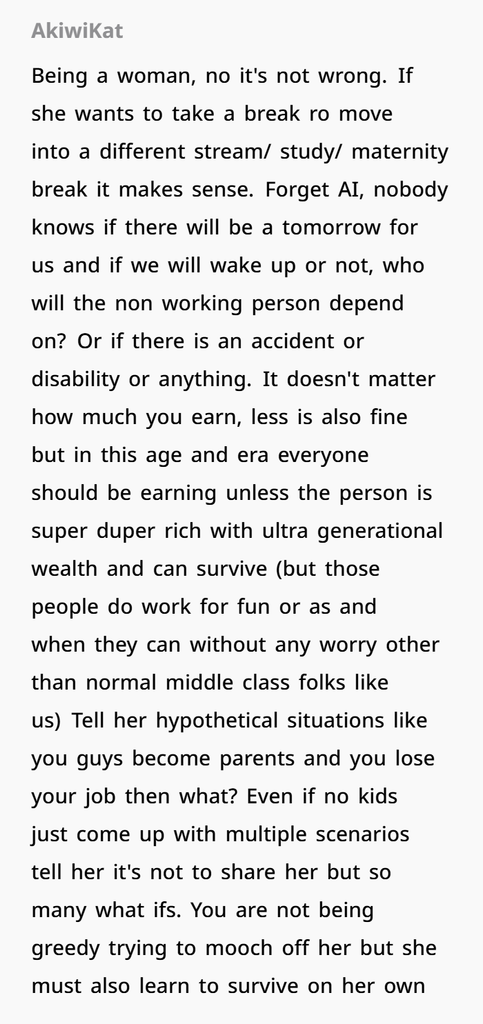
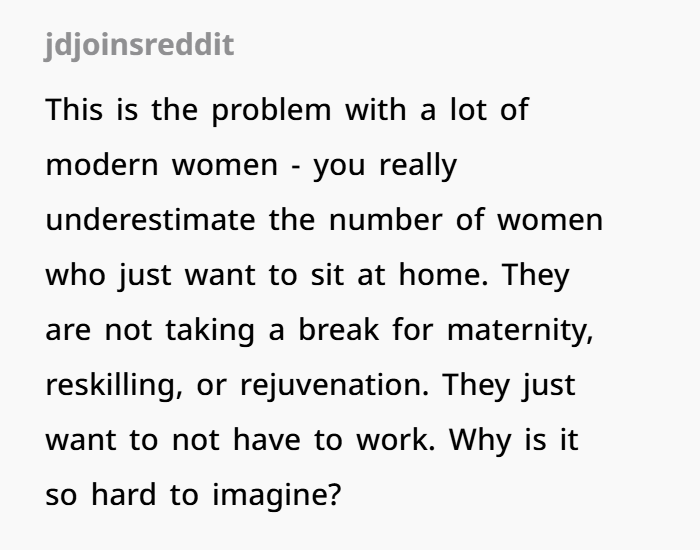

The boyfriend’s concerns about marriage and financial security are understandable. He loves his girlfriend and respects her decision not to work, but he also wants a stable future where money problems do not become a constant worry.
With existing EMI payments, family responsibilities, and growing concerns about job security, depending on a single income feels risky to him. At the same time, his girlfriend has her own expectations about married life, and those deserve respect too.
The real problem is not simply whether she should work after marriage. It is whether they can agree on how to handle money, responsibilities, and unexpected challenges as a couple.
Marriage is a big commitment, and love alone cannot settle every financial disagreement. Before taking the next step, both partners need an honest conversation about what they want from their future.
The boyfriend is not wrong for raising these concerns. But neither should feel forced into a lifestyle they do not want. If they cannot find common ground, they may need to rethink their marriage plans before making a decision that could leave both unhappy.