Wife Kicks Husband’s Best Friend Out After He Repeatedly Disrespects Her, but Her Husband Says She Went Too Far

A woman got into a big argument with her husband after asking his best friend to leave their home. She had agreed to let him stay for a week because he was visiting for a wedding. But things didn’t go as planned.
The guest, called Tod in her Reddit post, soon started making rude comments about her cooking. He also kept calling her “hon,” even after she asked him to stop. His comments about her culture made her even more upset.
The situation got worse when her husband kept defending his friend. She felt hurt because he wasn’t listening to her concerns. In the end, she told Tod to leave, even though he had no other place arranged to stay. What started as a small problem with a houseguest had now become a serious marriage conflict.
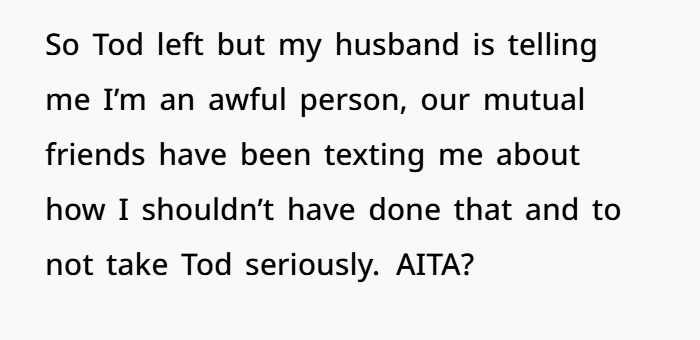
Now, her husband is calling her an awful person, and their mutual friends are taking Tod’s side. The woman turned to Reddit to ask whether she had gone too far by standing up for herself.

She Never Felt Comfortable Around Her Husband’s Best Friend
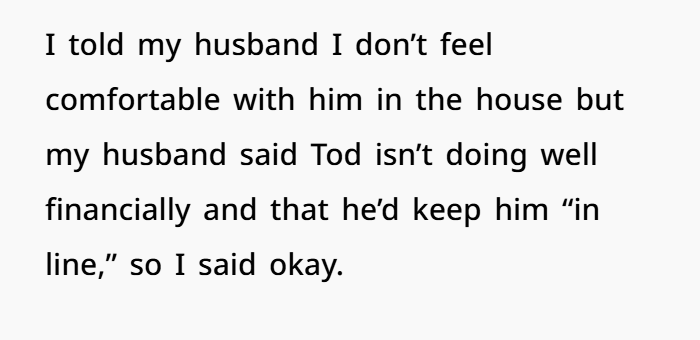
The woman explained that her husband and Tod had been close friends since college. Although they had known each other for years, she had never felt comfortable around him.
Her biggest problem was the way Tod spoke to her. She felt that he often talked down to her rather than treating her with respect.
Her husband had a different explanation. He believed Tod behaved that way because he was on the autism spectrum. But the woman wasn’t convinced. To her, there was a clear difference between being direct and making someone feel small.
The situation became more difficult when Tod planned a trip from another state to attend a stag party and wedding with their shared friend group.
He asked if he could stay at the couple’s home for a week. The plan was for him and her husband to drive together to the wedding venue, about two hours away, the day before the ceremony.
She wasn’t happy with the idea.
Still, her husband explained that Tod was having financial problems and couldn’t easily afford another place to stay. He also promised to keep his friend’s behavior under control.
After hearing that promise, she agreed to let Tod stay.
One Dinner Was Enough to Bring Back Old Problems
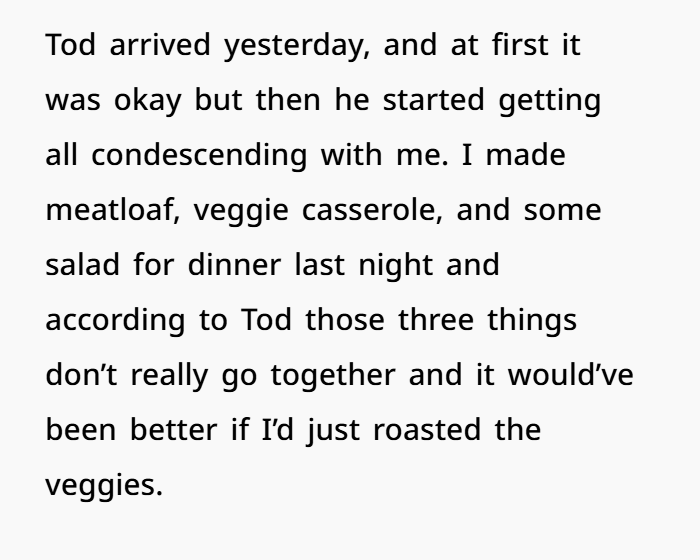
Tod arrived, and things seemed fine at first. Unfortunately, that peace didn’t last long.
The woman had prepared a full dinner for everyone. She made meatloaf, vegetable casserole, and salad.
Instead of simply enjoying the meal, Tod decided to share his thoughts about her cooking.
He told her the dishes didn’t really belong together. He also suggested that roasting the vegetables would have been a better choice.
She was frustrated.
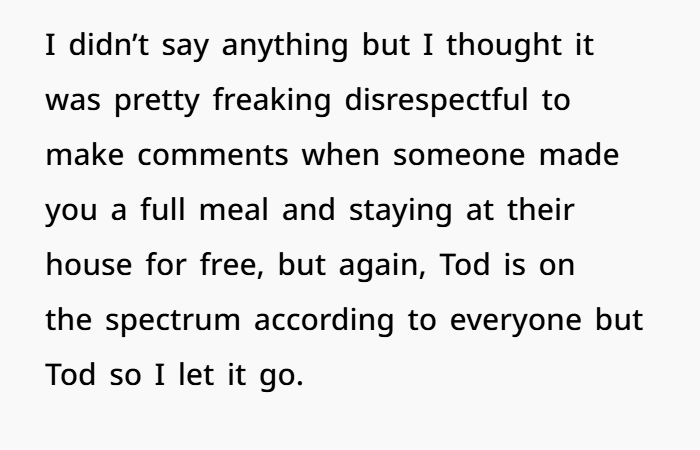
After all, she had spent time preparing dinner for someone who was staying in her home without paying anything. His comments felt rude and unnecessary.
But she decided not to argue.
Her husband and others had often explained Tod’s behavior by saying he was on the autism spectrum, although the woman said Tod himself had not made that claim.
So she tried to ignore the cooking criticism.
Sadly, that wasn’t the end of it.
The Word “Hon” Became a Bigger Problem Than Anyone Expected
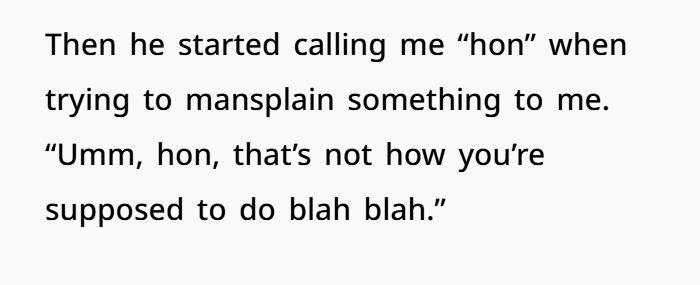
Tod also had a habit of calling the woman “hon,” especially when correcting her or explaining something she already understood.
He would use the nickname while telling her she was doing something wrong.
She felt that he was talking down to her, not trying to be friendly.
The woman had already asked him several times to stop using the nickname. She also wanted him to keep his unwanted opinions to himself.
But Tod didn’t take her complaints seriously. According to her account, he laughed them off.
Her husband continued to defend him. He said Tod was simply being himself and was using “hon” as a friendly term.
For the woman, though, the problem wasn’t just the word. It was the fact that Tod kept using it after she had clearly asked him to stop.
That difference matters in conversations about healthy relationship boundaries. A nickname that sounds harmless to one person can feel uncomfortable to another, especially when the person using it refuses to listen.
She wasn’t asking Tod to change his entire personality. She wanted him to respect one simple request while staying in her home.
His Comments About Her Culture Finally Pushed Her Too Far
The argument reached its breaking point when the woman asked Tod, once again, to stop calling her “hon.”
This time, instead of accepting her request, Tod began a long explanation about why he thought she was wrong.
According to the woman, he spent around 15 minutes talking about her cultural background.
Tod claimed he understood her culture because his girlfriend came from the same country. He said people there regularly used affectionate names when speaking to his girlfriend.
Because of that, he believed the woman should have no problem with him calling her “hon.”
But he didn’t stop there.
Tod then questioned whether she was becoming too American and forgetting her own culture. The woman said he gave her a disapproving look while making the comment.
That was the final straw.
She had already explained her feelings several times. Now, a guest in her own home was telling her how she should feel about her cultural identity.
What began as a disagreement over a nickname had turned into something much more personal.
She Told Tod to Pack His Bags and Leave
After listening to Tod’s comments, the woman had enough.
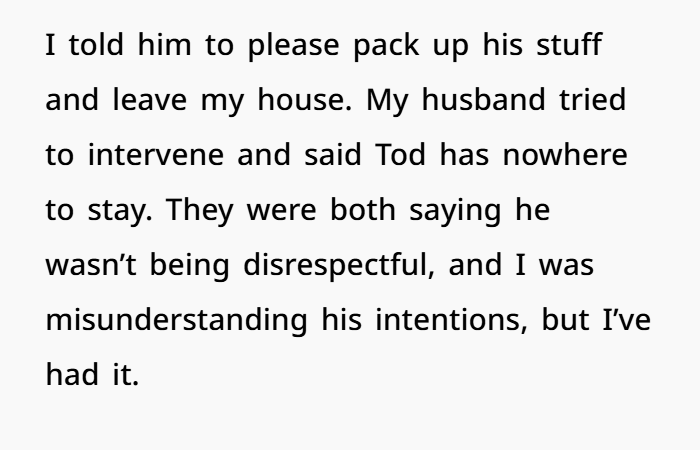
She told him to pack his belongings and leave her house.
Her husband immediately stepped in. He reminded her that Tod had nowhere else to stay and asked her to reconsider.
Both men argued that Tod hadn’t meant to disrespect her. They believed she was misunderstanding his intentions.
But she wasn’t willing to accept that explanation anymore.
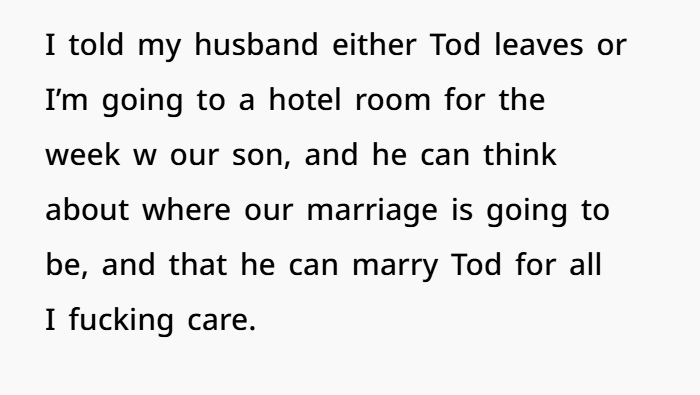
She gave her husband a choice. Either Tod could leave, or she would take their son and stay in a hotel for the rest of the week.
She also warned her husband that he would need to think seriously about the future of their marriage.
In her anger, she even told him he could marry Tod if he cared about him that much.
It was a harsh thing to say, but the argument had clearly moved beyond Tod’s behavior.
The woman was now upset with her husband for repeatedly defending his friend while dismissing her complaints.
This is where the issue of marriage communication and conflict resolution becomes relevant. When a couple disagrees about a houseguest, the problem can grow if one partner feels their concerns are being ignored.
In this case, the husband had promised to manage Tod’s behavior before the visit began. According to the woman’s account, she felt that promise had not been kept.
Tod Left, but the Argument Was Far From Finished
Tod eventually packed his things and left the house.
The woman had gotten what she wanted, but the decision created another problem.
Her husband was furious.
He told her she was an awful person for forcing his friend to leave when he had no other place arranged to stay.
Soon, their mutual friends became involved as well.
The woman said several people began sending her messages, telling her she shouldn’t have treated Tod that way.
They also encouraged her not to take his comments so seriously.
Instead of feeling supported, she found herself being criticized by her husband and their friends.
That left her questioning her decision.
Had she been too harsh with someone who was struggling financially? Or had she simply reached her limit after repeatedly asking to be treated with respect?
Was Tod’s Behavior a Communication Difference or a Lack of Respect?
One detail makes this story more complicated.
The husband repeatedly suggested that Tod’s behavior was connected to autism. However, the woman said Tod himself had never identified himself as being on the spectrum.
There is no confirmed diagnosis in the account.
According to the National Autistic Society, autistic people may communicate differently. Some use very direct language, while others may find it harder to understand tone, facial expressions, or certain social expectations. These differences vary widely from person to person.
That information helps explain why communication misunderstandings can happen. It does not establish why Tod behaved the way he did.
There is also a difference between someone missing a social signal and someone continuing a behavior after being directly asked to stop.
In this story, the woman said she clearly explained her discomfort several times.
The bigger question wasn’t whether Tod meant to upset her. It was why her request continued to be dismissed.
The Husband’s Reaction Raised Another Concern
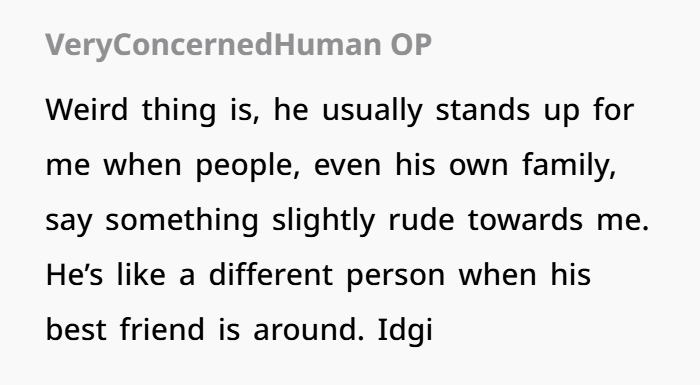
Perhaps the most painful part of the story was the husband’s response.
He knew his wife didn’t feel comfortable around Tod before the visit. He also knew she had concerns about how his friend treated her.
Still, he convinced her to agree by promising to keep Tod’s behavior in check.
When problems began, however, he repeatedly explained away his friend’s comments.
From the woman’s point of view, she was being asked to tolerate behavior that made her uncomfortable simply because Tod had been her husband’s friend for years.
Of course, the husband had concerns of his own. His friend was struggling with money and had traveled from another state for a wedding. Finding somewhere else to stay on short notice could have been difficult.
But that doesn’t erase the woman’s concerns about respect in her own home.
The situation shows how personal boundaries in relationships can become a source of conflict when people have different expectations.
It also raises an uncomfortable question: Should someone be expected to put up with repeated unwanted comments just because the person making them is a guest?
Was She Wrong to Kick Him Out?
Based on the woman’s account, her frustration is understandable.
She agreed to let Tod stay despite her earlier concerns. She prepared food for him, ignored his criticism at dinner, and repeatedly explained why she disliked being called “hon.”
The argument became more serious when Tod questioned her cultural identity rather than accepting her request.
At the same time, asking a guest to leave without another place arranged to stay is a serious decision. Her threat to leave with their son and question the marriage also made the conflict much bigger.
Still, this wasn’t described as a single awkward comment that caused an immediate reaction.
It was a series of incidents that built up until the woman felt she could no longer tolerate the situation.
The husband and his friends believed she overreacted. The woman believed she had been patient for long enough.
The original account does not establish what happened after Tod left or whether the couple resolved their disagreement.
But one thing stands out: the woman wasn’t only upset about a nickname or a dinner complaint. She was hurt because she felt her husband cared more about protecting his friend’s feelings than listening to hers.
And that is what turned an uncomfortable visit into a serious marriage dispute.
The story leaves readers with one final question: Was the woman wrong for making a guest leave when he had nowhere else to stay, or was she right to stand up for herself after her boundaries were repeatedly ignored?
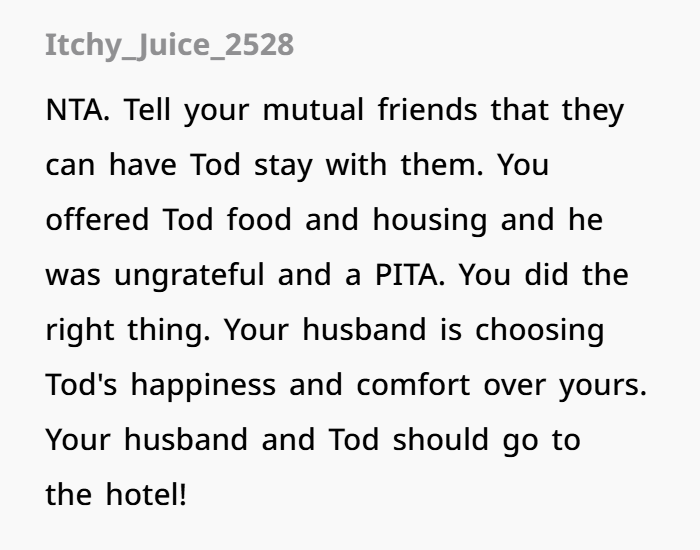
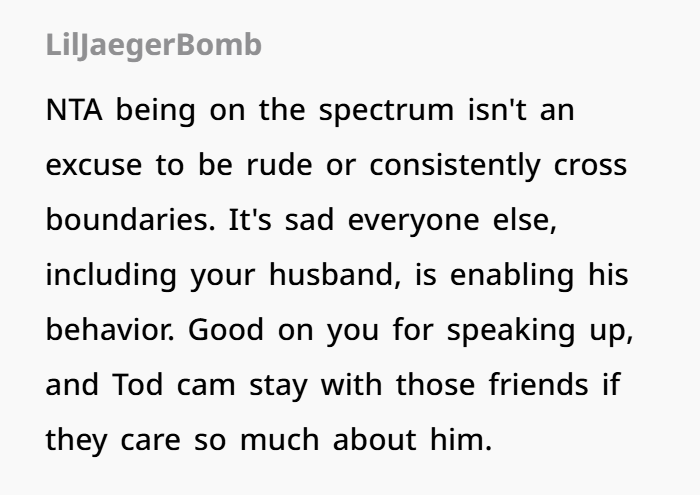
See the comments to know what people said



What was supposed to be a simple wedding visit turned into a serious argument that left a marriage under strain. The woman had agreed to welcome Tod into her home, even though she had never felt comfortable around him. But his repeated comments, unwanted nickname, and remarks about her culture pushed her too far.
The most upsetting part wasn’t just Tod’s behavior. It was her husband’s refusal to take her feelings seriously. She had asked for respect several times, yet her concerns were brushed aside.
Of course, kicking someone out when they have nowhere else to stay is a tough decision. But being a guest doesn’t mean someone can ignore the homeowner’s boundaries.
Based on her side of the story, the woman wasn’t wrong for wanting respect in her own home. Still, the way the argument ended shows how quickly a problem with a houseguest can turn into a much bigger relationship issue.
Now, the real challenge isn’t just what happened with Tod. It’s whether the couple can rebuild trust and learn to support each other when difficult situations come up.