
My Son Cheated on His Wife with Her Best Friend, and I Told Him He Was a Disappointment
Infidelity in relationships often brings a storm of emotions, especially when it involves someone you care about deeply. This story revolves around a mother’s heartbreak, who calls her son a “disappointment” after discovering he cheated on his wife, Isabella, with her best friend. Even though Joseph is deeply sorry and trying to make things right, his mother struggles to reconcile the love she has for him with the deep sense of betrayal she feels. This post explores the complex feelings that arise between family loyalty, moral values, and the sting of betrayal.
Here’s the backstory: Joseph, 25, had been married to Isabella, a woman his mother adored. After a brief separation, Joseph confessed to the affair, leading to a heated confrontation with his mom. The mother, hurt and angry, lashed out, calling him a disappointment. Now, she’s left questioning whether her response was justified. Was she wrong for holding him accountable, or was her anger and disappointment just a natural reaction to his actions?

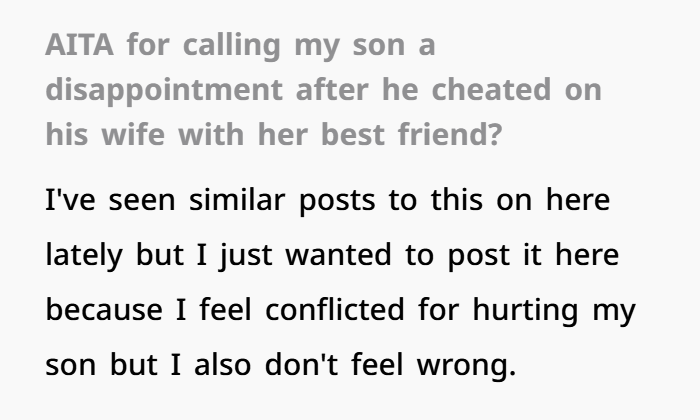


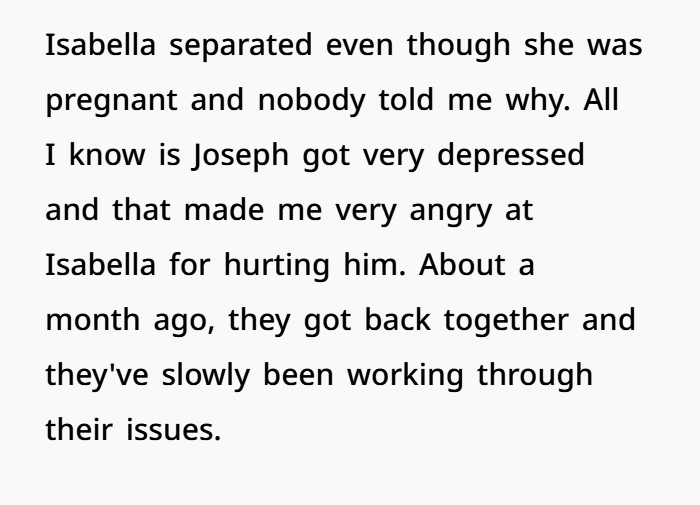




Infidelity is a deep betrayal in any relationship, and its emotional fallout often goes far beyond the couple involved. For a mother, seeing her child hurt someone they love can feel like an even greater pain. In this situation, Joseph’s affair with his wife’s best friend wasn’t just a betrayal between him and Isabella — it hit the heart of a mother’s trust and her understanding of what’s right in relationships.
When Joseph admitted to his mother that he had cheated, the confession likely shook her to the core. As a mother, she had raised him, loved him, and always been there for him. She had a deep bond with Isabella, whom she considered a kindred spirit and loved like her own child. To hear that her son, someone she had invested so much emotional energy into, had hurt someone she cared for so much, understandably triggered a strong reaction.
Psychologically speaking, betrayal in close relationships often leads to intense feelings of anger, disbelief, and deep hurt. Studies show that betrayal trauma can create emotional turmoil, especially when the actions of someone close to you conflict with your values. For many mothers, the instinct to protect their child’s partner or family can sometimes cloud their judgment, but when their own child is the one causing the hurt, it creates a huge ethical dilemma.
The mother’s reaction was understandably intense. She called Joseph a “disappointment,” and this word clearly struck a nerve with him. While it might seem harsh, it’s crucial to consider her emotional state. In many family dynamics, a mother’s feelings of betrayal stem from a strong desire to uphold values like loyalty, integrity, and respect. She probably saw her son’s actions as a reflection of her parenting — wondering if she had failed him in some way. She had supported him through life’s struggles, and to her, this felt like a slap in the face. For many mothers, trust in their child’s character is a central part of their relationship, and when that trust is broken, it feels like a deep loss.
Joseph’s confession of cheating with Isabella’s best friend was a whole different level of betrayal. For his mother, it was hard to wrap her mind around why he would take such a reckless step, especially since she thought so highly of Isabella. This added another layer to her disappointment, because it wasn’t just about infidelity — it was infidelity with someone so close to Isabella. Despite the depth of his mistake, Joseph’s remorse was genuine. He admitted his selfishness, recognized the hurt he caused, and promised to make things right. At least he was taking responsibility for his actions.
It’s important to keep in mind that people react to cheating in different ways. Some believe in offering unconditional support to family members, no matter their actions, while others are more focused on upholding moral integrity. The mother’s reaction was grounded in a strong sense of right and wrong that didn’t make room for excusing cheating. While she admired Isabella’s determination to work through issues instead of jumping straight to divorce, she likely felt Joseph had broken that same principle of loyalty. For her, this wasn’t just about the marriage, but about the values she wanted to instill in her son.
That said, calling Joseph a “disappointment” was harsh. When people are hurt, they often lash out with words they don’t fully mean. The term “disappointment” can stick with someone, leading to feelings of self-doubt and shame. Parents don’t always realize the weight their words carry, and even though the mother was frustrated and hurt, this particular word probably caused more emotional damage than she intended. Joseph was in a fragile emotional state, and while his actions were unforgivable in many ways, his efforts to make things right and rebuild his marriage were important. His mother, lost in her grief and anger, may have missed that.
That being said, some would argue that tough love is sometimes necessary. Holding someone accountable for their actions, especially when those actions hurt others, is an important part of personal growth. Joseph’s mother, by calling him a disappointment, was probably trying to teach him responsibility. She didn’t want him to think that cheating could be excused, which is why her reaction was so strong.
Looking at it from the husband’s side, he might’ve felt his wife’s actions were too harsh given the emotional vulnerability involved. When someone’s already feeling down, adding judgment from a loved one can feel like a slap in the face. While he may have wanted to protect her from the guilt or shame of the situation, his approach highlights how people respond differently to emotional struggles. Some prefer to console and comfort, while others believe in holding their loved ones accountable for their mistakes.
There’s no one-size-fits-all solution here. The mother’s decision to express her hurt through anger is pretty typical in situations like this, but it’s essential to consider the long-term impact of those words. Her harsh reaction might’ve pushed Joseph even further away, when what he needed most was support and guidance.
Joseph’s actions were selfish, no doubt. But his efforts to make things right — by being transparent with Isabella, agreeing to measures like letting her track him, and working to earn back her trust — show his willingness to grow and fix his mistakes. It’s clear Joseph is trying to change. The real question is how his mother will respond over time: Will she embrace his attempts to rebuild his marriage, or continue to hold his past actions against him?
The Comments Are In






At the end of the day, the most important thing in this situation is communication. The mother may have been deeply hurt, but for Joseph’s sake, they need to move forward with open dialogue and understanding. Her disappointment, though valid, can be channeled into supporting his efforts to become a better person while ensuring he understands the weight of his actions.