
I Refused to Support My Parents—and Now My Whole Family Is Shunning Me
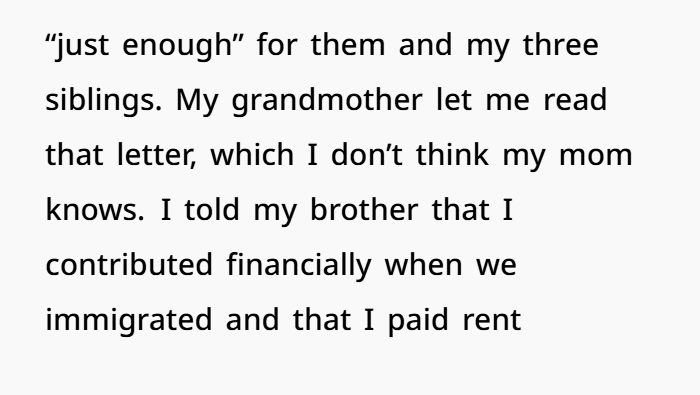
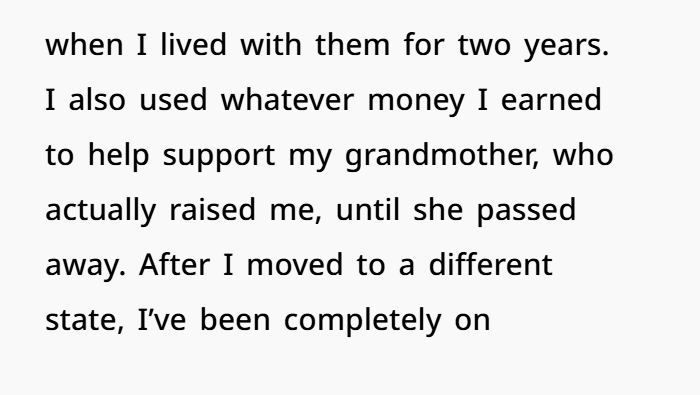
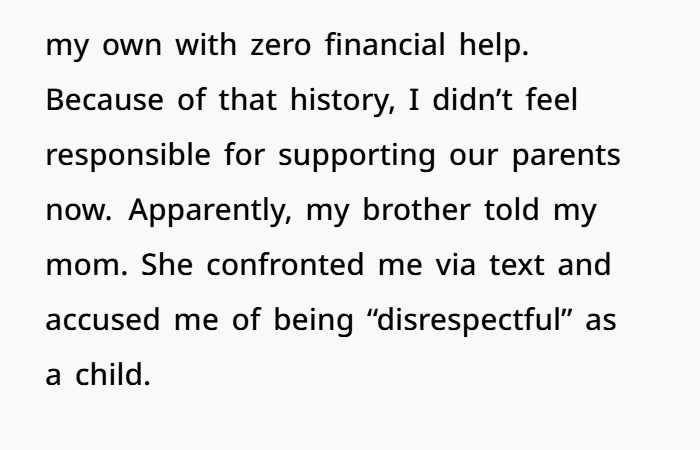
When a 38-year-old woman was asked by her younger brother why she wasn’t helping financially support their parents, she answered honestly—and the fallout was massive. After years of being left out, emotionally neglected, and even manipulated as a child, she laid out the real reason: her parents hadn’t supported her growing up. They gave her nothing—not money, not care, not love. Her grandmother raised her while the rest of the family lived comfortably without her.
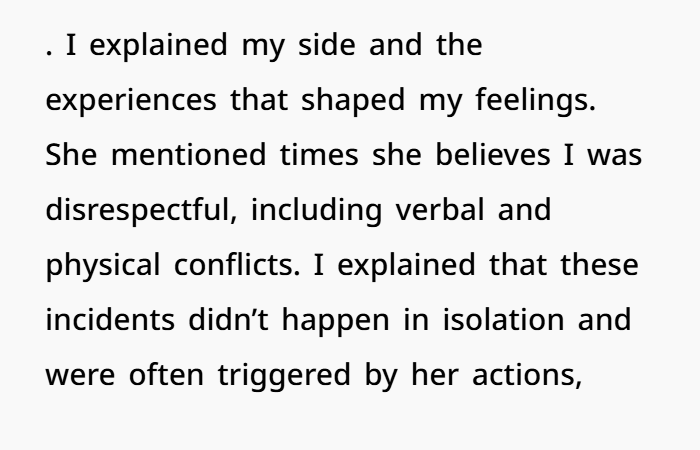
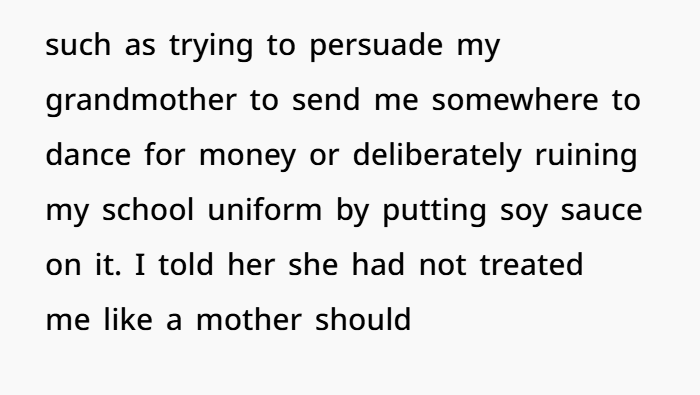
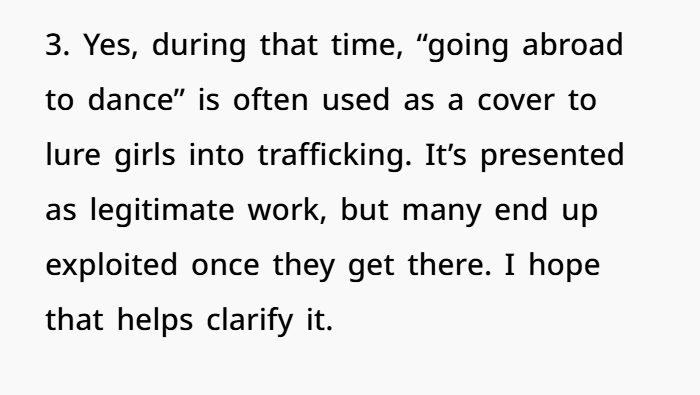
That one truth bomb caused a family implosion. Her mother accused her of being disrespectful, ignoring her own history of cruelty—including trying to send her overseas to “dance” in a situation that likely could have led to trafficking, and deliberately destroying her school uniform to hurt her. And now? The entire family has gone no contact with her. But the real question is… was she wrong to finally say no?
It’s ironic how money can sometimes make or break relationships, especially within a family

The poster was raised by her grandma, so she refused to financially help her toxic parents when her brother asked


If you’ve ever felt guilty for not helping family—especially when they’ve hurt you—you’re not alone. Family financial expectations can be a heavy, messy subject. And it’s even worse when those expectations are built on guilt, manipulation, and silence.
Let’s unpack this story and talk about why this woman is absolutely justified in saying “no”—and why more people need to hear this.
1. You Don’t Owe Parents Who Didn’t Raise You

Let’s start here: she didn’t grow up with her parents.
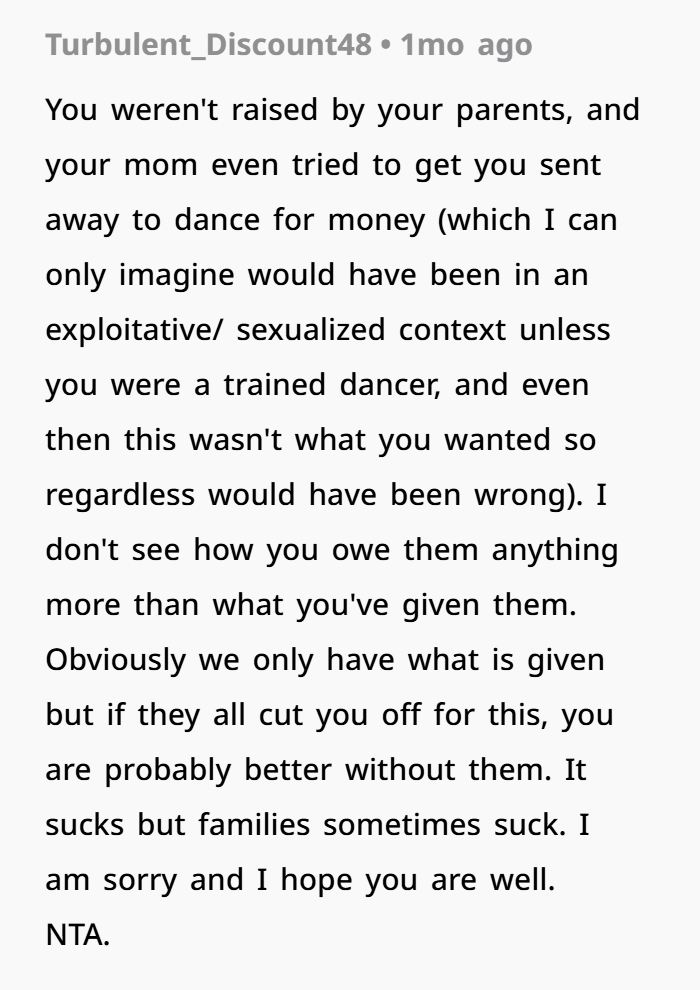
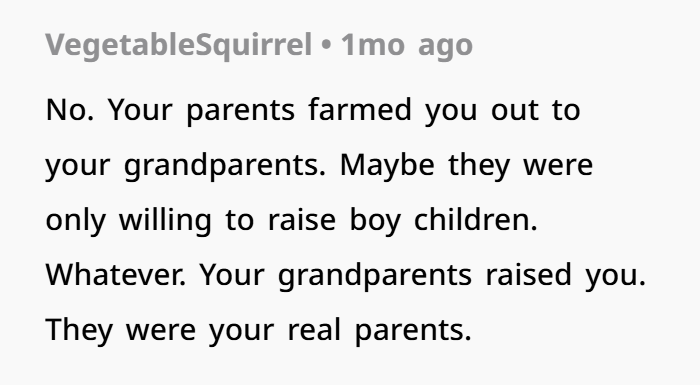
They chose to leave her with her grandmother while raising her three siblings themselves. That alone speaks volumes. Emotional neglect isn’t always about what’s said—it’s about who shows up. Her grandmother raised her, cared for her, and supported her schooling. Her parents? Not so much.
What makes this even worse? When her grandmother asked for financial help from her parents for education, her mother’s reply was: “Teach her not to ask us for money.” That’s not parenting. That’s rejection. And that decision back then—no matter how long ago it was—has consequences today.
2. Neglect Doesn’t Just Disappear With Time
So often in families, people try to sweep the past under the rug. “That was years ago.” “Things are different now.” But trauma doesn’t disappear just because time passes.
She wasn’t just forgotten. She was actively mistreated.
- Her mother sabotaged her school uniform, knowing how much it meant.
- She was pressured into potentially dangerous situations abroad under the guise of “dancing.”
- She paid rent when she did live with them and sent money to the one person who actually raised her—her grandmother.
This isn’t someone holding a grudge. This is someone remembering what shaped them. And she’s right to say: those actions matter.
Keyword: emotional abuse recovery
3. Living Independently Doesn’t Mean You’re Rich
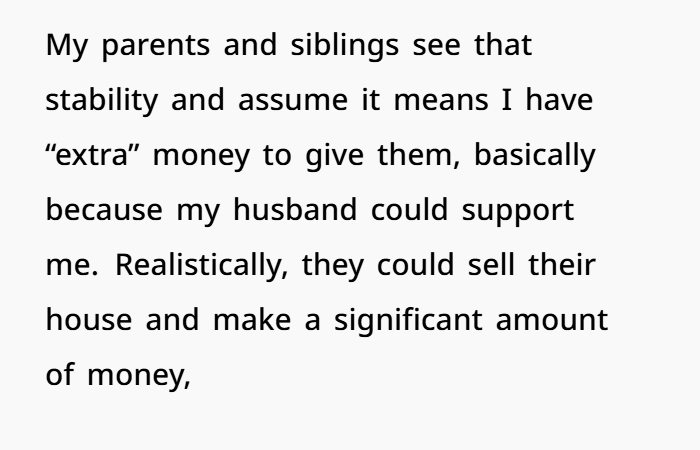
Here’s another layer to the guilt trip: because she and her husband are stable, her family assumes she’s got “extra money” lying around. But financial health doesn’t mean you owe others—especially when that stability was built without their help.
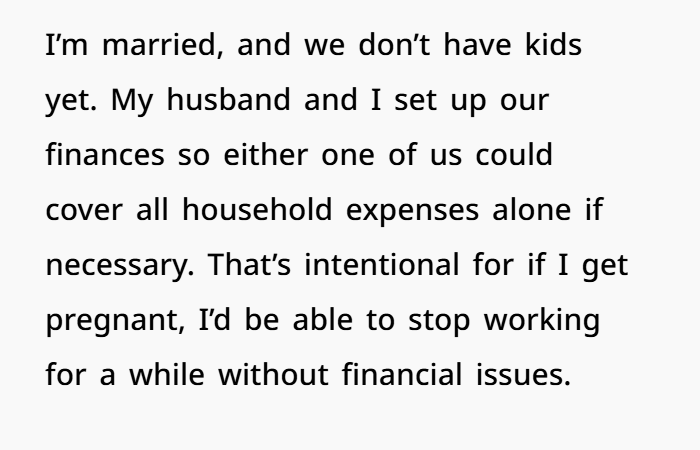
This woman and her husband made smart, intentional choices. They structured their life so either one of them could handle expenses alone. That’s planning. That’s effort. That’s not a license for other people to freeload—especially people who never once helped build that life.
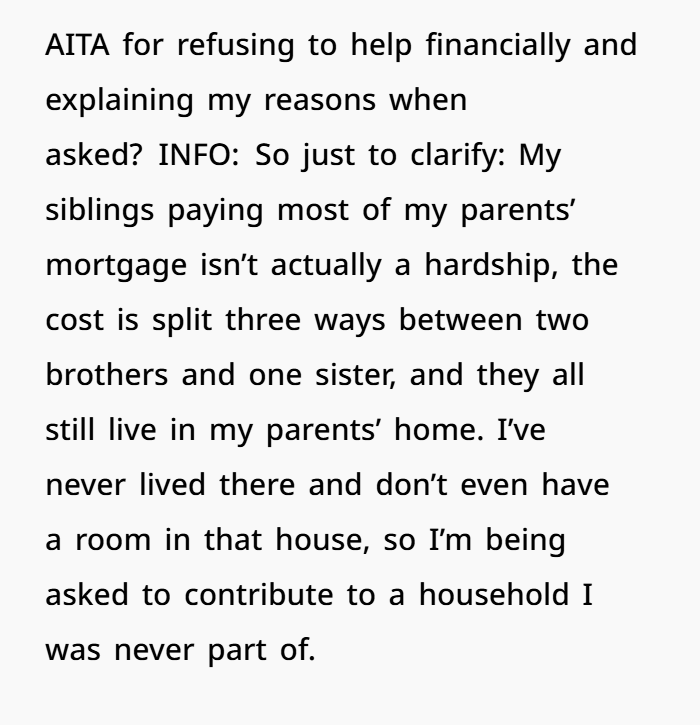
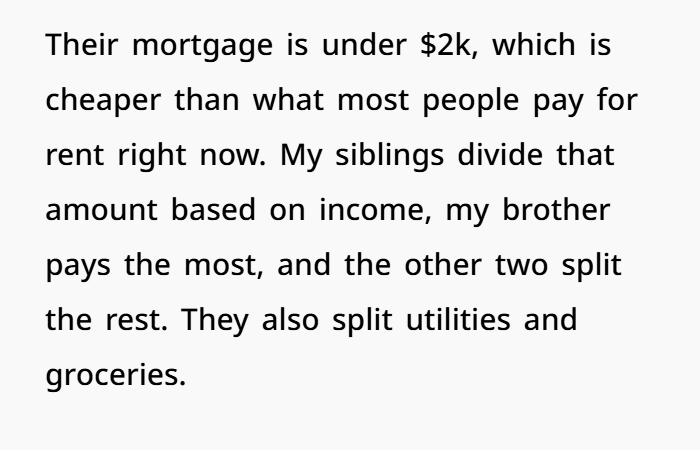
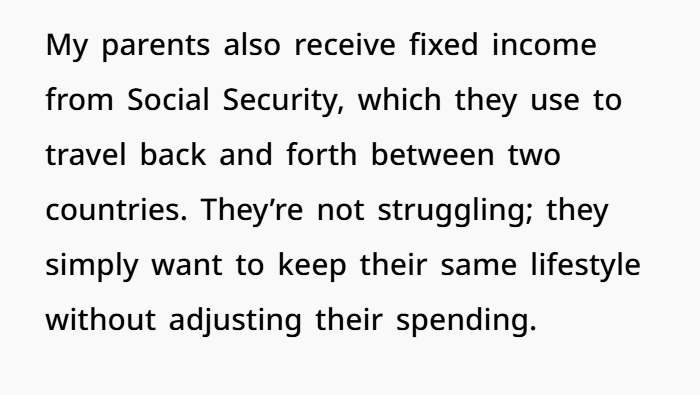
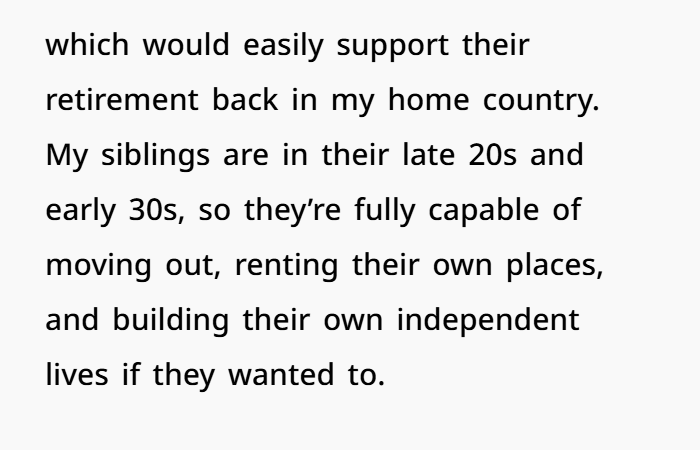
Her siblings, meanwhile, chose to live together. They split bills, live in the parents’ house, and have a shared lifestyle. That’s their call. But just because it’s cheaper for them to stay in that bubble doesn’t mean their sister has to fund it.
4. Boundaries Aren’t Disrespectful—They’re Necessary
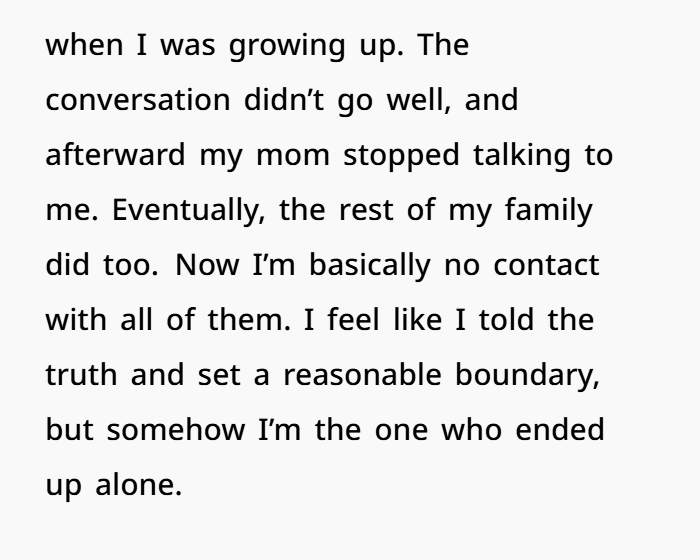
When her brother asked why she wasn’t contributing, she answered truthfully. She didn’t yell. She didn’t insult anyone. She simply explained her experiences. But toxic family dynamics often twist the narrative: “You’re being disrespectful. You’re the problem.”
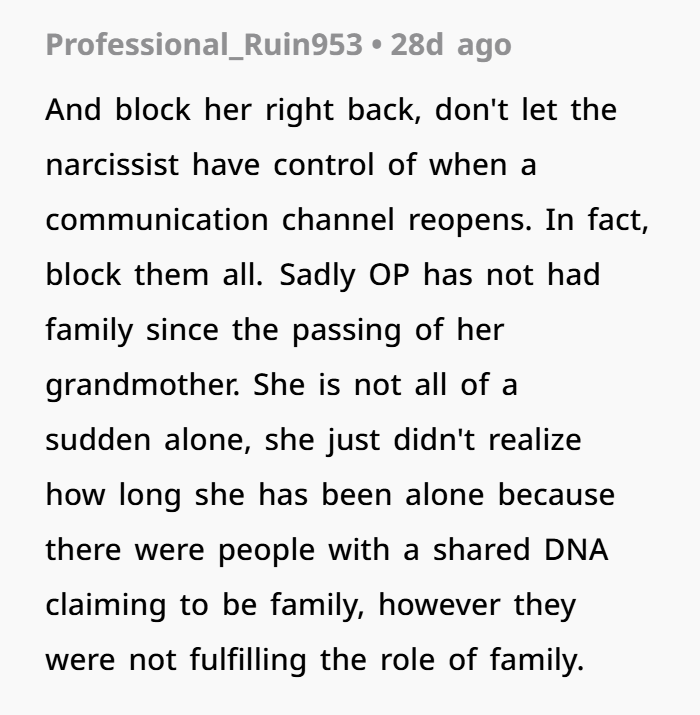
It’s emotional manipulation. And it’s common in families where the scapegoat (usually the kid who got left out, questioned things, or tried to break free) starts standing up for themselves. The moment she voiced her truth, the entire family turned their backs on her. Not because she was cruel—but because she dared to call out the past they’re still pretending didn’t happen.
5. The Silent Treatment Is Emotional Control Tactic
Now she’s no contact with her entire family.
Not because she screamed. Not because she caused drama. But because she said no.
Her mother’s immediate reaction—accusing her of being “disrespectful” as a child, bringing up ancient fights, and refusing accountability—is a classic move in emotionally manipulative families. The goal? To shame her into silence. To make her doubt her own memory. To get her back “in line.”
But it didn’t work. And it shouldn’t.
6. She’s Not the Problem—She’s the Pattern Breaker

Let’s be clear: this woman broke a generational pattern. She built a life without financial help, emotional support, or even basic care from her parents. She refused to carry the same burden her siblings chose to carry. And that made her the scapegoat.
She’s not selfish. She’s not cold. She’s just not going to bleed for people who wouldn’t offer her a bandage.
And sure, it hurts to be iced out. Losing contact—even with toxic family—still leaves a hole. But sometimes peace comes with loneliness at first. And in time, that space? It gets filled with real connection, chosen family, and a life where you don’t have to question if you’re loved.
7. You’re Allowed to Say No. Even to Family.
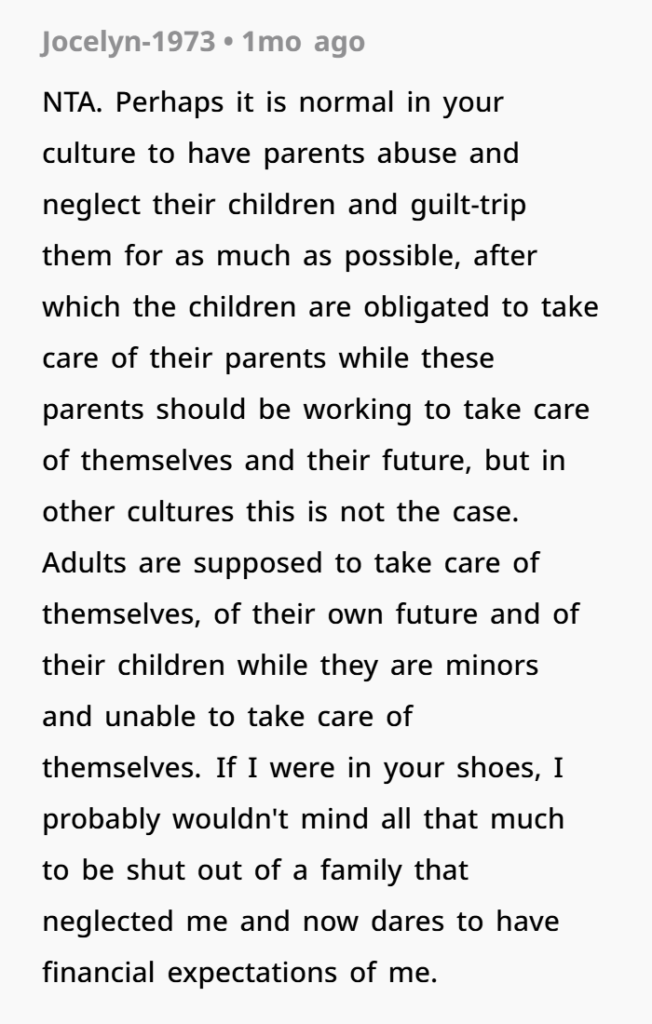
Let’s stop pretending that being born into a family means you owe them forever. If they didn’t raise you, protect you, or love you right, you don’t owe them money just because they have your last name.
Family is earned. Respect is earned. And this woman? She’s earned the right to say no.
And if you’re in a similar place, hear this loud and clear:
You’re allowed to protect your peace.
You’re allowed to set boundaries.
And you’re allowed to walk away from people who never walked with you in the first place.
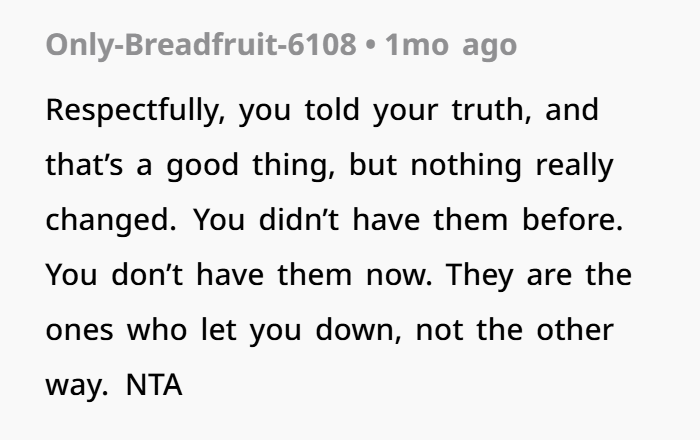
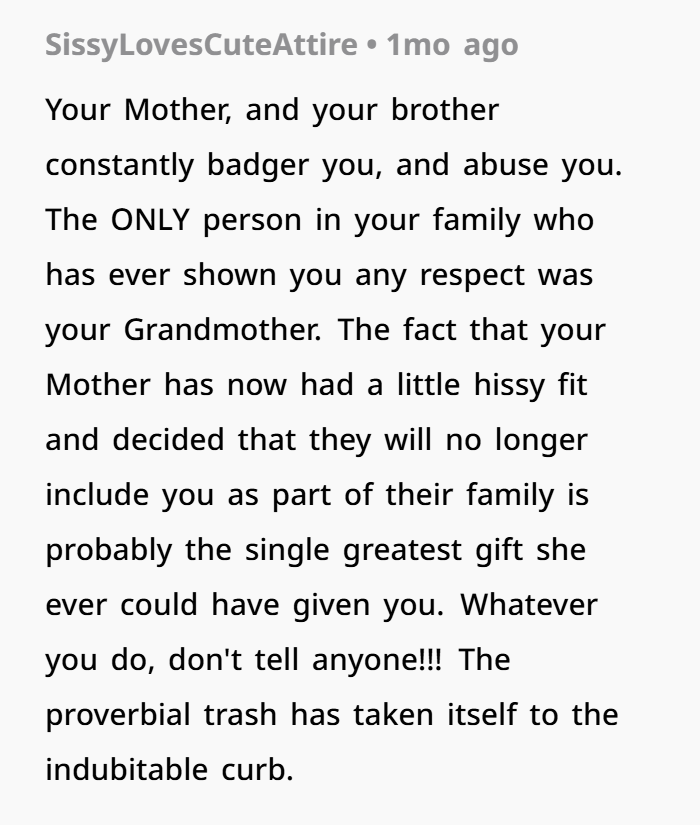
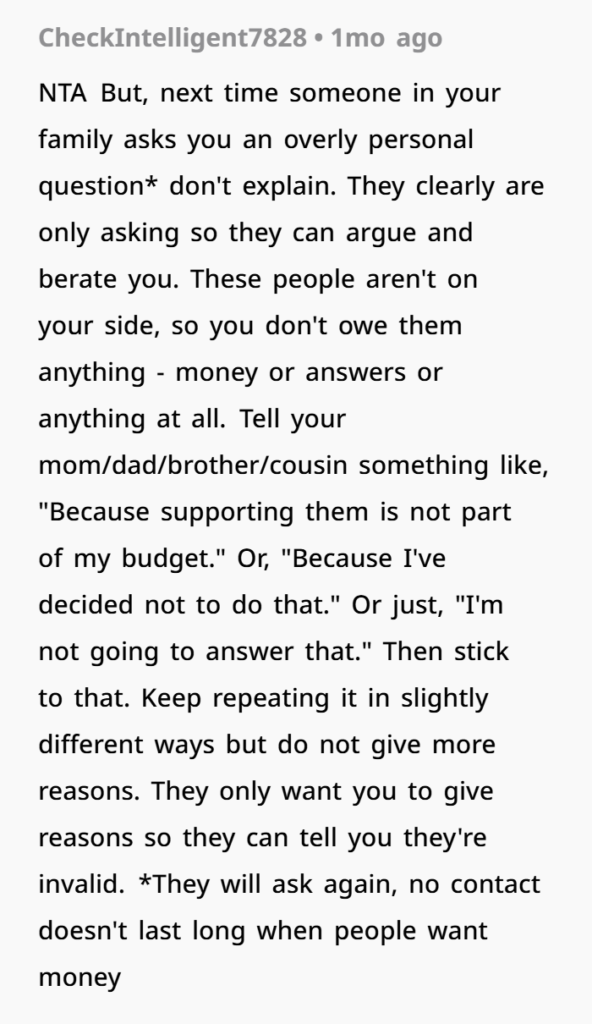
Netizens applauded the poster for standing up for herself and claimed that her family going no-contact was actually a good riddance