My Housemate Turned the Living Room Into His Bedroom… and I’m Losing It
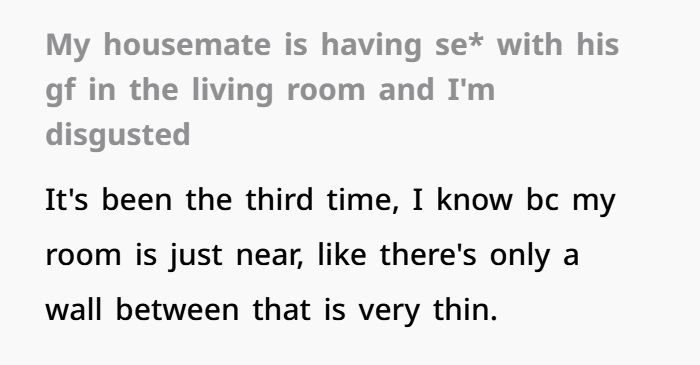
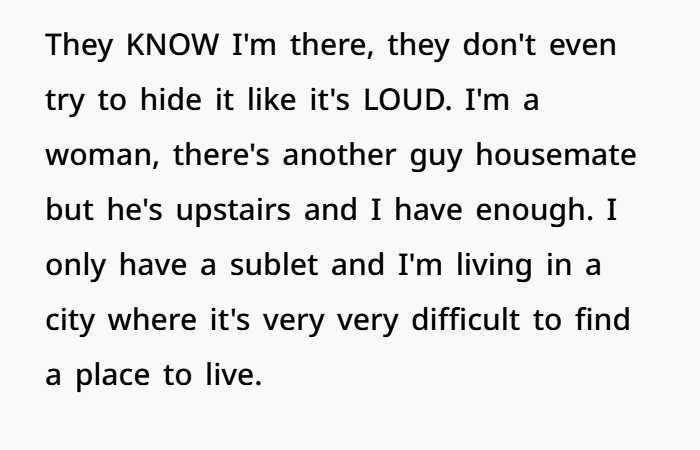
Living with random roommates can go either way. Sometimes it’s fine, sometimes it turns into a situation you never expected. In this case, what should’ve been a simple shared housing setup — split bills, mind your space — got weird real quick. One housemate kept having loud sex in the living room. Like, super obvious. And she knew someone else was just a wall away. It didn’t happen once, it kept happening. No trying to keep it low, no respect for shared space etiquette. Just zero care. Stuff like this is exactly why people start googling roommate conflict advice, tenant legal rights, or even how to file a noise complaint.
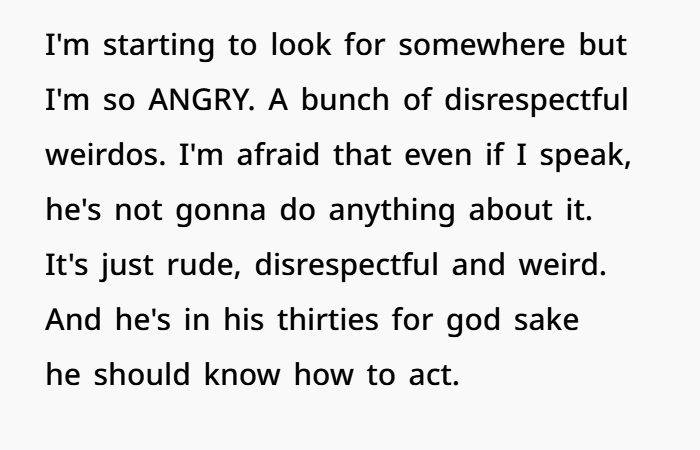
The frustrating part? She’s kinda stuck. She’s subletting in a competitive rental market where finding another place isn’t easy at all. So saying something feels like a risk. What if nothing changes? Or worse, what if it creates drama and she’s still stuck there? Even after involving another decent housemate, there’s no clear solution yet. And honestly, this isn’t only about noise or awkward moments. It’s about respect, feeling secure, and being able to relax in your own place. And right now, that comfort just isn’t there at all.


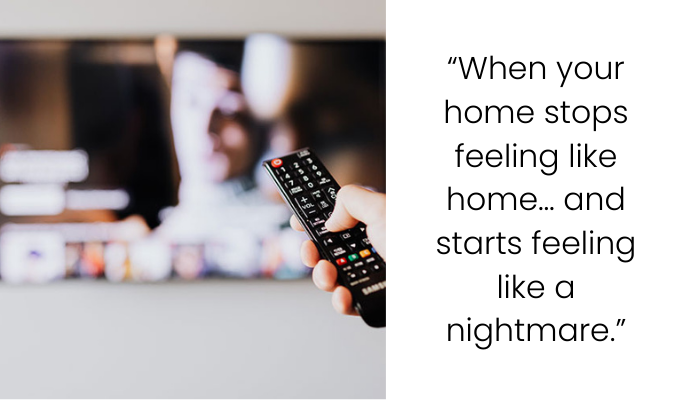
Alright, let’s actually break this down — because this isn’t just about “annoying roommates.” It goes deeper. We’re talking about tenant rights, shared housing rules, and personal boundaries. And yeah… basic human decency too. Stuff like this is exactly why people end up searching things like legal advice for tenants, renter rights guide, or roommate dispute solutions when things get messy.
First off, let’s be real:
Having sex isn’t the problem. That’s normal.
But doing it loudly, again and again, in a shared living room — knowing someone else is right there? That’s where it crosses a line. That’s not just awkward, it’s disrespectful. And honestly, it can fall under noise complaint issues or even tenant harassment concerns depending on how bad it gets.
In most shared apartments, there’s kind of an unspoken rule (and sometimes it’s even written into rental agreements):
common areas are shared, not private.
So yeah — kitchens, living rooms, hallways… those spaces aren’t your personal bedroom. Turning them into one, especially in a way that makes others uncomfortable, goes against basic roommate etiquette and even shared housing agreements. It’s the kind of behavior that can push people to look into tenant complaint procedures or legal rental options just to feel okay in their own space.
From a tenant rights perspective (and this is where it gets interesting), many rental agreements include clauses about:
- “Quiet enjoyment”
- “Reasonable use of shared spaces”
- “Nuisance behavior”
These aren’t just fancy legal phrases. They basically mean every tenant has the right to live in the space without ongoing disturbance or discomfort caused by others. Loud, repeated sexual activity in a shared area? That can absolutely fall under nuisance behavior in some cases.
Now, let’s bring in some real-world parallels.
There have been disputes (especially in cities with tight housing markets like London, New York, Toronto) where tenants filed complaints over:
- Loud intimate activity at unreasonable hours
- Inappropriate use of shared spaces
- Repeated disregard for house rules
In some documented cases, landlords have actually intervened — not because of the sex itself, but because of how it impacted other tenants’ ability to live normally.
And that’s the key point:
This isn’t about morality. It’s about impact.
If someone’s behavior:
- Keeps you awake
- Makes you uncomfortable leaving your room
- Forces you to change your routine
…it’s no longer “their private life.” It’s affecting yours.
Now let’s talk psychology for a second — because your reaction (anger, disgust, frustration) is completely understandable.
Shared living spaces rely heavily on mutual respect. When that breaks, it creates a sense of:
- Lack of safety
- Loss of control
- Emotional stress
Especially as a woman in a shared place, there’s another layer to all this. It’s not just annoying noise anymore. It can start to feel uncomfortable… even a bit intimidating. Like your space isn’t really yours. Situations like this are why people look into tenant rights for women, safe housing advice, or even legal help for harassment in shared housing.
It’s not about overreacting. You didn’t agree to live in that kind of environment. You didn’t sign up to hear or be exposed to that. But somehow it’s being pushed into your daily space anyway. And yeah, that can feel violating, even if it’s indirect. That’s where it stops being just a roommate issue and starts becoming a personal boundaries and renter protection problem.
And here’s where a lot of people get stuck:
“Should I say something or just tolerate it?”
Because yeah, confrontation is risky. Especially when:
- You’re subletting
- The housing market is tight
- You don’t know how they’ll react
But staying silent has its own cost — it builds resentment, stress, and honestly… burnout.
Let’s break down realistic options.
1. Indirect Approach (Low Risk)
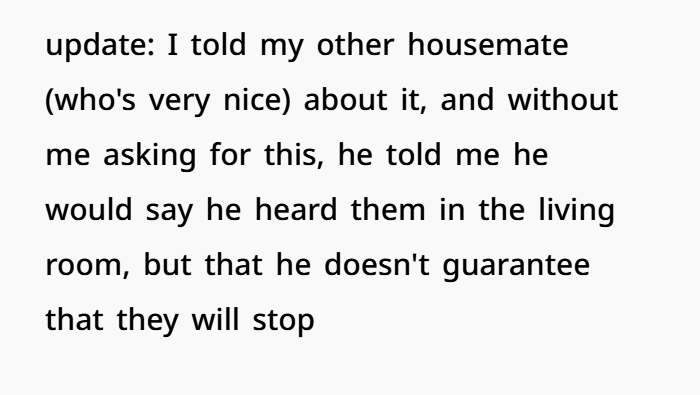
What your other housemate suggested? That’s actually a smart move.
Having someone else casually say:
“Hey, just so you know, the sound really carries from the living room…”
It removes direct confrontation while still sending a clear message.
This works surprisingly often, especially if the person is just being oblivious rather than intentionally disrespectful.
2. Direct but Calm Conversation
If it continues, a short, non-emotional approach works best:
- No accusations
- No insults
- Just facts
Something like:
“Hey, I just wanted to mention that I can hear everything from my room when you’re in the living room. It’s making me uncomfortable. Could you keep that kind of stuff to your room?”
Simple. Clear. Hard to argue with.
3. House Rules Reset
If there’s any kind of group chat or shared agreement, you can bring up:
- Respecting shared spaces
- Noise levels
- Guests usage
Framing it as a house-wide discussion makes it less personal.
4. Landlord or Lease Angle (If Needed)
If things don’t change and it gets worse, you can escalate — carefully.
Especially if:
- The lease mentions shared space usage
- There are noise clauses
- Other tenants are also affected
Even a subtle mention like:
“I might need to check what the lease says about shared space use…”
can sometimes be enough to shift behavior.
5. Exit Strategy (Real Talk)
You’re already doing this — looking for another place.
And honestly? That’s valid.
Because sometimes, even if you can fix a situation… it’s just not worth the energy. Especially when:
- Respect is already broken
- You feel uncomfortable in your own home
No living situation is worth constant stress.
Big Picture Takeaway
What’s happening here isn’t just “annoying roommates.”
It’s a breakdown of shared living boundaries.
And those boundaries matter more than people think.
Because at the end of the day, home should feel like:
- A safe space
- A private space
- A place where you can relax without feeling disturbed or disrespected
Right now, that’s not what you have. And your reaction? Completely justified.
You’re not overreacting.
You’re reacting to a situation that’s genuinely not okay.
Readers’ Comments Speak Out