She Slept With Other Guys Before We Were Official — And Lied. Now What?
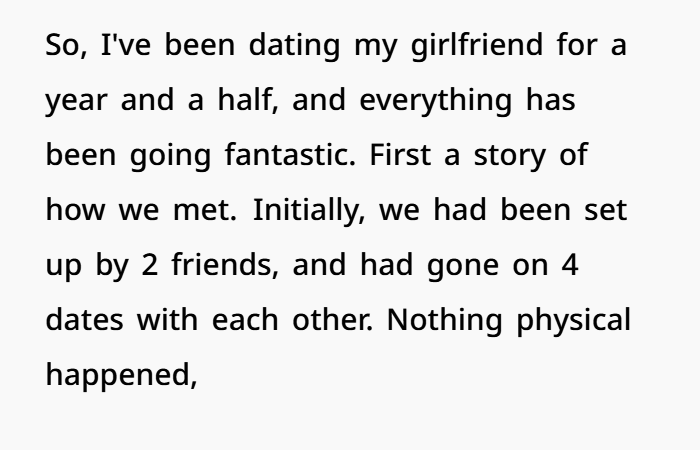
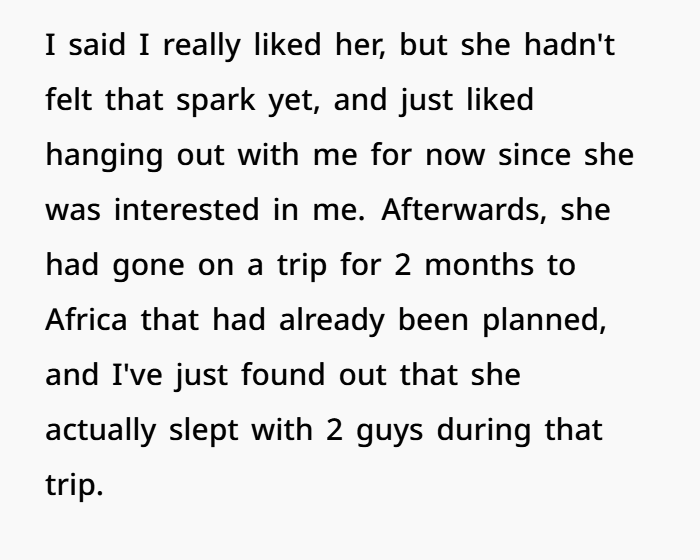
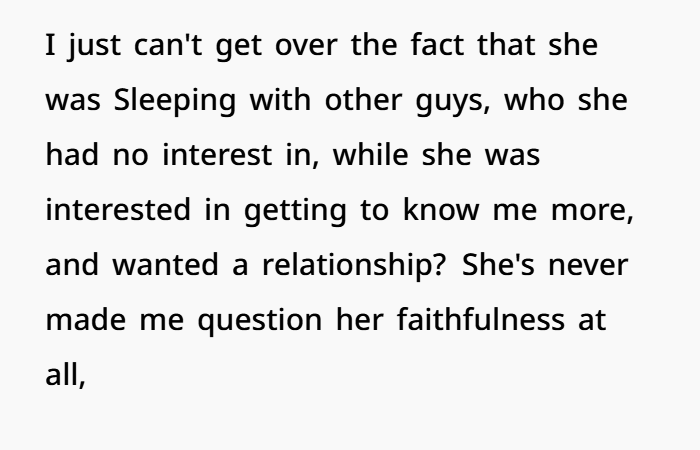
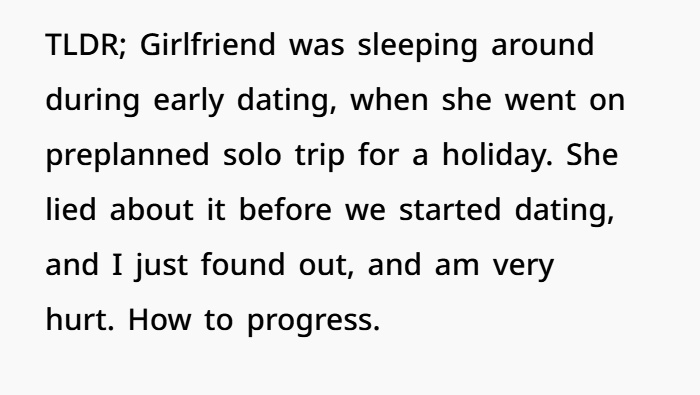
You met through friends. Four real dates. No s*x. Just steady vibes and real effort. You told her you were into her. She said she hadn’t fully felt the spark yet but wanted to keep dating and see where it goes. Fair enough. That’s how modern relationships start sometimes. Then she left for a two-month Africa trip that was already planned. You didn’t disappear. You stayed consistent. Texts. Calls. Late-night talks. Even made plans for when she got back. That’s emotional availability. That’s long-term relationship energy.
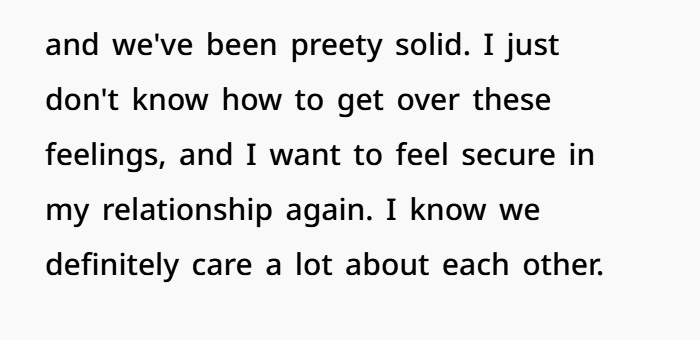
Here’s the part that hits hard. On that trip, she had casual hookups with two guys. No commitment. When she came back, you two kept building. Two months later, you became exclusive. Before locking in the relationship, you asked if anything happened while she was away. She said no. That’s the real wound. Not just the physical part. The lie. She says she hid it because she knew you value commitment and aren’t into casual dating. She felt embarrassed. Maybe afraid of losing the relationship. Now it’s been a year and a half. Everything’s been stable. No cheating. No red flags. But finding this out triggered trust issues. Relationship anxiety. That feeling of being the backup option. You don’t want to sabotage a healthy relationship over pre-exclusivity behavior. But you also can’t just ignore betrayal and act like it’s nothing.

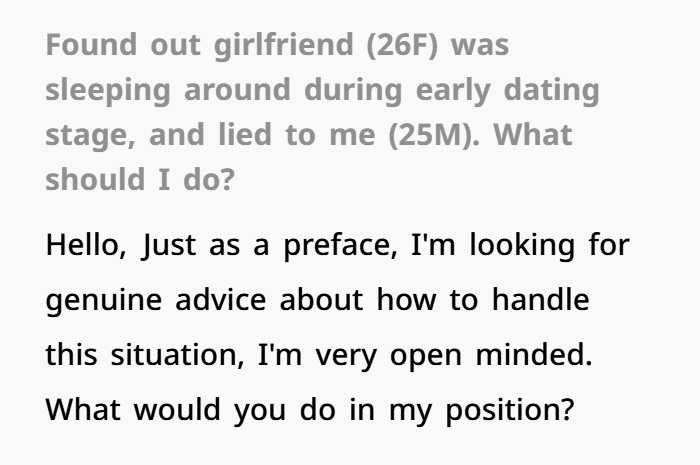
Alright. Let’s slow this down for a second. Because this really isn’t about s*x. It’s about trust in a relationship. Emotional safety. And how early-stage dating works in modern dating culture. A lot of people skip that part and jump straight to blame, but this runs deeper than that.
First, technically, she didn’t cheat. There was no exclusivity agreement. No defined relationship boundaries. In most Western dating norms, until you have that “we’re official” talk, people are free to explore other options. Research published in the Journal of Social and Personal Relationships shows that early dating ambiguity creates mismatched expectations all the time. One person feels emotionally invested. The other feels like they’re still in the casual dating phase. That expectation gap is where relationship anxiety and heartbreak usually start.
But this still isn’t really about whether she had the right to sleep with someone else.
It’s about trust issues in relationships that come from lying.
According to research from the American Psychological Association (APA), deception in romantic relationships — even about past experiences — can damage emotional security long term. When someone lies, your brain doesn’t just process the event. It questions stability. It questions predictability. And once emotional safety feels shaky, anxiety kicks in. You start replaying things. Overthinking. Wondering what else might not be fully transparent. That’s why this feels heavier than it “should.”
Your mind is likely looping on a few key thoughts:
- Was I just her backup option?
- Did she choose me after “testing the field”?
- If she hid this, what else could she hide?
- Was I more invested than she was?
These thoughts are normal. They’re not toxic. They’re human.
There’s also something called retroactive jealousy. It’s when someone feels real distress over their partner’s past s*xual experiences. And it’s not rare anymore. A lot of couples therapists say it’s getting more common, especially with social media, dating apps, and hookup culture making casual encounters feel normal. But it hits different when those hookups happened while you were emotionally investing. While you were texting every day. Planning the future. That overlap can mess with your head.
But here’s the uncomfortable truth. She didn’t owe you exclusivity back then. There was no commitment. No defined relationship agreement. However, once you directly asked her about it before becoming official? She did owe you honesty. That’s basic relationship communication. That’s where emotional safety is built.
The lie is the real crack in the foundation.
Now let’s look at why she might’ve lied. Not to excuse it. Just to understand the psychology behind it.
She said she knew you weren’t into casual s*x and felt embarrassed. That says a lot. She probably feared judgment. Maybe feared rejection. Research on relationship communication patterns calls this “impression management.” It’s when someone presents a cleaner, safer version of themselves to protect the connection. It’s common in early-stage relationships. People hide things because they want acceptance. Not because they’re planning long-term deception. Still doesn’t make it okay. But it explains the behavior.
It was immature. But it doesn’t automatically mean she’s unfaithful or manipulative.
What matters more is: how has she acted for the last 1.5 years?
You said:
- She’s never made you question her loyalty.
- She’s been solid.
- She’s apologizing.
- She’s trying to comfort you.
That behavior aligns with someone who regrets hiding something — not someone living a double life.
Let’s also address your biggest emotional wound: feeling like second choice.
When someone sleeps with other people while saying they’re “interested” in you, yeah… it can mess with your self-worth. It can trigger relationship insecurity. Makes you feel like you weren’t enough. Like you were an option, not the priority. But attraction and emotional connection don’t always move in straight lines. Early-stage dating is messy. Feelings develop at different speeds. She could’ve liked you emotionally but not felt ready for commitment. That’s not Plan B energy. That’s uncertainty.
And here’s something important. She came back from that trip and chose to build a relationship with you. That shows decision. That shows clarity. If you were just backup, she wouldn’t have invested long term. She wouldn’t have built a stable relationship for a year and a half. That’s not how rebound dynamics usually work.
Now think about this from another angle. If she had been fully honest back then, what would’ve happened?
You already said you would’ve felt “icky.” Maybe you would’ve walked away. Maybe the relationship never would’ve started. So in a way, the lie protected the short-term connection. It avoided immediate rejection. But it created long-term trust issues. That’s the trade-off. She chose short-term relationship preservation over long-term transparency. And now you’re dealing with the emotional aftershock.
Now, where do you go from here?
There are really only three healthy paths:
- You decide this is a boundary violation you can’t move past.
If honesty about s*xual history during early dating is a core value for you, and this permanently changes how you see her, that’s valid. Breaking up doesn’t mean she’s evil. It means compatibility on values didn’t align. - You forgive, but don’t process it.
This is the dangerous one. You say “it’s fine,” but internally you keep replaying it. That turns into resentment. Passive aggression. Emotional distance. - You rebuild trust intentionally.
This is the hardest — and most mature — option.
Rebuilding trust means:
- Having one or two deeper conversations. Not 20 interrogations.
- Asking for reassurance in healthy ways.
- Setting future transparency boundaries.
- Possibly doing a few sessions of couples therapy (yes, even for this).
According to relationship therapy models like the Gottman Method, trust is rebuilt when three things happen:
- The person who lied shows genuine remorse.
- They answer questions openly without defensiveness.
- Their behavior consistently aligns with honesty over time.
From what you’ve written, she’s doing those things.
Now the final question you need to ask yourself isn’t, “Was she wrong?”
It’s this:
Can I see her the same way again?
If your mind keeps looping those scenarios every time you see her, that’s not about what she did anymore. That’s about relationship anxiety and how your attachment system reacts to perceived threat. You can’t control her past. You can only control how you process it. And learning to separate past behavior from present loyalty is emotional maturity work.
Also, let’s be real for a second. Male ego and s*xual comparison can cut deep. A lot of guys feel this but don’t admit it. It’s not just about trust. It’s about pride. About status. About feeling chosen. That sting is real. Doesn’t make you weak. Just means it hit something personal.
If you truly see that she’s been consistent, loyal, emotionally invested, and clear about choosing you — then this story shifts. It’s not about betrayal trauma. It’s about a messy start that eventually turned into a stable relationship.
But if your gut says something essential snapped — something you can’t rebuild — that matters too.
There’s no universally “mature” answer. Just the one that protects your peace long term.
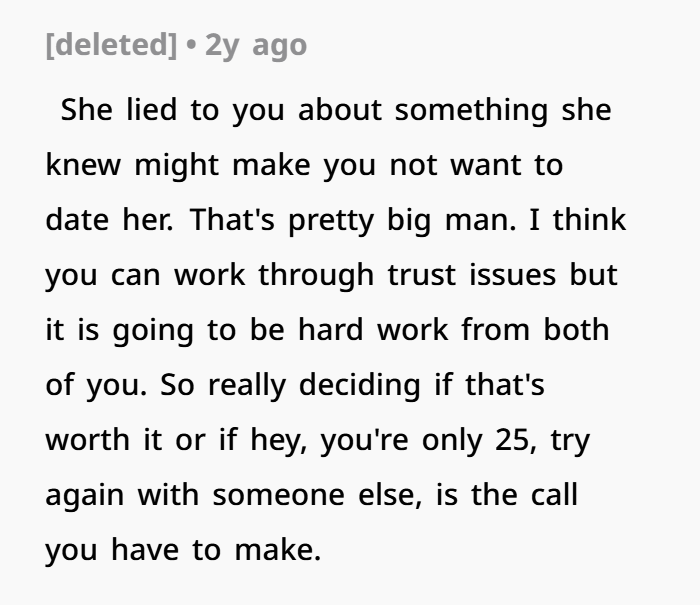
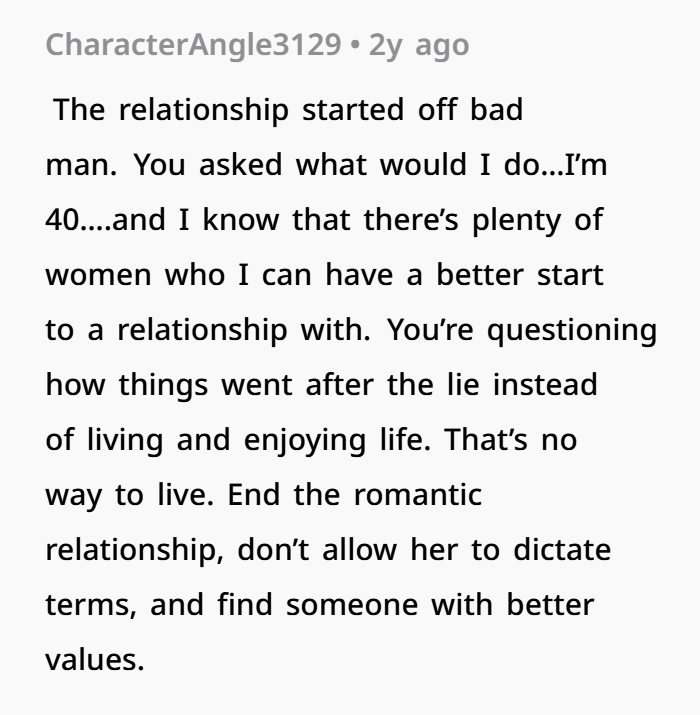
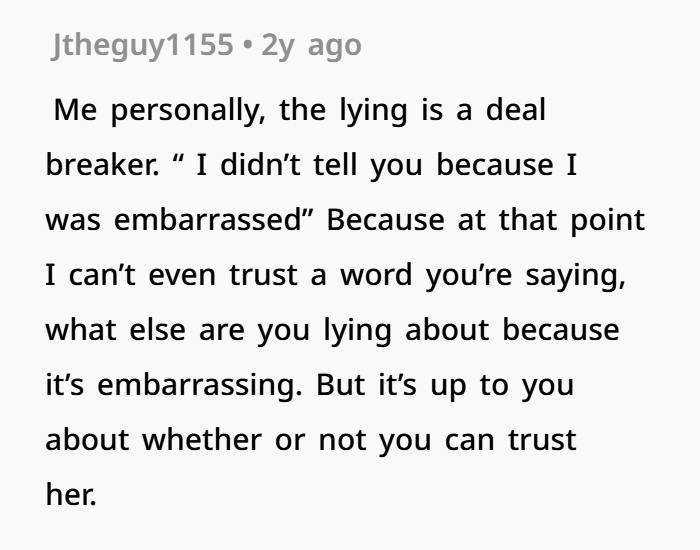
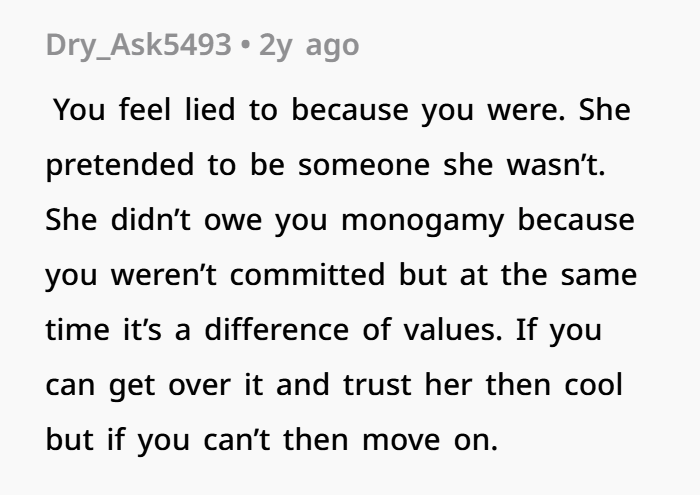
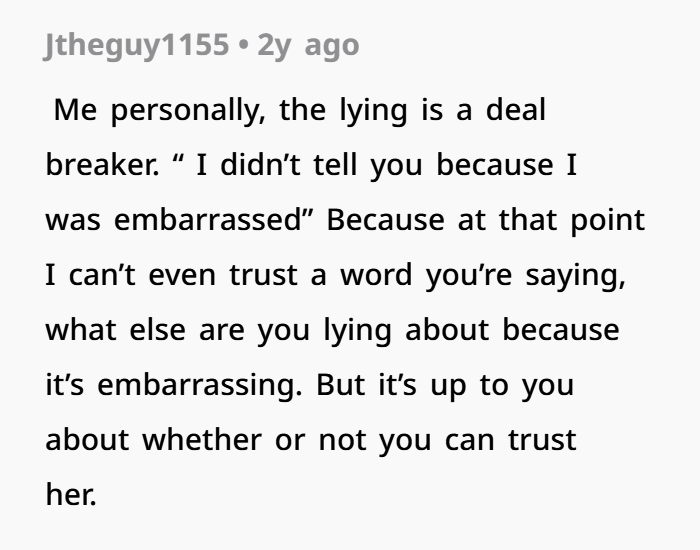
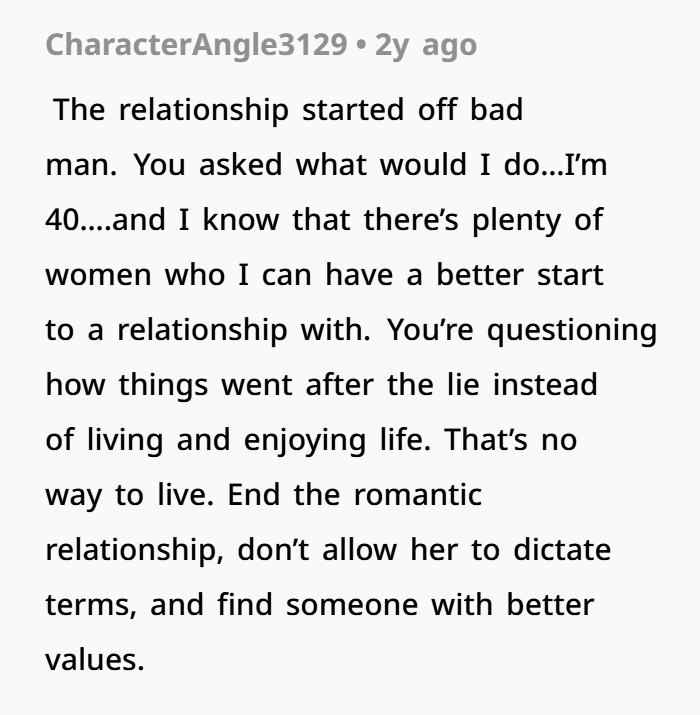
Comments That Say It All
So What Should You Do?
Take a week. Don’t decide anything dramatic.
Have one calm conversation. Tell her exactly what part hurt most — the lie, not the s*x. Ask for reassurance about being chosen. Watch how she responds.
Then ask yourself:
Do I want to be right, or do I want to be with her?
Sometimes you don’t get both.
And if after honest effort you still feel unsettled? It’s okay to walk away from a good person because the foundation cracked.
But if you stay, stay fully. Don’t punish her for something that happened before you were official.
That’s the real crossroads here.