AITA for Laughing When My Wife Clapped Back at My Mom?
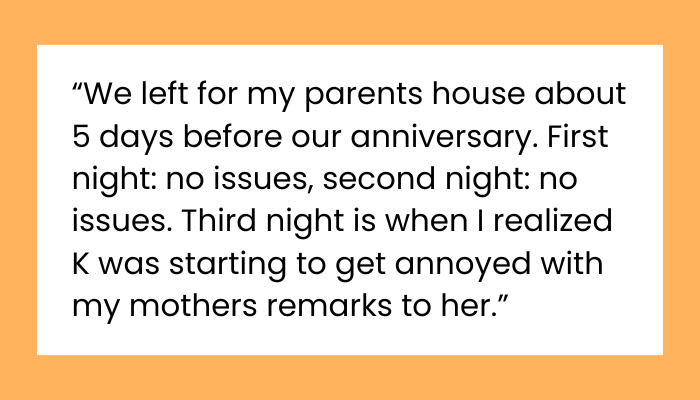
So here’s the situation. A young husband finds himself right in the middle of a family drama that escalates way too fast. He and his wife—high school sweethearts—just hit their one-year anniversary. They head over to his parents’ place to spend time, reconnect, and meet his nephew for the first time. At first, everything feels normal. Easy. But underneath that, there’s tension building between his wife and his mom. It starts with small remarks. Little digs. The kind that don’t explode right away but slowly get under your skin.
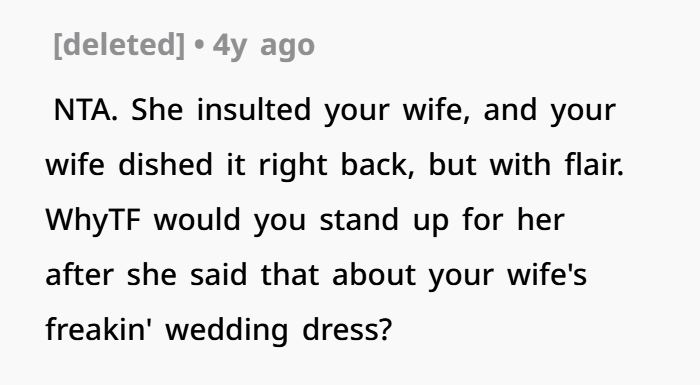
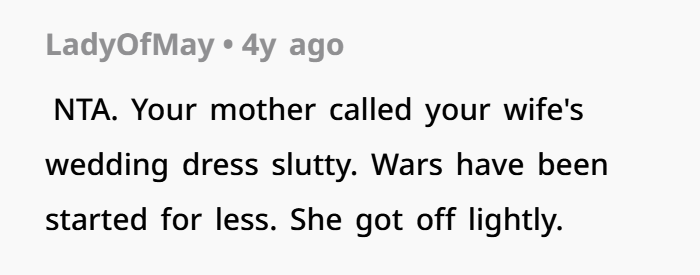
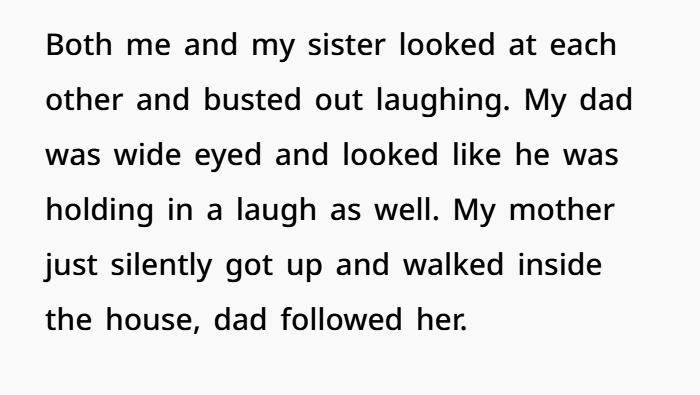
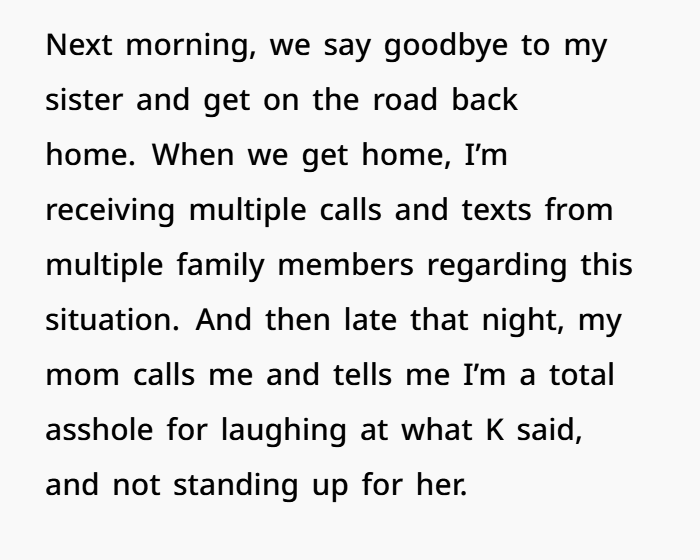
Then things take a turn. The wife is about to share her wedding dress photos—something special, something personal. And suddenly, the mother-in-law throws out a harsh insult. Totally unprovoked. She calls the dress inappropriate in a way that crosses the line. Now instead of yelling or losing control, the wife responds calmly—but her comeback is blunt, almost surgical. It lands hard. The husband and his sister laugh without even thinking, while the father just sits there trying not to react. The mom walks off, clearly upset. After that, it all spirals—angry phone calls, emotional accusations, and the husband getting blamed for being disrespectful. Now he’s stuck in that mental loop, asking himself… did laughing make him the problem here?

This might look like a simple family fight, but it’s actually way deeper than that. It’s not just about who said what or who laughed. It’s about emotional build-up, respect issues, personal triggers, and family hierarchy dynamics. These kinds of situations are super common in early marriage stages, especially when in-laws are involved.
Let’s break down the main moment—the insult. What the mother said wasn’t harmless. It crossed a line into verbal attack territory. Even implying something like that based on clothing? That’s heavy. In relationship psychology, this is categorized as hostile communication, and over time, it can seriously damage trust and respect.
Now think about the background. You already said your mom and your wife don’t get along. That changes everything. This wasn’t one random comment—it was the result of ongoing tension. Studies on in-law relationships show that small things—micro-aggressions, side comments, passive digs—build up over time until one moment explodes.
Your wife’s reaction fits into what experts call a boundary defense response. She didn’t ignore it. She didn’t walk away. She answered back. Strongly. Maybe a little sharp, sure—but that’s pretty normal when someone feels pushed for too long.
Also, the calm tone you mentioned? That’s actually a big detail. It shows she wasn’t out of control. She was intentional. In conflict communication terms, that’s closer to assertiveness than emotional outburst—even if it sounded harsh.
Then comes your reaction—the laugh.
This is where things get complicated fast. For you, it was probably just instinct. When tension breaks suddenly, laughter can happen without thinking. Psychologists call this nervous laughter. It’s basically your brain trying to deal with stress or awkwardness.
But your mom didn’t see it that way. To her, that laugh likely felt like you took a side—and not hers.
There’s a concept called alliance shift in family psychology. When an adult child seems to side with their spouse, it can make a parent feel replaced or rejected. So her reaction might not just be about the comment—it’s about feeling like she lost her position.
Now here’s the big question—were you supposed to defend her?
Most modern marriage advice says your priority shifts once you’re married. Your spouse becomes your main team. That doesn’t mean cutting off your parents or disrespecting them. But it does mean standing by your partner, especially when they’re being disrespected. In the long run, that kind of support builds stronger trust and a healthier relationship overall.
And let’s be real—the original insult came from your mom. That part can’t be ignored.
There’s this idea called provocation-response balance. It’s basically asking—did the reaction match the situation? Your mom’s comment was strong, direct, and uncalled for. Your wife’s response was strong too, no doubt. But it was a reaction, not something random. When someone feels attacked, they don’t always respond gently.
Coming back to your laugh—timing played a big role. In that moment, it probably made things feel worse. Even if it was just instinct, it added pressure to an already heated situation. But honestly, even if you stayed quiet, the outcome likely wouldn’t change much. The moment things crossed the line was when the insult happened.
Then there’s the whole family mindset factor. Some families strongly believe in respecting elders, no matter what. No questioning, no pushback. In those environments, even a small reaction—like laughing—can be seen as disrespect. Your mom might be viewing the situation through that lens.
The problem is, that kind of setup can become unhealthy. If one person always gets a free pass to say hurtful things, it creates a one-sided dynamic. And over time, that leads to resentment and bigger conflicts.
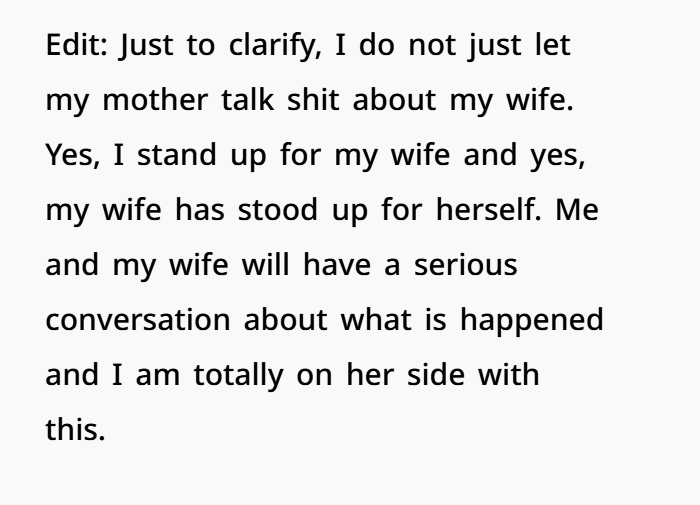
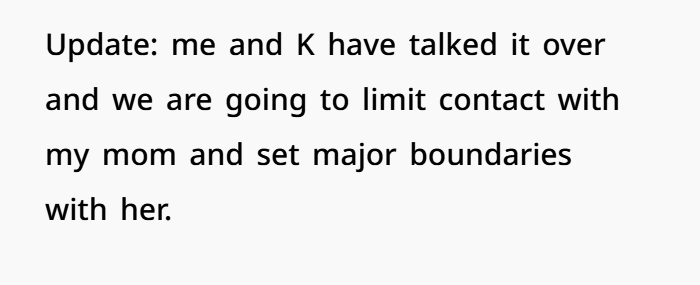
Now your update is where things actually shift in a positive way. You and your wife setting boundaries and limiting contact? That’s not extreme—it’s actually a smart move in situations like this. In relationship coaching and family psychology, boundaries are seen as protection, not punishment. They help create healthier space.
In extended family relationship management, couples who stick together and present a united front usually have stronger, more stable marriages long-term. It’s about choosing your partnership while still being respectful—but not at the cost of your own well-being.
And your dad’s reaction? That small detail says a lot. Him holding back a laugh might mean he doesn’t fully agree with your mom either. Sometimes families have one dominant voice, and others just stay quiet to keep the peace. Doesn’t mean they actually support what’s happening.
So where does this leave the “AITA” judgment?
Let’s break it down cleanly:
- Your mom made a harsh, unprovoked insult
- Your wife defended herself, firmly but not explosively
- You laughed—likely as an instinctive reaction
- Your mom expected loyalty and didn’t get it
- You and your wife are now setting boundaries
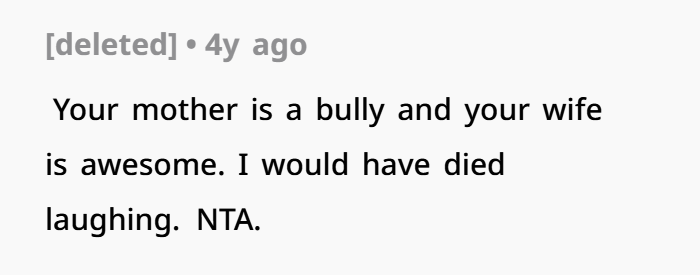
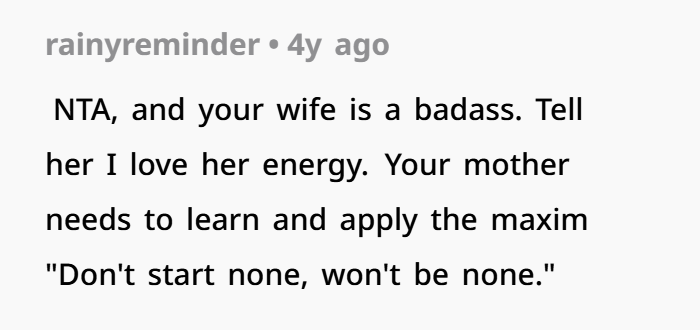
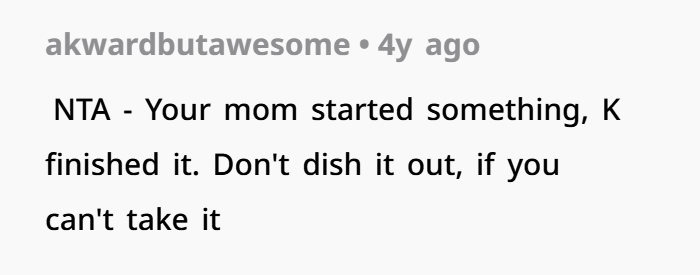
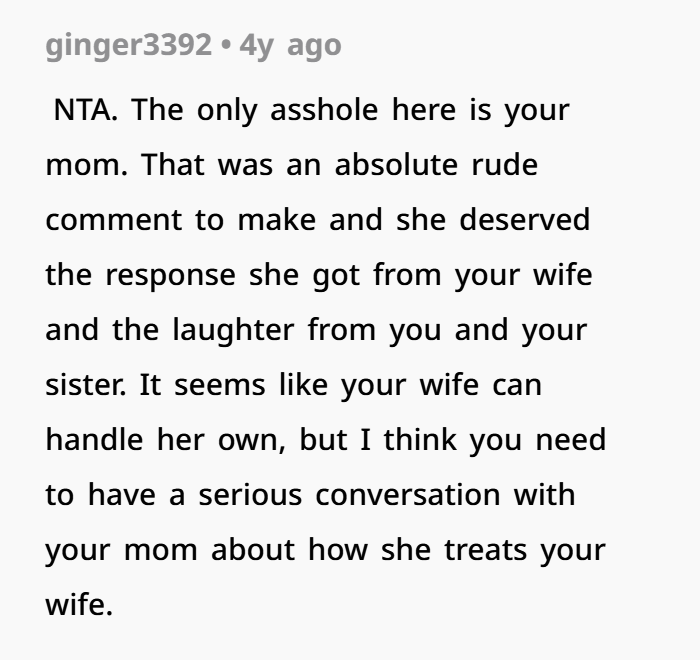
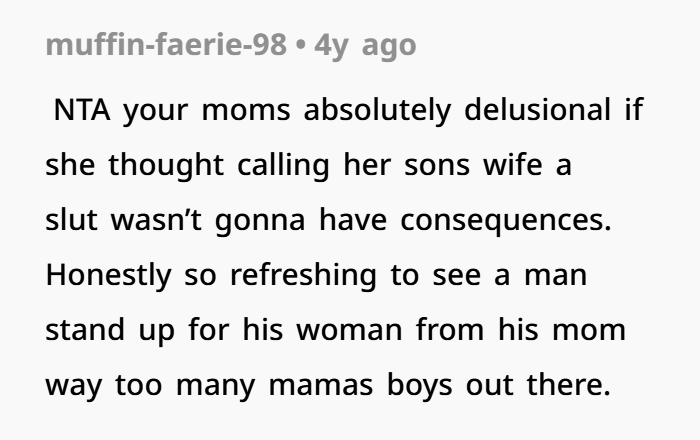
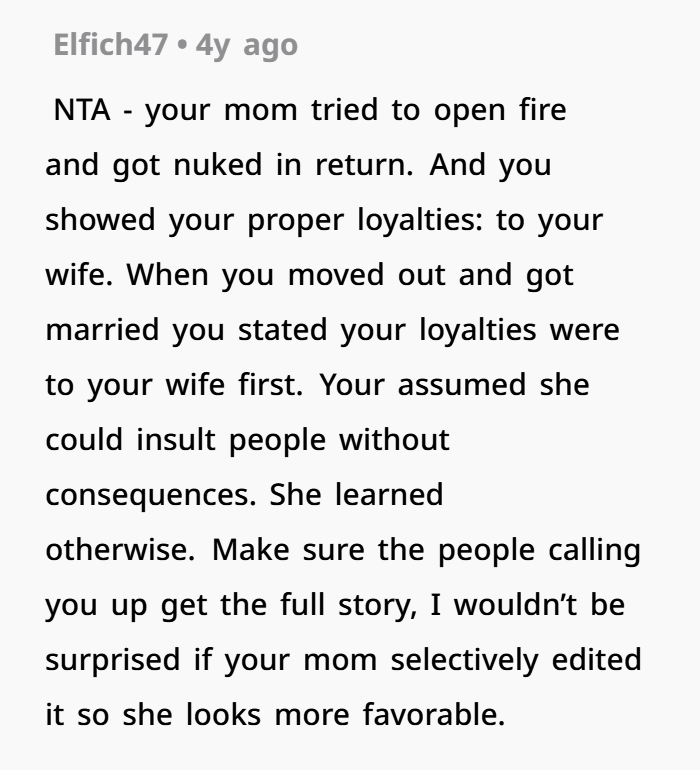
Looking at this from the outside, it strongly points to Not the A-hole. In terms of marriage dynamics and family conflict resolution, your reaction isn’t the core issue—the deeper problem is the repeated disrespect that built up over time.
Could the laugh have been handled better? Probably, yeah. But that alone doesn’t make you the villain. It was a split-second response in an already heated moment. The situation was already unstable before that.
What this really highlights is a bigger reality about married life. When conflict comes from within the family, you’re forced to pick your position—emotionally at least. And that’s tough. You’re balancing family loyalty, personal values, and your role as a partner. It’s messy, no clean answers.
In the end, the laugh didn’t start the fire. It just made the existing problem impossible to ignore.
See The Comments Below