I Let My Divorcing Friend Stay in My New House—Now My Fiancée Wants Him Gone, but He Has Nowhere Else to Go


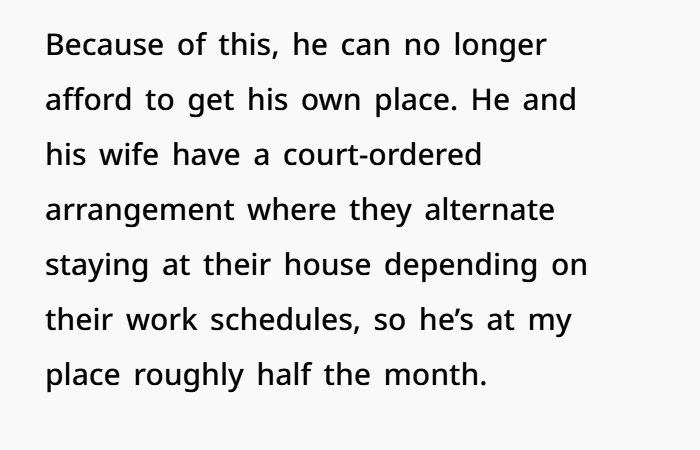
When a man’s friend started going through a divorce, he wanted to be there for him. His friend needed a temporary place to live, so he welcomed him into his home. He believed his friend would soon find an apartment and move out. But the divorce took longer than expected. Between child support, lawyer fees, and other monthly bills, his friend could not afford to rent a place of his own. What was supposed to be a short stay slowly turned into a much longer arrangement.
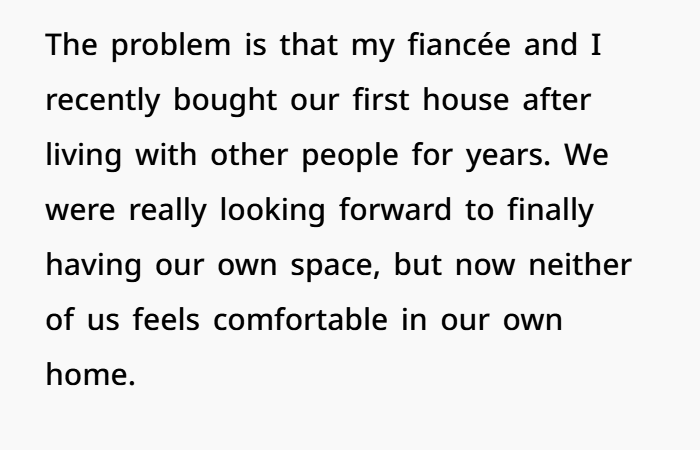
The timing made everything even more difficult. The man and his fiancée had recently become first-time homeowners. They had spent years sharing homes with other people and were excited to finally have some privacy. They wanted to decorate their new house, settle into a comfortable routine, and enjoy their life together. Instead, they were sharing their space with another person again. Even though the friend was only staying there for about half the month, it was enough to make the couple feel uncomfortable.
The friend’s behavior also became a problem. He regularly drank too much, returned home late, and caused a few situations that upset the couple. The fiancée finally told her partner that she wanted their guest to leave. He understood her feelings because he was also tired of the situation. They had invested their savings into buying a home and wanted a peaceful place where they could relax. Instead, they were dealing with stress that neither of them had expected.
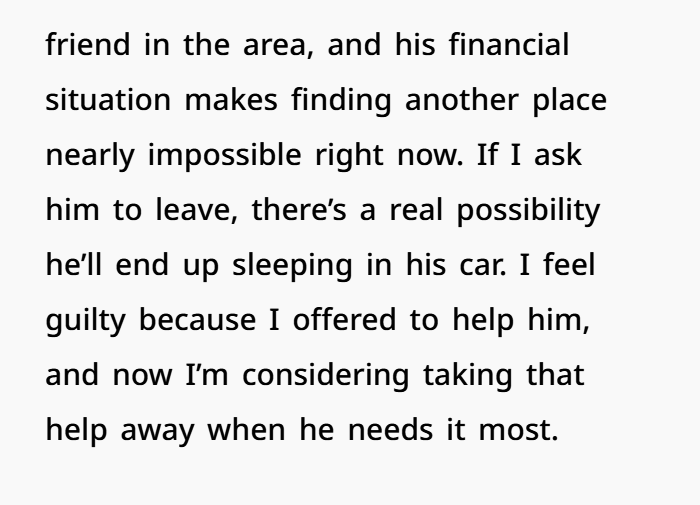
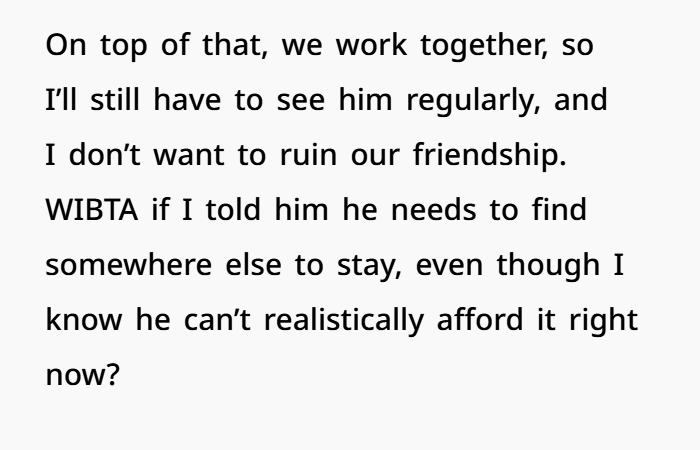
The man knew that asking his friend to move out could leave him in a difficult position. His friend had no family in the area, no other place to stay, and not enough money for an apartment. He worried that his friend might have to live in his car. He also feared that the decision could end their friendship and affect their working relationship. At the same time, he knew his fiancée deserved to feel comfortable in their own home. Now he had to make a difficult choice between continuing to help his friend and setting boundaries to protect his own relationship.


He Let His Friend Stay During a Divorce, but Now He Wants His Home Back
Helping a friend during a difficult time feels like the right thing to do. But what happens when a temporary favor turns into a living arrangement with no end in sight?
That is exactly what one homeowner is dealing with.
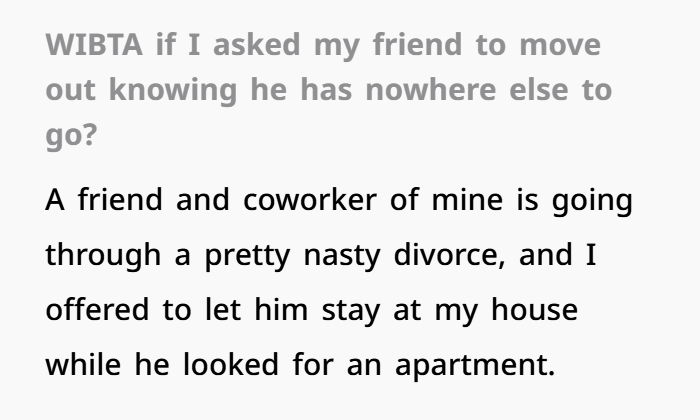
He allowed his friend to stay with him while going through a difficult divorce. His friend was struggling with money, legal expenses, and family responsibilities. At the time, offering him a place to stay seemed like a simple way to help.
But months have passed, and things are no longer working.
The homeowner and his fiancée recently bought their first house. They were excited to finally have their own space and start a new chapter together.
Instead, they are still sharing their home with his friend.
Now, the homeowner wants his friend to move out. But he feels guilty because he knows his friend cannot easily afford another place.
So, is he wrong for wanting his home back?
A Temporary Favor Should Not Last Forever
There is nothing wrong with helping someone who is having a hard time.
In fact, offering a friend a place to stay during a divorce is a generous thing to do.
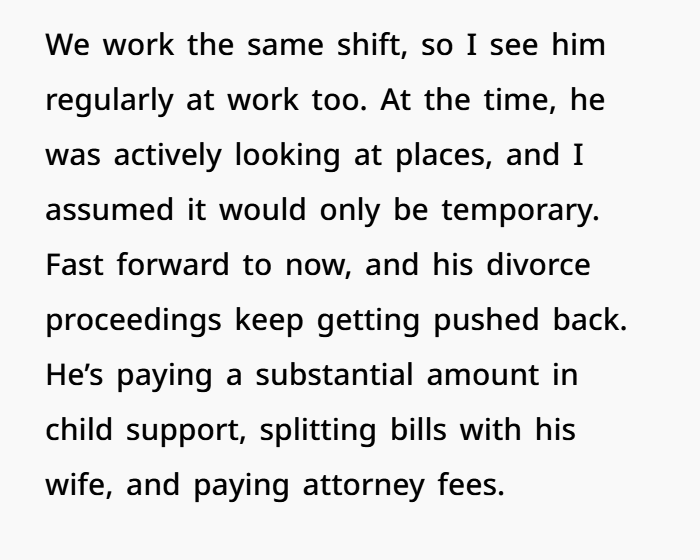
Divorce can bring unexpected expenses. Between attorney fees, child support, monthly bills, and housing costs, it can be difficult to manage everything.
The friend clearly needed help.
But the homeowner also has his own life to think about.
He and his fiancée worked hard to buy their first home. They likely spent time saving money, planning their budget, and looking at mortgage options before making such a big decision.
Buying a house is not a small commitment.
It comes with mortgage payments, property taxes, homeowners insurance, maintenance costs, and other responsibilities.
After all that planning, it makes sense that the couple wants to enjoy their home together.
The problem is that their friend’s stay no longer feels temporary.
And when there is no clear move-out date, a simple favor can slowly become a major responsibility.
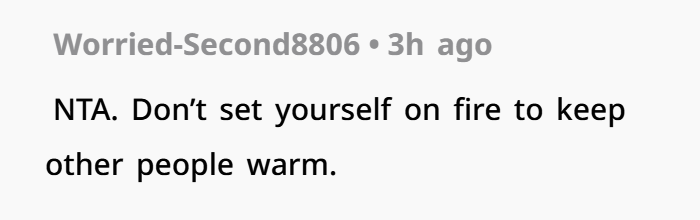
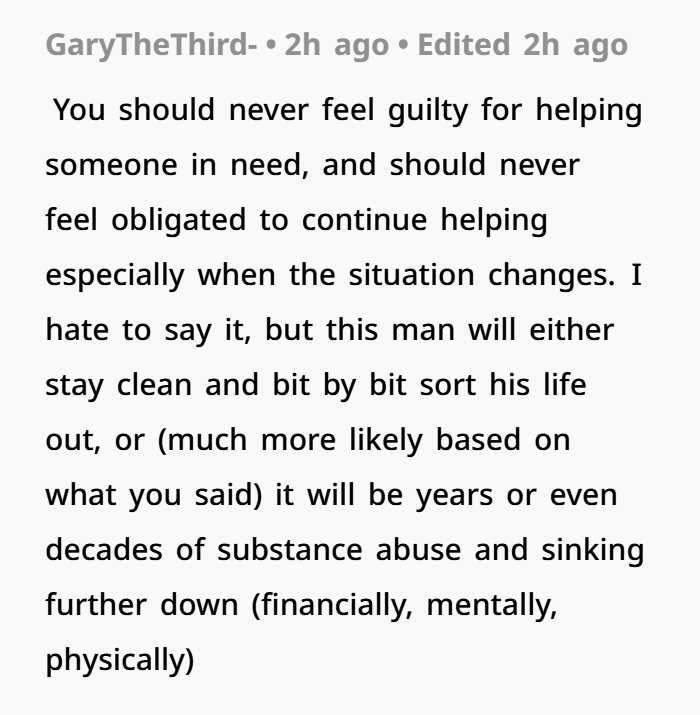
Helping someone does not mean you have to take care of their housing needs forever.
His Friend Is Struggling Financially
The friend’s situation is not easy.
He is dealing with divorce expenses and family responsibilities. His relatives live in another state, and he does not have many people nearby who can help.
Finding a new place may be difficult.
Rental prices can be high, especially when someone is already paying legal bills and other monthly expenses.
Moving into an apartment may also require a security deposit, the first month’s rent, and money for utilities.
Those costs can add up quickly.
Still, the homeowner cannot be expected to solve every financial problem his friend is facing.
There may be other options.
His friend could look into affordable housing, shared apartments, or renting a room instead of an entire home.
He might also benefit from creating a monthly budget or speaking with a financial counselor.
If he is struggling with debt, a debt management plan could help him better understand his payments and expenses.
None of these options will make his problems disappear overnight.
But they could help him take steps toward becoming independent again.
The Drinking Has Made the Situation Harder
Another concern is the friend’s drinking.
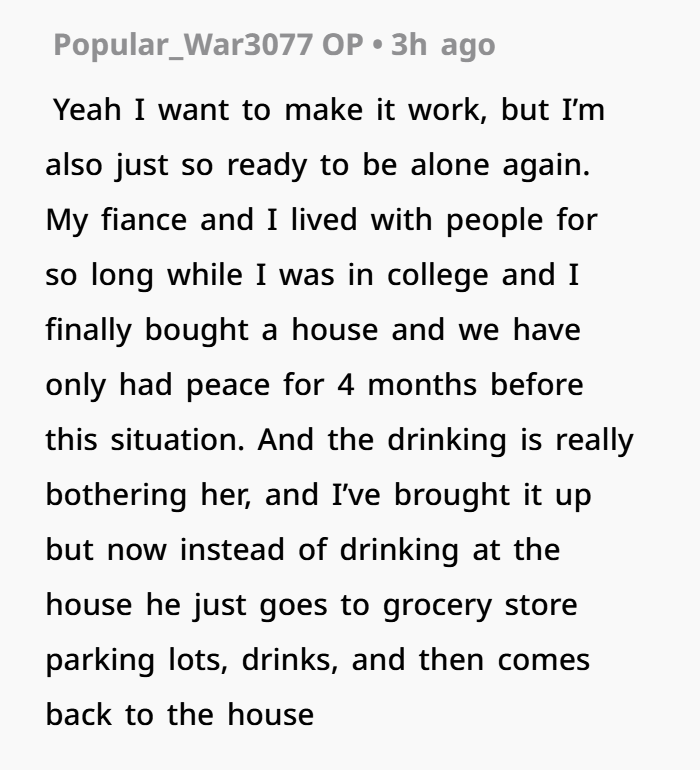
According to the situation, he has started drinking more often and sometimes comes home intoxicated at unusual hours.
This has made the homeowner and his fiancée uncomfortable.
It is understandable that someone going through a divorce may feel stressed or overwhelmed.
Major life changes can affect a person’s emotional well-being.
But that does not mean other people should have to ignore behavior that makes them uncomfortable in their own home.
The couple deserves a peaceful living environment.
They should not have to worry about what kind of evening they will have when their guest comes home.
This does not mean the friend is a bad person.
He may simply be having a difficult time and could benefit from additional support.
Professional counseling or other support services may help him manage stress in a healthier way.
However, the homeowner is not responsible for solving those problems.
He can care about his friend while still deciding that the current arrangement needs to end.
His Fiancée Deserves to Feel Comfortable Too
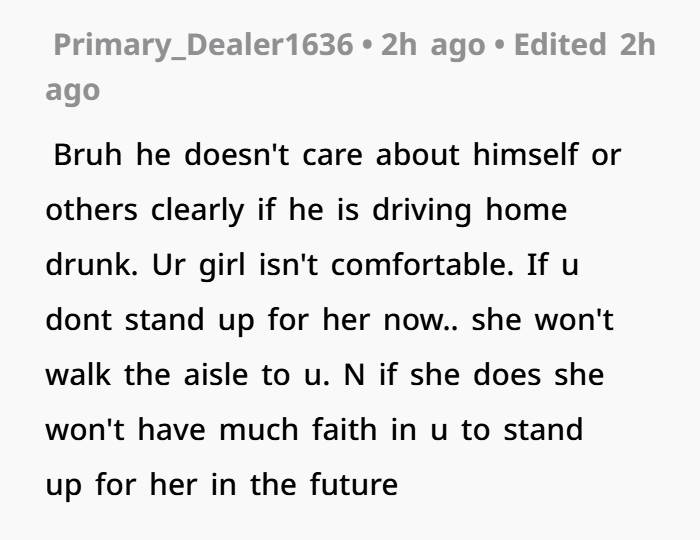
One part of this situation that should not be overlooked is the fiancée’s feelings.
She and the homeowner bought a house together.
For many couples, buying their first home is a major milestone.
It means having their own space, decorating rooms the way they want, planning their future, and enjoying everyday life together.
They may have imagined quiet evenings, weekend home improvement projects, and spending time together without another person around.
Instead, they are still living with a guest.
That can become frustrating.
Even small things, such as using the kitchen, watching television, or having friends over, can feel different when someone else is always there.
Over time, these issues can affect a relationship.
The fiancée should have a say in what happens inside the home she shares with her future husband.
Her comfort matters just as much as his friend’s needs.
The homeowner should not ignore her feelings simply because he feels guilty about asking his friend to leave.
A healthy relationship needs privacy, respect, and shared decisions.
And in this case, the couple needs to decide what is best for their household.
Could Asking His Friend to Leave Cause Legal Trouble?
There is another important issue to consider.
Even though the friend was invited to stay temporarily, he may have certain legal rights depending on how long he has lived there.
Landlord-tenant laws are different in every state and city.
In some areas, a person who has lived in a home for an extended period may be considered a tenant or legally protected occupant, even without a written rental agreement.
For example, New York City has legal protections for certain people who have lawfully lived in a home for at least 30 consecutive days.
However, this is not a rule that applies everywhere.
The homeowner should check local housing laws before asking his friend to leave immediately.
Depending on the situation, he may need to provide written notice or follow a formal legal process.
Changing the locks or removing someone’s belongings without following the law could lead to legal problems.
That is why speaking with a landlord-tenant attorney or local legal aid service may be helpful.
A short legal consultation could help the homeowner understand his rights and avoid unnecessary expenses.
The goal should be to end the living arrangement fairly and legally.
He Can Be Kind Without Letting His Friend Stay Forever
Asking a friend to move out does not have to mean ending the friendship.
The homeowner can still be understanding.
He can explain that he was happy to help during the divorce, but he and his fiancée now need their own space.
The conversation does not need to be angry or dramatic.
He could simply say:
“I know things have been difficult for you, and I’m glad I could help. But we bought this house because we wanted to start our life together. We need to make a plan for you to find another place.”
That is a fair and respectful way to explain the situation.
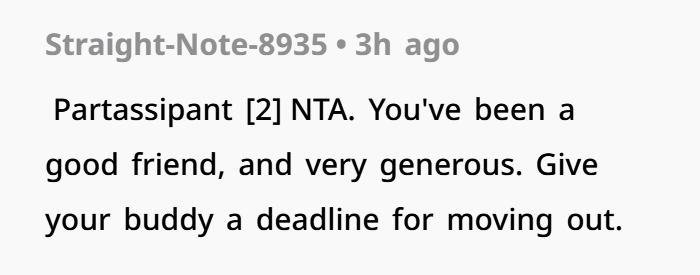
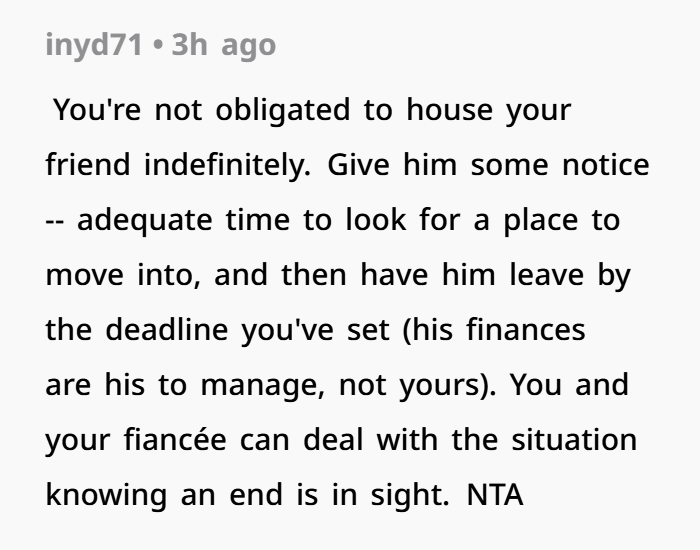
He should also discuss a clear move-out date that follows local housing laws.
Giving his friend time to look for another place may make the transition easier.
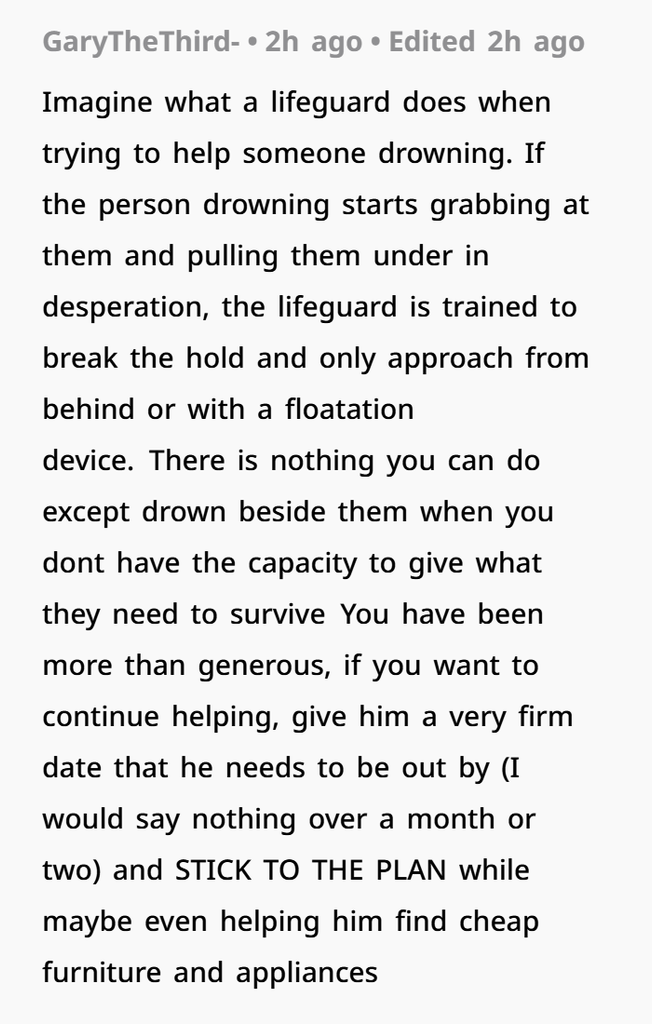
But the homeowner should avoid making another open-ended promise.
Otherwise, the same problem could continue for months.
There Are Other Housing Options Worth Exploring
The homeowner does not have to provide permanent housing to continue being supportive.
He could help his friend search for more affordable rental options.
Renting a room in a shared house may cost less than getting an apartment alone.
His friend could also look into local rental assistance programs or housing support services.
Some communities have nonprofit organizations that help people facing financial difficulties find housing resources.
Another option is speaking with family members.
Even if his relatives live out of state, they may be able to offer advice, temporary support, or help with moving expenses.
A simple financial plan may also help.
By reviewing monthly income, debt payments, and living expenses, his friend may get a clearer idea of what he can afford.
The homeowner can offer help with these steps if he wants to.
But there is a big difference between helping someone find a solution and becoming their only solution.
Setting Boundaries Does Not Make Someone a Bad Friend
This is probably the hardest part of the situation.
The homeowner feels guilty.
He knows his friend is struggling, and he worries about what might happen if he asks him to leave.
That is a normal feeling when you care about someone.
But guilt should not be the only reason for making a decision.
Healthy boundaries help people protect their time, personal space, finances, and relationships.
They are not about being selfish.
They are about understanding what you can reasonably offer.
The homeowner has already helped his friend by giving him a place to stay during a difficult period.
That kindness still matters, even if the arrangement comes to an end.
His friend may feel disappointed when he hears the news.
He may even be upset for a while.
But that does not automatically mean the homeowner has made the wrong choice.
Sometimes, doing what is best for your household means having an uncomfortable conversation.
And that is okay.
Final Verdict: NTA — Not the Asshole
The homeowner is not wrong for wanting his home back.
He offered his friend temporary housing during a difficult divorce. That was a generous thing to do.
But the arrangement has gone on longer than expected.
His friend’s financial problems are serious, and finding another place may not be easy. Still, those challenges do not mean the homeowner must continue sharing his house indefinitely.
The couple has worked hard to buy their first home.
They deserve privacy, comfort, and the chance to enjoy their new life together.
The best approach is to be honest with the friend, give legally appropriate notice, and help him explore other housing options if possible.
There is no need to be unkind.
But there is also no reason to keep postponing an important decision simply because it feels uncomfortable.
Being a good friend means offering support when you can. It does not mean putting your own home, finances, and relationship on hold forever.
Sometimes, the kindest way forward is to be clear about what you can and cannot continue to offer.
Top Comments From Readers