AITAH for Refusing to Take My Flu-Positive Son to the Aquarium and Ruining Our Family Vacation?

A father was looking forward to a relaxing family vacation in St. Louis with his wife and their two children, ages five and ten. They had planned several fun activities for fall break, including visits to the zoo, a Renaissance Festival, and the Gateway Arch. One of their favorite moments was seeing the moon and Saturn through telescopes. But their travel plans changed when their youngest child started feeling unwell. A home flu test confirmed that he had influenza A. The boy stayed back to rest while his father took the older child to visit the Missouri Botanical Garden.
The following morning, the five-year-old’s temperature had dropped to about 100.3°F. His mother believed he was feeling well enough to enjoy one last family activity before going home. She decided they should visit the aquarium, even though the family still had a four-hour drive ahead. The father was surprised because she had not spoken to him about the plan. He was concerned about taking a child with a recent positive flu test into a crowded indoor space. To him, family health and the safety of other visitors mattered more than completing their vacation schedule.
The father tried to explain his concerns through a private message, but his wife wanted to continue with the aquarium visit. She even suggested that he could remain in the car if he did not want to join them. This upset him, and their disagreement soon became an argument. He felt that going inside could expose other families to the flu. After more discussion, his wife finally agreed to cancel the visit. Unfortunately, they were already near the aquarium parking lot, which made the last-minute change even more disappointing for the children.
The family headed home without visiting the aquarium, and the mood was far from happy. His wife was angry, and both children were upset about missing the final stop on their vacation. The father felt bad about their disappointment but still believed that avoiding a crowded attraction was the right decision. He also wondered whether speaking more calmly could have prevented the argument. What started as a simple family travel decision had become a disagreement about parenting, public health, and making responsible choices while traveling with children.





Dad Refuses to Take His Sick Son to an Aquarium, but His Wife Says They Should Still Go
A family vacation took an unexpected turn when a five-year-old boy tested positive for influenza A.
The family had traveled several hours and planned a few fun activities for their children. One of those activities was a visit to an aquarium.
But the day before the visit, their youngest son tested positive for the flu.
The dad wanted to cancel the outing and let his son rest.
His wife disagreed.
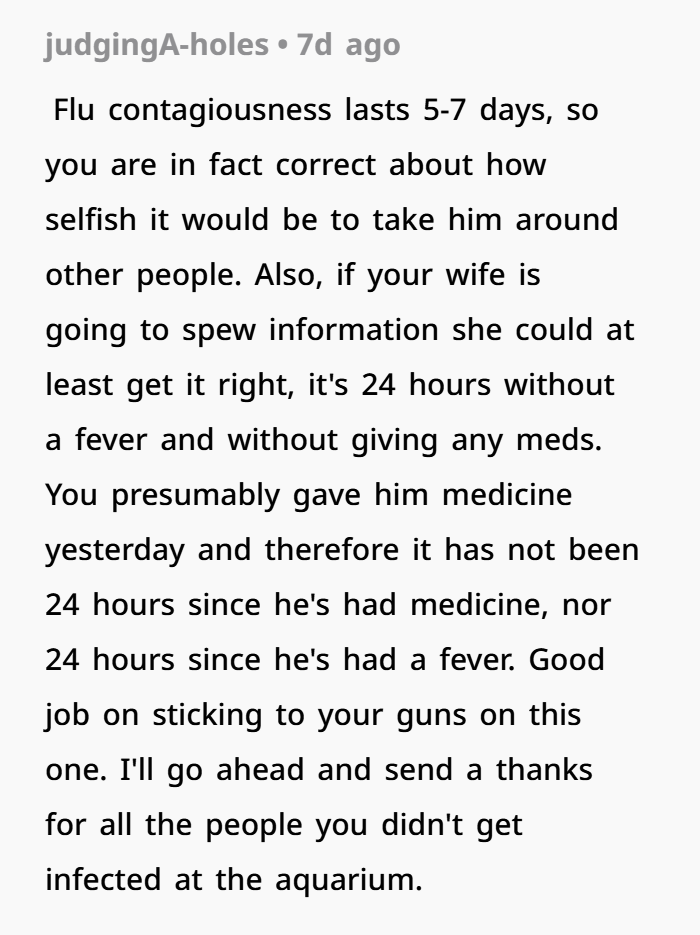
She pointed out that their son’s temperature had dropped to 100.3°F, just below the usual fever level of 100.4°F.
She thought they could still enjoy the aquarium.
The dad wasn’t convinced. He worried that their son could still spread the flu to other visitors.
Soon, the couple found themselves arguing over what to do next.
Why the Dad Didn’t Want to Go
The dad’s main concern was his son’s recent flu diagnosis.
The boy had tested positive only one day earlier.
Even though his temperature was improving, he was still recovering from the illness.
The dad didn’t think taking him to a crowded indoor aquarium was a good idea.
He was worried about two things.
First, his son might need more rest instead of spending hours walking around an attraction.
Second, other visitors could be exposed to the flu.
Aquariums often have busy viewing areas where families stand close together.
The dad felt it would be better to miss the outing than risk making someone else sick.
Why the Mom Wanted to Continue the Vacation
The mom had a different view.
The family had already spent hours traveling to their vacation destination.
They had also spent money on the trip and planned activities for the children.
The aquarium was one of the last things they wanted to do.
Canceling it would be disappointing, especially for the other kids.
The mom also saw that her son’s temperature was getting closer to normal.
She may have believed that was a sign he was ready to go out.
It’s easy to understand why she wanted to save the family outing.
But a lower temperature doesn’t always mean a child is no longer contagious.
That was the biggest issue in this disagreement.
Can a Child Still Spread the Flu Without a High Fever?
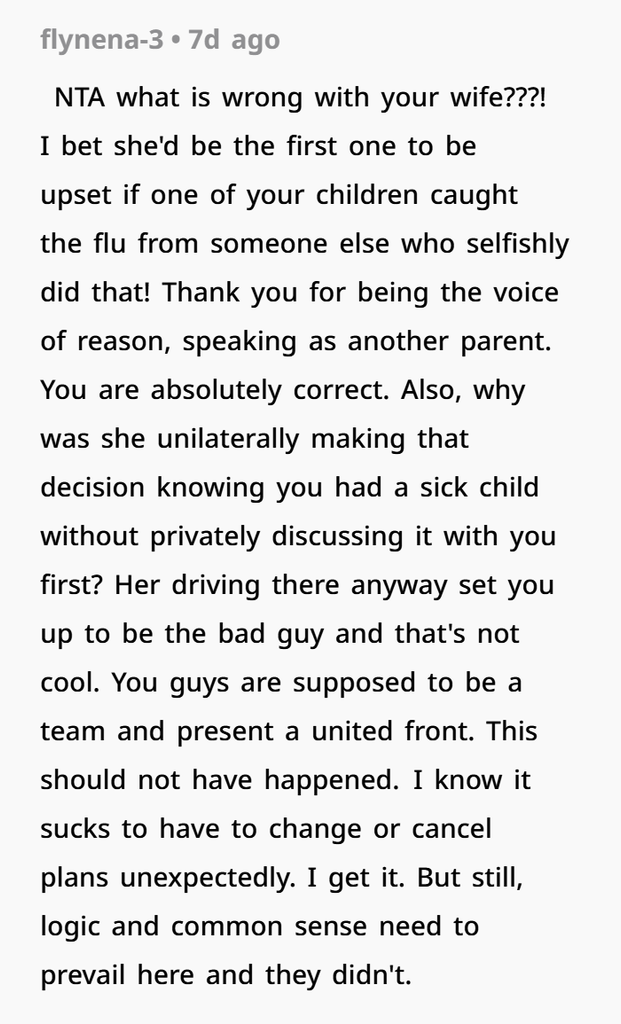
Yes. A child can still spread the flu even when their temperature starts to return to normal.
According to the Centers for Disease Control and Prevention (CDC), people with influenza can spread the virus about one day before symptoms begin.
Many people can continue spreading it for five to seven days after becoming sick.
Young children may remain contagious for even longer.
So a five-year-old who tested positive just one day earlier could still pass the virus to someone else.
The fact that his temperature had dropped to 100.3°F didn’t mean he was no longer infectious.
The dad’s concern was reasonable because his son was still in the early days of the illness.
Source: CDC — How Flu Spreads
What Does the CDC Recommend?
The CDC advises people with respiratory virus symptoms to stay home until they meet two conditions.
Their symptoms should be improving overall for at least 24 hours.
They should also be fever-free for at least 24 hours without taking fever-reducing medicine.
After returning to normal activities, the CDC recommends taking extra precautions for the next five days.
That’s because some risk of spreading the virus may remain.
In this story, the boy had tested positive for influenza A only the previous day.
His temperature was also still close to the usual fever threshold.
There wasn’t enough information to assume he was ready for a busy public attraction.
Staying away from the aquarium was the safer choice.
Source: CDC — Preventing Spread of Respiratory Viruses When You’re Sick
Why an Indoor Aquarium Could Put Others at Risk
An aquarium is a fun place for families, but it can also be crowded.
Visitors often gather around popular exhibits.
Parents and children may stand close together while watching fish and other sea animals.
The flu mainly spreads through respiratory particles released when someone coughs, sneezes, or talks.
Being close to a person with the flu can increase the chance of exposure.
Some visitors may also face a higher risk of serious flu complications.
These include young children, older adults, pregnant people, and people with certain health conditions.
The dad didn’t know who would be visiting the aquarium that day.
He simply didn’t want to risk exposing other families.
Source: CDC — People at Increased Risk for Flu Complications
The Family Had Already Spent Money on the Trip
One reason vacation disagreements can become stressful is the money involved.
Family vacations aren’t always cheap.
Parents may pay for hotel rooms, transportation, meals, and attraction tickets.
When a child becomes sick, those plans can change very quickly.
A family might have to cancel activities or spend extra time at the hotel.
That can be frustrating when everyone has been looking forward to the trip.
Some families purchase travel insurance to help with certain unexpected travel problems.
Depending on the policy, trip cancellation coverage or trip interruption insurance may help with eligible costs when illness changes travel plans.
However, every policy has different rules.
In this story, we don’t know whether the family had travel insurance or whether the aquarium tickets could be refunded.
The mom may have been thinking about the money and time already spent.
But the dad believed those costs weren’t a good reason to take a contagious child into a crowded space.
Could Travel Insurance Help With a Sick Child?
When planning a family vacation, parents sometimes look into family travel insurance.
Some policies may provide coverage for certain medical emergencies or eligible trip cancellations.
Travel medical insurance may also help with covered healthcare expenses while traveling.
But coverage depends on the plan.
Parents should always check the policy details, including exclusions and any required medical documentation.
It’s also worth checking hotel cancellation policies and attraction refund rules before booking.
These steps can’t stop a child from getting sick.
But they may help families deal with unexpected changes without losing as much money.
What About the Other Children?
The other children were also part of the problem.
They had been looking forward to visiting the aquarium.
Now they might have to miss it because their younger brother was sick.
That can feel unfair to a child.
But parents can explain the situation in a simple way.
They could tell the kids that their little brother needs rest and that the flu can spread to other people.
They could also explain that staying away from crowded places helps protect other families.
The children might still feel disappointed.
That’s normal.
The parents could plan another fun outing after everyone is feeling better.
It wouldn’t make the missed aquarium visit any less disappointing, but it would give the children something new to look forward to.
The Dad Tried to Talk to His Wife Privately
According to the story, the dad first tried to discuss the problem through text messages.
This may have been his way of avoiding an argument in front of the children.
But when his wife continued toward the aquarium, he became more upset.
He started lecturing her about why he thought the decision was selfish.
His concern about spreading the flu was understandable.
However, his words may have made the disagreement worse.
His wife may have felt criticized instead of heard.
And the dad may have felt that she wasn’t taking his concerns seriously.
At that point, the argument was no longer only about the aquarium.
It had also become a disagreement about how they make parenting decisions.
Could They Have Handled the Situation Better?
Both parents wanted what they believed was best for their family.
The mom wanted the children to enjoy their vacation.
The dad wanted to protect their sick son and other visitors.
But they needed to find a way to discuss the problem without turning it into a personal argument.
A calmer conversation could have helped.
The dad could have explained that a lower temperature didn’t mean their son was no longer contagious.
He could also have suggested a different activity or a quiet day at the hotel.
The family could have saved the aquarium visit for another time.
The kids might still have been upset.
But the parents would have been working together instead of arguing.
What Parents Should Remember When a Child Gets Sick on Vacation
Even a carefully planned family trip can change when a child becomes ill.
That’s why it helps to be flexible.
Parents can review cancellation policies before booking hotels and attractions.
They can also compare travel insurance plans to understand what types of trip changes and medical expenses may be covered.
If a child develops flu symptoms, rest, fluids, and appropriate medical advice are important.
A healthcare professional can help parents decide whether treatment is needed, especially for young children or those at higher risk of complications.
Parents should also follow public health guidance before taking a sick child back into crowded places.
Missing an activity is disappointing.
But a child’s recovery and the health of other people should come first.
Final Verdict: Was the Dad Wrong?
Based on the story, NTA (Not the A-Hole).
The dad had a good reason to refuse the aquarium visit.
His five-year-old son had tested positive for influenza A only one day earlier.
Even though his temperature was improving, he could still spread the virus.
Taking him into a crowded indoor aquarium could have exposed other visitors.
The dad was also thinking about his son’s need for rest.
However, the way he spoke to his wife may have made the argument more stressful than necessary.
He could have explained his concerns without calling her decision selfish.
The mom was understandably disappointed about canceling the family outing.
But the safer choice was to skip the aquarium until their son had recovered enough to return to normal activities.
Sometimes, family vacation plans have to change, even when everyone is excited.
What would you do? Would you cancel an aquarium visit after your child tested positive for the flu, or would you consider going if their temperature had almost returned to normal?
The Comments Are In