AITA for Ruining My Sister’s Pregnancy Announcement After Losing My Baby?


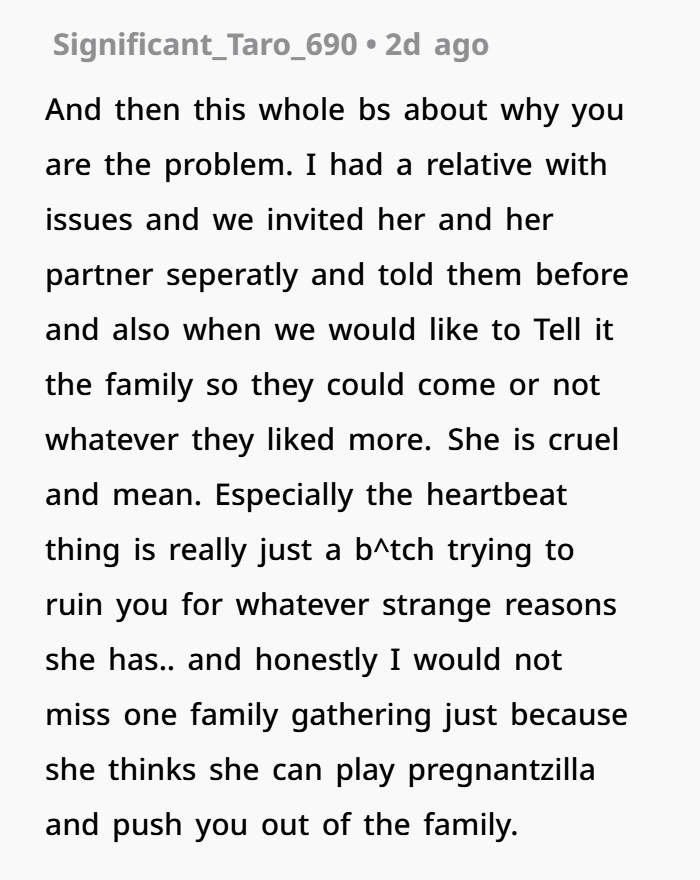
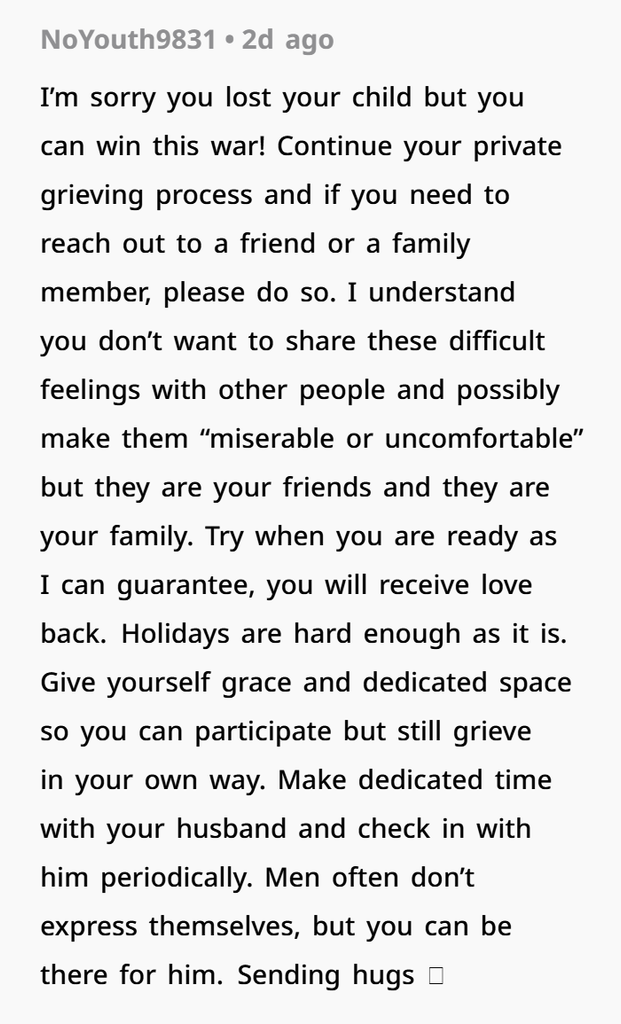
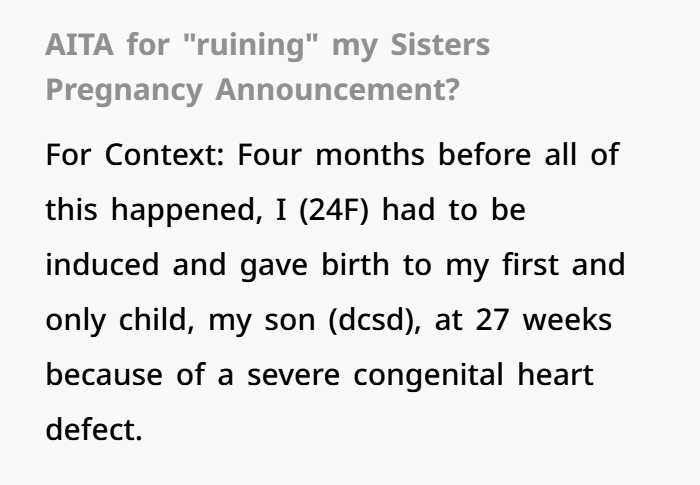
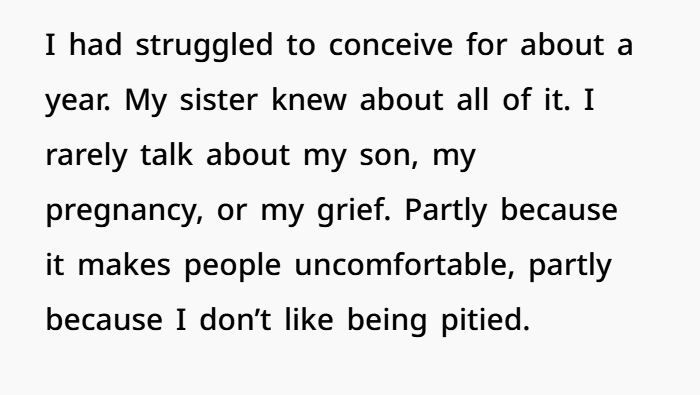
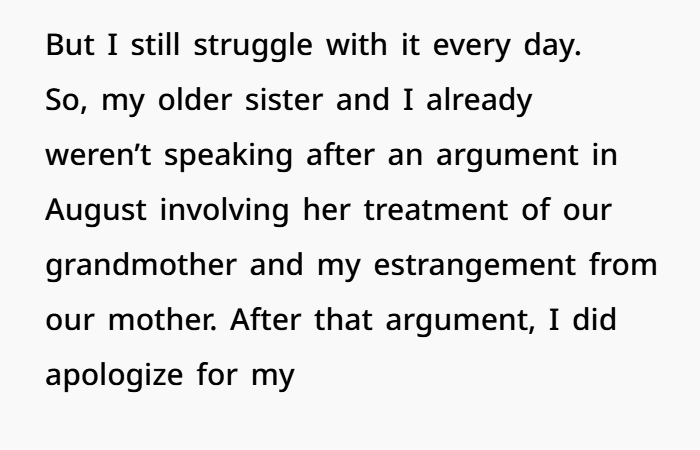
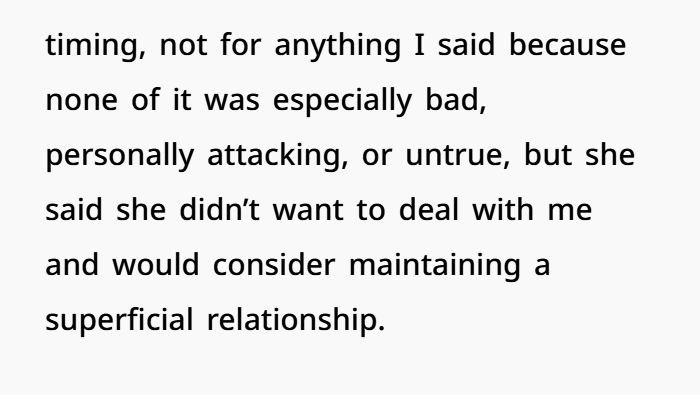
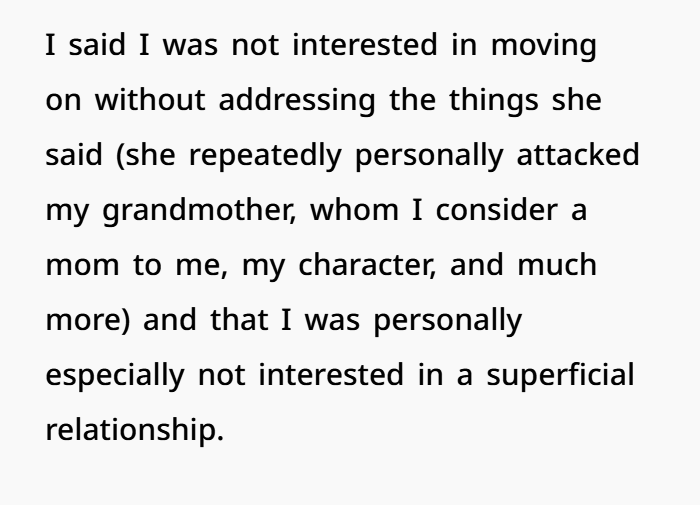
Losing a child can change a person’s life, and one 24-year-old woman was still trying to heal after losing her baby boy. She and her husband had waited a long time to become parents. After a year of trying, she became pregnant, but doctors later discovered that her son had a serious heart defect. She had to deliver him at 27 weeks, and sadly, he did not survive. Four months later, she was still struggling with the loss. She kept most of her feelings private and tried to continue her daily routine. Her older sister knew about her experience, but they were not on good terms because of a previous family disagreement.
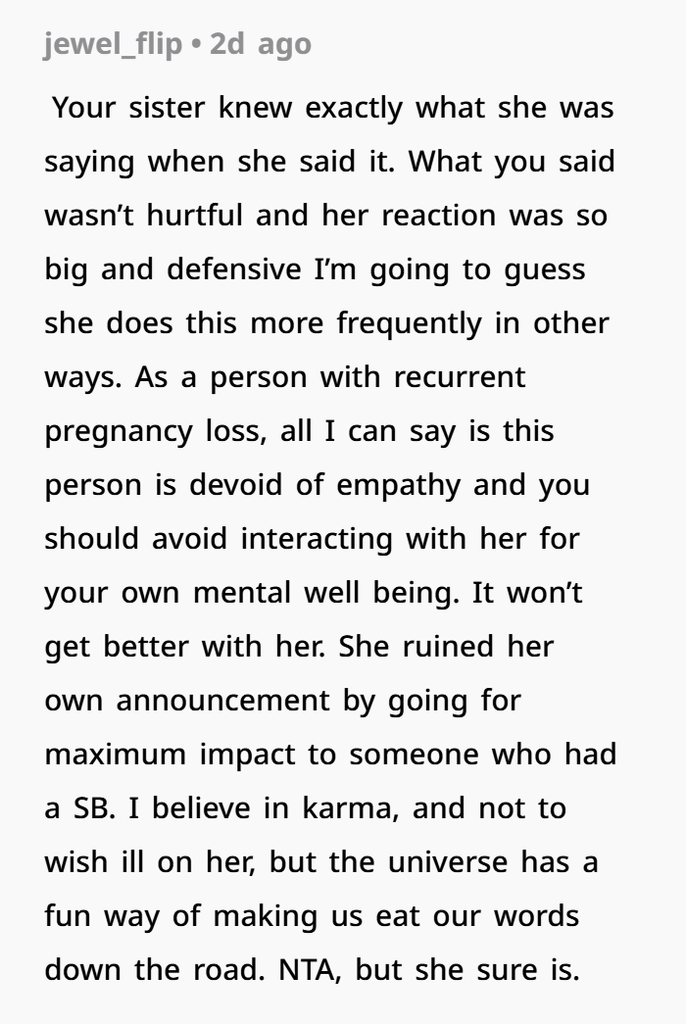
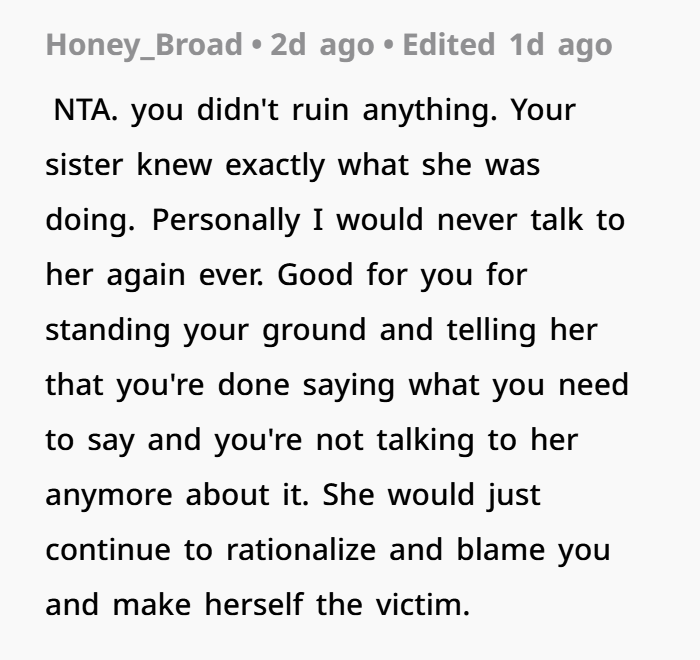
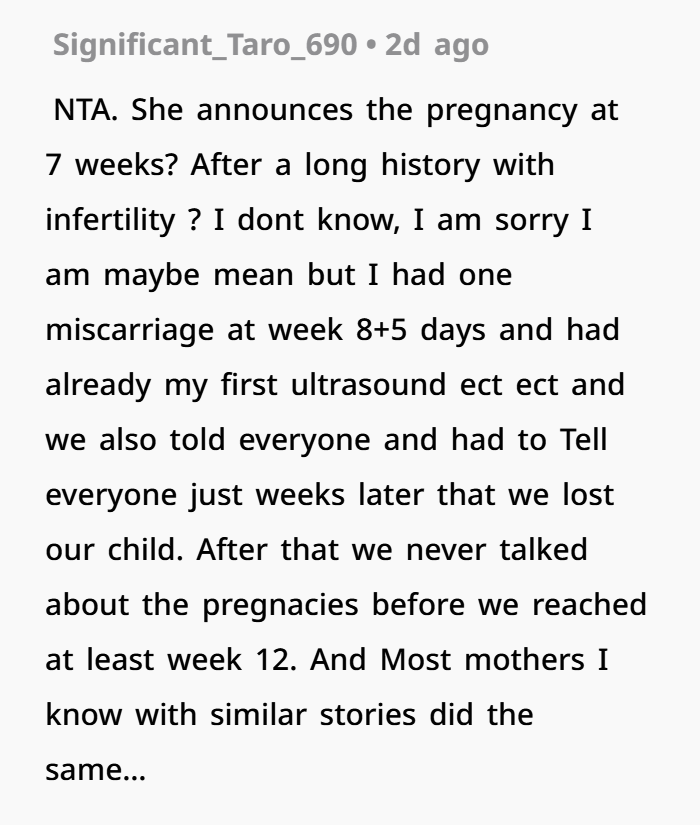
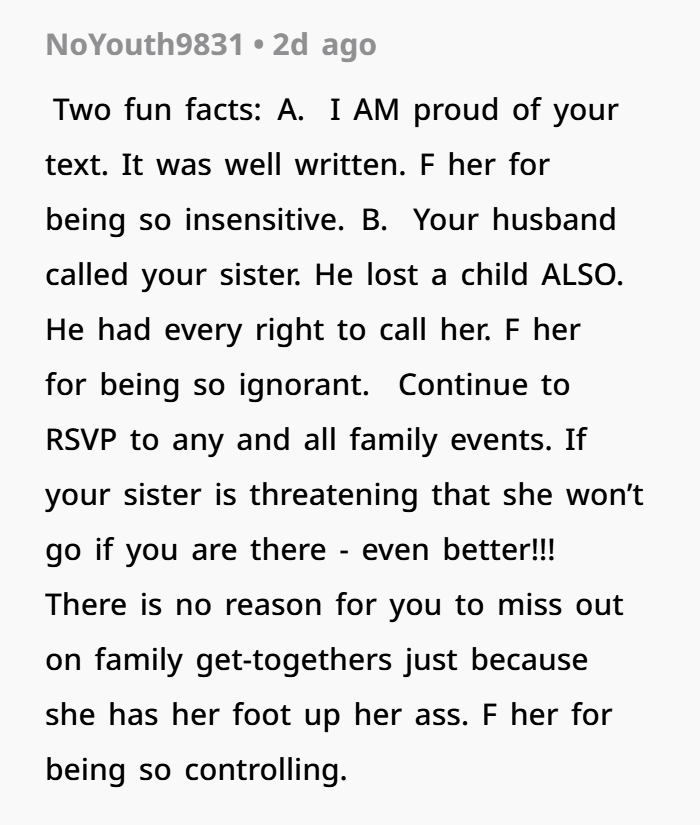
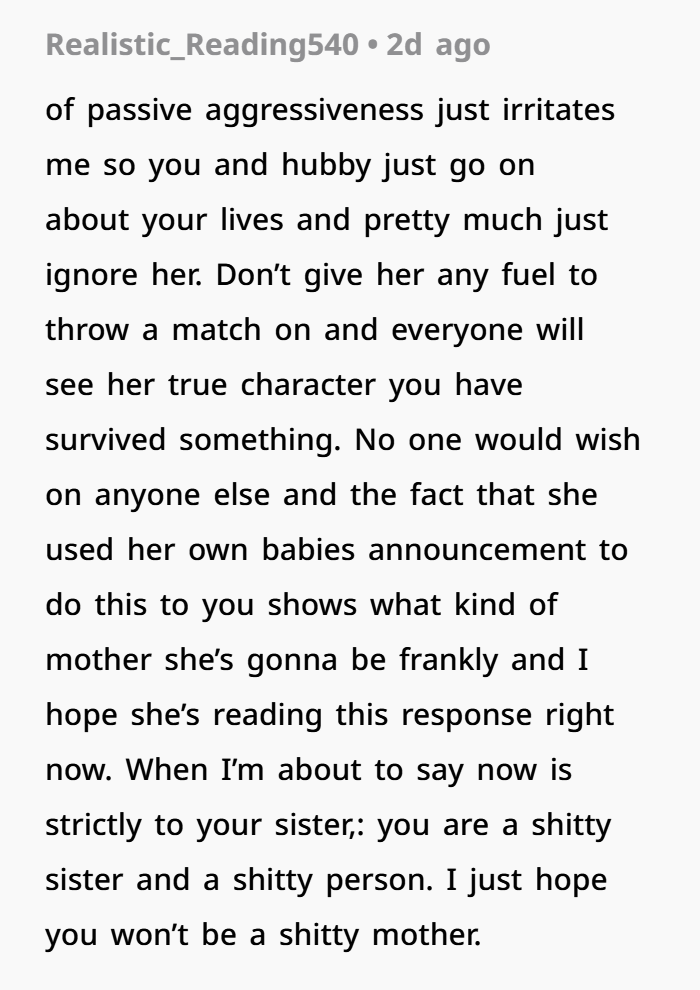
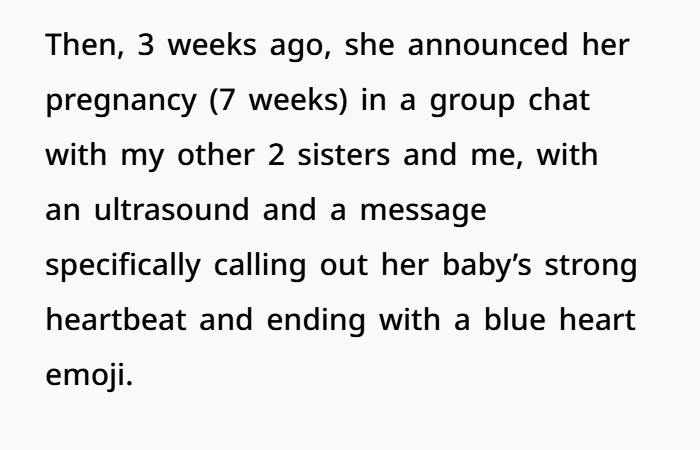
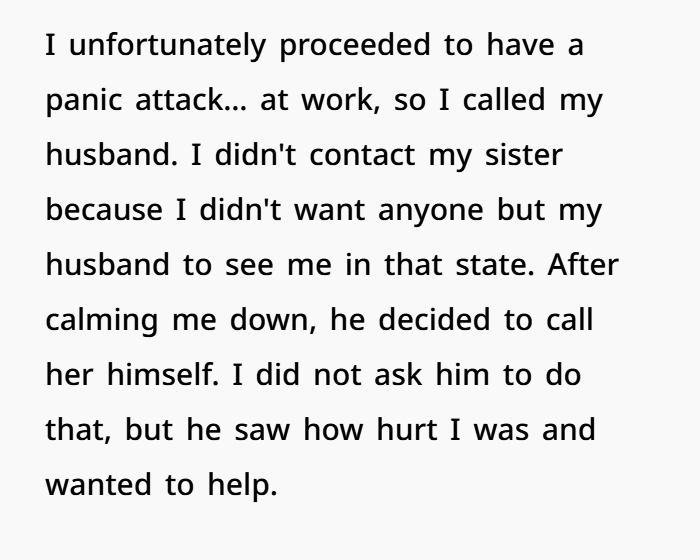
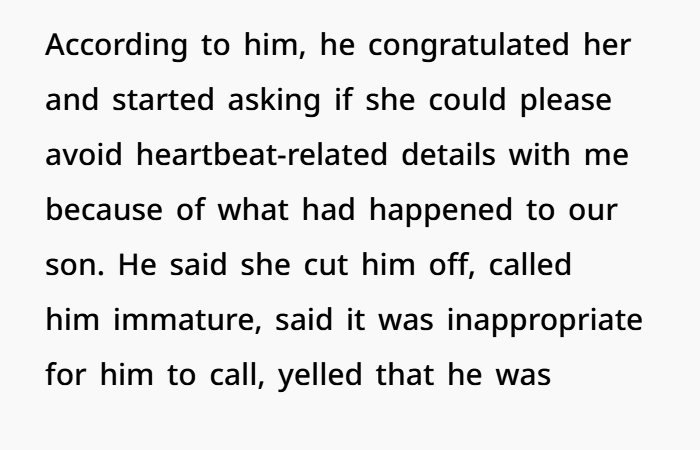
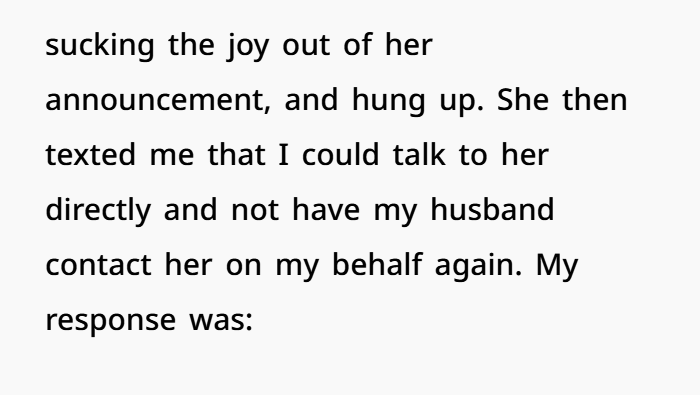
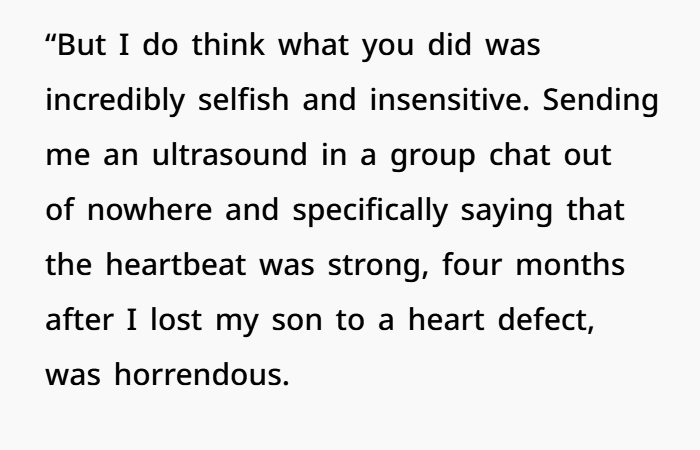
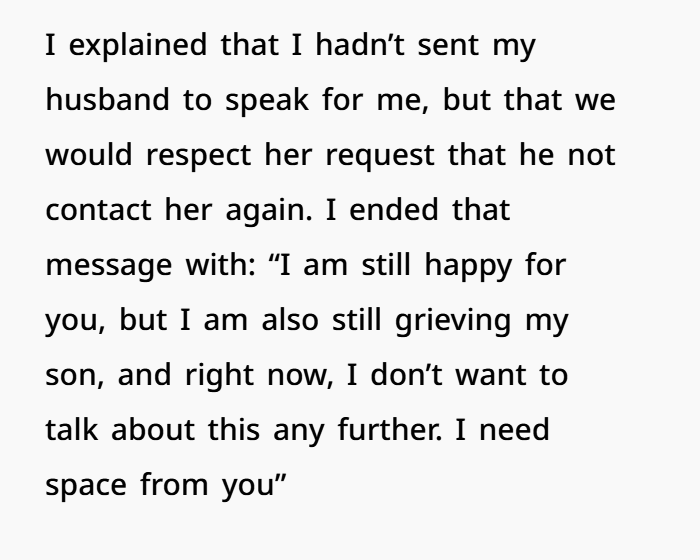
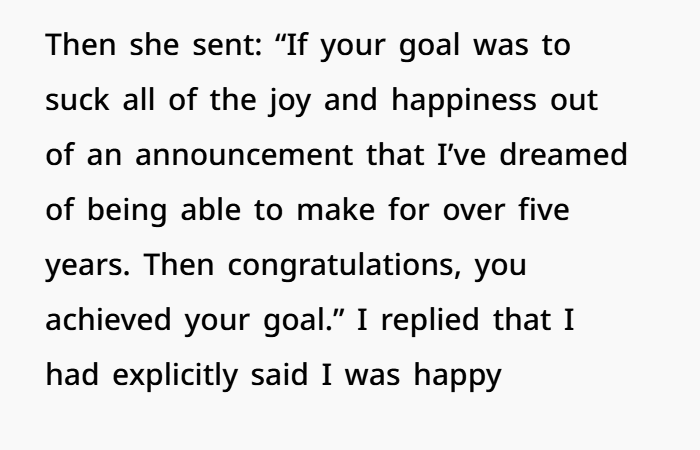
The family situation became more difficult when her older sister shared a pregnancy announcement in a group chat. She was seven weeks pregnant and posted an ultrasound picture along with a message celebrating her baby’s strong heartbeat. The younger woman wanted to be happy for her sister, but reading about the heartbeat was especially painful because of what had happened to her own son. She became very upset at work and called her husband for help. He decided to message her sister, congratulating her while also asking her to be more thoughtful with future pregnancy updates. Unfortunately, the older sister felt offended and accused him of taking away from her special moment.
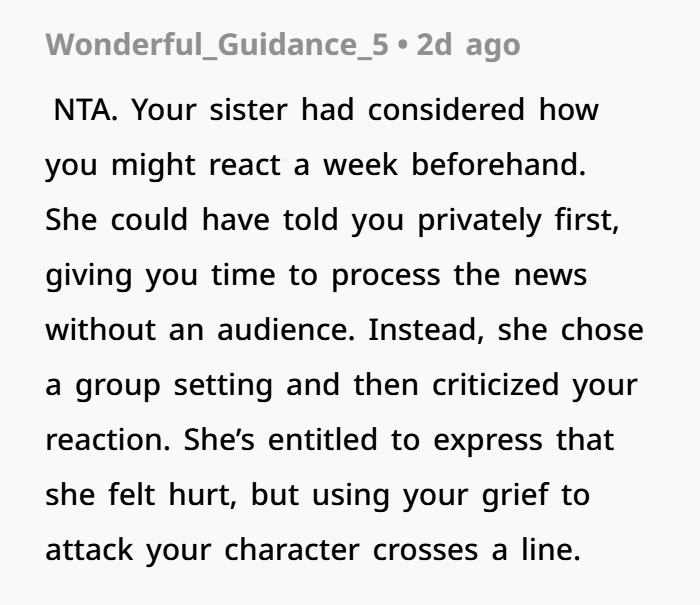
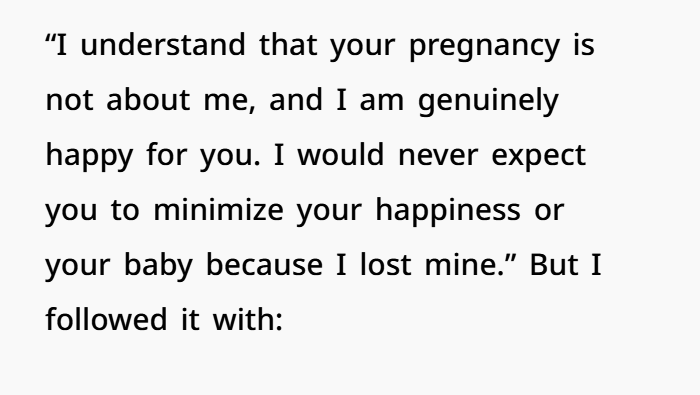
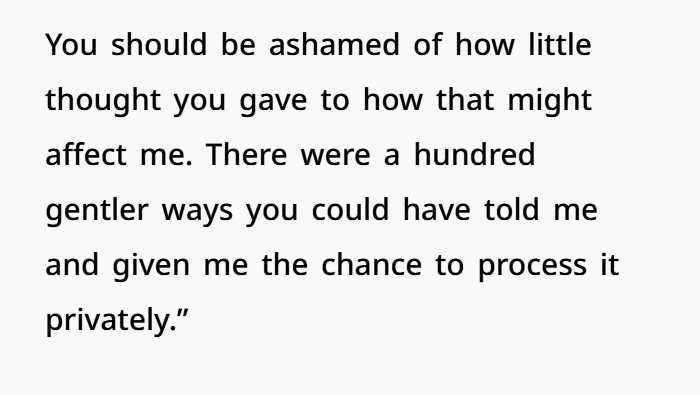
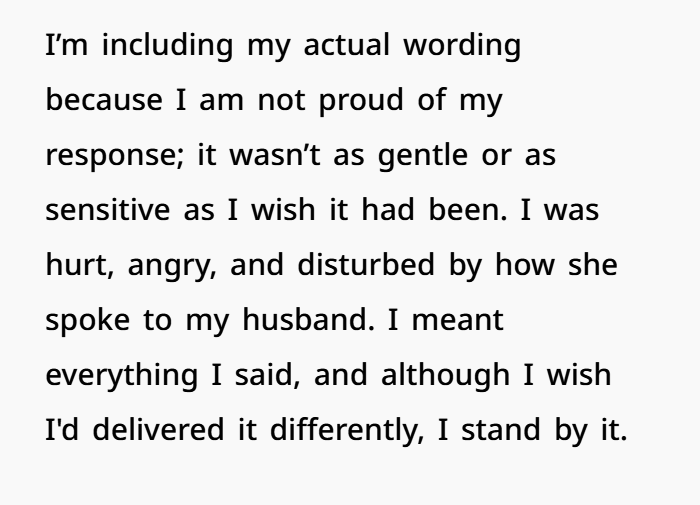
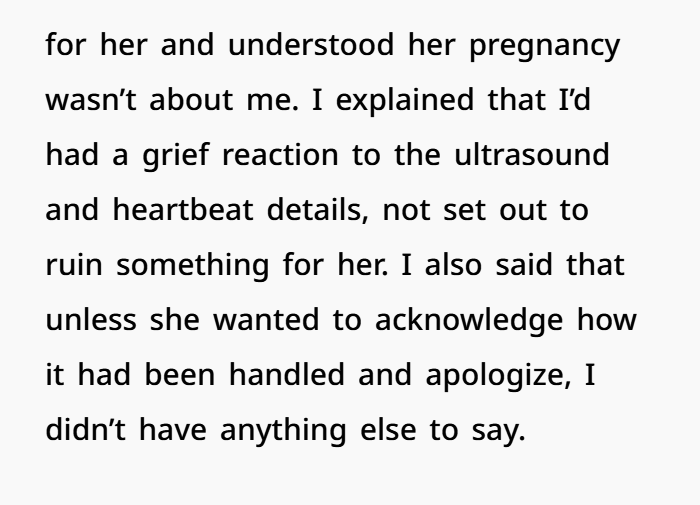
The younger woman then spoke to her sister herself. She explained that she was happy about the pregnancy but wished she had been told privately before seeing the announcement in the group chat. She felt that a little warning would have helped her deal with the news. Her sister did not agree and believed she had every right to share her happiness with the family. Their conversation soon became heated, and the older sister reportedly made unkind comments about the younger woman’s loss. Later, the younger woman discovered that her sister had already told their grandmother she was worried about how the announcement might affect her. This made the situation even more upsetting because she felt her sister had understood the risk but had not reached out to her first.
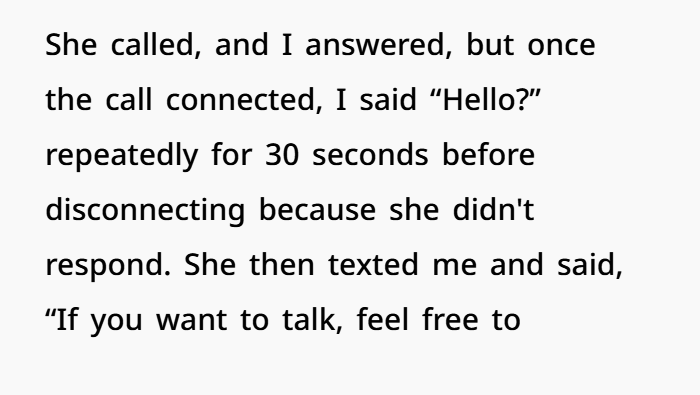
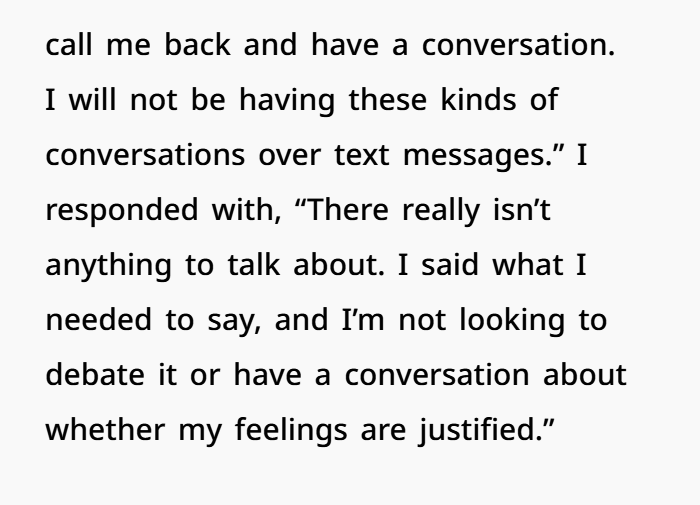
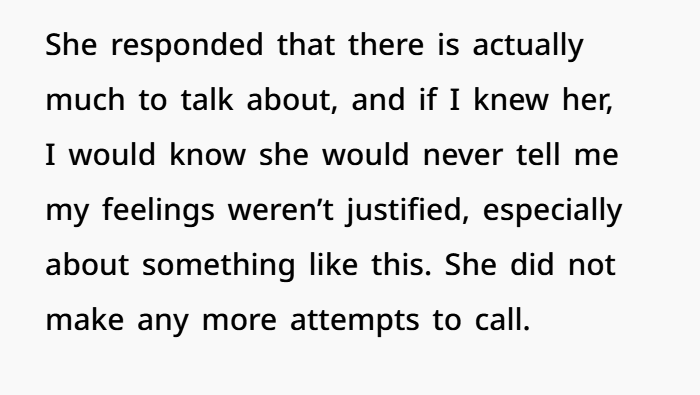
The younger woman eventually blocked her sister to protect her emotional well-being. She also shared a recording of their disagreement with their other sisters. Now, the family is divided, and her older sister reportedly refuses to attend gatherings when she is invited. Both women are facing very different life experiences, with one preparing for a new baby and the other still learning to live with her loss. Maternal health, pregnancy support, and grief counseling can all play an important role during difficult family situations. A caring conversation might have helped prevent this disagreement from becoming so serious. The younger woman now wonders whether speaking about her feelings was a mistake or whether her sister should have been more sensitive to what she was going through.


When a Happy Pregnancy Announcement Brings Back Painful Memories
A pregnancy announcement is usually a happy moment. Families celebrate, share good wishes, and look forward to welcoming a new baby.
But for someone who has recently lost a child, hearing pregnancy news can bring back painful memories.
That is what happened between two sisters during a family celebration.
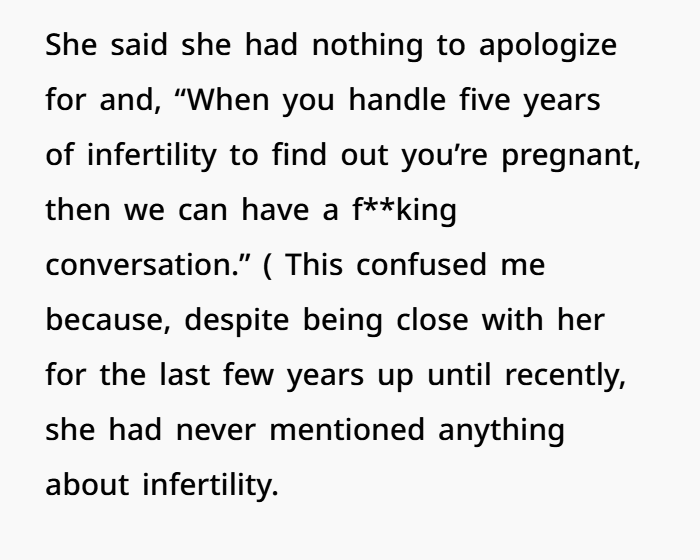
The older sister was excited to announce her pregnancy after five years of fertility struggles. Her younger sister, however, was still grieving the loss of her baby boy, who had passed away just four months earlier because of a heart condition.
When the older sister mentioned that her baby had a strong heartbeat, the words were especially painful for her younger sibling.
The younger sister became overwhelmed and reportedly experienced a panic attack.
What started as a happy family moment soon turned into a disagreement that left both sisters upset.
The situation raises an important question about family relationships, pregnancy loss, and emotional support. How can one person celebrate good news while also respecting another person’s grief?
Why Pregnancy Announcements Can Be Difficult After Losing a Baby
For parents who have experienced pregnancy or infant loss, certain moments can bring back strong emotions.
A pregnancy announcement, baby shower, or conversation about newborns may remind them of the child they lost.
That does not mean they are unhappy for someone else.
A person can be excited about a family member’s pregnancy and still feel sadness about their own experience.
In this case, the younger sister had lost her son only four months earlier.
The mention of a healthy heartbeat was particularly difficult because her baby had died from a heart condition.
Hearing those words may have reminded her of the medical challenges and painful experiences surrounding her son’s loss.
Grief can appear in unexpected ways. Some people cry, others become quiet, and some feel overwhelmed.
This is why emotional support after infant loss can be so important.
A little patience and understanding from loved ones may help someone feel less alone during a difficult time.
Grief Does Not Follow a Fixed Timeline
People sometimes expect grief to become easier after a few months.
But there is no set amount of time for someone to feel better after losing a child.
Some days may feel manageable, while others can be much harder.
Even a small reminder can bring back sadness.
Research has shown that pregnancy loss can have lasting effects on mental health.
A 2020 study published in the American Journal of Obstetrics and Gynecology found increased symptoms of anxiety, depression, and post-traumatic stress among women who experienced miscarriage or ectopic pregnancy.
Although the study focused on those specific experiences, it helps explain why pregnancy-related events may be emotionally difficult for some people.
The younger sister’s reported panic attack did not necessarily mean she was angry about the pregnancy itself.
She may simply have been overwhelmed by memories of her own baby.
For families facing similar challenges, grief counseling, bereavement support, and mental health services can provide additional help.
The Older Sister Had Her Own Emotional Journey
The older sister also had reasons to feel deeply emotional about the pregnancy.
According to the story, she had struggled with infertility for five years.
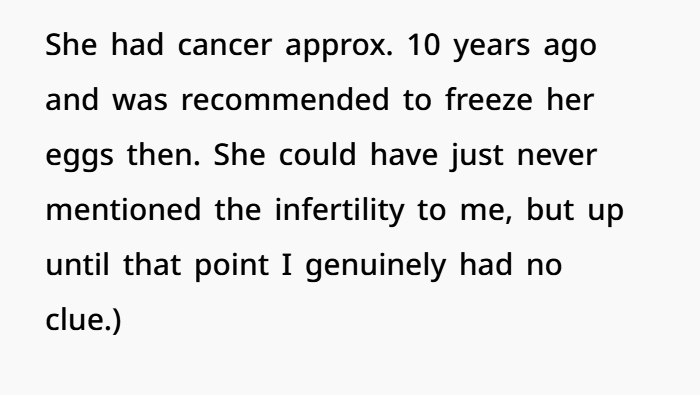
She also had a history of cancer, which had caused concerns about her ability to become pregnant.
After years of uncertainty, learning that she was expecting a baby was likely a very special moment.
Hearing a strong heartbeat may have brought her relief and excitement.
For people dealing with fertility challenges, pregnancy milestones can carry a lot of meaning.
Some couples spend years learning about fertility treatment options, reproductive health care, and pregnancy planning.
Others may need support from medical professionals while trying to start a family.
The older sister had every right to feel happy about her pregnancy.
However, sharing happy news and showing kindness toward someone who is grieving can happen at the same time.
Neither feeling has to take away from the other.
A Private Message Might Have Made Things Easier
The younger sister was not asking her sibling to keep the pregnancy a secret.
Her concern was about how the announcement was handled.
A private message or phone call before the family gathering might have helped her prepare emotionally.
She could have taken some time to process the news before hearing it in front of everyone.
This would not have taken away from the older sister’s celebration.
It would simply have given the younger sister some space.
According to the original account, the older sister had already spoken with their grandmother about how the announcement might affect her grieving sibling.
This suggests she knew the news could be difficult for her younger sister.
It does not prove she wanted to hurt her.
Still, a more careful approach may have prevented some of the tension.
Sometimes, healthy family communication is about thinking ahead and understanding how our words may affect others.
When the Family Argument Became Personal
After the announcement, the situation became more upsetting.
The younger sister reportedly told her older sister that she should feel ashamed of how she handled the news.
Those words were harsh and may have made the older sister feel criticized.
The younger sister’s husband also became involved without being asked.
His involvement may have added more pressure to an already emotional conversation.
However, the older sister’s reported response went beyond defending her announcement.
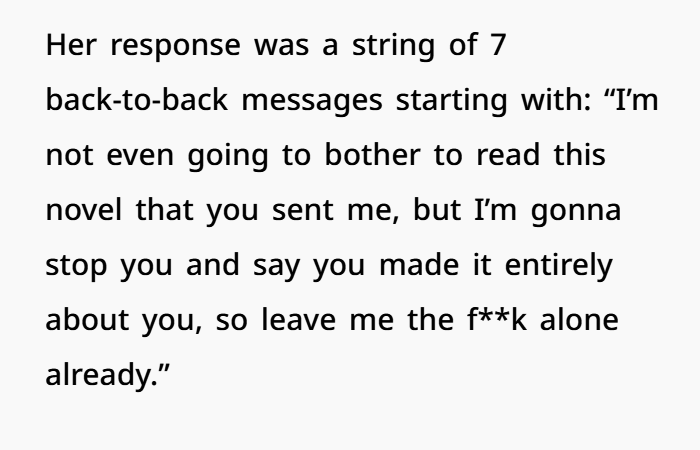
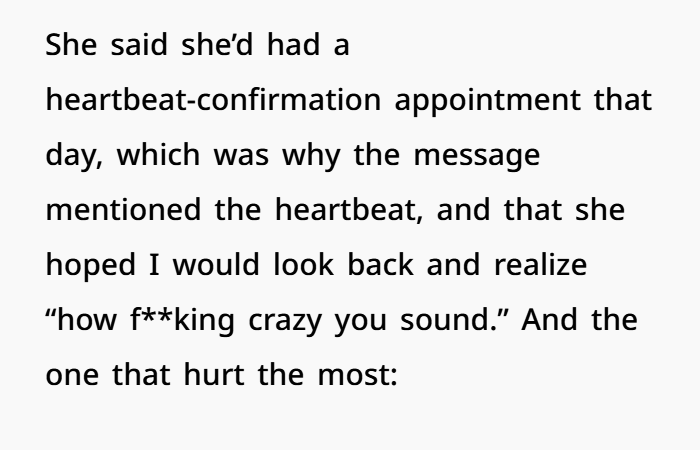
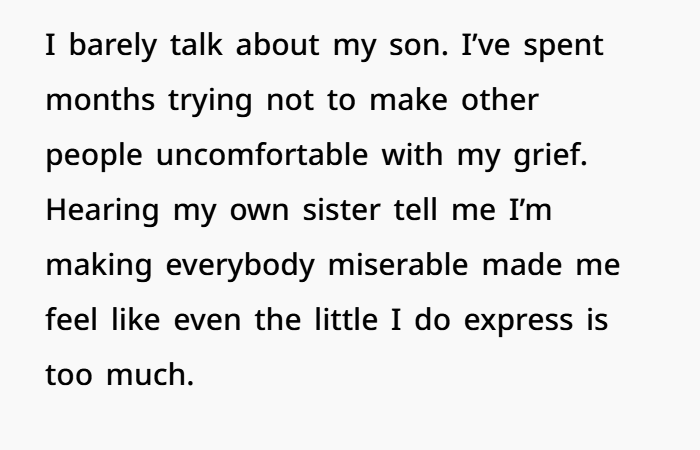
She accused her younger sister of making everyone miserable because of her grief.
For a parent who had recently lost a child, those comments could be especially hurtful.
There is a difference between disagreeing with someone’s behavior and criticizing their character.
Relationship researcher John Gottman has written about how personal criticism and contempt can harm close relationships.
Although much of his research focuses on couples, respectful communication is also important between siblings and other family members.
Both sisters were upset, but the argument became more painful when they began making personal comments.
Why Family Support Matters After Pregnancy or Infant Loss
Parents who have lost a baby may need support for a long time.
Some want to talk about their child often.
Others prefer to keep their feelings private.
Both responses deserve respect.
Family members can help by listening, being patient, and avoiding pressure.
For example, if someone is planning a pregnancy announcement, they might privately inform a relative who has recently experienced a loss.
This gives the person time to prepare.
It also allows them to decide whether they feel comfortable attending a celebration.
Families do not have to stop sharing happy news.
They can simply make room for different emotions.
For people who need additional support, licensed mental health counselors, grief support groups, and family therapy services may offer helpful resources.
Professional counseling can also help relatives learn better ways to communicate during emotional situations.
Why Taking Space Can Sometimes Be Helpful
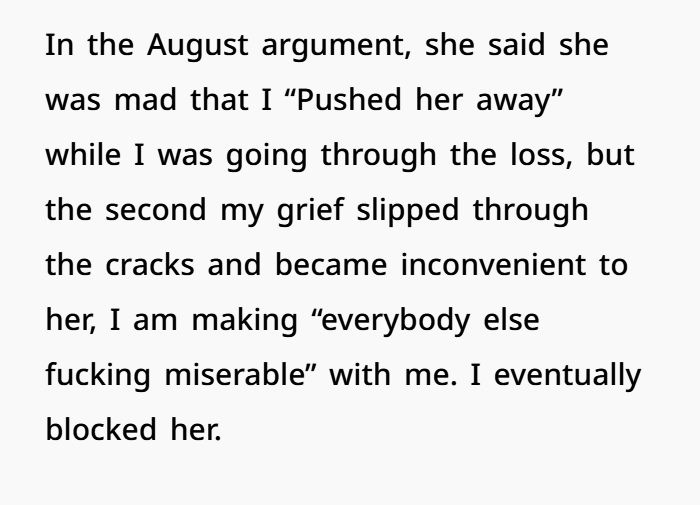
After the disagreement, the younger sister decided to block her older sibling.
Some people may think blocking a family member is too much.
Others may understand why she wanted a break.
When conversations become painful, taking some time apart can help people calm down.
A temporary boundary does not always mean the relationship is over.
It may simply mean someone needs time to process what happened.
The older sister also reportedly said she would not attend family gatherings if her younger sister was present.
That decision could make future celebrations more difficult for the rest of the family.
Other relatives may feel caught in the middle.
This is why family conflict resolution and relationship counseling can be useful when disagreements begin affecting several people.
Sometimes, giving everyone space is better than trying to solve everything immediately.
How Family Arguments Can Affect Other Relatives
When two family members disagree, the tension can spread.
In this story, other sisters also had feelings about what happened.
One chose not to get involved.
Another reportedly admitted that she had immediately worried about the grieving mother when she heard the pregnancy announcement.
Now, family gatherings may feel uncomfortable.
Relatives might worry about inviting both sisters to the same event.
Psychiatrist Murray Bowen developed family systems theory, which looks at how emotions and conflicts can affect entire families.
One idea from this theory explains how other relatives can become involved in disagreements between two people.
When family members feel pressured to choose sides, the original problem can become harder to resolve.
A calmer approach may be to respect both sisters’ feelings without turning the disagreement into a larger family argument.
Can Someone Feel Happy and Heartbroken at the Same Time?
Yes.
And that is one of the most important parts of this situation.
The younger sister could love her older sister and feel happy about the pregnancy.
At the same time, she could feel heartbroken when reminded of her own child.
Those feelings can exist together.
Being sad does not mean someone wants to ruin another person’s happiness.
And being excited does not mean someone has forgotten about another person’s pain.
The older sister was celebrating a pregnancy she had wanted for years.
The younger sister was grieving a loss that had happened only months earlier.
Both experiences mattered.
With a little more understanding, the sisters might have been able to support each other instead of arguing.
Could the Sisters Rebuild Their Relationship?
It is hard to know whether the sisters will eventually make peace.
Both said things that may take time to move past.
The younger sister’s harsh words and her husband’s involvement may have made the older sister feel attacked.
At the same time, the older sister’s comments about grief may have caused lasting hurt.
If they decide to speak again, a calm conversation could be a good place to start.
Instead of arguing about who was right, they could explain how the situation made them feel.
A sincere apology and a willingness to listen may help.
If the disagreement continues, a licensed family therapist or professional relationship counselor could help them work through the conflict.
However, rebuilding trust should happen when both people feel ready.
The Real Lesson Is About Kindness and Understanding
This disagreement was about much more than a pregnancy announcement.
One sister was celebrating a long-awaited pregnancy after years of fertility struggles.
The other was still grieving the loss of her little boy.
Both were experiencing strong emotions.
The younger sister’s reaction may have been difficult for the family, but it was not necessarily an attempt to spoil the celebration.
The older sister had every reason to be excited, but her reported comments about her sibling’s grief made the situation more painful.
Families should not have to choose between celebrating happiness and supporting someone who is grieving.
There is room for both joy and sadness in the same family.
A private conversation, a thoughtful message, or a little patience can sometimes prevent a painful misunderstanding.
And when someone is dealing with the loss of a child, kindness and understanding can mean more than finding the perfect words.
Comments From The Community