I Gave Birth 5 Months Ago, and My Husband Is Already Complaining to His Mom That I Haven’t Lost the Baby Weight


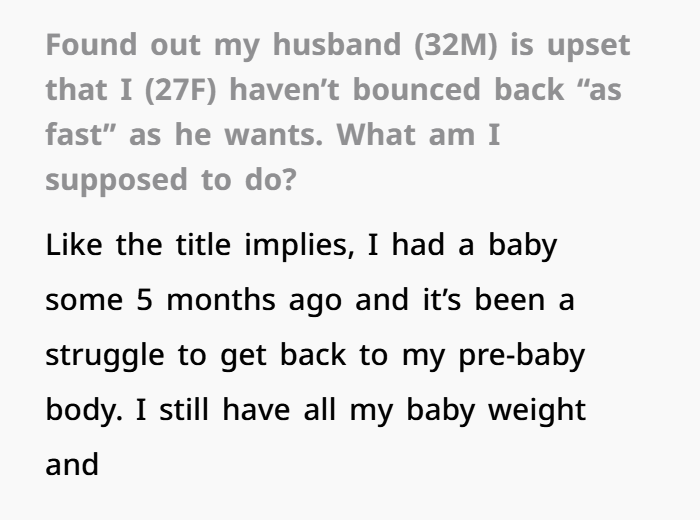
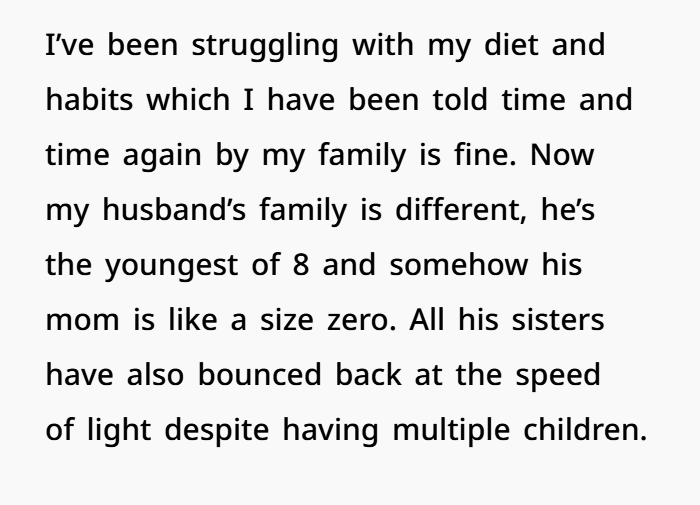
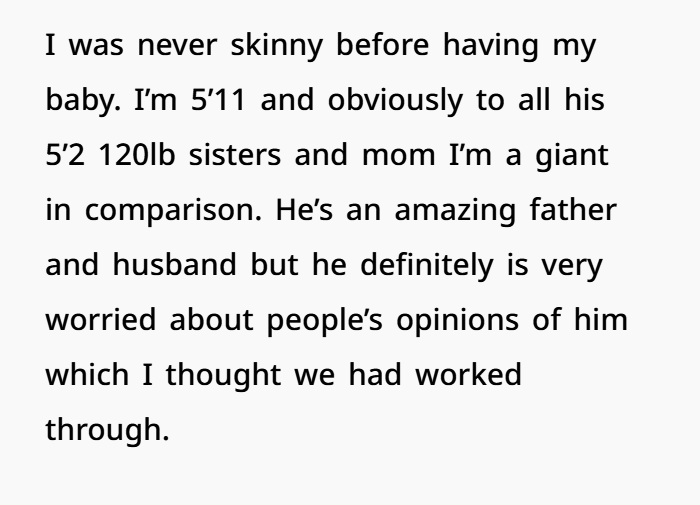
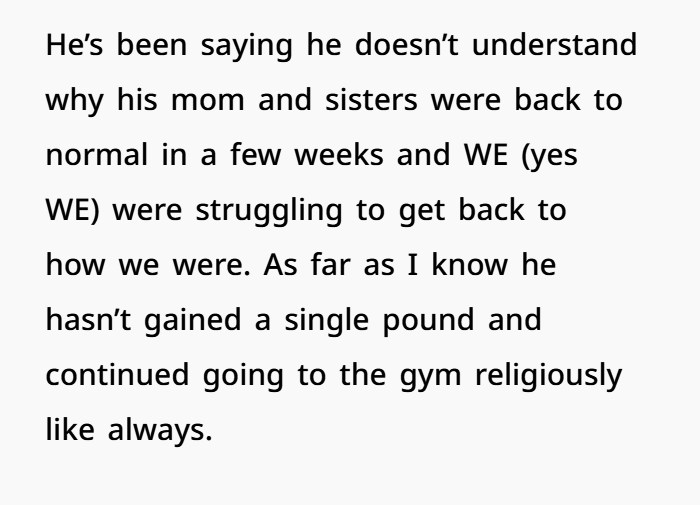
A new mother thought she had a supportive husband and a loving family, but a few private messages changed how she sees her marriage. The 27-year-old woman gave birth just five months ago and is still adjusting to life with a baby. Her body has changed, and she has not returned to her pre-pregnancy weight. Her own family has encouraged her to be patient and focus on her postpartum recovery. However, her husband’s family has a different view. His mother and sisters are much smaller than her and reportedly lost their pregnancy weight quickly. She never expected her husband to use their experiences to judge her own recovery.
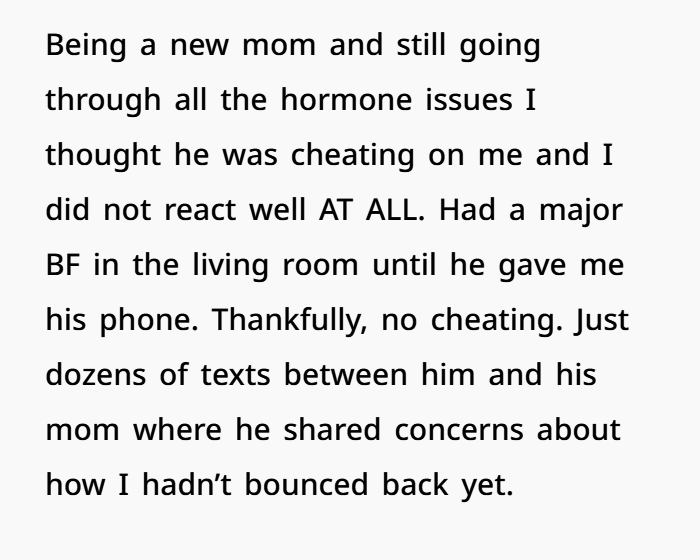
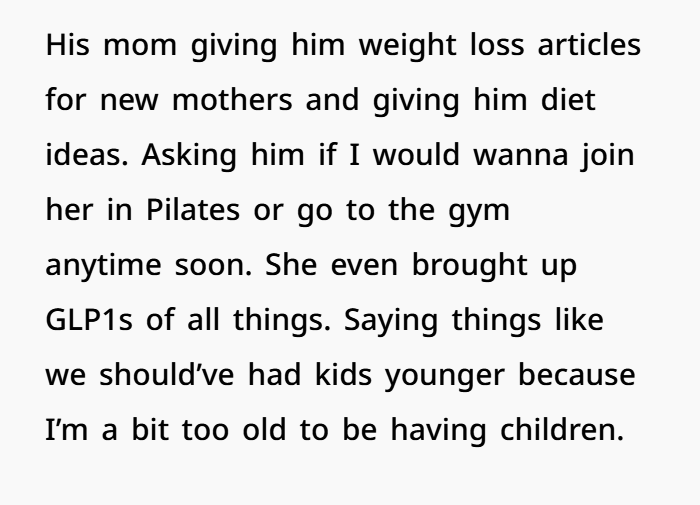
Her husband, who is 32, has always been a hands-on father. He helps with nighttime care, feeds their baby, and changes diapers. She trusted him and believed they could talk openly about anything. But when he suddenly became protective of his phone, she started to feel uneasy. After a difficult conversation, he allowed her to read his messages. She found several conversations between him and his mother about her body. His mother had been sending weight-loss articles, exercise suggestions, diet tips, and information about medical weight-management options. Her husband had even questioned whether she would return to her previous appearance before their family vacation in Costa Rica.
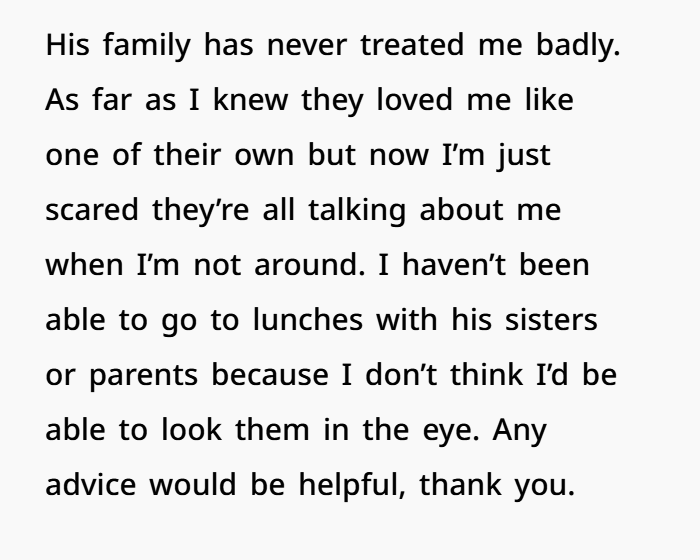
The messages made her feel deeply embarrassed. She was already dealing with the physical and emotional changes that come with motherhood, and now she knew her husband had been criticizing her appearance in private. She felt especially hurt because he had compared her to his mother and sisters instead of understanding that every woman’s postpartum health journey is different. She also began to question her relationship with her in-laws. Family gatherings that once felt comfortable now seemed stressful because she worried about being judged. She wanted kindness and support, not pressure to meet someone else’s expectations.
More than anything, she feels confused about what this means for her future. She loves her husband and appreciates how much he helps with their child, but she cannot forget what he wrote. She has considered staying with her parents for a short time to think about the situation. However, she does not want to create a bigger disagreement between the families. She knows that trust, respect, and healthy communication are important parts of a strong marriage. Relationship counseling may be one way to work through the problem, but she is still trying to understand her feelings. After sharing her experience on Reddit, she asked a simple question: Is she being too sensitive, or was her husband wrong to discuss her appearance with his mother?







What Medical Research Says About Postpartum Recovery and Body Shaming
Having a baby is a big change in a woman’s life. Her body goes through a lot during pregnancy, and it needs time to recover after childbirth.
But not everyone understands that.
In this story, a woman was only five months postpartum when she discovered that her husband and mother-in-law had reportedly been talking about her weight and appearance.
Her husband even compared her body to those of his mother and sisters, who he believed had lost their pregnancy weight much faster.
Naturally, this left her feeling hurt.
The situation raises an important question: How long does postpartum recovery really take, and what happens when a new mother feels judged instead of supported?
A Woman’s Body Needs Time to Recover After Childbirth
Many people think that once a woman has her six-week postpartum checkup, her body should be back to normal.
But that is not how recovery works.
The American College of Obstetricians and Gynecologists (ACOG) explains that postpartum care is an ongoing process.
A woman’s body continues to change after childbirth. She may experience tiredness, hormonal changes, sleep problems, and emotional ups and downs.
Some women also need more time to recover from pregnancy-related health problems or a difficult delivery.
At five months postpartum, the woman in this story was still in a period of adjustment.
There was no reason to assume she should already look exactly as she did before pregnancy.
Postpartum healthcare is about helping mothers recover safely and stay healthy, not pushing them to reach a certain body size.
How Long Does Pregnancy Weight Take to Go Away?
There is no exact deadline for losing pregnancy weight.
According to MedlinePlus, a health resource from the U.S. National Library of Medicine, returning toward pre-pregnancy weight may take around six to twelve months.
For some women, it takes longer.
Others may never return to the exact same weight, and that alone does not mean they are unhealthy.
Pregnancy can change a woman’s body shape, muscles, and daily energy needs.
Her routine may also be very different after the baby arrives.
Instead of having time for regular exercise or meal planning, she may be busy feeding her baby, changing diapers, and trying to get enough sleep.
These everyday challenges matter.
When it comes to healthy postpartum weight management, medical professionals generally focus on balanced nutrition, appropriate physical activity, and each woman’s individual health needs.
The goal should be feeling healthy and strong rather than trying to meet someone else’s expectations.
Why Comparing One Mother’s Body to Another Is Unfair
One of the most hurtful parts of this story was the husband’s reported comparison between his wife and the women in his family.
He seemed to believe that because his mother and sisters lost weight quickly after pregnancy, his wife should be able to do the same.
But women’s bodies do not all work the same way.
The Centers for Disease Control and Prevention (CDC) recognizes that weight is influenced by many factors.
These can include genetics, sleep, stress, hormones, age, and certain medical conditions.
Two women can have babies around the same time and still have very different recovery experiences.
One may lose weight quickly, while another may need much more time.
Neither experience should become a standard for everyone else.
Comparing a new mother to other women can create unnecessary pressure during a time when she needs patience and support.
What About Weight Loss Medications After Pregnancy?
The mother-in-law reportedly suggested that the woman consider GLP-1 medications for weight loss.
These prescription medications are used for certain health conditions, including type 2 diabetes and, in some cases, long-term weight management.
They can be appropriate for some patients, but they are not the right choice for everyone.
Women who have recently given birth may have additional health needs to consider.
This is especially important if they are breastfeeding.
Research about the use of individual GLP-1 medications during breastfeeding is still developing, and safety information is not the same for every medication.
That is why prescription weight loss treatments should always be discussed with a qualified healthcare provider.
A doctor can review the patient’s medical history, current health, and whether a treatment is suitable.
Medication should never be something a woman feels pressured to use simply because a family member wants her to look different.
How Hurtful Comments Can Affect a New Mother’s Mental Health
The months after childbirth can be emotionally challenging.
New mothers often have less sleep, more responsibilities, and very little time for themselves.
During this period, support from a partner can make a big difference.
In this story, the woman believed her husband and mother-in-law were encouraging her.
Finding out that they had privately discussed her appearance reportedly changed how she felt about both of them.
It was not just about her weight.
It was about trust.
When someone close to us makes negative comments about our appearance, it can affect our confidence and emotional well-being.
For a new mother who is already adjusting to major life changes, those comments may feel especially painful.
Postpartum mental health support can be helpful for women experiencing ongoing stress, sadness, or anxiety.
A licensed mental health counselor can offer a safe space to talk about difficult feelings and explore healthy ways to cope.
New mothers deserve care for their emotional health as well as their physical recovery.
A Good Father Can Still Hurt His Partner’s Feelings
The husband’s behavior in this story is not completely one-sided.
According to the woman’s account, he helps care for their baby.
He shares nighttime responsibilities and appears to be involved in parenting.
These are positive things.
However, being a caring father does not mean someone will always be a supportive spouse.
Both things can be true.
A husband may help with childcare while still making comments that hurt his wife’s feelings.
The main problem here was that he reportedly discussed his wife’s body with his mother instead of speaking to her with care and respect.
Private marriage concerns can become more difficult when other relatives get involved.
Healthy marriage communication means being able to discuss sensitive topics without making a partner feel embarrassed or judged.
Why Boundaries With In-Laws Matter
Grandparents can be a wonderful source of support after a baby arrives.
They may offer childcare, help with meals, or give new parents a chance to rest.
But there is a difference between offering help and making someone feel that they need to change.
In this story, the mother-in-law reportedly suggested babysitting so the woman could spend more time working on her weight.
Childcare itself could have been a thoughtful offer.
However, connecting that help to criticism about the woman’s appearance made the situation more uncomfortable.
This shows why healthy family boundaries are important.
Couples should be able to decide which personal matters they want to share with relatives.
They should also feel comfortable asking family members not to comment on sensitive topics.
It is important to note that the reported messages involved the husband and his mother.
There is no clear evidence that his sisters or other relatives shared the same opinions.
Can Couples Rebuild Trust After Hurtful Comments?
Discovering that your partner has been talking negatively about you can be upsetting.
It may leave you wondering what else has been said and whether you can trust that person again.
But some relationships can improve when both people are willing to work through the problem.
For this couple, an honest conversation would be a reasonable place to start.
The woman could explain how the messages made her feel.
Her husband would need to listen and understand why discussing her body with his mother was hurtful.
They could also agree on boundaries about sharing private marriage matters with family members.
If these conversations are difficult, couples counseling or marriage counseling may help.
A licensed relationship therapist can support couples as they work on communication, trust, and mutual respect.
However, counseling works best when both partners are willing to listen and make meaningful changes.
The focus should be on improving the relationship, not on changing the woman’s appearance.
What New Mothers Actually Need From Their Families
After childbirth, a new mother may need help with many everyday things.
She may be tired from nighttime feedings or overwhelmed by the number of tasks that need to be done.
Sometimes, small acts of kindness can mean more than advice.
Preparing a meal, helping with laundry, or watching the baby while she rests can make her day easier.
Asking how she feels is also important.
Not every new mother wants advice about diet, exercise, or weight loss.
Some may simply want their families to understand that recovery takes time.
Access to women’s healthcare services, postpartum checkups, nutritional guidance, and mental health care can also support a healthy recovery.
The best support is the kind that respects the mother’s needs and choices.
Final Thoughts
This story is not really about how quickly a woman can lose weight after pregnancy.
It is about how she is treated while recovering from one of the biggest physical changes of her life.
At five months postpartum, she was still adjusting to motherhood.
Medical guidance makes it clear that recovery is different for every woman, and there is no single timeline that everyone must follow.
Her husband’s help with childcare was valuable, but it did not erase the hurt caused by his private comments.
Moving forward, rebuilding trust would require honest communication, respect, and a willingness to set healthier family boundaries.
A woman’s value should never be measured by how quickly she returns to her pre-pregnancy weight.
What matters most during postpartum recovery is her health, emotional well-being, and the support she receives from the people closest to her.
See The Comments Below