My Husband’s Family Has Lived in Our Apartment for Over a Year—Now I’ve Given Him Until Friday to Choose


A 36-year-old mother is wondering if she has gone too far after telling her husband that his relatives must move out. She has been with her husband, John, for ten years, and they got married two years ago. Not long after the wedding, she became pregnant and moved far away from her home country to live with him. She left behind the people and places she knew and started building a new life with her husband and their baby. John works long days, sometimes up to 12 hours, while she stays home with their young son. She is also getting ready to return to work, but her daily routine has become much harder because their apartment is rarely free of guests.
The couple rents or owns a small two-bedroom apartment, and the extra bedroom is constantly being used by John’s family. His father, cousin, and sometimes his uncle stay there one after another. For over a year, the woman has handled nearly all the household chores. She cooks meals, cleans the rooms, washes clothes and bedsheets, and buys groceries for everyone. The relatives do not contribute to the living expenses, even though they use plenty of food and bathroom products. She became frustrated when she found out that John’s cousin was using her household supplies while keeping his own toiletries untouched. He even asked her to purchase more deodorant when he ran out.
One day, the cousin drank all the milk she had bought for her little boy. That was when she finally decided she had enough. She had already spent months feeling like she was running a guesthouse instead of enjoying her own family home. The constant visitors meant higher grocery bills, more housework, and very little privacy. She told John that his cousin needed to move out and asked him to set a clear date. Although he promised to speak with his family, the situation stayed the same. She felt disappointed because she had explained her concerns many times, but nothing seemed to improve.
Now, she has made her decision. She told John that if any of his relatives are still living with them by Friday, she will leave the apartment and not return. She does not believe it is fair to spend every day cooking, cleaning, and paying for extra household needs without support. She wants a peaceful place to raise her son and prepare for her return to work. She also wants her husband to understand that marriage involves shared decisions, healthy family boundaries, and respect for personal space. The question she is struggling with is whether giving an ultimatum is unfair or whether she has every reason to ask for a home that belongs to her immediate family.






Wife Wants Husband’s Family to Move Out After More Than a Year of Constant Visits
Having relatives stay over can be nice. You get to spend time together, enjoy family meals, and catch up on each other’s lives.
But what if the guests never seem to leave?
One woman found herself in this situation after her husband’s father and cousin started staying at their apartment regularly.
At first, she tried to be welcoming. She knew her husband wanted to help his family.
But after more than a year, she was tired.
She was cooking, cleaning, doing laundry, buying groceries, and caring for her young son. Meanwhile, her home was almost always full of visitors.
When she finally told her husband that his relatives needed to find another place to stay, the situation became a serious family disagreement.
Was she being unfair, or had she simply reached her limit?
She Barely Had Any Time Alone With Her Family
The woman lived in a two-bedroom apartment with her husband, John, and their young son.
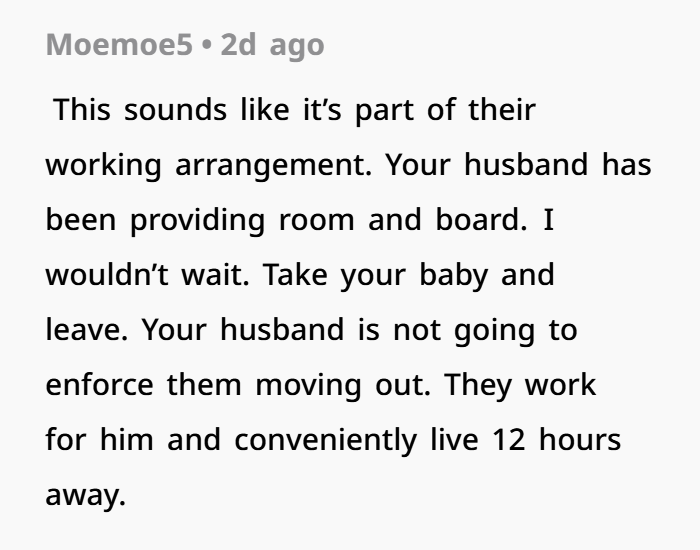
John owned a restaurant where his father and cousin worked.
Both relatives normally lived in another country, about twelve hours away by car.
Because of their work, they often stayed at John’s apartment.
The problem was how often they visited.
According to the woman, even in a good month, she might have only ten days without guests. Those days were not necessarily together.
That meant she rarely had a full week to relax with just her husband and child.
She had moved across the continent to build a life with John.
But instead of enjoying a quiet family home, she felt like she was always hosting someone.
For a mother caring for a young child, that can become exhausting.
All the Extra Housework Was Falling on Her
Having guests means more household chores.
There are extra dishes, more laundry, more cleaning, and additional meals to prepare.
When visitors stay for a weekend, that extra work may not be a big problem.
But when they stay for months, it becomes part of everyday life.
The woman said she was doing much of this work herself.
She already had a young child to look after.
On top of that, she was expected to help care for two adults who regularly stayed in her home.
The International Labour Organization has studied the unequal amount of unpaid care work done around the world.
In its 2018 report, Care Work and Care Jobs for the Future of Decent Work, the organization estimated that women performed about 76.2% of unpaid care work hours worldwide.
That number does not describe every marriage, but it helps explain why household responsibilities can become a serious source of stress.
In this woman’s case, the issue was not just that she had extra chores.
She felt that nobody was thinking about how much work the visitors created for her.
The Guests Were Using Household Supplies Without Replacing Them
One thing that really bothered the woman was how quickly household products disappeared.
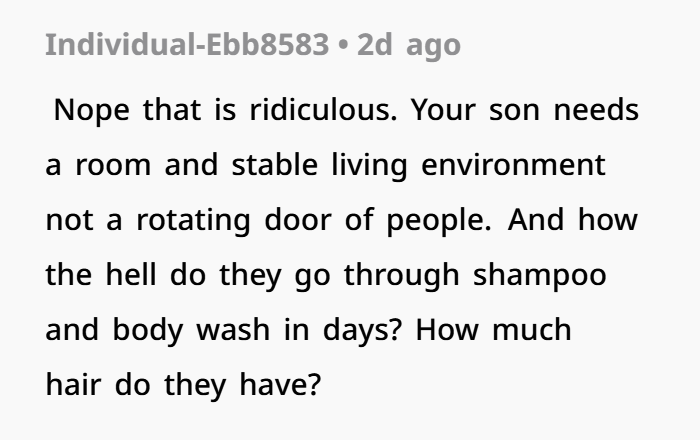
She said shampoo sometimes lasted only three days.
Shower gel could be empty after about four days.
With extra adults using the bathroom, she was constantly buying replacements.
The guests apparently did not make much effort to buy their own supplies.
Then John’s cousin asked her to purchase more deodorant.
That request upset her.
According to the woman, she later discovered that the cousin had his own deodorant but had been saving it while using products bought for the household.
She felt that he was treating her like someone responsible for shopping for him.
The problem was not the cost of a single bottle.
It was the expectation that she would keep paying for everything.
When managing a household budget, small purchases can add up quickly.
Groceries, toiletries, cleaning products, and laundry supplies are regular monthly expenses.
Adding extra adults without sharing those costs can put pressure on a family’s finances.
The Empty Milk Carton Was the Final Straw
The woman also described an incident involving milk intended for her young son.
She discovered that the milk was gone.
By itself, an empty carton may not seem like a serious problem.
But after months of buying groceries and asking the guests to be more considerate, it was enough to push her over the edge.
There is no evidence that the cousin deliberately wanted to take something away from the child.
He may not have realized the milk was being saved.
Still, the mother was upset.
She was already responsible for making sure her son had everything he needed.
Now she felt that she also had to worry about whether the adults staying in her home would leave enough food and supplies for her family.
For her, the milk was another reminder that the current living arrangement was not working.
A Two-Bedroom Apartment Was Not Enough for Everyone
Space was another major issue.
The woman, John, and their son shared one bedroom.
The visiting relatives stayed in the other bedroom.
That left the family with very little privacy.
As their son grew older, the parents also wanted to think about giving him his own room.
But that was difficult when the second bedroom was regularly occupied by guests.
Living in a small apartment is not always a problem.
Many families make it work by sharing space and creating routines.
But the situation becomes harder when people do not agree on who should live there.
The woman wanted to relax in her living room without feeling that she had to entertain visitors.
She wanted time alone with her husband.
And she wanted her son to have enough space as he grew.
Those were normal family needs, not unreasonable demands.
Her Husband Was Away at Work Most of the Day
John worked long hours at his restaurant.
According to the woman, he was often away for ten to twelve hours a day.
That meant he did not experience the visitors’ presence in the same way she did.
While he was at work, she was at home caring for their child and managing the household.
She was also dealing with the extra cooking, cleaning, and shopping.
John may have believed the arrangement was working because he did not see everything happening during the day.
But his wife was living with the effects of his decision.
She had spoken to him about the problem several times.
He reportedly promised that he would fix things.
However, she did not see meaningful changes.
Over time, those promises became harder for her to believe.
Helping Family Should Not Mean Ignoring Your Spouse
John had reasons for wanting to help his father and cousin.
They worked at his restaurant and traveled from another country.
Having somewhere familiar to stay may have made their work arrangements easier.
There is nothing wrong with wanting to support relatives.
But marriage also involves making decisions together.
When two people share a home, both should have a say in who stays there and for how long.
In this situation, the woman felt she had little control.
She was expected to manage the extra responsibilities, but she did not seem to have much influence over the visiting arrangements.
That was the real problem.
John was trying to help his extended family, but his wife felt that her own needs were being overlooked.
A healthy family relationship should make room for both.
The Financial Pressure Was Adding Up
Hosting adults for long periods can increase monthly living expenses.
More people usually means higher grocery bills, more laundry, and faster use of household supplies.
Depending on the home, water and electricity costs may also increase.
For a couple raising a child, these costs can affect their family budget.
The woman said she was repeatedly paying for groceries and other items used by the visitors.
She did not describe a clear agreement about how the guests would contribute.
That can create resentment.
A fair household arrangement might involve guests purchasing their own toiletries, helping with meals, or contributing to shared groceries.
It can also help to discuss household expenses before someone moves in or begins staying regularly.
Simple financial planning can prevent arguments later.
In this case, the woman was not only upset about spending money.
She was upset that the guests appeared to expect her to cover their needs.
Was She Wrong to Give Her Husband an Ultimatum?
After more than a year of dealing with the situation, the woman told John that his relatives needed to find somewhere else to stay.
She had reached the point where another promise was not enough.
Ultimatums can be difficult in a marriage.
They can make one partner feel pressured or forced to choose sides.
But there is a difference between trying to control someone’s family relationships and setting a limit about your own living situation.
The woman was not asking John to stop speaking to his father or cousin.
She was not demanding that he cut them out of his life.
She wanted them to stop staying in the apartment so often.
She wanted her home back.
After many conversations that had not led to lasting changes, it is understandable that she felt she needed to be firm.
Her request was about the living arrangement, not about ending family relationships.
What Could John Do to Fix the Situation?
The couple needed a clear plan.
John could speak with his father and cousin about finding another place to stay while working at the restaurant.
He could also discuss a visiting schedule with his wife.
If the relatives continued to visit, everyone could agree on how long they would stay and what responsibilities they would handle.
The guests could buy their own personal products and contribute to groceries.
John could also take a larger role in preparing for visits and cleaning up afterward.
Most importantly, he needed to listen to his wife’s concerns and work with her on a solution.
A shared home should not be managed by one partner alone.
Both people deserve a voice.
Could Marriage Counseling Help?
Sometimes disagreements about extended family become difficult because each partner sees the situation differently.
John may feel responsible for helping his father and cousin.
His wife may feel that she has been asked to sacrifice too much.
Marriage counseling or couples therapy can help partners talk about these differences.
A counselor may help them discuss communication, personal boundaries, financial responsibilities, and family expectations.
Professional help is not always necessary, though.
Sometimes couples can make progress by sitting down together and agreeing on clear rules.
The important part is that both partners take the problem seriously.
Promises only help when they lead to action.
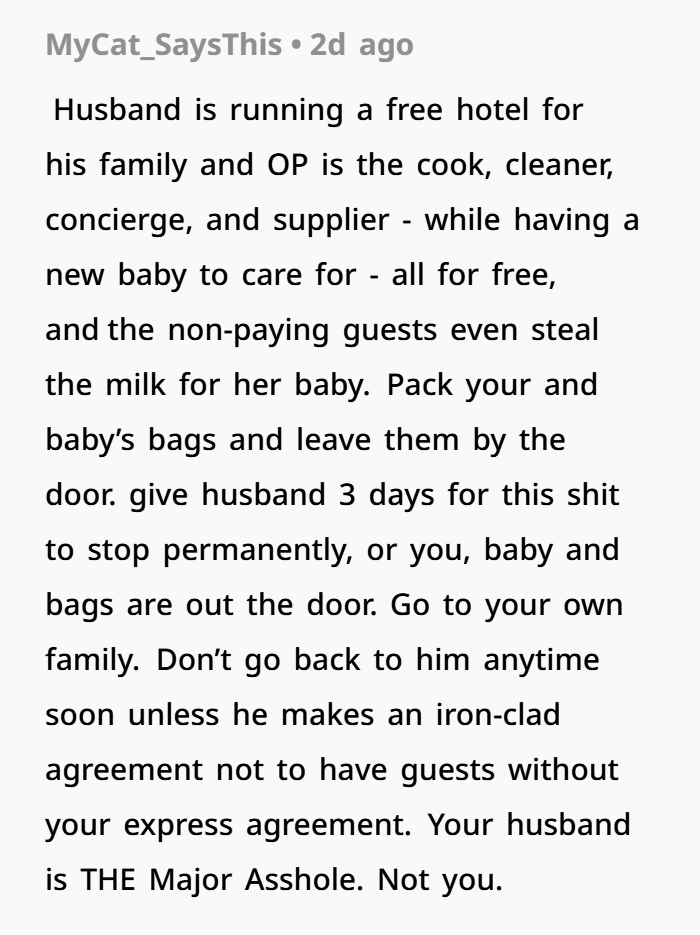
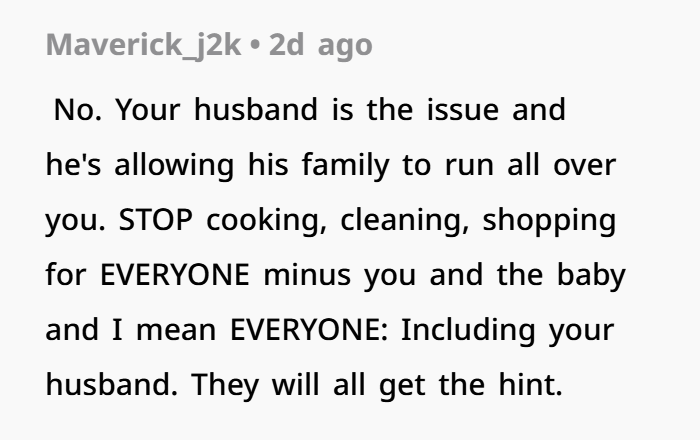
Reddit Verdict: Not the A-Hole (NTA)
Based on the woman’s account, her request seems reasonable.
She had welcomed her husband’s relatives into their home for more than a year.
She handled extra cooking, cleaning, laundry, and shopping while raising a young child.
She also had very little privacy in a two-bedroom apartment.
When she raised her concerns, John reportedly promised to fix the situation but did not make meaningful changes.
Asking the relatives to find other accommodation was not the same as asking her husband to abandon his family.
John may have good reasons for helping his father and cousin.
But his wife and son also need his support.
The woman was not wrong for wanting a home where she could relax and spend time with her immediate family.
The Real Problem Was Never Just About Shampoo or Milk
It might sound like this disagreement started over small household items.
Deodorant, shampoo, shower gel, and milk are everyday products.
But for this woman, those items represented something much bigger.
She felt that her time, money, and personal space were being taken for granted.
She had moved a long distance to build a family life with John.
Instead, she spent much of her time caring for people who were supposed to be visitors.
Family hospitality is a good thing when everyone feels comfortable with the arrangement.
But when one person is doing most of the work and has little say in the decisions, problems are likely to follow.
John can continue loving and supporting his relatives without expecting his wife to host them almost every day.
A family home should be a place where both partners feel heard, respected, and comfortable.
Top Comments From Readers