My MIL Complained She Couldn’t See My NICU Baby Enough—Now I Never Want to See Her Again


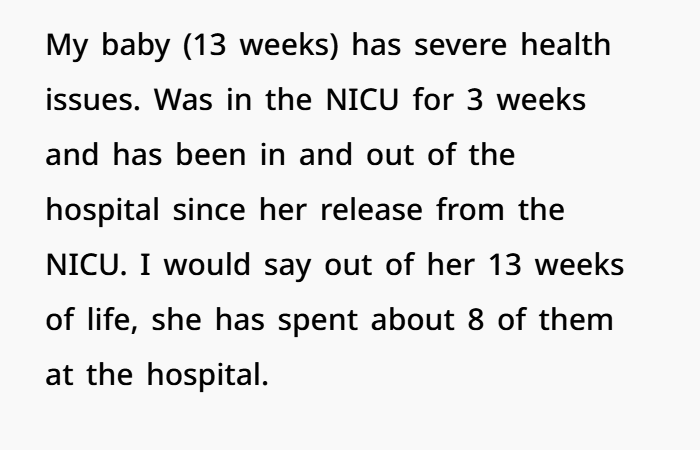
One new mom says her relationship with her mother-in-law has become very stressful since her daughter was born. The birth was difficult, and the mom needed two blood transfusions and an iron transfusion. Her baby also faced health problems and spent much of her first 13 weeks in the hospital. With so much time spent on medical care, the family has had very little chance to settle into a normal routine. The mom is still trying to recover, care for her baby, and enjoy some quiet family time.
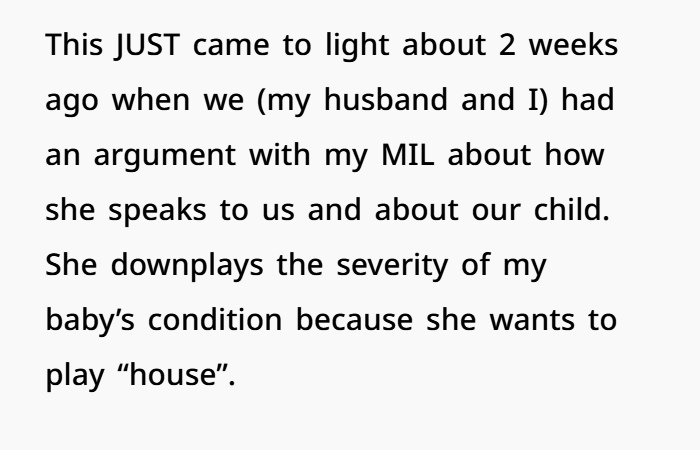
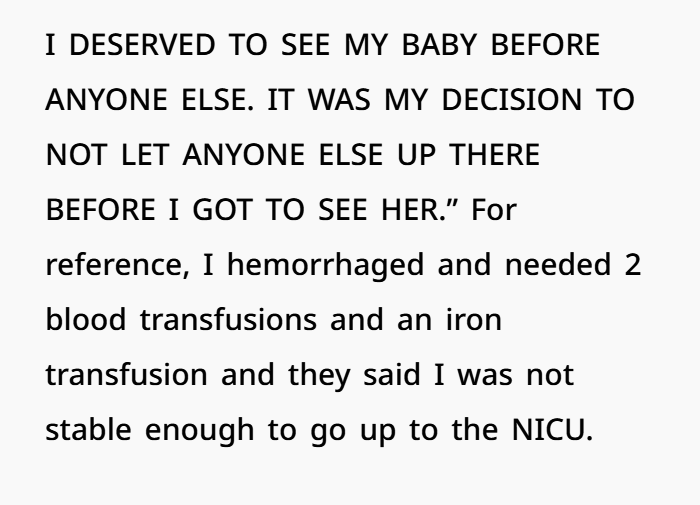
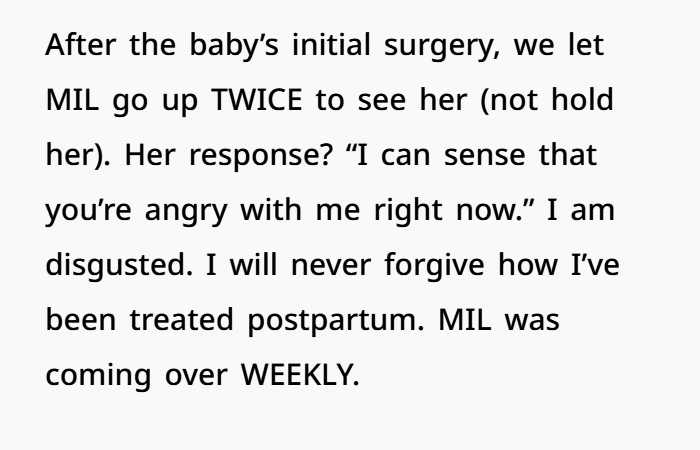
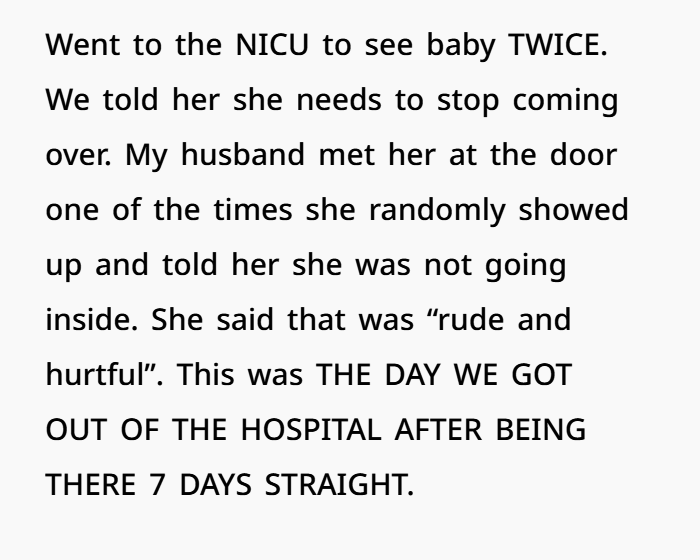
Instead of offering support, her mother-in-law has been upset about not seeing the baby enough. She told the parents she had only visited three or four times, but the mom counted 14 visits in family photos. The grandmother was also unhappy that she could not visit the NICU before the mother. This really hurt the new mom because she had been too unwell to see her own daughter right after giving birth. She feels her mother-in-law should have been more understanding during such a difficult time.
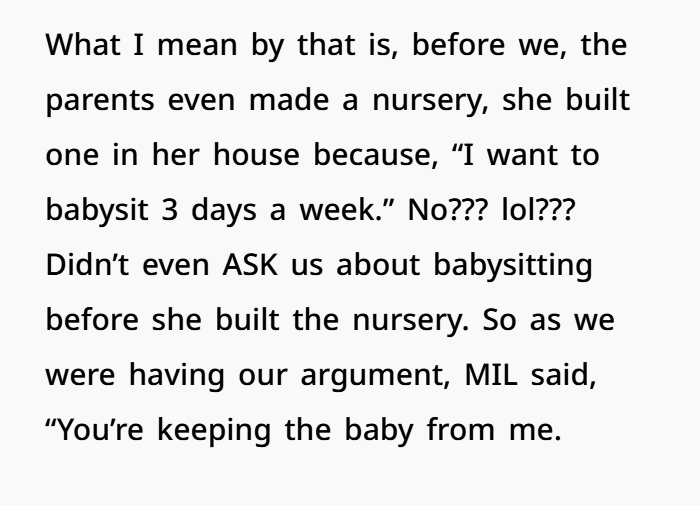
Another problem started when the grandmother created a fully furnished nursery at her home. She bought baby furniture and prepared a room without discussing it with the parents first. She then announced that she wanted to provide childcare three days a week. While having help with babysitting can be useful for many families, this mom wants to make those choices with her husband. She also wants visitors to respect their schedule, especially after long hospital stays and during postpartum recovery.
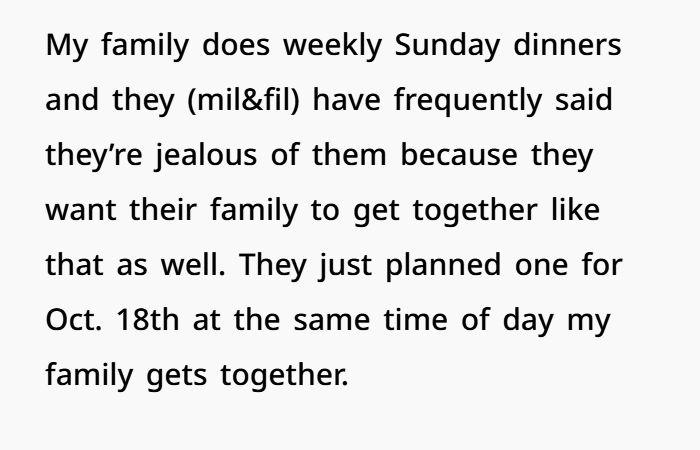
After several disagreements, the mom feels she has reached her limit. Her mother-in-law has continued to complain about baby visits and has shown up without warning after hospital discharges. Now there is another family event planned for October 18, and the mom has decided not to go with her daughter. She wants to focus on her baby’s well-being, her own recovery, and a calmer home life. The only thing she has not decided is whether to tell her mother-in-law directly that she wants no contact or ask her husband to handle the conversation.











When Grandparents Don’t Respect Parents’ Boundaries
Welcoming a new baby should be a happy time for the whole family. But things can become stressful when grandparents have different expectations from the parents.
In this story, a new mother was already dealing with serious health concerns. Her baby needed special care in the Neonatal Intensive Care Unit (NICU), and she was also recovering from medical problems after giving birth.
Instead of getting the peace and support she needed, she found herself dealing with family disagreements about who could visit her baby.
The situation shows why healthy family boundaries, emotional support, and respect for parents’ decisions are so important.
A New Mother Needed Time to Recover
Having a newborn in the NICU can be one of the hardest experiences for parents.
There are medical appointments, hospital visits, and constant worries about the baby’s health. Parents may also struggle with sleep, stress, and their own recovery.
Studies published in pediatric medical journals have found that parents of babies in intensive care may face higher levels of anxiety, depression, and emotional stress.
During this difficult time, the mother made one simple request. She did not want other family members visiting her baby before she had the chance to see her own child.
It was a personal decision made during a medical emergency.
However, the grandmother was upset about the visiting rules.
Rather than understanding the mother’s situation, she complained about not being able to see the baby.
This made an already stressful time even harder for the new parents.
The American Academy of Pediatrics supports family-centered care, which encourages parents to be involved in their baby’s medical treatment and recovery.
This also means respecting parents’ concerns and following hospital visitation policies.
Grandparents Can Help, But Parents Make the Decisions
Grandparents often look forward to spending time with their grandchildren.
Some even prepare a special room, buy baby furniture, or make plans to help with childcare.
There is nothing wrong with being excited.
But those plans should always be discussed with the parents first.
In this case, the grandmother had already set up a nursery in her home. She also expected to babysit three days every week.
The parents had never agreed to that arrangement.
While her plans may have come from a place of love, they did not create an obligation for the parents.
Childcare decisions belong to the parents, especially when a baby needs ongoing medical care.
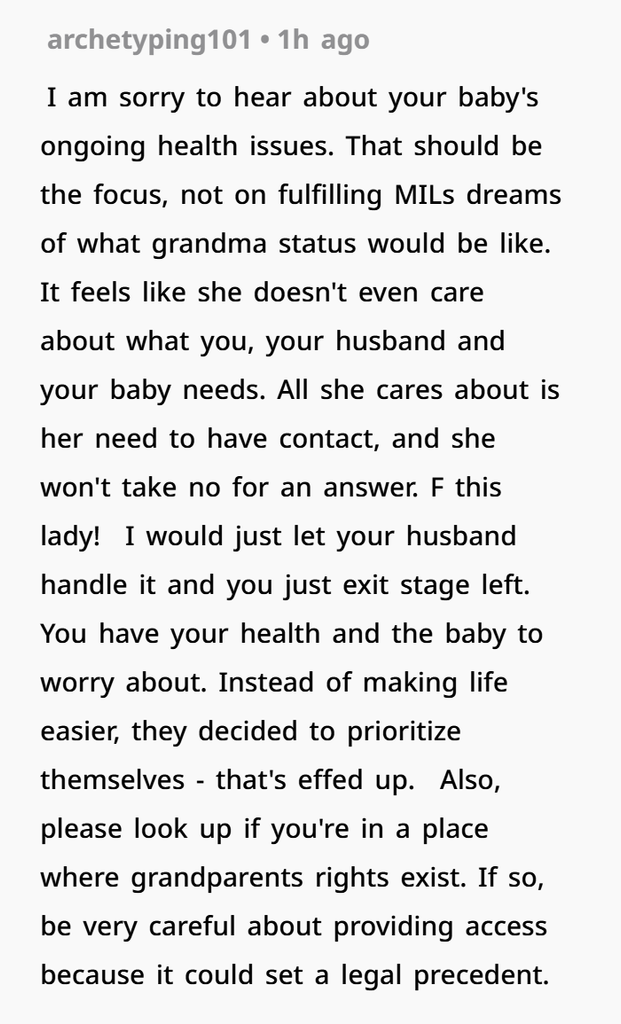
There is also a legal side to grandparent visitation.
In the United States, family law regarding grandparents’ visitation rights varies from state to state.
The Supreme Court case Troxel v. Granville (2000) recognized that courts must give special weight to the decisions of fit parents when considering visitation.
This does not mean every family disagreement needs legal action. It simply highlights the important role parents have in making decisions about their children.
Family Time Should Not Be a Competition
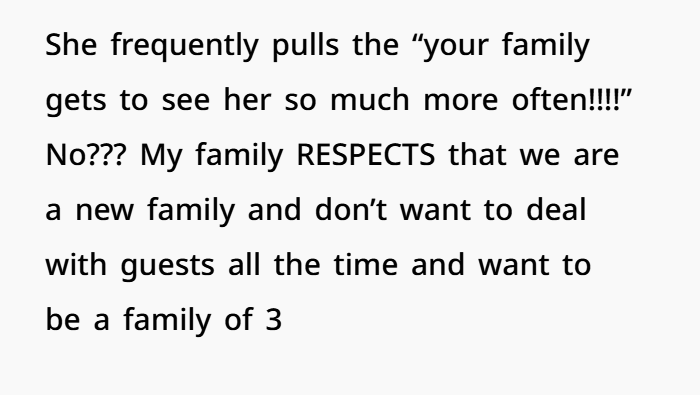
Another problem in this situation was the grandmother’s habit of comparing herself to the baby’s other grandparents.
She seemed to believe that both sides of the family should receive the same amount of time with the child.
But family relationships do not always work that way.
Some grandparents may live closer. Others may help with meals, household chores, or transportation to medical appointments.
Parents may also feel more comfortable around relatives who respect their privacy.
According to the mother, her own family understood when she needed space.
Her in-laws, however, often took the same boundaries personally.
This created more tension between the families.
Healthy relationships are not built by counting visits or comparing who spends more time with a baby.
They grow through trust, kindness, and understanding.
Real Support Means Helping Without Adding Pressure
Caring for a newborn takes a lot of time and energy.
When a baby has ongoing health needs, parents may also have to manage regular hospital visits, medical bills, healthcare appointments, and daily household responsibilities.
This is when family support can make a big difference.
Sometimes the most helpful thing a grandparent can do is not ask to hold the baby.
It might be bringing dinner, picking up groceries, helping with laundry, or offering to handle a small household task.
These simple actions can give tired parents a chance to rest.
In this story, the mother felt that her in-laws expected visits but did not offer much practical help.
She was already managing her baby’s healthcare needs and her own recovery.
Having to meet other people’s expectations only added to her stress.
Family counseling often focuses on the importance of listening, clear communication, and respecting personal boundaries.
These habits can help families avoid unnecessary arguments and build stronger relationships.
Why Healthy Boundaries Matter for New Parents
Setting boundaries does not mean parents are trying to hurt anyone’s feelings.
It means they are choosing what works best for their family.
A baby with medical needs may require a careful daily routine. Parents may need quiet time, rest, and flexibility around healthcare appointments.
Frequent visitors may not fit into that routine.
Grandparents might feel disappointed when they cannot visit as often as they would like.
Those feelings are understandable.
However, parents should not have to change every decision just to keep other family members happy.
Good communication can help.
Grandparents can ask when a visit would be convenient, offer help when needed, and accept that plans may change.
Parents can explain their needs clearly while still treating relatives with kindness.
When everyone respects these limits, family relationships become easier to manage.
Taking Some Space Can Help Families Move Forward
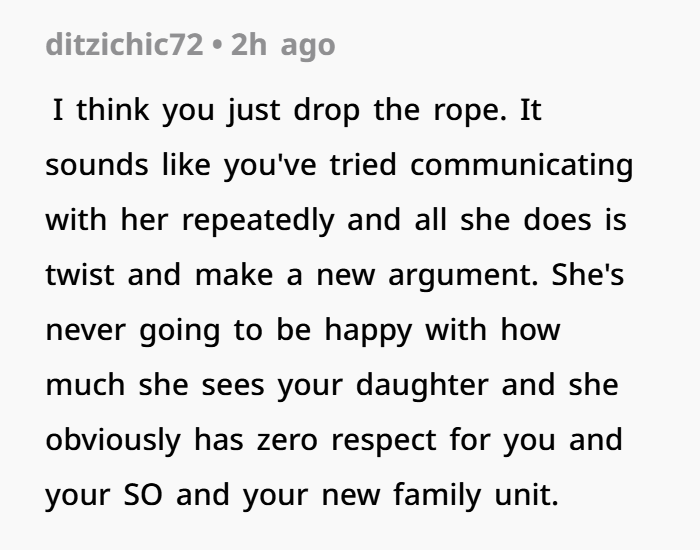
The mother’s decision to step away from her in-laws did not appear to come from one disagreement.
According to her account, several problems had built up over time.
She felt that her boundaries were repeatedly questioned and that her family’s needs were not being understood.
Eventually, she decided that some distance was necessary.
Taking a break from a difficult family relationship does not always mean cutting ties forever.
Sometimes people need time to reflect, calm down, and think about how they can communicate better.
Family counseling may also be helpful when relatives are willing to work through their differences.
Still, rebuilding a relationship requires effort from everyone involved.
Trust cannot be forced.
It develops when people show through their actions that they respect each other’s feelings and decisions.
The Most Important Thing Is the Baby’s Well-Being
At the heart of this story is a family trying to care for a newborn with serious medical needs.
The grandmother wanted to be involved in her granddaughter’s life. That is a natural wish for many grandparents.
But the parents were dealing with responsibilities that needed to come first.
Their baby’s health, their own recovery, and a peaceful home environment were more important than meeting a certain number of family visits.
Grandparents can be an important source of love and support. Their involvement can bring happiness and comfort to a growing family.
But that involvement works best when it respects the parents’ choices.
In the end, strong family relationships are not about who gets the most time with a child.
They are about showing up when help is needed, listening without judgment, and understanding that parents need room to make their own decisions.
Sometimes the best way to support a new baby is to support the parents who are caring for them.
Comments From The Community