Divorce Battle Turns After Husband Exposes Wife’s Affair With Her Addiction Counselor

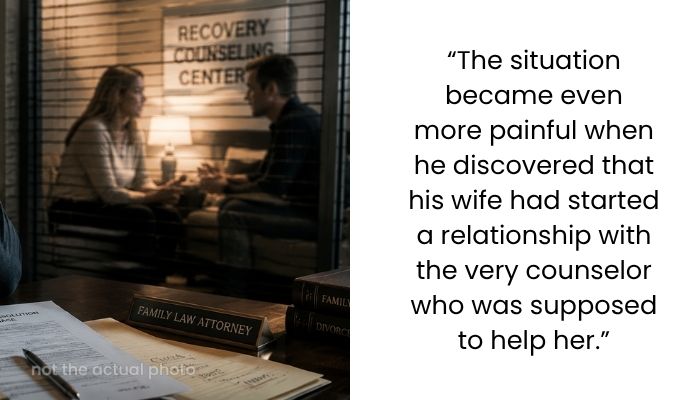
A difficult divorce became even more complicated when a husband discovered that his wife, who had struggled with alcohol addiction, was involved with the same counselor who had helped her during treatment.
He had spent thousands of dollars supporting her recovery and felt deeply hurt when she returned to old habits and started another relationship.
During the divorce, he and his lawyer decided to report the counselor’s alleged professional misconduct to a state licensing board.
Relationships between counselors and their clients are carefully regulated because of the trust and power involved. Many professional boards consider romantic or sexual relationships between a counselor and a current client a serious violation that can lead to disciplinary action or the loss of a professional license.
The story became a turning point in the divorce. The husband received custody of their three children, kept the family home, and reached a settlement that was far lower than what his wife had originally demanded.
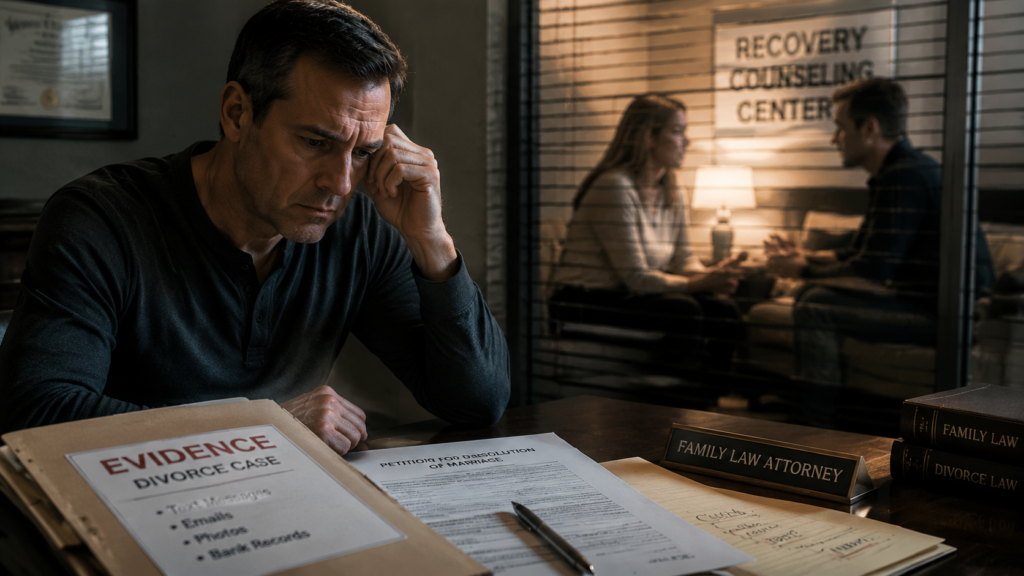
After nearly two decades of marriage, the husband never expected his relationship to end this way.
His wife had battled alcohol addiction, and he had supported her recovery by helping pay for rehabilitation. The treatment cost around $25,000, a major expense that he said he could barely afford.
But after completing rehab, she eventually returned to her previous behavior. The situation became even more painful when he learned she had started another affair, this time with her addiction counselor.
For him, the issue was not only the broken marriage. It was also the feeling that someone who was supposed to help her had crossed a serious professional boundary.
Counselors and therapists are expected to maintain clear boundaries with clients. Professional rules in many places prohibit intimate relationships because clients may be vulnerable and dependent on their care providers.
The Legal Strategy Behind the Divorce Settlement
Before the divorce was completed, the husband and his lawyer filed a complaint with the state health professions licensing authority.
By that time, the counselor was already facing trouble because of the relationship. According to the husband’s account, the counselor had lost a position at a major teaching hospital after the affair became known.
Knowing there could be serious consequences, his wife reduced her financial demands during the divorce negotiations.
The final agreement worked out in his favor. He kept the house, gained custody of their three children, received child support, and paid only a modest settlement.
However, there was one important detail in the divorce agreement. His wife’s lawyer included a clause saying he could not make negative statements about her former counselor and their relationship.
The lawyer assumed he had only been complaining privately to friends and neighbors.
What the lawyer did not know was that a formal complaint had already been filed with the licensing board.
The Complaint That Changed Everything
After the divorce was finalized, the state licensing board responded to the complaint.
The husband explained that he would only testify if he was legally required to do so. Since a subpoena is a legal order, it could override the confidentiality agreement in the divorce settlement.
The board issued the subpoena, and he agreed to provide testimony.
The investigation ended with serious consequences for the counselor. The board removed his professional license and placed him on a public list of sanctioned health professionals.
Professional licensing boards can discipline healthcare workers and counselors when they violate ethical rules. Penalties may include restrictions, suspension, or loss of a license depending on the severity of the violation.
The Aftermath of the Affair
After losing his license, the counselor reportedly struggled financially.
Within a few years, the couple’s relationship fell apart, and his wife divorced him after their money problems grew worse.
The financial impact lasted longer than expected because the counselor later received an inheritance from his mother, delaying the couple’s financial struggles.
The husband also received help from an unexpected person — the counselor’s own wife.
The two exchanged information, including hotel receipts connected to the affair, which helped both of them during their separate divorce cases.
In the end, the husband believed the legal process had finally caught up with everyone involved.
The divorce had started as a painful family breakdown, but the professional misconduct complaint became the issue that changed the outcome and brought consequences for the counselor’s actions.
See the comments to know what people said






The divorce became much more than a fight over money and custody. It turned into a painful story about broken trust, professional boundaries, and the consequences of personal choices.
The husband felt betrayed after years of supporting his wife through addiction recovery, only to discover she had started a relationship with the person who was supposed to help her heal. By reporting the counselor’s conduct to the licensing board, he used the legal system to address what he believed was a serious ethical violation.
In the end, the situation changed everyone’s lives. The counselor lost his professional license, the marriage ended, and both families faced the damage caused by the affair.
While divorce battles are often filled with anger and disappointment, this case shows how important professional ethics and accountability can be when someone in a position of trust crosses a line.