The “Girl Friday” With a PhD Who Took Over the Business After Being Overlooked for Years


A loyal employee helped build a successful consulting company for 15 years, bringing in clients, managing daily operations, and becoming the person the business depended on. But things changed when the owner secretly decided to sell the company without giving her a chance to buy it.
Instead of waiting for promises that were never going to happen, she made a bold decision and started her own business. Soon, many of the company’s clients and employees chose to follow her, leaving the original owner watching his business slowly lose its value.
This story shows why business owners should respect their key employees, create a clear business succession plan, and understand the important role played by the people who help keep a company successful.

When she first joined the consulting company, she was only the second person hired. At the time, nobody could have predicted how important she would become.
Over the next 15 years, the company expanded into a respected firm with three offices and several employees at each location. Much of that growth came from her knowledge, professional connections, and ability to bring in new clients.
She was not just another employee. She became the person who understood the industry, handled important relationships, and helped create new opportunities.
In many small businesses, a few key employees become the foundation of the entire operation. Good succession planning often depends on recognizing these people early and creating a clear future path for them. The U.S. Small Business Administration business succession planning resources explains why owners need plans for transferring ownership and protecting business value.
The Owner Started Depending on Her, But Never Truly Respected Her
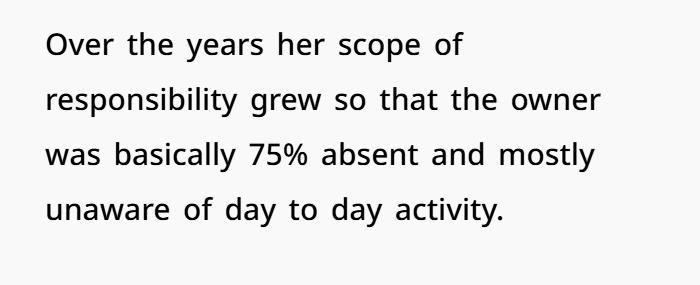
As the company grew, the owner slowly stepped away from daily work. He became less involved with everyday decisions because she was handling so much of the business.
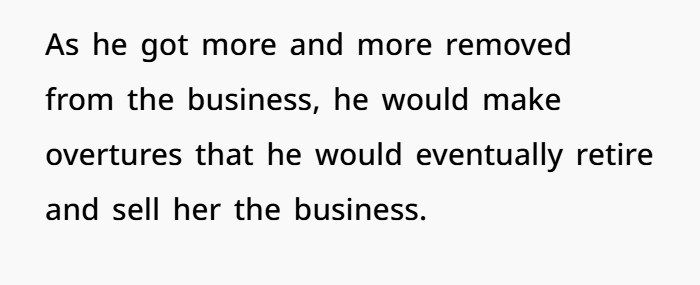
He often suggested that one day he would retire and sell the company to her. Those conversations continued for years, but nothing ever happened.
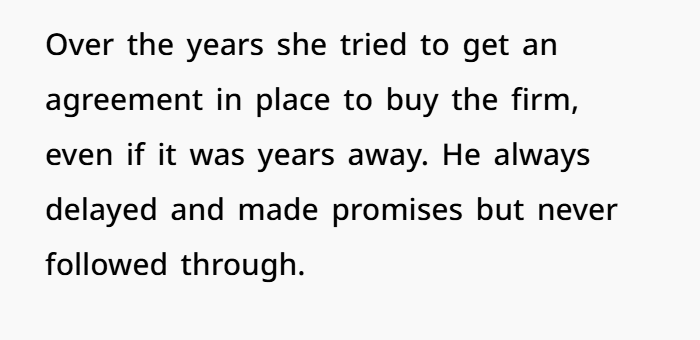
She tried several times to create a real agreement for buying the company. Each time, the owner delayed things and made more promises.
From the outside, it looked like he wanted to keep her motivated without giving her any actual control.
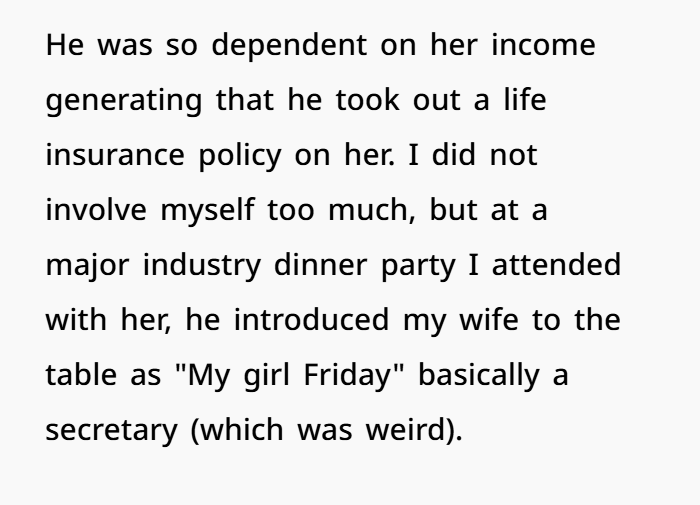
The situation became even stranger when he introduced her at an industry dinner as his “Girl Friday.” The phrase usually refers to a personal assistant or helper, which felt completely out of place considering she had helped build a major part of the company.
The Contract That Revealed the Truth
One day, she received a small raise, a bonus, and a new employment contract.
At first, it seemed like recognition for years of hard work. But after reading the paperwork carefully, she noticed something important.
The agreement included restrictions that would limit her ability to leave and work elsewhere. She realized the owner was trying to protect himself from losing her to a competitor.
Around the same time, a competing company contacted her. They explained they were already in the final stages of reviewing the business they were planning to buy and wanted to meet with her.
That was the moment everything became clear.
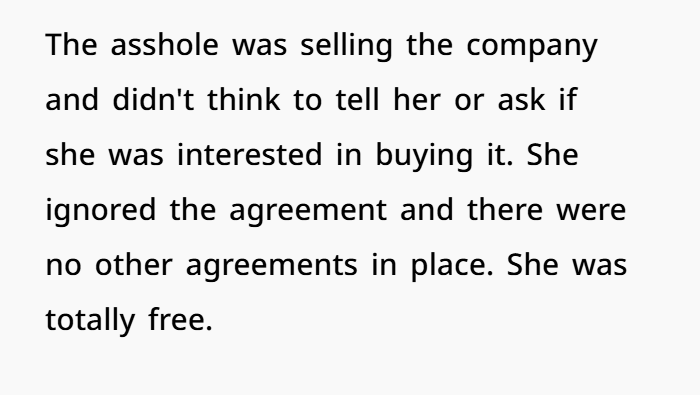
The owner was selling the company behind her back.
He had spent years saying she could eventually buy the business, yet when the opportunity actually came, he never asked her.
The Employee Decided to Build Her Own Company
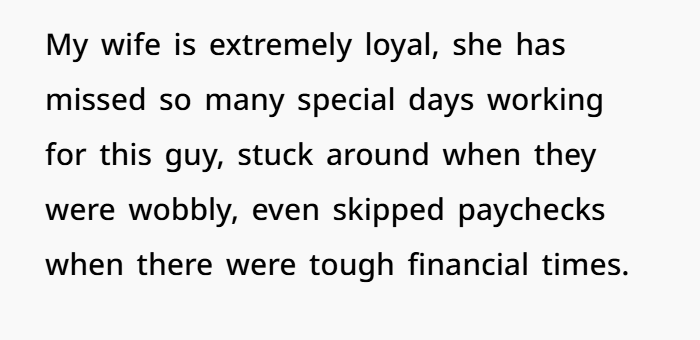
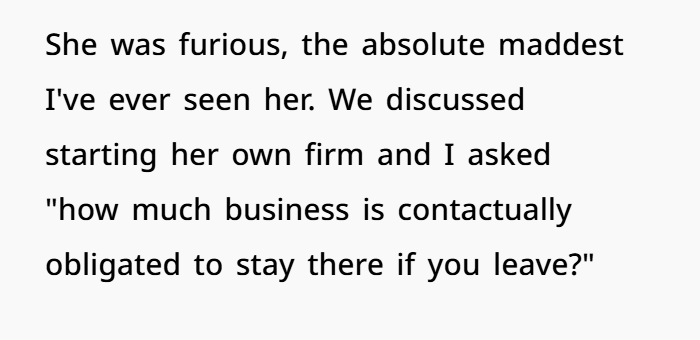
She was devastated and angry. After years of loyalty, missed personal events, and even helping during difficult financial periods, she felt completely betrayed.
Instead of waiting for another promise, she looked at her options.
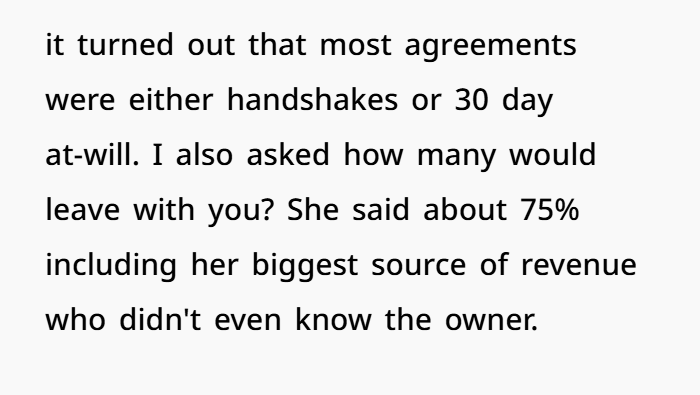
She discovered that many client agreements were informal or could be ended with short notice. A large number of customers had strong relationships with her, not the owner.
She estimated that around 75% of the business could potentially follow her, including some of the biggest accounts.
That changed everything.
Business owners often underestimate how much value is tied to relationships, reputation, and customer trust. These are major parts of a company’s overall value, especially in consulting and service-based industries.
A New Firm Was Built During a Three-Week Vacation
She had months of unused vacation time, so she decided to use it.
During a three-week break, she rented an office in the same building, created a plan, and prepared to launch a new consulting firm.
She was careful about how she handled the transition. She left company property behind and avoided giving her former employer any obvious reason for a legal fight.
She contacted clients and explained that she was leaving. She told them that if they wanted to move their accounts, they first needed to end their relationship with the old company.
Many clients understood exactly what was happening.
The Old Company Lost Its Biggest Asset
While she was away, the former owner suddenly called in panic.
A major client had left, and he wanted to know if she knew anything about it.
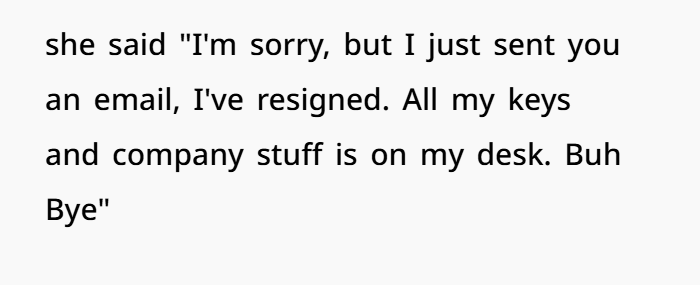
She calmly explained that she had already resigned. Her keys and company belongings were waiting on her desk.
The message was simple: she was done.
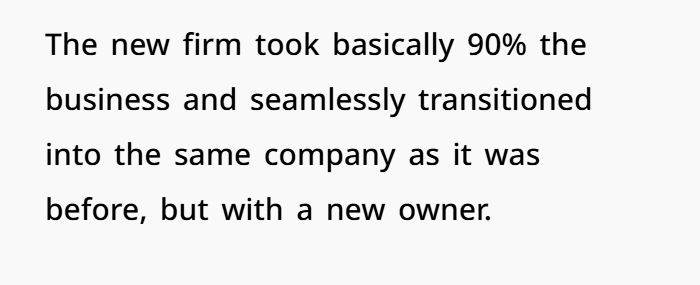
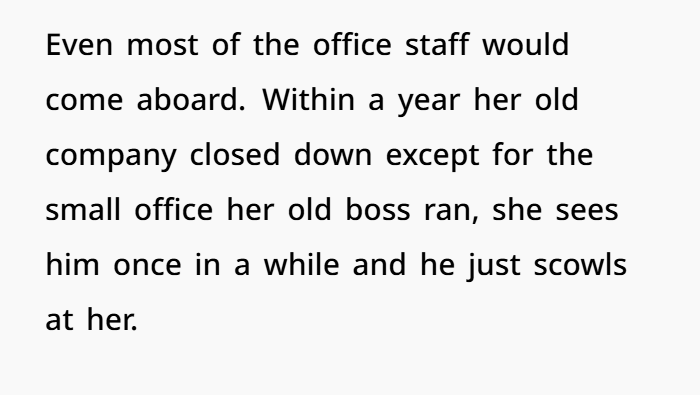
Her new company quickly replaced the old one in many ways. About 90% of the business moved over, the transition happened smoothly, and even many employees decided to join her.
The company that once depended on her continued under a new owner — her.
A Lesson About Employee Loyalty and Business Leadership
Within a year, the original company had mostly disappeared except for the small office still run by the former owner.
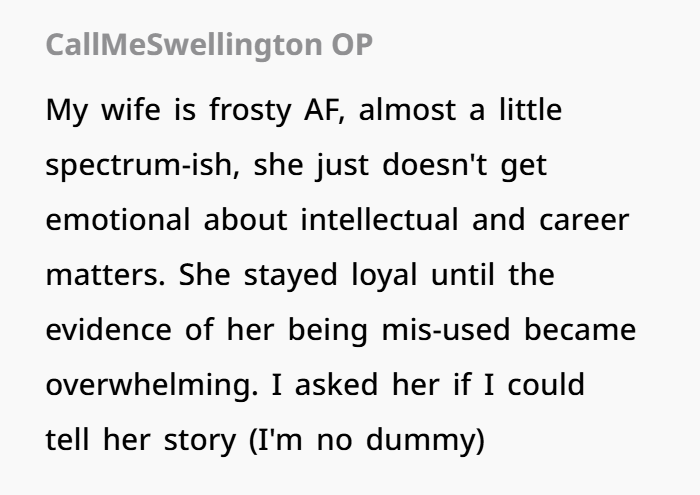
The former owner had spent years believing he controlled the business. But he failed to recognize that much of the company’s real value was connected to one person.
This story is a reminder for business owners that employees are not just costs on a payroll. Skilled workers, trusted managers, and experienced professionals can become the heart of a company.
A successful business depends on more than buildings, contracts, and equipment. It depends on people.
For companies thinking about ownership transfer, retirement, or selling a business, professional advice and proper planning can prevent situations like this. Resources about valuing and preparing a company for transition are also discussed by organizations such as SCORE small business mentoring resources.
The biggest mistake the owner made was not losing an employee.
He lost the person who had become the business.
See the comments to know what people said


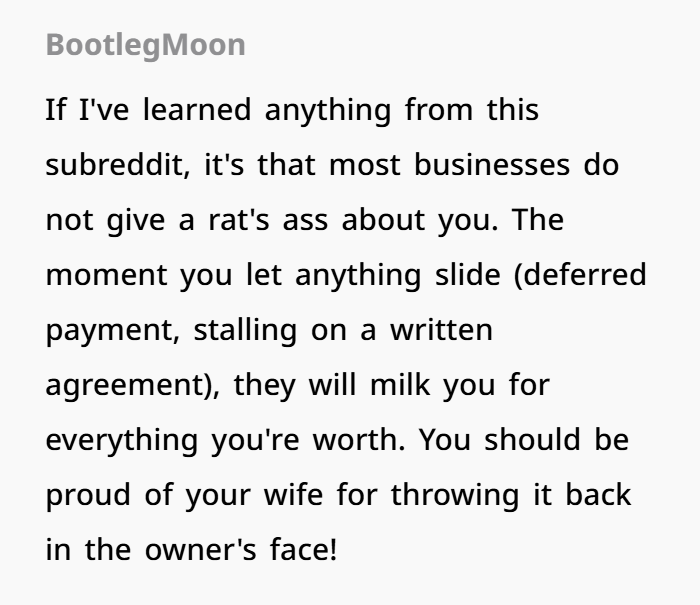


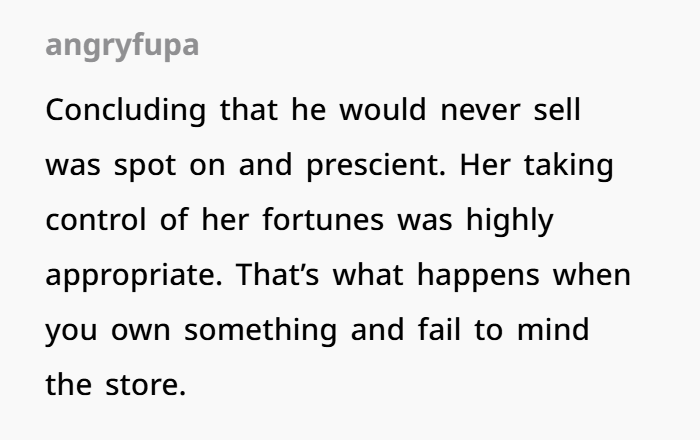
This story shows a simple but powerful lesson: a company’s biggest asset is not always its name, office, or financial records. Sometimes, it is the person who built the relationships, earned customer trust, and kept everything moving behind the scenes.
The owner had years to recognize her value and create a fair path for the future. Instead, he kept delaying promises and treated a key leader like someone who could easily be replaced.
In the end, the business did not fail because of competition or bad luck. It failed because the owner ignored the person who had become the foundation of the company.
For business owners, this is a reminder that loyal employees should be respected, rewarded, and included in important decisions. A smart leader understands that protecting talent and planning for the future is just as important as making money today.
Sometimes, the person working quietly in the background is the person holding the entire business together.