I Kicked My Bridesmaid Out Two Weeks Before My Wedding—Then Found Out She Has Cancer

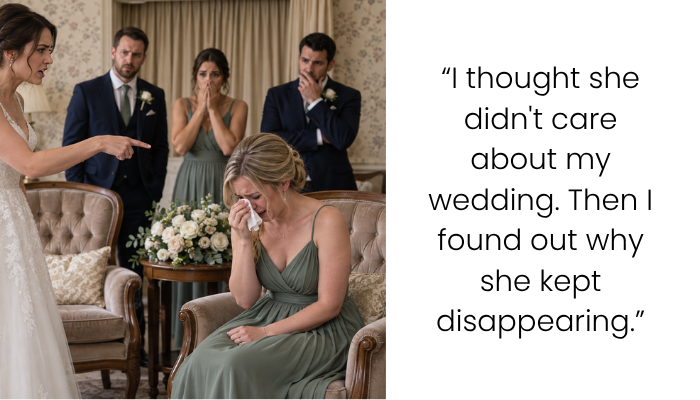
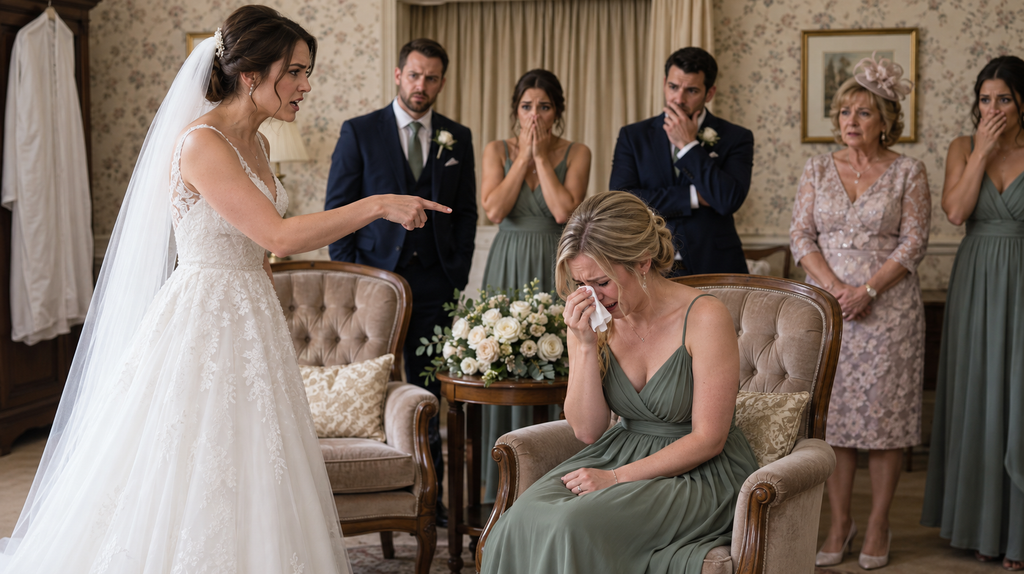
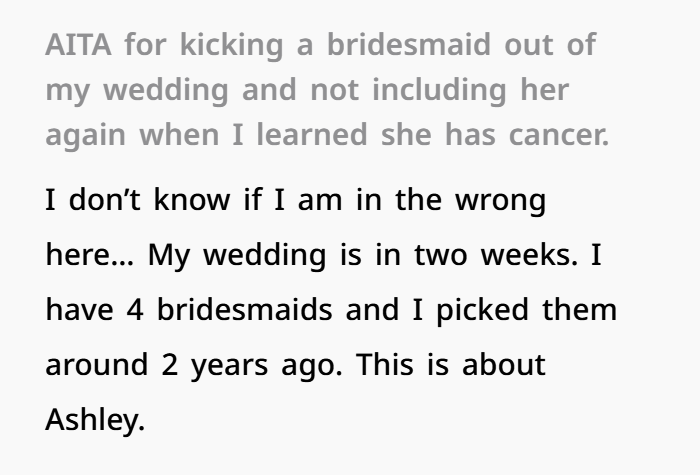
This bride thought one of her bridesmaids was simply not interested in her wedding. Her friend Ashley had agreed to be part of the wedding party, but she later started canceling plans. Since wedding planning often requires careful scheduling, budgeting, and coordination, the bride became concerned about Ashley’s lack of participation.
Ashley said she could not afford her bridesmaid dress and missed several shopping trips. When she finally attended one, she seemed distracted and spent much of the time looking at her phone. She also missed tailoring plans. The bride tried to check on her privately, but Ashley continued to say that nothing was wrong.
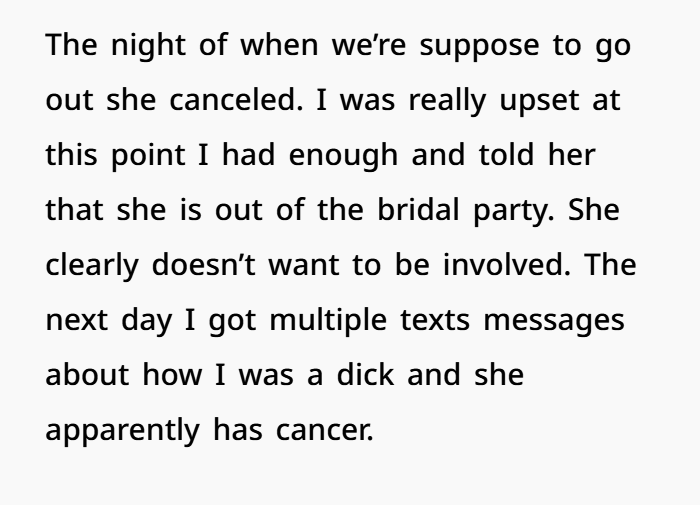
After Ashley canceled the bachelorette party at the last minute, the bride reached her limit. The event date had already been changed more than once, partly because of Ashley’s schedule. Feeling that she could no longer depend on her, the bride removed Ashley from the wedding party.
Everything changed when the bride learned that Ashley had cancer. The news explained why Ashley may have struggled to take part in wedding events, but it also created a complicated situation. Ashley had every right to keep personal health information private, while the bride had been making decisions without knowing what she was facing. The disagreement shows how difficult wedding planning, friendships, health privacy, and personal boundaries can become when important information is not shared.
Illness, Privacy, and the Need for Honest Communication
Finding out that Ashley has cancer changes the whole situation.
Before the bride knew about Ashley’s illness, her behavior may have looked careless. She canceled plans, missed events, and often said everything was fine.
Now there is more information.
Ashley may have been dealing with medical appointments, treatment, tiredness, healthcare costs, stress, or the emotional weight of a serious diagnosis.
A major illness can affect work, relationships, finances, mental health, and everyday life. Even simple plans can suddenly become difficult.
That does not mean Ashley handled every situation perfectly. But her diagnosis helps explain why she may have struggled to keep her commitments.
You Cannot Judge Someone’s Health by Their Appearance
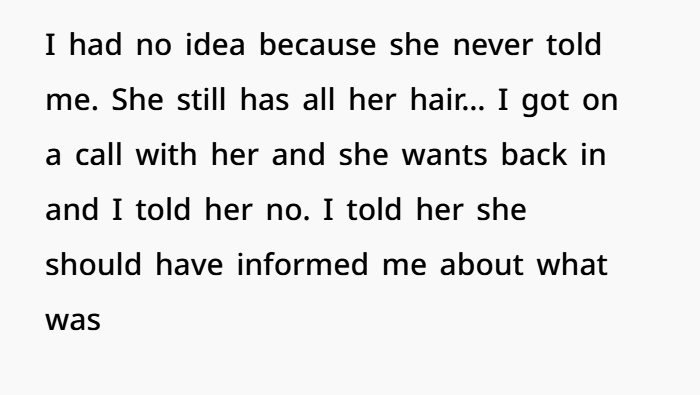
One comment from the bride is especially important. She noticed that Ashley still had her hair and questioned whether she was receiving treatment.
That is not a reliable way to judge someone’s medical condition.
Cancer treatment is different for every person. Not everyone receives chemotherapy, and not every type of treatment causes complete hair loss.
Some people with serious health conditions may look completely healthy to others.
That is why it is better not to make assumptions about someone’s health based on appearance.
Medical care is personal, and only the patient and their healthcare professionals know the full situation.
Ashley Had a Right to Medical Privacy
Ashley was not required to immediately tell her friends about her cancer diagnosis.
Health information is deeply personal.
Some people tell friends and relatives soon after receiving a diagnosis. Others need time to understand what is happening before they are ready to talk about it.
There can be many reasons for staying private.
A person may not want constant questions. They may not want other people sharing their medical information. They may also want some parts of life to continue without everything becoming focused on their illness.
Ashley had the right to decide when and how she wanted to share her diagnosis.
Privacy Does Not Mean Saying Nothing
However, there is a difference between medical privacy and basic communication.
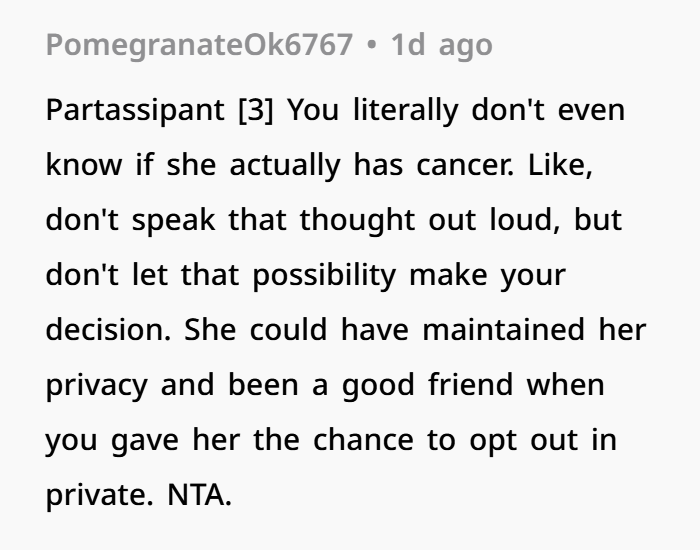
Ashley did not need to tell the bride that she had cancer.
She could have said that she was dealing with a serious personal health issue and could not promise that she would attend every bridesmaid event.
That small amount of information could have made a big difference.
It would have protected her private medical details while helping the bride understand why her plans kept changing.
This is especially important because being part of a wedding usually involves commitments from several people.
The Bride Did Try to Check on Her
The bride apparently asked Ashley more than once if something was wrong.
She also gave Ashley the chance to step away from being a bridesmaid.
Ashley continued to say that everything was fine.
From the bride’s point of view, that made the repeated cancellations difficult to understand.
The bride did not know about the cancer diagnosis. She could only make decisions using the information she had at the time.
That is why removing Ashley from the bridal party was not automatically unfair.
Wedding Plans Affect More Than One Person
Changing a bachelorette party or other wedding event can affect several people.
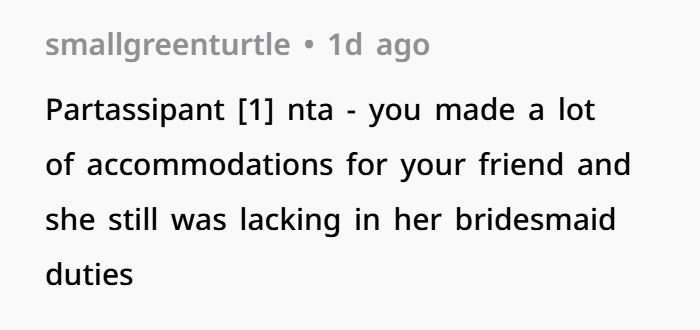
Bridesmaids may need to change work schedules, arrange childcare, update travel plans, move reservations, or spend additional money.
Wedding planning can already involve significant costs and scheduling challenges.
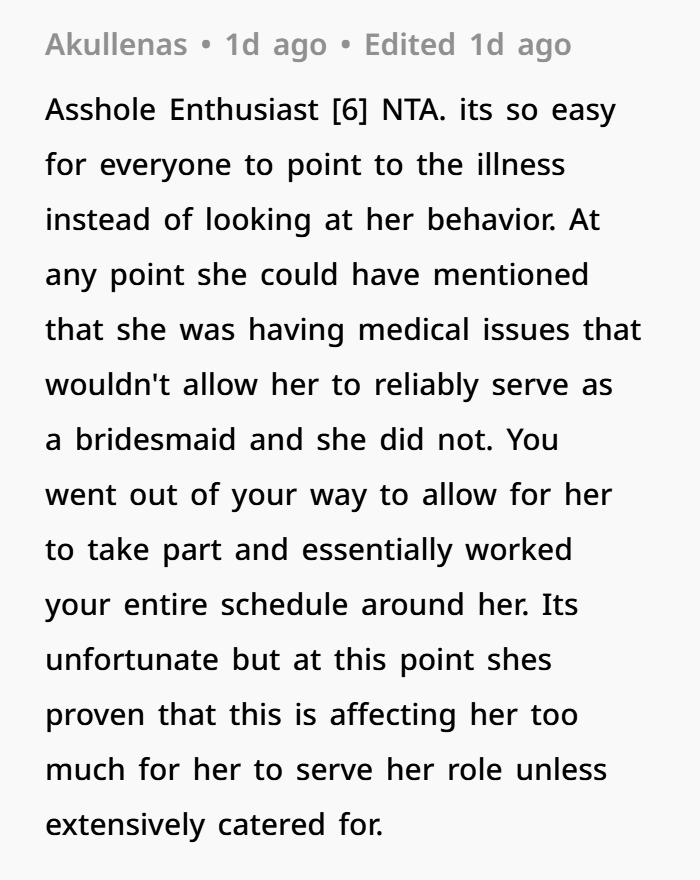
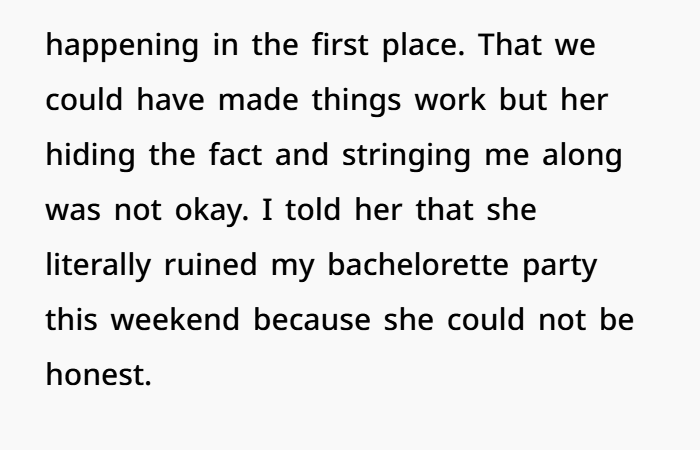
If an event is moved several times to help one person and that person still cannot attend, frustration is understandable.
At the time, the bride did not know that Ashley was dealing with a serious medical condition.
That context matters.
The Bride’s Reaction After Learning the Truth Is Different
Once the bride learned that Ashley had cancer, however, the situation changed.
It became clear that the cancellations were connected to something much more serious than a lack of interest in the wedding.
The bride could still be disappointed about the poor communication.
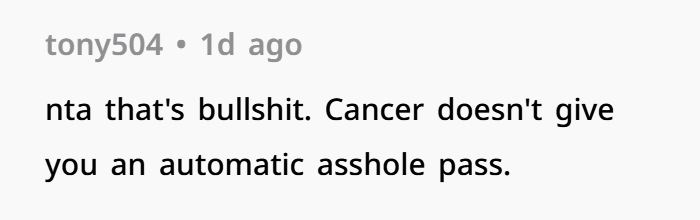
But saying Ashley “ruined” the bachelorette party puts a lot of blame on a friend dealing with a serious illness.
This was the moment when compassion should have become more important than the earlier frustration.
A person can be upset about poor communication while still showing kindness toward someone facing a major health challenge.
Being a Bridesmaid Is a Separate Issue
There are really two different questions here.
The first is whether Ashley should become a bridesmaid again.
The second is how Ashley should be treated as a friend.
Those questions do not need to have the same answer.
The wedding is only two weeks away. Plans may already be complete, and changing the bridal party again could create additional stress.
Ashley may also have medical appointments or days when she needs to rest.
Putting her back into the wedding party simply because everyone now knows about her diagnosis could even create pressure for her.
Keeping the current wedding plans does not have to mean ending the friendship.
There Is a Kinder Middle Ground
The bride could acknowledge both sides of the situation.
She could make it clear that Ashley never owed her the details of her cancer diagnosis.
At the same time, she could explain that knowing Ashley was dealing with a serious private issue would have helped her understand the cancellations.
That would allow the bride to keep the current wedding plans while still supporting Ashley as a friend.
It also avoids making Ashley feel that sharing private medical information was a requirement for receiving kindness.
Serious Illness Can Affect Everyday Life
A serious diagnosis can create challenges far beyond physical symptoms.
A person may suddenly have to think about medical appointments, healthcare, health insurance, treatment costs, work schedules, family responsibilities, and future plans.
There can also be a major emotional impact.
Friends may not see any of this from the outside.
That does not mean people should ignore every missed commitment. Clear communication still matters.
But when someone’s behavior suddenly changes, it can be helpful to remember that there may be private circumstances other people do not know about.
Good Friendships Need Privacy and Communication
Healthy relationships need boundaries.
Friends should not feel forced to share private medical information before they are ready.
At the same time, when someone has agreed to an important responsibility, it is helpful to communicate if they can no longer reliably meet that commitment.
Both ideas can be true.
Ashley deserved privacy.
The bride deserved enough information to understand that Ashley’s availability had changed.
Neither required Ashley to explain the details of her diagnosis.
Verdict: The Original Decision Was Understandable, but Compassion Matters
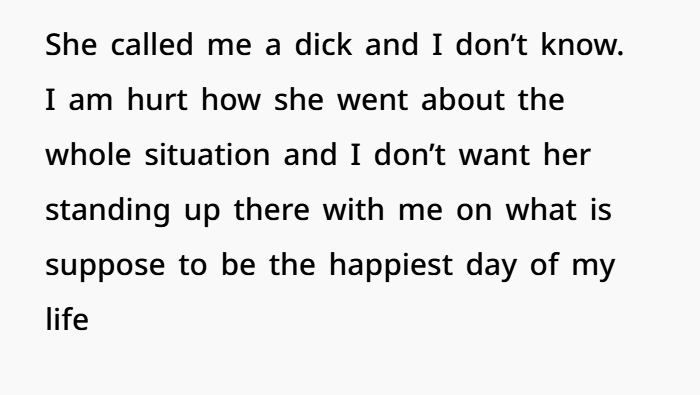
The bride was not necessarily wrong for originally removing Ashley from the bridal party.
When she made that decision, she did not know Ashley had cancer. From her point of view, Ashley had repeatedly canceled plans while continuing to say that nothing was wrong.
Ashley also did not owe the bride her diagnosis. She had every right to keep her medical information private.
However, saying that she was dealing with a serious health issue could have prevented much of the misunderstanding.
Once the bride learned the truth, the situation deserved a more compassionate response.
She did not have to give Ashley her bridesmaid position back, especially with the wedding only two weeks away. But Ashley should not be made to feel guilty for keeping her cancer diagnosis private.
The most balanced conclusion is this: Ashley did not owe the bride the details of her diagnosis, but better communication about her ability to participate would have helped. The bride did not owe Ashley a place back in the bridal party, but her seriously ill friend deserved empathy and understanding.
In difficult situations involving health, friendship, and privacy, being kind does not mean ignoring problems. It means discussing those problems with care.
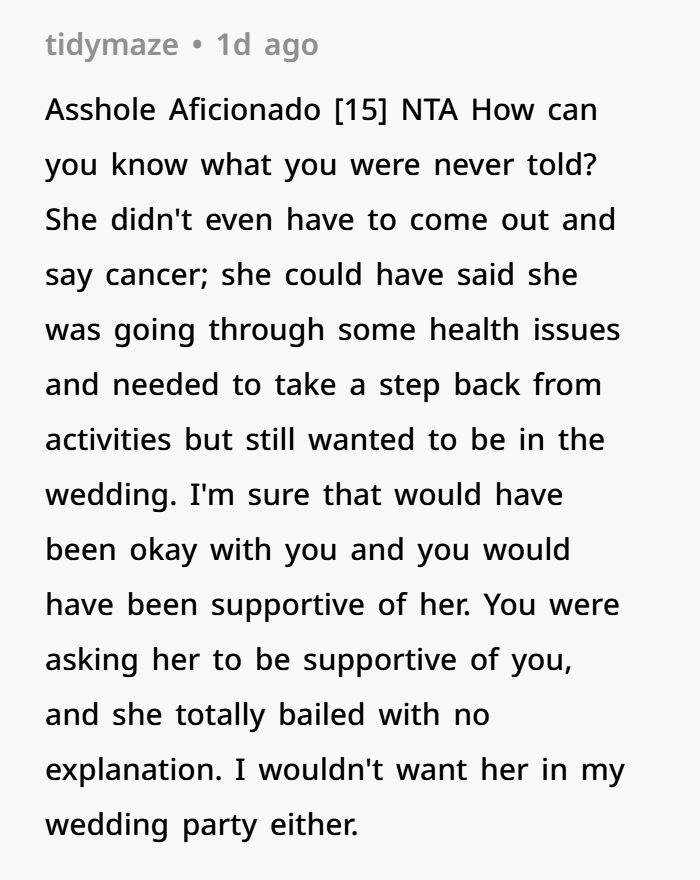
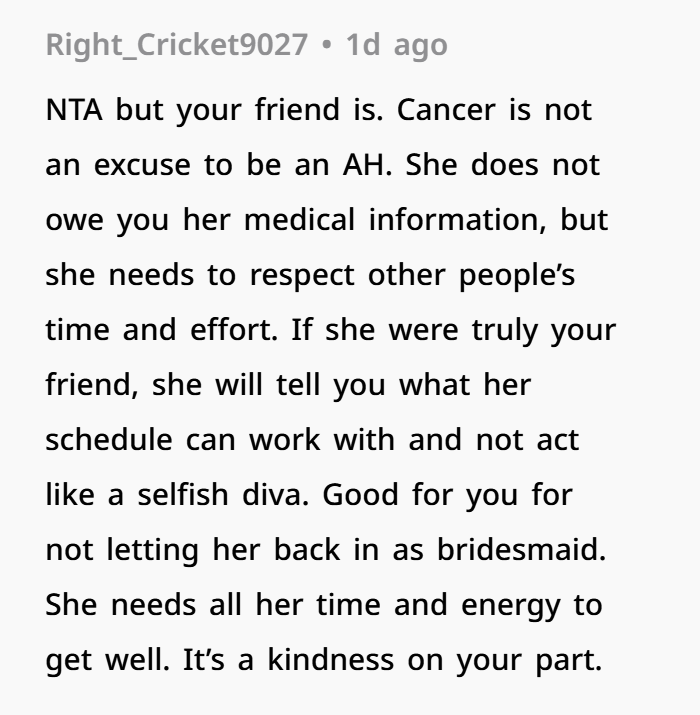
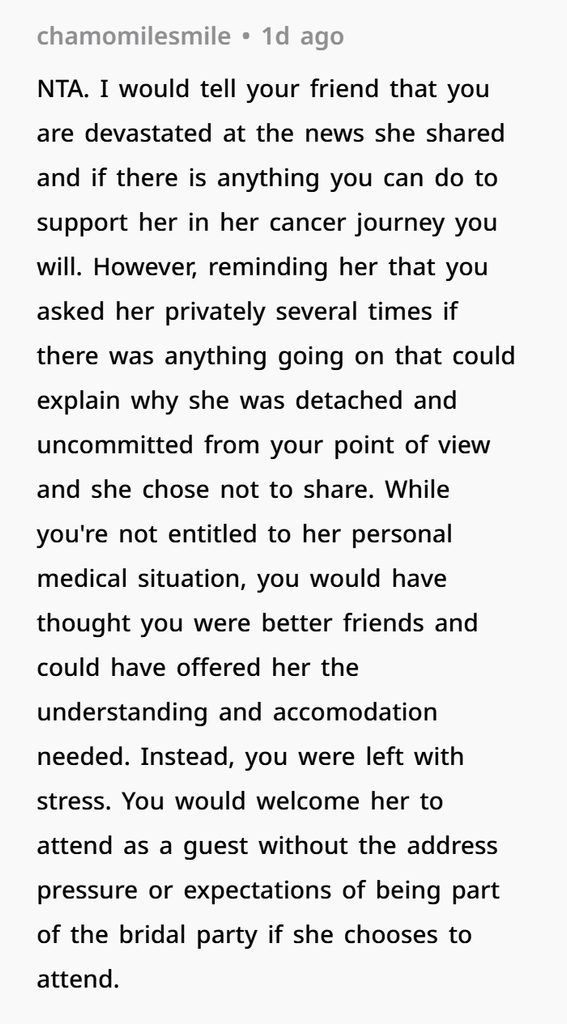
Readers Shared Their Thoughts