New Dad Chooses Sister’s Wedding Over Family Trip

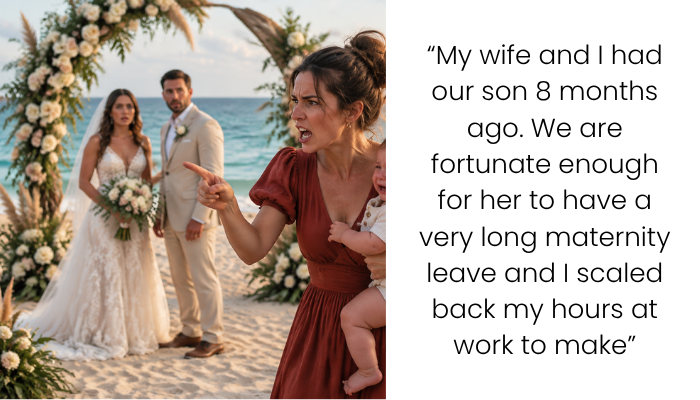
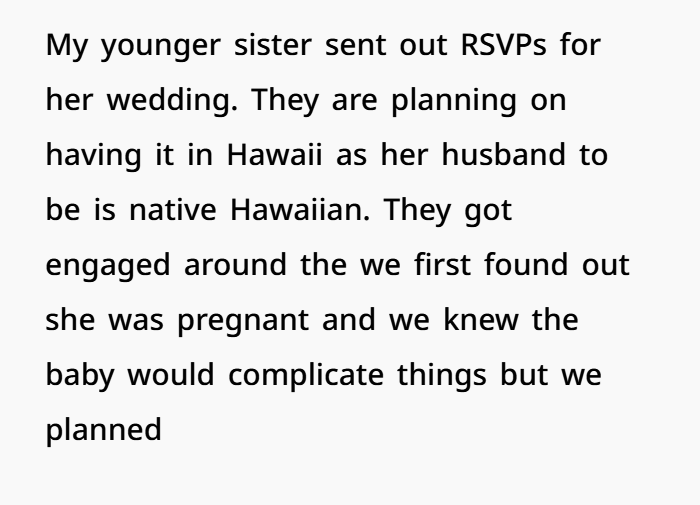
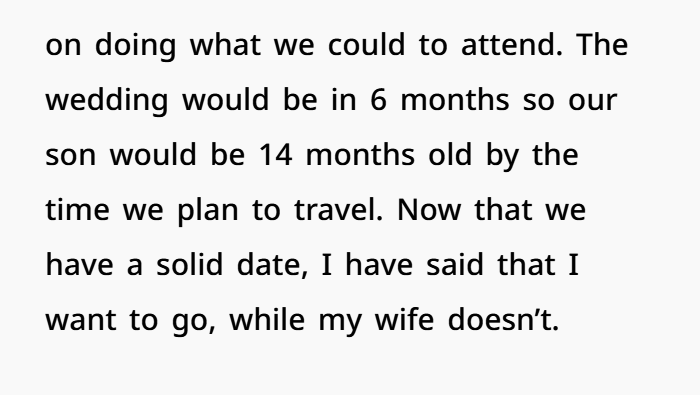
A new father shares a story about a difficult choice between his sister’s wedding and his wife’s feelings about their child’s first years. He and his wife have an 8-month-old baby and feel that parenting has been going well. When his sister plans a wedding in Hawaii for the future, he thinks they can all travel together when their child is older.
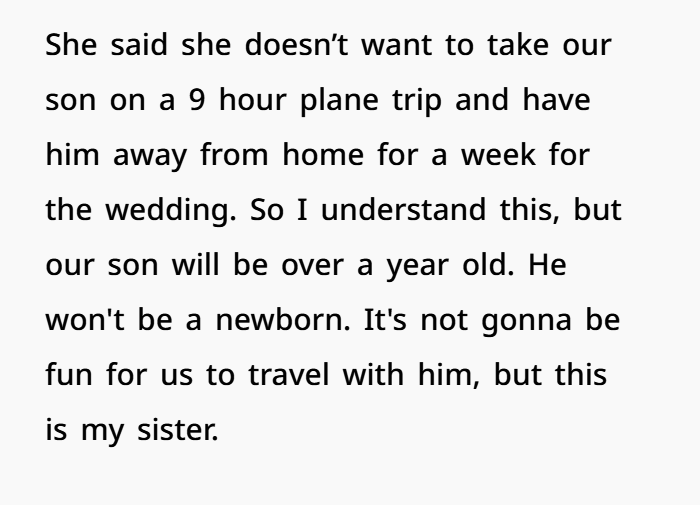
His wife feels differently and does not want to take their child on such a long trip. She believes staying close to home would be easier and less stressful for the family. The father feels that the trip should be possible because their child will not be a newborn anymore.
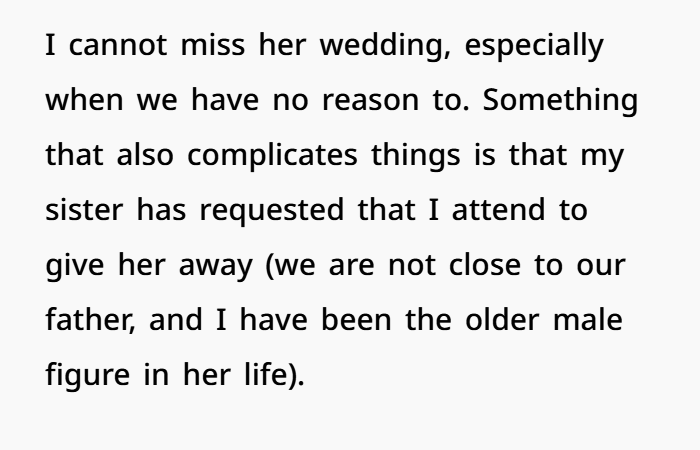
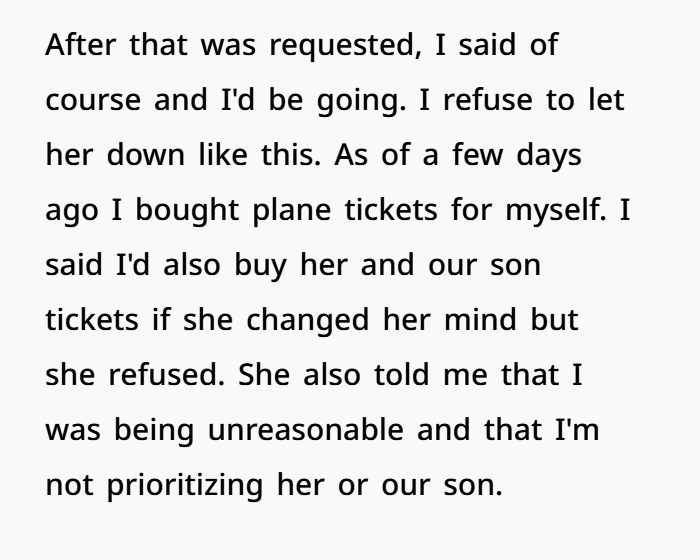
The father’s sister has a special place in his life and asks him to support her during the wedding ceremony. Because of their close bond, he decides to attend even after his wife chooses not to join. He feels he is doing the right thing by being there for his sister.
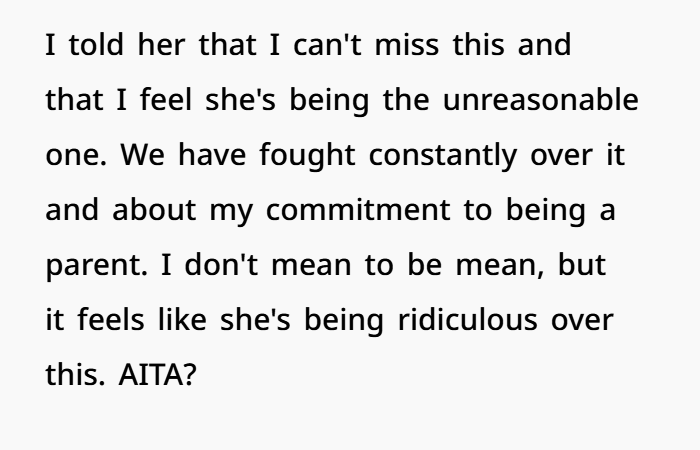
His wife sees the decision differently and feels that he is putting another family member before her and their child. This story is about balancing family commitments, parenting choices, and emotional support. Respect, teamwork, and communication are important when making major family decisions.

Balancing Family Responsibilities, Parenting, and Marriage
Becoming a parent can change the way people think about family. Before having children, it may be easier to make plans around parents, siblings, and other relatives. After having a baby, a spouse and child often become the main focus.
That seems to be the real issue in this situation.
On the surface, the couple is arguing about a trip for a wedding. But underneath that disagreement are bigger questions about parenting responsibilities, marriage communication, family priorities, and making decisions together.
Both people have understandable reasons for feeling the way they do.
Why the Sister’s Wedding Matters So Much
For the husband, this is not just another wedding.
His sister has asked him to take on an important role because their father is not involved. That makes the wedding much more personal for him.
He may feel that his sister is depending on him for emotional and family support. Missing such an important day could make him feel as though he has disappointed someone who truly needs him.
Weddings are also major family events. People often spend months planning the ceremony, travel, accommodation, wedding expenses, and other details.
It makes sense that he wants to be there for his sister.
The problem is not his desire to attend. The problem is how that desire affects his wife and young child.
His Wife Has Real Parenting Concerns
His wife also has a reasonable point.
Traveling with a 14-month-old child can require a lot of planning. A toddler may not understand why their normal routine has suddenly changed.
Long flights, different sleeping times, unfamiliar food, busy airports, and a new environment can make family travel more difficult.
Of course, many parents successfully travel with babies and toddlers. But every child is different.
Some children adjust easily. Others need more time and support.
That is why decisions about traveling with a young child should consider the child’s needs as well as the parents’ comfort level.
The wife may not be trying to keep her husband away from his sister. She may simply be thinking about childcare, travel planning, sleep routines, and the extra work involved in taking a toddler on a major trip.
Those concerns deserve to be heard.
The Bigger Problem Is How the Decision Was Made
The biggest issue is that the husband appears to have made the final decision on his own.
Major decisions involving a young child should normally be discussed by both parents.
International travel, being away from home for several days, childcare arrangements, travel costs, and family schedules can affect everyone in the household.
This is where good marriage communication becomes important.
In a healthy partnership, one person should not simply announce a major family decision and expect the other person to accept it.
Both people need a chance to explain their concerns.
Even when couples disagree, shared decision-making can help protect trust in the relationship.
His Words May Have Sent the Wrong Message
The husband says he refuses to let his sister down.
It is easy to understand what he means. He loves his sister and wants to support her.
But his wife may hear those words differently.
She may feel that avoiding his sister’s disappointment is more important to him than listening to her concerns.
That may not be what he means at all. Still, communication is not only about what someone intends to say. It is also about how those words make the other person feel.
This is why clear communication skills are so valuable in a marriage.
There Were Other Options to Discuss
This did not necessarily have to become a choice between attending the full trip and missing the wedding completely.
The couple could have discussed several possible compromises:
- He could attend for fewer days.
- He could travel alone while arranging extra support for his wife at home.
- They could travel as a family with a detailed childcare and travel plan.
- A trusted relative could possibly provide extra help.
- They could review the travel plans again closer to the wedding.
The best option would depend on their family situation, budget, childcare needs, and the child’s routine.
The important part is that both partners should be involved in choosing the solution.
Buying the Ticket Changed the Situation
The husband buying his own ticket after his wife had already expressed concerns is probably the biggest problem.
Wanting to attend his sister’s wedding is reasonable. Buying the ticket may also have felt like the easiest way for him to protect an important family commitment.
But doing it without reaching an agreement with his wife can hurt trust.
His wife also needs to be willing to discuss realistic solutions. Simply refusing every possible option would make it harder for the couple to find a fair compromise.
This is why an ESH (Everyone Sucks Here) judgment can make sense. Neither person’s feelings are unreasonable, but their communication and decision-making could have been better.
This Conflict Is About More Than a Wedding
Many relationship disagreements start with something small and reveal a much bigger issue.
This argument may appear to be about wedding travel. In reality, it is about whether both partners feel respected and included.
The husband sees himself as a brother trying to support his sister during one of the biggest moments of her life.
The wife sees herself as a mother thinking about her young child and the needs of their household.
Both roles matter.
Marriage does not mean ignoring parents or siblings. But once a couple has a child, decisions that affect the household usually need to be made with the spouse and child in mind.
The Most Balanced Conclusion
The husband is not wrong for wanting to attend his sister’s wedding. His sister clearly means a lot to him, and supporting her during such an important family event is understandable.
Where he went wrong was treating the travel decision as something he could make by himself.
His wife’s concerns also deserve attention, but refusing to explore any compromise may not be the best approach either.
A healthier solution would involve calm communication, realistic travel planning, childcare considerations, and a decision both partners can accept.
At its heart, this is less about choosing a sister over a wife or a wife over a sister. It is about learning how to balance extended family relationships with the responsibilities of marriage and parenting.
Strong families are not built by always agreeing. They are built when people can disagree, listen to each other, and still make important decisions as a team.
Comments You Can’t Miss

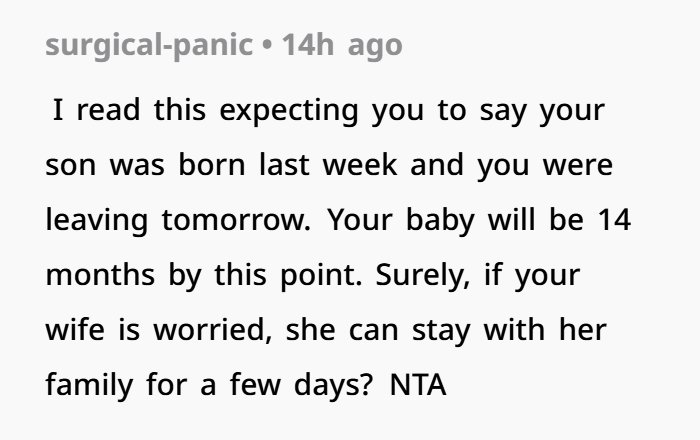
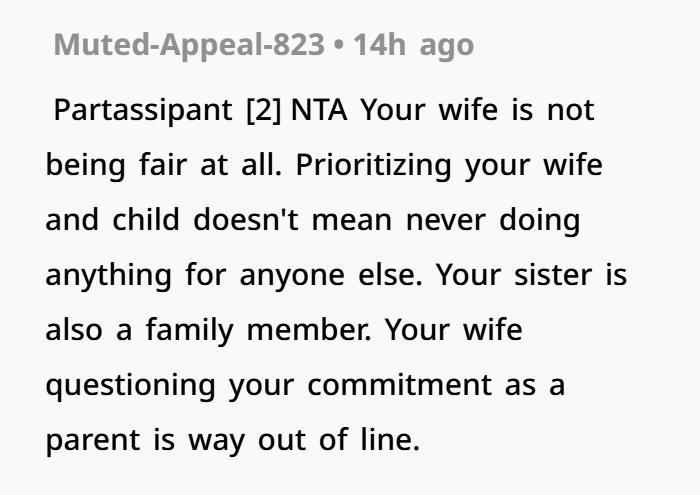
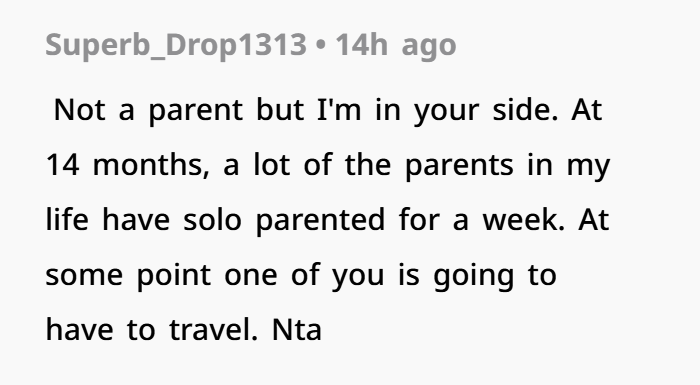
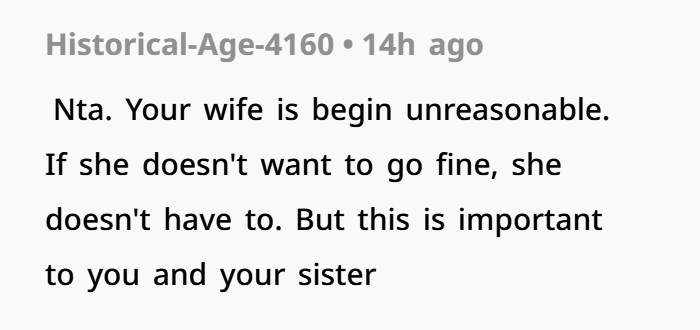
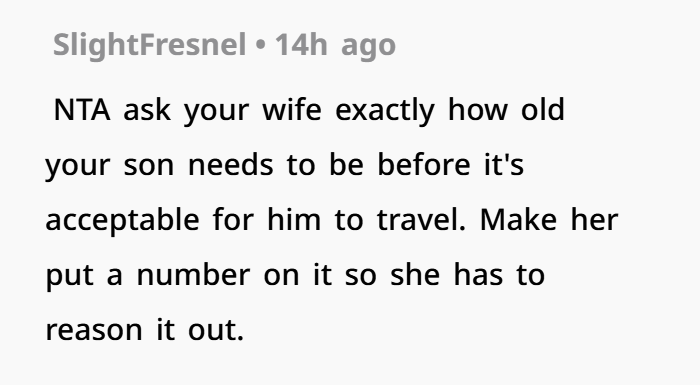
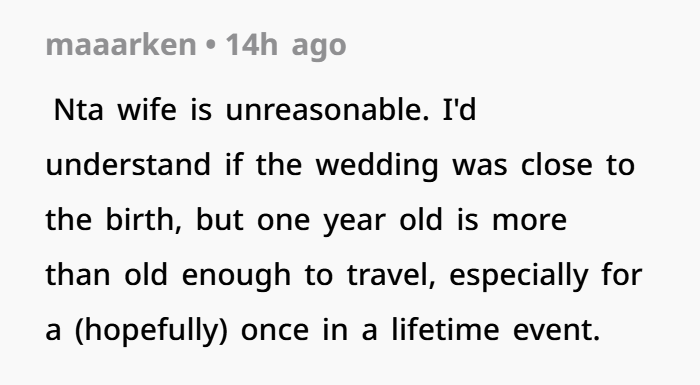
The husband is not wrong for wanting to attend his sister’s wedding. His desire to support his family member is understandable.
However, he is wrong for treating the decision as something he could make alone.
His wife’s concerns about parenting, family travel, and their young child should also be respected.
The best solution would come from honest communication, careful planning, and a willingness from both partners to understand each other.
Strong families are created through teamwork, respect, and shared decisions. Couples do not need to agree on everything, but they do need to work together when important family choices are involved.