
I Bought a Couch for Our Apartment—Now My Friends Want Their Money Back
Living with college roommates isn’t always as fun as people imagine. Most of the time the arguments are over small everyday stuff — dirty dishes, grocery money, or whose turn it is to restock toilet paper. Nothing serious. But for one student, the drama started over something totally unexpected… a second-hand couch from Facebook Marketplace. What was supposed to be a simple shared furniture deal slowly turned into a friendship-ending problem. Before long, everyone was talking about money, cost splitting, and who really owned the couch. It’s funny how a $250 purchase can suddenly feel like a big financial dispute.
The student had been sharing an apartment with four other girls for nearly two years. Things were mostly chill during that time. But when one roommate moved out and took all her furniture with her, the living room suddenly looked empty. Someone had to fix that. So she searched Facebook Marketplace and found a couch listed for $250 — honestly a decent deal for college apartment furniture. The plan was simple: split the cost between the five roommates, $50 each. Everyone seemed okay with it at first. But one roommate asked something before paying. She wanted to know if they’d get their $50 back at the end of the lease. The buyer thought the question sounded a little unnecessary, but she agreed just to keep things smooth.
A year later, things played out differently than expected. The student was the one who handled the whole process — arranging pickup, finding a truck, and even asking family members to help carry the couch up to their second-floor apartment. It wasn’t exactly easy. So when the lease was ending, she figured keeping the now-used couch wouldn’t be a big deal. But her roommates had a different idea. They wanted their $50 back through apps like Venmo or Cash App — or they’d sell the couch online to get their money back. What started as a small furniture purchase quickly turned into a bigger fight about shared bills, fairness, and whether a small money issue is worth risking a friendship.


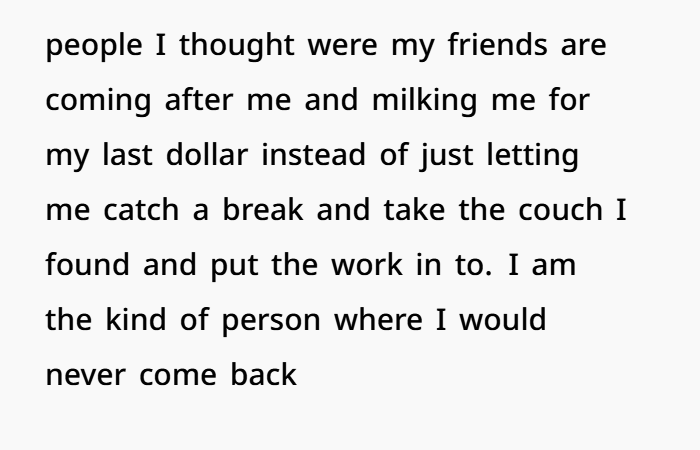
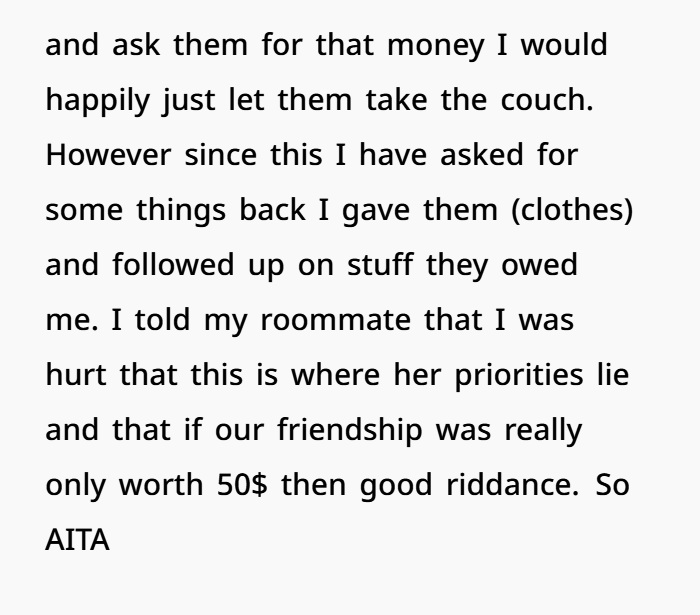
Shared apartments always create these weird money situations. Anyone who’s lived with roommates knows how fast small purchases turn into awkward money talks. One day it’s splitting groceries, next day it’s arguing over furniture payments or utility bills. Sounds small, but stuff like this usually hits deeper things — trust, fairness, and expectations about shared living. In this situation, a $250 couch somehow turned into a full debate about roommate finances. Honestly it even feels a bit like those informal shared asset agreements people talk about in personal finance advice.
Let’s look at the simple math first. Five roommates splitting a $250 couch means each person pays $50. Easy. On paper it looks like a normal shared purchase. But shared furniture inside rental apartments rarely stays that simple. Items like couches, coffee tables, smart TVs, or even small appliances usually fall into a few common roommate finance setups. Either everyone treats it as a communal item, ownership rotates when someone moves out, or one person technically owns it while others just help with the cost.
In this case, it started as a communal purchase. Everyone chipped in so the living room had a couch to sit on. Pretty normal. But things changed the moment one roommate asked if they’d get their $50 back later. That small question actually shifted the whole deal. Suddenly it wasn’t just a shared expense anymore. It started looking more like a refundable payment — almost like a mini deposit on shared furniture.
From a practical money point of view, the couch had already lost value by the end of the year. Furniture depreciation is real, especially for used couches that get daily use. If someone buys a couch for $250 and five roommates use it for a full year, the resale value could easily drop to around $80 to $150 depending on condition and local marketplace demand. So expecting a full refund later doesn’t really line up with how second-hand furniture value works.
That’s why in many roommate setups, shared furniture costs work more like a “usage fee.” Everyone throws in money so the item exists in the apartment while they live there. Later, whoever keeps it just takes the worn version without paying extra. It’s kinda similar to shared household supplies — nobody asks to be reimbursed for paper towels, dish soap, or cleaning products used months ago.
Another layer in this whole situation is the effort that went into getting the couch. The student didn’t just pay money. She did the work too. She found the listing on Facebook Marketplace, talked to the seller, arranged transportation, scheduled the pickup, and then helped move the couch into the apartment. With help from family, sure, but still. Anyone who’s moved furniture up apartment stairs knows that’s exhausting. It’s the kind of task people usually avoid if they can.
In basic group finance or shared living economics, effort counts as a hidden cost. Someone always ends up doing the planning, driving, lifting, or organizing. The others still benefit, but they didn’t spend the time or energy. In a lot of roommate situations, that effort kind of balances things out later. The person who did the work might keep the furniture when everyone moves out. It’s not always written down, but that’s usually how it plays out.
But expectations can change everything. Even if the logic makes sense, people remember what was said at the start. Since the roommates had mentioned getting their $50 back, they probably viewed the couch differently. In their minds it might have felt like a shared asset, not something the buyer would eventually own. That tiny misunderstanding is where tension usually starts.
Roommate money fights like this are honestly super common. A lot of research on shared housing and co-living shows that unclear financial agreements cause most conflicts. Behavioral economics studies even say people react strongly to money situations that feel unfair. Funny thing is, the reaction usually isn’t about the amount. It’s about the feeling of fairness.
What makes this story even more interesting is that the student said she supplied a lot of other household stuff during the year. Things like avocado oil, toilet paper, dishwasher pods, and other kitchen basics. These things seem small, but over months they add up fast. In many apartments one roommate slowly becomes the person who buys everything while others just use it.
From a personal finance angle, those everyday household items can easily cost more than the $50 couch payment. Cooking oils, cleaning supplies, paper goods, random groceries — it can reach hundreds of dollars across a year. But because nobody tracks those costs with budgeting apps or split payment apps, they stay invisible until a bigger argument suddenly brings them up.
Another factor here is friendship. When roommates are also close friends, people expect a bit of generosity. Sharing food, lending clothes, covering small costs — it becomes normal. The relationship works more on trust than strict financial tracking. At that point it stops feeling like accounting and starts feeling more like helping each other out.
When the couch argument suddenly turned into a strict money discussion, it probably felt like a betrayal to the student. She may have believed the friendship should matter more than a $50 reimbursement. In her mind it was a small expense in a shared apartment life. But her roommates likely saw the situation differently. They might have viewed it as a basic financial agreement — contribute money now, get it back later. Neither side was necessarily wrong. They were just approaching the shared expense from different personal finance mindsets.
The conflict really escalated when the roommates suggested selling the couch if they weren’t repaid. That changed everything. Suddenly the discussion wasn’t about working out a fair solution. It felt more like pressure. In many financial disputes, once someone introduces a threat — even a small one like selling shared furniture — the conversation shifts from cooperation to control.
What makes this type of roommate dispute complicated is that both sides have valid reasoning. The roommates helped pay for the couch, so they may feel entitled to their $50 share back. But the student handled the entire process — finding the Facebook Marketplace deal, organizing pickup, arranging transportation, and moving the furniture into the apartment. On top of that, everyone used the couch for an entire year, which in many shared living situations is considered fair value for the contribution.
Legally speaking, informal roommate purchases like this rarely have strong protection. Without a written contract, shared furniture deals mostly rely on trust and expectations. That’s why many rental advice guides and personal finance blogs recommend assigning one clear owner to items like couches, TVs, or appliances. It avoids confusion when roommates move out or when leases end.
The real lesson here isn’t really about a couch or even about $50. It’s about communication in shared housing. If the roommates had clearly decided from the beginning whether the couch was a communal item or someone’s personal property, the entire situation might have been avoided.
Because when expectations collide, small amounts of money can suddenly feel like a big issue. Not because the dollars are huge, but because they represent fairness, respect, and how people value their friendships while living together.
Here Are The Comments
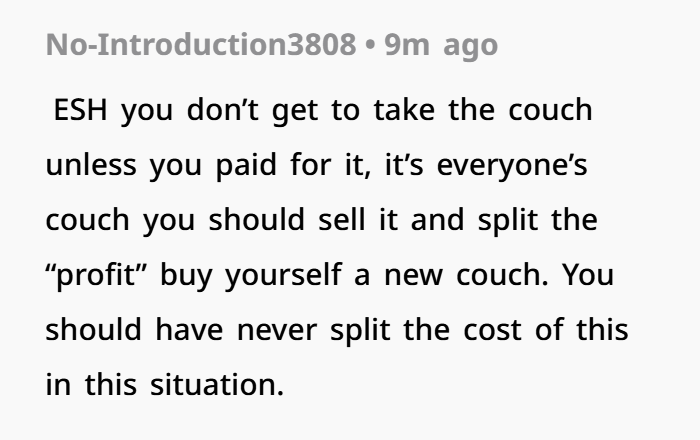
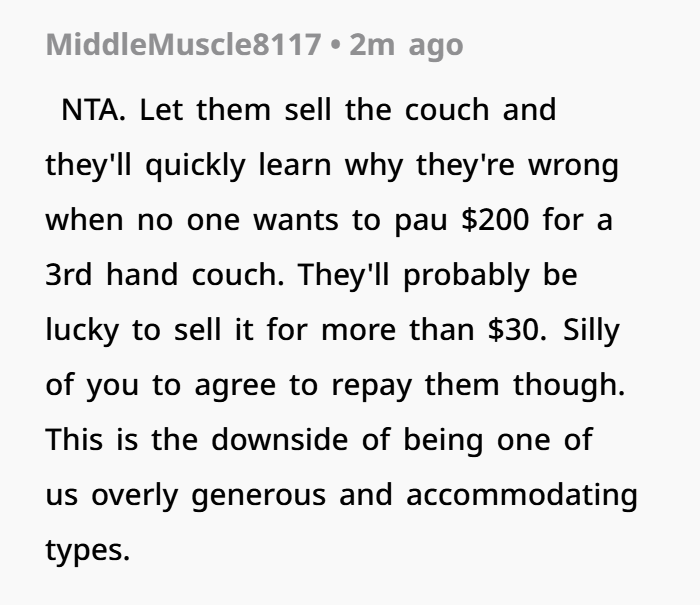
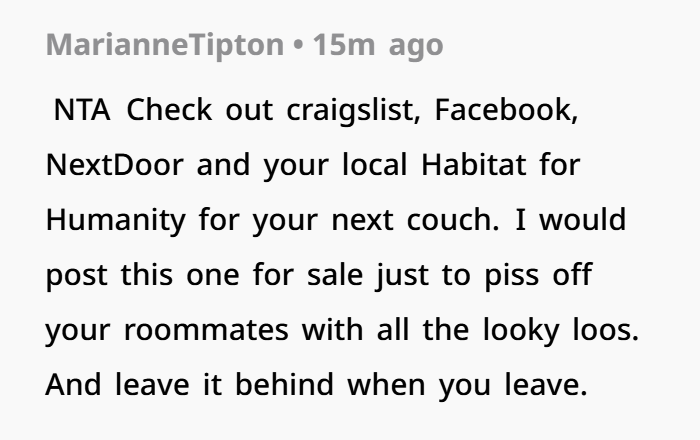
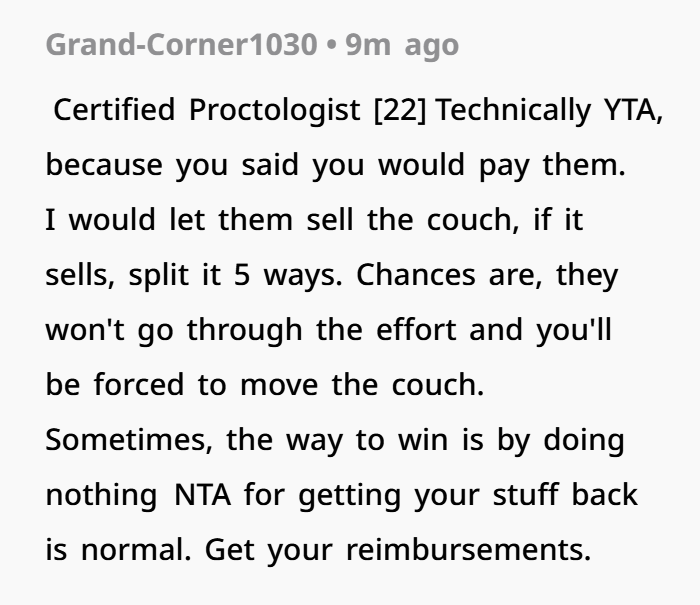
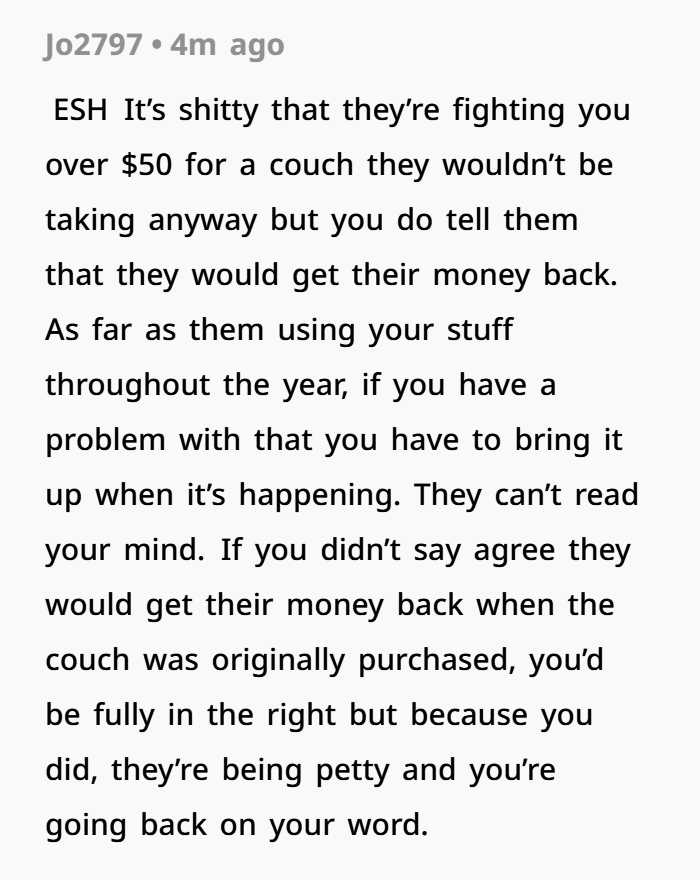

At the end of the day, the real question isn’t just whether someone should reimburse their roommates for a used couch. It’s whether friendships should survive arguments over small shared expenses — and how easily everyday misunderstandings can turn into permanent fallouts when money gets involved.