Uninvited from Christmas but Asked to Leave Gifts Is He Using Me or Am I Overreacting?
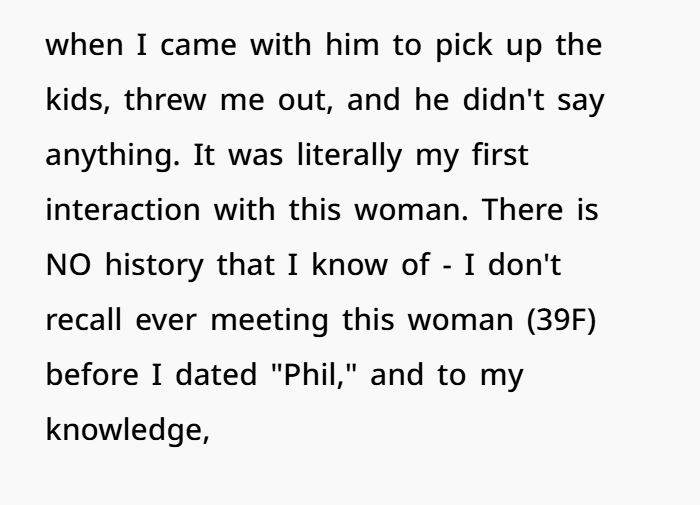
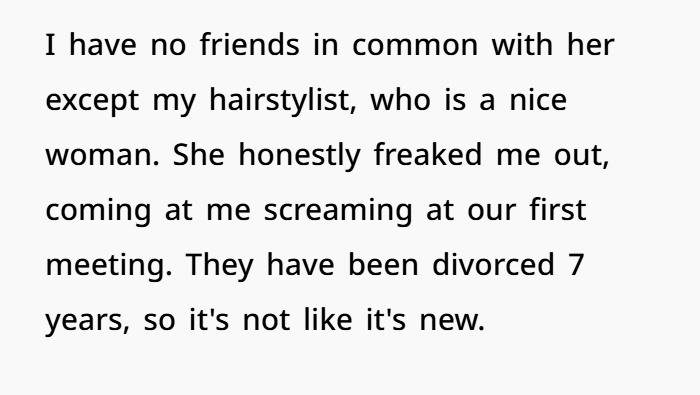
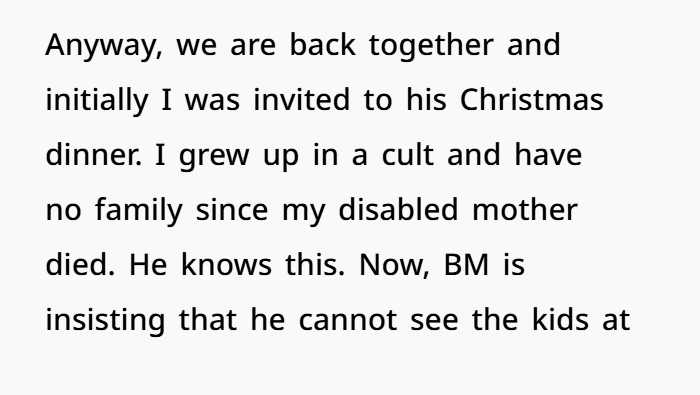
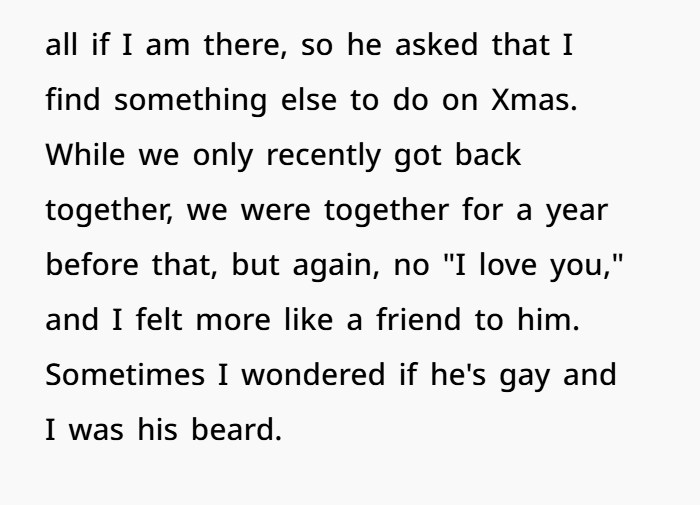
Your story carries a lot of pain, courage, and survival layered into it. You’ve come out of a cult, endured emotional abuse, survived dangerous relationships, and are still learning how to trust yourself and recognize when something isn’t love — it’s control, obligation, or emotional neglect. You’ve been rebuilding your self‑worth piece by piece, and now you’re with a man who not only fails to protect you from hostility, but also expects you to finance his holidays, do emotional labor, and then disappear so everyone else can enjoy the benefits of your effort while you sit alone on Christmas.
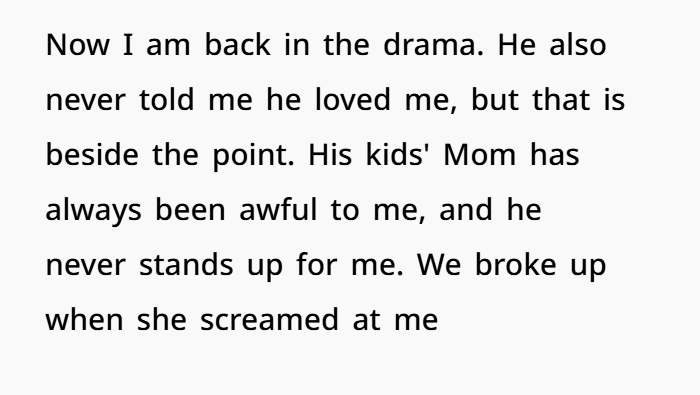
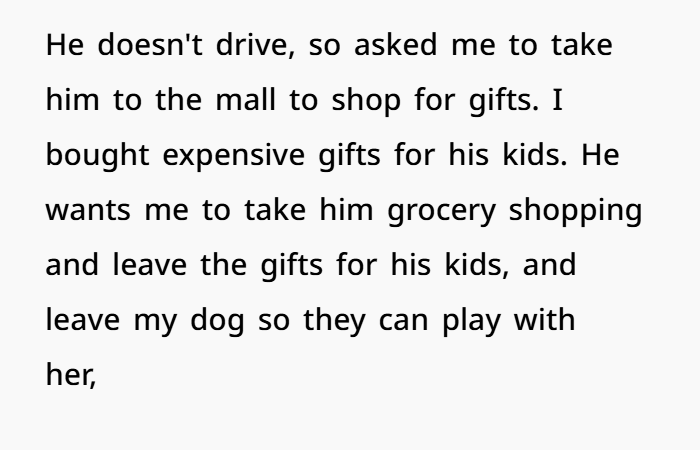
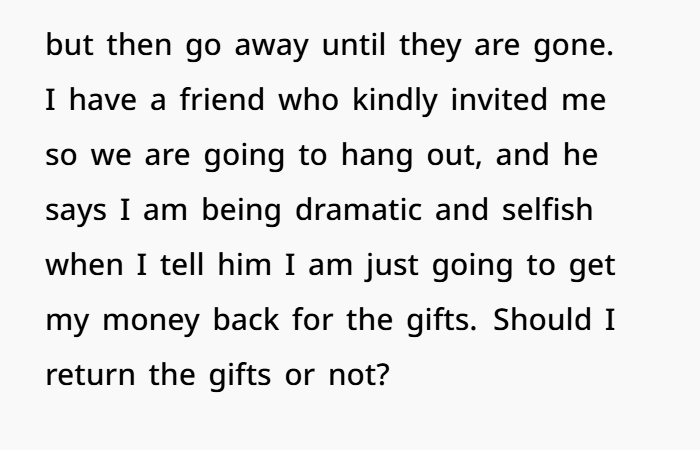
That’s not love. That’s not partnership. That’s someone using your kindness and history of self‑doubt against you. He uninvited you to Christmas because his ex demanded it — and instead of standing up for you or setting boundaries, he asked you to drive him, buy gifts, provide your dog for entertainment, and then vanish. And when you rightfully said you were returning the gifts, he called you dramatic and selfish. That’s manipulation, not misunderstanding.
You’ve spent your life being told you don’t deserve space, love, or respect. But everything about this situation points to one clear truth: you are allowed to have boundaries — and you are allowed to say no.
This woman was excited about celebrating the holidays with her boyfriend

But when she found out she was uninvited, she began to wonder if their relationship has any future at all
Let’s slow down and walk through this with compassion, realism, and honesty — because this isn’t just about Christmas or gifts. It’s about relationship boundaries, emotional validation, trauma recovery, self‑worth, narcissistic dynamics, and financial exploitation in relationships.

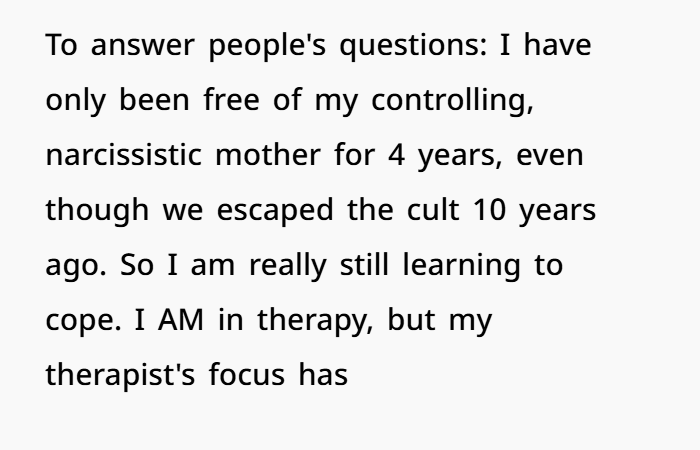
You grew up in a system where your needs didn’t matter. Where love was conditional, control was disguised as care, and silence was survival. Survivors of coercive groups and narcissistic family systems often struggle with people‑pleasing tendencies, fear of abandonment, and a belief that they must earn affection through service or sacrifice. That conditioning doesn’t just disappear — it shows up in relationships where you find yourself giving, accommodating, shrinking, and apologizing.
And here is a man who benefits from exactly that.
He doesn’t drive, yet expects you to chauffeur him.
He doesn’t defend you when his ex mistreats you.
He allows someone else to dictate whether you exist at holidays.
And then has the audacity to ask you to fund gifts, contribute to his life, and disappear quietly.
That’s not compromise — that’s exploitation.
His framing — calling you “dramatic,” “selfish,” or lacking empathy — is a textbook tactic known as gaslighting. Instead of acknowledging your pain or his failure to stand up for you, he reframes the situation to make you question your reactions. When someone’s response to your boundary is guilt‑tripping rather than understanding, that is a sign of emotional immaturity and control‑based dynamics.
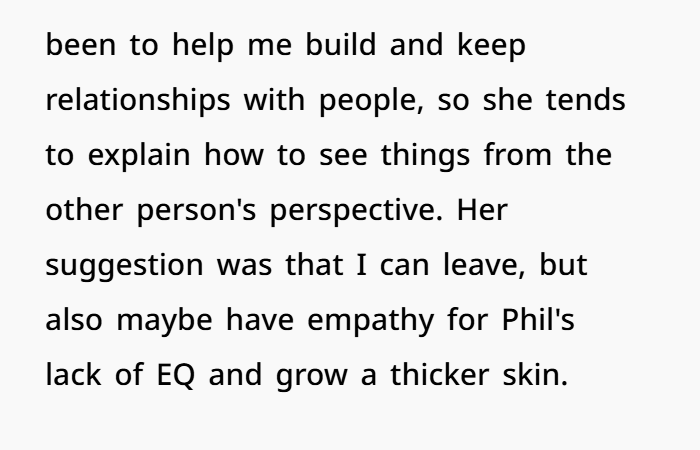
And your therapist’s approach — encouraging you to absorb discomfort and empathize with others while minimizing your own feelings — may unintentionally reinforce that old narrative that you should endure mistreatment for the sake of “keeping relationships.” Trauma‑informed therapy should help you develop self‑advocacy, secure attachment, and healthy boundaries, not teach you to tolerate disrespect in order to appear agreeable.
You are not difficult.
You are not fragile.
You are reclaiming your sense of self.
Your boyfriend had options — healthy ones:
He could have said to his ex:
“My partner is part of my life. If the kids visit, she will be present. If you refuse, we’ll reschedule.”
He could have backed you.
He could have chosen partnership.
He didn’t.
Instead, he chose avoidance over loyalty and appeasement over respect. And then he expected you to absorb the consequences.
Let’s be honest: asking you to leave the gifts, drive him shopping, and drop off your dog while you sit alone on Christmas is not only inconsiderate — it borders on emotional exploitation and financial dependency behavior.
This isn’t generosity anymore. It’s uneven emotional investment — where you play giver, caretaker, transportation, support system, and emotional placeholder… and in return, you get indifference.

You mentioned you’ve wondered whether he even loves you or simply benefits from you being there. The truth is — love looks like protection, reciprocity, respect, consistency, and emotional safety. Love does not look like:
• silence when you are disrespected
• disappearing when conflict arises
• accepting you only when convenient
• expecting your labor but denying your presence
What hurts most isn’t Christmas. It’s the message beneath it:
“You’re good enough to give — but not good enough to belong.”
And that message mirrors the one you spent your childhood escaping.
Returning the gifts isn’t petty. It’s reclaiming agency. It’s saying:
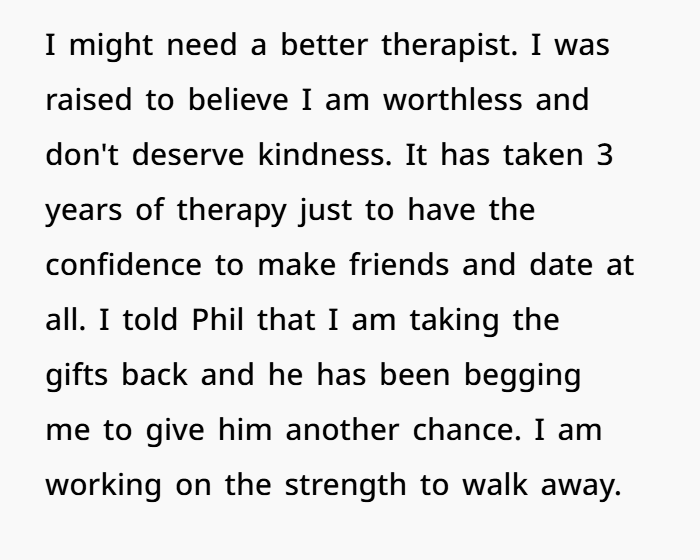
“If I am excluded from your family space, I am not obligated to support it financially or emotionally.”
Children deserve gifts — yes. But they deserve them from a parent who respects the people in his life. Your resources — emotional or financial — should not be extracted under pressure or guilt.
You aren’t punishing the kids.
You’re refusing to subsidize someone else’s disrespect.
You’re also modeling something powerful for yourself:
You are allowed to walk away from dynamics that resemble your past hurt — even if they are wrapped in politeness, “niceness,” or excuses like EQ issues or keeping the peace. Avoidant behavior is not a personality quirk — it is a choice with consequences for the people around him.
And let’s talk about safety and self‑healing for a moment. Survivors often gravitate toward partners who feel “familiar” because the nervous system recognizes chaos as normal. But real love may actually feel calm, kind, steady, and maybe even boring at first — because it isn’t built on fear, anxiety, or insecurity.
You don’t need to grow a thicker skin.
You need a partner who doesn’t try to wound it.
You don’t need to empathize with his lack of emotional maturity.
He needs to grow up — or you need to leave.
And from everything you’ve shared, it sounds like you already know the answer. You are gaining strength, clarity, and self‑respect — even if it feels shaky right now.
Returning the gifts isn’t just about money.
It’s about ending the cycle of being used.
You deserve a Christmas where you are wanted, included, respected, loved, and safe — not erased.
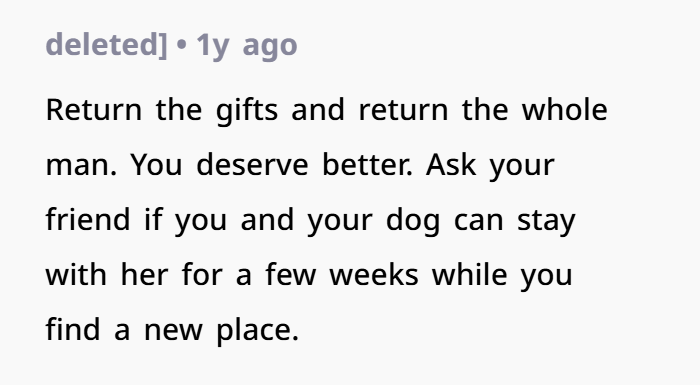
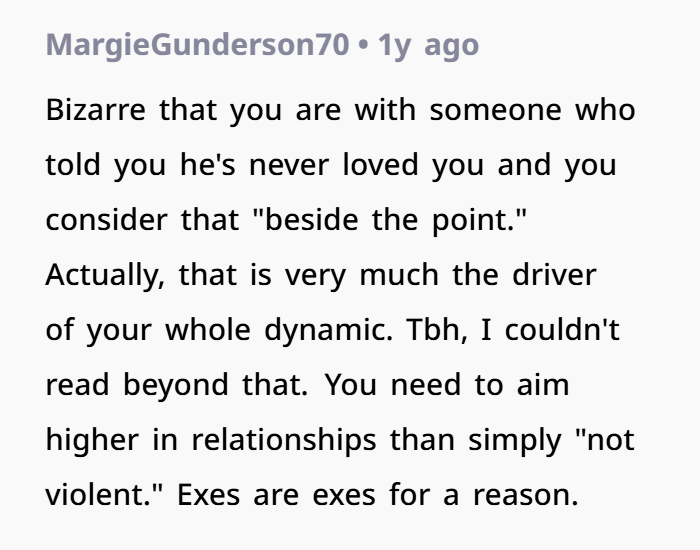
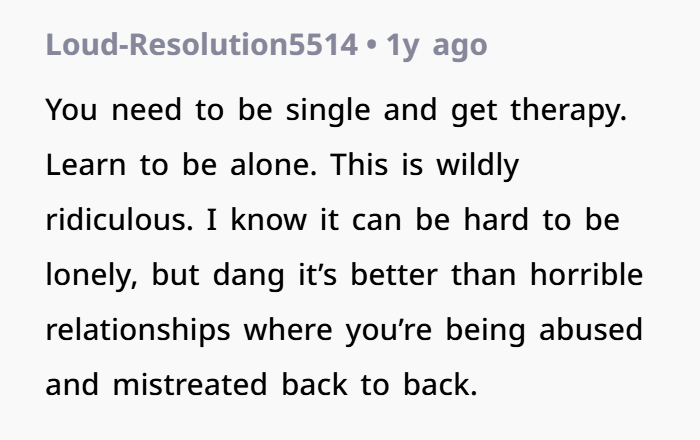
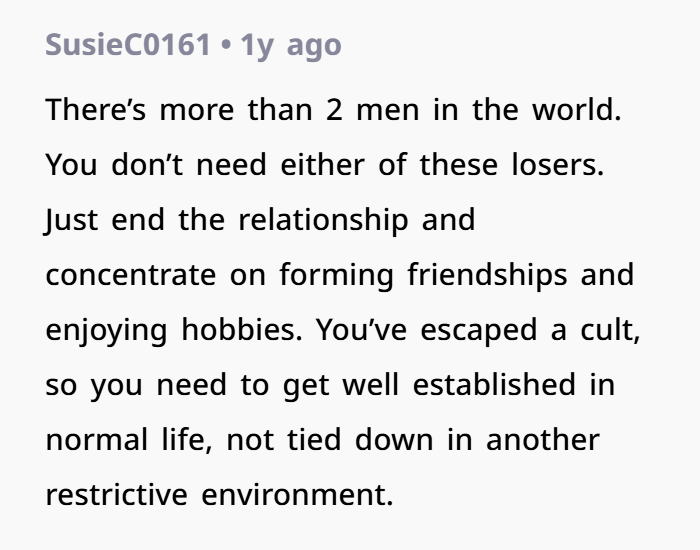
Readers were appalled by the man’s behavior, and many encouraged the author to hold onto the gifts that she bought
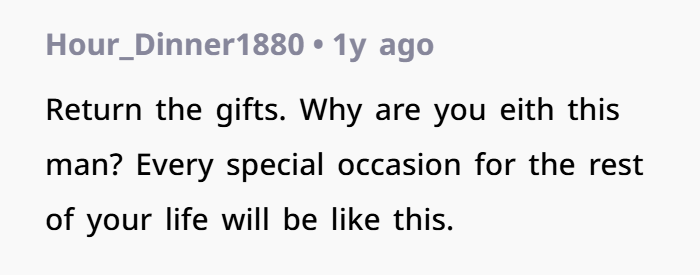
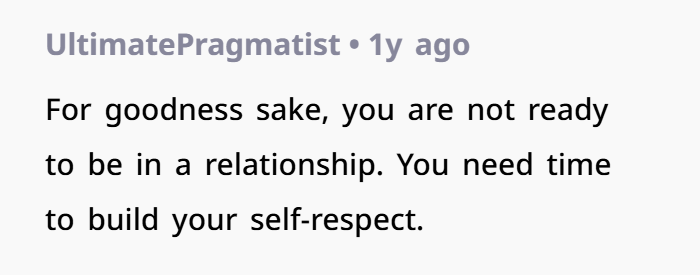
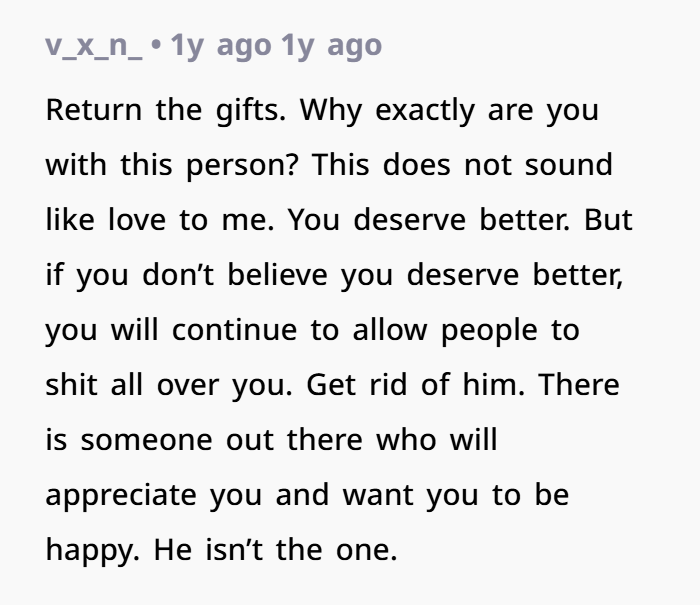
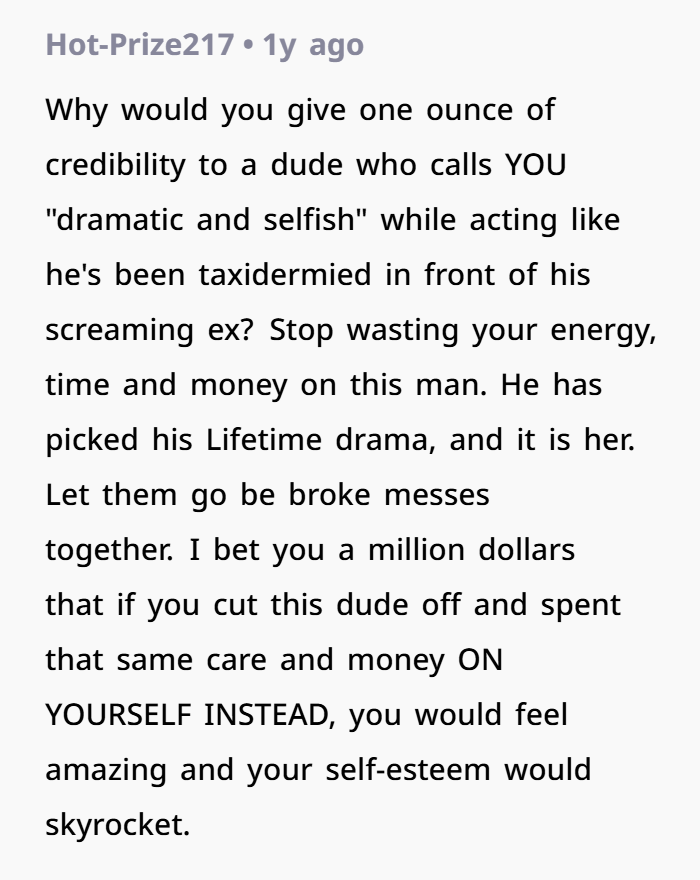
No — you should not leave the gifts. Return them. Keep your money. Keep your dog. Keep your dignity. Go spend Christmas with your friend — someone who chooses you. Let this moment be a turning point, not another wound.
You’ve survived worse — and you’re finally strong enough to choose peace over pain.
If you want, I can also help you draft a short, firm message to him — or talk through how to safely step out of this relationship. You’re not alone. 💛