Stage Kiss or Too Far? The Night a “Performance” Turned Personal
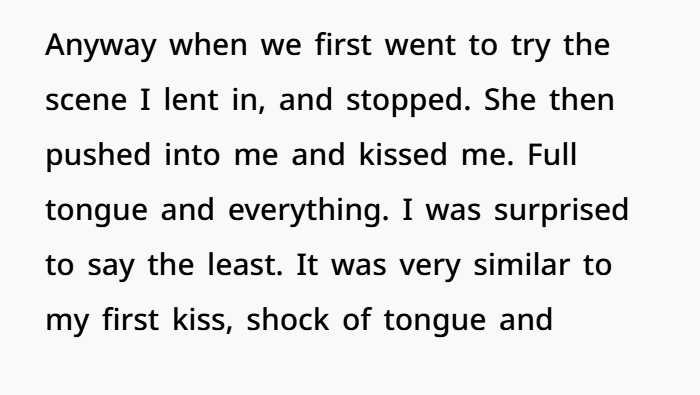
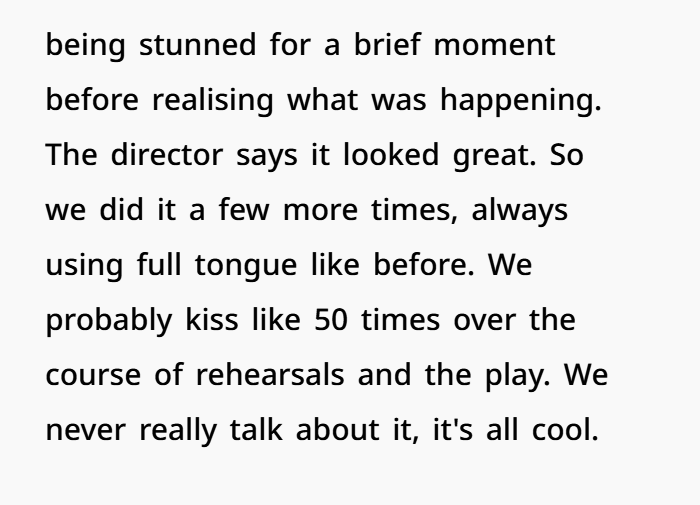
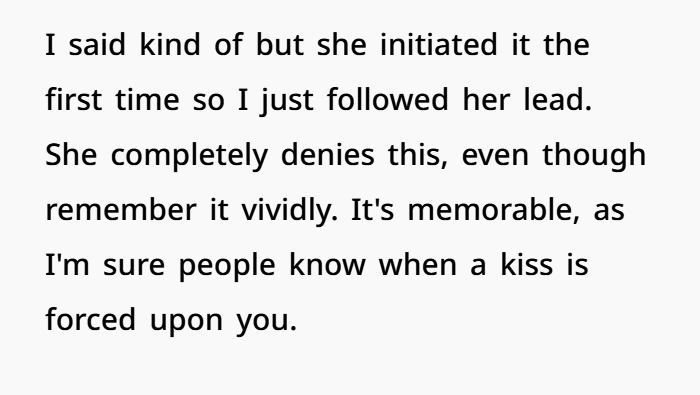
It started off simple. Just a university theatre project, the kind people usually forget after graduation. But this one didn’t fade. It stayed with him. The role involved a kiss—pretty normal in acting and performance training—but neither of them really knew how to handle stage intimacy properly. During the first rehearsal, he hesitated. He wasn’t confident, didn’t know the limits. And then suddenly, she took the lead. She initiated a much more intense kiss than he expected. He didn’t plan it, didn’t question it in the moment—he just went along. The director signed off on it, and after that, it became routine. Practice after practice, performance after performance. Same execution. No conversations about comfort, no boundary-setting, nothing. It was just treated as part of the role.
But later, things got complicated.
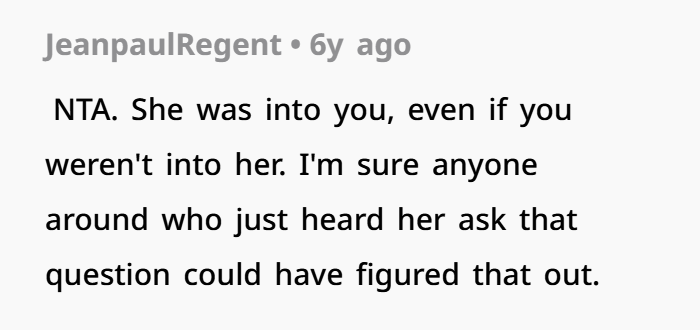
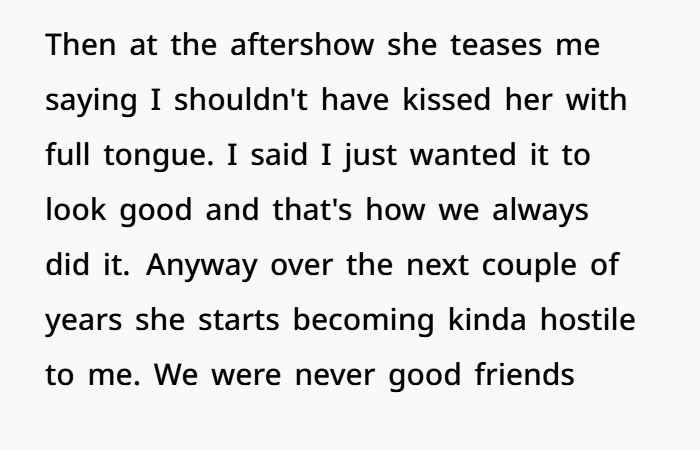
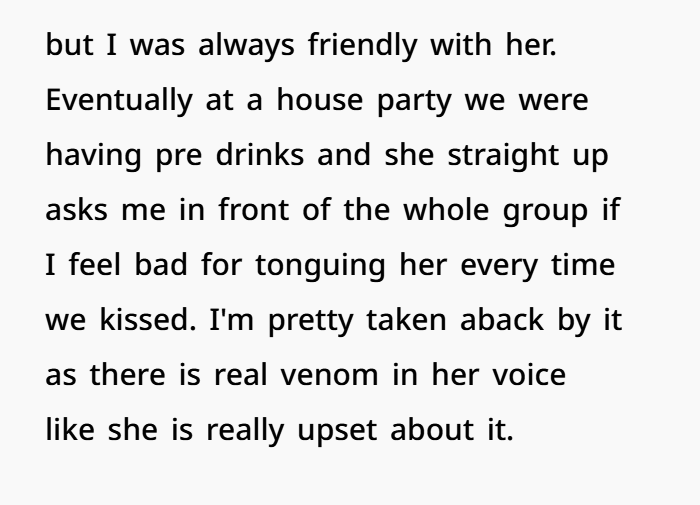
At an afterparty, there was a small comment—something that suggested maybe she wasn’t entirely okay with how things had gone. It wasn’t direct, but it planted doubt. Fast forward a few years, and that doubt turned into something much bigger. At a gathering, she confronted him in front of others, accusing him of crossing a line. Framing it like he had made things inappropriate. The hardest part? Their memories don’t match at all. He remembers her initiating everything. She denies that completely. Now he’s left dealing with confusion, second-guessing himself, trying to figure out if he unknowingly crossed a boundary or if this is a miscommunication that escalated into something more serious over time.

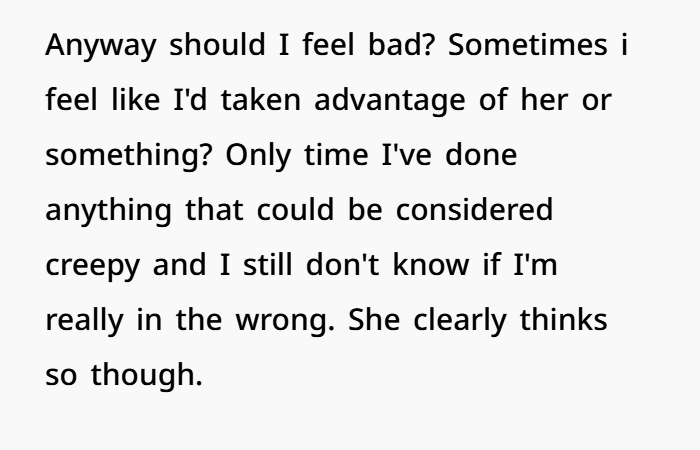
This kind of situation sits right in that uncomfortable gray zone—where consent, memory, and social perception all overlap. And yeah, it’s the type of thing that keeps replaying in your head at night because there’s no clear “right” answer. It’s messy. Confusing. And honestly, more common than people admit, especially in environments without clear communication frameworks.
Let’s break it down in a real, simple way.
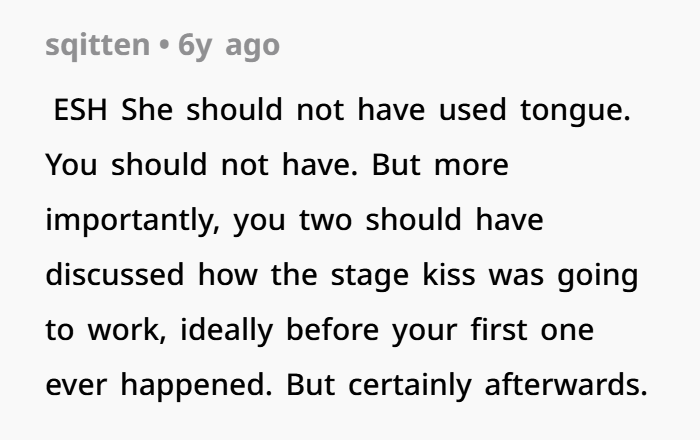
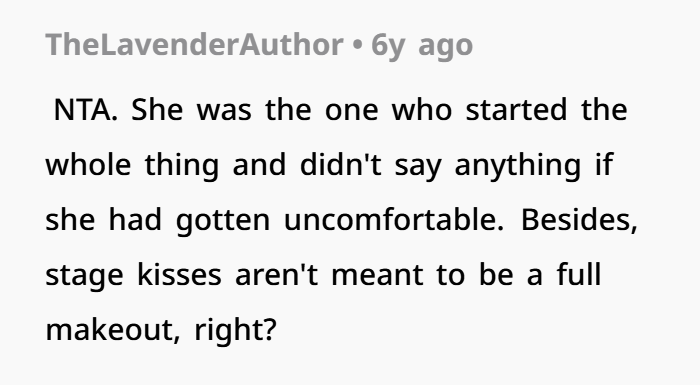
First, context matters. A lot. This wasn’t some random moment at a party or a misread dating signal. This was a stage kiss, part of a performance. In acting and theatre training, physical intimacy is sometimes expected. But in student productions, there’s usually no structured system—no professional intimacy coordinator, no clear consent protocols, nothing like you’d see in professional theatre or film production. It’s more like… everyone just figures it out as they go.
And that’s where problems start.
Because “figuring it out” often turns into assumptions instead of clear communication.
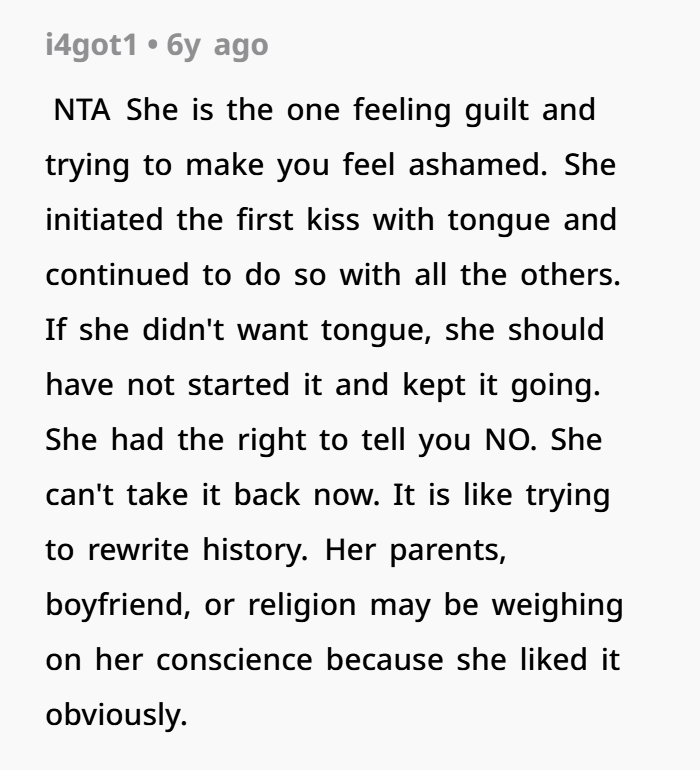
From your side, you hesitated. That actually says a lot. It shows awareness. Respect. You didn’t want to cross a line. Then she stepped in and made it more intense. Naturally, you read that as the standard. Like, okay—this is what we’re doing. And when it kept happening over and over, with no pushback, that assumption got reinforced.
That’s a very normal human reaction. Not manipulation. Not bad intent.
But here’s the hard part to understand—consent isn’t always clear, and it’s not always consistent.
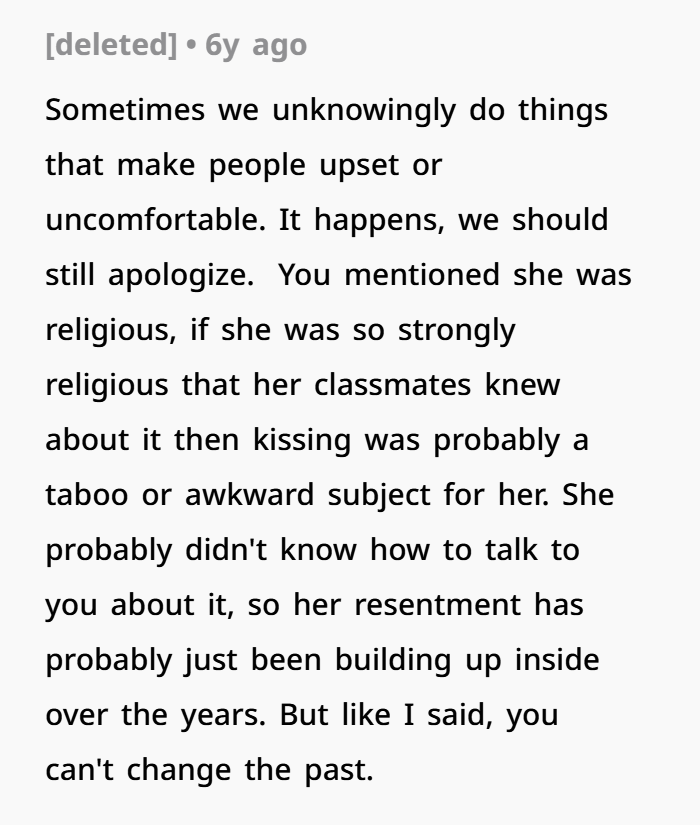
Psychology research—especially in areas like social behavior and group dynamics—shows that people often go along with things in the moment, even if they’re unsure. Especially in group settings like theatre. There’s pressure. A director watching. Other actors around. No one wants to make things awkward or disrupt the flow. So instead of speaking up, people stay quiet.
That’s called social compliance or performance pressure.
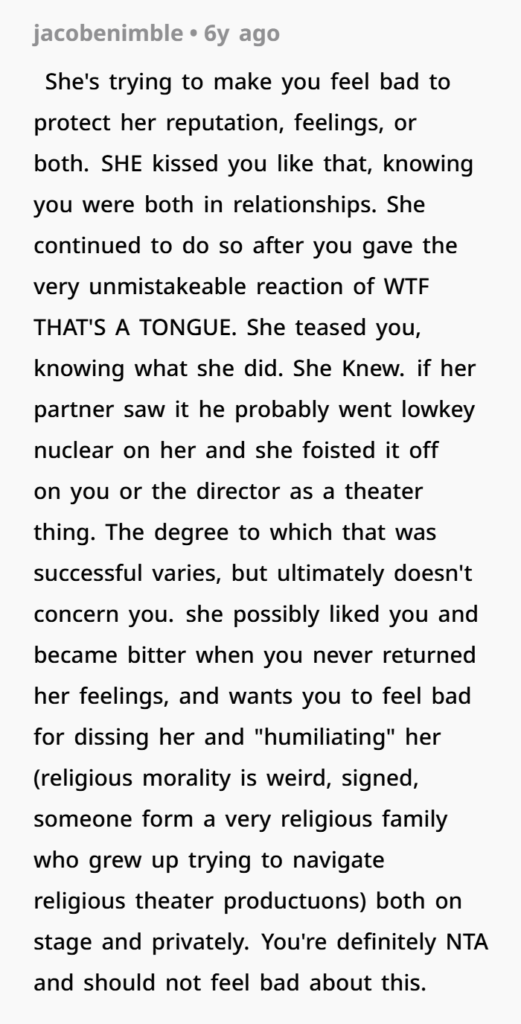
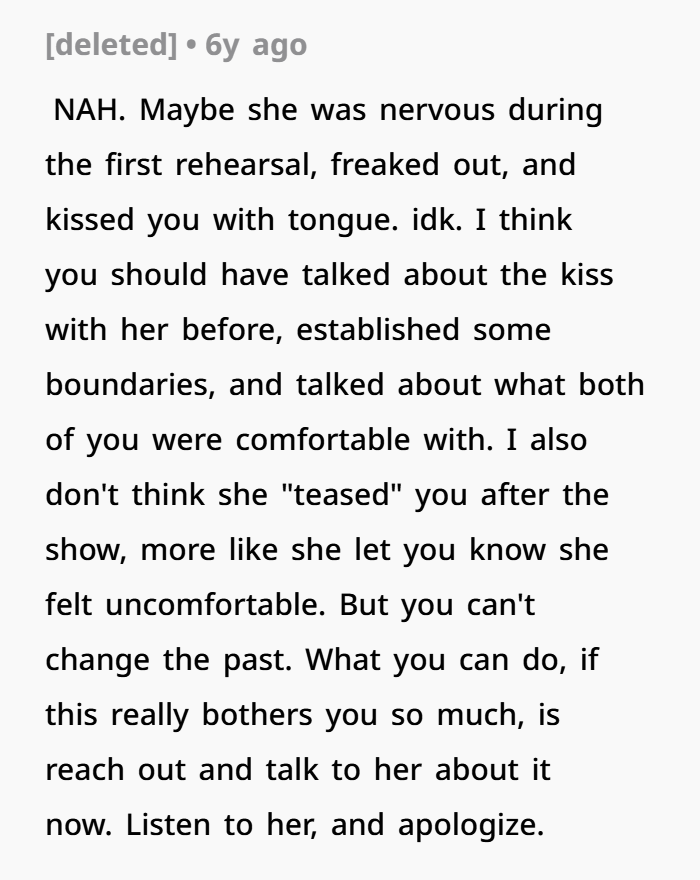
So yeah, it’s possible—not certain, but possible—that she acted in the moment, then later felt uncomfortable with how far it went. And instead of addressing it early, it just sat there… building into confusion, maybe even resentment over time.
Now layer in memory.
Human memory isn’t like a video recording you can rewind and play exactly the same way. It’s more like… a story your brain keeps rewriting. In psychology, this is called reconstructive memory. Over time, especially when emotions like regret, discomfort, or even embarrassment come in, the brain can reshape what happened. Not in a fake way, but in a way that matches how someone feels now, not necessarily what actually happened back then.
So when she says she didn’t initiate it, it doesn’t automatically mean she’s lying on purpose. She might genuinely believe that version of events.
From her side, the story could feel like:
“I was in a situation where things went further than I was comfortable with, and it just kept happening.”
While from your side, it’s:
“She initiated it, I followed, and we both continued without any issue.”
And yeah… both of those versions can exist at the same time. That’s what makes this whole thing so frustrating. There’s no clean overlap.
Now about the confrontation.
Calling you out publicly, especially with that kind of intensity—it’s not a healthy way to handle something like this. In any kind of conflict resolution or emotional communication, the better approach is private, direct conversation. Public confrontation usually isn’t about clarity. It’s about built-up resentment finally spilling out. It’s more reaction than resolution.
It also suggests this has been sitting with her for a long time.
But here’s the key question you’re really asking:
Did you do something wrong?
Based on what you’ve described—no clear.
You didn’t initiate the escalation.
You followed an established pattern.
There was no objection at the time.
And the behavior was repeated consistently.
That doesn’t align with intentional wrongdoing.
However—and this is important—you’re brushing up against something else: impact vs intent.
Even if your intent was completely neutral (just doing the scene properly), the impact on her might have been different. And that’s where the discomfort you’re feeling is coming from.
It’s not guilt in the sense of “I did something bad.”
It’s more like:
“What if I was part of something that didn’t feel okay to her, even if I didn’t realize it?”
That’s actually a pretty human and emotionally aware reaction.
But you also need to be careful not to take on full responsibility for a shared situation.
Because this wasn’t one-sided.
She had agency.
She made choices.
She didn’t communicate discomfort at the time.
In healthy interactions—especially ones involving physical contact—both people share responsibility for setting and communicating boundaries.
Now, could this have been handled better back then?
Yeah, probably.
Ideally, there would’ve been a quick conversation like:
“Hey, how do you want to play the kiss? Keep it light or go more realistic?”
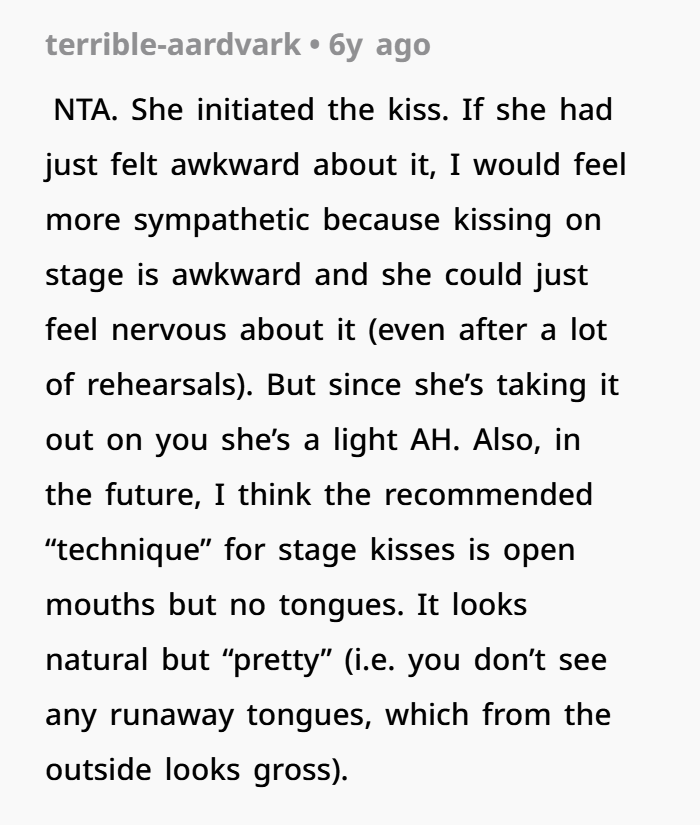
That kind of check-in—clear communication, even a simple “are you okay with this?”—is what prevents situations like this. It’s something you see emphasized now in modern consent education and professional acting environments. But back then? In the moment? Especially when you’re young, inexperienced, just trying to not mess things up… most people don’t think that far ahead.
So where does that leave you now?
First thing—you don’t need to carry this like some kind of guilt label. Like “I was creepy” or “I crossed a line on purpose.” There’s no solid evidence pointing to that. From everything you described, this was a shared situation shaped by assumptions, not intent.
But if it still sits heavy in your mind, there is a healthy way to deal with it—both emotionally and, if life ever brings you face-to-face again, maybe even directly.
You can acknowledge her possible experience… without erasing your own.
Something simple like:
“I remember it differently, but if it ever made you uncomfortable, that genuinely wasn’t my intention.”
That’s enough.
No over-apologizing. No guilt spiral. No rewriting your memory just to make it fit someone else’s version. This approach is actually aligned with healthy conflict resolution and emotional accountability—owning the impact without taking blame for something you didn’t knowingly do.
Because at the end of the day, this wasn’t some clear-cut case of wrongdoing.
It was a communication gap. In a moment where communication really mattered.
And those are the situations that tend to stick with people. Not because someone was clearly right or wrong—but because no one paused to check if everyone was actually okay.
The Reactions Are In