
AITA for telling my SIL to walk her daughter to school?

A 23-year-old woman shared a family situation that caused tension after her brother and his family moved into her mother’s home temporarily. She recently finished university and works in healthcare with an unpredictable schedule, including early mornings and overnight shifts.
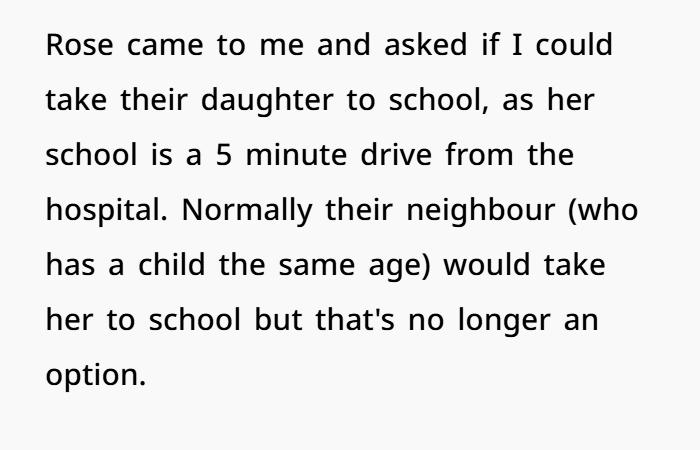
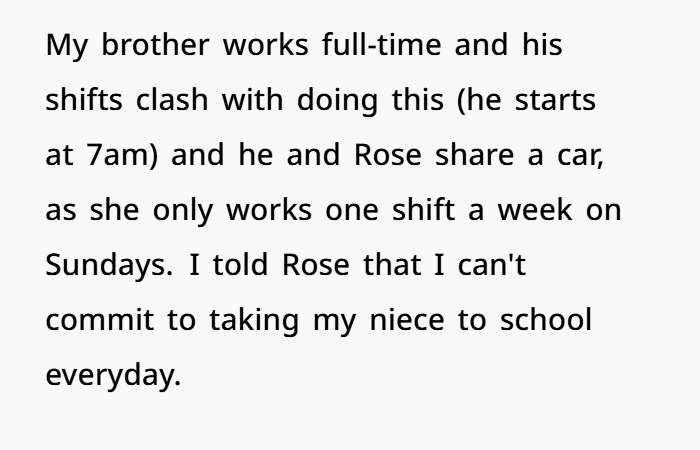
Her brother, his wife Rose, and their 6-year-old daughter moved in because they were having serious problems with their new home. Shortly after moving in, Rose asked if the woman could drive their daughter to school every day. The school was only a short drive away, but the woman explained that her work schedule made it difficult to make a daily commitment.
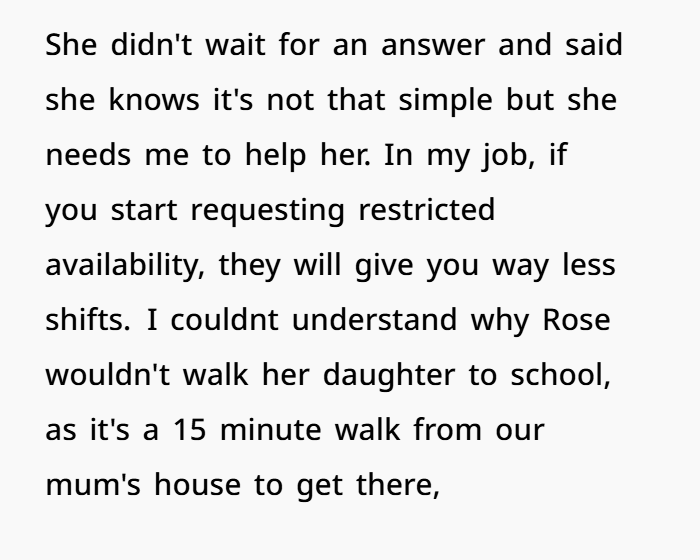
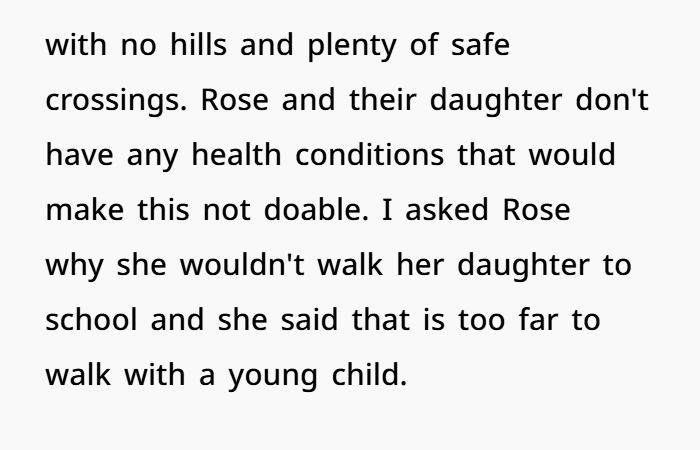
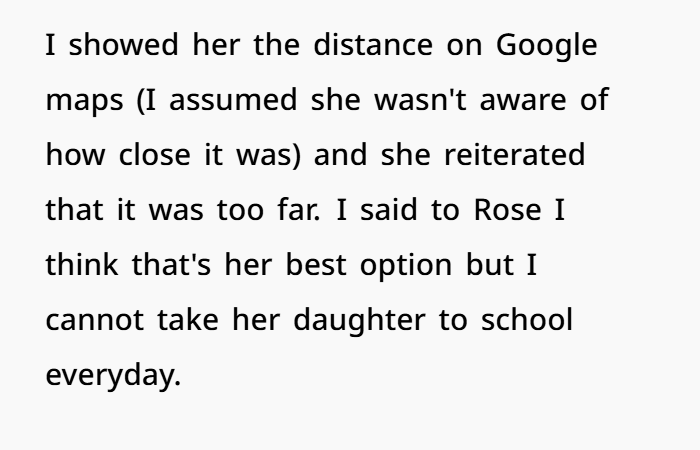
Instead, she suggested that Rose walk her daughter to school because it was a safe route and only about 15 minutes away. Rose was upset by the suggestion, and the situation became a family disagreement. The woman’s mother tried to help solve the issue, while her brother said she was being selfish.
Now, the woman is questioning whether she was wrong for refusing to take on this responsibility. She feels that she wants to support her family but also needs to respect her own time, work schedule, and personal boundaries. The situation highlights the importance of communication, family expectations, and finding a fair balance when relatives live together.
But this woman’s sister-in-law expects her to take her child to school every day instead of doing it herself


Setting Boundaries When Family Needs Help
Living with family can sometimes create complicated situations. When everyone shares the same home, it can become difficult to understand where helping ends and where personal responsibility begins.
In this situation, you live with your mum, pay rent at a reduced amount, and help with most of the household chores. At the same time, you work irregular healthcare shifts, which can be physically and mentally demanding.
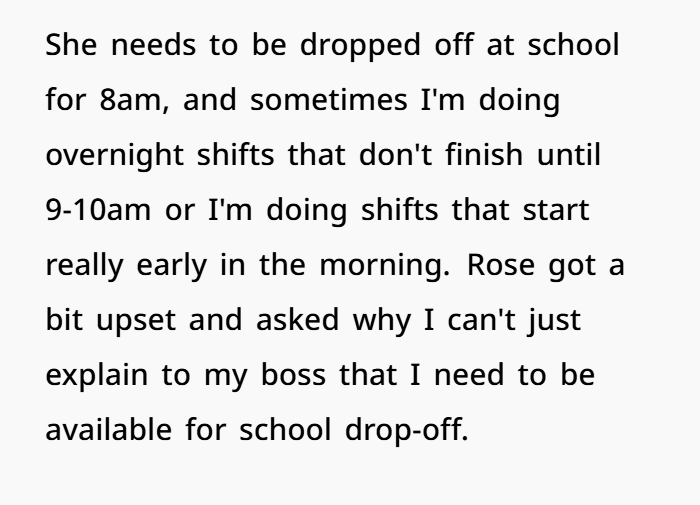
Because of your work schedule, you are not available every morning. Some days you may finish a night shift late in the morning, and other days you may have early work commitments. This makes a daily school drop-off difficult to promise.
When Rose asked you to take her daughter to school every weekday, it was not just a small favour. A daily commitment becomes a regular responsibility. It affects your routine, your job schedule, and your personal time.
You were honest when you said you could not commit to doing it every day. Setting a clear boundary is important, especially when your work and financial stability could be affected.
Your Job and Personal Responsibilities Matter
Working in healthcare often means dealing with unpredictable hours. Shift workers usually cannot control their schedules in the same way as people with regular 9-to-5 jobs.
If you ask your employer for limited availability because of school drop-offs, you may receive fewer shifts. This could reduce your income and create financial pressure.
Your job is an important part of your life. Protecting your employment, career goals, and financial security is a reasonable choice.
You are also not the child’s parent. You are a family member who is willing to help, but the main responsibility for school routines belongs to the child’s parents.
Helping family is a kind thing to do, but it should not mean giving up your own responsibilities.
The Walking Option
You suggested that Rose could walk her daughter to school because it is only around a 15-minute walk.
For many families, a short walk to school is a normal part of daily life. Of course, every child and every situation is different. Weather, safety, and the child’s ability should always be considered.
However, suggesting a walk was not the same as refusing to help. You were offering another solution that allows the parents to handle their child’s routine.
The main issue is that Rose wanted you to take on the responsibility every morning, while you were explaining that this was not possible with your work schedule.
Family Expectations Can Become Difficult
When relatives live together, people sometimes assume that everyone will automatically help with extra responsibilities.
Because you live in the same house, your brother and Rose may feel that you should be more available. They may see your help as something natural within a family home.
However, sharing a home does not mean you are responsible for every family need.
You already contribute by paying rent and helping around the house. Those contributions have value. Your time, energy, and work schedule also matter.
A temporary living arrangement because of home repairs does not automatically make you responsible for daily childcare duties.
Understanding Rose’s Side
It is also possible to understand why Rose feels stressed.
Their home situation sounds difficult, and moving into another person’s house can create pressure. Losing help from a neighbour may have made things harder. She may have felt like she had limited options and simply needed support.
Her request may have come from stress rather than bad intentions.
At the same time, someone else’s difficult situation does not remove your own needs and responsibilities. A solution should consider both sides.
Finding a Fair Compromise
A possible compromise could be helping only when your schedule allows.
For example, you could offer to do school drop-offs occasionally when you are not working early or finishing a night shift. This allows you to support your family without creating a daily obligation.
Other options could include:
- Sharing school drop-offs with another parent
- Finding occasional childcare support
- Creating a schedule between family members
- Using walking days when possible
The goal is to find a solution that works for everyone.
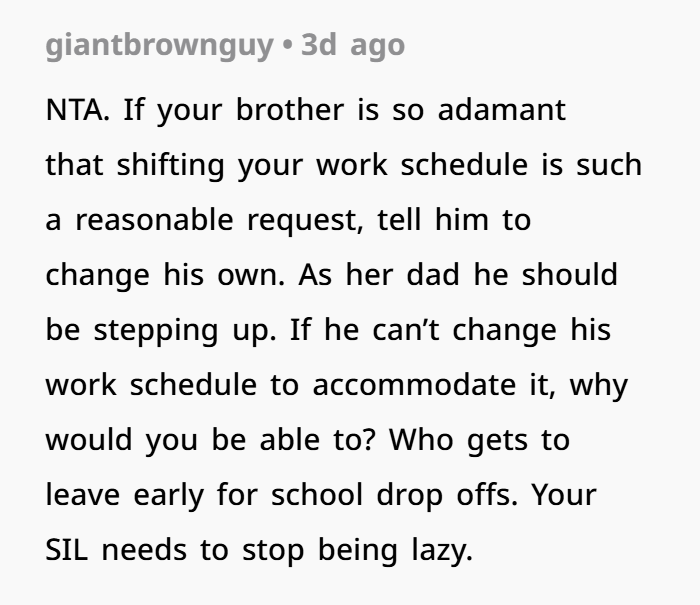
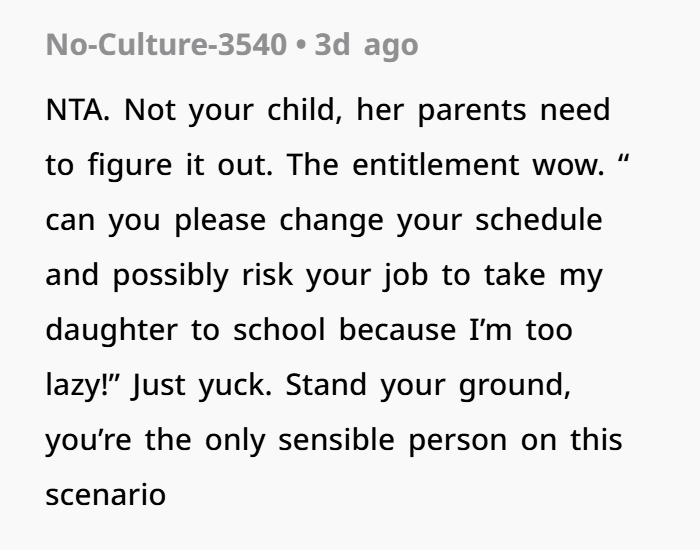
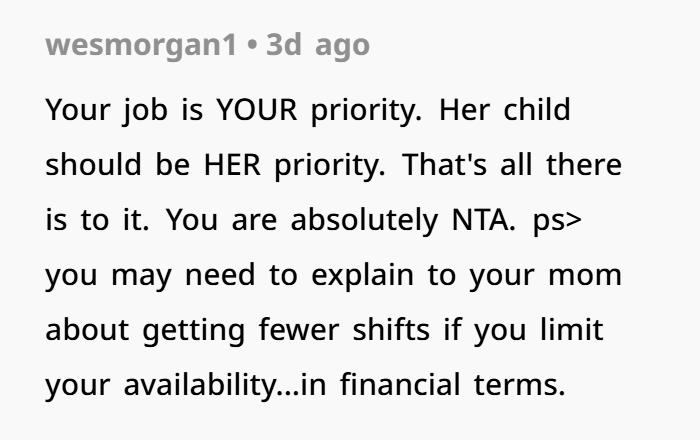
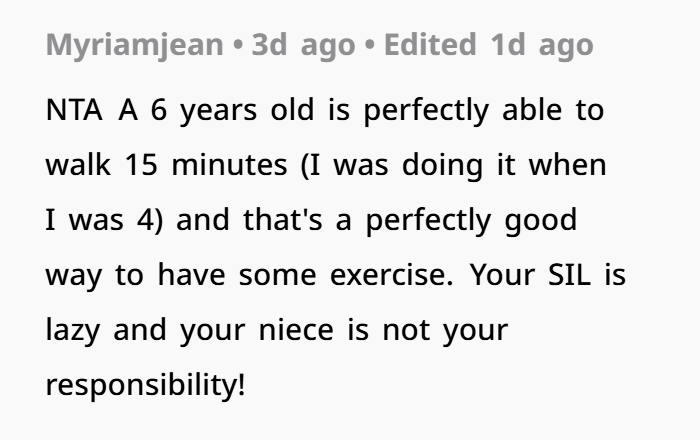
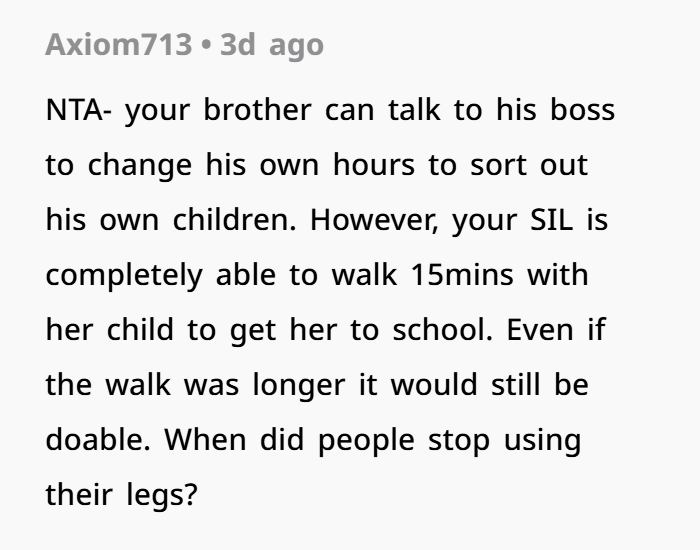
People who read this particular story said the aunt cannot be blamed for refusing to help with her niece




Final Thoughts
You are not wrong for setting a boundary.
You explained your situation, considered your work commitments, and suggested another option. You did not refuse to support your family completely. You only declined a daily responsibility that does not fit your lifestyle.
Family support is important, but healthy relationships also need respect, communication, and realistic expectations.
Helping others should not come at the cost of your own job, financial security, or personal well-being. A fair arrangement is one where everyone’s responsibilities are respected.