She Kissed My Sister’s Boyfriend 10 Years Ago Now I’m Not Invited to Her Wedding
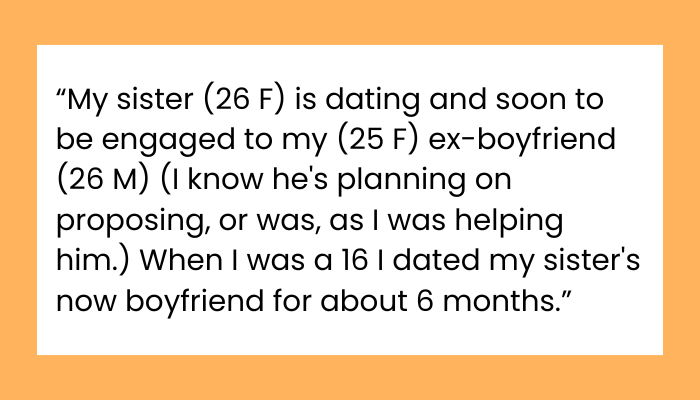
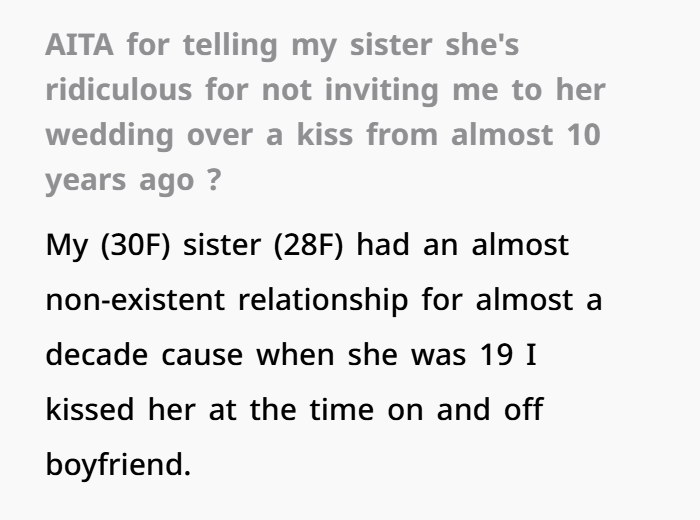
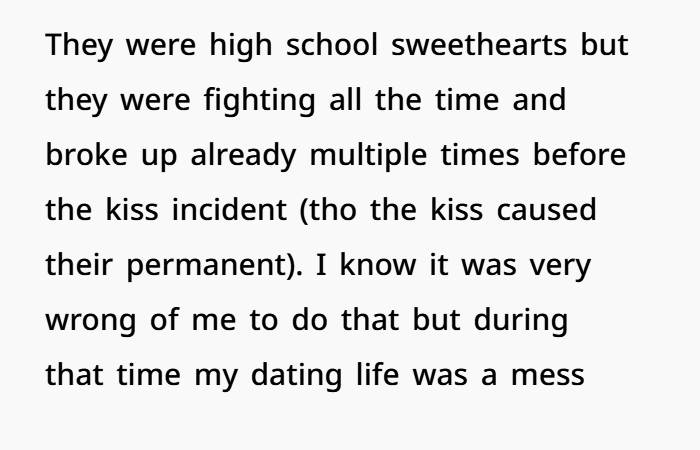
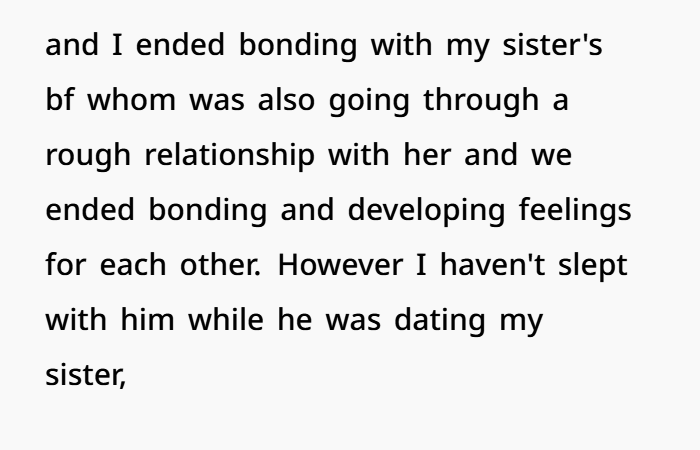
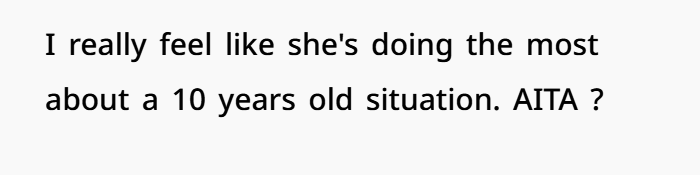
This story is messy. Not reality-TV messy. Real-life emotional damage, family drama, relationship betrayal kind of messy. A 30-year-old woman is wondering if she crossed the line for calling her younger sister ridiculous after being left off the wedding guest list. And why was she excluded? Because almost ten years ago, she kissed her sister’s on-and-off high school boyfriend. That’s it. No long-term cheating scandal. No secret double life. Just one kiss. But sometimes one bad decision is enough to destroy trust, trigger long-term resentment, and cause serious family estrangement.
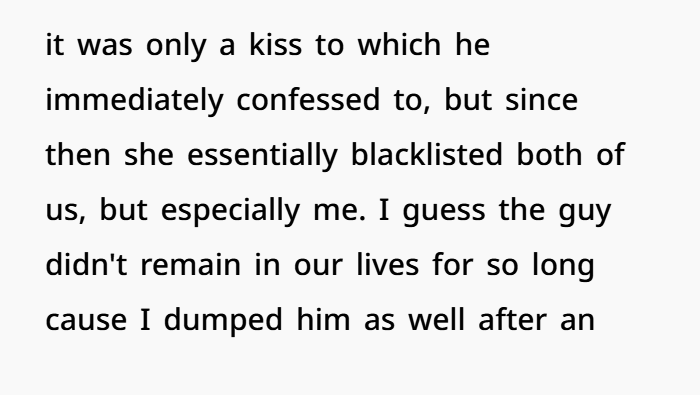
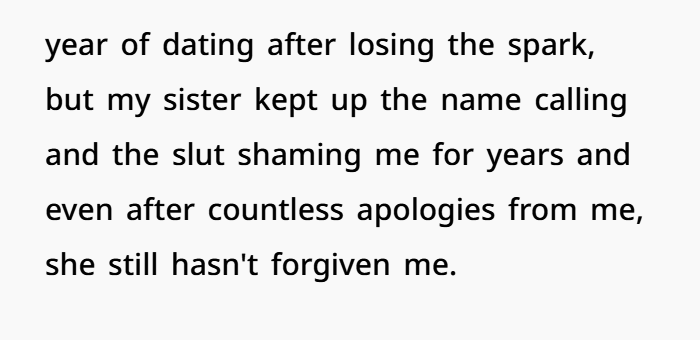
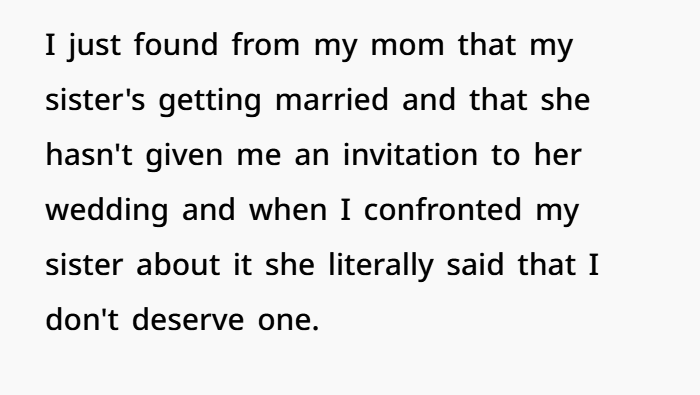
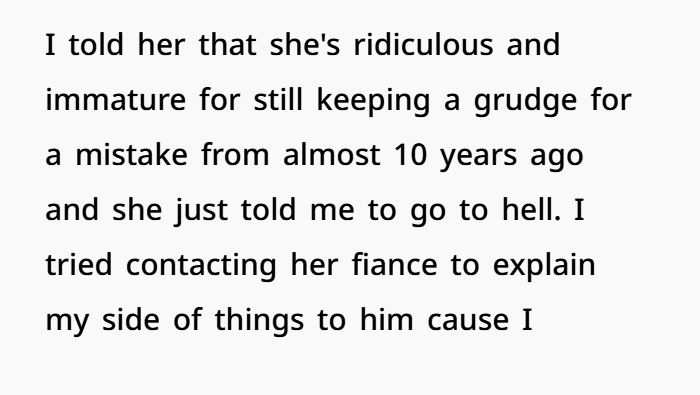
Back then, the boyfriend confessed right away. No hiding it. The younger sister cut both of them off instantly. Full no-contact. The relationship ended for good. The older sister went on to date him for about a year, then broke it off when the spark faded. So the romance? Dead and gone. But the emotional trauma? Still very much alive. For almost a decade, the younger sister kept the cold shoulder going. Add in insults, slut-shaming, and constant reminders of that one mistake. Even after multiple apologies and attempts at accountability. Now there’s a wedding involved. A huge life event. And she didn’t invite her own sister. When asked about it, she said, “You don’t deserve one.” That’s harsh. Things spiraled even more when the older sister reached out to the fiancé to explain her side, probably hoping for some conflict resolution or at least damage control. Instead, it made everything worse. Now wedding security might even be involved. So the real question isn’t just about a kiss anymore. It’s about unresolved family trauma, emotional boundaries, and whether either side is truly ready to take responsibility and move forward.

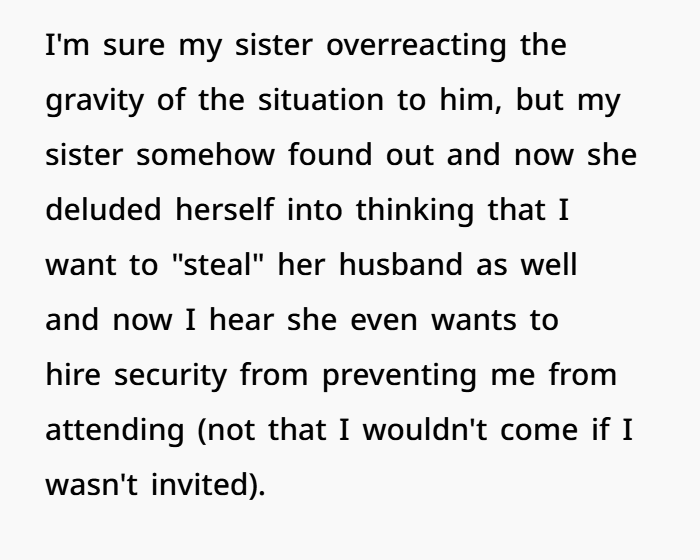
Let’s call this what it really is. This isn’t about one random kiss. It’s about betrayal trauma, sibling rivalry, broken emotional boundaries, and long-term family estrangement. And those things? They hit deep. Way deeper than people like to admit.
Sibling betrayal can actually hurt more than romantic cheating. Research published in the Journal of Family Psychology shows that trust violations between siblings during adolescence can permanently shift attachment patterns inside a family system. That’s not small stuff. That’s long-term emotional impact. Especially when a romantic partner is involved. A high school sweetheart isn’t just “a boyfriend.” It’s first love. It’s identity development. It’s those formative relationship experiences that shape your attachment style and future trust issues.
Now mix betrayal into that. Even if it was “just a kiss.”
In relationship psychology, this falls under what therapists call an attachment injury. That’s when someone you deeply trust breaks that trust in a way that shakes your sense of emotional safety. In romantic relationships, attachment injuries are strongly linked to long-term anxiety, insecurity, and even commitment issues. But when it’s between siblings? It’s layered. Shared childhood. Shared parents. Shared memories. You can’t just block your sibling and erase them. The family dynamic keeps pulling you back in. That’s why unresolved family conflict tends to drag on for years.
And this is where accountability gets messy.
The older sister admits she was wrong. She says she apologized over and over. She claims it never went past that one kiss while the boyfriend was still dating her sister. But here’s the part that probably keeps the wound open: she dated him for a year after the breakup. That changes perception. Even if the kiss technically ended the relationship, choosing to pursue him afterward likely reinforced the betrayal trauma in her sister’s mind. From a psychological standpoint, intent doesn’t cancel impact. You can feel regret. You can take responsibility. And still have caused lasting emotional damage. That’s where a lot of family estrangement cases stall. One person thinks enough time has passed. The other feels like the trust was never rebuilt.
Now let’s zoom out and talk about the wedding guest list from a legal rights and personal boundaries angle.
A wedding isn’t just a party. It’s a private event. Legally speaking, the host controls the guest list. There’s no “family obligation law” that forces someone to invite a sibling. In fact, wedding planning conflicts rank high in online searches under terms like toxic family relationships, wedding guest list drama, and high-conflict family boundaries. This situation isn’t rare. It just feels personal when you’re inside it.
And yes, courts have addressed wedding-related disputes before. When uninvited family members show up to private venues, property law and trespassing laws generally back the host. Security can legally remove someone who isn’t invited. So if the sister hires wedding security, that’s not over-the-top from a legal standpoint. It’s her exercising her legal rights and enforcing personal boundaries.
At the end of the day, this isn’t just about forgiveness. It’s about unresolved emotional trauma, broken trust, and whether either side truly processed what happened. Time alone doesn’t fix attachment injuries. And apologies don’t automatically rebuild a shattered bond.
But emotionally? It’s obviously a statement.
Then there’s the fiancé contact. And honestly, that’s where things shift from messy to high-conflict family drama. When someone reaches out to a partner to “explain their side,” it can easily look like interference. In family therapy and relationship counseling circles, this is called triangulation — when tension between two people pulls in a third. And triangulation almost never fixes anything. It usually escalates conflict and damages trust even more.
Even if her intention was innocent. Even if she just wanted clarity. Optics matter. From the bride’s perspective, this could feel like history repeating itself. She already went through relationship betrayal once involving her sister and a partner. So when her sister privately contacts her future husband? That hits the exact same emotional trigger. Same attachment wound. Same fear of disloyalty.
Is that reaction totally rational? Maybe not. But trauma responses aren’t logical. They’re protective. The brain goes into emotional defense mode. Especially when past trust issues haven’t fully healed.
Now let’s talk about forgiveness expectations. Society loves to say, “Time heals all wounds.” Sounds comforting. But research in conflict resolution and emotional healing shows forgiveness needs three things: clear acknowledgment of harm, meaningful amends, and emotional readiness from the person who was hurt. Miss one of those? Forgiveness stalls. Sometimes indefinitely.
Apologies were made, apparently. More than once. But here’s the uncomfortable question: were boundaries truly respected afterward? Did the older sister fully step back to allow space for healing? Or did dating the ex-boyfriend for a year keep reopening the betrayal trauma? From a psychological recovery standpoint, ongoing involvement with the source of hurt can delay closure. That part matters more than people think.
Now zoom out.
Is holding a ten-year grudge healthy? Chronic resentment has been linked to higher stress levels, anxiety symptoms, and even cardiovascular strain, according to research published in Health Psychology. Long-term emotional stress doesn’t just hurt relationships. It can impact mental health and physical health too. But here’s the nuance: choosing distance is not always the same as holding a grudge. Sometimes family estrangement is a form of emotional self-protection and boundary setting.
And this isn’t rare anymore. Family estrangement rates are rising. A 2020 Cornell University survey estimated that more than 25% of adults are estranged from at least one close family member. That’s a significant number. Weddings especially tend to become emotional flashpoints. Big life transitions bring unresolved family conflict to the surface fast.
The older sister feels like the punishment doesn’t fit the crime. In her mind, this was young adulthood. They were 19. Immature. Emotional. Bad decision. She moved forward. She wants reconciliation. Maybe even family therapy and closure.
But the younger sister might see something deeper. For her, it may represent disloyalty during a vulnerable stage of life. A sister breaking an unspoken boundary. And in her personal values system, that line once crossed might be permanent.
Here’s the uncomfortable truth: both things can exist at once.
The older sister can truly regret the mistake and still feel like being cut from the wedding guest list is harsh. That makes sense. At the same time, the younger sister can genuinely feel emotionally unsafe. When trust is broken, especially inside a family system, not everyone is willing to re-open that door. And that’s valid too.
The wedding isn’t the core problem. It’s just the trigger event. The real issue is unresolved betrayal trauma that never got fully processed.
And let’s be honest. Calling someone “ridiculous and immature” is not exactly a masterclass in healthy communication. Even if the frustration is real. Even if you feel pushed to the edge. Conflict resolution strategies and relationship counseling experts repeat this all the time — when you label someone’s feelings as irrational, you activate defensiveness. You escalate the conflict. You don’t rebuild trust. You widen the emotional gap.
So… is she the asshole?
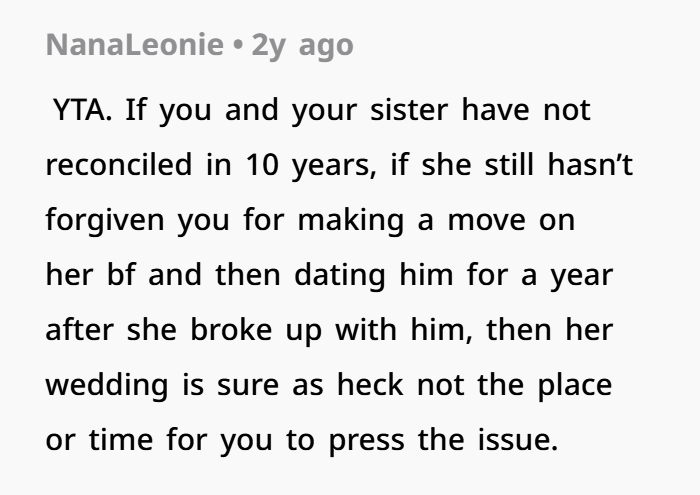
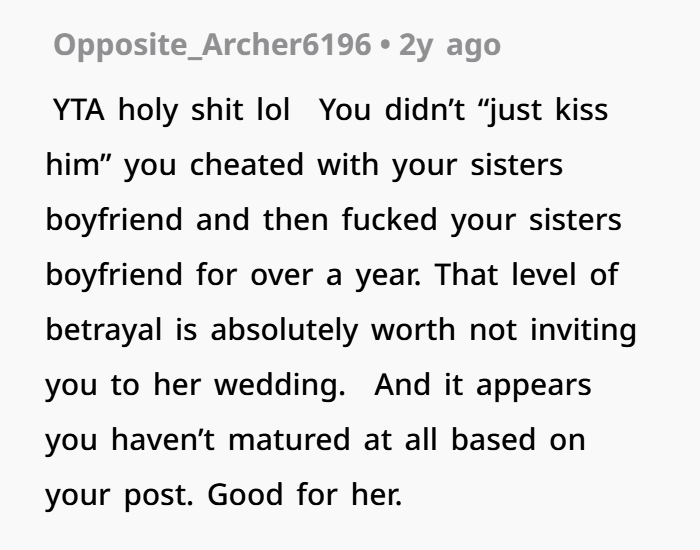
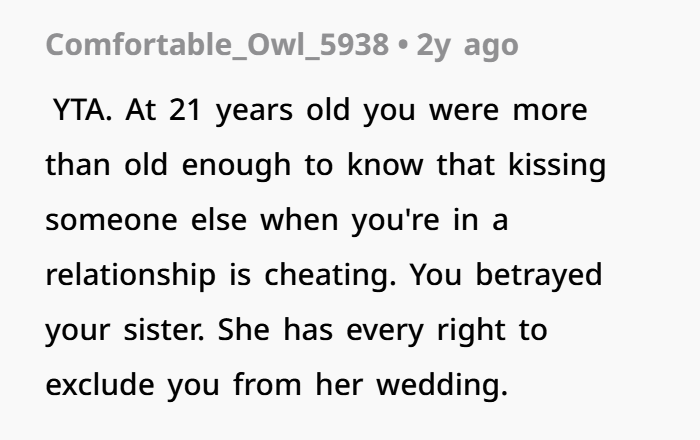
From an ethical boundary standpoint, the original betrayal was wrong. Kissing your sibling’s partner crosses a clear relational line. That’s basic loyalty and relationship ethics. No way around that.
But ten years later, this isn’t just about that one mistake. It’s about how the emotional fallout was handled. Was there true accountability? Were healthy boundaries rebuilt? Was there any structured attempt at reconciliation, maybe even family therapy? Or did both sides just let time pass and hope the resentment would fade?
The bride has full autonomy over her wedding planning decisions. It’s a private event. She controls the guest list. The older sister has every right to feel excluded and hurt. What she doesn’t have is entitlement to an invitation. Emotional pain doesn’t automatically equal legal or moral obligation.
And reaching out to the fiancé? From a relationship psychology and trust-repair perspective, that likely reinforced the bride’s attachment anxiety rather than easing it. If trust was already fragile, that move probably confirmed her fear of boundaries being crossed again.
At the end of the day, this isn’t about who’s legally correct. It’s about whether reconciliation was ever truly rebuilt through consistent effort and emotional accountability. And from the outside, it doesn’t look like it was.
So maybe the better question isn’t, “Am I wrong for calling her ridiculous?”
Maybe it’s this: was the trust ever genuinely repaired… or just buried under a decade of avoidance?
Because time alone doesn’t heal betrayal trauma. Repair takes intentional effort, boundary respect, and emotional readiness on both sides. And sometimes, even when you try, the relationship never goes back to what it was.
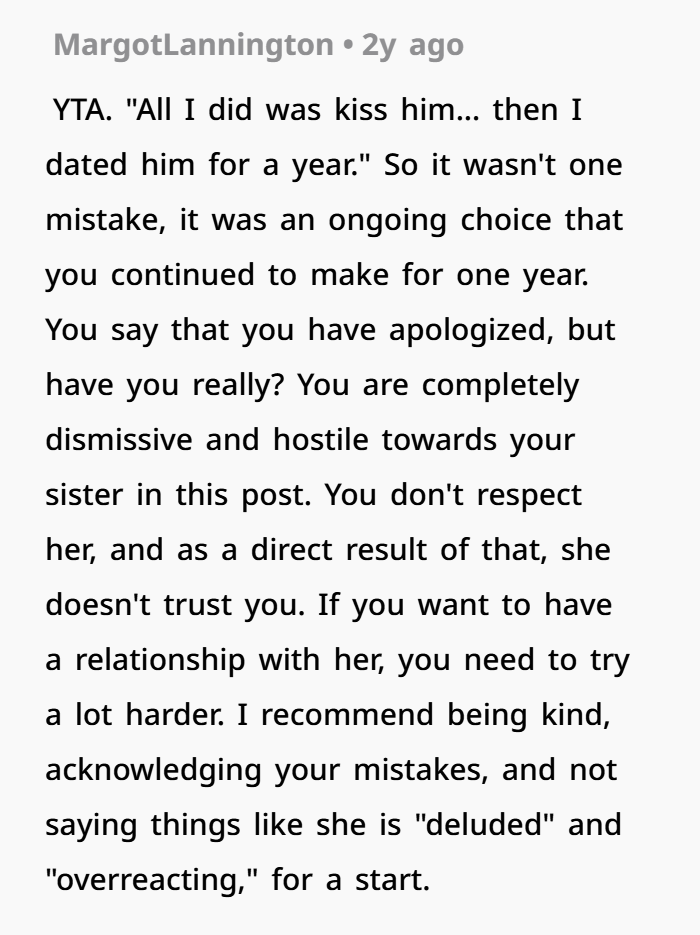
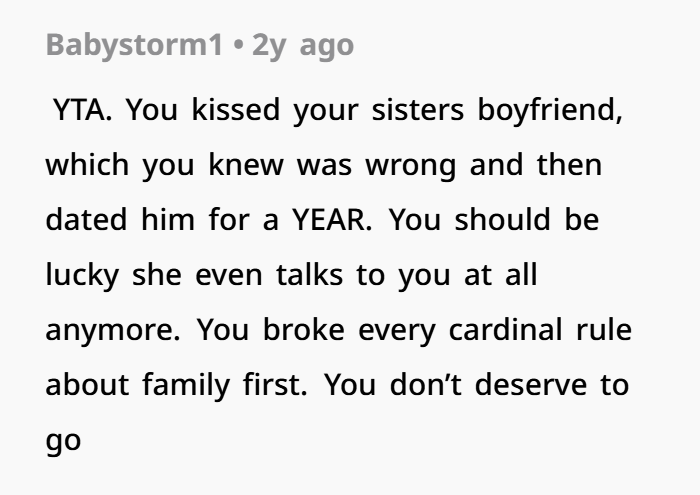
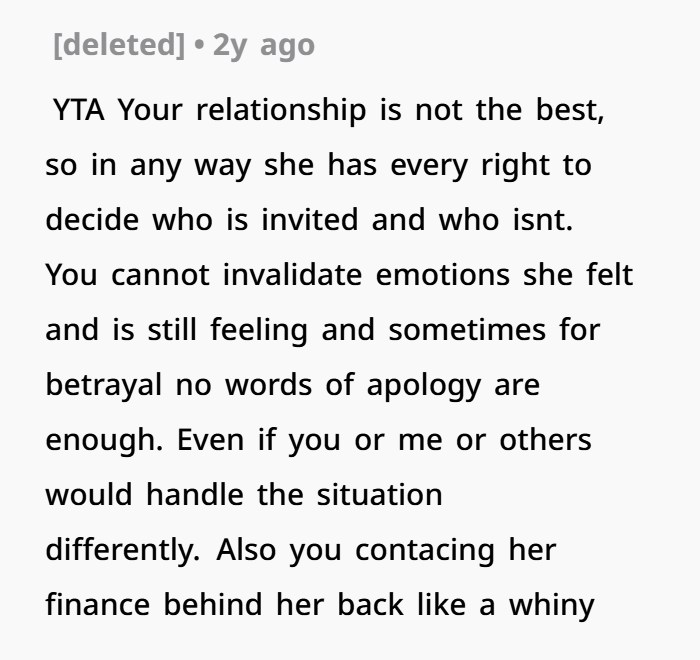
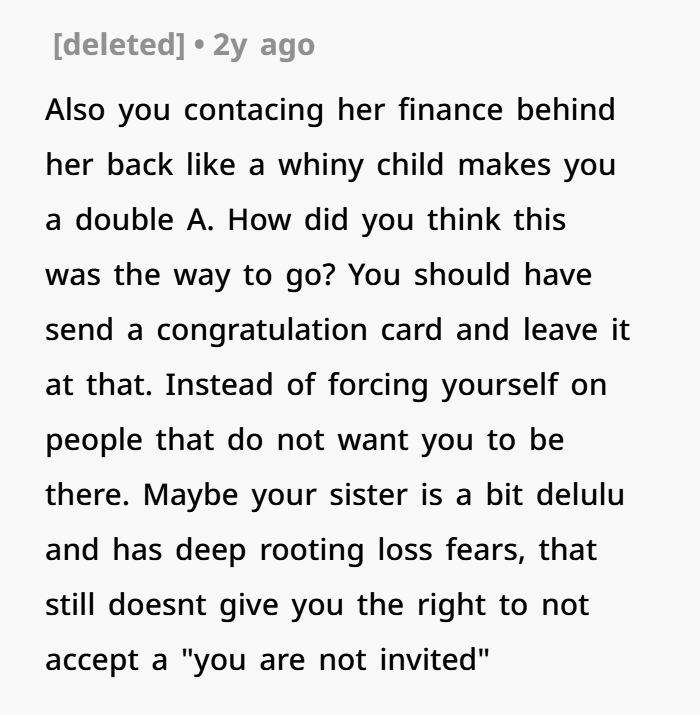
Top Comments From Readers