The #1 Thing Most People Totally Get Wrong About Sacagawea

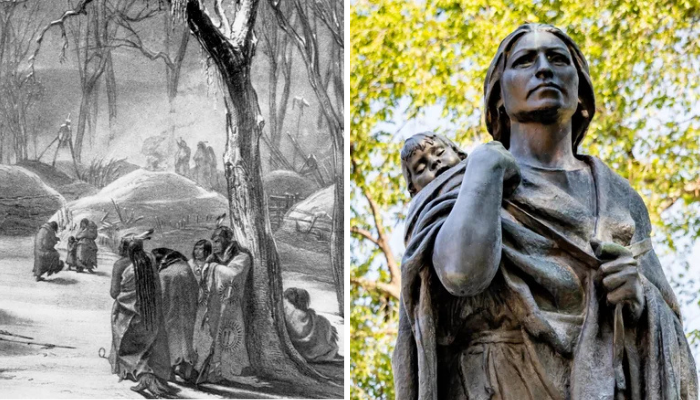
The Lewis and Clark expedition from 1804 to 1806 is one of the most famous journeys in American history. This important expedition helped explore new parts of the United States and reach the Pacific Ocean.
One of the most remembered people from this journey is Sacagawea, a Native American woman who helped guide the explorers across a difficult 8,000-mile trip from Missouri to Oregon.
Many people know Sacagawea because her image appears on a U.S. coin, and many statues have been created in her honor. She is often remembered as a symbol of courage, exploration, and strength.
However, there are still many unanswered questions about her life. Even the spelling of her name is debated, with different versions appearing in historical records.
Another mystery is Sacagawea’s tribal background. Many history sources describe her as a Shoshone woman who was captured by the Hidatsa people. However, some newer research suggests a different possibility — that she may have had Hidatsa roots and later became connected with the Shoshone.
These different ideas show that history can change as researchers discover new information. Even famous figures like Sacagawea can still have parts of their stories that remain unknown.
Sacagawea’s role in the Lewis and Clark expedition
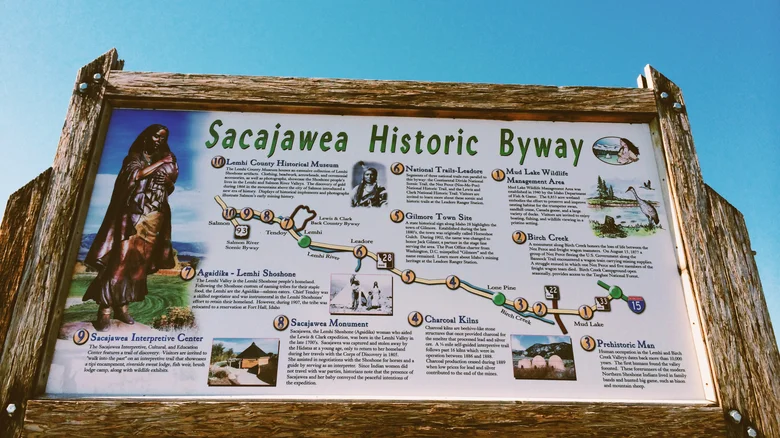
Sacagawea’s role in the Lewis and Clark expedition is one of the most interesting stories in American history. Her journey was filled with challenges, courage, and important moments that helped the famous exploration mission succeed.
In 1803, President Thomas Jefferson started the Corps of Discovery, a major expedition to explore new areas of the United States. During the winter of 1804–1805, explorers Meriwether Lewis and William Clark reached the area that is now North Dakota. They built a fort near Mandan and Hidatsa villages along the Missouri River.
There, they met Toussaint Charbonneau, a French Canadian fur trader, and his young wife, Sacagawea. She was a teenager and was expecting a child when Charbonneau joined the expedition team. Soon before the journey continued, Sacagawea gave birth to her son, Jean Baptiste, who became the youngest member of the expedition.
Even at a young age, Sacagawea played an important role during the journey. She helped communicate with Native American groups, supported peaceful meetings, and helped the explorers in difficult situations.
One famous moment happened in 1805 when a boat nearly overturned. Sacagawea helped save important items, including maps, journals, and scientific tools that were needed for the expedition.
Much of what historians know about Sacagawea comes from the journals of Lewis and Clark. However, some details about her life came through Charbonneau, who helped translate her story. Because of this, some parts of her background and early life are still debated by historians.
Today, many researchers believe Sacagawea’s story may be more complex than what is commonly written in history books. Her courage, knowledge, and contributions continue to make her an important figure in American history.
The traditional version of Sacagawea’s life
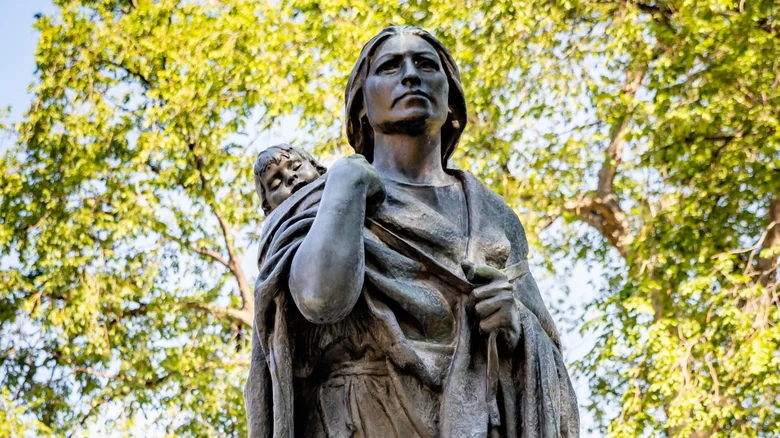
The common story about Sacagawea’s early life is well known, but historians still have many questions about what really happened.
Many history books say that Sacagawea was born a Shoshone girl in the Rocky Mountain region, near what is now Idaho. The story says that she was captured by the Hidatsa people when she was young and later became connected with Toussaint Charbonneau, the French Canadian trader who joined the Lewis and Clark expedition.
However, some details about her childhood are still debated. Much of the information came from Charbonneau, who helped share her story with the explorers. Because different languages were involved, some historians believe that parts of her story may have been misunderstood over time.
One famous moment from Sacagawea’s story is the meeting between the Lewis and Clark expedition and the Shoshone people. According to later accounts, Sacagawea recognized members of her family during this meeting. The story describes it as an emotional reunion.
However, historians have found that this dramatic scene was not clearly recorded in the original handwritten journals of Lewis and Clark. It appeared later in the official published version of the expedition records.
Some researchers believe this shows that parts of Sacagawea’s story may have changed as they were passed down. Like many historical figures, her life includes unanswered questions and different interpretations.
Even with these mysteries, Sacagawea remains an important figure in American history. Her role in the Lewis and Clark expedition continues to inspire people and encourage more research into her remarkable journey.
The Hidatsa’s version of her life
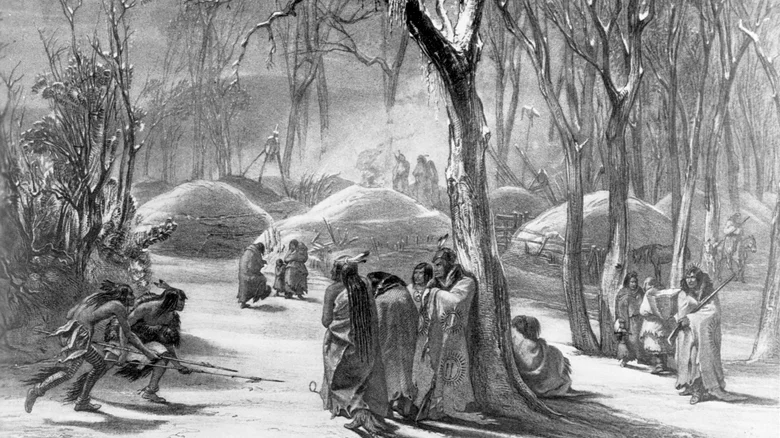
The Hidatsa people have a different story about Sacagawea’s life, and it is different from the version many people know.
According to the book Our Story of Eagle Woman, Sacagawea: They Got It Wrong by the Sacagawea Project Board of the Mandan, Hidatsa & Arikara Nation, Sacagawea may have been Hidatsa instead of Shoshone. In this version, her original name was Eagle Woman.
This account says that Sacagawea was not captured by the Hidatsa. Instead, it suggests that she was taken by the Shoshone and lived with them for some time before returning to her Hidatsa community in what is now North Dakota.
Some stories also suggest that Sacagawea had connections with both the Hidatsa and Shoshone people. These connections may be one reason why historians have different ideas about her tribal background.
There are also different views about what happened later in her life. Many history sources say Sacagawea died in 1812 after becoming ill. However, the Hidatsa version suggests that she lived much longer and passed away in 1869.
Supporters of this version have also discussed oral history and research that they believe connects Sacagawea to Hidatsa descendants. However, historians continue to study and debate these different accounts.
No matter which version is correct, Sacagawea remains an important figure in American history. Her story represents courage, strength, and the important role Native American people played in the exploration of the United States.
Her journey with the Lewis and Clark expedition continues to inspire people interested in Native American history, exploration, and the stories of remarkable women who helped shape the past.