She Said Our Dog Was Dead. I Found Him Alive at the Pound.
We adopted Winston, a 12-year-old beagle with sad eyes and a soft little howl, after his owner passed away. He wasn’t perfect. A few health issues. One mild seizure. But he was sweet, gentle, and he fit into our lives like he had always been there. After a short weekend trip, my in-laws bonded with him hard. My father-in-law didn’t want to give him back. One thing led to another, and we made what felt like a kind decision at the time — we traded dogs. Winston would live in their quieter home, and we’d take their shepherd mix, Minnie, so she wouldn’t end up in a shelter.
About a year later, my mother-in-law called me in tears. She said Winston had a seizure and the vet had to put him down. Something about the story didn’t sit right. She added weird details. Said the vet didn’t charge her because he felt sorry for her. I started making calls. Their regular vet hadn’t seen him. Another clinic finally called me back and said a woman had brought in a beagle claiming she hit him with her car and didn’t know who he belonged to. He had been turned over to animal control. Four days later, I walked into the pound and heard Winston baying from his kennel. He was alive. Scared. Abandoned again. And I’ll never forget that sound.
This woman had a beagle, who eventually ended up with her husband’s parents

Then one day, she received a strange call from her mother-in-law





What happened to Winston isn’t just family drama. It touches on something bigger — pet ownership rights, animal abandonment laws, and how messy things can get when trust breaks inside families.
First off, pets are legally considered property in most U.S. states. That sounds cold, I know. But in the eyes of the law, dogs fall under personal property law. So when someone gives away or transfers a dog, even verbally, it can become legally complicated. Courts look at proof of ownership — adoption papers, vet bills, microchip registration, and who has been paying for medical care. In high-conflict situations, pet custody disputes have ended up in small claims court, especially when one party accuses the other of unlawful surrender or abandonment.
In Winston’s case, the big legal issue would’ve been animal abandonment. In many states, abandoning a dog at a shelter or on the street without proper disclosure can fall under animal cruelty statutes. Laws vary, but under many state penal codes, knowingly abandoning an animal without making reasonable arrangements for care is a misdemeanor offense. Some states even treat it as a higher-level animal neglect charge depending on intent and harm. If someone lies about ownership to surrender a dog — claiming they found it or hit it with their car — that can introduce fraud elements. Not always prosecuted, but legally relevant.

There’s also the veterinary angle. Veterinarians are mandated reporters in some states when they suspect abuse or neglect. If someone brings in a dog and claims they hit it with their car, the clinic usually documents everything carefully. Medical records matter. That’s why calling around was so important. Vet records are often the strongest evidence in pet ownership disputes. They show who authorized treatment and who was listed as the owner.
And let’s talk about that strange detail your MIL added — “the vet didn’t charge me because he felt sorry for me.” In reality, euthanasia services have standard fees. While some clinics may waive fees in extreme hardship cases, it’s not common for a vet to waive costs without documentation or financial need paperwork. That detail raised a red flag because professionals in veterinary medicine operate under clear billing policies, liability coverage, and malpractice insurance standards. It just didn’t track.
From a psychological standpoint, cases like this often fall under what family therapists describe as coercive control behavior. Sometimes, when a person feels a loss of power — maybe over adult children forming their own families — they assert control in subtle or extreme ways. Pets can become pawns in those dynamics. There have been documented cases in domestic conflict situations where animals were surrendered, hidden, or harmed to emotionally punish another person. It’s not always about the dog. It’s about leverage.
Financially, reclaiming a dog from a municipal shelter can be expensive. Impound fees, boarding fees, vaccination updates, microchipping, and licensing costs add up fast. On average, reclaiming a dog after four days in a public shelter can cost anywhere from $150 to $400 depending on the city. High CPC keywords like “emergency vet bills,” “animal cruelty attorney,” “pet custody lawyer,” and “pet insurance coverage” exist for a reason — these situations can become legally and financially intense very quickly.
If this had escalated, small claims court would likely have been the route. Judges in pet disputes usually look at best interest factors — who provides primary care, emotional attachment evidence, stability of housing, and sometimes even testimony from vets. Some progressive courts are beginning to treat pets closer to family members rather than mere property, though legally they’re still classified as assets in most jurisdictions.
There’s also the issue of microchipping. If Winston had been microchipped under your name, the shelter would have contacted you immediately upon intake. Microchips are one of the strongest protections against wrongful surrender. Animal welfare organizations consistently recommend microchipping as part of basic pet protection. It’s inexpensive, permanent, and legally significant.
What stands out most here is intent. If someone knowingly lies to surrender a dog to avoid conflict or responsibility, that shows premeditation. That’s different from panic in a medical emergency. In actual seizure emergencies, responsible caregivers typically call the dog’s primary vet, seek emergency veterinary services, or notify the legal owner immediately. They don’t invent hit-and-run stories.
Family estrangement experts often point out that events involving betrayal around vulnerable beings — children, elderly parents, pets — tend to become permanent turning points. Trust, once broken in those moments, rarely rebuilds fully. Going no-contact for a year wasn’t dramatic. It was protective.
And let’s not ignore the emotional trauma to the animal. Studies in animal behavior show that senior dogs experience higher stress levels in shelter environments. Cortisol levels spike. Appetite drops. Sleep patterns change. For a 13-year-old beagle who had already lost one owner to death, four days in a loud kennel environment isn’t small. It’s destabilizing. The fact that Winston lived two more years suggests he was physically stable. Which further undermines the “immediate euthanasia due to seizure” narrative.
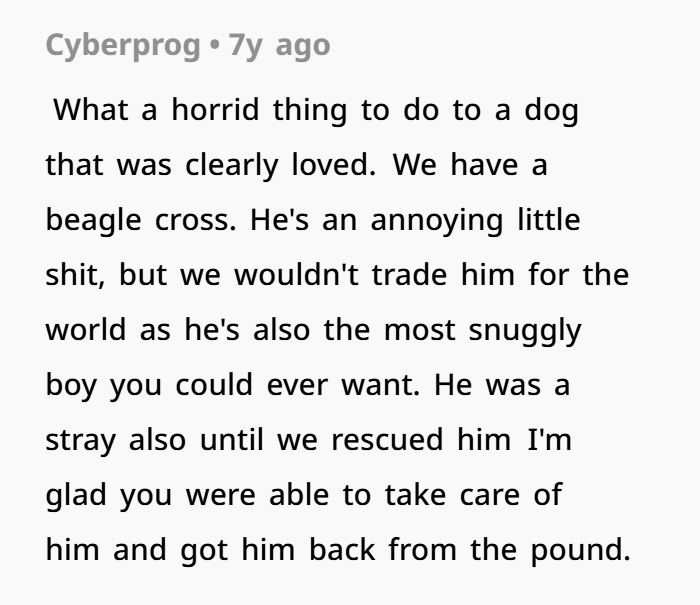
People have had a lot of reactions to this woman’s experience







In the end, this wasn’t just about a lie. It was about agency. About someone making a unilateral decision over a living being that wasn’t truly theirs to discard. And from a legal perspective, if you ever find yourself in something similar, document everything. Keep vet records. Keep adoption paperwork. Microchip your pets. And if necessary, consult a pet custody attorney — yes, that’s a real and growing legal niche.
Winston’s story could have ended very differently. Many dogs surrendered under false claims are adopted out within days. If you had waited one more week, he might have been gone for good. That’s the terrifying part.