She Left, Cheated, and Took Everything — Even the Cat
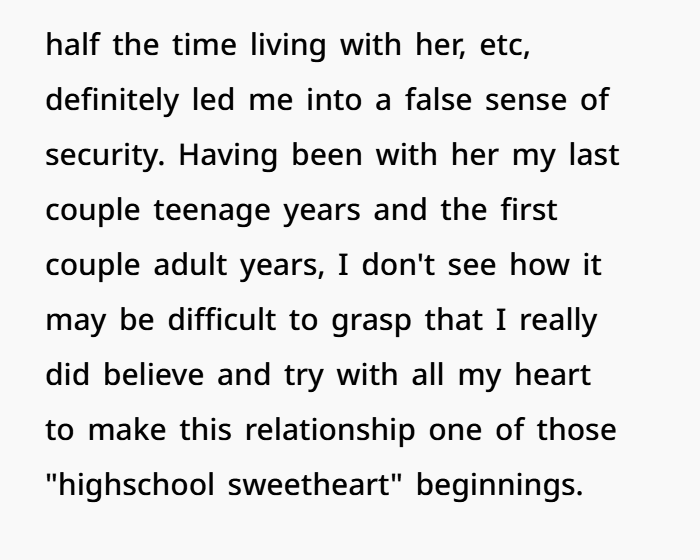
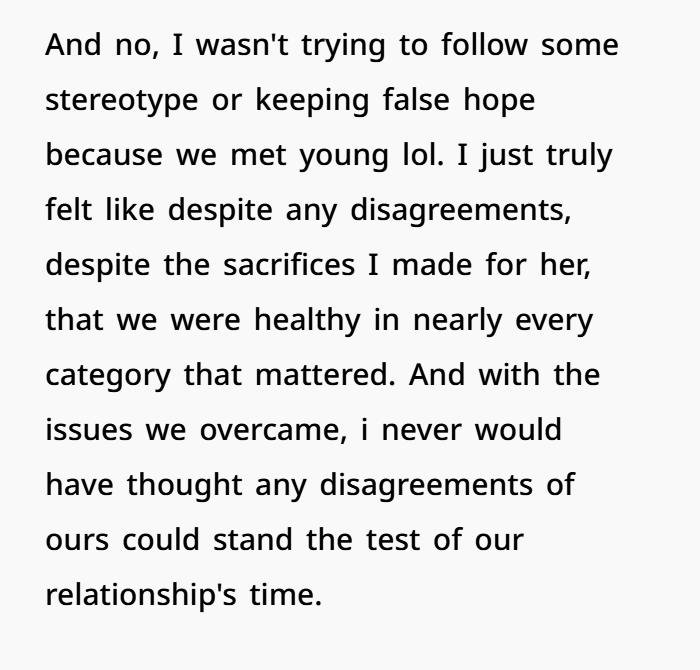
This story starts like something straight out of a “perfect relationship” fantasy. Two people who grew up together, became best friends, then partners, then basically built a life side by side. They moved in together, traveled, adopted cats, and created routines that made them look like the ideal couple. From the outside, everything screamed stability, trust, and long-term commitment. Honestly, even he believed it. There were barely any arguments, and whatever issues came up only seemed to bring them closer. It felt safe. Predictable. Like something that would last.
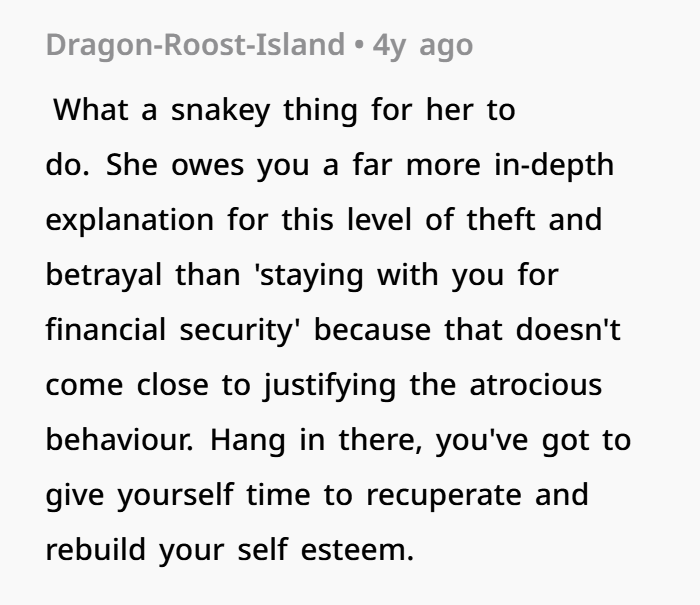
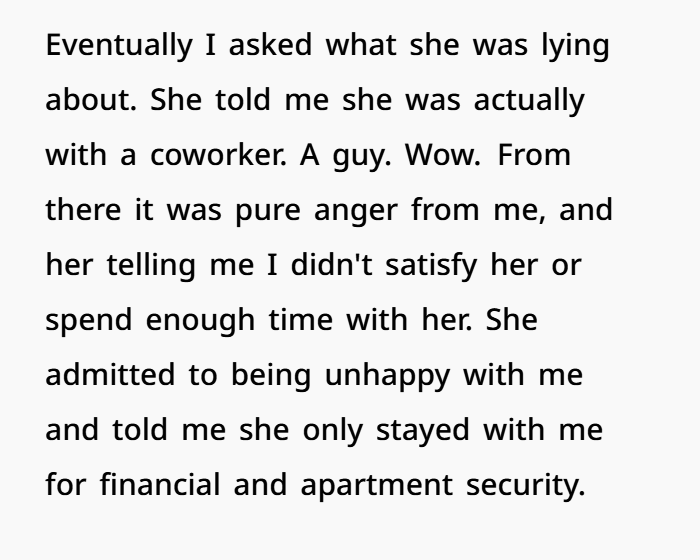
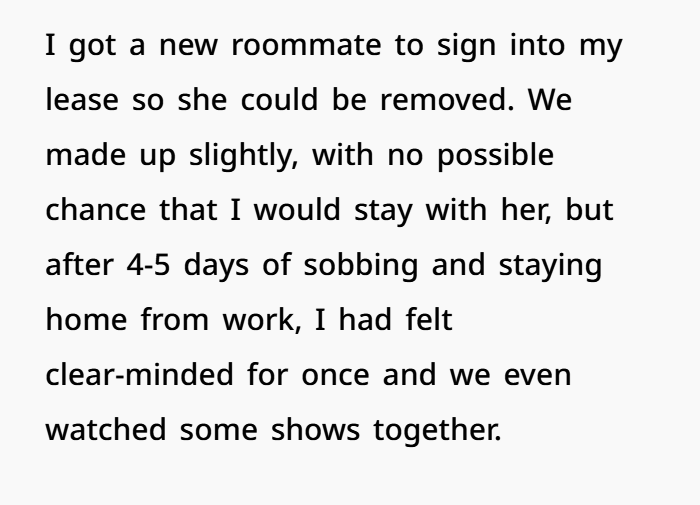
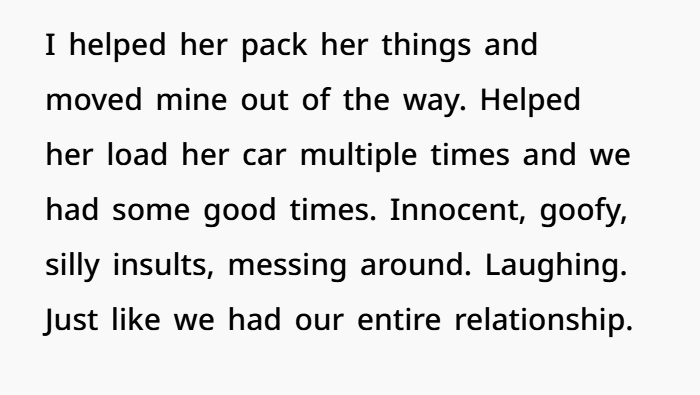
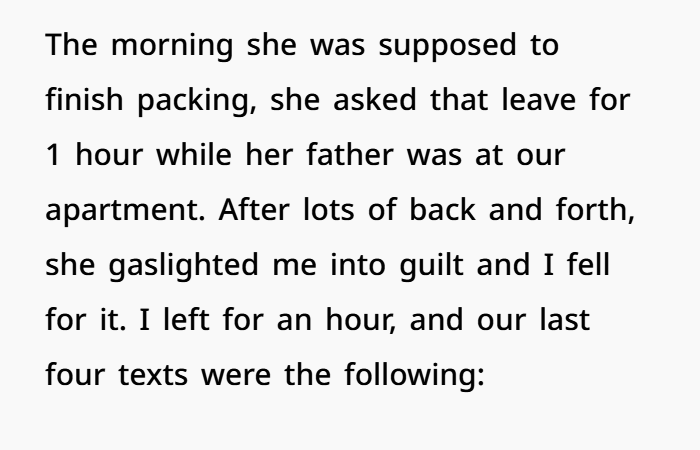
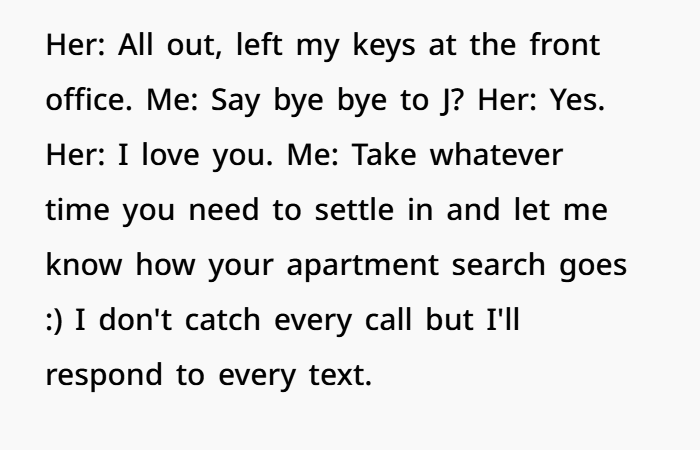
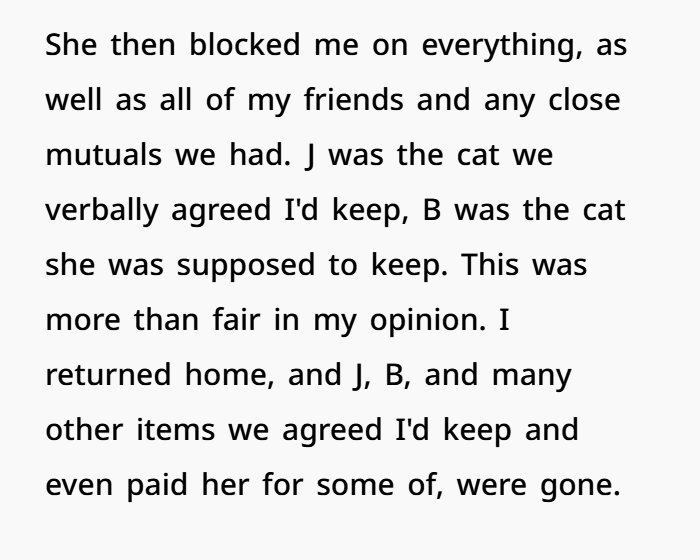
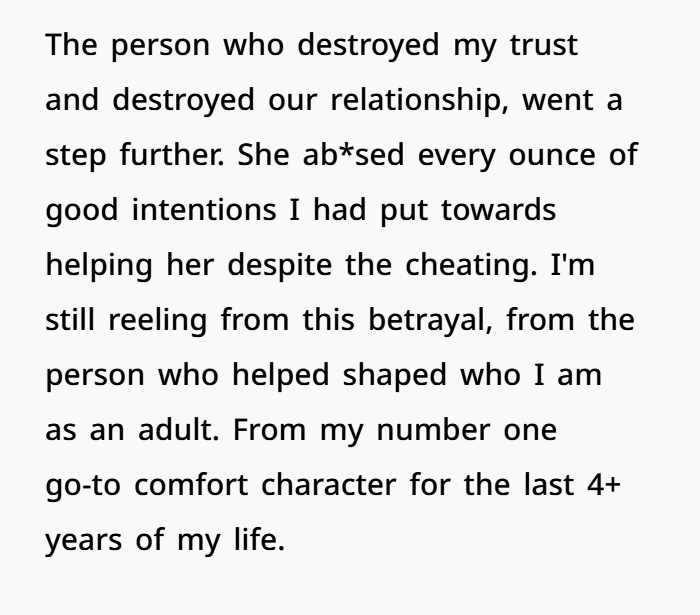
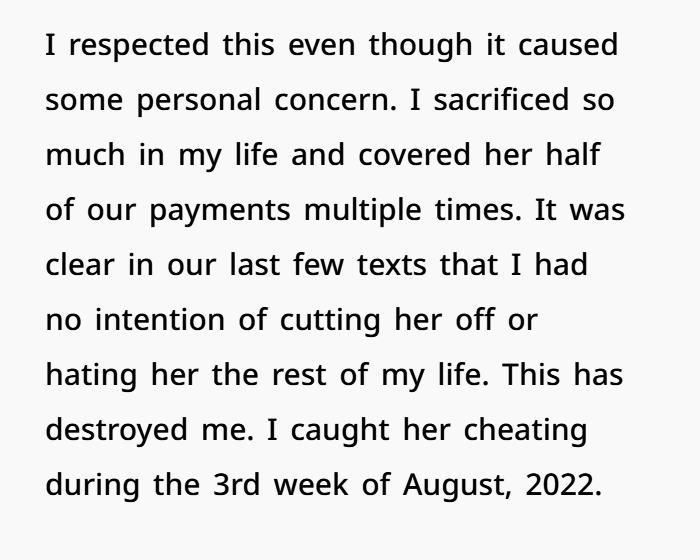
But then everything flipped — fast. One random night, her behavior changed. Missed calls, vague texts, location turned off… all those little red flags people usually ignore started stacking up. What followed was the kind of truth that hits like a truck: she wasn’t where she said she was, she was with another guy, and worse, she admitted she’d been unhappy for a while and was only staying for financial security. That alone shattered things. But what really pushed it into betrayal territory was what came after — manipulation, sudden blocking, and then taking things that weren’t hers… including his cat. Now it’s not just heartbreak. It’s emotional damage mixed with a full-on legal dispute.







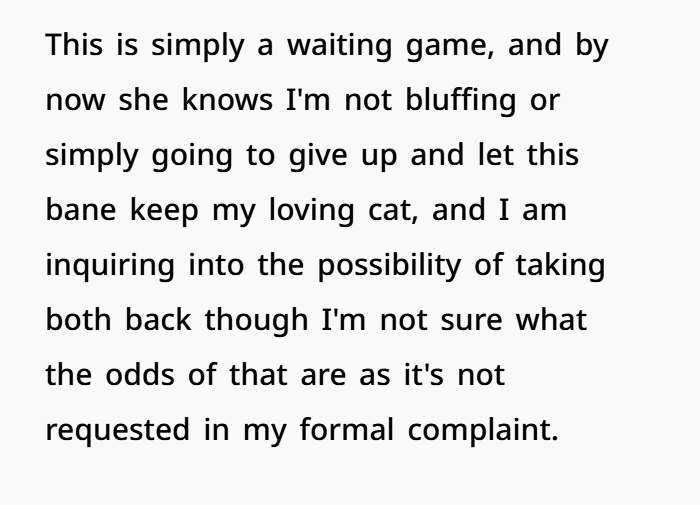
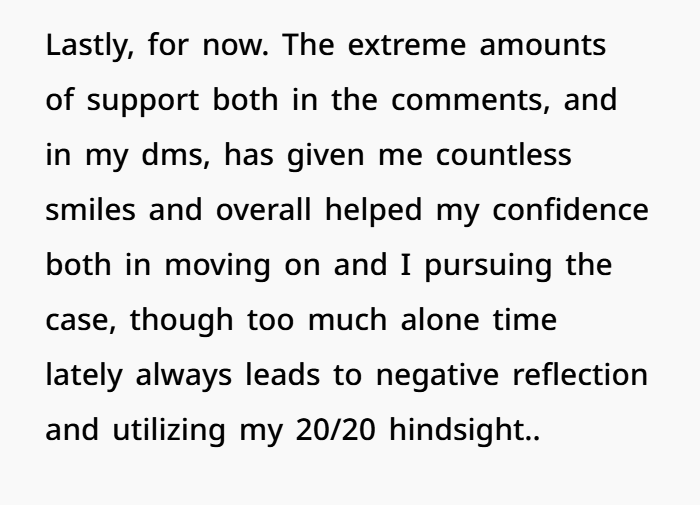
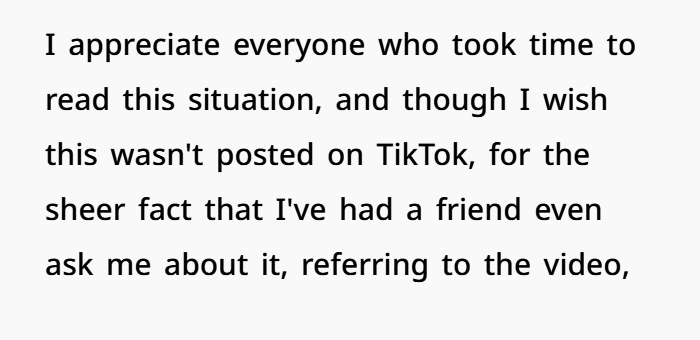
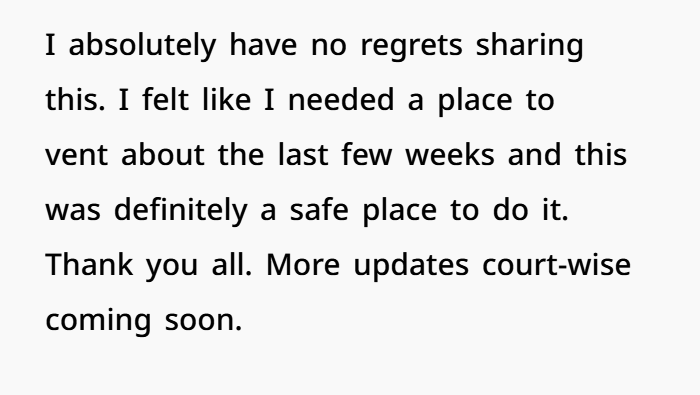
What makes this situation hit harder than a normal breakup story is how many layers it has. This isn’t just cheating. It’s emotional dependency, financial dependency, shared living, trust issues, and now even legal complications like property disputes. All of this mixed together gets messy real quick. And honestly, this kind of situation is more common than people think — especially in long-term live-in relationships where finances and daily life are connected.
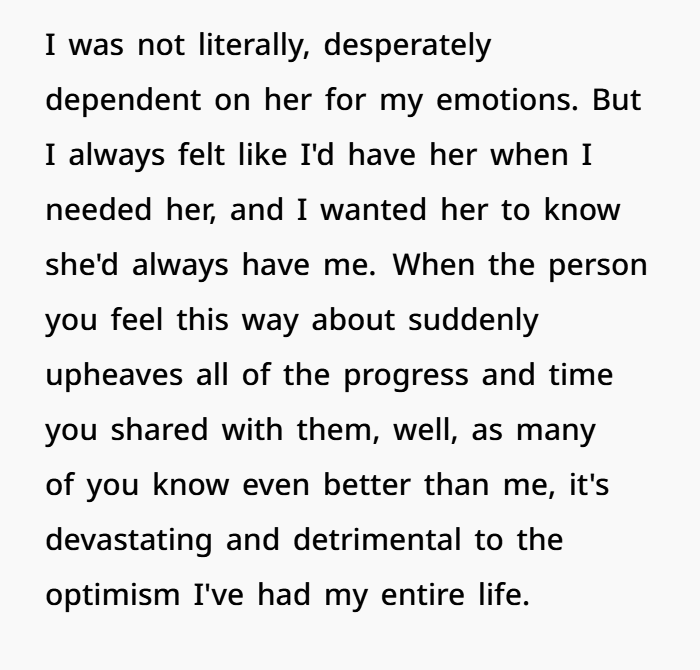
Let’s talk about the emotional side first. When someone spends years with a partner — especially during those early adult years — the connection becomes deeper than just love. It becomes part of your identity. Your daily routine, habits, comfort zone… everything gets linked to that one person. Psychologists call this emotional attachment or attachment conditioning. It’s not weakness at all. It just means your brain got used to them being your safe space and emotional support system.
So when that same person suddenly changes — lies, cheats, and pulls away emotionally — your brain can’t process it properly. That’s why he felt mentally drained, lost weight, and had those unstable 50/50 days. This actually matches what experts call post-relationship trauma or emotional distress response. Your mind keeps trying to connect the “old version” of them with the current reality. And yeah, that confusion hits hard.
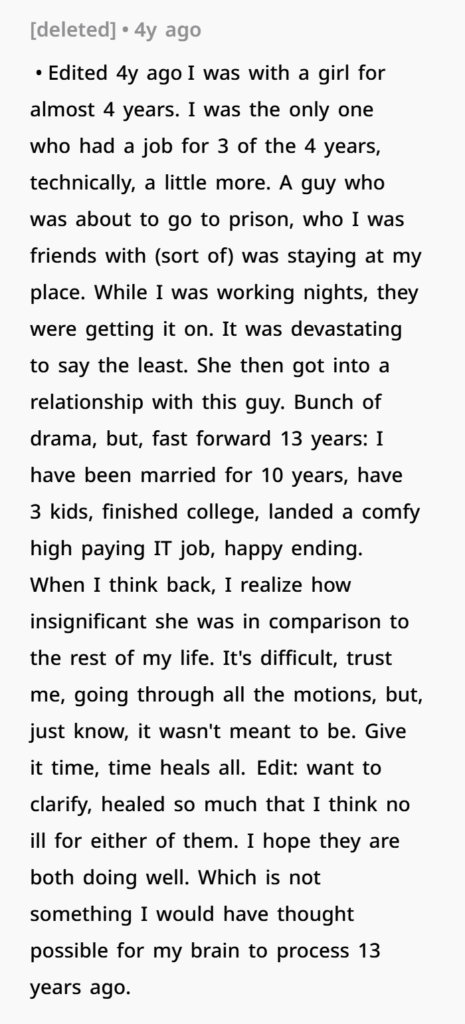
Now about the cheating part. What stands out isn’t just the cheating, but the pattern behind it. Late work hours, coming home late, emotional distance — these are common red flags often linked to workplace affairs. Research on infidelity shows that coworker relationships are one of the biggest causes of cheating, mostly because of constant interaction and time spent together. When someone starts investing emotionally somewhere else, they slowly disconnect at home. That’s probably why she later claimed dissatisfaction instead of communicating earlier.
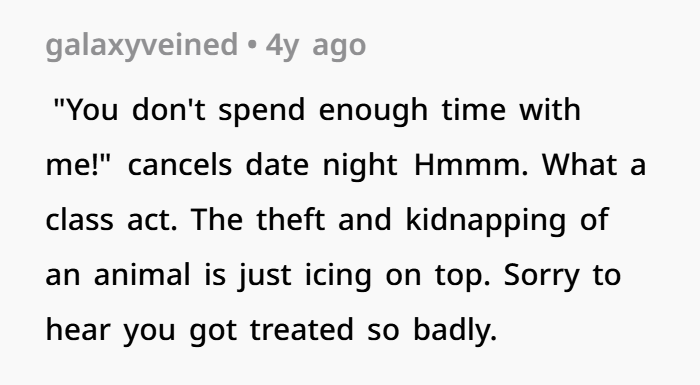
And this brings up another major issue — lack of communication vs excuse-making. Instead of talking about problems when they started, she kept everything inside and then used it as a justification after getting caught. This happens a lot. People rewrite the story to reduce their own guilt. Saying things like “you didn’t give me enough time” even when that’s not fully true. It becomes less about facts and more about protecting themselves emotionally.
Now this is where things move from emotional damage into legal territory.
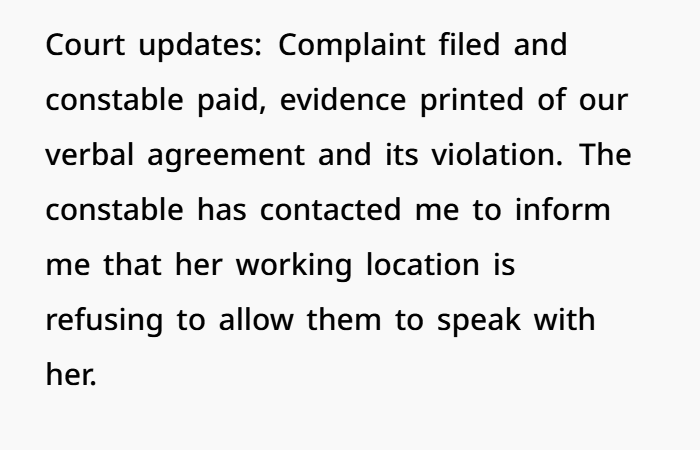
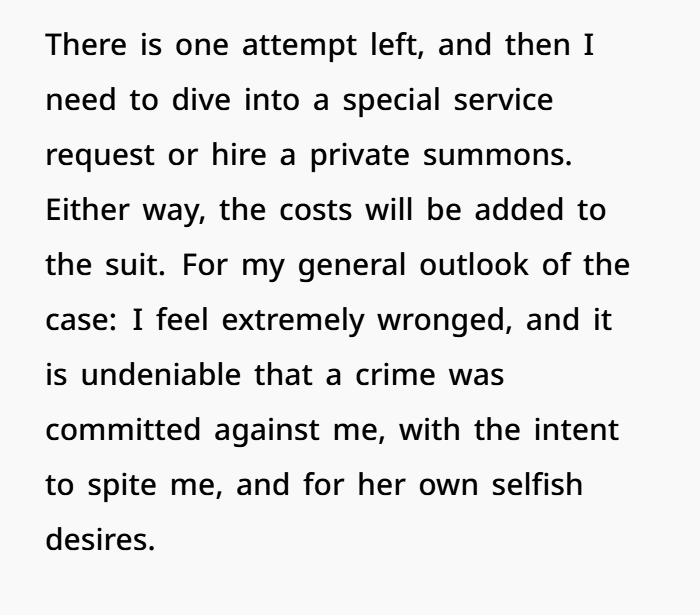
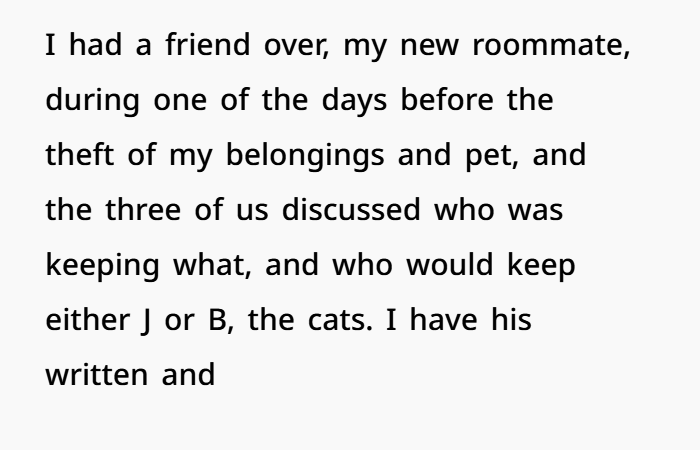
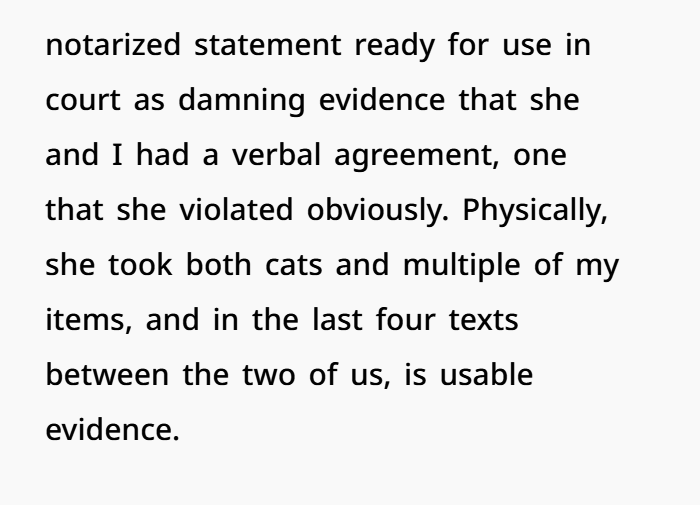
Taking shared or disputed property after a breakup can fall under civil law issues, depending on ownership rights and prior agreements. In this case, the cats weren’t just pets — they were jointly adopted, and there was a verbal agreement about who keeps which one. While verbal agreements are harder to prove than written contracts, they can still be legally valid in many cases if there’s supporting proof like chat records, payment history, or witness statements.
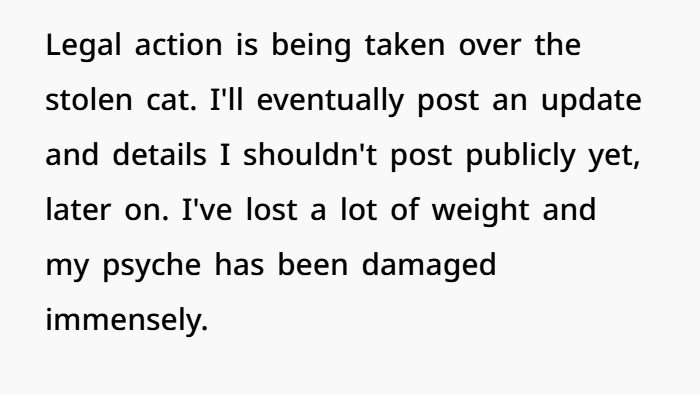
He said he has a notarized witness statement plus chat evidence. That’s actually solid proof in a civil case, especially when it comes to property disputes or asset recovery. Legally, pets are often classified as property, even though emotionally they’re family. So if someone takes a pet that was already agreed to belong to the other person, it can be treated as unlawful possession or even conversion under civil law.
Also, her behavior after the incident matters a lot. Blocking him and disappearing right after taking the items makes it look intentional. Courts usually analyze patterns, not just one action. If it appears calculated or deceptive, it can strengthen his case and support his legal rights.
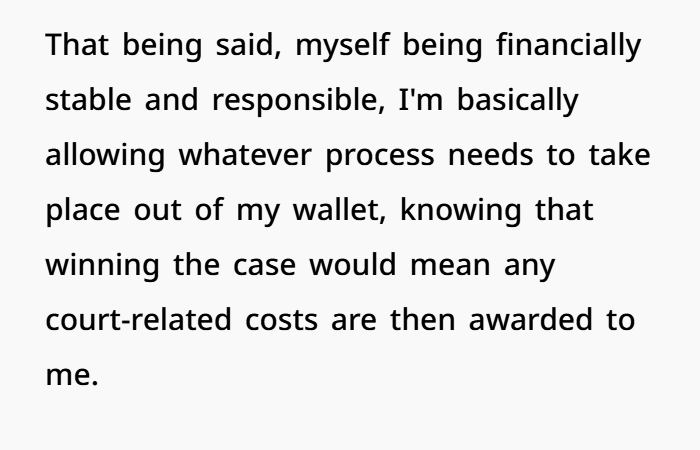
Then there’s the financial side. He talked about covering expenses, helping her move, and paying for certain things. That shows good faith and financial support, which plays a big role in legal disputes. Meanwhile, her taking extra items beyond agreement could be viewed as acting in bad faith or even financial exploitation.
From a bigger perspective, this situation highlights some real truths about relationships.
First, just because a relationship looks stable doesn’t mean it’s honest. A lot of issues stay hidden, especially when people avoid communication or stay for financial security.
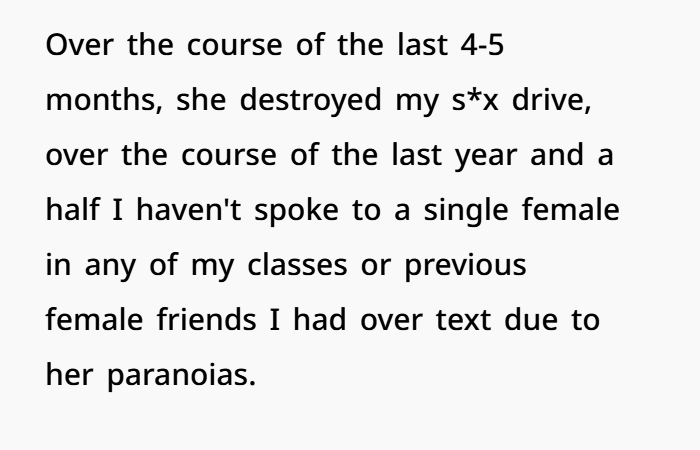
Second, setting boundaries is more important than over-sacrificing. He gave his time, energy, and even social life for her, but without equal effort, that creates imbalance and emotional reliance. And when it breaks, it hurts way more.
Third, the way someone ends a relationship shows their real nature. Manipulation, blame-shifting, and ignoring agreed terms — these are choices, not accidents.
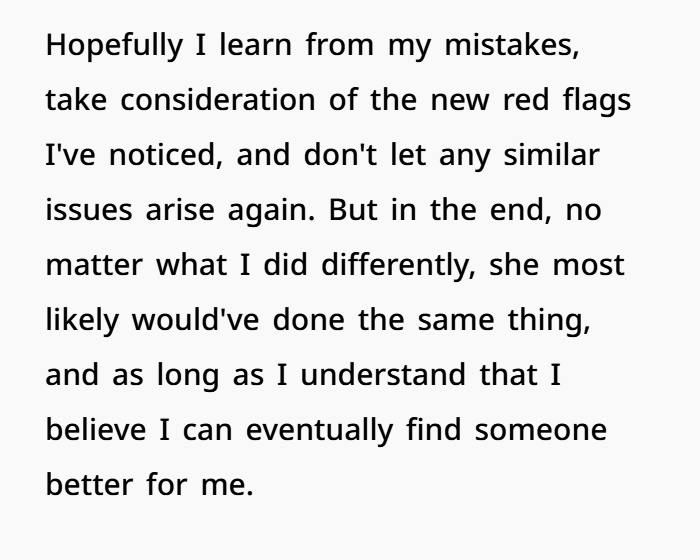
Now about the healing part. He’s currently in that unstable phase — some good days, some really bad ones. That’s completely normal in emotional recovery and mental health healing. Getting over betrayal takes time. The key shift is moving from regret to awareness. From “what if” to “now I know better.” Because honestly, this wasn’t fully in his control.
Legally and emotionally, this is a full reset situation. Life, trust, routine — everything needs rebuilding. And yeah, that process isn’t quick.
But once legal clarity comes in and things start making sense, the chaos settles down. It always does, just takes time.
And later on, this won’t just feel like heartbreak. It’ll feel like a major life lesson — something painful, but necessary for growth.
Top Comments From Readers