
AITA for Calling Out My Family’s “Birthday Club” for Acting Like Bill Collectors?
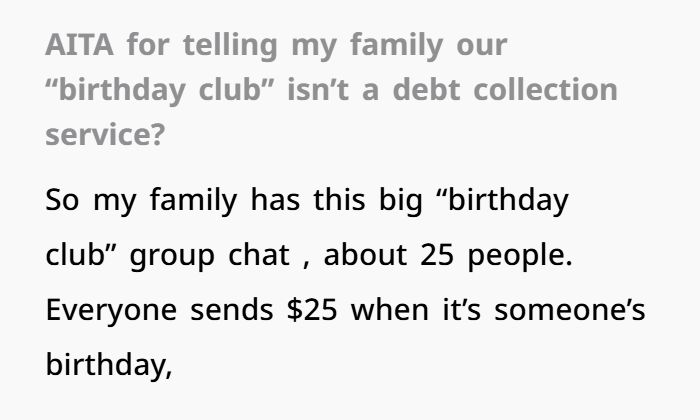
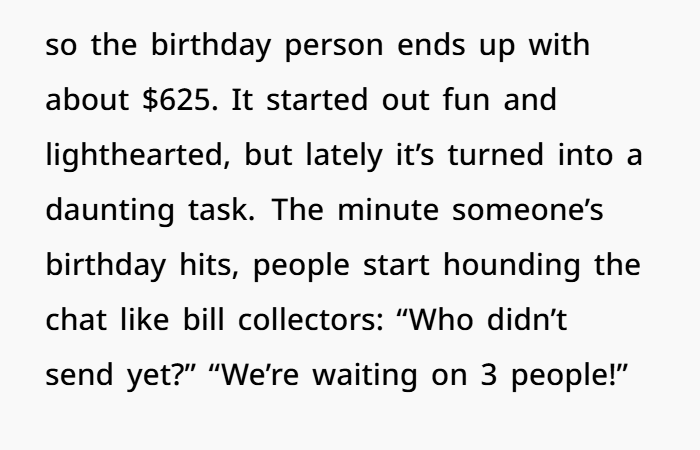
The idea behind OP’s family “birthday club” is actually really sweet: every family member sends $25 to whoever’s birthday it is, so they end up with a big birthday lump sum (around $625). It’s not meant to be about profit, but rather a feel-good gesture and shared tradition. But lately, the vibe has shifted from warm and fuzzy to intense and aggressive. The moment someone’s birthday starts, people start spamming the chat with “Who hasn’t sent yet?” and “We’re still waiting on 3 people!!” Like… before folks are even awake.
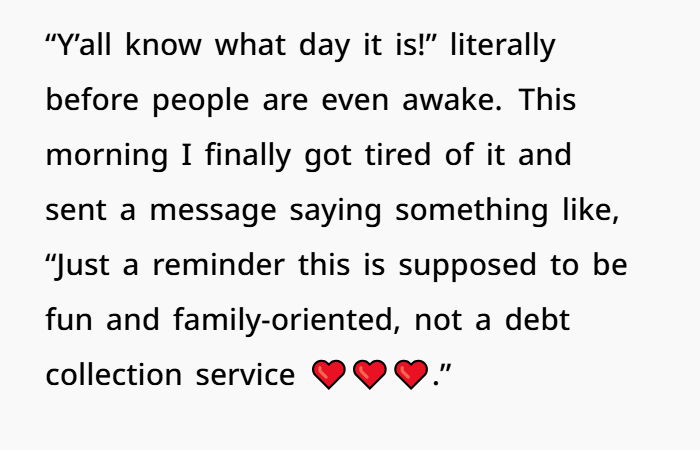
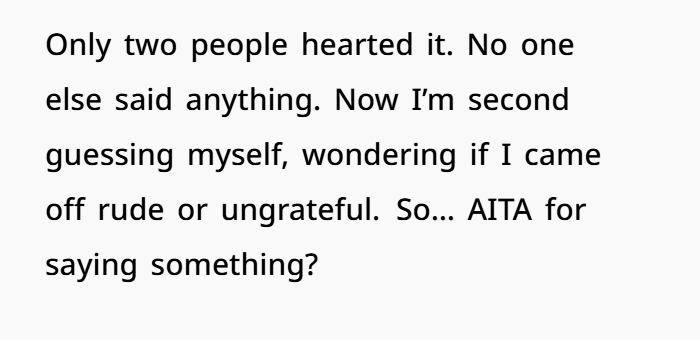
Feeling exhausted by the energy, OP finally snapped (softly) and dropped a gentle reminder in the group chat: “Just a reminder this is supposed to be fun and family-oriented, not a debt collection service ❤️❤️❤️.” Only two people reacted (heart emoji), and now OP is spiraling—did that come off rude or ungrateful? Was it wrong to speak up?
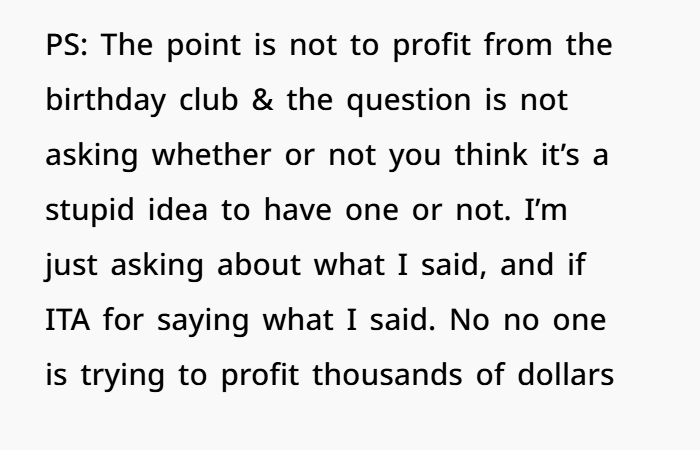
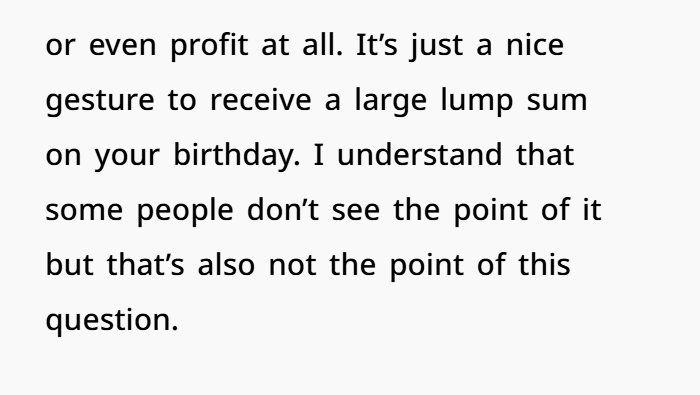
They’re not asking for judgment on the concept of the birthday club—just on their comment in the group chat.
Birthday gifting should be fun and simple, instead of an obligation that people want to escape

The poster explained that her family started a club with 25 people, and that they’d collect $25 from everyone and give the collection to the birthday person
Let’s dive into this one because it touches on so many themes that resonate across families, especially during birthdays and shared money traditions. If you’ve ever been in a group chat gone sideways—or felt obligated to send money to a family member just because—it’s easy to see where this gets complicated.
1. Group gifting can become group pressure
At its best, shared gifting ideas like birthday pools or Venmo group contributions are thoughtful, easy, and make everyone feel included. It takes the pressure off buying a big personal gift, and the birthday person gets a generous lump sum they can use however they want. But that sweetness only lasts as long as people feel like they’re choosing to participate—not being forced.
When people start acting like debt collectors—even if it’s joking—it changes the whole energy. That “Who didn’t send yet?!” message starts to feel less like a nudge and more like an invoice. This is especially true when it hits first thing in the morning or multiple times a day. Suddenly, it’s not fun anymore. It’s stressful.
According to a piece from The Atlantic, group chats often blur the line between social connection and obligation, especially when tied to money. Social etiquette expert Diane Gottsman says that the “reminder culture” (constant nudging or tagging) can feel pushy and guilt-inducing even if it’s intended to be efficient. (theatlantic.com)
So, OP’s instinct that the tone was shifting? Spot on.

2. Venmo birthdays and digital guilt
In the age of Venmo, CashApp, and Zelle, sending money has become super convenient—but that convenience can also become toxic. Apps now show who paid whom, when, and even why (with emojis!), creating a layer of digital peer pressure.
Studies have shown that social comparison through payment apps increases anxiety. When everyone else has already sent $25 and your name isn’t checked off, you might feel behind—even if you were planning to send it later in the day. It becomes less about the birthday and more about meeting a payment deadline.
And let’s be real: money is sensitive. Even $25 isn’t nothing, especially for family members on tight budgets. Feeling like you’re being “called out” in a family chat for not sending it by 9AM is, understandably, annoying. The reminder may not mean harm, but it can feel very personal—especially if you’re juggling bills, a busy morning, or just forgot.
3. Tone is everything—and OP’s wasn’t mean
Now, to the core question: was the message rude or ungrateful? Let’s break it down.
Here’s what OP said:
“Just a reminder this is supposed to be fun and family-oriented, not a debt collection service ❤️❤️❤️.”
Honestly? That’s one of the softest and most diplomatic ways to express frustration. You didn’t name names. You used “we” language. You even added heart emojis to soften the blow. That’s practically textbook for how to express a boundary without being harsh.
Had you said “y’all need to chill and stop acting like vultures every time someone has a birthday,” then maybe yes—you’d be straying into AH territory. But your message kept the tone respectful. You focused on the vibe, not blaming individuals. That’s key.
In fact, the lack of response from the group might say more about them feeling awkward or called out than you doing anything wrong. It’s uncomfortable to be told your behavior is off, even gently. But that doesn’t make your observation incorrect.
4. The cost of silence
A lot of people stay silent in group chats when things go sour because they don’t want drama. But silence can also reinforce bad behavior. By speaking up—even once—you actually set a boundary that might make other people feel seen too.

The two people who hearted your message? They probably agreed with you, even if they didn’t want to get involved. And you might be surprised how many family members privately felt the same but just didn’t have the courage to say it.
In group dynamics, it often only takes one person to say, “Hey, this is feeling off,” to prompt a slow shift. Your message may have planted a seed—even if no one responded right away.
5. Healthy traditions evolve
Here’s the truth: traditions are only good if they work for the people in them. If a birthday gifting ritual starts to feel like a burden or a bill—especially first thing in the morning—it needs to evolve. You can still love the tradition and also want to tweak how it plays out.
Consider suggesting some tweaks:
- A “birthday window” instead of “pay by today”—give people a few days.
- A pinned message with a reminder, rather than constant tagging.
- Or even rotating opt-in lists each year.
Making it easier for people to participate on their own time respects both the tradition and everyone’s boundaries.
6. Should you follow up?
Maybe. If you’re still feeling the tension, it could help to clarify that you weren’t trying to cancel the tradition—just bring back the joy in it. Something like:
“Hey fam, love being part of the birthday club—it’s such a cool tradition. Just wanted to make sure we keep it lighthearted and low-pressure for everyone ❤️”
This can gently reset the tone and reassure people you’re not trying to shut it down—just asking for less intensity.
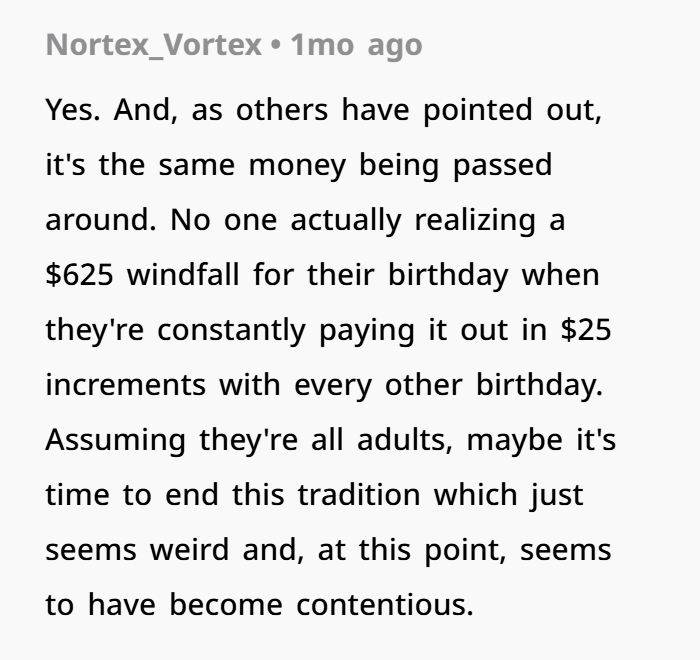
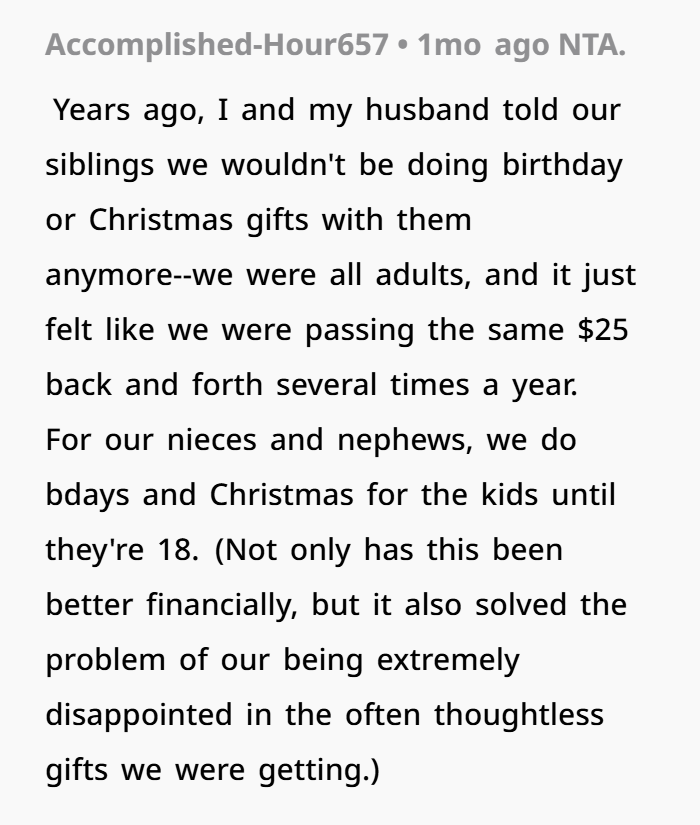
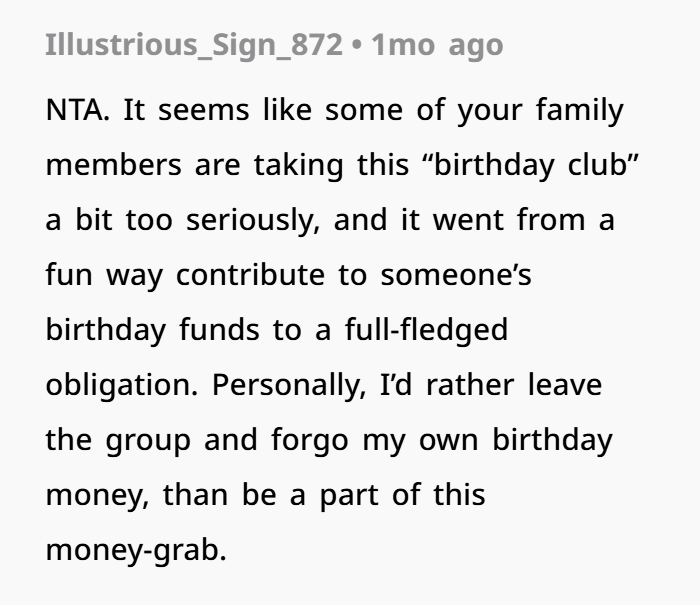
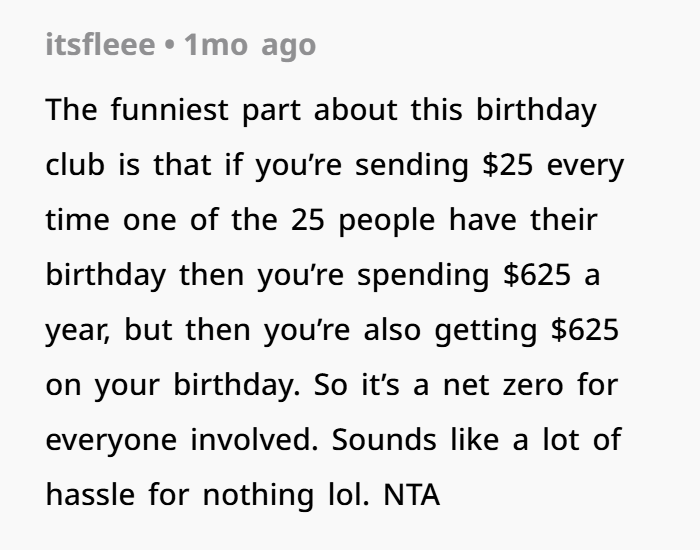
Most folks sided with the poster and felt that the birthday tradition had become too forced


You weren’t rude. You weren’t ungrateful. You saw a vibe shift in something that was supposed to be joyful and said, “Hey… let’s remember why we do this.” That’s not being an AH. That’s being aware.
In families—and in money-related group chats especially—tone creep happens. A kind reminder like yours is actually one way to preserve the tradition. You’re protecting the fun, not stomping on it. And that deserves some heart emojis, even if they don’t all show up in the chat.
So no, OP—NTA. You just hit “send” on what a lot of folks were probably already thinking.
Want a gentle follow-up message you could drop to ligh