He Said I Should ‘Man Up’ Over Marvel—But My Twin Brother Died Watching WandaVision
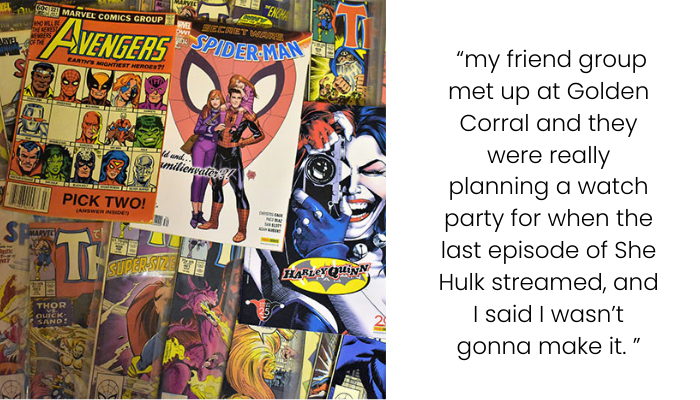
Losing a sibling is a trauma that never really goes away, and for one 17-year-old Redditor, it’s made even harder by how it happened—his twin brother passed away in their shared room while watching WandaVision. Ever since, anything Marvel-related is a painful trigger. He’s gone to therapy and tried to keep going, but superhero movies are just off the table for him now. So when his friend group planned a Marvel watch party, he respectfully declined. Everyone seemed cool with it—except for a guy in the group who didn’t know the backstory and made a cruel joke about his avoidance.
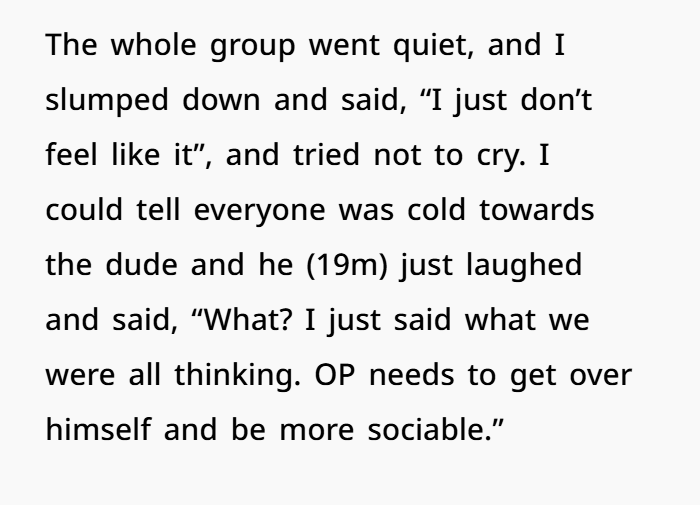
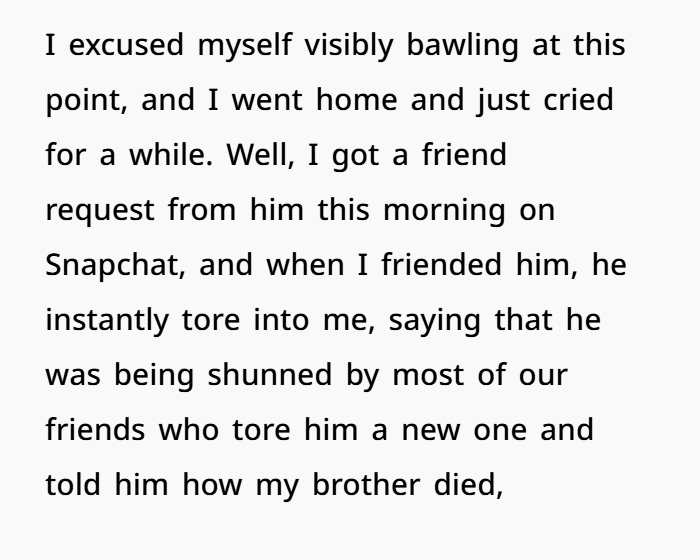
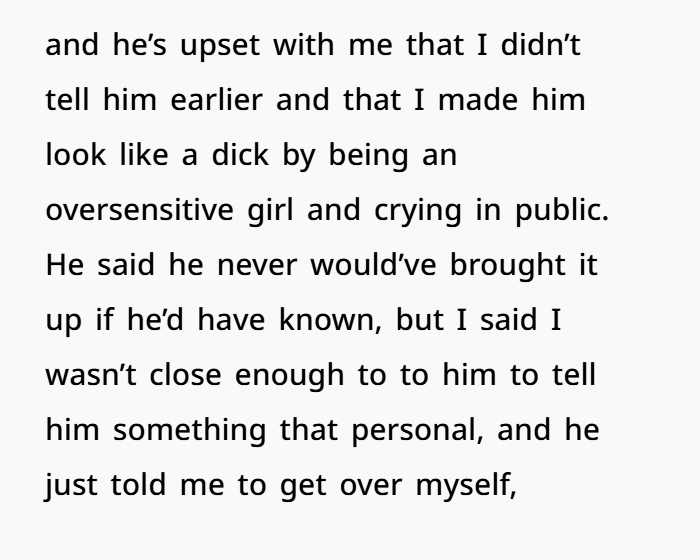
When the OP didn’t react the way the acquaintance expected, it escalated. The dude doubled down, mocking OP for being emotional and “unsociable,” only to later find himself ostracized by the rest of the group once they filled him in. He came at OP over Snapchat, blaming him for “making him look like a dick” and even calling him names. Now OP’s second-guessing himself—should he have just explained things right away? Or was it okay to protect himself and his pain?
Some folks are so obsessed with their “reputation,” they would cross all lines of decency just for themselves
The 17-year-old poster was very close to his twin, but lost him while watching a Marvel movie, and the series became a PTSD trigger for him
Grief is weird, right? Especially when it’s grief tied to something that used to bring joy—like movies, music, or shared hobbies. In this case, OP and his twin had a shared love of Marvel. For them, it wasn’t just about superheroes or CGI battles—it was about bonding. That kind of connection runs deep. So when his brother died, while watching a Marvel show, it makes total sense that those memories got permanently tied to the trauma.
According to mental health experts, this is called a “trauma trigger.” Psychologists like Dr. Mary C. Lamia have written about how sensory or situational reminders can instantly bring back overwhelming feelings tied to a past trauma. (Source: Psychology Today) In OP’s case, Marvel isn’t just a brand—it’s a reminder of loss. A painful one.
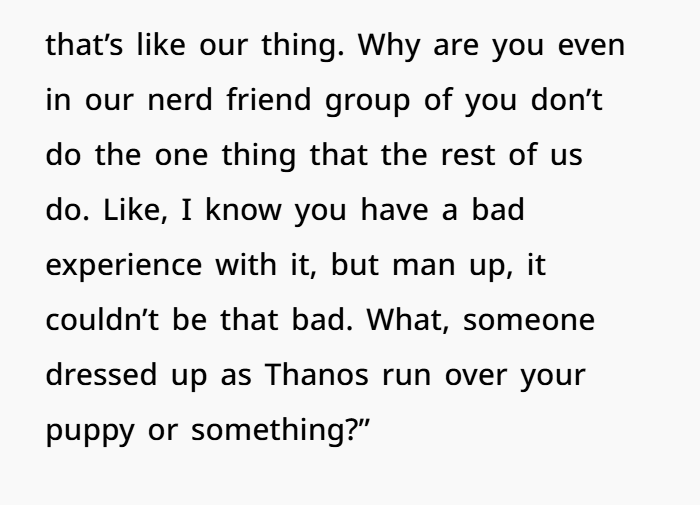
Now let’s talk about what happened at that dinner. The acquaintance’s behavior fits a classic case of toxic insensitivity. Some people just don’t get that their words can cut deep, especially when they think they’re being funny or edgy. But the line about “a Thanos cosplay running over a puppy”? That wasn’t just a bad joke—it was cruel. And making fun of someone’s pain because it doesn’t make sense to you isn’t just ignorance—it’s emotional immaturity.
OP’s reaction was incredibly restrained. He didn’t lash out, he didn’t start yelling, and he even tried to just leave the situation. That’s a pretty mature move, especially for a teen dealing with unresolved grief. It shows emotional intelligence—something the other guy clearly lacked in the moment.
The friend-of-a-friend’s later response on Snapchat is also worth unpacking. When he found out the truth, instead of owning up to his mistake, he flipped it. Blamed OP. That’s a common reaction from people who feel shame but don’t want to deal with it. According to Dr. Brené Brown, shame can trigger defensiveness, and one of the easiest ways to dodge accountability is to blame someone else. He said, “You made me look like a dick”—when in reality, he did that to himself.
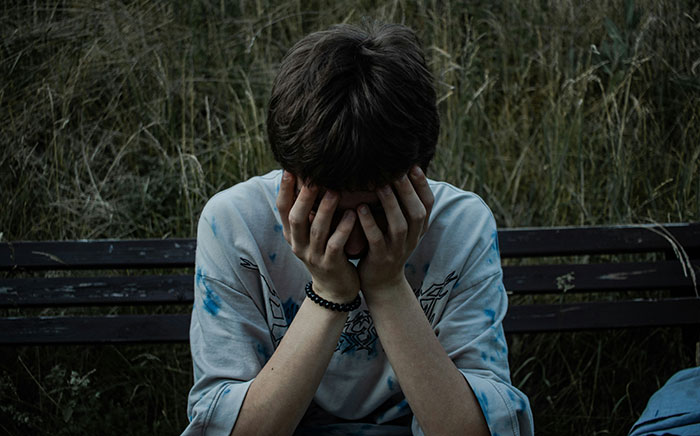
Let’s also talk about the emotional toll on OP. That one dinner brought back memories so intense that he described feeling like he did the day he found his brother’s body. That’s serious. Trauma like that isn’t something you “man up” from. In fact, telling someone to “man up” or stop being “an oversensitive girl” is deeply problematic—it plays into outdated gender stereotypes and toxic masculinity. The idea that crying or being vulnerable makes someone weak is a belief that hurts everyone.
Legally speaking, OP doesn’t owe anyone a disclosure of his trauma. There’s no social or legal requirement to explain your triggers, especially not to acquaintances. In fact, mental health privacy is protected by various laws in different countries. In the U.S., for example, while HIPAA applies mainly to medical professionals, there’s a cultural and ethical understanding that people are allowed to keep their emotional history private unless they choose to share it.
Ethically, was OP in the wrong for not speaking up sooner? Not at all. He tried to handle things privately. The acquaintance wasn’t someone he was close to. Opening up about something that raw in the middle of Golden Corral, especially when being mocked, isn’t reasonable to expect. That would’ve been setting OP up to explain himself just to avoid being insulted again.
From a community standpoint, the friend group’s reaction is telling. They didn’t back the guy up. They defended OP. That speaks volumes. Peer support after trauma is huge—it’s often the difference between someone shutting down or healing a little. Social psychologists call this “social validation.” When people back you up and acknowledge your pain, it helps reinforce that your feelings are real and justified.
Interestingly, OP even considered if he should’ve made the situation easier for the other guy. That shows empathy—but it’s misdirected. The onus shouldn’t be on the grieving person to make everyone else comfortable. That’s like asking someone with a broken leg to apologize for limping.
There’s also a learning moment here about consent and emotional boundaries. Everyone has a right to decide what they share and when. If someone doesn’t tell you about a trauma, the correct response is empathy—not anger or entitlement. The acquaintance saying “you should’ve told me earlier” is like saying “you should’ve warned me before I stepped on your heart.”

Another angle worth noting is the age gap. OP is 17. The acquaintance is 19. While that’s not a huge gap, it’s just big enough that the 19-year-old should’ve had a bit more awareness. There’s an unspoken maturity expectation when you’re legally an adult, even if just barely. Calling someone “oversensitive” and mocking them for crying? That’s behavior more suited to a middle school bully than someone about to enter their 20s.
In the end, OP’s just trying to heal. And grief doesn’t come with a timeline or a rulebook. There’s no script for “the right way” to handle being triggered. But one thing is clear—OP’s silence wasn’t an attack. It wasn’t manipulative. It was protective. And that’s okay.
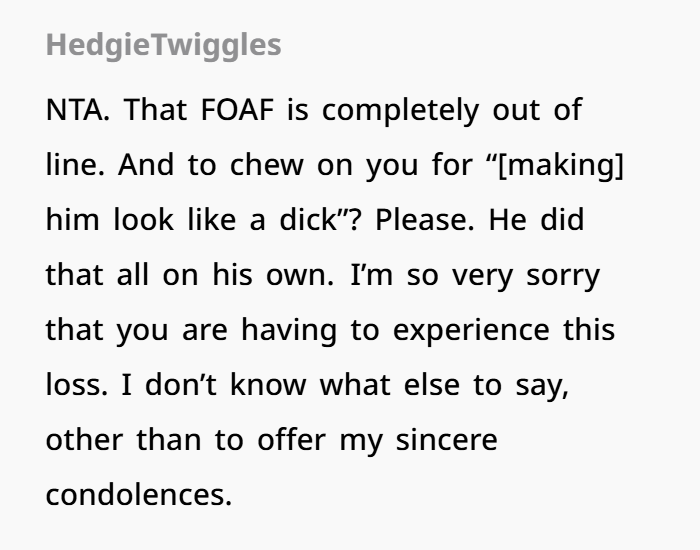
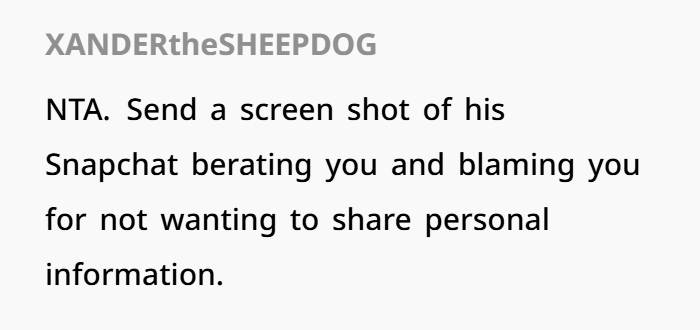
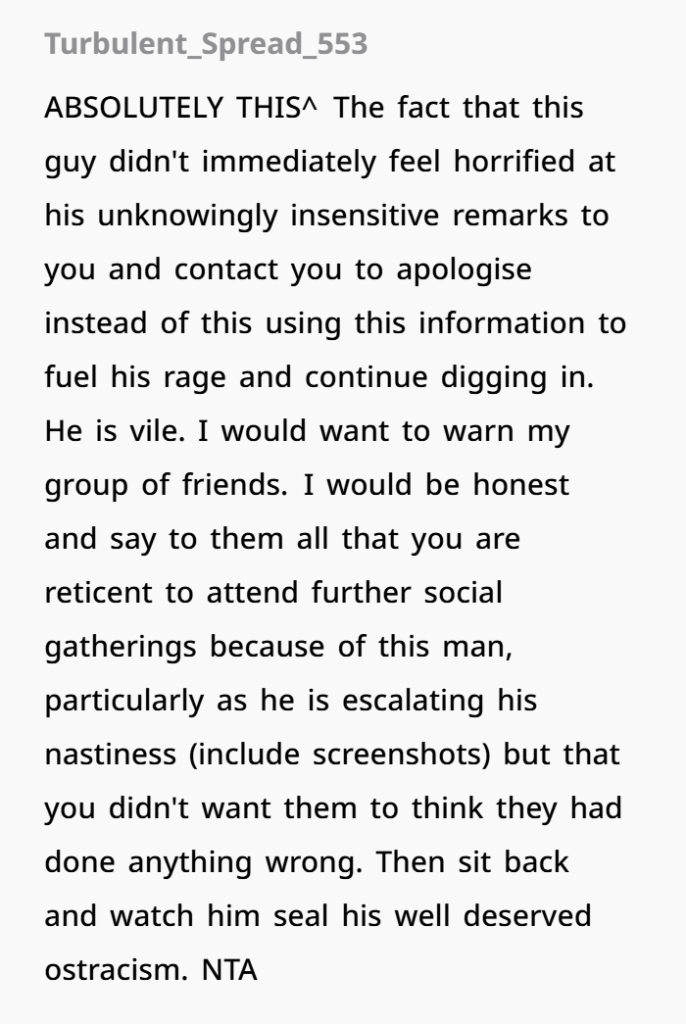
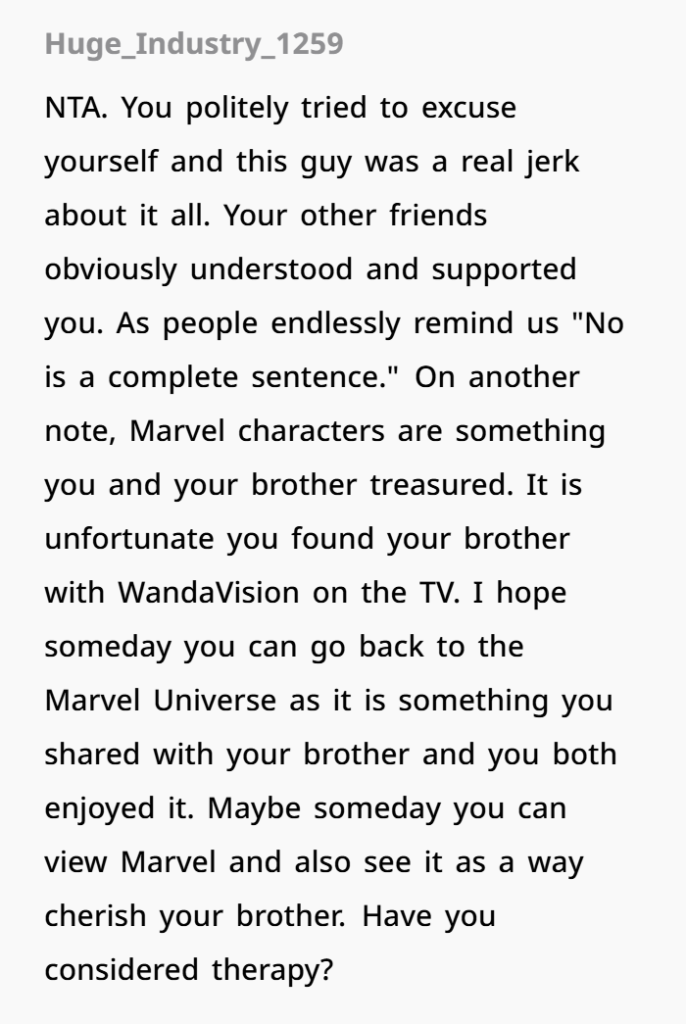
Netizens expressed their sympathy to the poster, while also applauding his other friends for kicking the toxic guy out of their group