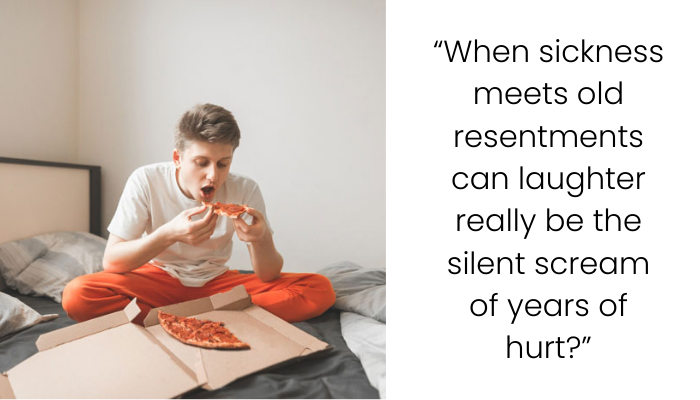
AITAH for laughing when my brother got diagnosed with diabetes?
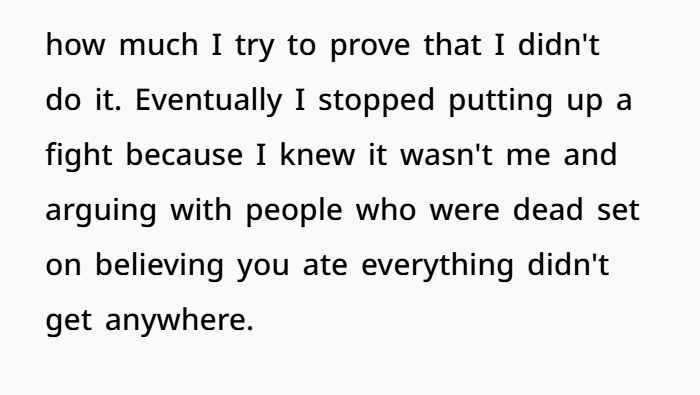
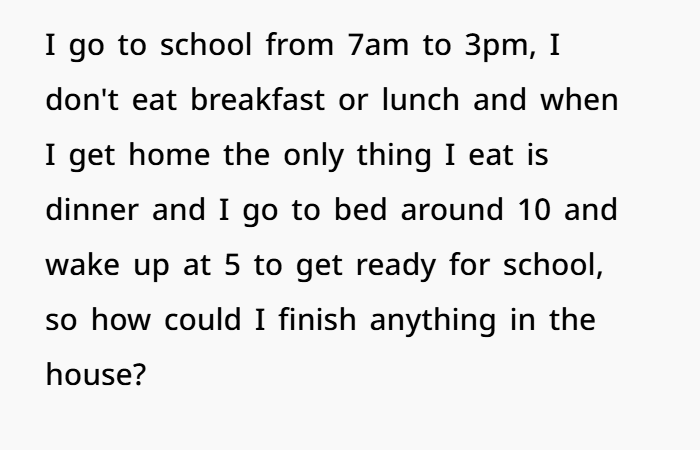
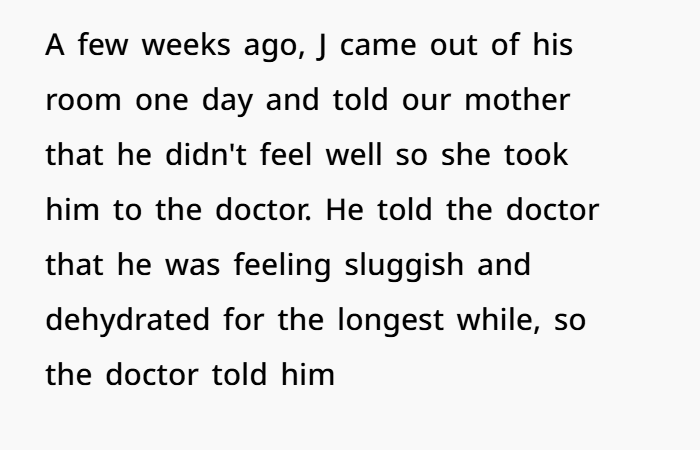
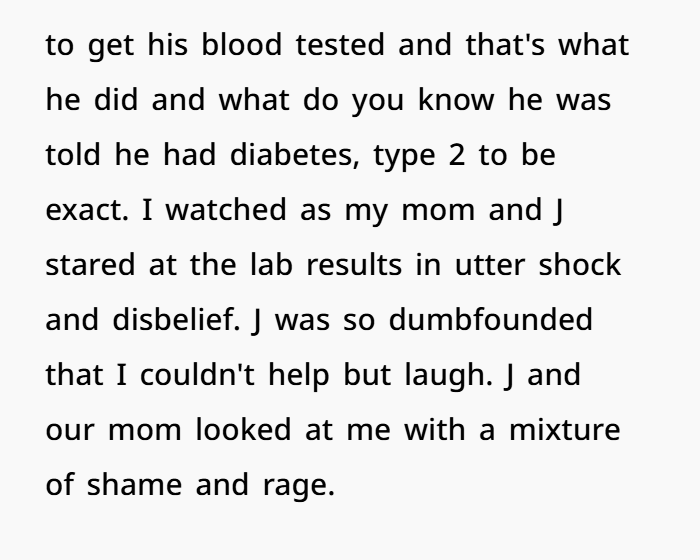
You’ve felt treated unfairly for years — accused of eating everything, being “fat,” blamed whenever anything vanished from the fridge. Your brother always got special treatment. So when he got diagnosed with Type 2 diabetes, and you laughed, it wasn’t joy or cruelty — it was anger, frustration, and all that built‑up bitterness spilling out.
Now, you’re stuck. Family’s calling you cruel and unfeeling, but you argue — this isn’t about “kicking someone when they’re down.” It’s about being tired of being treated like trash while he got away with everything for years. Deep down, you still care about him — but you don’t think you deserved to carry his insults and unfair blame for so long.
Sometimes life serves up moments so perfectly ironic that all you can do is laugh, and it has nothing to do with cruelty or insensitivity

The author was consistently blamed by her family for finishing food and was mocked for being “fat”, while her older brother ate freely without consequence
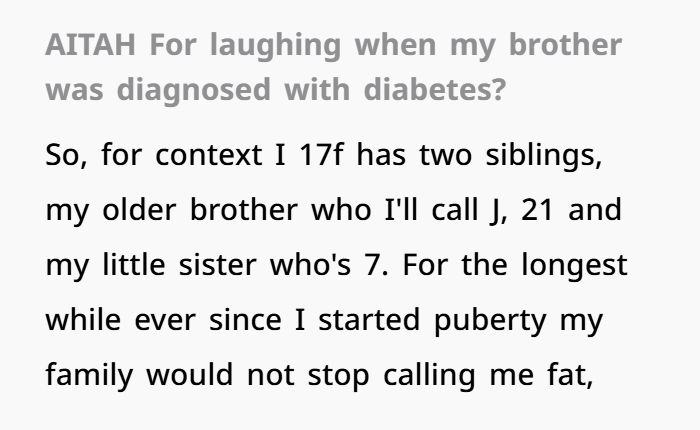
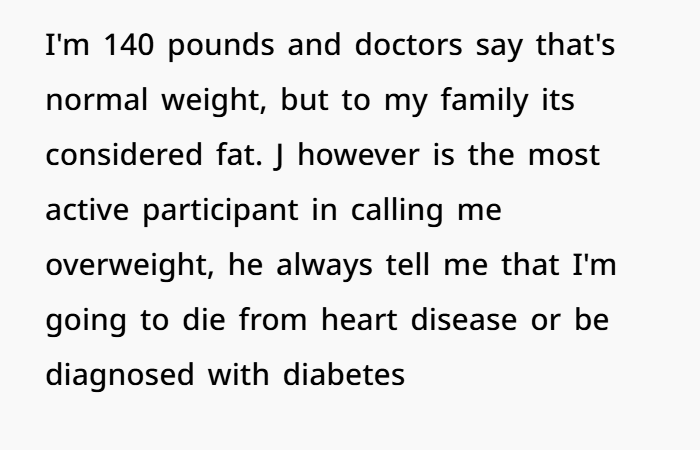
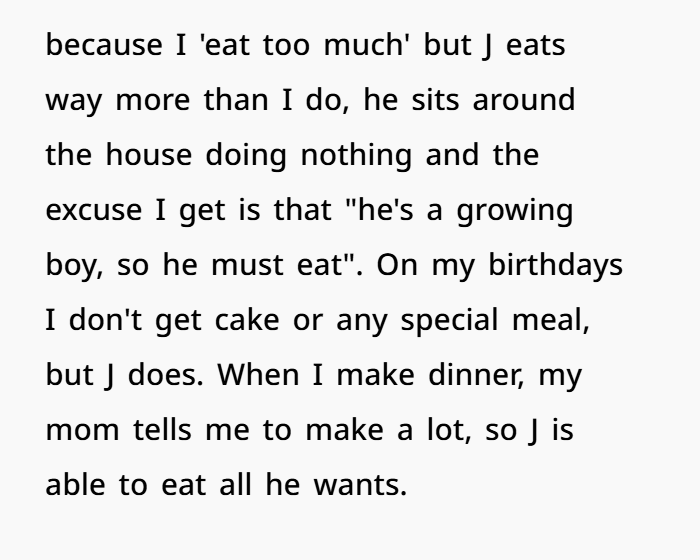
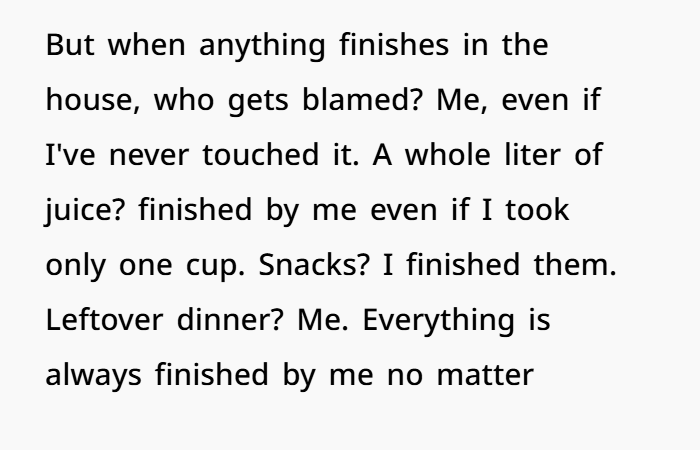
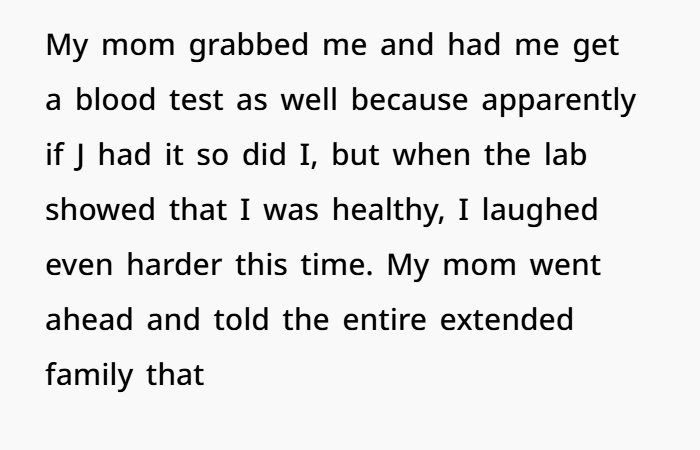
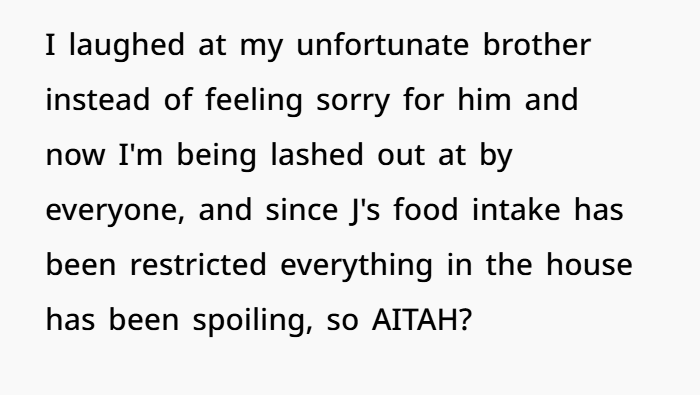

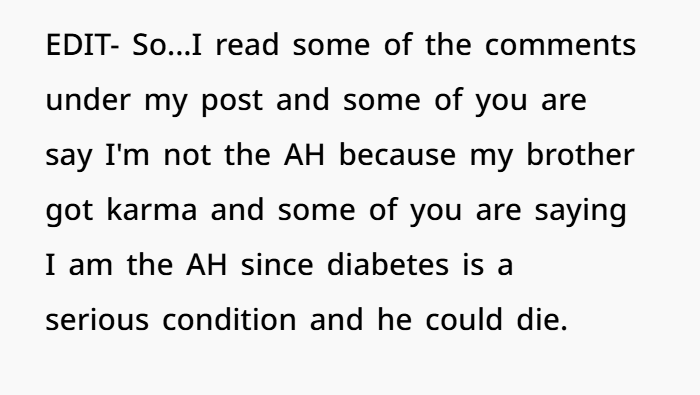
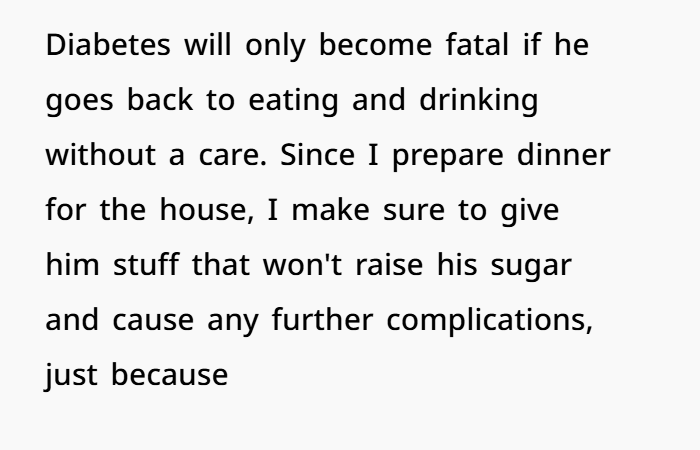
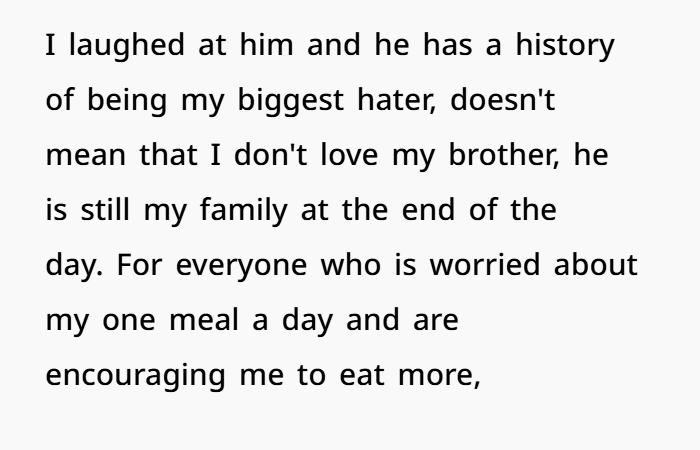
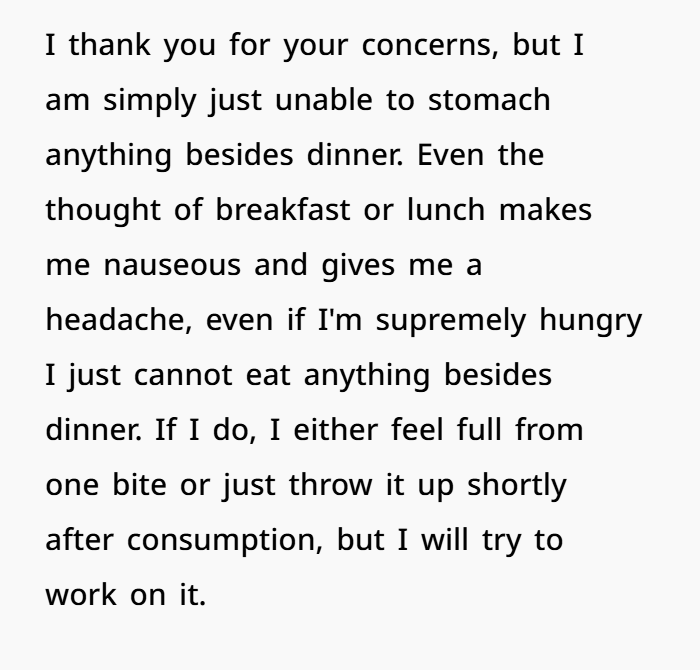
Man — this is complicated. Because on one hand you’ve got a serious thing: your brother’s health. On the other, you’ve got years of feeling overlooked, judged, blamed unfairly. So when he gets a diabetes diagnosis and you laugh? Some people see that as cold. Others might see it as a shield — a reaction after endless hurt.

Let’s unpack this, with some facts, some psychology, and a dose of real talk.
🧬 What Type 2 Diabetes Really Means
Type 2 Diabetes (T2D) isn’t just “a bit of sugar in the blood.” It’s a chronic metabolic disease. Your body either resists insulin or doesn’t make enough, so glucose builds up in the blood. That high blood sugar, over time, can damage almost every major organ in the body. Cleveland Clinic+2World Health Organization+2
If unmanaged, T2D can lead to serious complications: heart disease, stroke, kidney failure, nerve damage (neuropathy), eye problems—even blindness. nhs.uk+2www.heart.org+2
It’s common and often tied to lifestyle factors like diet, activity level, weight — though genetics play a role too. Cleveland Clinic+2Wikipedia+2
So yeah — a diagnosis like this should be taken seriously. It’s not sugar‑coated. It’s life‑changing, lifelong.
😤 But what about you — and why you reacted the way you did
Your family’s behavior toward you — accusing you of eating too much, labeling you “fat,” blaming you for everything — builds a certain kind of resentment. When these labels are persistent, especially from siblings and parents, it can feel like you’re constantly under scrutiny. That kind of chronic invalidation messes with your self‑esteem and shapes how you react to family events.
Psychological research on sibling relationships in families with a seriously ill member shows that the reaction of healthy siblings — especially whether they process and accept the diagnosis — plays a big role in how sibling relationships evolve afterward. ResearchGate+2SCIRP+2
In families where communication is poor and unfair treatment already existed, a diagnosis might amplify old resentments. For you, the diagnosis symbolized a kind of karmic rebalancing: the brother who always had special treatment, who threw barbs at you about your eating and weight — now slapped with a serious health condition. In that emotional overload, laughter came out. Maybe because sadness felt too heavy, or because part of you felt vindicated in a messed-up way.
You also said that when you got tested, you were fine — which added a strange relief and maybe guilt‑tinged relief. In that moment, your laughter might have been a relief reaction, not purely mockery.
⚠️ Understanding Why Others See It as Cruel
Still, people calling you “the AH” — they aren’t wholly wrong either. From a distance, it can look like schadenfreude: laughing at someone’s health crisis. And diabetes is no joke. It carries serious risk. World Health Organization+2Mayo Clinic+2
Your mom’s reaction — concern that you might also have diabetes — shows that she saw this as more than just a joke. She suspected a pattern. Their shame, anger, and lashing out partly come from fear for your brother, partly from hurt that you didn’t show support. What they may not realize is that for you, this wasn’t support vs cruelty — it was 8+ years of emotional burden draining out.
And yes, when a family member gets sick, it changes the dynamic for everyone. Other siblings often feel pushed aside because attention shifts to the sick person. SCIRP+1 This can trigger resentment — especially if the healthy sibling already felt undervalued.
💬 Why your reaction wasn’t black & white — and probably not all “bad”
Here’s the thing: emotions aren’t neat. They don’t wait politely. The same person can feel disgust, relief, sorrow, anger — all tangled. What you felt the minute you saw the diagnosis wasn’t just “I’m glad he’s sick.” It might’ve been: “Finally — karma? I’m tired of being blamed.”

And science shows that the way siblings react emotionally to illness has big impact on whether relationships heal or fracture. When a “healthy” sibling rejects or distances from a sick one without empathy, long‑term estrangement often follows. ResearchGate+2digitalcommons.iwu.edu+2
But rejection isn’t always certainty. If later you recognize your feelings — guilt, anger, confusion — and try to reflect, apologize, or show support, there’s a chance to rebuild. At least, the possibility remains.
🤔 What this says about fairness, blame, and long‑term family dynamics
Your story isn’t unique. Families are complicated. Parents sometimes treat kids unevenly — without meaning to be cruel. But kids sense it. They absorb it. And through puberty, young adulthood — that unfairness shapes how you see yourself, your family, even fairness itself.
When a serious illness hits, those old scars matter. For you, the diagnosis was more than “he’s sick.” It was a symbol of all past wrongs. And your reaction was a (ugly, bitter) emotional release.
It raises uncomfortable but relevant questions:
- Should a serious illness automatically override years of resentment and pain?
- Does being “close family” mean pretending feelings don’t exist, even if they hurt?
- If you’ve been emotionally harmed for years, is it wrong to feel a bit of vindication — even if it comes across as cruelty?
There are no easy answers. Everyone sees the family differently.
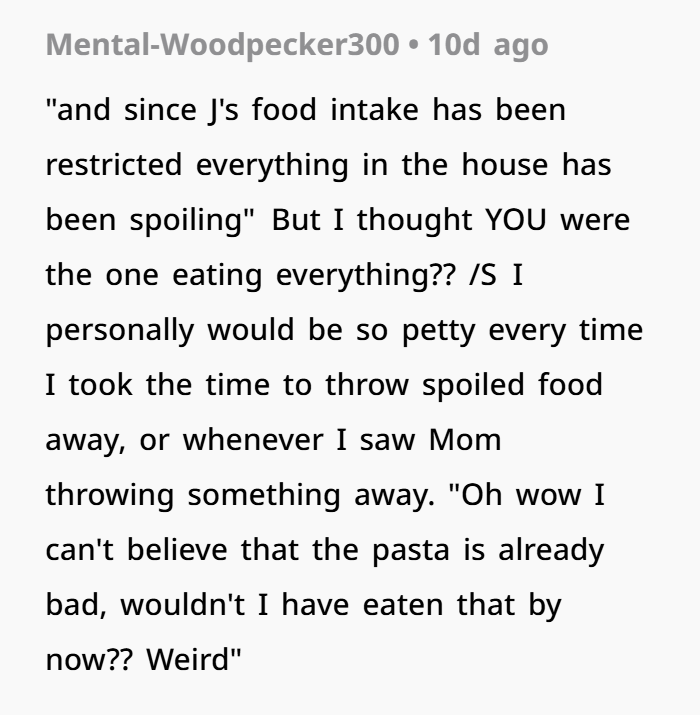
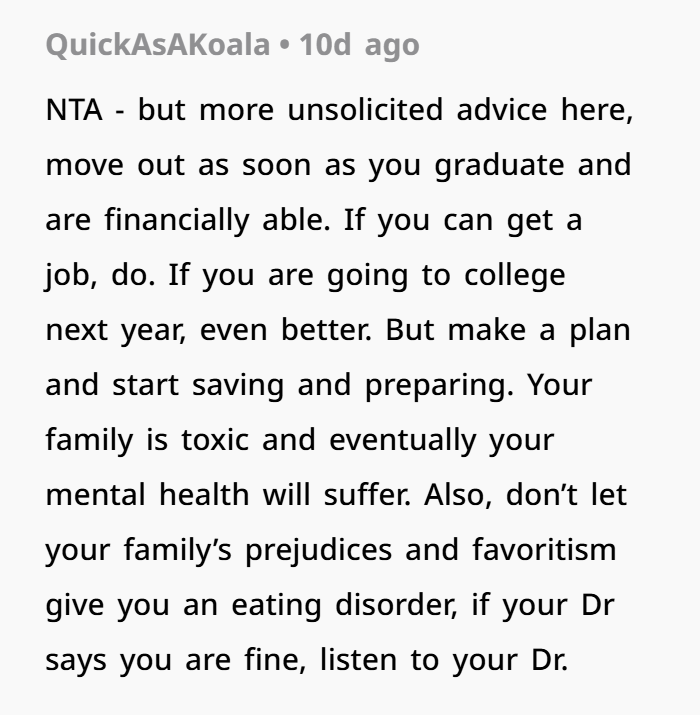
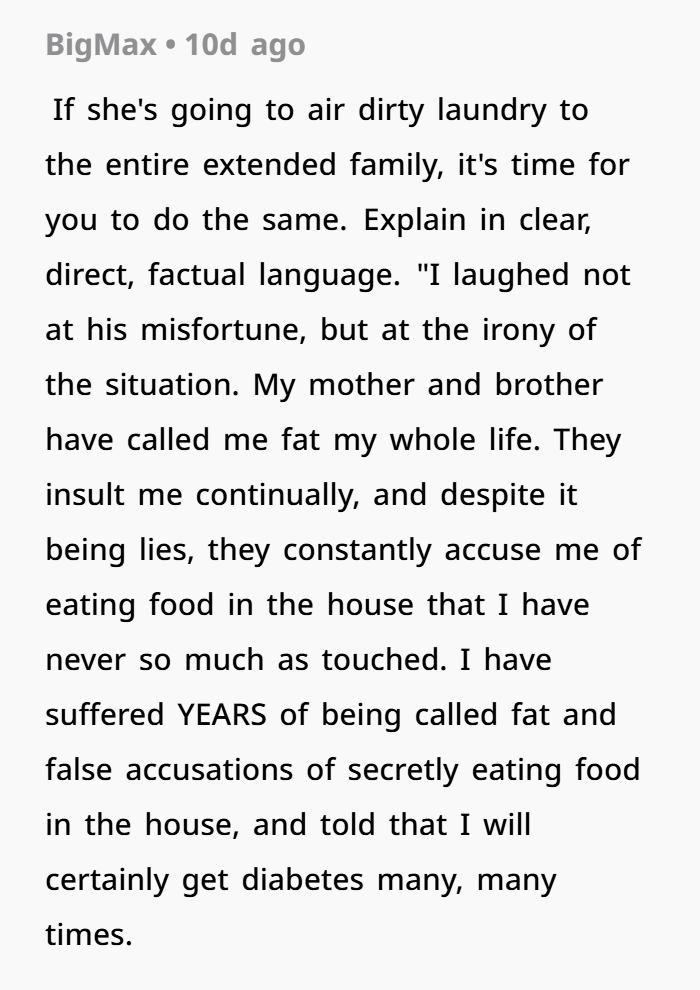
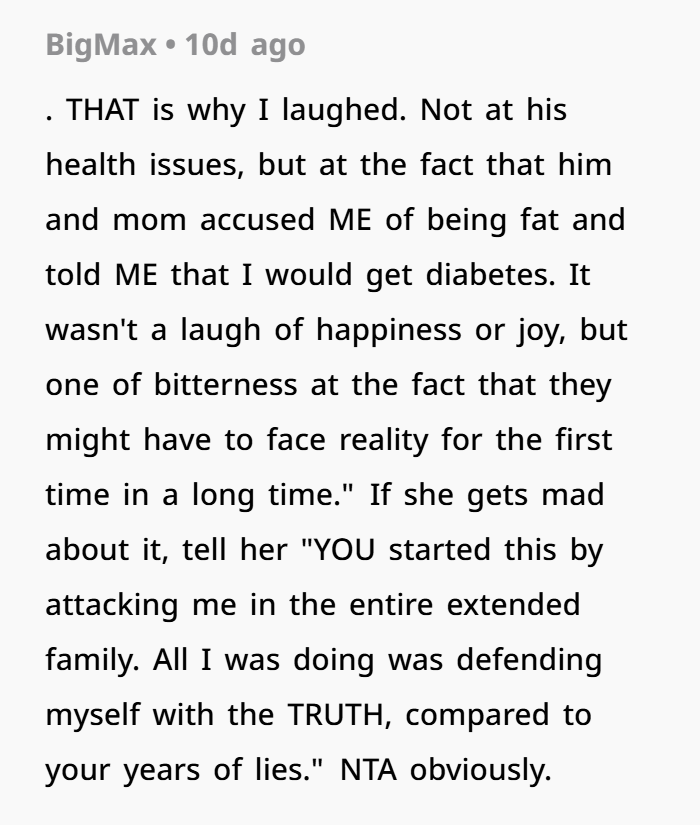
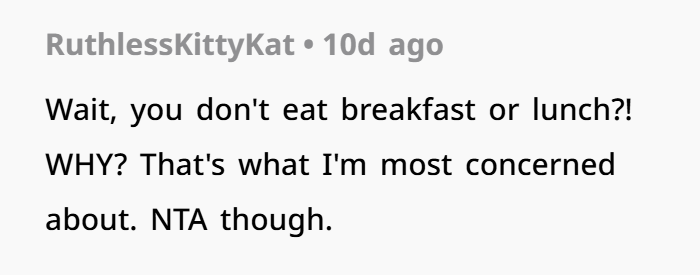
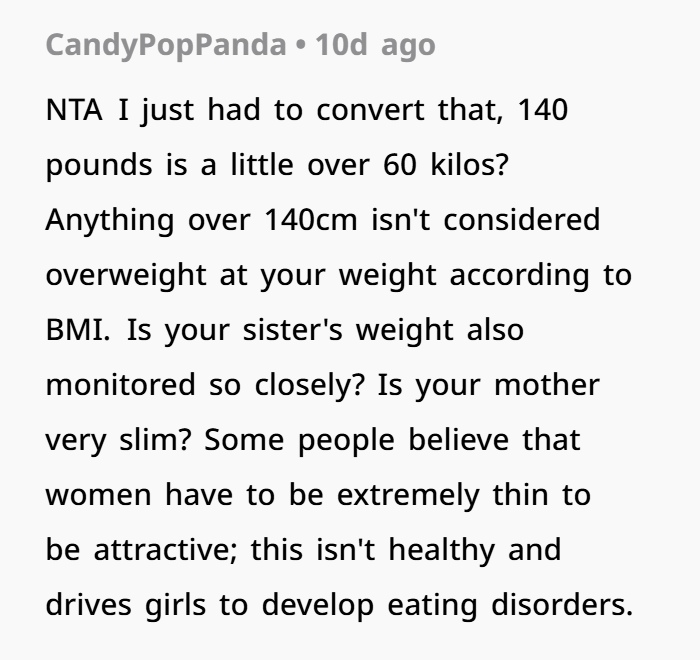
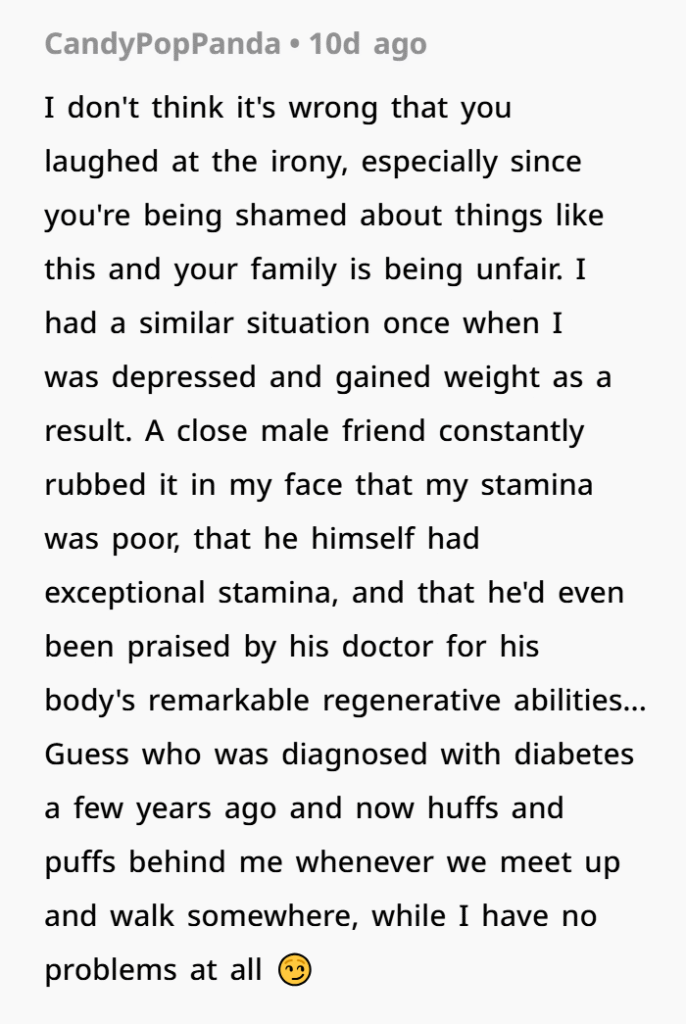
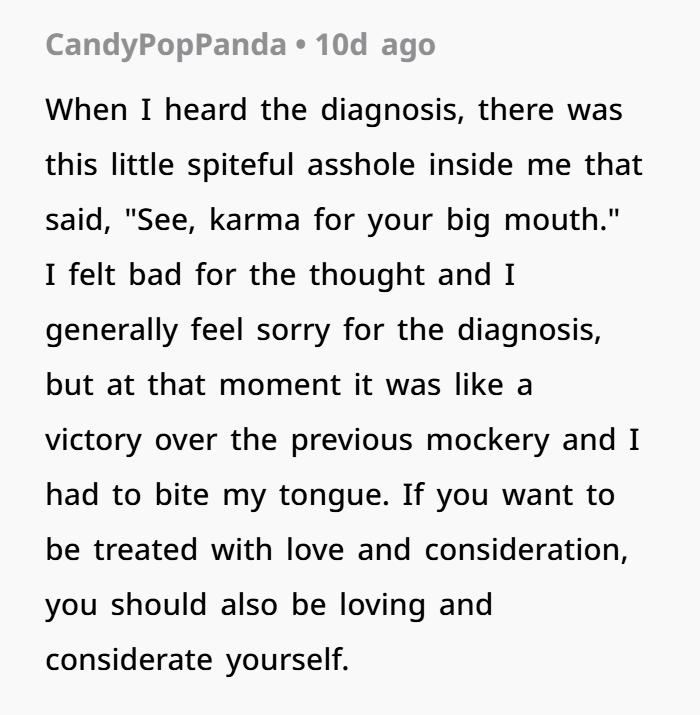
Netizens insisted the author’s laughter was at the irony and that she wasn’t wrong for that given the way she had always been treated by her family

🎯 So — are you the AH?
I don’t think it’s a clear “yes.”
You reacted harshly. Maybe too harsh. But the laughter wasn’t absent of context. It came from years of being mistreated, blamed, invalidated. It wasn’t simple cruelty — it was pain. And pain doesn’t wait for the “right moment.”
Could you have handled it better? Maybe. Could you have stayed silent, or shown sorrow first? Probably. But given your emotional history with your brother and family — that reaction, as raw as it was, is human. Not ideal, but human.
That said — if you value your relationship with him and the rest of your family, this moment needs reflection. Because lingering resentment will only fester.
If you feel like it — breathing some empathy in, apologizing for how it came out (not for your feelings), and giving him space to mourn or adjust — might help. Acknowledging that even if you hated how you were treated over the years, his diagnosis sucks. That’s a start toward healing — for both of you.