
AITA for Clapping Back After My Girlfriend Compared Me to Her Ex?
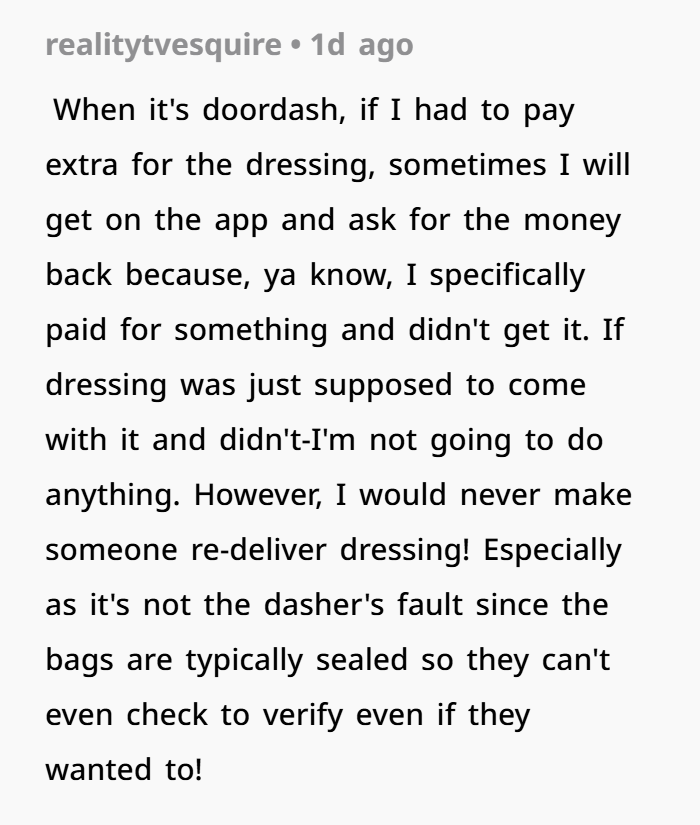
This whole thing started over something so minor it almost sounds dumb. A 26-year-old guy is having a chill movie night with his girlfriend of almost a year. They order takeout wings. Restaurant forgets the bleu cheese. He shrugs. Not worth the stress. He’s got some in the fridge anyway. But she keeps pushing him to call, complain, ask for a refund. Basically “stand up for himself.” He doesn’t bother. To him, it’s just wing sauce. End of story. Or it should’ve been.
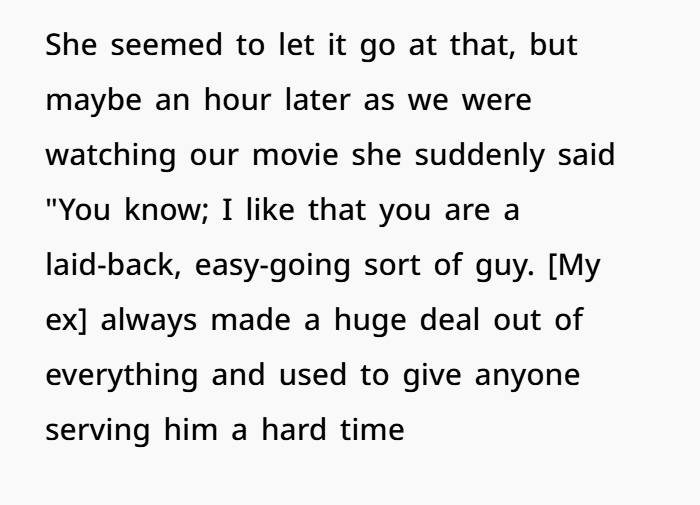
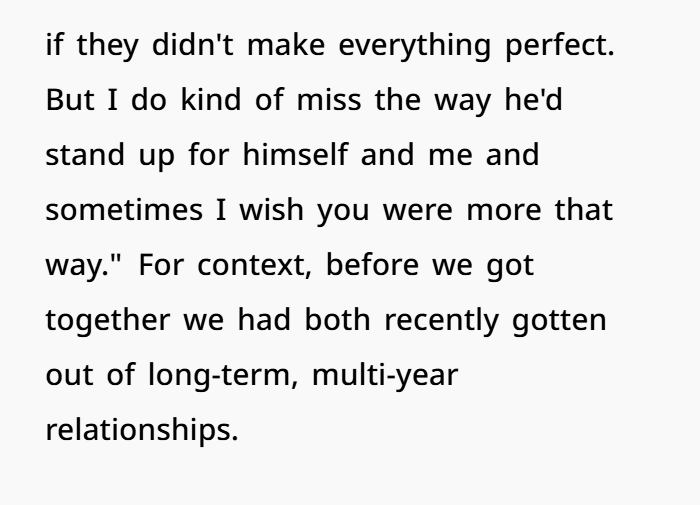
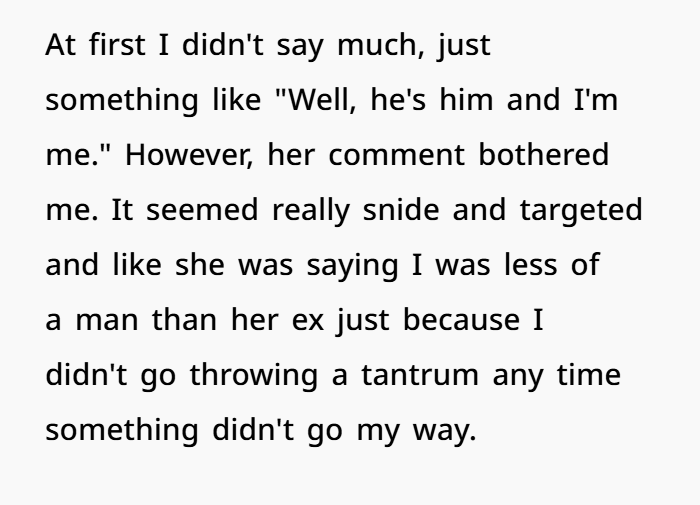
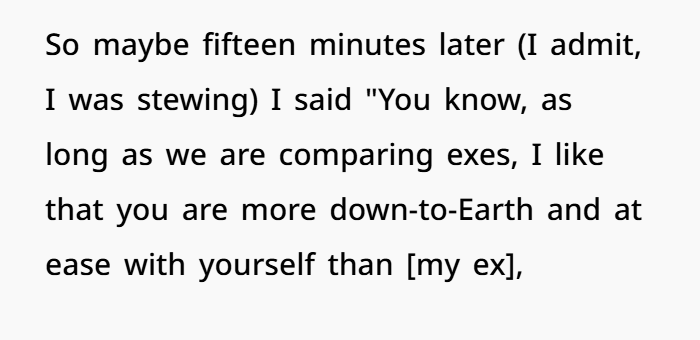
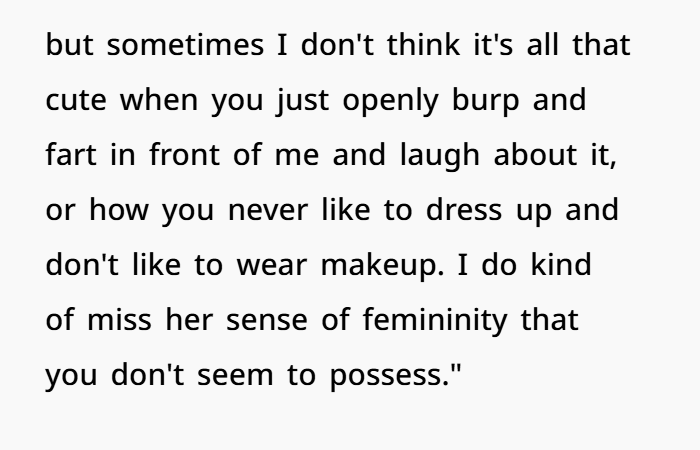
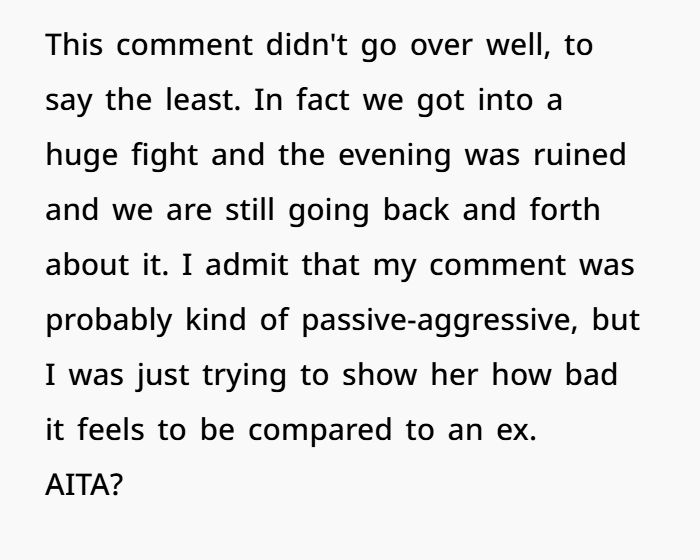
But it didn’t stop there. An hour later she compares him to her ex. Says she likes that he’s laid-back, but misses how her ex would “stand up for himself and for her.” That hits his ego. Feels like she’s questioning his confidence, his masculinity, maybe even his backbone in the relationship. So he reacts. He compares her to his ex too. Says he misses how feminine his ex was. Says he doesn’t love the burping, farting, not dressing up. That lands hard. Now it’s a full relationship conflict. He says he was making a point about respect and double standards. She says he crossed a line and attacked her personally. So now it’s not about wings. It’s about insecurity, comparison in relationships, and whether either of them handled that argument with emotional maturity.
Looking at the past through rose-tinted lenses can get you into trouble in the present if you’re not careful about it

One guy, a year deep into a relationship with his girlfriend, thought he was in for a laidback movie night with a food delivery on the way
Let’s break this down because this isn’t about bleu cheese. This is about emotional triggers, relationship communication, and something called comparison theory.

In relationship psychology, comparing your partner to an ex is a major red flag. Research in the Journal of Social and Personal Relationships shows that romantic comparison lowers relationship satisfaction and spikes insecurity — especially when it sounds like, “you’re missing what my ex had.” That’s emotional gasoline.
When she said she “missed” how her ex stood up for her, she probably thought she was just expressing a preference. Maybe even encouraging him to be more assertive. But what he actually heard was simple: you’re not enough.
That’s the real issue. Communication isn’t about what you meant. It’s about what landed.
Attachment theory also fits here. Someone with an anxious attachment style may crave visible protection and outward defense. To her, calling the restaurant wasn’t about dressing on the side. It was about feeling supported. Backed up. Protected. In modern dating terms, she may have wanted that “protective masculine energy.”
He, on the other hand, seems more avoidant or secure. He doesn’t treat small service mistakes like battles to win. Conflict resolution experts often say not reacting to every inconvenience is emotional regulation — and that’s usually a maturity marker, not weakness.
Here’s where it gets interesting.
A 2021 study on conflict management in romantic relationships found that couples who escalate minor public issues — like restaurant complaints — often escalate private disagreements too. Patterns repeat. If someone feels disrespected easily in small moments, they may feel disrespected easily in bigger ones.
So when she pushed him to call and he didn’t, she may have read that as lack of backbone. He read her insistence as unnecessary drama. Same moment. Completely different meanings.
Now his response.
It wasn’t accidental. It was calculated. He mirrored her comparison. That’s classic retaliatory communication — what therapists call defensive counter-attack. Instead of saying, “that hurt me,” he basically said, “let me hurt you back.”
And that’s where it shifted from vulnerability to insult.
There’s also gender expectations layered into this. Studies on modern relationship dynamics show men often feel their masculinity challenged when compared to another man, especially around assertiveness or protection. On the flip side, women often feel deeply wounded when their femininity or attractiveness is criticized. Those hit identity.
So when he said he missed his ex’s “femininity,” it wasn’t about clothes. It landed as, “you’re not woman enough.”
That’s nuclear.
From a relationship counseling standpoint, this is a fork in the road. Research from the Gottman Institute on long-term relationship stability talks about the “Four Horsemen” — criticism, contempt, defensiveness, and stonewalling. They both stepped into criticism. His femininity comment edged toward contempt. And long term, that pattern can seriously damage emotional safety and trust.

There’s also a deeper issue here. When partners compare you to an ex, it usually signals unresolved processing. Either nostalgia bias or unmet needs. Nostalgia bias is when we remember exes in highlight reels instead of full reality. Her ex probably wasn’t just a bold defender. He may have also been exhausting, aggressive, or embarrassing. But in that moment, she pulled the one trait she liked.
He did the same.
What neither of them did was communicate the need underneath.
She could’ve said:
“I sometimes want to feel like you’d go to bat for me.”
He could’ve said:
“When you compare me to your ex, it makes me feel inadequate.”
Instead, they both went for emotional uppercuts.
From a legal standpoint (and yes, even though this isn’t court), emotional abuse definitions in many counseling frameworks include repeated unfavorable comparisons to past partners. It’s not illegal, obviously, but it’s flagged in domestic counseling as corrosive behavior if it becomes a pattern.
The keyword here is pattern.
One off? Repairable.
Habitual? Relationship-ending.
There’s also a concept called conflict reciprocity. Research shows when one partner escalates, the other almost always matches it — or goes bigger. It’s human nature. You hit me, I hit back harder.
He admitted he sat with it for 15 minutes. That part matters. He didn’t respond from honesty or vulnerability. He responded from built-up resentment.
And resentment doesn’t fade quietly. It stacks. It compounds.
Scroll through any high-traffic relationship advice column or couples therapy blog and you’ll see one theme over and over: don’t weaponize your ex. It almost never ends well.
When you compare your partner to a former partner — especially highlighting what the ex did “better” — you trigger social comparison theory. We naturally measure ourselves against perceived rivals. And an ex? That’s the ultimate rival. It sparks jealousy, insecurity, competitiveness, self-doubt. Fast.
So this isn’t really about wing sauce.
This argument exposed deeper compatibility gaps. They define strength differently. They handle conflict differently. They have different expectations around assertiveness, gender roles, and even what “masculine” or “feminine” behavior should look like inside a relationship. And that’s a much bigger issue than a missing side of dressing.
And neither is inherently wrong.

But the delivery? That’s where they both slipped.
If this relationship survives, it’ll be because they sit down and unpack the real issue: She wants visible assertiveness. He wants emotional respect. Both want to feel valued without being measured against ghosts from the past.
Because here’s the truth. The second you bring an ex into a current argument, you’re no longer solving a problem. You’re scoring points.
And relationships aren’t scoreboards.
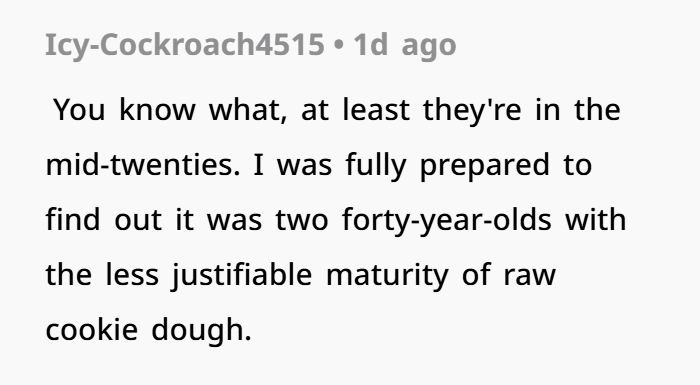
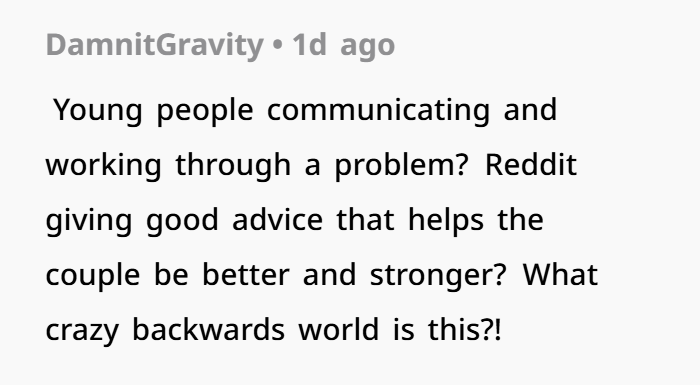
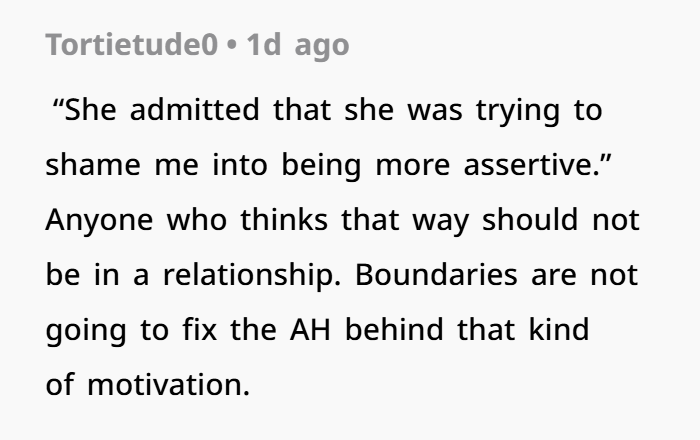
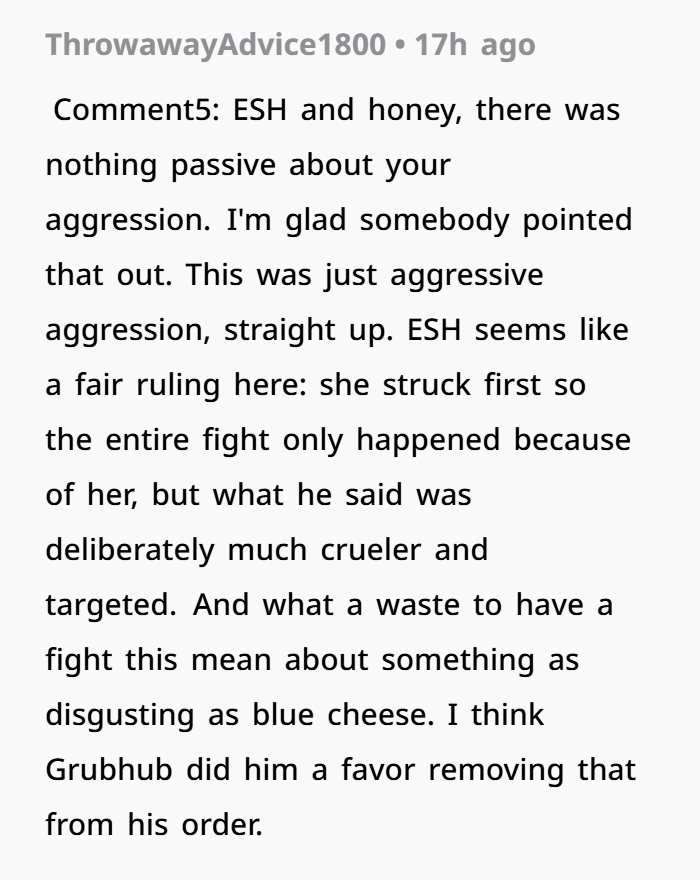
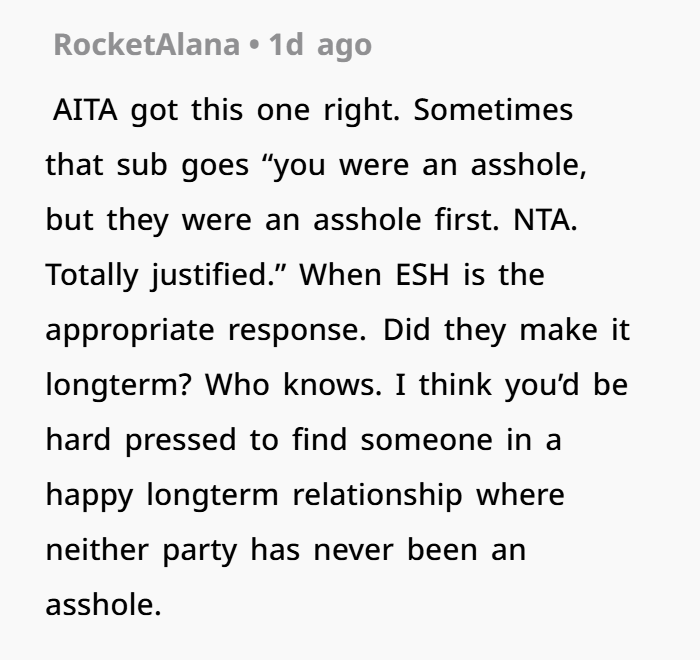
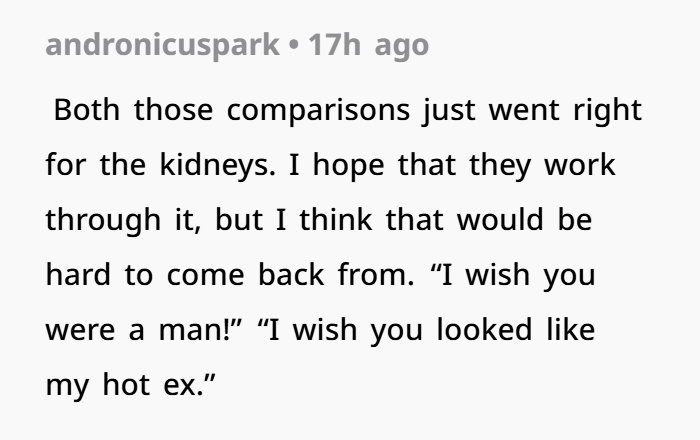
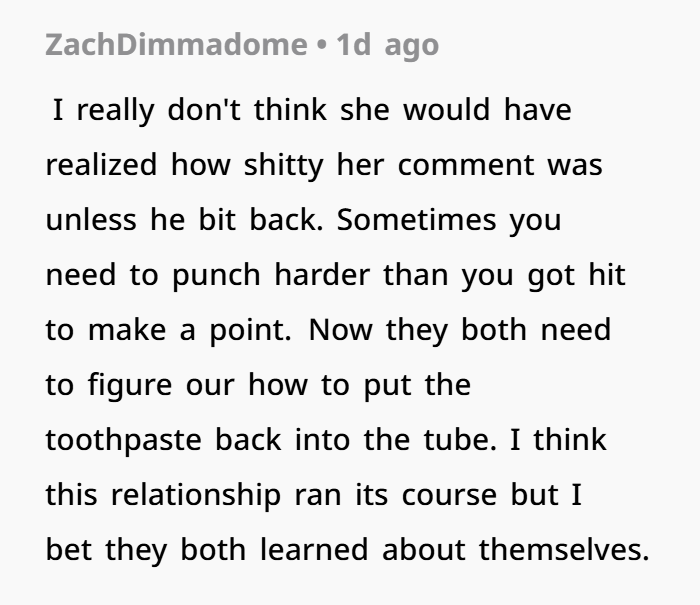
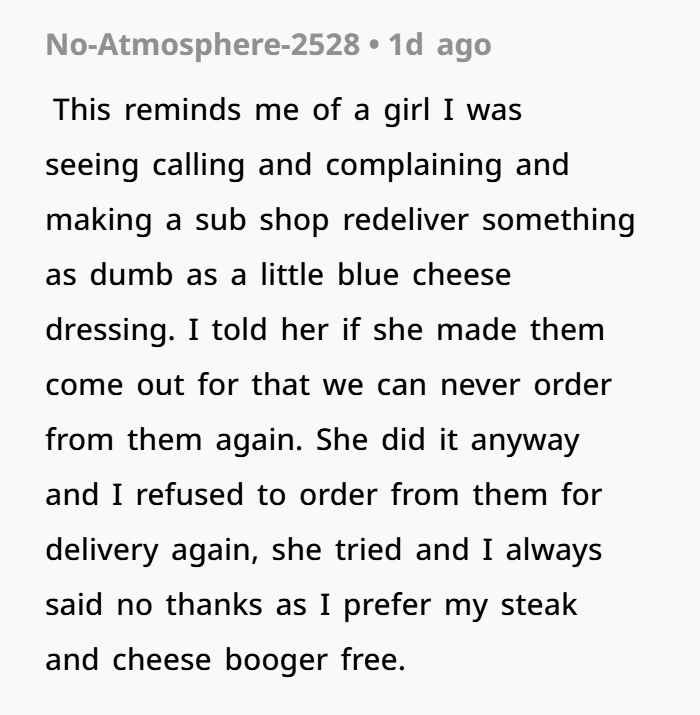
In the comments, readers joked that neither the original poster nor his girlfriend should be dating for now