AITA for skipping my own surprise birthday party after discovering it was secretly designed to reunite me with my ex?

This story is about a simple family conflict that started because of personal boundaries and a surprise birthday party that went too far.
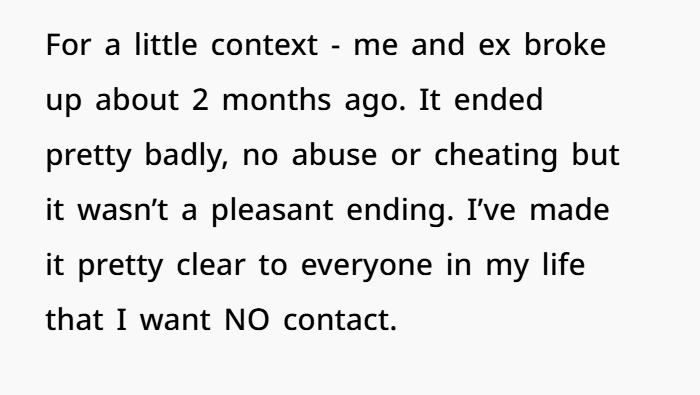
The main person in this story does not like big birthday celebrations. They have clearly told their family many times that they prefer a quiet day. No big parties, no attention, and no pressure. This became even more important after a recent breakup with an ex-partner.
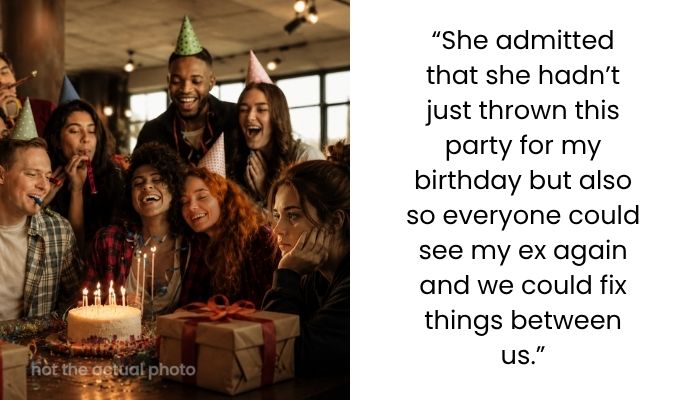
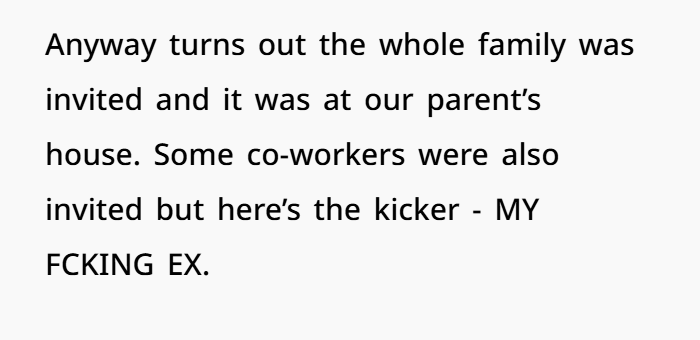
But their sister has a very different personality. She enjoys big celebrations, emotional surprises, and planning large family events. For this birthday, she organized a surprise party at the family home. She invited many people, including relatives, coworkers, and even the person’s recent ex-partner.
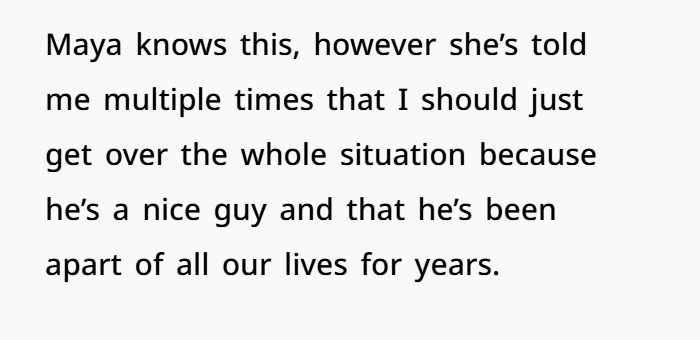
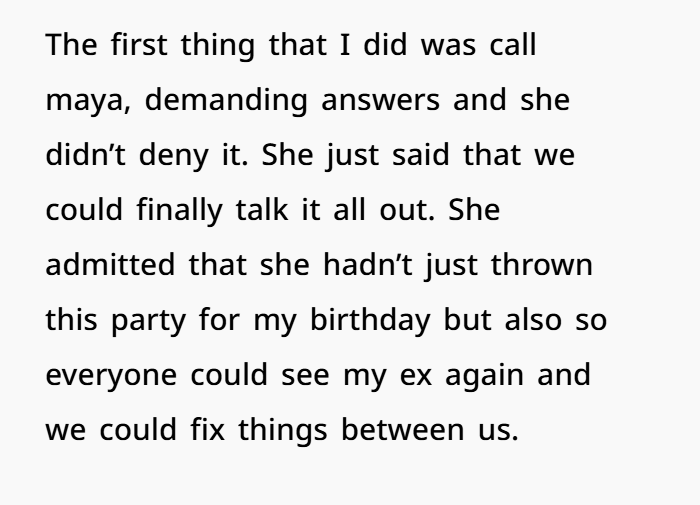
Later, it came out that the sister had another reason for doing this. She was trying to bring the person and their ex back together. This was done without permission, even though the person had already asked for no contact after the breakup.
Because of this, the person felt uncomfortable and hurt. Their personal boundaries were ignored, and their wishes were not respected. Instead of attending the party, they decided not to go and spent the day quietly with a close friend.
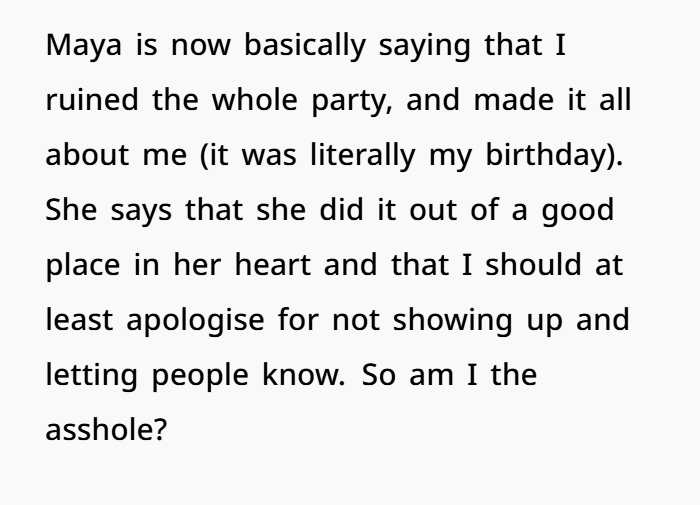
Even though their day was calm, some family members were upset. They blamed the person for not showing up and said they embarrassed the sister and “ruined” the birthday party.
The main issue in this situation is about personal boundaries, consent, and family communication. It shows how even well-meant birthday planning or surprise parties can cause stress when someone’s limits are ignored.
In the end, the situation highlights an important point: family celebrations should still respect personal choices, emotional boundaries, and comfort levels—otherwise they can easily lead to conflict instead of happiness.

Midview: Psychology, Boundaries, and Real-Life Conflict Dynamics
This situation is mainly about personal boundaries, emotional consent, and family pressure, especially after a breakup.
Psychological Perspective on Boundaries
From a psychology point of view, this story shows what happens when someone clearly sets a boundary but it is not respected.
The person in this case repeatedly said they prefer quiet birthdays and no big celebrations. In healthy relationships, especially within families, experts say these wishes should be respected.
Research from the American Psychological Association shows that strong relationships depend on listening to boundaries and respecting personal comfort levels.
When boundaries are ignored, it can lead to stress, emotional discomfort, and distance in relationships.
Forced Reconciliation and Emotional Pressure
The sister’s attempt to bring the person and their ex back together at the party reflects what psychologists call forced reconciliation.
This happens when someone tries to “fix” a relationship without permission from the people involved.
Studies in psychology show that this can backfire. Instead of improving relationships, it often causes people to withdraw even more because they feel their control has been taken away. This is linked to a concept called psychological reactance—when people resist situations where they feel forced or controlled.
Conflict Resolution and Mediation View
In professional family mediation and counseling, experts strongly recommend that any attempt to repair relationships must be voluntary.
Bringing someone into a surprise emotional situation—especially after a breakup—is usually discouraged because it can increase tension instead of solving it.
Mediation works best when all people agree to participate calmly and openly, not under pressure or surprise situations.
Legal and Ethical Context (General Overview)
From a legal point of view, this situation usually does not involve criminal behavior. However, it can still raise ethical concerns.
In most places, hosts can invite guests to private events. But problems can arise if:
- Someone is misled about the real purpose of the event
- A situation is created to emotionally pressure or confront someone
- A person is placed in a harmful or distressing situation without consent
In rare cases, extreme emotional harm situations may be discussed under legal ideas like intentional infliction of emotional distress, but these cases are difficult to prove and depend heavily on context.
Real-World Family Patterns
Similar situations are often seen in family therapy and counseling cases, especially after breakups or emotional conflicts.
Therapists often report that surprise interventions like this:
- Increase emotional stress
- Damage trust between family members
- Make reconciliation harder, not easier
Because of this, professionals usually recommend planned, voluntary conversations instead of surprise emotional setups.
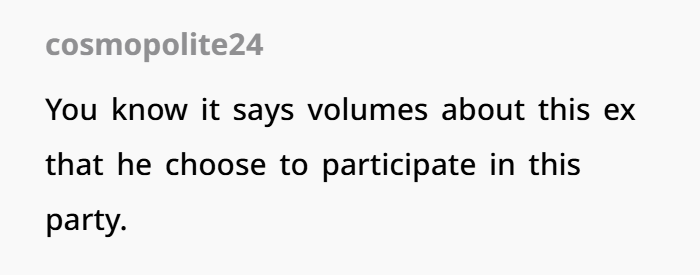
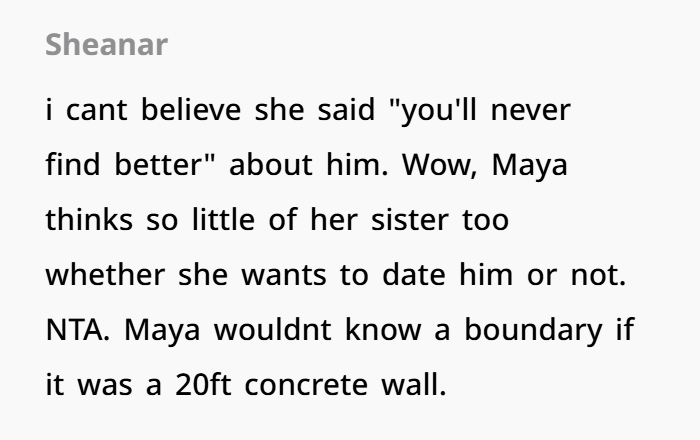
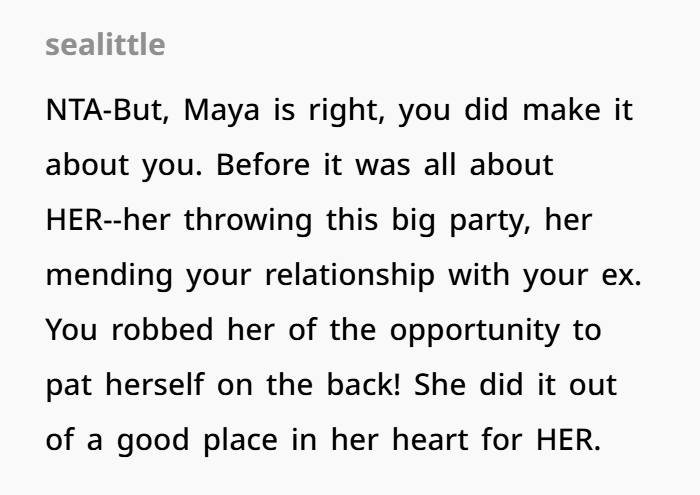
See the comments to know what people said

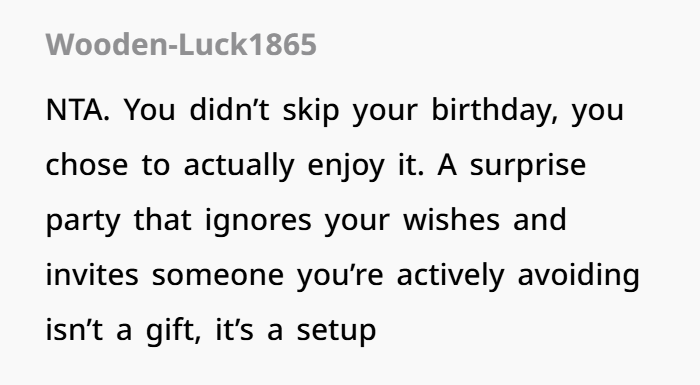
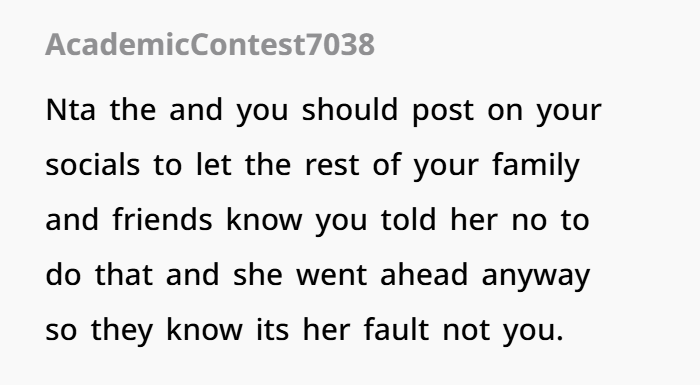

This story shows how even well-meaning actions can cause harm when personal boundaries, consent, and emotional timing are ignored.
In modern family relationships, especially after breakups, respect for autonomy is often more important than the intention to “fix” a situation.