
AITA for Asking a Coworker to Pay Back $800 After Selling Free Denver Broncos Tickets?

A nice gesture at work turned into an awkward situation when a man found out that his coworker had broken a simple rule about a free gift.
He had been a Denver Broncos season ticket holder for almost 20 years. Whenever he couldn’t attend a game because of work or family plans, he would give his tickets to his coworkers instead of selling them.
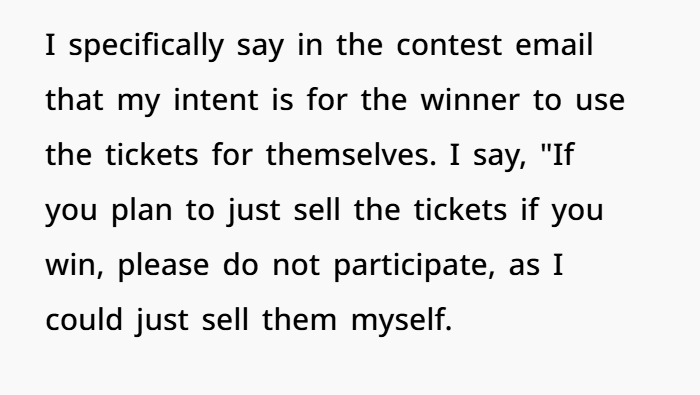
However, there was one simple rule. Whoever won the tickets had to use them to watch the game. Selling the tickets for money was not allowed.
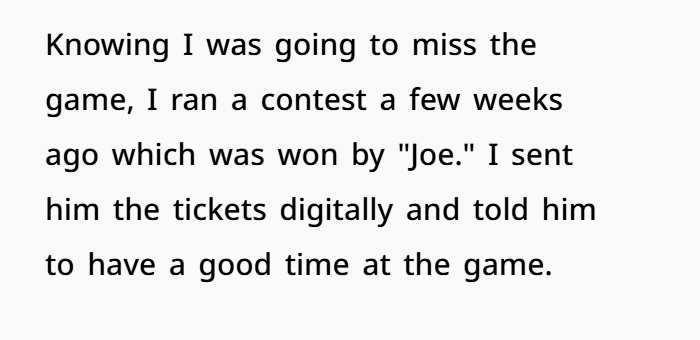
To give everyone a fair chance, he started holding small contests at work. He usually invited around 50 coworkers, and about 30 people joined each time. The winner received two valuable NFL game tickets, with great seats near the 40-yard line.
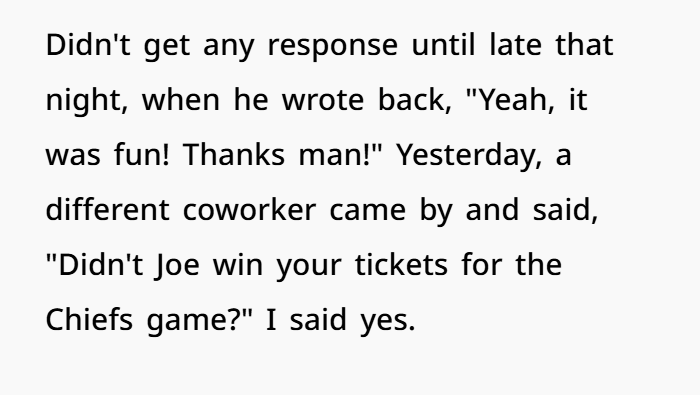
Everything was going well until one coworker, Joe, won tickets to the Kansas City Chiefs versus Denver Broncos game. But instead of going to the stadium, Joe decided to sell both tickets online.
After paying the selling fees, he made more than $800 from the sale. He used most of that money to help pay for a weekend trip to Las Vegas with his girlfriend.
When the ticket owner learned what had happened, he was very upset. Joe admitted that he had sold the tickets but said they were a gift, so he could do whatever he wanted with them.
The ticket owner didn’t agree. He reminded Joe about the contest rules and asked him to return the money he had made from selling the tickets.
Now, the situation has become a workplace conflict. Was Joe wrong for ignoring the rules of the contest, or was the ticket owner being unreasonable by expecting payment for something he had already given away?





A Free Gift Came With One Clear Condition
The biggest issue in this story isn’t really about money. It’s about trust.
The ticket owner wasn’t asking coworkers to pay for anything. He had already paid for his Denver Broncos season tickets and was happy to let someone else enjoy a game he couldn’t attend.
His contest was also open to several coworkers, giving everyone a fair chance to win. But he made his expectations clear from the start. Anyone who planned to sell the tickets instead of attending was asked not to enter.
That detail matters because Joe knew the rules before taking part. He wasn’t surprised by the restriction after winning. He had a chance to stay out of the contest if he didn’t agree with it.
Joe Chose Money Over the Game Experience
Joe’s decision is what made the situation so frustrating.
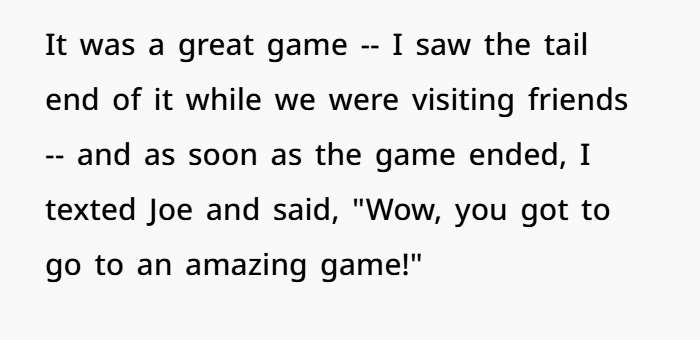
He won two valuable seats to a major NFL game. The matchup between the Chiefs and Broncos turned out to be an exciting one, and the ticket owner was happy that someone from work had the chance to enjoy it.
But Joe had other plans.
Instead of going to the stadium, he sold both tickets through the secondary ticket market. After platform fees, he reportedly kept more than $800. He then used much of that money to help pay for flights and a hotel for his Las Vegas trip.
The problem wasn’t simply that Joe sold something valuable. It was that he entered a contest knowing the owner’s wishes, accepted the prize, and then did exactly what he had been asked not to do.
Platforms like StubHub allow ticket holders to list event tickets for sale and receive a payout after seller fees. The platform’s own fee information explains that the final amount depends on the sale and the fees involved.
So, Joe’s explanation about keeping more than $800 after fees is possible. However, that doesn’t make his decision any less disappointing.
Was Joe Free to Sell the Tickets After Winning?
This is where the disagreement gets interesting.
Joe believes the tickets became his property once he won them. From his point of view, the original owner gave them away, so he should be free to decide what happens next.
There is some common sense behind that argument. Gifts are generally understood as something given without expecting payment in return.
But there is another side to the story. The ticket owner didn’t hide his expectations or make them up after Joe won. He clearly explained the purpose of the contest before anyone entered.
That makes this more than a simple disagreement about a gift. It becomes a question of honesty and whether someone should respect the conditions they knowingly accepted.
There is also a difference between what someone can do with a ticket and what they should do after winning it under agreed contest rules. Those are not always the same thing.
What Do the Denver Broncos Ticket Rules Say?
There is another interesting detail worth considering.
According to the official Denver Broncos season ticket policies, the team has rules covering ticket transfers, season ticket accounts, and the use of tickets for promotions and giveaways.
The published policy says tickets may not be used for commercial purposes, including contests, sweepstakes, and giveaways, without written permission from the Broncos and the NFL.
This raises a separate question about the original ticket owner’s workplace contest. Even though he was trying to do something nice for his coworkers, the contest itself may fall under the team’s ticket-use restrictions.
The Broncos mobile ticket guide also explains that season ticket holders can manage, transfer, and resell tickets through their mobile accounts.
These official rules don’t settle the personal disagreement between Joe and his coworker. They do, however, show why ticket transfers and giveaways can involve more than just handing someone a digital ticket.
The $800 Demand May Be Harder to Settle Than the Argument
The ticket owner wants Joe to return the money he made from selling the tickets.
From his perspective, this is a fair request. Joe received something valuable through a contest that was never meant to give away extra cash. He ignored the owner’s instructions and benefited financially from doing so.
However, Joe may see the demand as unreasonable because he believes the tickets were already his.
There is a difference between asking someone to respect an agreement and assuming that the agreement automatically gives someone a legal right to collect money. The original post doesn’t provide enough information to decide whether the ticket owner could legally demand the full $800.
For anyone interested in the rules around ticket resale, the Colorado Revised Statutes include provisions covering ticket sales and resale restrictions. But those rules should not be treated as a direct answer to this particular workplace dispute.
The bigger issue here is that Joe accepted a prize under one understanding and then acted against the owner’s clearly stated wishes.
A Workplace Friendship May Now Be at Risk
Perhaps the most uncomfortable part is that both men still have to work together.
The ticket owner has already warned Joe that he won’t be invited to future contests. He has also said that their relationship will suffer and that other coworkers may learn what happened.
That’s a serious consequence for a situation that started with free football tickets.
Still, the owner has a reason to feel disappointed. He spent years building a tradition that allowed coworkers to enjoy expensive NFL games without paying for them. Now, one person’s actions may make him think twice about continuing it.
Joe, on the other hand, could have avoided the entire situation by simply telling the owner he wasn’t interested in attending and allowing someone else to win.
A quick, honest conversation would have been much better than selling the tickets and pretending everything was fine.
The Bigger Question: Who Was Wrong?
There are reasonable arguments on both sides, but Joe’s actions are difficult to defend.
The ticket owner wasn’t asking for money, wasn’t forcing anyone to participate, and clearly explained the purpose of the contest. Joe knew those expectations before entering.
At the same time, demanding the entire resale amount and threatening to tell everyone at work could make an already uncomfortable situation worse. A calm conversation and a clear decision about future contests might be a better way forward.
Still, winning something doesn’t mean someone should ignore the expectations they agreed to when entering.
See the comments to know what people said
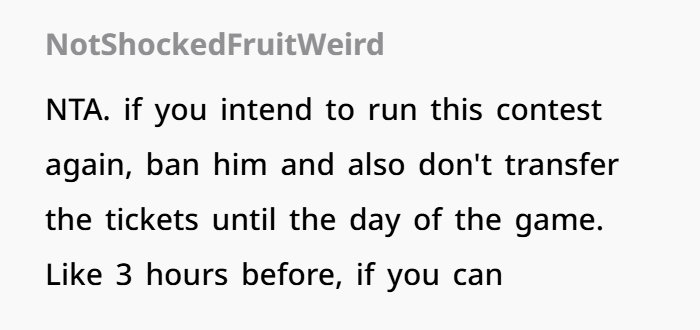

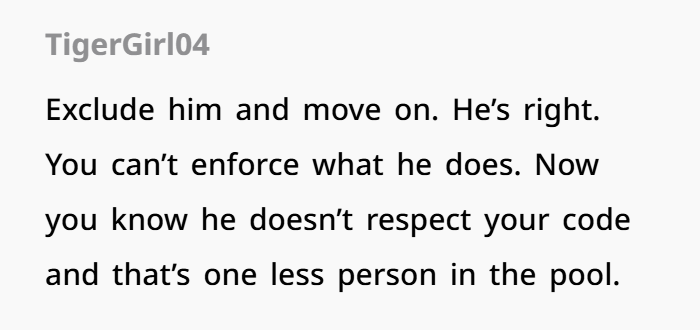

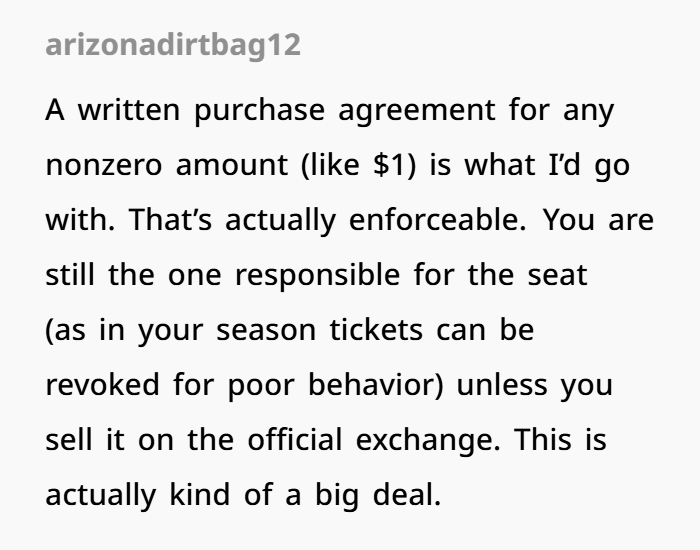
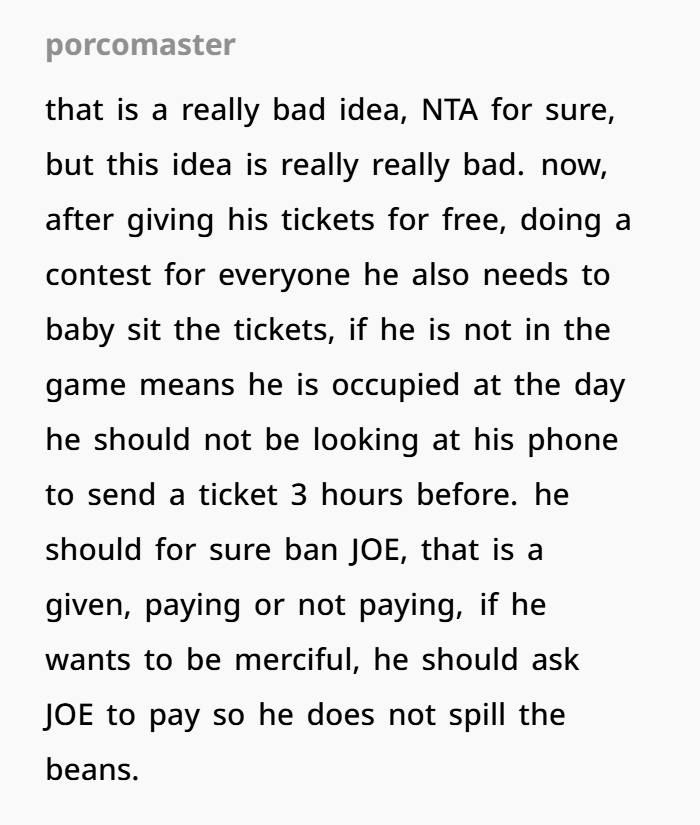
At the end of the day, this situation comes down to honesty and respect. The ticket owner was simply trying to give his coworkers a chance to enjoy an exciting Denver Broncos game. He made the rules clear before the contest, and Joe knew exactly what was expected.
Joe had every chance to let someone else win if he wasn’t interested in attending. Instead, he accepted the tickets, sold them for more than $800, and used the money for his personal trip.
The ticket owner may not be entitled to the resale money automatically, but his frustration is understandable. A free gift can still come with clear expectations, especially when someone agrees to those rules before winning.