Woman Refuses to Clean Up After Boyfriend’s 20-Year-Old Daughter, but He Says She’s Making His Child Feel Unwelcome

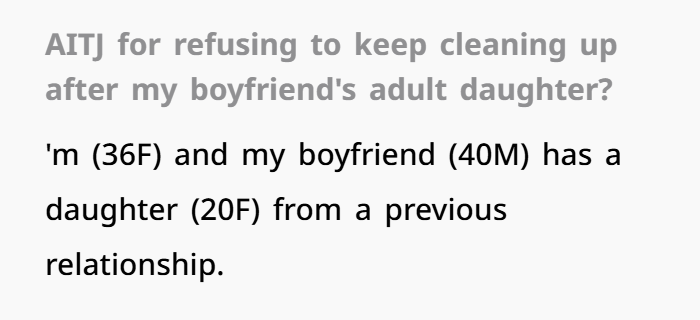
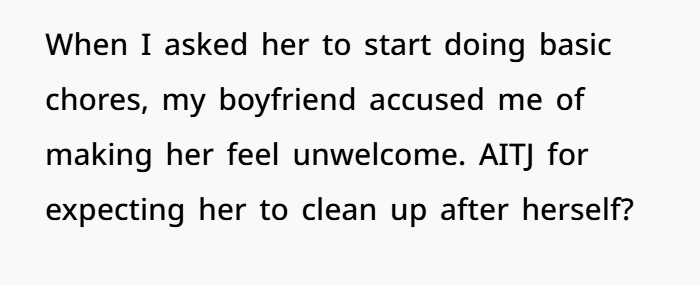
A 36-year-old woman is upset after letting her boyfriend’s adult daughter move into her house. She wanted to help, but things soon became stressful because of household chores and cleaning problems.
The woman owns the house. Six months ago, she agreed to let her boyfriend’s 20-year-old daughter stay with them. She thought it would only be for a short time while the young woman figured out what to do after leaving college.
But things didn’t go as planned.
The daughter doesn’t have a job, doesn’t go to school, and doesn’t pay rent. She also leaves dirty dishes, food containers, and clothes around the house. Her father pays her phone bill and gives her money, but he doesn’t seem worried about her lack of help with household responsibilities.
After months of cleaning up the mess, the woman finally got tired of it. She asked her boyfriend to set some simple house rules and make sure his daughter cleaned up after herself.
But her boyfriend didn’t agree. Instead, he got upset and said she was making his daughter feel unwelcome. He also blamed her for causing problems in their relationship.
Now the couple is barely speaking, and the woman is wondering if expecting a 20-year-old to handle basic chores is really too much to ask.




She Opened Her Home to Help Her Boyfriend’s Daughter
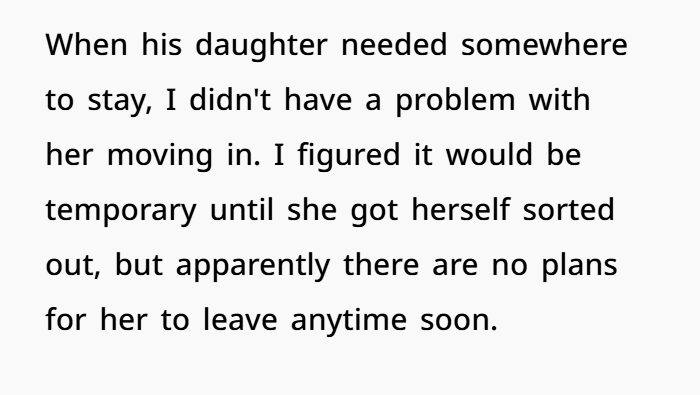
The trouble began about six months ago when the boyfriend’s 20-year-old daughter dropped out of college. She no longer wanted to live with her mother and needed somewhere else to stay.
Her father was already living with his 36-year-old girlfriend. He had moved into her house the year before, and when his daughter needed help, the homeowner agreed to let her move in.
At first, the arrangement seemed reasonable. The young woman was going through a change in her life, and having a safe place to stay could give her time to figure things out.
The homeowner believed it would only be temporary. She expected the daughter to eventually make plans for work, education, or a place of her own.
But six months later, nothing had changed.
There was no clear move-out date, and the daughter didn’t appear to have any plans to leave. What began as a favor was slowly becoming a permanent living arrangement, at least from the homeowner’s point of view.
This kind of situation isn’t unusual. According to a 2024 Pew Research Center study, 57% of American adults ages 18 to 24 were living in a parent’s home in 2023.
Living with parents can offer young adults some much-needed financial support. But when families don’t agree on household responsibilities, even a helpful arrangement can become stressful.
The Daughter Wasn’t Working or Helping With Household Expenses
One of the homeowner’s concerns was that the young woman wasn’t doing anything to support herself financially.
She wasn’t attending college, didn’t have a job, and wasn’t paying rent. Her father continued covering her phone bill and giving her spending money whenever she needed it.
The homeowner didn’t object to her boyfriend providing financial support for his daughter. She understood that parents often help their children during difficult times.
What bothered her was the growing feeling that she was expected to provide more than just a place to live.
She was also taking care of the mess his daughter left behind.
Research shows that financial help from parents is common, especially among younger adults. A Pew Research Center report on financial independence found that 44% of adults ages 18 to 34 had received financial help from their parents during the previous year.
But the same study found something else worth considering.
Among young adults living with their parents, 72% said they helped with household expenses, rent, or mortgage payments in some way. That included 65% who contributed toward costs such as groceries or utility bills.
Of course, not every young adult can afford to pay rent. Someone who has recently left college may need time to find work or decide what comes next.
Still, financial contributions and household chores are two different things. Even when someone cannot help with the bills, they may still be able to help keep their shared living space clean.
And that was exactly what the homeowner wanted.
Dirty Dishes and Forgotten Laundry Became a Daily Problem
The biggest source of frustration wasn’t the daughter’s lack of income. It was how she treated the house.
According to the homeowner, the young woman regularly left dirty plates and food containers in the living room.
She would use the kitchen and walk away without cleaning up afterward. Her clothes sometimes remained in the washing machine for days, leaving the homeowner to deal with the laundry before she could use it herself.
These might sound like small problems when they happen once or twice.
But when the same things happen again and again, they can become exhausting.
The homeowner explained that if she didn’t move the laundry or clean up the dishes, they would simply stay where they were. Eventually, she would get so frustrated that she would take care of everything herself.
It wasn’t just about having a tidy home anymore. She felt that her time and effort were being taken for granted.
The situation also raised questions about the division of household responsibilities. The American Psychological Association has discussed how disagreements over shared responsibilities, particularly financial duties, can become a source of conflict between partners.
In this case, the issue was everyday cleaning rather than household finances.
Still, the underlying problem was similar. One person felt they were carrying more responsibility than they had agreed to.
She Tried Speaking to the Daughter, but Nothing Changed
Before confronting her boyfriend, the homeowner tried addressing the problem directly with his daughter.
She hoped that a simple conversation would be enough.
Unfortunately, the young woman always seemed to have a reason for not cleaning up.
Sometimes she was tired. Other times, she was heading out and promised to do it later. On other occasions, she simply said she had forgotten.
The homeowner kept hearing the same explanations, but the mess remained.
Her boyfriend didn’t seem particularly worried either. Whenever she brought up the problem, he assured her that his daughter would eventually get around to cleaning.
But according to the woman, that rarely happened.
The repeated excuses left her feeling increasingly disappointed. She had welcomed the young woman into her home, but she didn’t feel that the same consideration was being shown in return.
There was also a bigger concern. Without clear household rules, she couldn’t see how things would improve.
The Homeowner Finally Decided She Had Enough
Last weekend, the frustration reached a point where the woman felt she could no longer ignore it.
She sat down with her boyfriend and explained that she wasn’t willing to continue cleaning up after another adult.
Her request was fairly simple.
She wanted his daughter to start taking responsibility for her own mess. She also suggested dividing household chores so everyone knew what they were expected to do.
She wasn’t demanding that the young woman clean the entire house or spend every weekend doing housework.
She only wanted her to wash her dishes, handle her laundry, and occasionally help with general cleaning.
From the homeowner’s point of view, these were basic expectations for anyone sharing a home.
But her boyfriend didn’t see it that way.
Her Boyfriend Accused Her of Making His Daughter Feel Unwelcome
Instead of discussing a cleaning schedule, the boyfriend immediately became defensive.
He explained that his daughter had been having a difficult time adjusting to her situation. She had left college, moved away from her mother, and was still trying to settle into a different living arrangement.
He also reminded his girlfriend that his daughter was only 20 years old.
In his view, putting pressure on her to do chores could make her feel unwanted.
He went further, arguing that because his girlfriend had agreed to let his daughter move in, she couldn’t suddenly start making rules.
That response surprised and upset the homeowner.
She had never agreed to become responsible for the daughter’s cooking mess, dirty dishes, or laundry. She had simply agreed to give her somewhere to stay.
For her, there was a clear difference between helping a family member and becoming their unpaid housekeeper.
The boyfriend, however, appeared to see the new expectations as a threat to his daughter’s comfort.
And that difference in thinking turned a discussion about cleaning into a much bigger relationship conflict.
The Argument Was No Longer Just About Cleaning
After the conversation, the boyfriend began speaking to his girlfriend much less.
He also accused her of creating unnecessary tension between him and his daughter.
That left the homeowner in an uncomfortable position.
She didn’t want to damage their father-daughter relationship. At the same time, she didn’t believe keeping the peace should mean doing all the cleaning herself.
The disagreement highlights a common challenge in blended families and shared households.
When an adult child moves into a home shared by a parent and their partner, everyone may have different ideas about what living together should look like.
The parent may focus on helping their child feel safe and supported. The partner may expect everyone living in the house to respect shared spaces and contribute to everyday responsibilities.
Neither concern has to cancel out the other.
In fact, Pew Research Center’s research on parent-adult child relationships found that young adults often continue turning to their parents for guidance about work, money, and other personal matters.
That support can be valuable, especially during uncertain times.
But offering emotional or financial help doesn’t automatically mean removing every household expectation.
The Lack of a Move-Out Plan Made Things More Frustrating
Another important part of the story was the uncertainty surrounding the daughter’s stay.
The homeowner originally believed she was offering temporary accommodation.
Six months later, there was still no clear plan for when the young woman might leave.
This matters because temporary and long-term living arrangements often come with different expectations.
Someone staying for a few days may be treated as a guest. But when a person lives in a home for months, their daily habits begin affecting everyone around them.
A Pew Research Center study on multigenerational households found that people don’t always agree on whether living with family is a temporary or permanent arrangement.
In that research, 41% of adults in multigenerational households described their living situation as long-term, while 34% considered it temporary. Another 24% were unsure.
That uncertainty can make planning difficult.
In this woman’s case, the missing move-out plan added to her concerns about household boundaries. She wasn’t simply dealing with dirty dishes for a few weeks. She had no idea how long the arrangement would continue.
Why the Homeowner Felt Taken Advantage Of
One detail made the situation especially frustrating for the woman: the house belonged to her.
Her boyfriend had moved into her property a year earlier, and she had agreed to let his daughter stay there too.
She wasn’t asking either of them to leave.
She also wasn’t demanding rent from the daughter or insisting that she immediately find a job.
Her main concern was that she had become the person responsible for cleaning up after someone who was old enough to handle those tasks herself.
The boyfriend’s reaction made things worse.
Rather than acknowledging her frustration, he suggested that she was causing problems by bringing it up.
That left her feeling as though her own comfort mattered less than his daughter’s.
It’s possible the father was worried about how his daughter was coping after leaving college. The story doesn’t explain what led to her decision or how she feels about her current situation.
But the homeowner’s request was not about punishing her for dropping out.
It was about keeping shared spaces clean and making sure one person wasn’t left doing the work for everyone.
Could Clear Household Rules Help Resolve the Conflict?
The story shows how quickly a lack of communication can turn an ordinary living arrangement into a serious disagreement.
The homeowner had expectations about how long the daughter would stay and how she would behave. Her boyfriend appeared to have different expectations.
Neither had established clear rules before the young woman moved in.
A possible way forward would be for the couple to agree on basic household responsibilities before discussing them with the daughter.
That could include cleaning up after meals, removing laundry from shared machines, and taking turns with general household chores.
They could also discuss the daughter’s longer-term plans without demanding that she immediately become financially independent.
The American Psychological Association’s guidance on handling disagreements between partners encourages couples to understand each other’s concerns and work together when dealing with shared responsibilities.
That kind of teamwork appears to be missing here.
The homeowner wants more help around the house. Her boyfriend wants his daughter to feel comfortable and supported.
Both goals could exist together if everyone agreed on reasonable expectations.
Was She Wrong to Expect a 20-Year-Old to Clean Up After Herself?
Based on the woman’s account, her request doesn’t appear unreasonable.
She welcomed her boyfriend’s daughter into her home when the young woman needed somewhere to stay. She also accepted that her boyfriend would continue supporting his daughter financially.
What she didn’t agree to was taking responsibility for the daughter’s everyday mess.
At 20, the daughter may still need help finding her direction after leaving college. But washing dishes, managing laundry, and helping clean shared rooms are basic household tasks.
The boyfriend’s concern about his daughter’s adjustment is understandable. Still, protecting her feelings doesn’t have to mean ignoring his partner’s concerns.
The deeper problem seems to be the couple’s disagreement about boundaries, respect, and shared responsibility.
The homeowner is now left wondering if she was too harsh for finally speaking up.
But her story raises a question that goes beyond one family’s argument: Does making someone feel welcome mean never asking them to contribute, or can reasonable household rules actually help everyone live together more peacefully?
For now, the situation remains unresolved. The boyfriend is barely speaking to his girlfriend, the daughter is still living in the house, and the homeowner is left dealing with the same frustration that started the argument.
What began with dirty dishes and forgotten laundry has become a much bigger question about fairness inside a shared home.
See the comments to know what people said
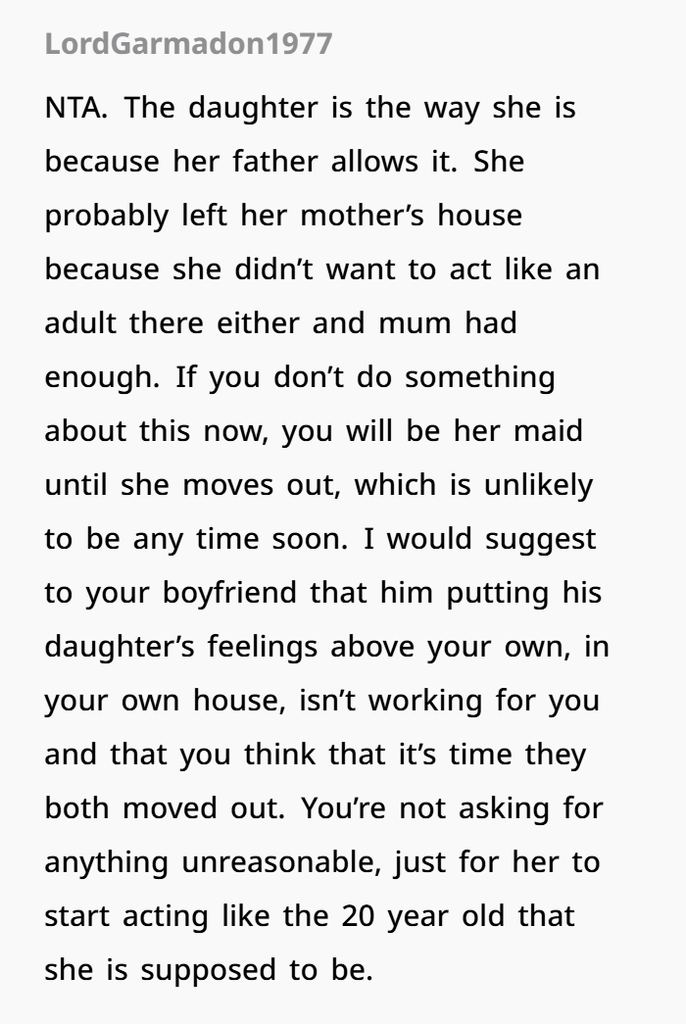

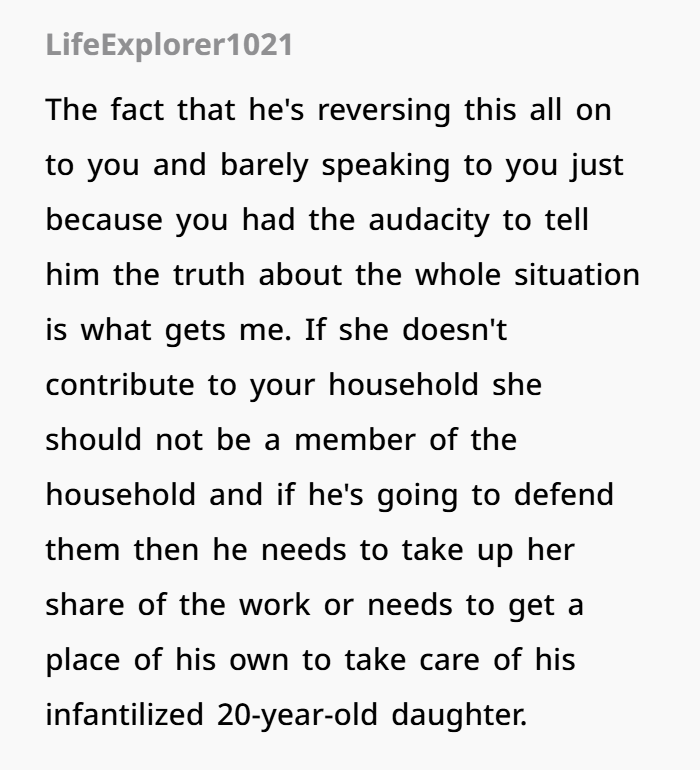
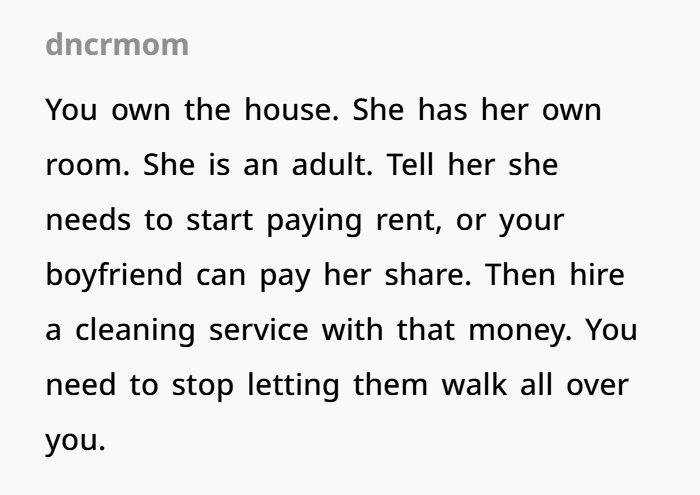
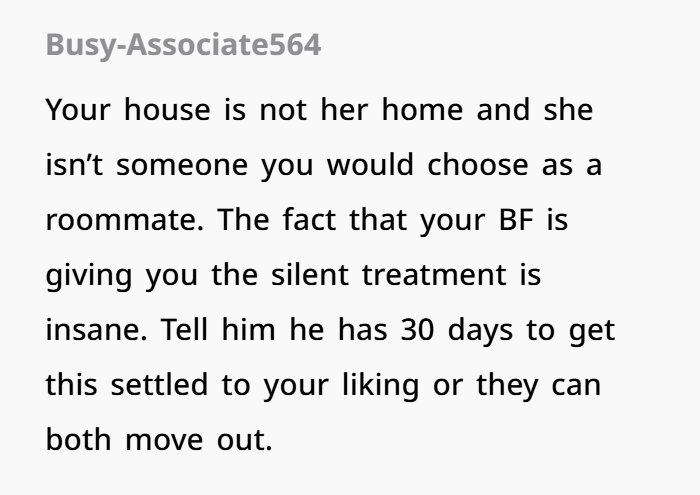
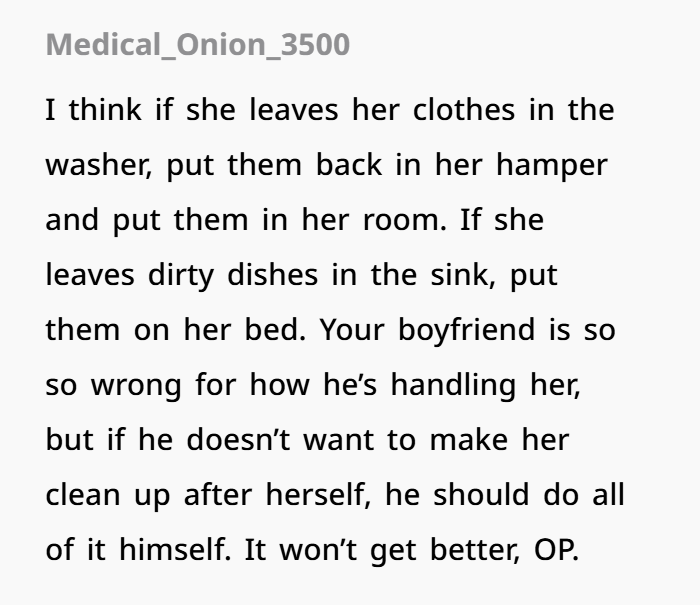
The woman never expected her boyfriend’s daughter to have everything figured out at 20. She simply wanted her to clean up after herself and show some respect for the home she was living in.
After six months of picking up dirty dishes, dealing with forgotten laundry, and handling most of the cleaning, her frustration is understandable. What makes the situation worse is that her boyfriend seems more upset about the rules than the mess itself.
Of course, helping an adult child through a difficult time is part of being a supportive parent. But that doesn’t mean someone else should have to take on all the extra work.
The couple needs to have a serious conversation about household boundaries, shared responsibilities, and the daughter’s future plans. Without some agreement, the tension is unlikely to disappear.