Parents Assume Theme Park Offers Free Childcare, Hand Their Baby to a Random Employee and Disappear

I once worked at a famous theme park resort in Florida, the kind of place known for family vacations, entertainment, and magical experiences. One busy day during the lunch rush, I was walking toward the cash register when a little girl grabbed my shirt. She was a sweet baby with big blue eyes, chubby cheeks, and no hair yet. Her mother smiled and said the baby usually did not reach out to strangers, so she asked if I could hold her for a moment.
I said, “Just for a second,” and picked the baby up. I thought her family would stay nearby, but within moments they disappeared into the busy crowd. The parents and grandmother had walked away, leaving me holding the baby while I searched for them. I spent about 30 minutes walking around the area, trying to safely reunite the child with her family.
Finally, I asked a manager for help. I expected someone to step in, but I was told to continue looking for the family. After some more searching, I saw the grandmother getting ready to leave the area. I quickly approached her, returned the baby, and made sure the child was back with her family.
The experience was surprising and taught me an important lesson about safety and responsibility. Even if a parent seems comfortable with it, you should always be careful about holding a stranger’s baby. Child safety, family security, and responsible behavior matter everywhere, especially in crowded places like theme parks, resorts, and public events.
The author of the post is an employee in a famous theme park in Florida and recently she ran into a family with a baby during her working day
Why This Baby Incident Was More Than Just Strange: Safety, Responsibility, and Important Lessons
At first, this situation might sound simply unusual. A parent leaves their baby with an employee for a short time. The employee feels confused, the parents disappear, and everyone moves on.
But when you look deeper, it was more than just a strange moment.
It involved child safety, employee responsibility, and the importance of clear rules in busy places like resorts and theme parks.
A friendly interaction with a child is one thing. Holding a baby and being responsible for their safety is something completely different.
A Friendly Employee Is Not Automatically a Caregiver
When you work at a resort, hotel, or theme park, you meet many different people every day. Families, children, parents, and guests from all backgrounds are part of the experience.
Employees may smile at children, answer questions, give directions, or make guests feel welcome. That is part of good customer service.
But picking up someone’s baby changes the situation.
The moment an employee holds a child, they are suddenly responsible for that child’s safety until the parent or guardian returns.
That is a serious responsibility.
Most employees are trained to provide guest service, not childcare. They are not prepared to become a temporary caregiver while working their normal job.
Busy Places Create Extra Safety Risks
Theme parks, resorts, and large entertainment areas can become extremely crowded. There are people walking everywhere, loud sounds, rides, food areas, shopping locations, and constant movement.
In places like this, it can be easy for people to lose track of each other.
That is why child safety policies are so important.
A parent leaving a child with someone they do not know well creates a risky situation. Even if the parent has good intentions, the employee may not know:
- The child’s name
- The parent’s contact information
- Whether the child has allergies or medical needs
- How long the parent will be gone
- Whether the person leaving is actually the child’s guardian
A simple “I’ll be back soon” can make a big difference, but in this situation, there was no clear communication.
Understanding the Legal Side
Child abandonment laws vary depending on location, but generally, they involve situations where a parent or guardian fails to provide proper care, protection, or supervision for a child.
Not every situation where a child is briefly left with another person becomes a legal case. Intent, circumstances, safety risks, and local laws all matter.
However, from a safety and responsibility perspective, leaving an infant with a stranger without clear communication can create serious concerns.
If something went wrong, questions would immediately come up:
- Who was responsible for the child?
- Was the child being supervised properly?
- Did the employee or business have a safety procedure?
- Could the situation have been prevented?
These are the kinds of questions that businesses think about when creating child safety policies and guest protection procedures.
The Responsibility of Businesses and Employers
Hotels, resorts, and theme parks have a responsibility to create a safe environment for guests and employees.
Good businesses usually have safety training and clear steps for unusual situations.
For example, employees should know what to do if:
- A child becomes separated from their family
- A guest leaves a child unattended
- A parent asks an employee to watch their child
- A child needs immediate help
A strong safety policy protects everyone involved — children, families, employees, and the business itself.
Employees should not be placed in situations where they have to make major safety decisions alone.
What Employees Should Do
If a guest hands you their child or asks you to watch them, it is okay to set a boundary.
Being kind does not mean accepting a responsibility you are not trained for.
A safer approach is:
- Politely explain that you cannot supervise the child alone
- Contact a manager, security team, or guest services
- Stay with the situation until help arrives
- Share important details about where and when it happened
Employees should never feel pressured to handle a child safety situation without support.
What Parents Should Remember
Parents naturally trust people who seem friendly and helpful. A smiling employee can make a child feel comfortable.
But a friendly person is not automatically prepared to care for a child.
When visiting busy places like resorts, hotels, and theme parks, parents should:
- Keep children within sight
- Avoid leaving children with strangers
- Use official childcare services if available
- Make sure another trusted adult is responsible before stepping away
Child safety should always come first, even during fun family experiences.
Why Children Often Feel Comfortable Around Certain People
Some people naturally attract children. They have a friendly personality, a calm voice, or a welcoming attitude.
In places designed for families, children often notice these qualities quickly.
A helpful employee may smile, answer a question, or make a child laugh. To a child, that person feels safe and familiar.
But this can create confusion.
A child feeling comfortable does not mean the employee has agreed to become a caregiver.
There is a big difference between being friendly and being responsible for someone’s child.
The Importance of Healthy Boundaries
This experience shows an important lesson:
You can be caring without taking on responsibilities that are not yours.
Helping people is good. Being kind is good. Providing excellent customer service is good.
But safety comes first.
Employees deserve clear workplace boundaries, and parents deserve reliable safety systems when visiting family destinations.
A simple moment can quickly become a serious responsibility. That is why clear communication, proper training, and strong safety guidelines matter.
Being helpful does not mean saying yes to everything.
Sometimes the safest choice is knowing when to ask for help.
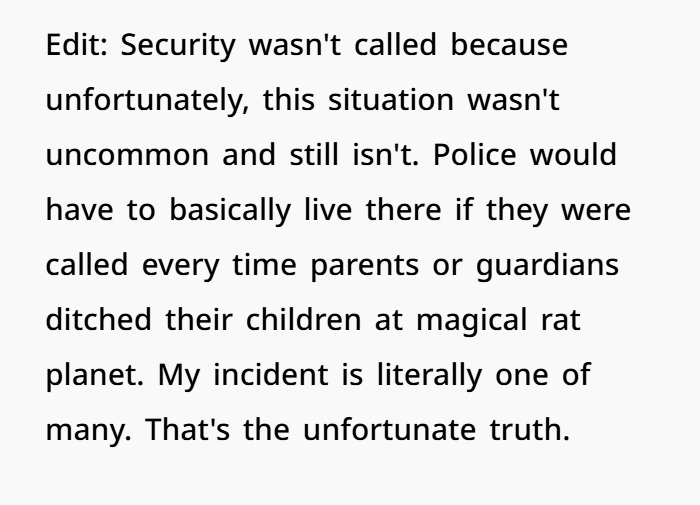
Most commenters agreed that this case in fact showed blatant parents’ neglection and noted that the police should’ve been involved here