“You Chose to Get Involved—Now Face the Consequences!” Mom Exposes Toxic MIL’s Lies After Family Tries to Force Reconciliation


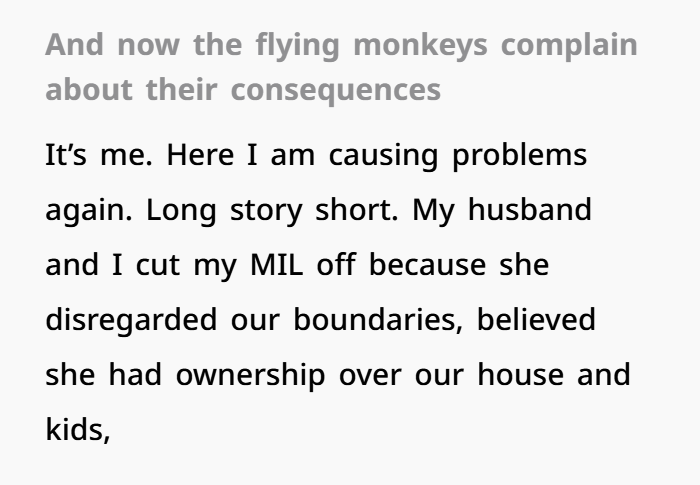
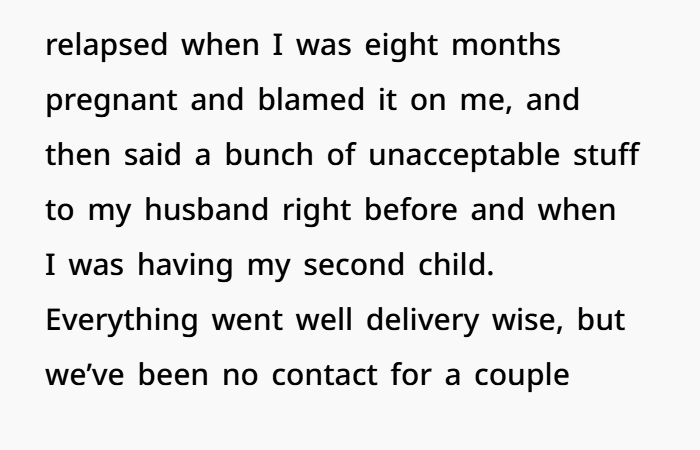
A mother of two decided to make a big change after months of problems with her mother-in-law. She said the grandmother often ignored her wishes and tried to interfere with childcare and parenting decisions. The problems became worse when the woman was eight months pregnant with her second child. Her mother-in-law, who reportedly had a long history of alcohol problems, began drinking again and blamed the pregnant woman. Around the time of the baby’s birth, she also sent messages that upset her son. After talking things over, the husband and wife agreed that they needed a break from his mother.
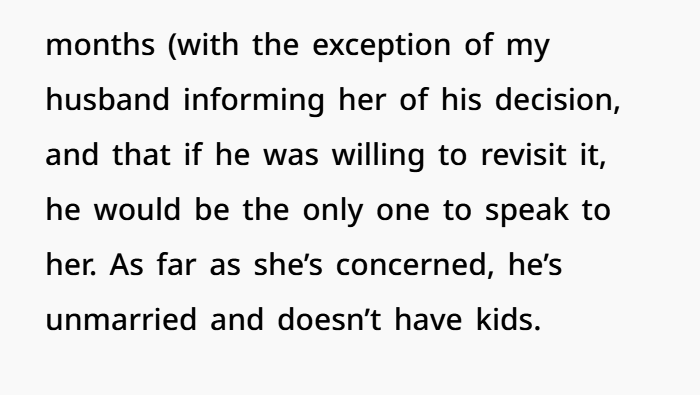
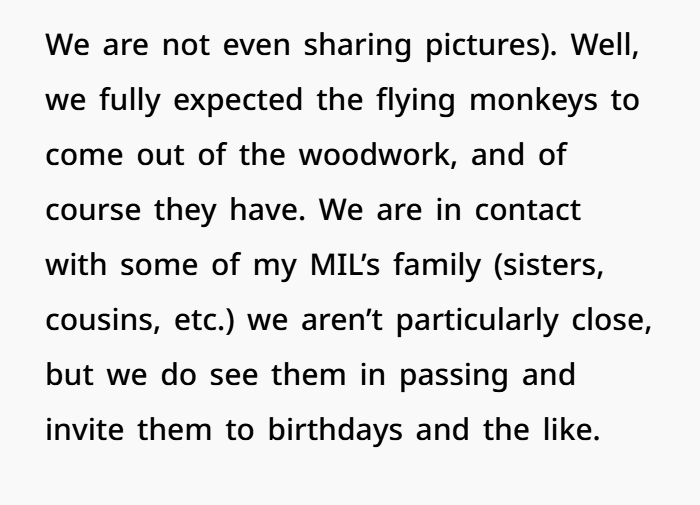
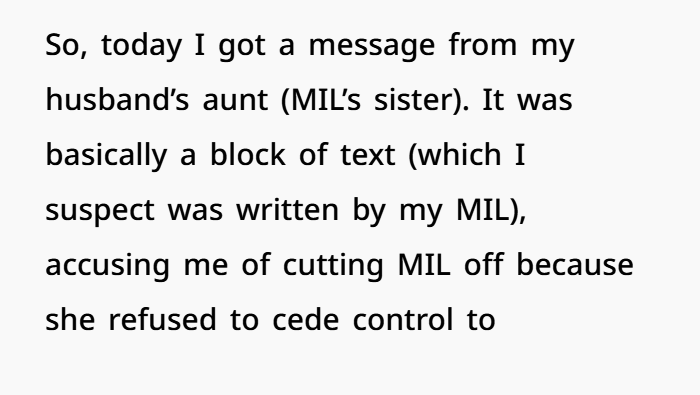
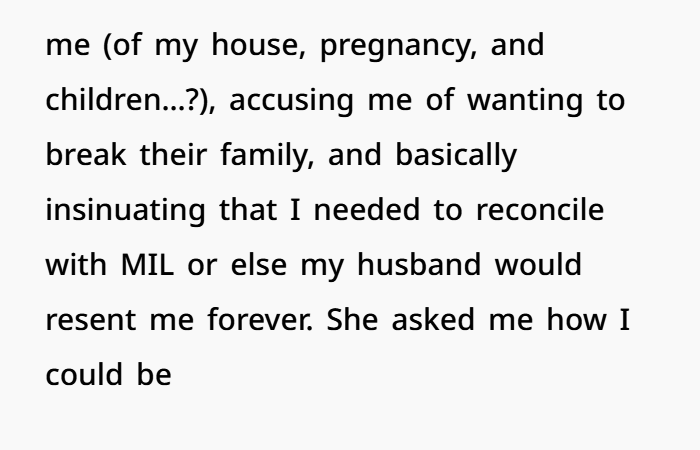
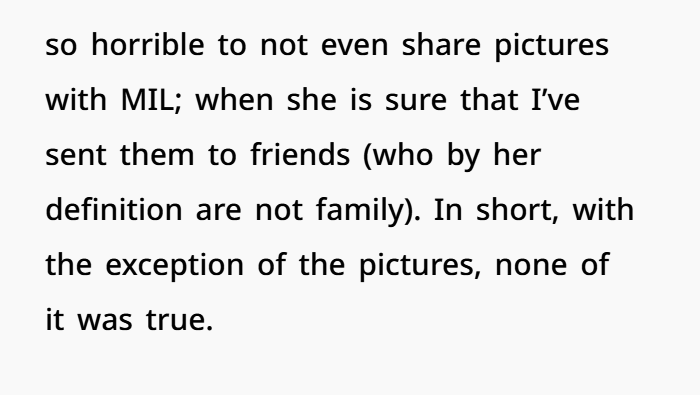
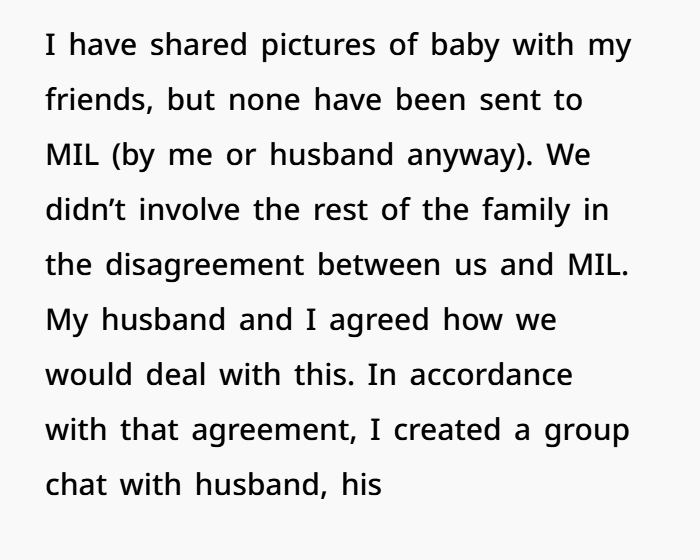
The couple decided there would be no visits, baby photos, or family updates for the time being. The husband told his mother that he would contact her if he ever wanted to talk again. But soon, his aunt sent his wife a long message. The aunt accused her of controlling her husband and keeping the family apart. She also said it was unfair that the grandmother could not see pictures of the new baby. The wife felt the message sounded like something her mother-in-law would say and believed the aunt had heard only one side of the story.
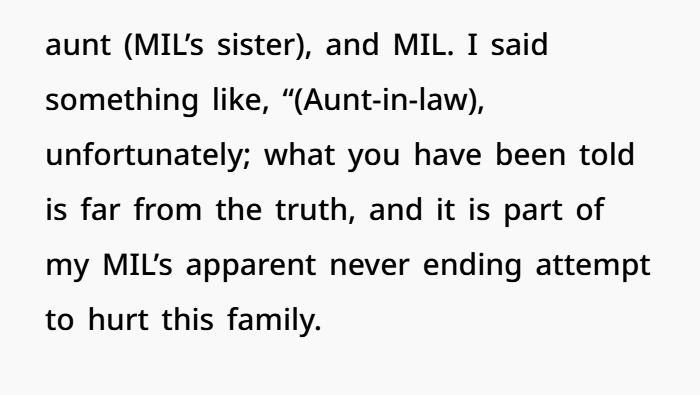
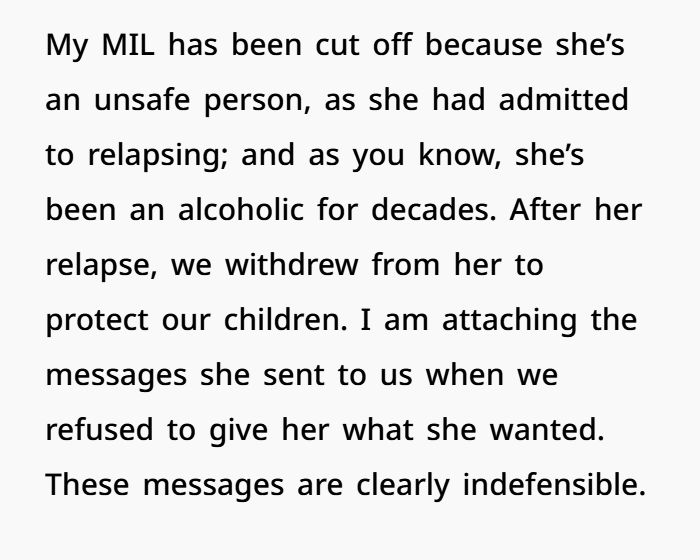
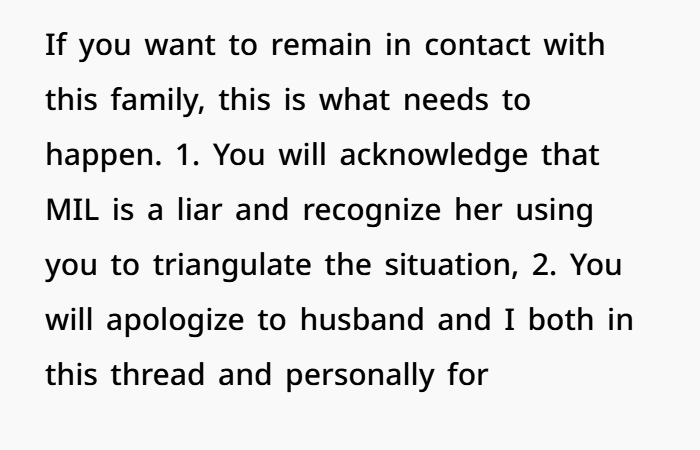
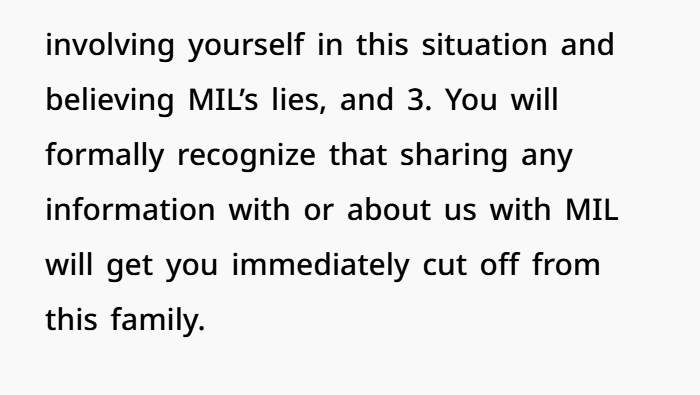
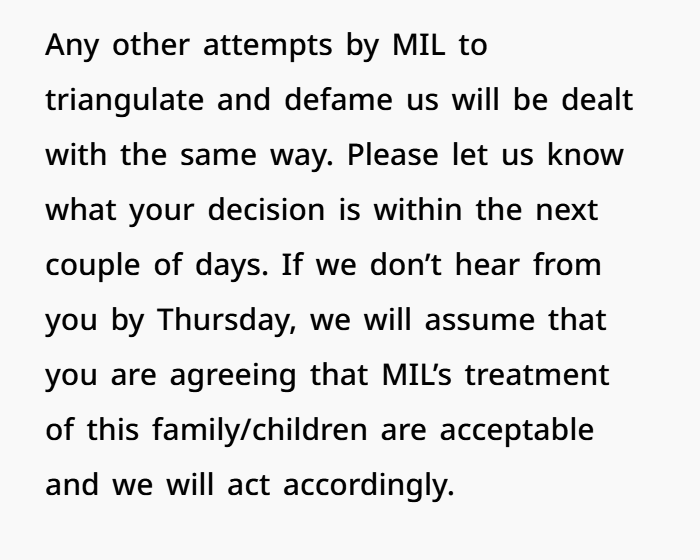
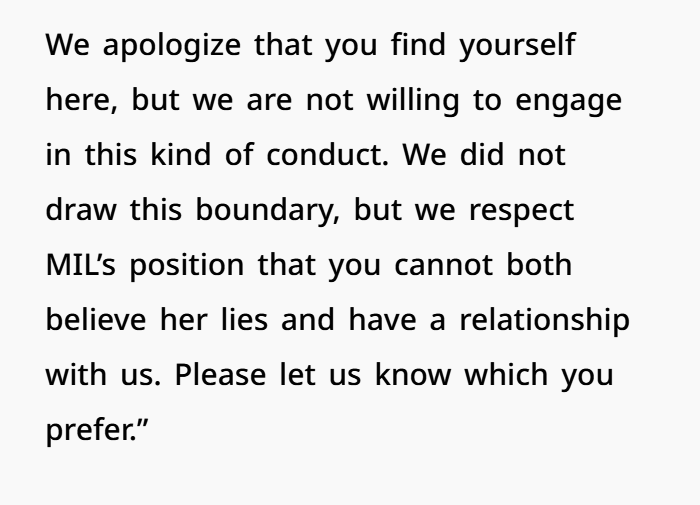
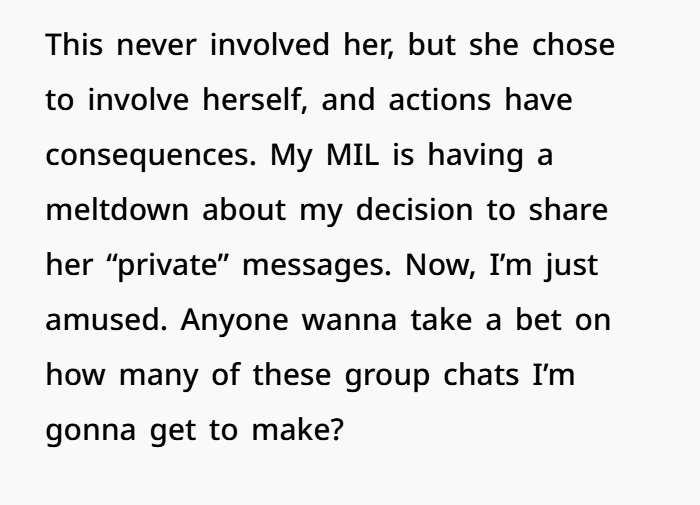
Rather than continue a private argument, the wife asked her husband how he wanted to handle it. They agreed to start a group chat with the aunt and his mother. In the chat, the wife explained why they had chosen to stop contact. She also included screenshots of messages that had caused problems before. Then she gave the aunt three choices to make if she wanted to stay involved with their family. She needed to recognize that the earlier claims were untrue, apologize for getting involved, and respect the couple’s privacy by not passing along information about their children.
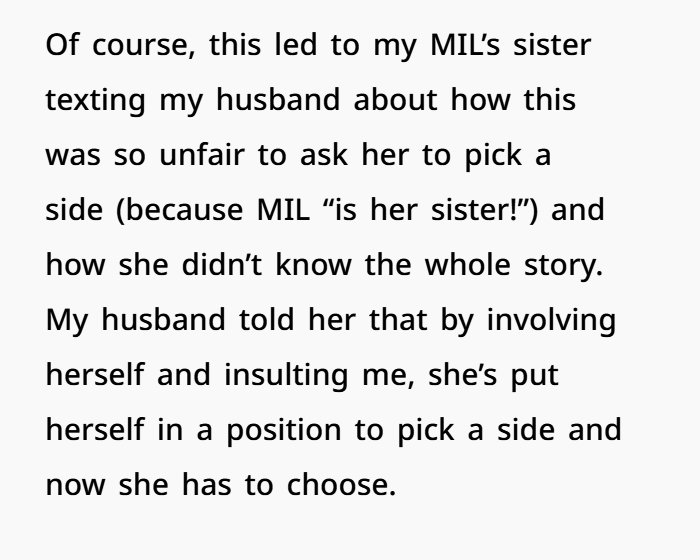
The aunt did not like these conditions. She said the couple was making her choose between her sister and her nephew. But the husband agreed with his wife and reminded his aunt that she had entered the disagreement on her own. His mother was also reportedly angry that her private messages had been shown to others. The wife was not surprised by the reaction and even found some humor in it. She believed that clear family boundaries, children’s online privacy, and respectful communication were important for keeping peace at home.

Couple Cuts Contact With Mother-in-Law, but an Aunt Steps In and Makes Things Worse
Family disagreements can be difficult enough without other relatives getting involved.
One couple had already decided to stop contact with the husband’s mother. They believed the decision was necessary because of problems with trust, personal boundaries, and concerns about their children.
But the husband’s aunt wasn’t happy about it.
Instead of staying out of the disagreement, she confronted the wife and accused her of keeping the family apart.
She was also upset that the couple shared pictures of their baby with friends but refused to send them to the grandmother.
The wife eventually responded by sharing screenshots of private messages in a family group chat.
Then she set conditions for any future contact with the aunt.
Now the bigger question is whether the couple was simply protecting their family or whether their response went too far.
Why Family Members Sometimes Get Involved in Arguments
When relatives stop speaking to each other, other family members often feel uncomfortable.
They may want everyone to apologize and move on.
Some try to help by carrying messages between people who aren’t speaking.
Others begin taking sides.
The problem is that they may not know the whole story.
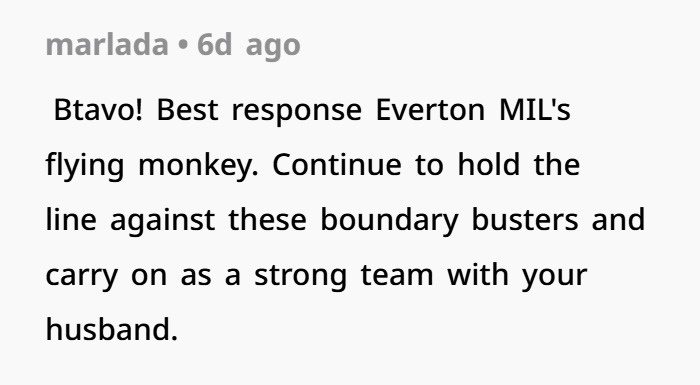
In online discussions, people sometimes use the phrase flying monkeys to describe relatives who act on someone else’s behalf during a family disagreement.
The expression comes from The Wizard of Oz. It is an informal term, not a mental health diagnosis.
There is also a family psychology concept called triangulation.
Psychiatrist Murray Bowen used this idea in his work on family relationships.
It describes what can happen when a disagreement between two people begins to involve a third person.
That seems similar to what happened here.
The original problem was between the couple and the husband’s mother.
But once the aunt became involved, the couple had another disagreement to handle.
We don’t know whether the mother-in-law asked her sister to step in or whether the aunt made that choice herself.
Either way, her involvement added more pressure instead of solving the problem.
Why the Couple Decided to Keep Their Distance
According to the couple’s account, the mother-in-law had struggled with alcohol use in the past.
They also reported that she had recently returned to drinking.
However, their concerns weren’t only about alcohol.
They described previous problems with boundaries and messages that made them uncomfortable.
These experiences led them to decide that limiting contact was best for their family.
Alcohol use disorder is a medical condition that can affect a person’s ability to control their drinking.
The National Institute on Alcohol Abuse and Alcoholism explains that recovery can involve setbacks.
Returning to alcohol use doesn’t mean a person cannot recover or maintain healthy relationships.
And having a history of alcohol problems does not automatically make someone unsafe around children.
What matters in family decisions is the person’s actual behavior and the circumstances involved.
In some situations, addiction treatment, recovery support, and family counseling can help rebuild trust.
But family members may still need time and space while those problems are being addressed.
The Argument Over Baby Pictures
One of the aunt’s complaints was about photos of the couple’s baby.
She couldn’t understand why the couple was willing to share pictures with friends but not with the grandmother.
From her point of view, the grandmother was being left out.
But the couple saw things differently.
They had decided not to share personal information with the mother-in-law.
That included pictures of their child.
Parents often make decisions about who can receive photos, videos, and updates about their children.
These choices can be especially important when family relationships are strained.
Children’s online privacy is something many parents think about before sharing photos through social media or messaging apps.
A picture sent to one person can sometimes be forwarded to someone else.
The couple may have trusted their friends not to share the photos further.
They may not have felt the same confidence about other relatives.
Whatever their reason, they were allowed to set rules about sharing their child’s pictures.
The aunt didn’t have to like those rules, but arguing about them was unlikely to change the couple’s minds.
Do Grandparents Have Legal Rights to See Their Grandchildren?
Family disagreements sometimes lead to questions about grandparent visitation rights.
In the United States, these laws vary by state.
The Supreme Court’s decision in Troxel v. Granville (2000) recognized the importance of a fit parent’s right to make decisions about their child’s care.
Some states allow grandparents to request visitation in certain situations.
However, being a grandparent doesn’t automatically give someone unlimited access to a child.
Grandparents also generally don’t have an automatic legal right to receive family photos or private updates.
When there is a serious disagreement about child custody, parental rights, or visitation, a family law attorney can explain the rules that apply to the situation.
But this story doesn’t describe a court dispute.
It describes a family argument over whether the couple’s parenting decisions should be respected.
Why the Wife Shared Private Messages
The situation became more heated when the aunt accused the wife of causing the family problems.
According to the story, the wife responded by sharing screenshots of messages from the mother-in-law.
She posted them in a family group chat that included people connected to the disagreement.
Her apparent goal was to show why the couple had decided to stop contact.
It’s understandable that she wanted to defend herself.
Being blamed for a decision that both spouses made together would be frustrating.
But sharing private messages can be a difficult choice.
Even when screenshots are sent to a small group, they may create new privacy concerns.
Rules about sharing communications can also depend on the location and circumstances.
From a relationship point of view, screenshots may help explain what happened.
But they can also make an argument worse.
The aunt might become more defensive, and the mother-in-law might feel that private conversations were exposed.
The wife may have believed sharing the messages was necessary.
Still, she could also have chosen a shorter response and refused to discuss the issue further.
Neither approach guarantees that the disagreement will end.
Did the Wife’s Conditions Go Too Far?
After the argument, the wife reportedly set three conditions for continued contact with the aunt.
These included an apology and an acknowledgment that the mother-in-law had lied.
Some expectations were reasonable.
The couple could ask the aunt to stop making accusations.
They could also tell her not to share pictures or information about their children with the grandmother.
Those are clear family boundaries.
But asking the aunt to describe her own sister as a liar is more complicated.
The aunt may be willing to apologize for her behavior without agreeing with every conclusion the couple has reached.
She may also want to maintain a relationship with her sister.
That doesn’t necessarily mean she supports everything her sister has done.
Healthy boundaries are usually about behavior.
For example, someone can say they won’t continue a conversation if they are being insulted.
They can also choose not to share personal information with someone who doesn’t respect their privacy.
But requiring another person to believe exactly what you believe is different.
The couple may get better results by focusing on respectful behavior rather than asking the aunt to prove her loyalty.
Why the Husband’s Support Makes a Difference
Another important detail is that the husband supported his wife.
The aunt appeared to blame the wife for keeping the mother-in-law away.
But according to the story, the couple made that decision together.
That matters because parenting decisions should not automatically be blamed on one spouse.
The husband has his own opinions and responsibilities.
If he agrees that limiting contact is best for their family, relatives should take his decision seriously too.
Couples sometimes face pressure from extended family members who disagree with their choices.
Marriage counseling or family therapy can help partners discuss boundaries and decide how to respond to that pressure.
In this case, the husband’s support suggests the couple was trying to present a united position.
Could the Family Ever Rebuild Trust?
It may be possible for the family to improve its relationships in the future.
But that would likely require changes in how everyone communicates.
The aunt could start by acknowledging that accusing the wife wasn’t helpful.
She could also agree to respect the couple’s privacy and stop passing along information about the children.
The couple, in turn, could explain what behavior they expect without requiring her to take sides against her sister.
That would leave room for the aunt to maintain her own relationships while respecting the couple’s choices.
It doesn’t mean everyone has to become close again.
Sometimes, families do better with limited contact.
And sometimes, people need time before they are ready to talk.
Family counseling may be useful if everyone is willing to participate, but it isn’t a requirement for setting boundaries.
Final Verdict: Did the Couple Go Too Far?
Mostly NTA (Not the A-hole), although one part of the wife’s response may have been too demanding.
The couple has the right to decide who receives information about their children.
They can also choose to limit contact with relatives who repeatedly ignore their wishes.
The aunt was free to disagree with their decision.
But confronting the wife, making accusations, and suggesting the disagreement would cause problems in her marriage was unlikely to help.
The husband supported the decision, so blaming only the wife was unfair.
However, demanding that the aunt formally call the mother-in-law a liar may have crossed a line.
The couple can ask for an apology, privacy, and respectful communication.
They cannot expect the aunt to stop loving her sister or agree with every part of their story.
Final Thoughts
Family problems often become worse when relatives start carrying messages and taking sides.
Sometimes, people think they are helping by encouraging others to reconnect.
But when that encouragement turns into pressure or accusations, it can damage relationships even more.
In this case, the couple wanted to make decisions about their children without outside interference.
The aunt had her own feelings, but she could have expressed them without confronting the wife.
And the couple could protect their boundaries without asking her to choose between them and her sister.
Families don’t have to agree on everything to treat one another with respect.
Sometimes, the best way to help is to listen, respect someone’s decision, and stay out of a disagreement that isn’t yours to solve.
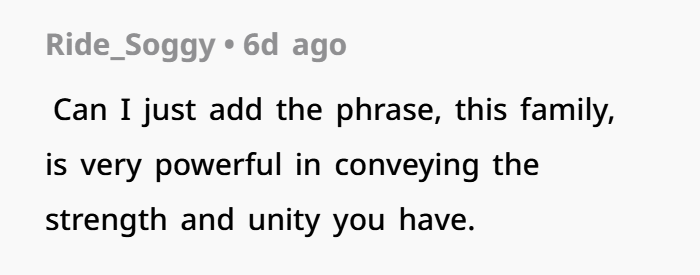
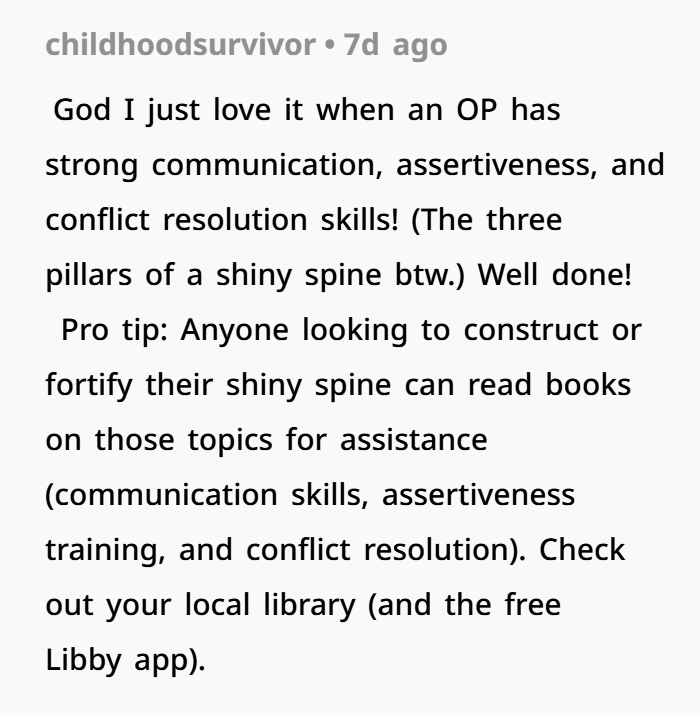
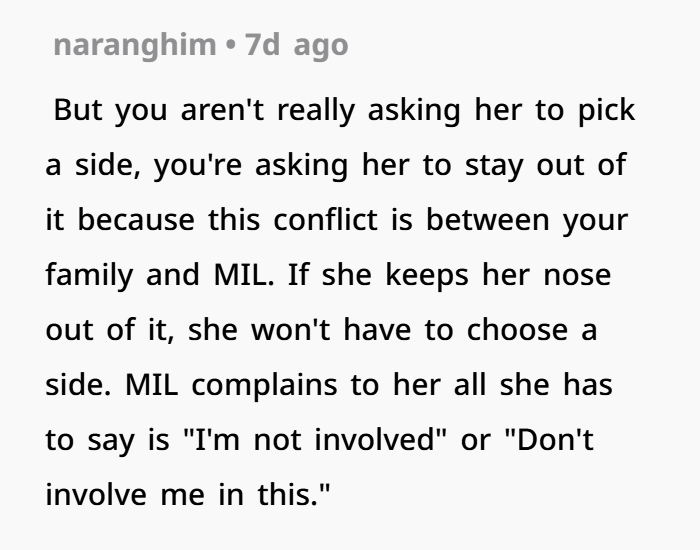
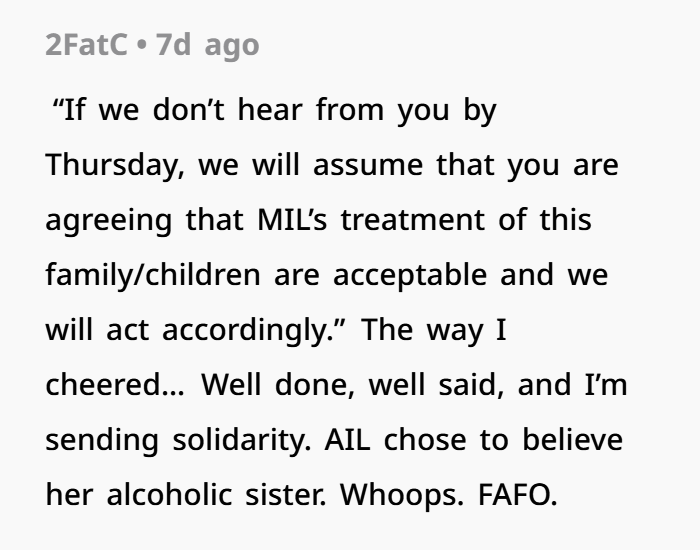
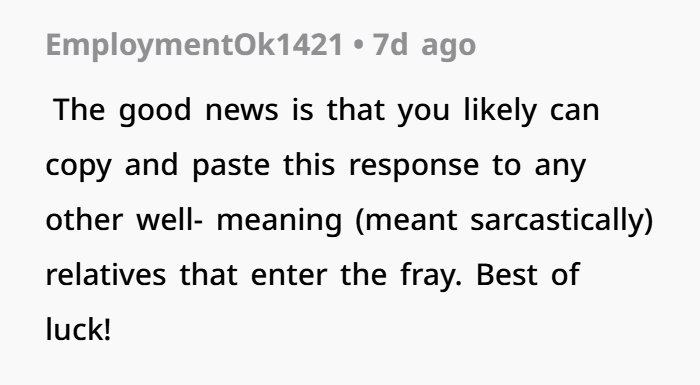
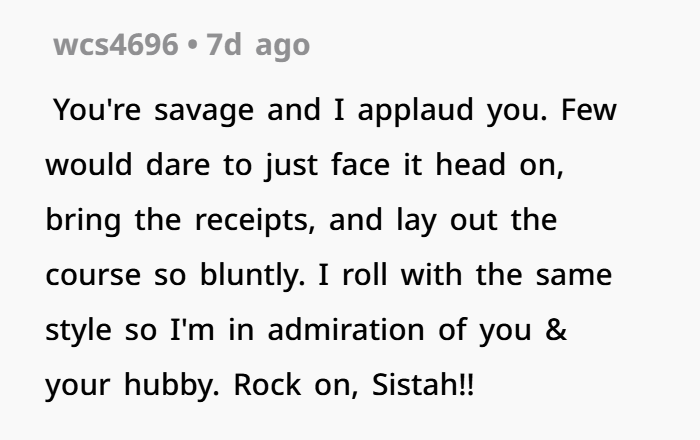
Readers’ Comments Speak Out