My Boss Ordered Me Back to the Office, So I Went to My Official Office

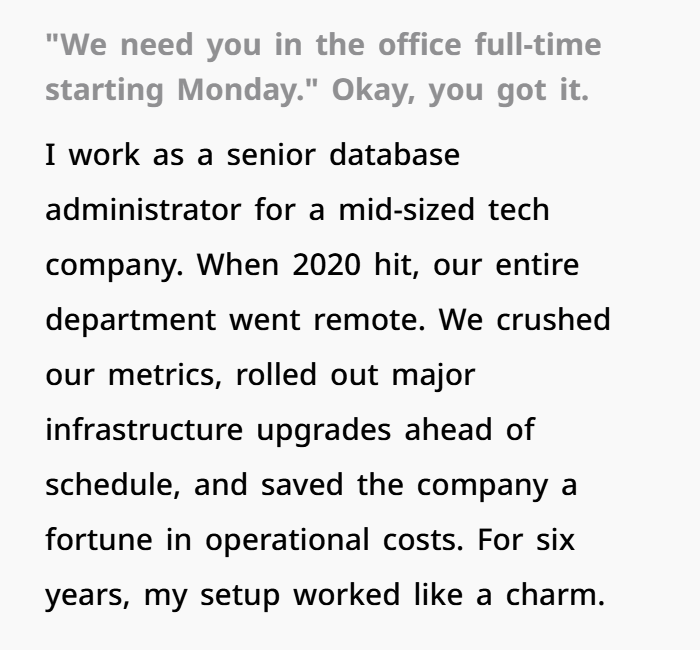
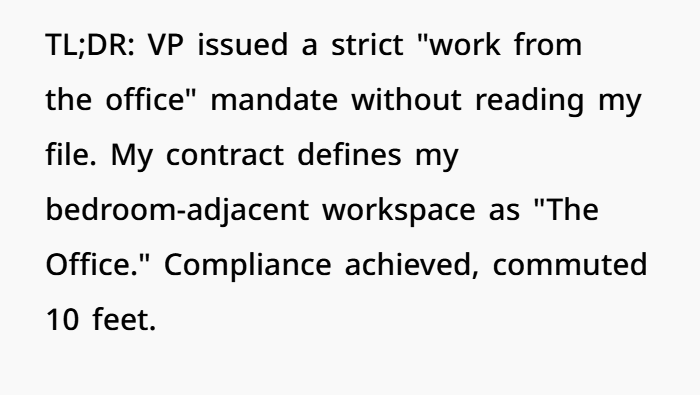
This story follows a database administrator who experiences a disagreement with management after a new workplace rule requires employees to return to the office. For years, he had worked remotely with his team and delivered successful results. The department completed large projects, supported company systems, and helped improve business efficiency.
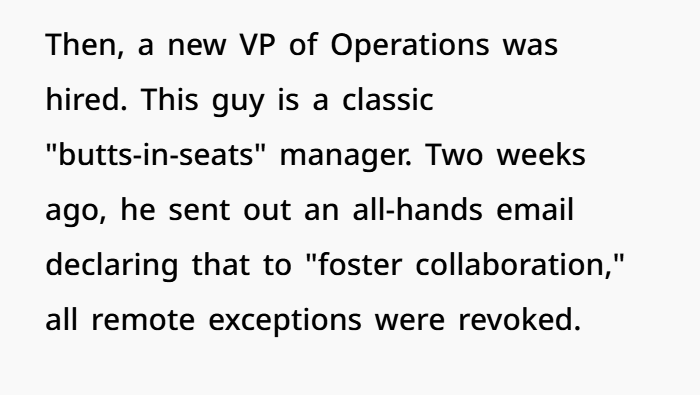
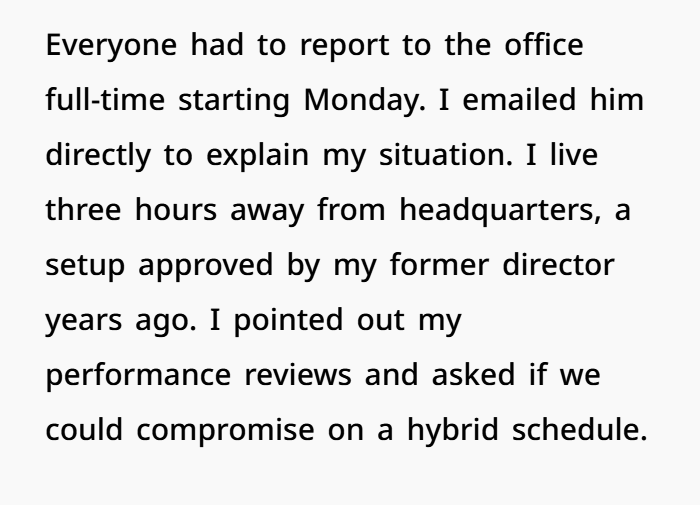
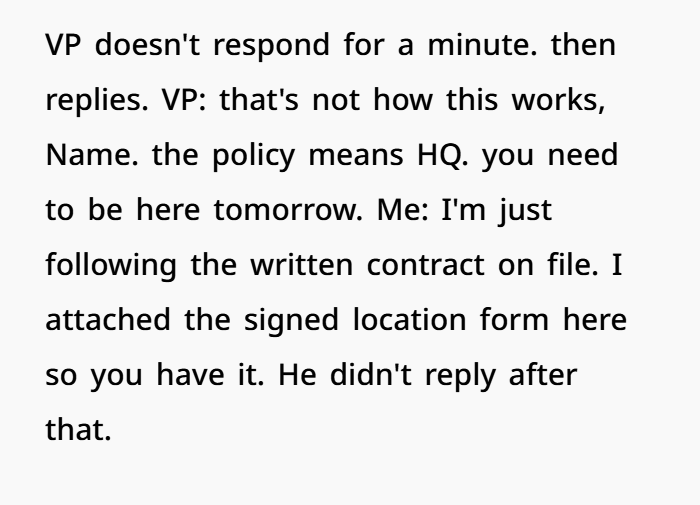
The new VP of Operations believed that employees needed to be back in the office every day to improve teamwork. However, the employee lived far away and had already received official approval to work remotely. He did not believe the new rule should apply to him without considering his existing agreement.
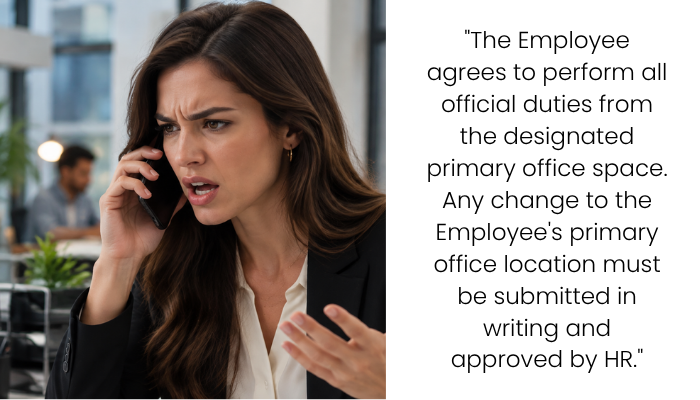
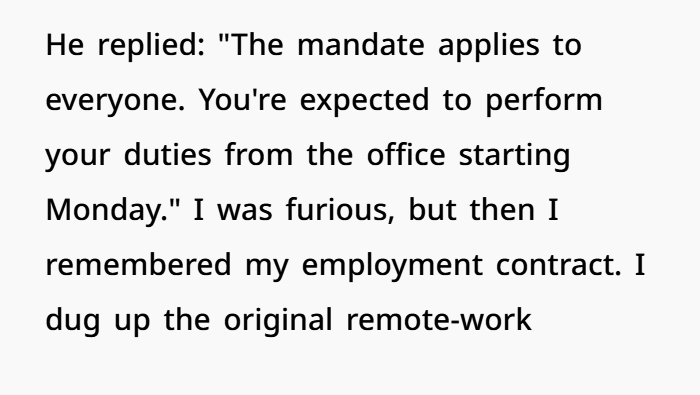
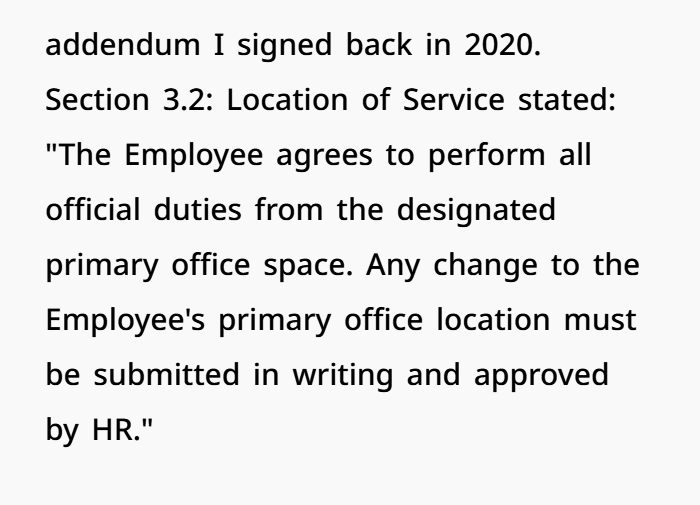
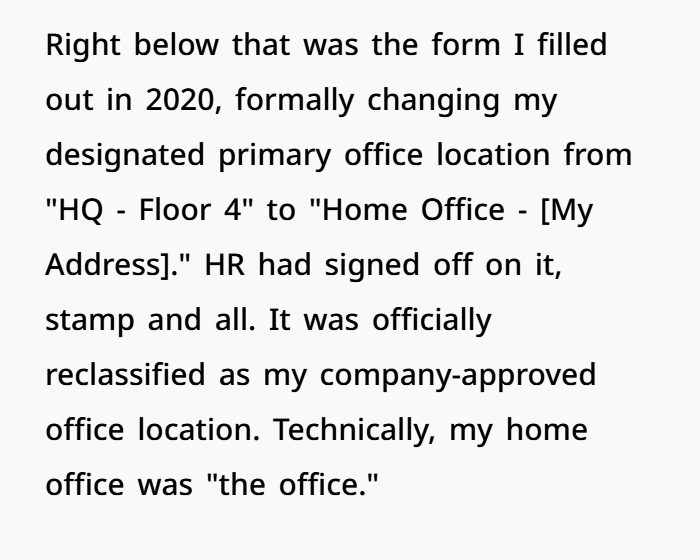
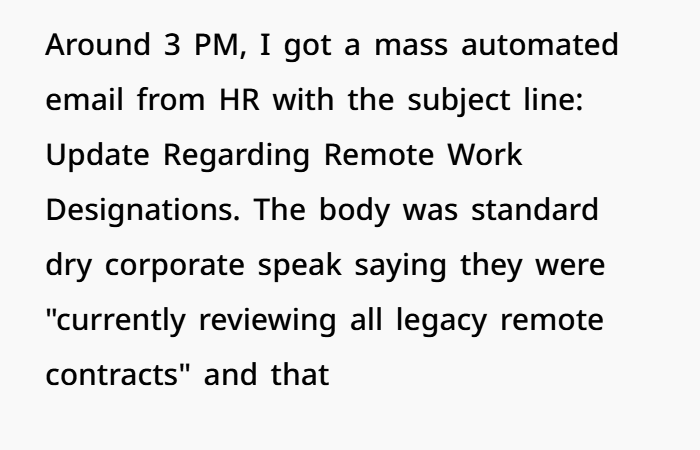
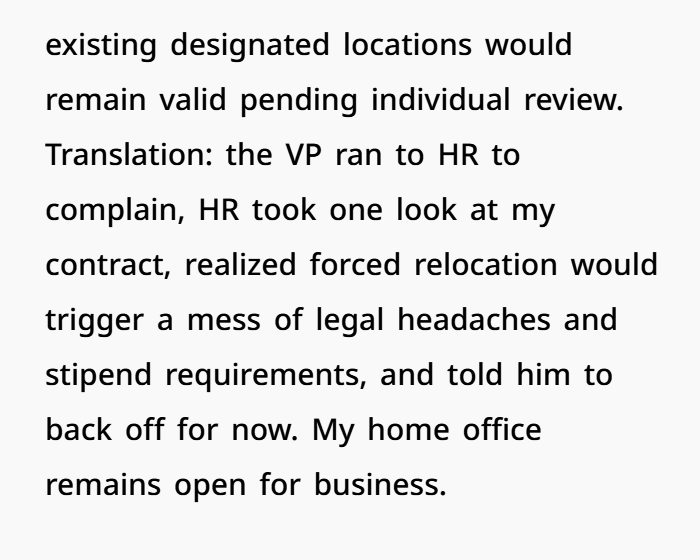
To better understand his situation, he checked his employment documents and found that his remote work arrangement was officially recorded. His home office was listed as his main workplace after approval from the company’s HR department.
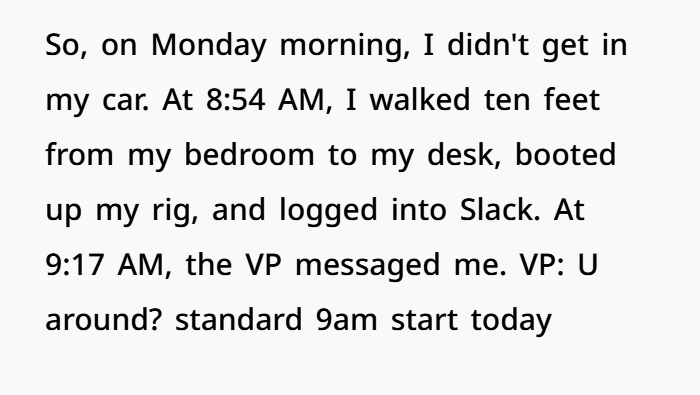
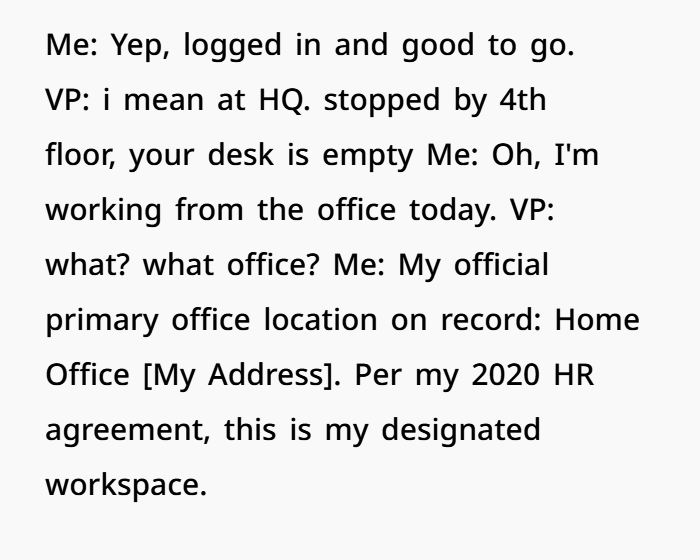
Instead of creating a conflict, he followed the written policy exactly. He continued reporting to his approved workplace, which was his home office. This story highlights topics like remote work, employee agreements, workplace communication, and how clear policies can help avoid misunderstandings in professional environments.

Return to Office Policies and Why Written Work Agreements Matter
The way people work has changed a lot since the COVID-19 pandemic.
During the pandemic, many companies moved employees to remote work. Many workers successfully completed their jobs from home and created new work routines.
Later, many businesses started bringing employees back to the office. These return-to-office policies were often created because company leaders wanted more face-to-face communication, stronger teamwork, better training, and more workplace connection.
However, problems can happen when a company creates a new rule that affects employees who already have a different work agreement.
The Difference Between a Casual Agreement and a Written Agreement
One of the biggest lessons from workplace conflicts is the importance of written documents.
There is a big difference between:
- A manager allowing someone to work from home informally
- A company officially approving a remote work arrangement in writing
A verbal agreement can be misunderstood over time.
A written agreement creates a clear record of what both the employer and employee accepted.
Important employment documents may include:
- Remote work agreements
- Employment contracts
- Work location approvals
- Flexible work arrangements
- Relocation agreements
- Workplace accommodation records
These documents help protect both employees and companies.
Why Documentation Matters at Work
Many workplace disagreements happen because people remember conversations differently.
One person may say:
“We agreed to this.”
Another person may say:
“That was never the official plan.”
Written records help prevent these situations.
In this case, the employee did not only argue that working from home was easier or more comfortable.
Instead, the employee looked at the official agreement and used the written terms that were already approved.
This shows an important workplace lesson:
Written agreements are usually stronger than personal memories.
Company Policies and Individual Employee Agreements
Companies create policies to guide many employees at the same time.
A return-to-office policy may apply to most workers, but some employees may have different arrangements.
For example, some employees may have approved exceptions because of:
- Previous remote work agreements
- Location differences
- Special job requirements
- Recruitment agreements
- Performance history
- Accessibility needs
A general company policy and an individual employment agreement may not always match.
When this happens, companies often need to review existing documents and decide how changes should be handled.
Why One Policy May Not Work for Everyone
A simple rule can be helpful, but workplaces are not always simple.
Employees often have different situations based on:
- Their job role
- Where they live
- Their work history
- Their responsibilities
- Their employment terms
For example, many technology jobs can be completed remotely.
Roles such as:
- Database administration
- Software development
- Cybersecurity
- IT infrastructure
often rely on digital systems instead of a physical office.
For these jobs, employers may focus more on performance, results, and reliability.
The Real Debate Behind Return-to-Office Policies
Return-to-office discussions are not only about where people work.
They are also about how companies measure success.
Some leaders believe working in an office improves:
- Team communication
- Employee relationships
- Training
- Company culture
Other leaders believe employees should be judged mainly by:
- Work quality
- Productivity
- Meeting goals
- Results
Both views are common in modern workplaces.
The disagreement is often about management style and workplace expectations.
What Is Malicious Compliance?
Sometimes employees respond to workplace rules by following them exactly as written.
This is often called malicious compliance.
It does not always mean the employee is refusing to cooperate.
Instead, the employee may follow the rule carefully to show that there is a problem with how the rule was created or applied.
In this type of situation, the employee may not be fighting the company policy.
They may simply be showing that the policy does not consider an existing agreement.
The Importance of Clear Communication
Workplace changes can create problems when communication is unclear.
Companies can reduce confusion by:
- Reviewing existing employee agreements
- Keeping accurate HR records
- Training managers properly
- Explaining policy changes clearly
- Discussing changes with affected employees
Good communication helps build trust between employers and employees.
What Employees Should Know About Their Rights and Agreements
Employees can also protect themselves by understanding their workplace documents.
Helpful steps include:
- Reading employment agreements carefully
- Keeping copies of approved arrangements
- Asking questions about policy changes
- Saving important workplace communications
Knowing your employment terms can help you make better career decisions.
The Bigger Lesson About Workplace Changes
Workplaces will continue to change as companies adjust their policies and business needs.
However, successful changes require:
- Clear communication
- Accurate documentation
- Fair treatment
- Respect for existing agreements
In this situation, the disagreement was not solved through an argument.
It was solved through documentation.
The employee did not simply ignore the return-to-office policy. Instead, they showed that the policy did not fully consider an agreement that was already in place.
The main lesson is simple:
Clear written agreements help create trust between employers and employees.
Comments You Can’t Miss