Man Apologizes to His Childhood Bully Victim, Then Dating Her Sister Changes Everything


Nobody gets everything right all the time. Everyone makes mistakes, but learning from them is one of the most valuable life lessons. Admitting when you were wrong takes honesty and courage.
Today’s story follows a man who looked back at his teenage years with regret. He admitted that he had bullied other students in school before becoming a more thoughtful adult.
Things became unexpected when he learned that one of his former victims was dating his sister. Wanting to move forward in a respectful way, he decided to apologize for his past actions.
His experience highlights the importance of personal growth, education, healthy relationships, and communication skills. Continue reading to see how the conversation unfolded.





He Apologized for Bullying Someone Years Later, But the Situation Took an Unexpected Turn
People often regret the mistakes they made when they were younger. While some try to move on, others want to apologize and make things right. But even a sincere apology does not always lead to forgiveness.
That is what happened in this story.
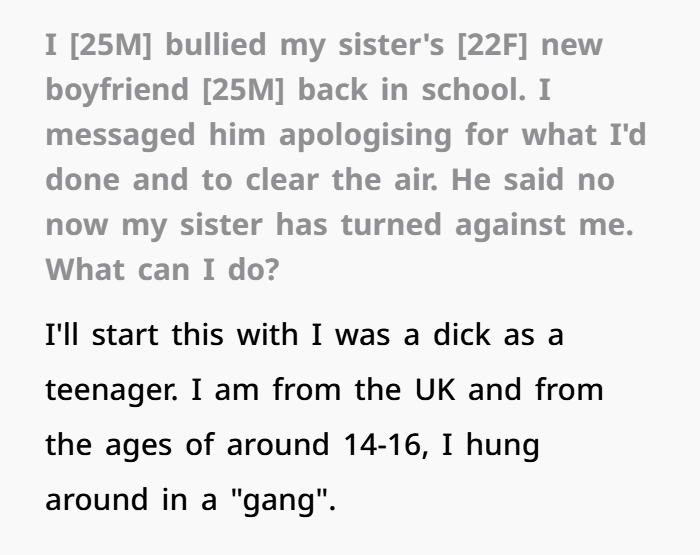
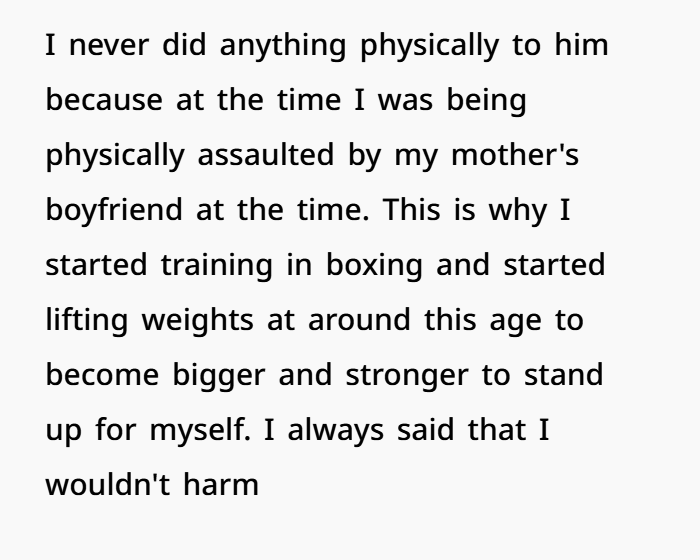
The man who shared the story is now 25 years old. During his teenage years, he had a difficult home life because of a stepfather he says was often rude and unkind. To deal with the stress, he started going to the gym and trained in boxing.
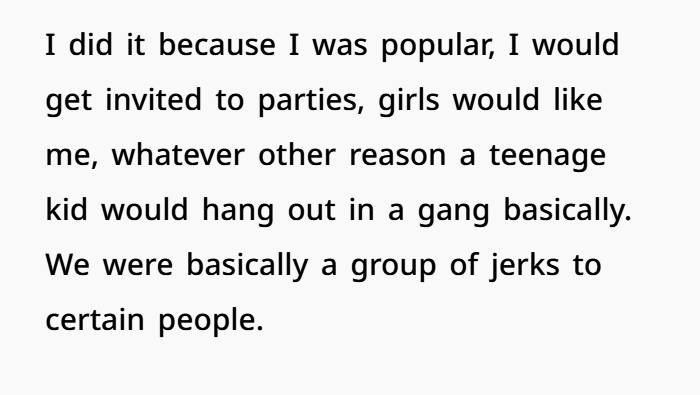
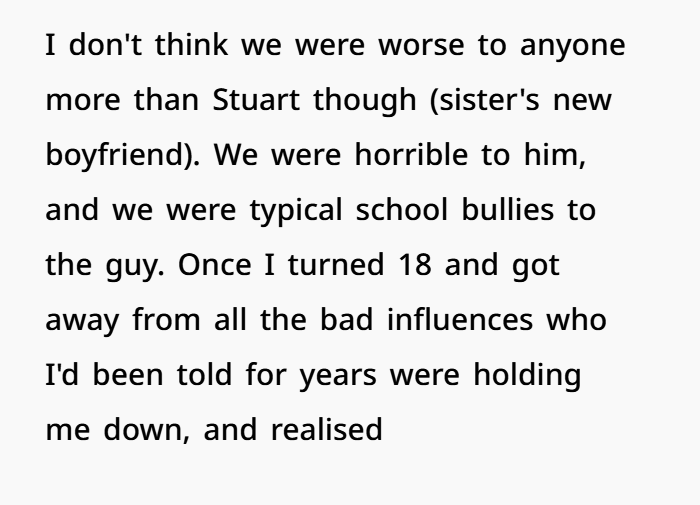
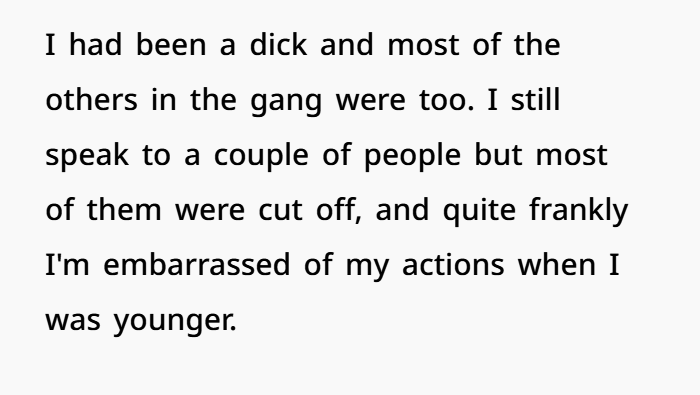
As time went on, he became friends with the wrong crowd. Looking back, he admits he made many poor choices and was not proud of how he treated other people.
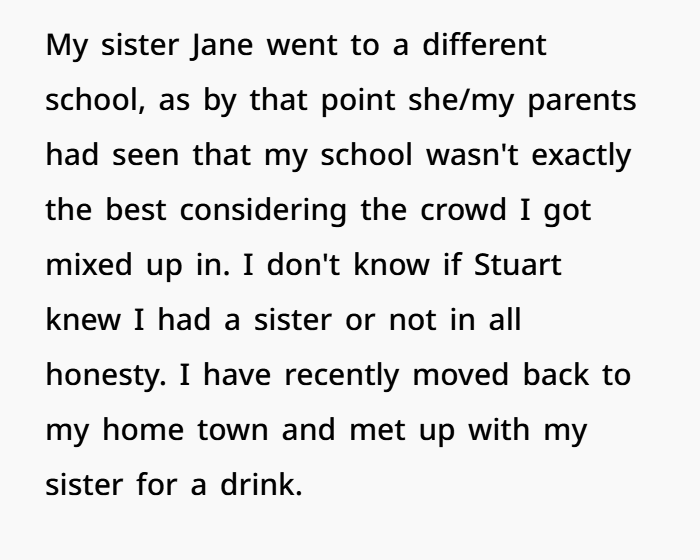
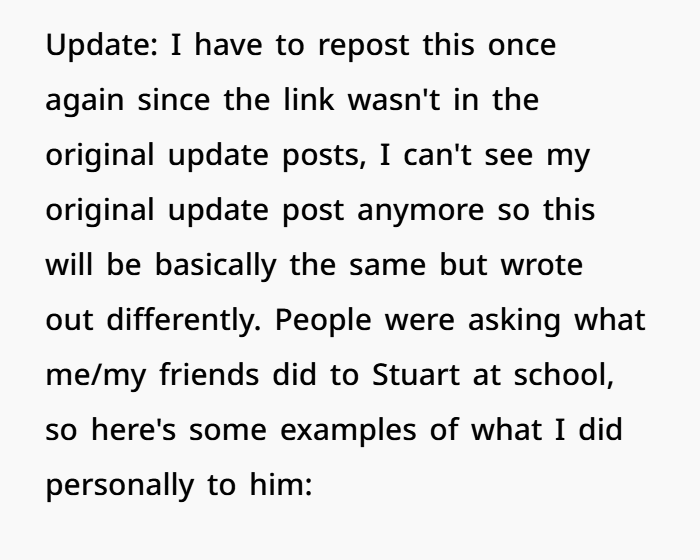
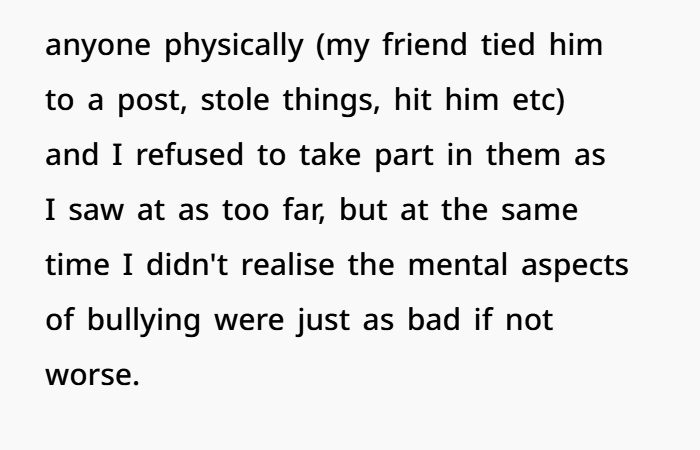
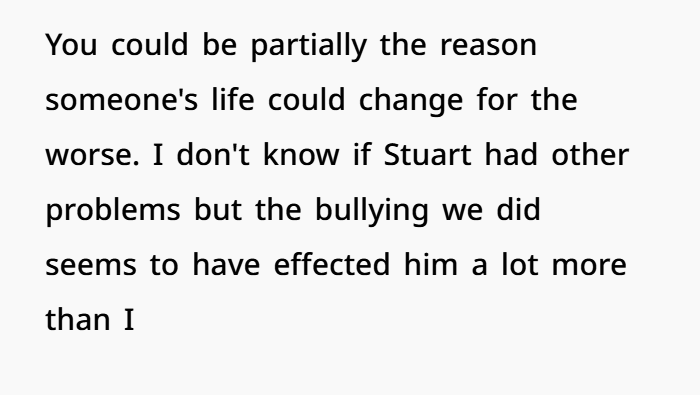
One of those people was a classmate named Stuart. The man said he never physically hurt Stuart, but he often played mean jokes on him and made school life harder. As an adult, he realized his behavior was wrong and felt guilty about it.
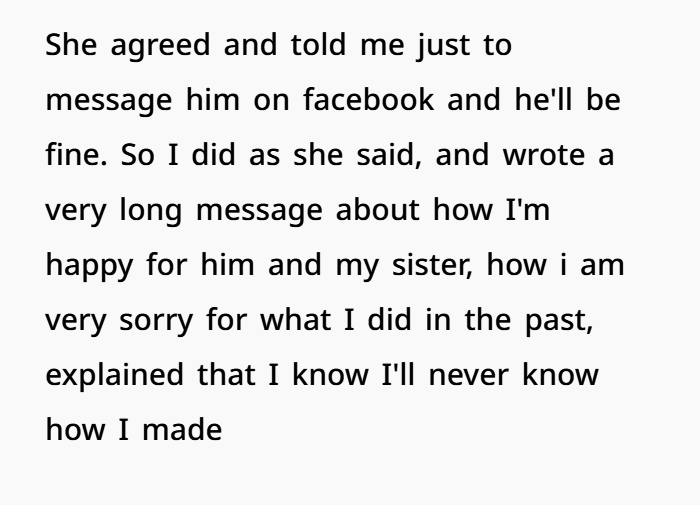
About 10 years later, he returned to his hometown and discovered that his sister was dating Stuart. Wanting to take responsibility for his past actions, he reached out to apologize.
Stuart listened but said he could not forgive him. He then blocked him and ended the conversation.
The man accepted Stuart’s decision. He understood that no one is required to forgive another person, and he chose not to contact him again.
Later, Stuart told his girlfriend about the bullying that had happened years earlier. After hearing the story, the man’s sister became upset with her brother and criticized him for how he had behaved in high school.
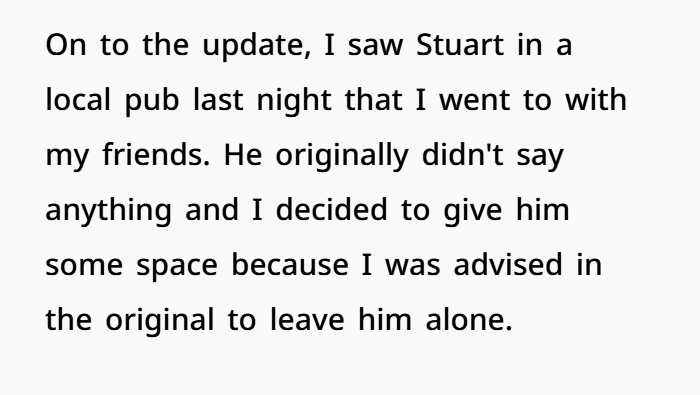
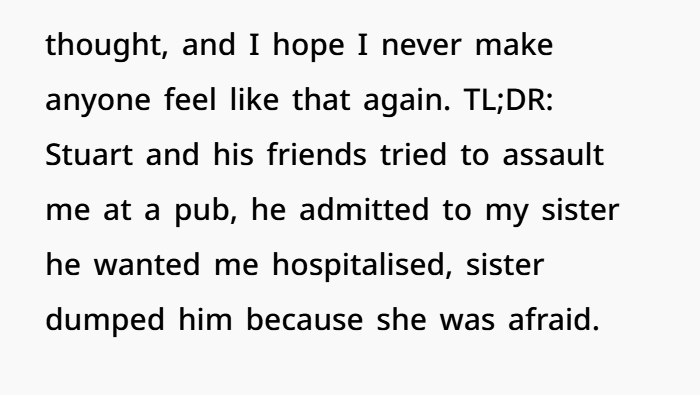
Some time later, both men happened to meet at a local pub while they were out with friends. An argument started, and the situation quickly became tense. According to the story, several people became involved before others stepped in to stop the confrontation.
After the incident, Stuart told his girlfriend that her brother had started everything. She believed him at first and called her brother, angry about what she had heard.
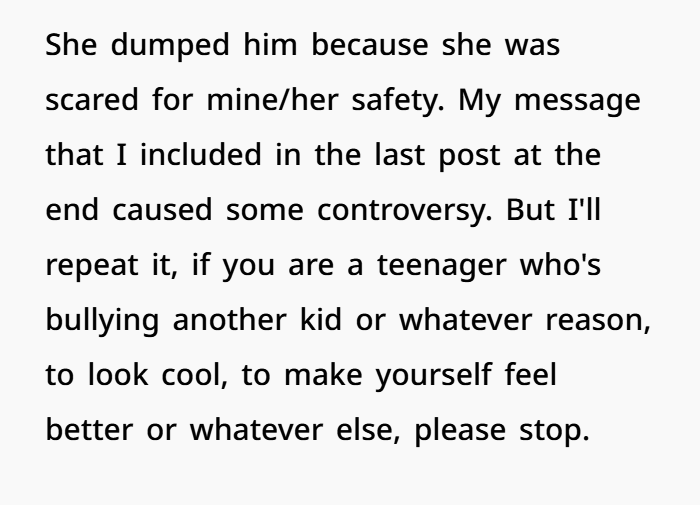
However, after speaking with her brother, other people who were there, and later hearing Stuart admit that he had not been truthful about the situation, she changed her mind. She decided to end the relationship because honesty and trust were important to her.
The story raises an interesting question. Should people forgive someone who apologizes many years after bullying them?
There is no simple answer.
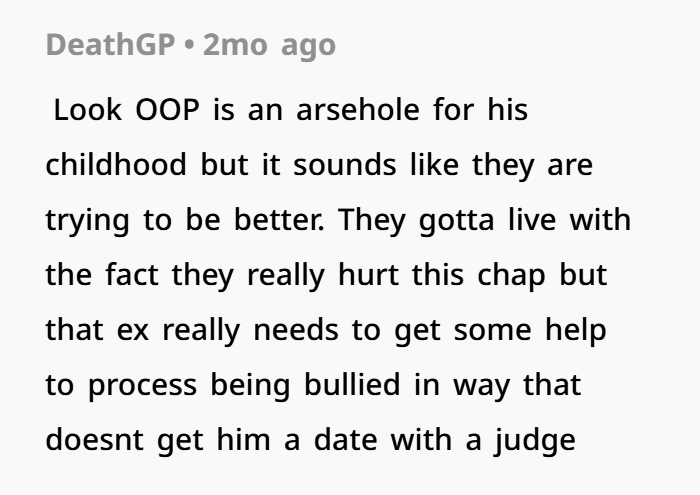
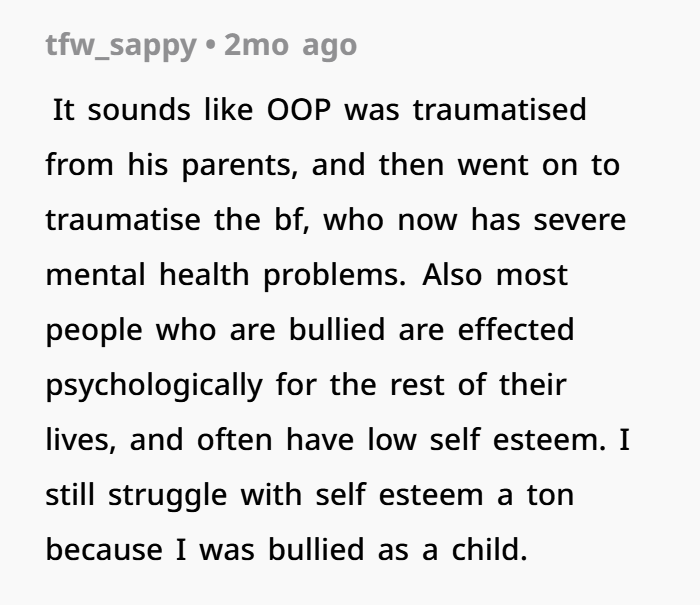
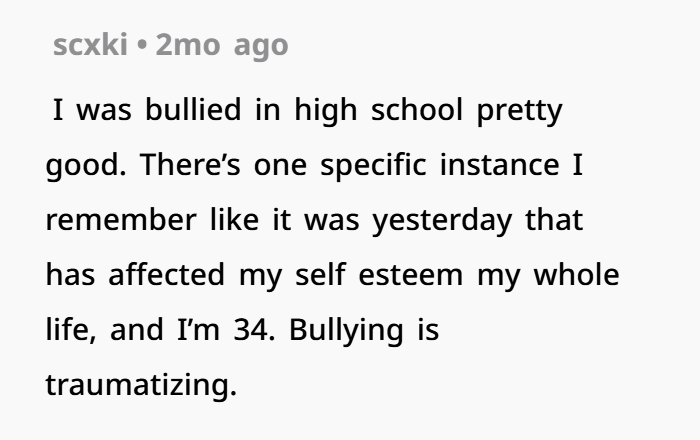
Experts say bullying can have long-term effects on mental health and emotional well-being. Some people experience anxiety, low confidence, or stress long after school ends. Because of this, hearing from a former bully can bring back difficult memories.
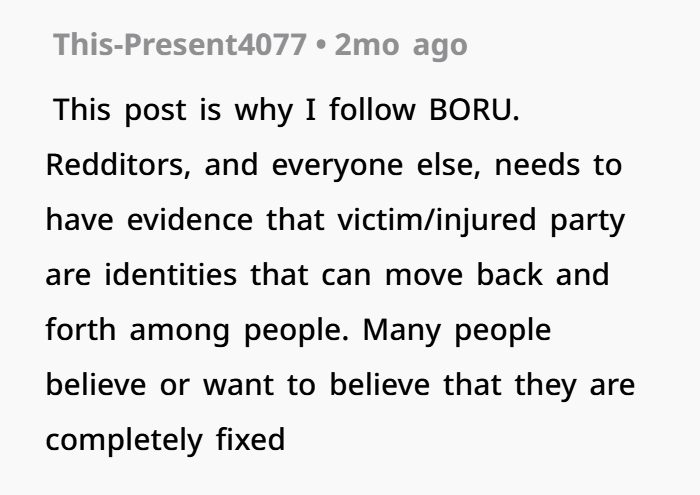
At the same time, people can grow and change. Taking responsibility, learning from past mistakes, and working on personal development are all positive steps. A genuine apology is important, but forgiveness is always a personal choice.
This situation also shows why healthy communication, family relationships, and emotional maturity matter. Whether at school, at work, or in everyday life, respect and honesty help build stronger relationships.
Professionals who work in counseling, education, mental health, workplace communication, conflict resolution, and even legal services often encourage people to handle disagreements with honesty and respect instead of anger.
In the end, both people had their own feelings about what happened. One wanted to apologize for the past, while the other was not ready to forgive. Both responses are understandable, and they remind us that rebuilding trust takes time.
What do you think? If someone apologized to you years after treating you badly, would you accept the apology, or would you choose to move forward without forgiving them? Share your thoughts in the comments.