I Want to Stay at My Mom’s While My In-Laws Visit Because My House Feels Like Too Much — Am I Wrong?


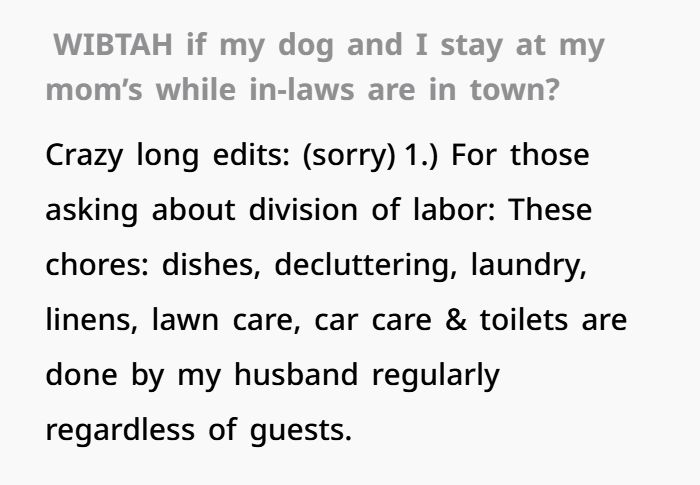
Welcoming family into your home can create special memories, but hosting a large group can also bring pressure. One woman recently shared her struggle about whether she should leave her home temporarily while her husband’s family visits for a wedding.
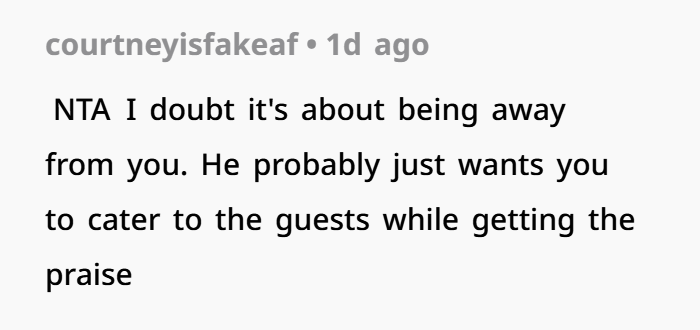
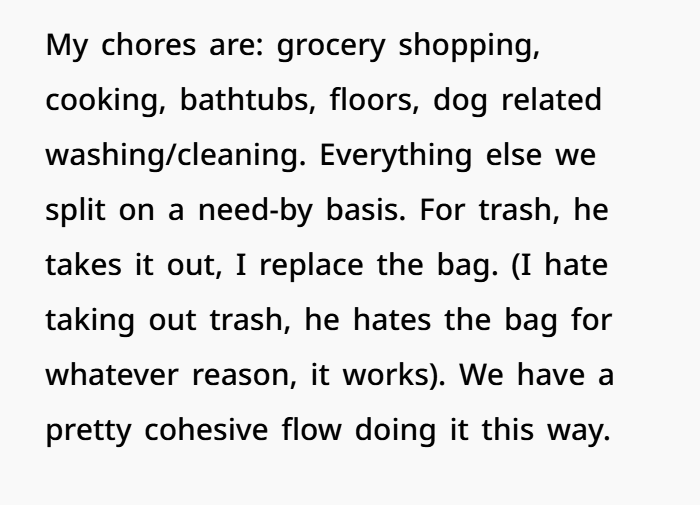
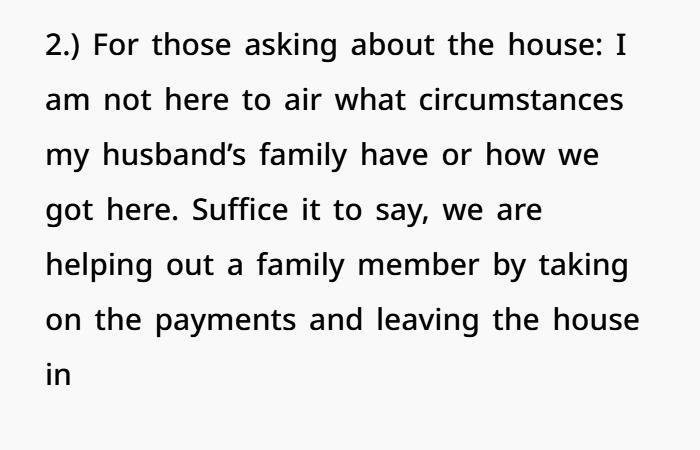
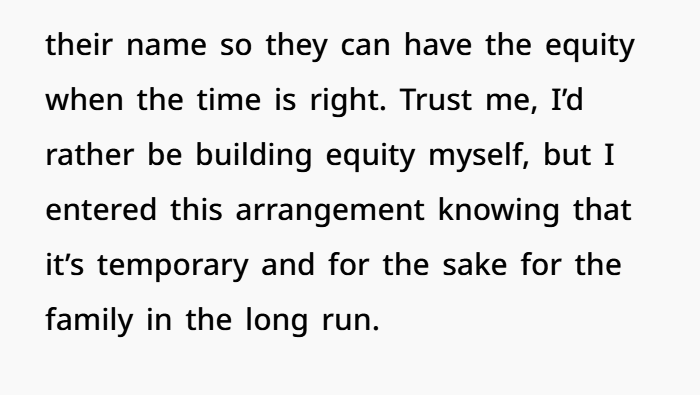
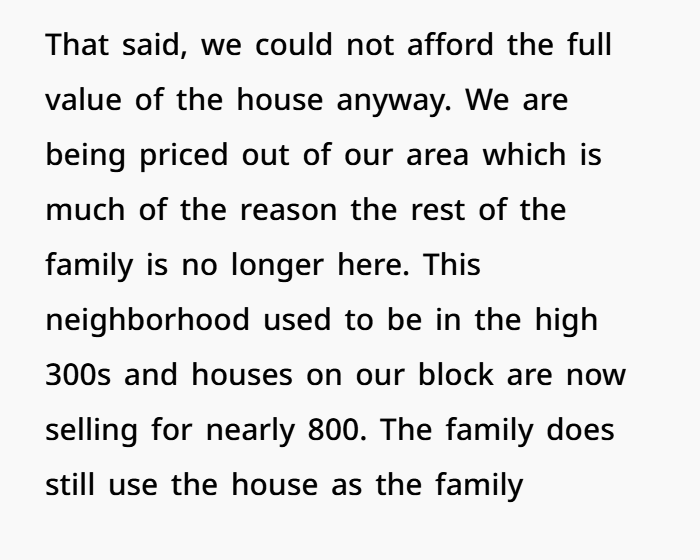
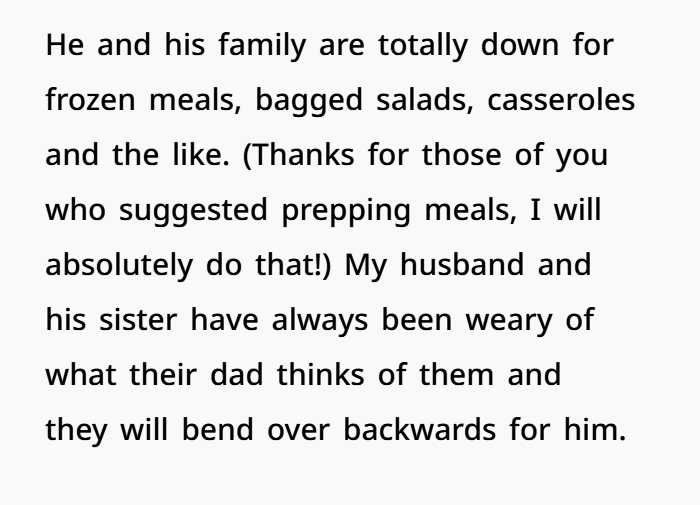
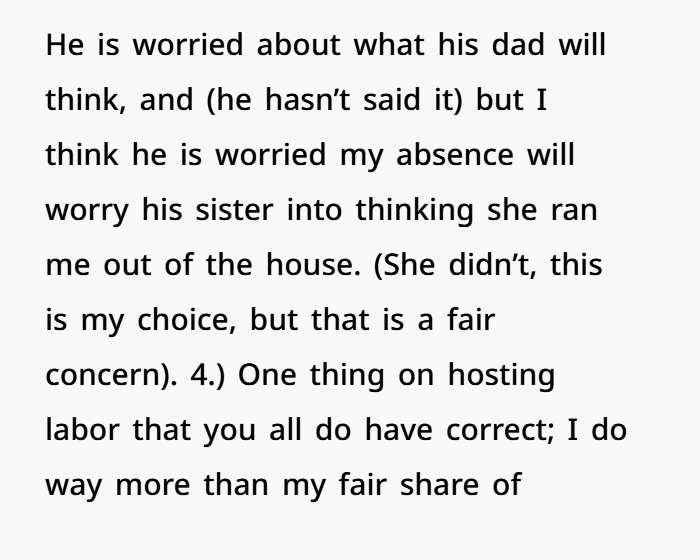
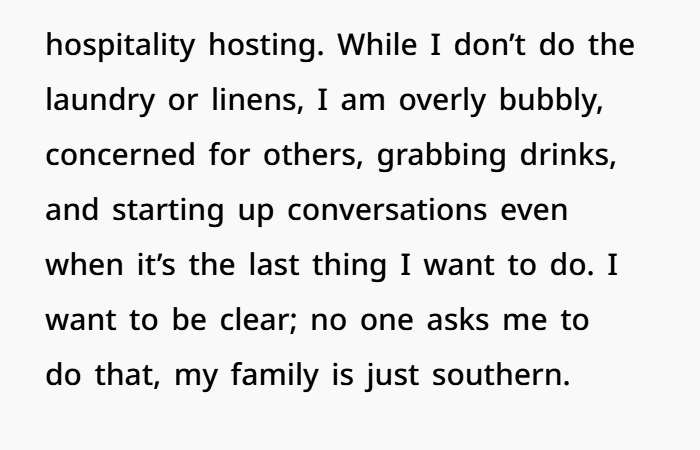
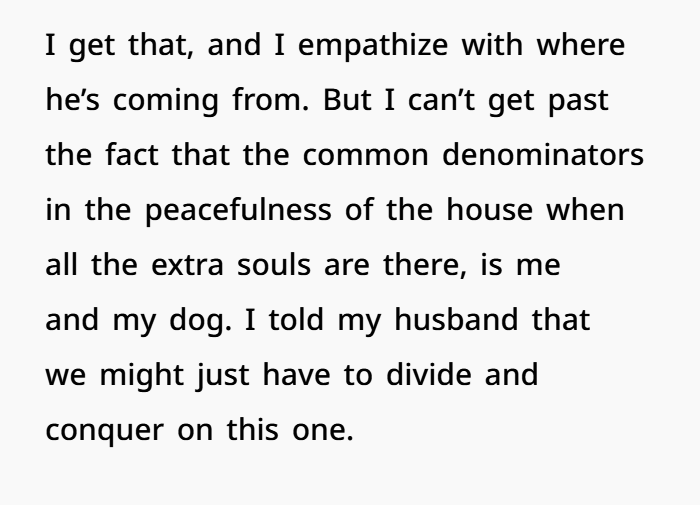
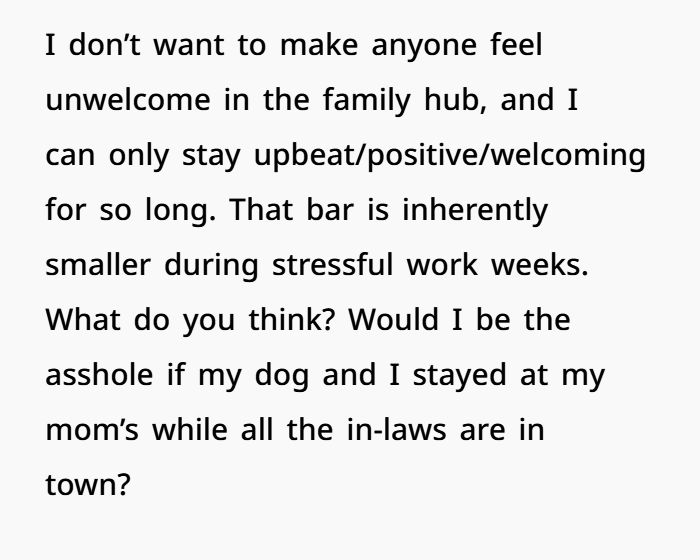
Because many family members no longer live nearby, their house has become the place where everyone gathers. She understands why her husband’s family needs a place to stay and wants to support them. However, she knows that being the main host can be exhausting, especially when she already has a demanding work schedule.
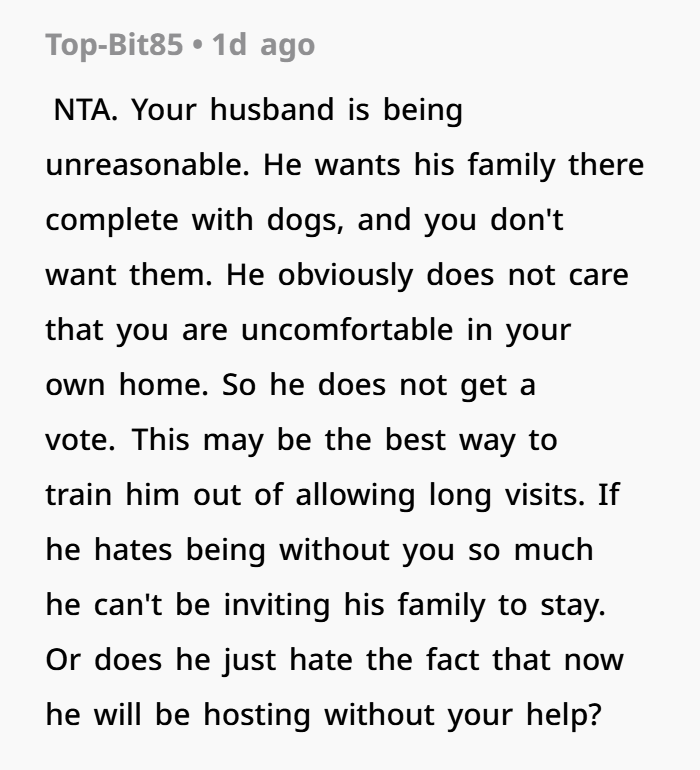
The situation became more challenging because some guests were bringing pets. The couple already has a very active dog, and they have experienced problems with keeping doors secure in the past. Another visiting dog had a history of difficult behavior, which made her concerned about keeping everyone safe and comfortable.
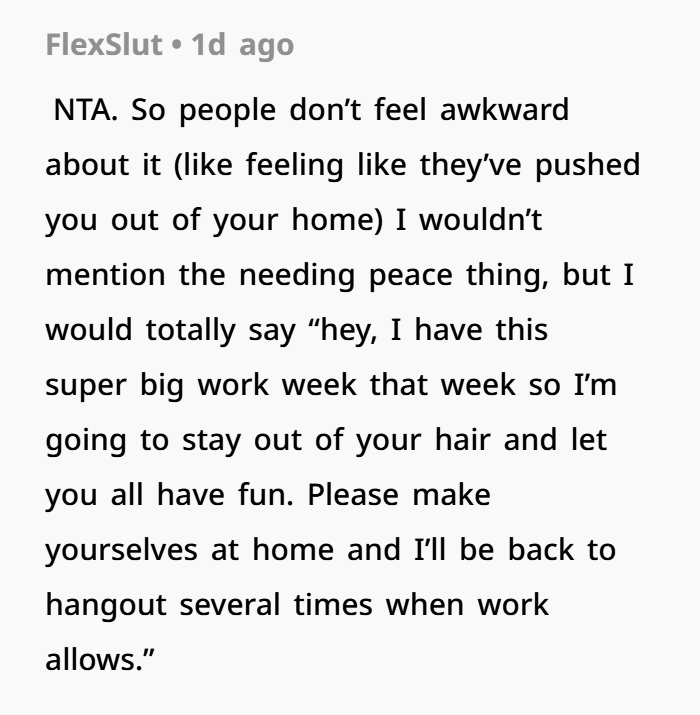
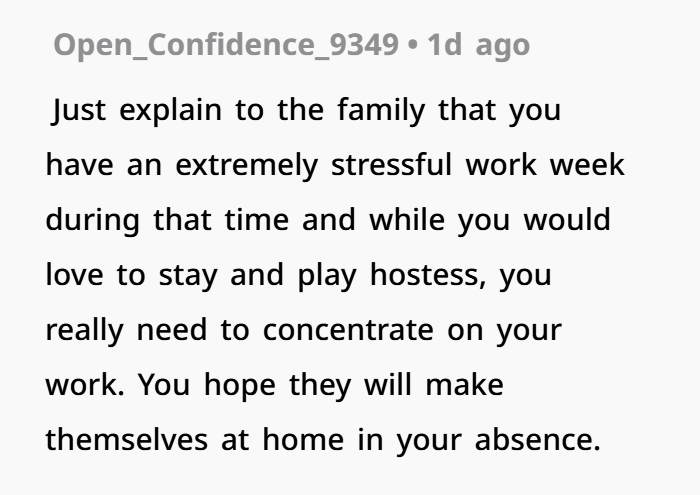
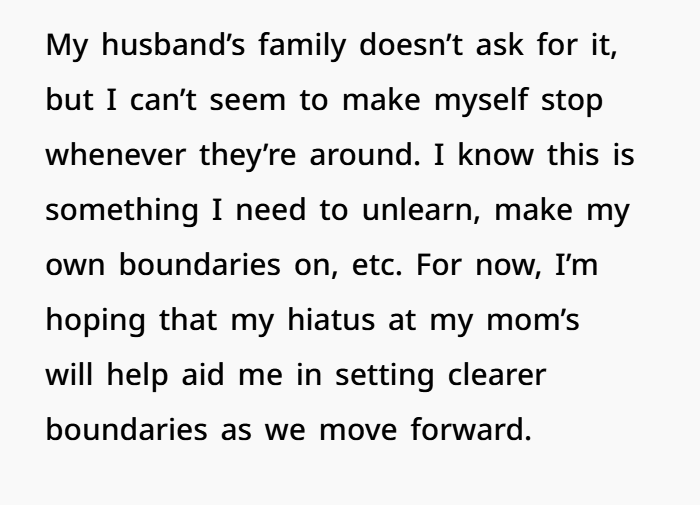
To protect her peace and reduce stress, she considered staying with her mother until the family visit was over. Her husband felt hurt because he wanted her support during the gathering. The situation showed that relationships often require honest conversations about boundaries, responsibilities, and personal needs.


Why Setting Family Boundaries Does Not Mean You Do Not Care
Family gatherings can be wonderful.
They bring people together, create memories, and give everyone a chance to spend time with loved ones.
But family visits can also create stress.
Someone has to prepare the home.
Someone has to plan meals.
Someone has to make sure everyone feels welcome.
In many families, one person quietly takes on most of these responsibilities.
Over time, that person can feel tired and overwhelmed.
This story is not about someone who does not care about family.
It is about someone learning that caring for others does not mean ignoring their own needs.
Caring for Family Does Not Mean Doing Everything
Many people believe being a good family member means always saying yes.
They help with everything.
They try to make everyone comfortable.
They worry about whether guests are happy.
But support does not mean one person has to carry all the responsibility.
Healthy relationships need balance.
A person can love their family and still need personal space.
They can enjoy spending time together and still need rest.
This is where family boundaries become important.
What Are Healthy Boundaries?
A boundary is a limit someone creates to protect their physical, emotional, or mental wellbeing.
Boundaries are not about being rude.
They are not about rejecting people.
They simply help people understand what someone can realistically handle.
Examples of healthy family boundaries include:
- “I can host for a few days, but not an entire week.”
- “I can help with meals, but I cannot organize everything.”
- “I enjoy family visits, but I need quiet time afterward.”
These limits help relationships stay healthy.
When people understand each other’s needs, there is usually less stress and fewer misunderstandings.
The Hidden Stress of Hosting
Many people think hosting only means cleaning the house and preparing food.
But hosting also includes emotional work.
This is sometimes called emotional labor.
Emotional labor means the invisible effort involved in making others feel comfortable.
It can include:
- Remembering what guests like
- Starting conversations
- Making sure nobody feels left out
- Solving problems
- Keeping the mood positive
These tasks may not always be noticed.
Someone may say:
“We will help with cleaning.”
“We will bring food.”
“We do not expect you to do everything.”
But the host may still feel responsible for everyone having a good experience.
Why Some People Feel Responsible for Everyone’s Happiness
Some people naturally become caretakers.
They enjoy helping others, but they may also feel pressure to make everything perfect.
This can lead to people-pleasing behavior.
A person may ignore their own needs because they do not want to disappoint anyone.
At first, this may feel like kindness.
But over time, it can create stress and frustration.
A person may think:
“I am doing everything for everyone, but nobody notices.”
This can lead to resentment.
Communication Can Prevent Family Conflict
Many problems become easier when people talk before stress builds.
Couples and families can discuss expectations before a big event.
Helpful questions include:
- Who will prepare meals?
- Who will handle extra responsibilities?
- How long will guests stay?
- When can everyone have quiet time?
- What should happen if someone feels overwhelmed?
Clear communication helps everyone understand their role.
It also prevents one person from feeling responsible for everything.
Pets Can Add Extra Stress During Family Visits
Pets can make family gatherings more complicated.
Dogs have different personalities.
Some dogs are calm around visitors.
Others may feel nervous, scared, or overwhelmed.
A dog that reacts strongly to people or other animals is not necessarily a bad dog.
Sometimes dogs react because of fear, stress, or anxiety.
During busy family visits, pet owners may need extra planning.
Helpful steps can include:
- Creating a quiet space for pets
- Supervising interactions
- Setting clear rules
- Keeping doors and exits secure
These steps help protect both pets and guests.
Understanding Different Needs in a Relationship
Sometimes couples disagree because they have different needs.
One partner may want to spend every moment with family during an important event.
The other partner may feel stressed and need more personal space.
Neither person is automatically wrong.
The goal is not for one person to win.
The goal is finding a solution that respects both people.
A compromise could include:
- Spending some time together and some time apart
- Sharing hosting responsibilities
- Making simpler plans
- Reducing pressure for everything to be perfect
Good relationships are built through teamwork.
Family Visits Do Not Need to Be Perfect
Many hosts put too much pressure on themselves.
They want the perfect home.
The perfect meals.
The perfect experience.
But most family members remember the conversations and memories more than small details.
A relaxed gathering is often better than a perfect but stressful one.
Lowering expectations can create a healthier family environment.
Different Families Have Different Traditions
When people get married or build new families, they often bring different traditions with them.
One family may love frequent visits and large gatherings.
Another family may value quiet time and privacy.
Neither way is wrong.
The important thing is understanding and respecting differences.
A person needing space does not mean they dislike their partner’s family.
It may simply mean they understand what they need to stay patient and positive.
Asking for Space Can Be a Loving Choice
Sometimes the healthiest thing someone can say is:
“I need a break.”
Taking time to rest does not mean someone does not care.
In fact, knowing your limits can help you show up as a better partner and family member.
A short break is often better than becoming exhausted, frustrated, and unhappy.
The Bigger Lesson About Family Boundaries
Family relationships are strongest when people can be honest about their needs.
Being supportive does not mean giving up your own peace of mind.
Setting boundaries does not mean you love your family less.
It means you are creating a healthier relationship where everyone’s needs matter.
In the end, the most important part of family gatherings is not a perfect house or perfect plans.
It is spending time together while making sure everyone feels respected and cared for.
See The Comments Below