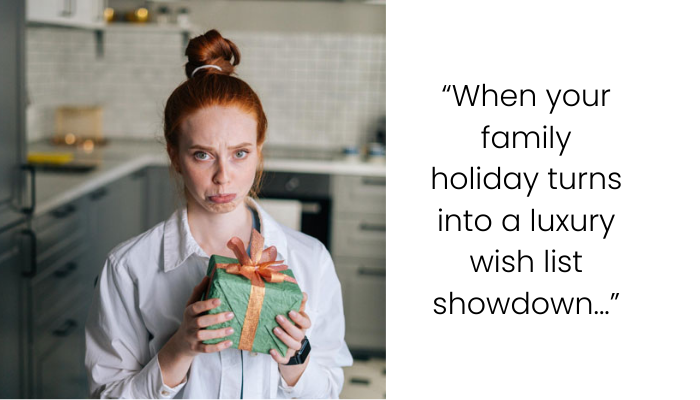
Entitled Gifting or Smart Wishlist? My SIL’s Pricey Christmas Demands Sparked Family Drama
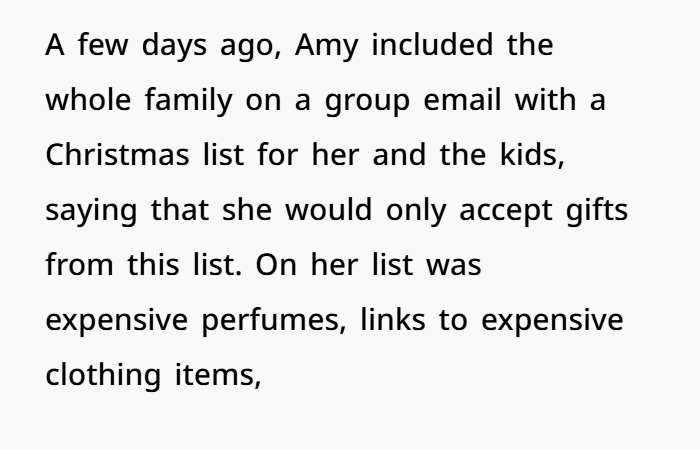
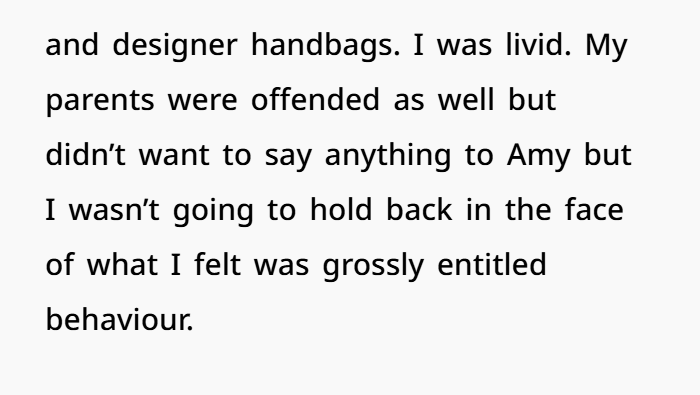
In this lively family drama, a 30-year-old woman and her husband prepared to host Christmas with their extended family—only to be met with a rather extravagant surprise. Her sister-in-law, Amy, sent out a group email to the entire family with a detailed Christmas gift list that included luxury perfumes, designer handbags, and pricey clothing. Not just suggestions, mind you—but a strict directive: only gifts from this list would be “accepted.”
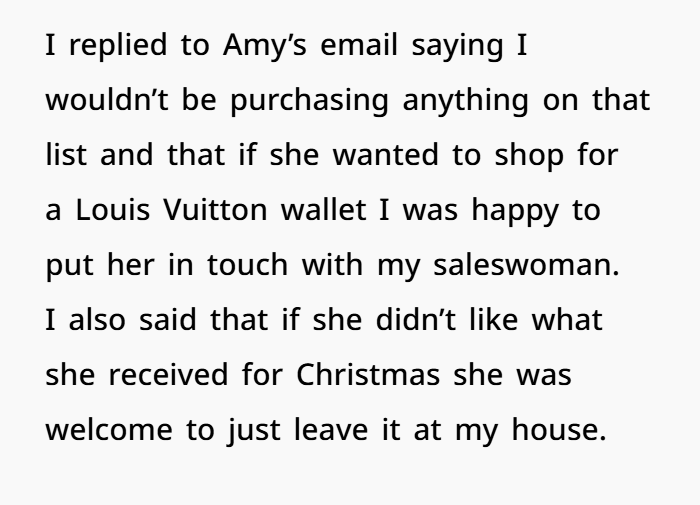
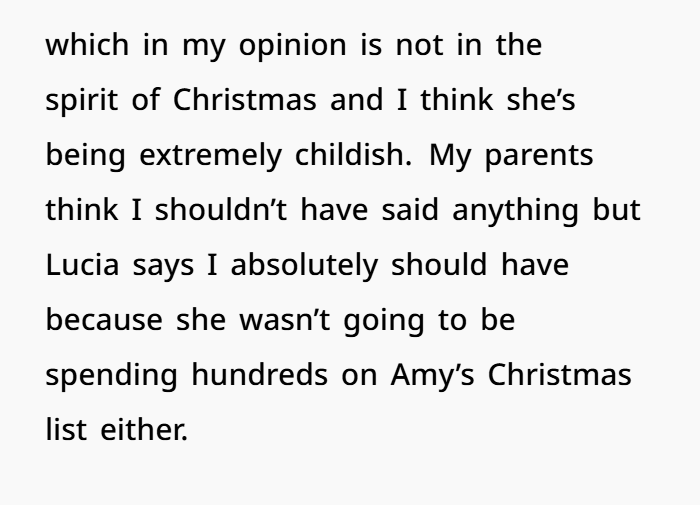
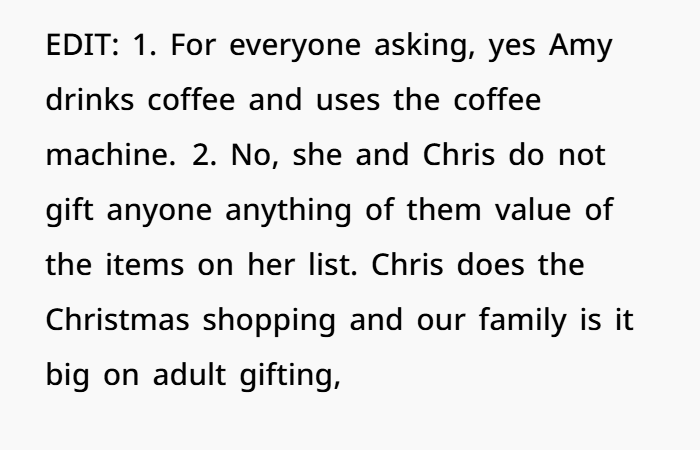
Now, Amy has a track record of being hard to please. The previous year, she made it crystal clear that a joint gift (a high-end coffee machine, no less) didn’t meet her standards. No “thank you.” Just passive-aggressive comments about how it wasn’t for her. This year’s stunt? It felt like the final straw. So, the OP clapped back. She told Amy point-blank that she wouldn’t be purchasing anything on that list and even cheekily offered to connect her with a Louis Vuitton sales associate if she was that eager.
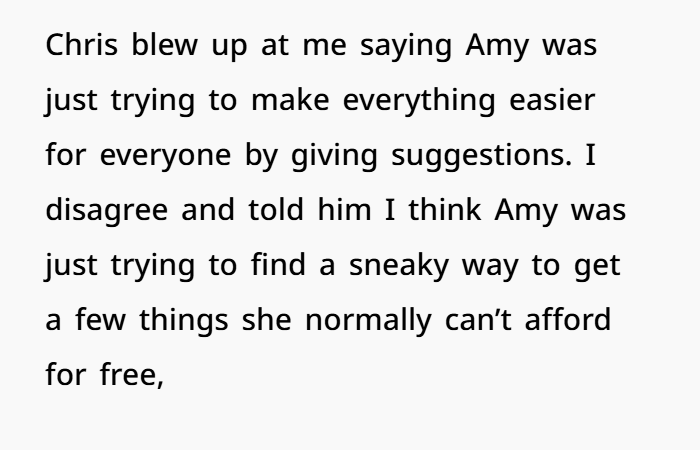
Naturally, this didn’t go over smoothly. Amy’s husband (the OP’s brother, Chris) lashed out, calling the list an attempt to “make things easier.” But was it really? Or was it just entitlement dressed in designer labels? The family remains divided, and the OP is left wondering—did she go too far, or was she simply the first person brave enough to call it like it is?
When people don’t appreciate the presents they are given, it can hurt the feelings of the gift-giver

The poster explained that her sister-in-law, Amy, always complained about the gifts she was given and even made faces when she got things she didn’t like
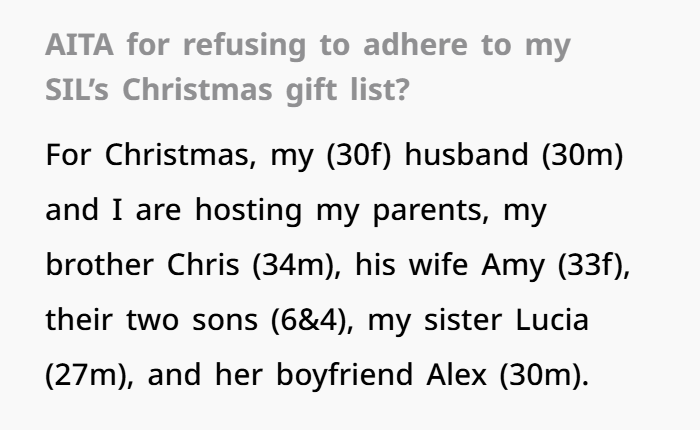
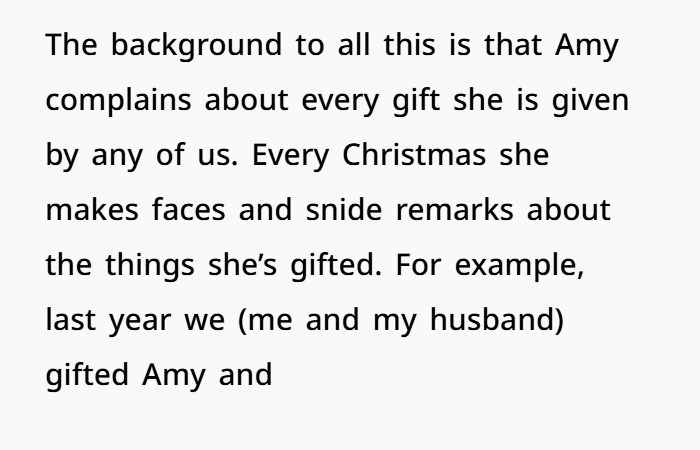
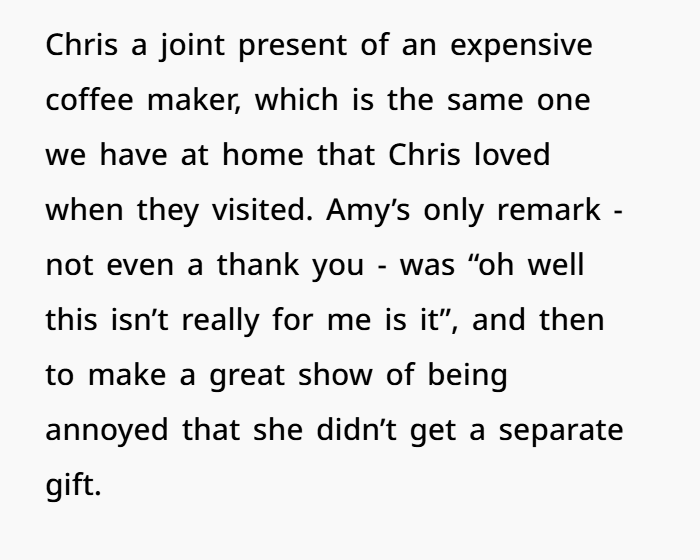

So let’s unpack this mess, shall we?
This story isn’t just about one woman’s expensive taste—it opens the door to a bigger conversation about holiday gift expectations, family boundaries, financial inequality, and, yes, a little thing called gift etiquette.
💸 The Psychology Behind Holiday Gifting
First off, the holidays are already stressful. Add in family dynamics and money issues? Boom. Ticking time bomb.
According to a survey by the National Retail Federation, Americans planned to spend an average of $998 on holiday gifts in 2023. But here’s the thing: that number isn’t split evenly. Families vary wildly in what they can afford. So when someone like Amy rolls out a gift list full of luxury high-ticket items, it can feel…well, more like a demand than a helpful suggestion.
Gift-giving, especially within families, is traditionally about thoughtfulness—not dollar signs. A gift is supposed to reflect your relationship, your shared memories, or even just a funny inside joke. Turning it into a transaction with designer links? That can feel cold, commercial, and—dare we say—manipulative.

👜 Gift Lists vs. Demands: Where’s the Line?
Now to be fair, there’s nothing inherently wrong with making a wish list. Plenty of people do it to avoid getting random stuff they don’t need (lookin’ at you, ugly Christmas socks). But there’s a line between “Hey, here are some ideas!” and “Buy me this $400 bag or don’t bother.”
It all comes down to tone and expectation. Amy’s group email reportedly came across as a strict order, with zero room for alternatives. That sets the tone for awkwardness—and it puts pressure on family members who might feel guilted into overspending.
If she had said, “Here’s a list of some things I’d love, but I appreciate anything,” this post probably wouldn’t exist.
👪 The Entitlement Trap: When Gifting Becomes a One-Way Street
Let’s talk reciprocity.
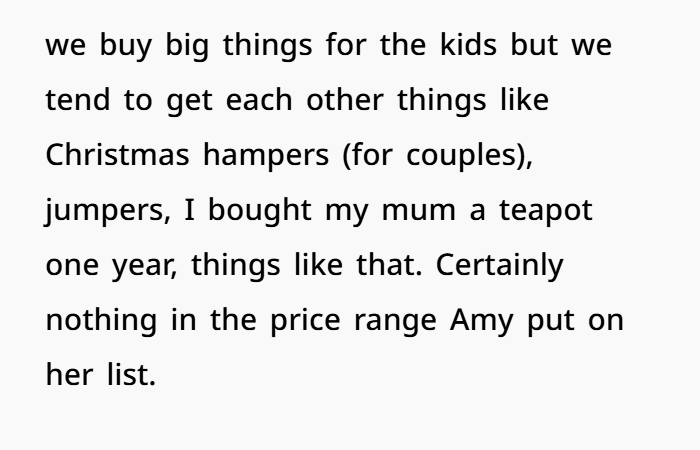
A big red flag in this story? Amy doesn’t give gifts of equal value to what she expects. Chris apparently does all the shopping, and their gifts are not in the same price range as the ones on her list. That’s a major no-no in the unspoken rules of family gifting.
When you demand Chanel, but give Dollar Tree, people notice. It creates resentment, especially if the family already has a more modest gifting culture—like hampers, teapots, or cozy jumpers.
It also skews the balance of generosity. Suddenly, gifting isn’t about kindness or connection. It’s about status and what you can squeeze out of others. And that… just feels icky.
🧠 Family Boundaries & Calling Out Bad Behavior
This story also taps into another hot topic: family boundaries. Just because someone’s “family” doesn’t mean they get a free pass to act entitled.
Setting boundaries during the holidays can be tricky. You don’t want to rock the boat. But sometimes, someone has to say, “Hey, this isn’t okay.” And in this case, the OP did just that.
Was the email snarky? Yeah, a little. But sometimes, snark is what happens when you’ve been tolerating passive-aggressive comments for years. It’s not ideal, but it’s real. And let’s be honest—if Amy dished out the sass last Christmas, she should expect a little back.
💡 What Could’ve Been Done Differently?

Okay, let’s flip the script. If you’re ever in a situation like this, here are a few ways to handle it better:
- Make a general wishlist – Not a list of luxury goods. Include various price points and add a disclaimer like “I appreciate anything!”
- Talk to your partner – If your spouse is more reasonable, have them manage the communication.
- Create a family gift budget – Agree ahead of time: “Let’s all spend $50 max per adult.”
- Be open to honest feedback – If someone says your list is over the top, don’t bite their head off.
And for people like the OP? It’s okay to say “no.” Boundaries aren’t mean. They’re healthy.
⚖️ Legal + Social Context: Gift-Giving, Expectations & Precedents
Believe it or not, there’s been research and even legal commentary on gift expectations. In contract law, for instance, gifts are not enforceable promises unless there’s evidence of a contract. So even if Amy says “I only accept X,” that doesn’t make anyone obligated to comply.
Socially, experts like etiquette guru Emily Post (and her foundation) have long stressed that wishlists should be treated as guidance, not instructions. The true spirit of gifting is to show love, not satisfy a shopping spree.
Also worth noting: studies have shown that people appreciate “thoughtful” gifts more than expensive ones. So Amy’s obsession with labels may actually backfire emotionally, even if she gets what she wants.
Folks were annoyed by Amy’s entitlement and told the poster not to give in to her demands
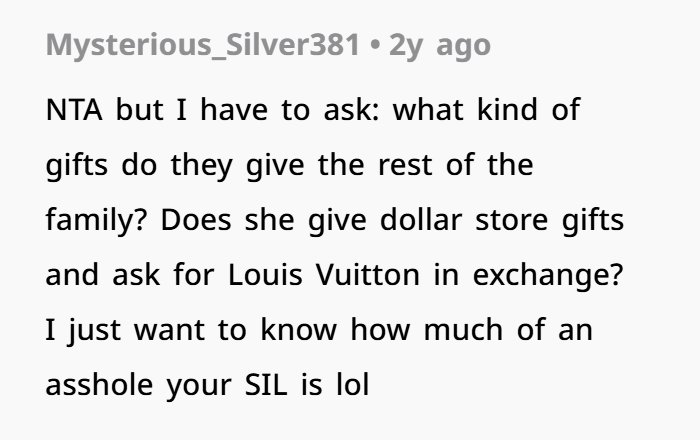
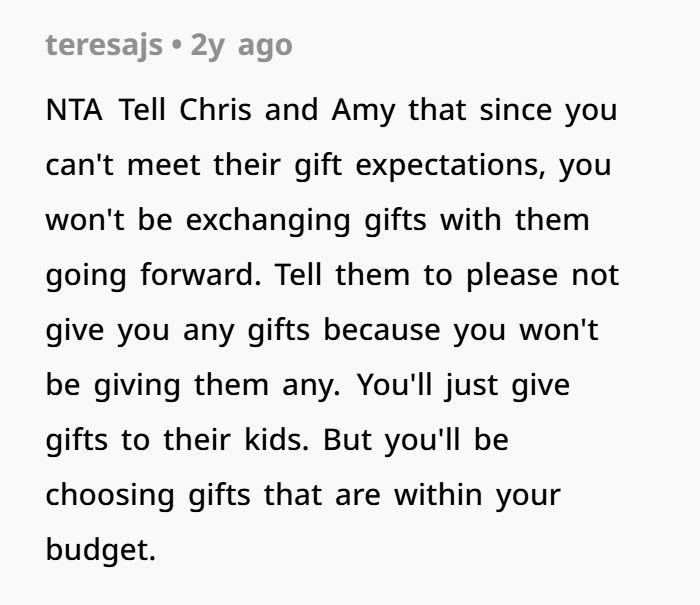
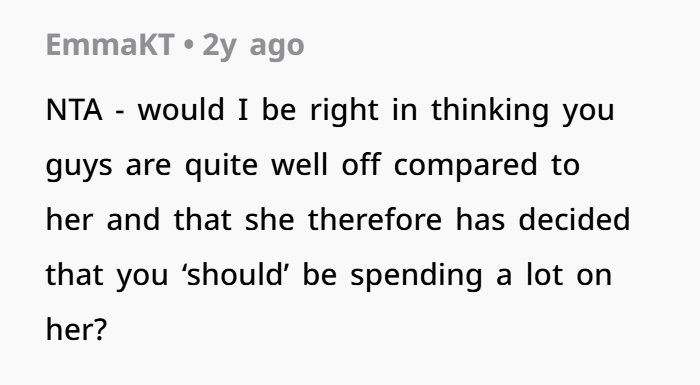
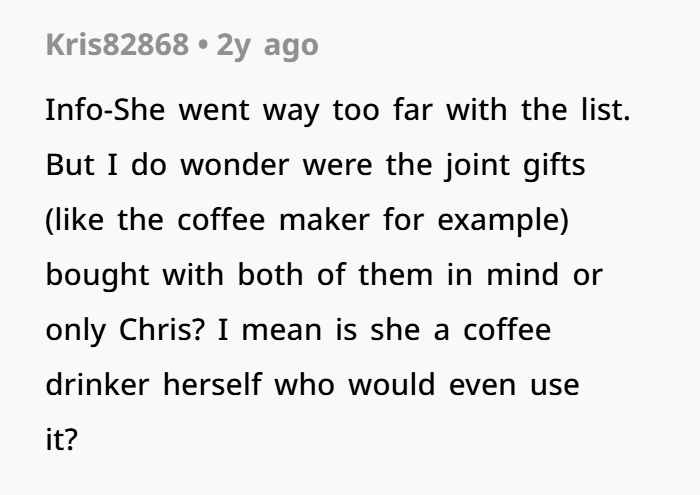
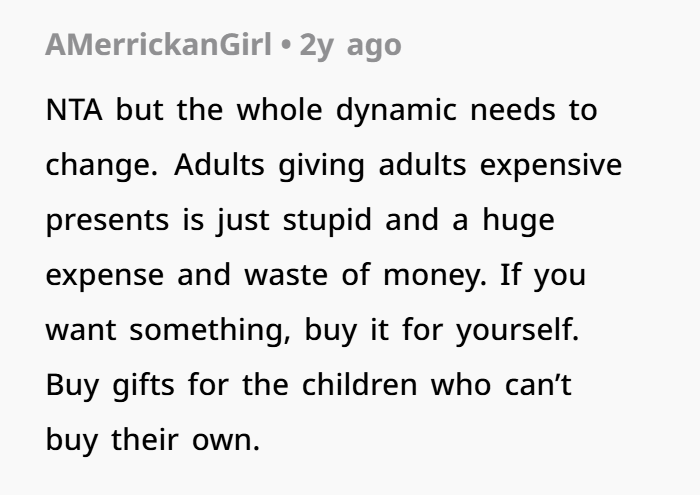
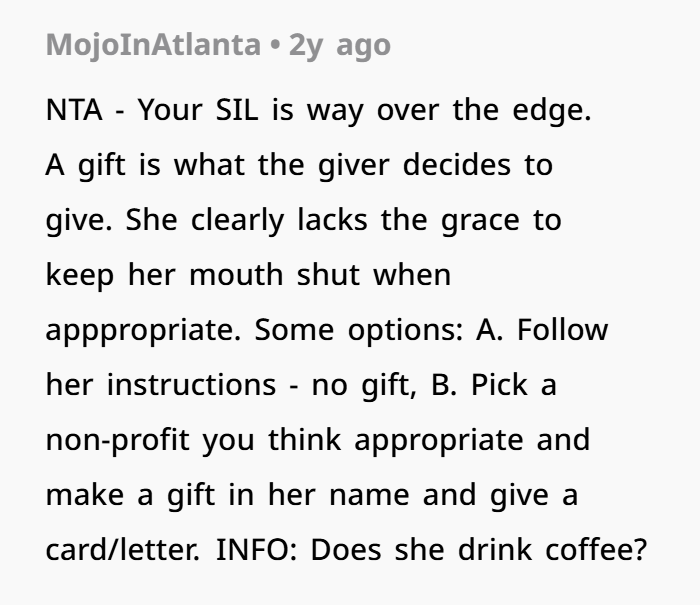
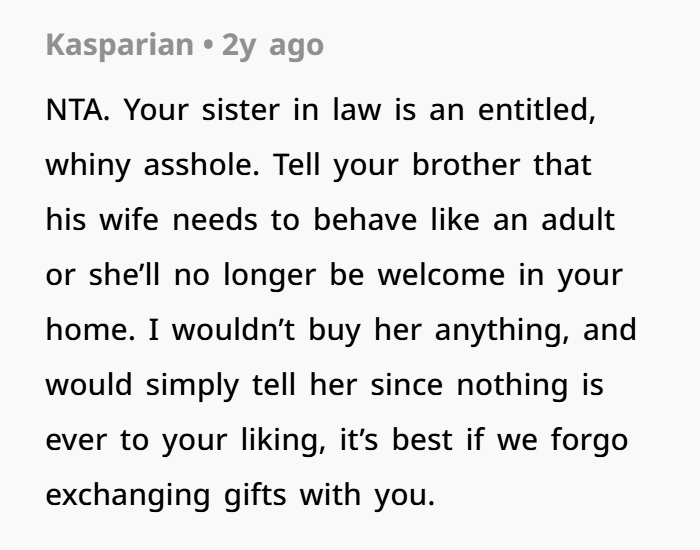
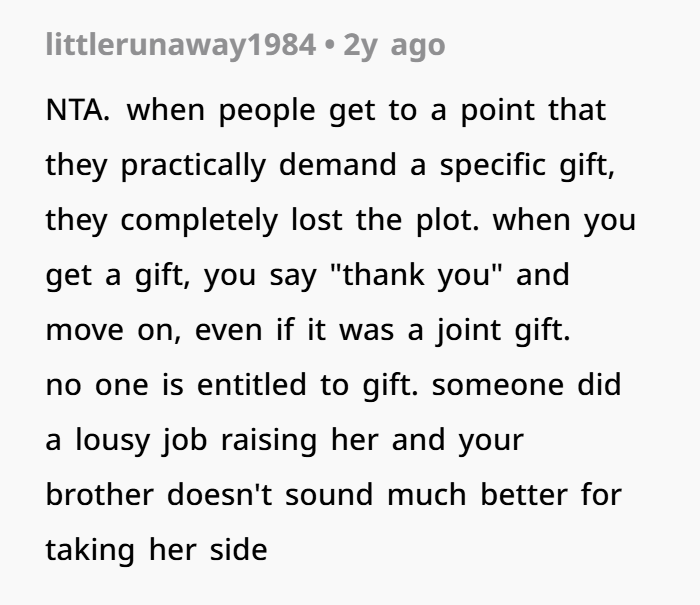
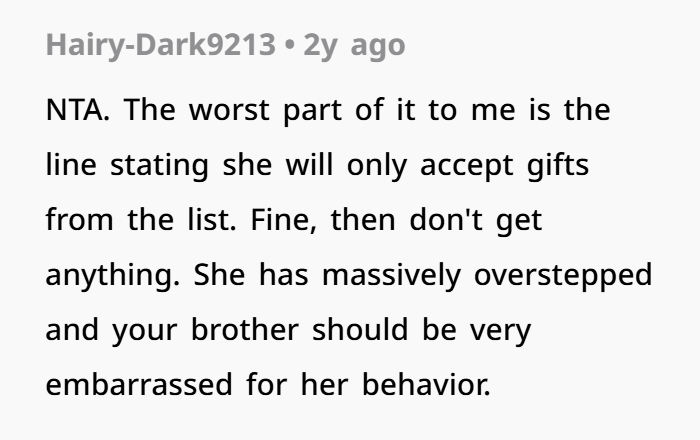
Nope, OP, you’re not the a-hole here. You set a clear, respectful boundary and called out a behavior that was honestly rubbing the whole family the wrong way.
Amy might see herself as just being “efficient,” but there’s a difference between efficiency and entitlement. And Christmas, of all times, should be about connection, not consumption.
Sometimes, the best gift you can give someone… is a reality check.