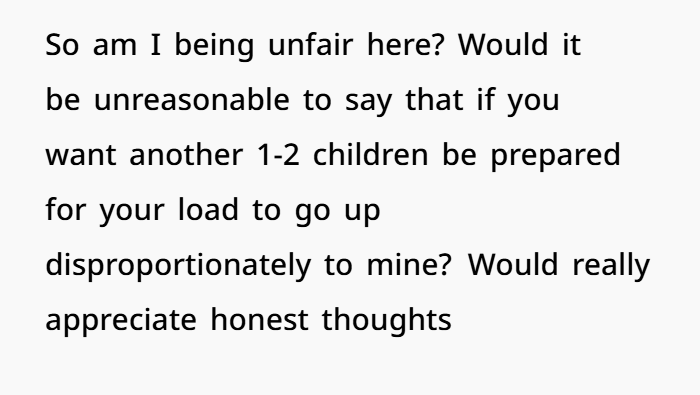
Is It Unfair to Want My Wife to Do More Childcare Tasks If She Wants a Bigger Family?

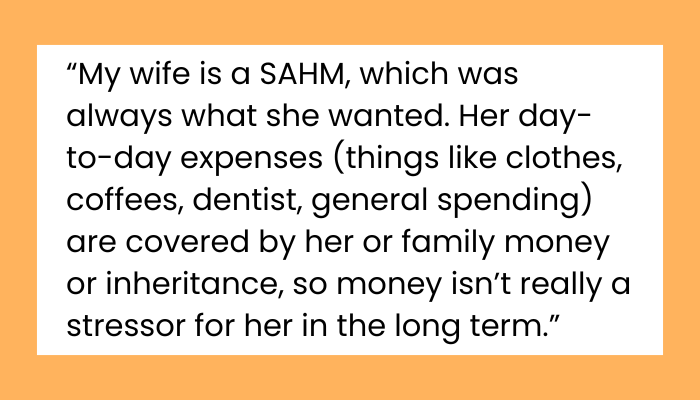
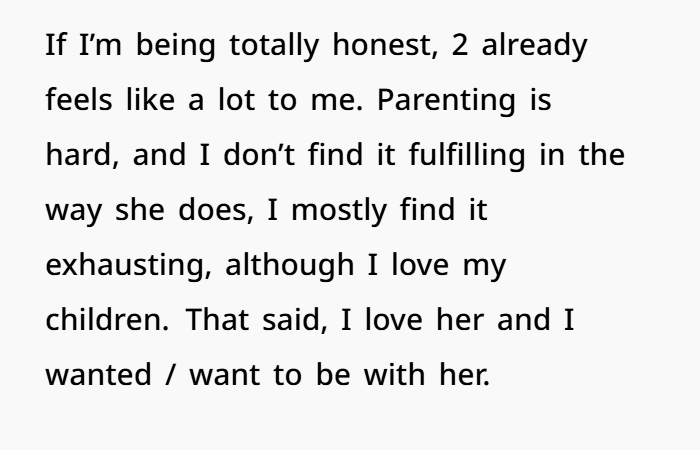
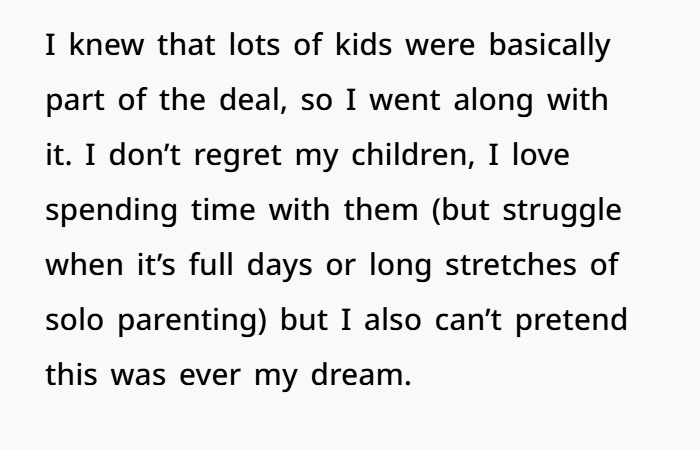
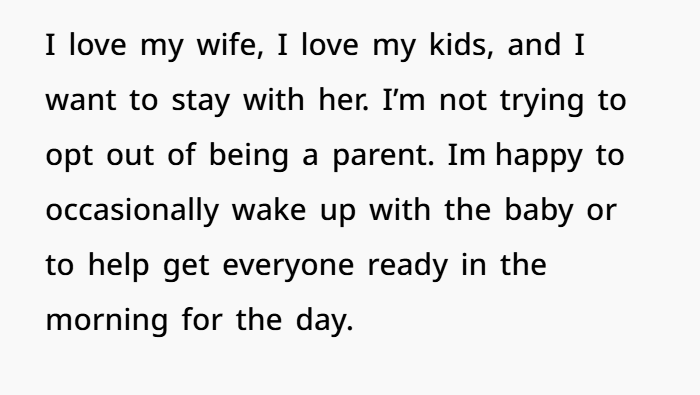
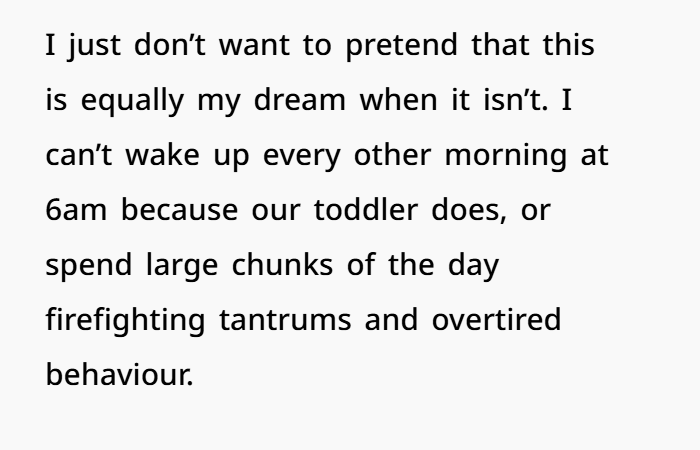
Parenting can be challenging, especially when partners have different ideas about growing their family. In this story, a father of two children shares his struggles with the possibility of having more kids. He feels tired, overwhelmed, and unsure if he can handle the extra responsibilities.
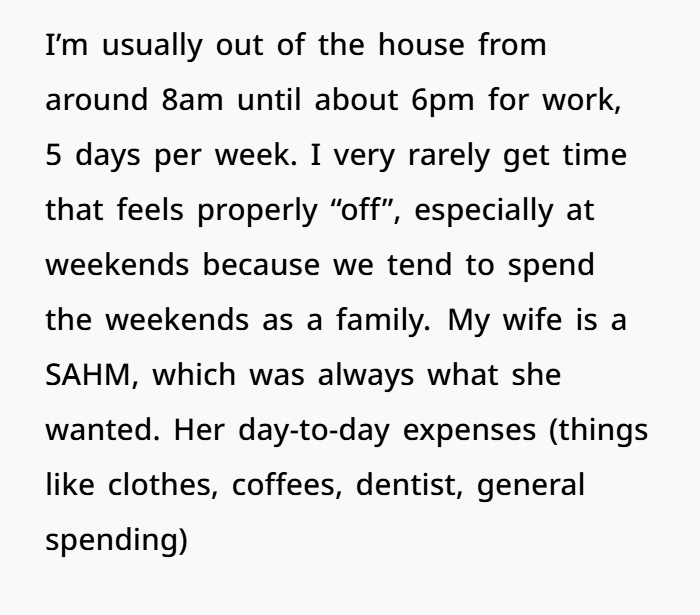
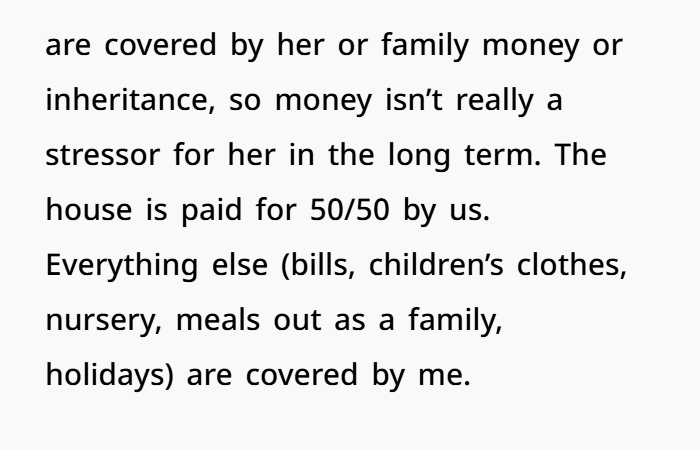
He works a full-time job and feels a lot of pressure to support his family financially. His wife stays home with their children, which is also a demanding role that requires time, energy, and patience. Both parents have important responsibilities, but the father feels like he is already reaching his limit emotionally and physically.
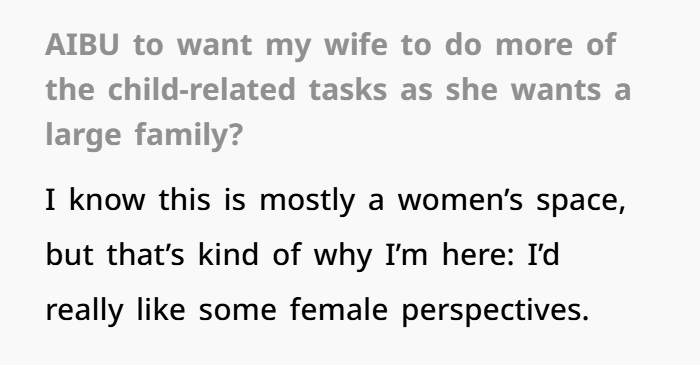
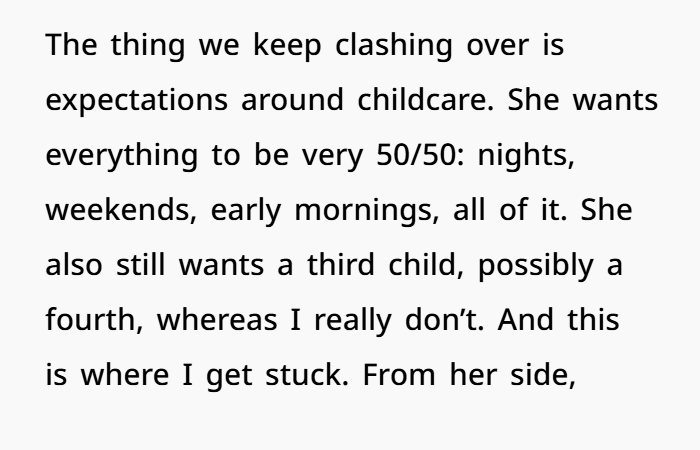
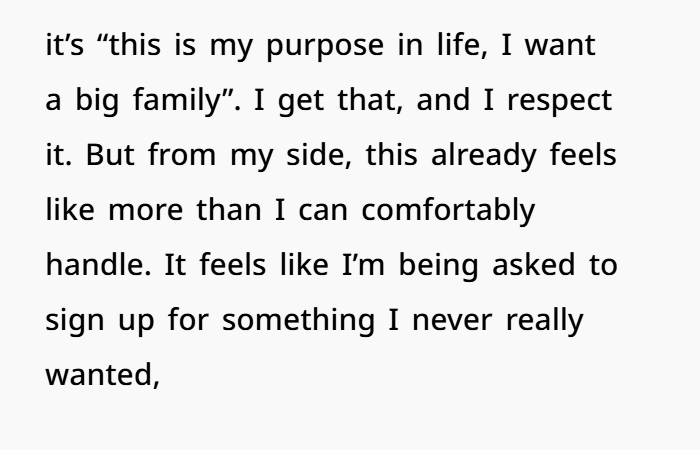
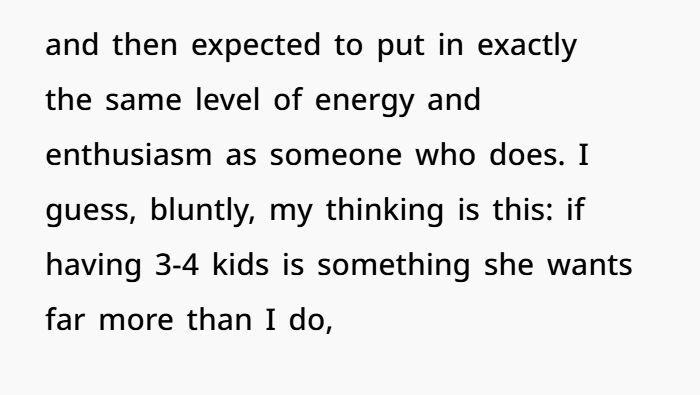
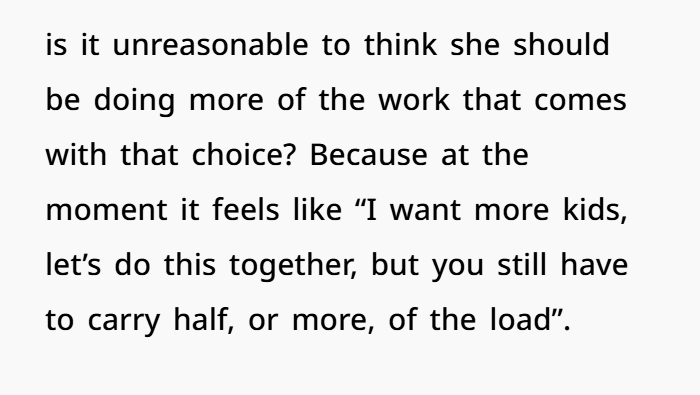
His wife dreams of having a bigger family, but he does not feel the same way. He worries that adding more children would create more stress and make it harder for both of them to manage daily life. He is now questioning whether it is fair to ask his wife to handle more childcare responsibilities when expanding the family is mainly her wish.
This situation highlights important topics like parental burnout, relationship communication, family planning, and creating a healthy balance at home. When couples have different goals about children, it is important to have honest conversations and consider each person’s feelings, needs, and well-being. A strong relationship requires teamwork, understanding, and respect for both partners.
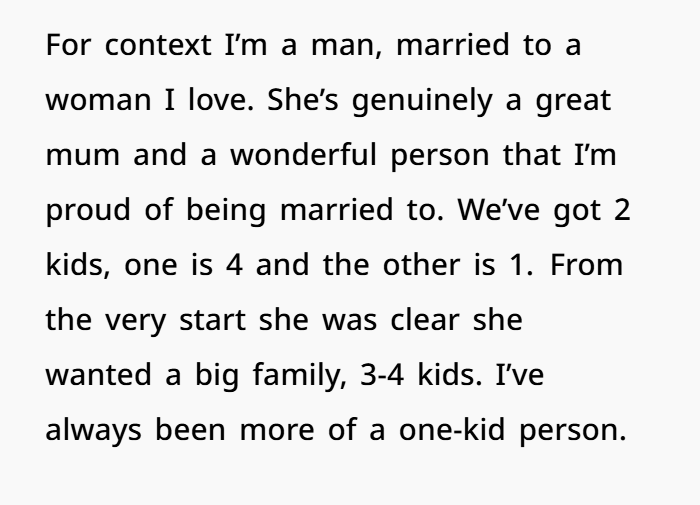
The poster explained that his wife always wanted a big family with 3-4 children, and didn’t want more than one, but went along with her ideas as she found it fulfilling
When Couples Disagree About Having More Kids: Balancing Family Goals, Parenting, and Burnout
Marriage often means building a life together, but sometimes couples discover that they have different ideas about what that life should look like.
One common challenge is deciding how many children to have.
For some people, a big family has always been their dream. For others, a smaller family feels more comfortable and realistic.
When partners have different family goals, the conversation can become emotional. It is not only about having another baby. It is also about time, energy, finances, parenting responsibilities, and mental health.
When One Partner Wants More Children
Some people dream of having a large family. They enjoy parenting and feel that raising children gives their life a strong sense of purpose.
Other people love their children but feel that their current family size already requires everything they have.
Neither feeling makes someone a bad parent.
Parenting is a major responsibility. It requires:
- Time
- Patience
- Emotional energy
- Financial planning
- Daily care
Before having more children, couples need to honestly discuss what that change would mean for their everyday life.
Parenting Burnout Is Real
Many parents experience parental burnout.
This can happen when someone feels emotionally and physically exhausted from constant responsibilities.
A parent may feel overwhelmed by:
- Work demands
- Childcare duties
- Household tasks
- Lack of personal time
- Feeling like they never fully rest
Someone can love their children deeply and still feel exhausted.
Enjoying being a parent and feeling tired from parenting can exist at the same time.
The Challenge of Balancing Work and Family Life
In many households, one partner may work full-time while the other stays home with the children.
Both roles require effort.
A full-time job can bring financial responsibility, workplace stress, and long hours. Being a stay-at-home parent can involve childcare, household management, and emotional labor throughout the day.
The important question is not:
“Who works harder?”
The better question is:
“How can we create a system where both partners feel supported?”
A healthy family life requires teamwork, but teamwork also means recognizing each person’s challenges.
The Mental Load of Raising Children
Parenting is more than just completing tasks.
There is also a mental load involved.
The mental load includes things like:
- Planning schedules
- Remembering appointments
- Managing routines
- Thinking ahead about children’s needs
- Making daily family decisions
When one person feels responsible for too much of this work, resentment and stress can build over time.
Couples often benefit from discussing responsibilities clearly instead of assuming everything will naturally feel equal.
When Couples Have Different Views on Family Size
One of the hardest parts of this situation is that having more children affects both partners.
A larger family changes:
- Daily routines
- Household responsibilities
- Career plans
- Personal time
- Financial decisions
Because both people are affected, both voices matter.
A decision about having another child should come from honest communication, not pressure or guilt.
It is important for couples to discuss:
- Who will handle childcare?
- How will household tasks be managed?
- What support systems are available?
- How will each person get time to rest?
These conversations can prevent future stress.
Finding a Fair Balance
A fair relationship does not always mean every task is divided exactly 50/50 every day.
Different seasons of life require different types of support.
Sometimes one partner may need more help because of work stress, health issues, or family responsibilities.
The goal is for both people to feel respected and appreciated.
A healthy partnership allows both partners to say:
“I need more support.”
“I feel overwhelmed.”
“I want us to find a better solution.”
Why Communication Matters
When conversations about children become arguments, couples may stop hearing each other.
Marriage counseling or couples therapy can sometimes help partners discuss difficult topics in a healthier way.
A professional counselor can help couples:
- Improve communication
- Understand each other’s needs
- Reduce conflict
- Create realistic family plans
Getting support does not mean a relationship is failing. Many couples use counseling as a tool to strengthen their marriage.
The Importance of Work-Life Balance
Raising children while managing a career can be challenging.
Parents need time to rest, recharge, and maintain their own mental health.
A family works best when both parents feel that their needs matter.
Creating a healthy work-life balance may include:
- Sharing responsibilities clearly
- Scheduling personal time
- Asking for outside support when needed
- Adjusting expectations
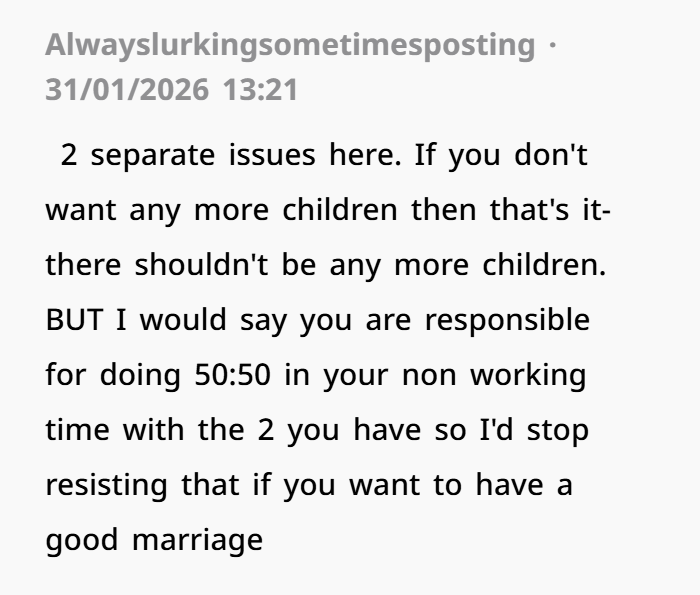
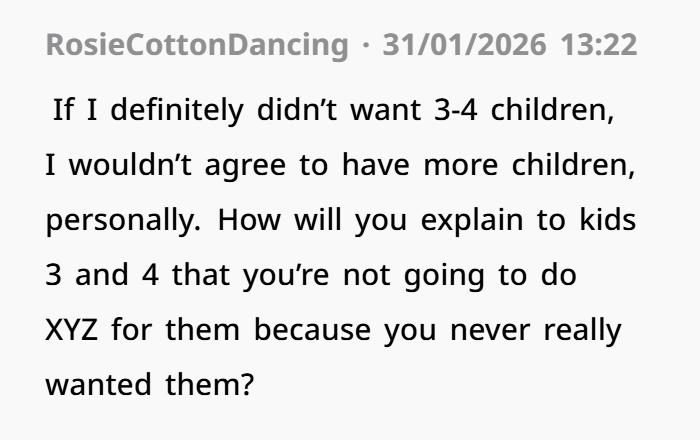
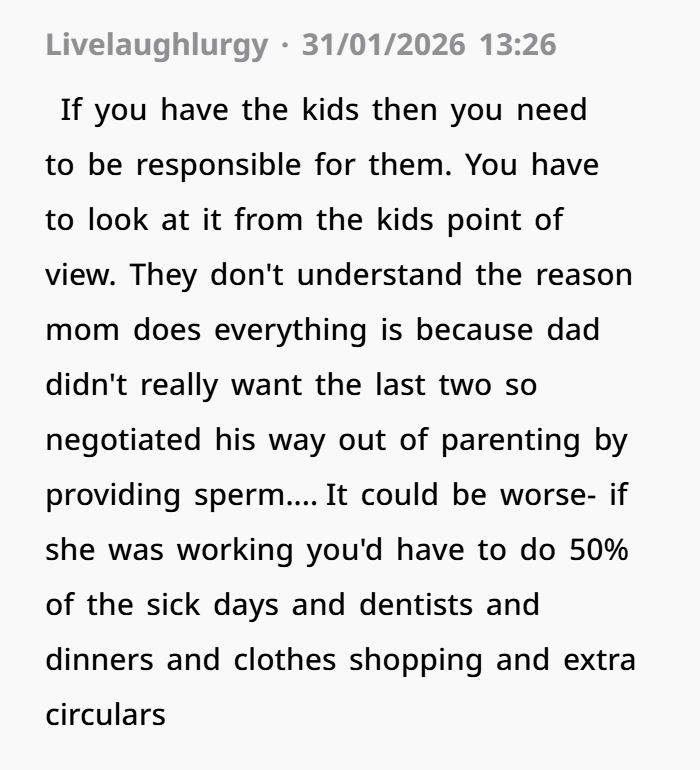
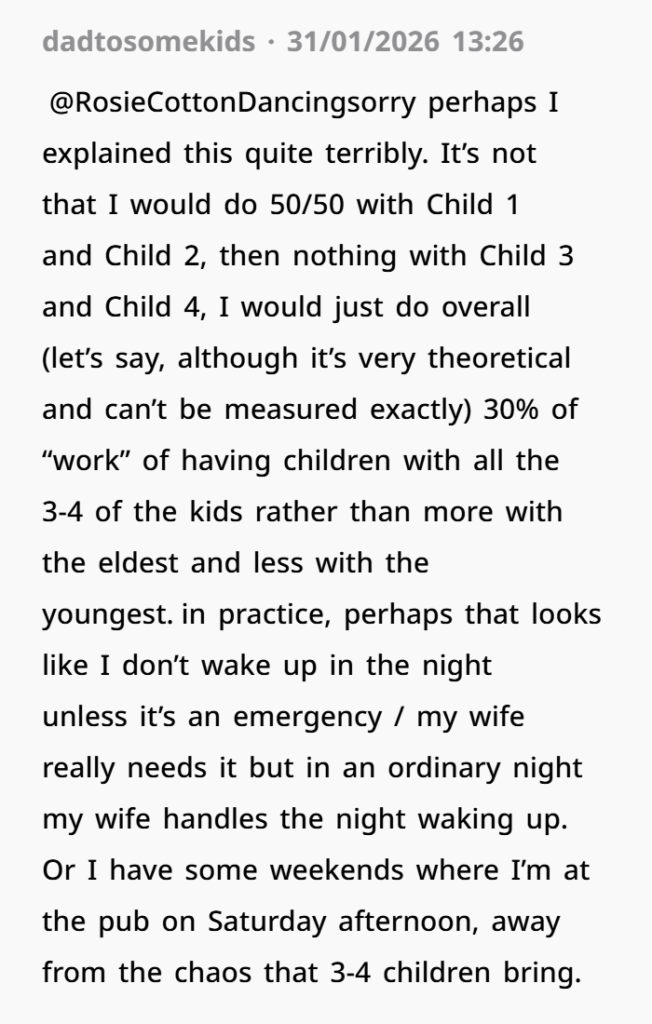
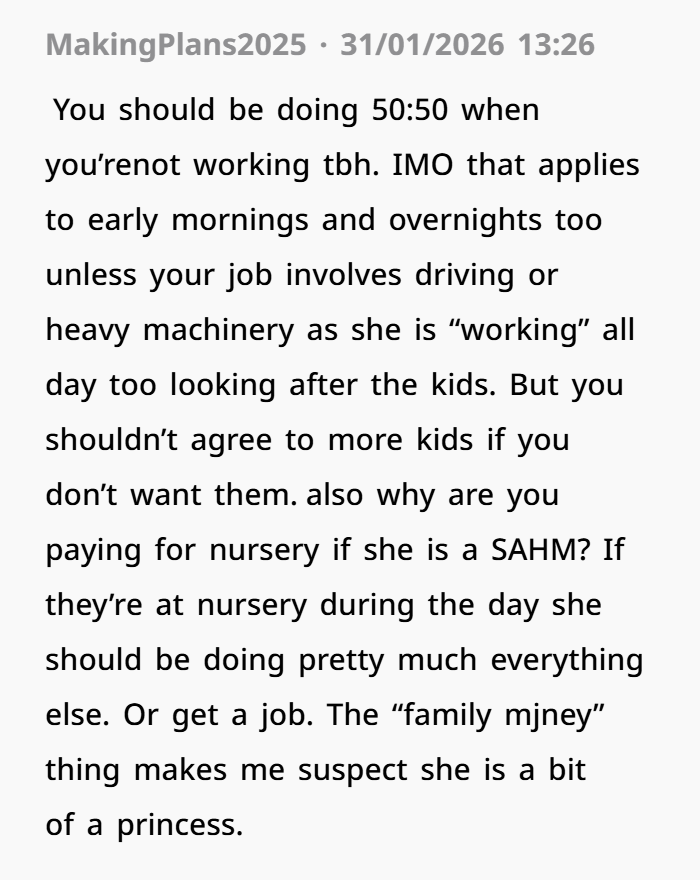
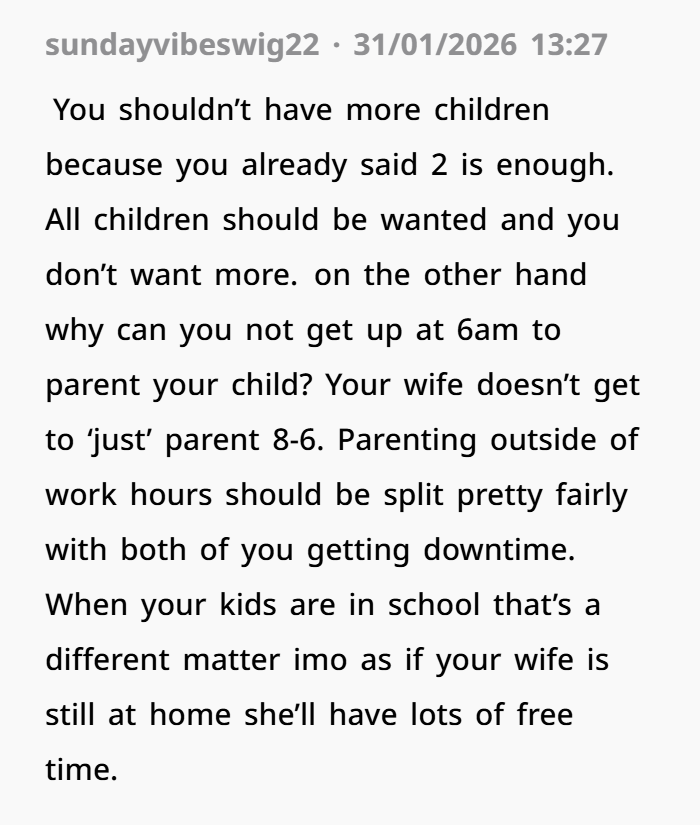
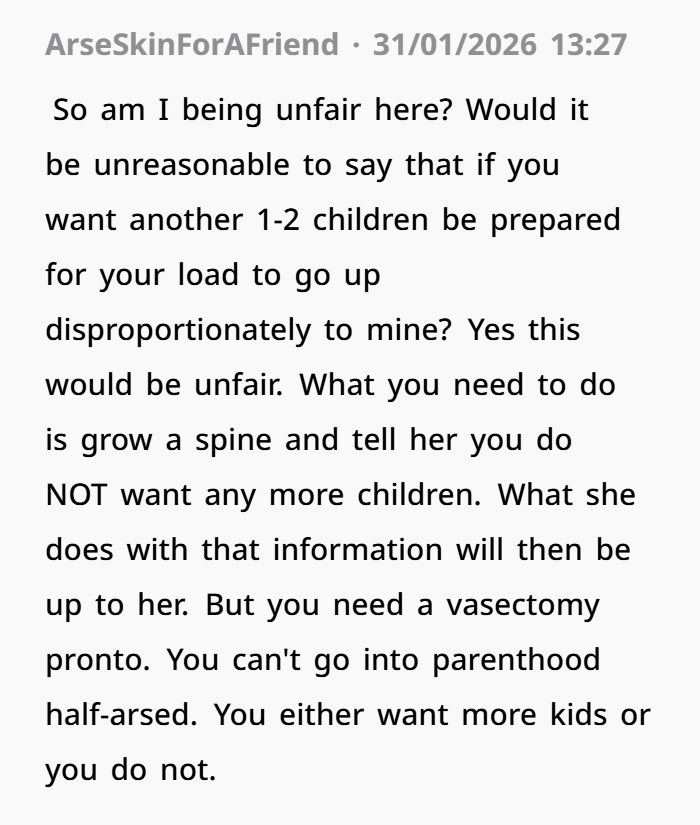
Most folks advised the man not to give in to his wife’s idea of having more kids, and if they did have more children, he should definitely help out more
Final Thoughts
Wanting different things about family size can be one of the biggest challenges a couple faces.
One partner may see more children as a dream, while the other may worry about stress, responsibilities, and burnout.
The solution is not blaming each other.
The solution is having honest conversations about what parenting really requires.
A strong marriage is built on understanding, respect, and teamwork.
Before making a major family decision, couples should make sure they are not only thinking about the dream of more children, but also the daily reality of raising them.
Both partners deserve to feel heard, supported, and valued while building the family life they choose together.