My MIL Told My Husband She’d See Our Baby More If He Were a Single Dad—All Because I Won’t Let Her Control Our Family!


A young mother was surprised when her mother-in-law made an upsetting comment about her marriage just before her son’s first birthday. The trouble began when her husband went to borrow chairs from his parents for the birthday party. His mother used the visit to complain about the rules they had made for their baby. The parents had asked family members not to kiss their son because both grandparents sometimes had cold sores. They also wanted thirty minutes’ notice before anyone visited and asked people not to share baby photos on social media without permission. The mother was breastfeeding and appreciated having time to prepare for visitors. To the couple, these were reasonable child safety and privacy rules.
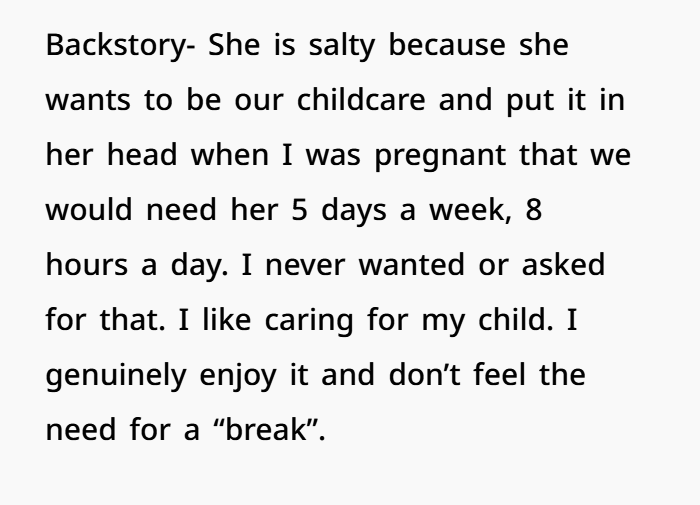
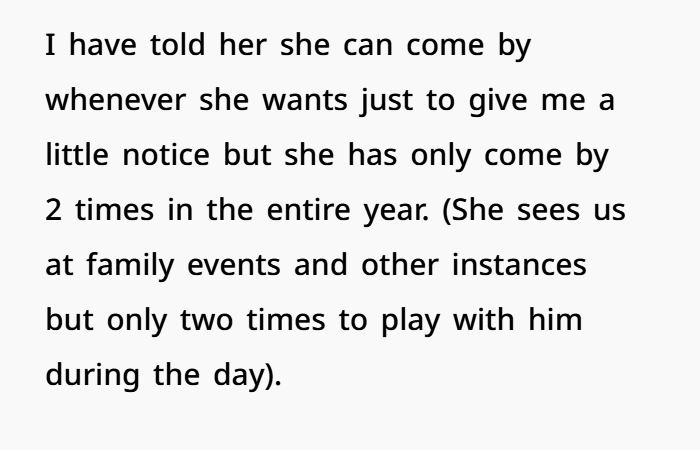
The grandmother had expected to be very involved in raising her grandson. While her daughter-in-law was pregnant, she had pictured herself providing childcare for eight hours a day, five days a week. But the new mother had never asked for that kind of help. She enjoyed spending time with her baby and wanted to follow her own parenting routine. She had told the grandmother that she could visit with a quick message or phone call first. However, the grandmother had only visited twice outside of family gatherings during the baby’s first year. Even with these open invitations, she continued to say that she was being kept away from her grandson.
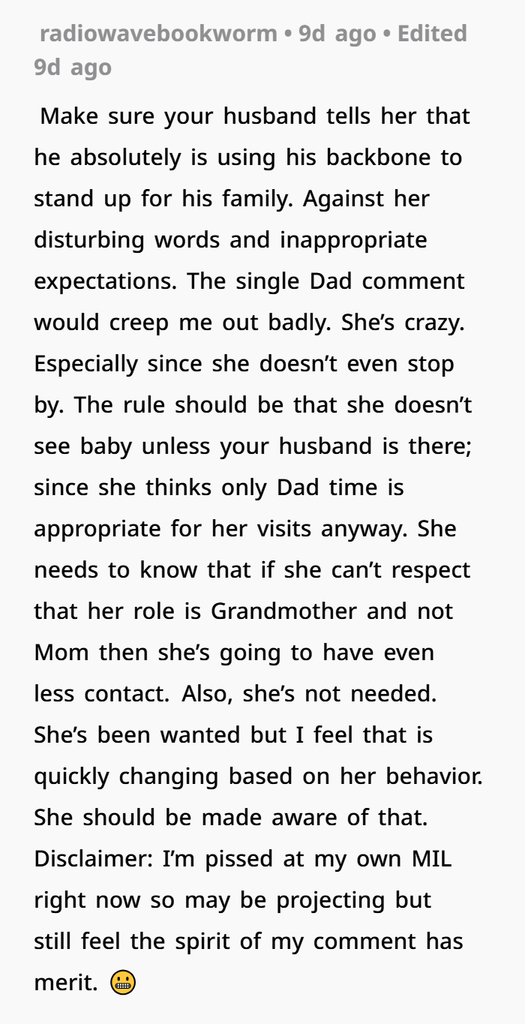
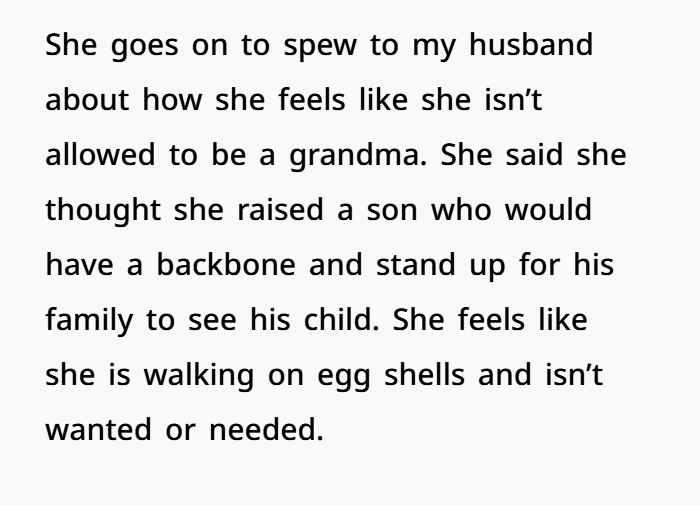
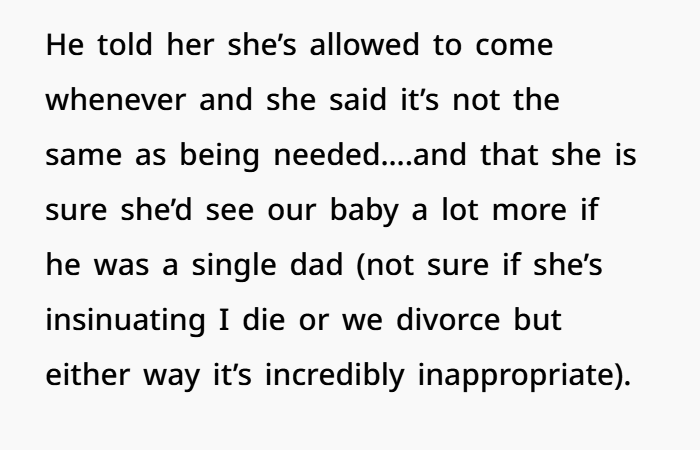
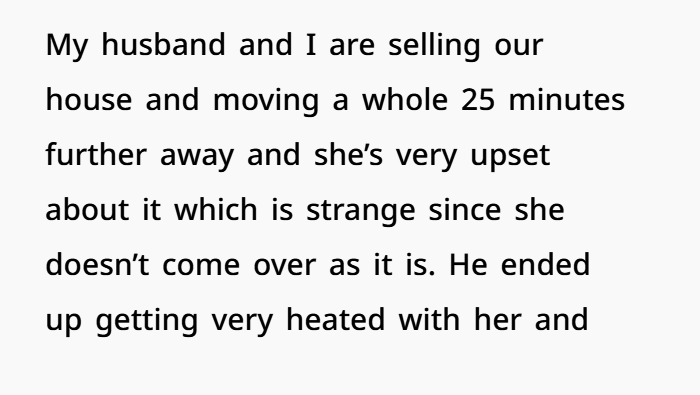
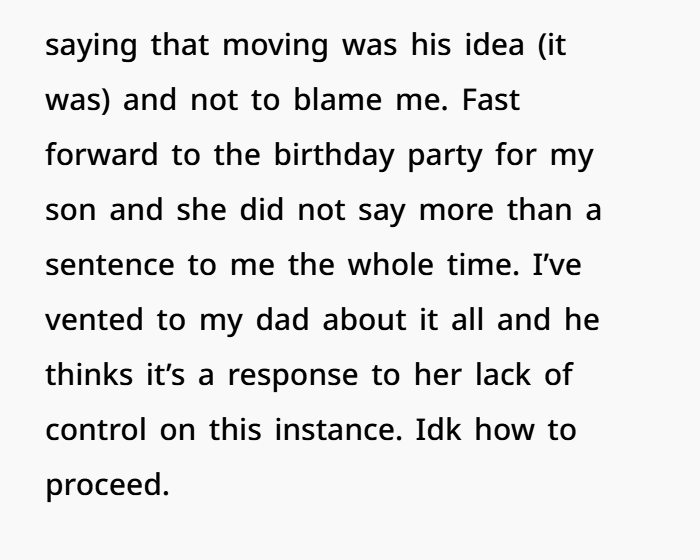
During the discussion with her son, the grandmother said she felt unwanted. She also accused him of not standing up for his family. Then she said something that left the young mother deeply hurt. She believed she would see her grandson more if her son were a single dad. The mother could not understand why her mother-in-law would make such a comment about their marriage. Her husband defended her and said they were happy together. He also explained that moving to a home twenty-five minutes farther away was his own decision. He did not want his wife to be blamed for their plans or the parenting boundaries they had agreed on.
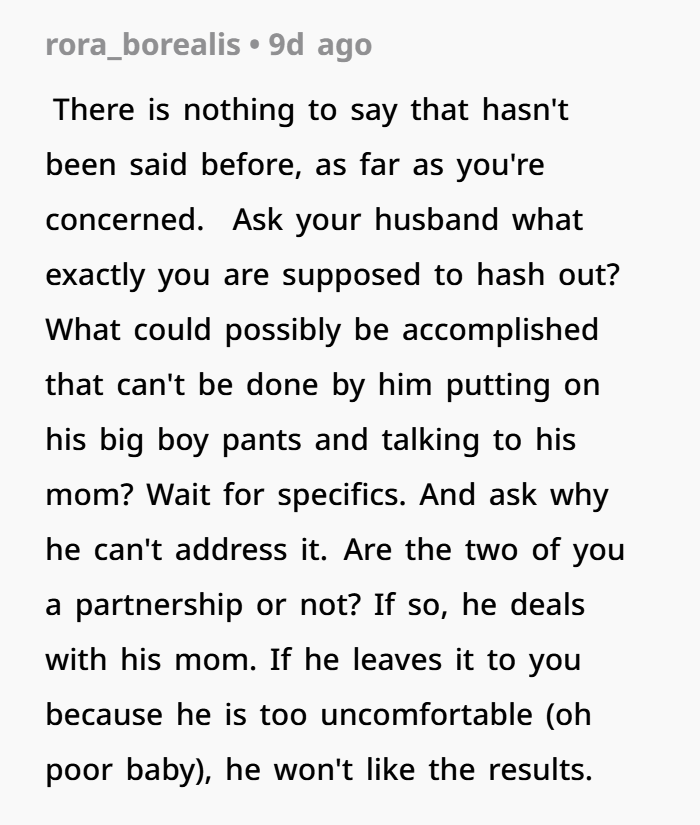
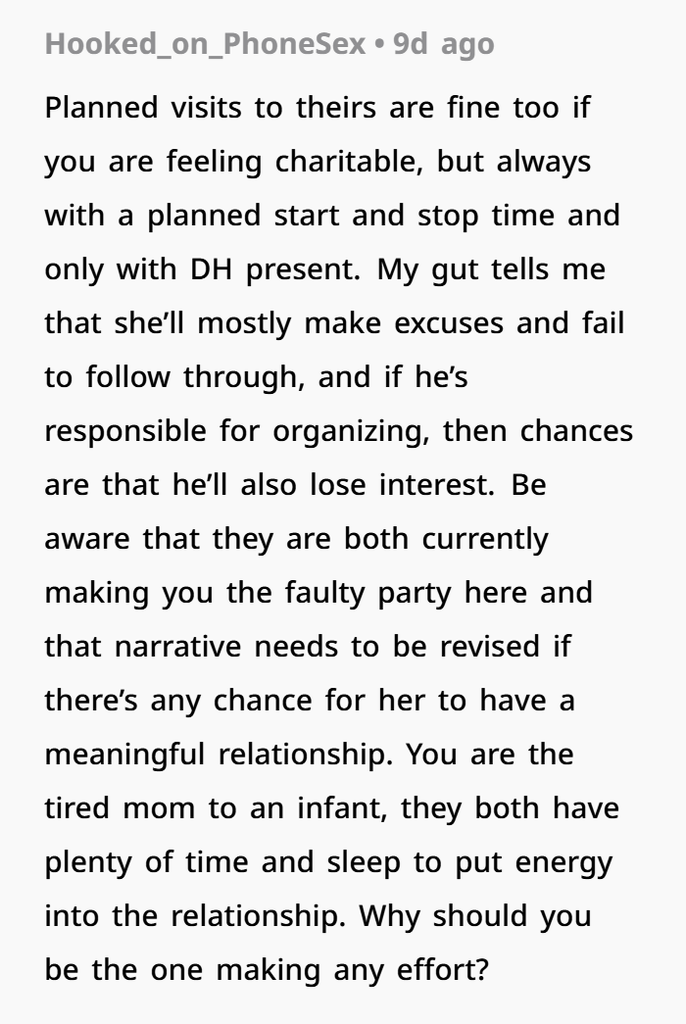
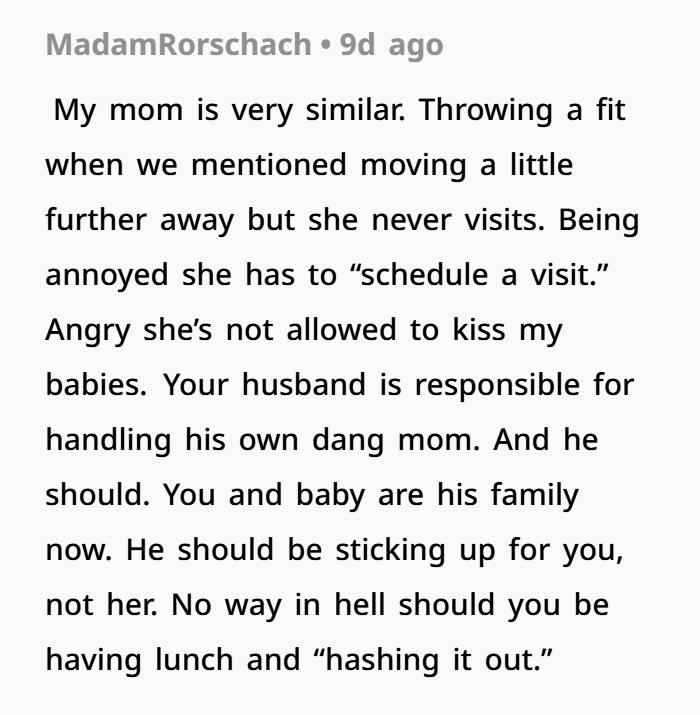
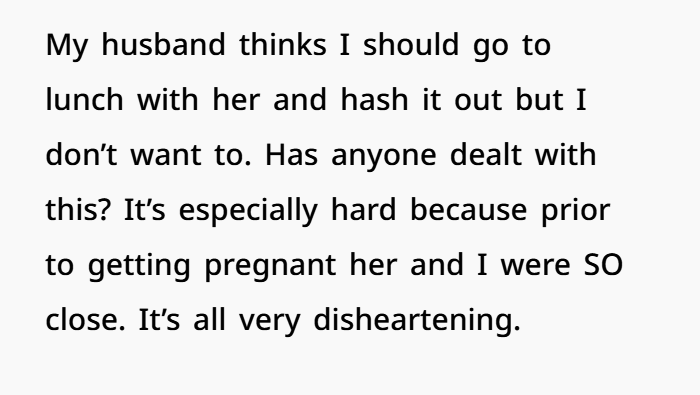
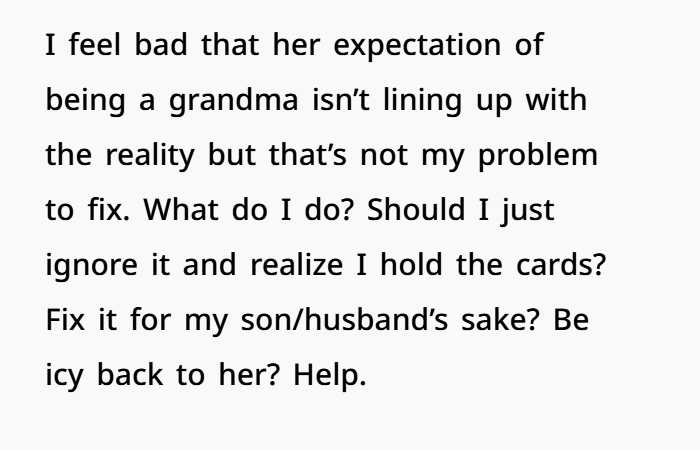
When the baby’s birthday party arrived, the grandmother barely spoke to her daughter-in-law. This was especially upsetting because the two women had been close before the pregnancy. The mother spoke to her father about the problem, and he suggested that the grandmother was struggling with not being in charge. Her husband recommended meeting his mother for lunch to clear up the disagreement. But she was tired of feeling blamed for decisions that were meant to protect her child. She wanted to focus on her baby’s well-being, healthy family relationships, and a peaceful home. Now she was trying to decide whether to have an open conversation, give the grandmother more time, or create some distance.


Grandma Was Welcome to Visit the Baby, but She Wasn’t Happy With the Parents’ Three Rules
Having a new baby changes a lot of things. There are sleepless nights, feeding schedules, endless laundry, and plenty of family members who want to meet the little one.
Grandparents are often especially excited.
They may dream about babysitting, visiting every weekend, and being part of their grandchild’s everyday life.
But what happens when the new parents want something different?
One mother found herself dealing with this exact problem when her mother-in-law became upset about three simple rules for visiting their baby.
The grandmother was welcome to visit. She just wasn’t happy with how much control the parents wanted over their own home and child.
And one comment she made to her son turned an already uncomfortable situation into a much bigger family disagreement.
The Grandmother Wanted to Be Needed, Not Just Invited
The grandmother had imagined having an active role in her grandson’s life.
She may have expected to help with daily childcare, spend lots of time at the family’s home, and become someone the parents depended on.
But the couple had their own plans.
They were comfortable caring for their son and did not need regular help.
That did not mean they wanted to keep the grandmother away.
The mother said her mother-in-law was welcome to visit whenever she gave a little notice.
In fact, she had been invited over many times.
But the grandmother rarely accepted those invitations.
Instead, she complained that simply visiting her grandson was not the same as being needed.
That was where the real disagreement seemed to begin.
The parents wanted her to enjoy being a grandmother. She appeared to want a bigger role in raising the child.
Those are two very different expectations.
The Parents Had Three Rules for Their Baby
The couple wasn’t asking family members to follow a long list of complicated instructions.
They had just three rules.
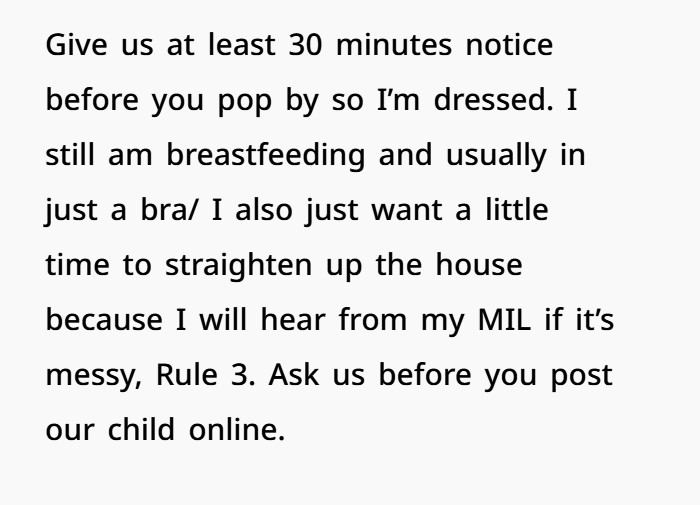
First, nobody could kiss the baby.
Second, visitors needed to give at least 30 minutes’ notice before coming over.
Third, anyone who wanted to post pictures of the baby online had to ask permission first.
That’s it.
The parents believed these rules would help protect their son’s health, their household privacy, and his personal information.
But the grandmother felt restricted by them.
From the parents’ point of view, the rules were reasonable.
They were still allowing visits and family time. They simply wanted everyone to respect a few basic boundaries.
Why They Didn’t Want Anyone Kissing the Baby
The first rule had an important reason behind it.
Both grandparents reportedly had a history of cold sores.
Cold sores are often caused by herpes simplex virus type 1, also called HSV-1.
The virus can spread through close contact, including kissing.
The World Health Organization explains that HSV-1 is common around the world.
Although many people experience mild symptoms, herpes infections can be especially dangerous for newborn babies.
That is why the couple wanted to be careful.
They were not saying the grandparents could never hold the baby or spend time with him.
They simply did not want anyone kissing him.
For new parents, baby health and safety can be a major concern.
There are already so many things to think about, from feeding schedules and newborn care to pediatrician appointments and keeping the home comfortable.
Avoiding unnecessary health risks was one decision this couple felt strongly about.
Parents who have questions about cold sores and newborn safety should discuss them with their child’s pediatrician.
The 30-Minute Visiting Rule Was About Respecting Their Home
The second rule was even simpler.
Anyone planning to visit needed to send a message or call at least 30 minutes before arriving.
For the mother, this was about feeling comfortable in her own home.
She was breastfeeding and often wore comfortable clothes while caring for the baby.
She didn’t want someone suddenly appearing at the door when she wasn’t ready for visitors.
She also worried about her mother-in-law making comments if the house wasn’t perfectly clean.
And with a baby at home, a messy room is hardly surprising.
There are bottles or feeding supplies to manage, baby clothes to wash, and household chores that don’t always get finished.
Sometimes, getting a few minutes of rest is more important than cleaning the living room.
The mother wasn’t asking for a week’s notice.
She just wanted half an hour to prepare.
For many families, a quick text before visiting is a normal part of being considerate.
The Baby’s Online Privacy Was Another Important Rule
The third rule involved social media.
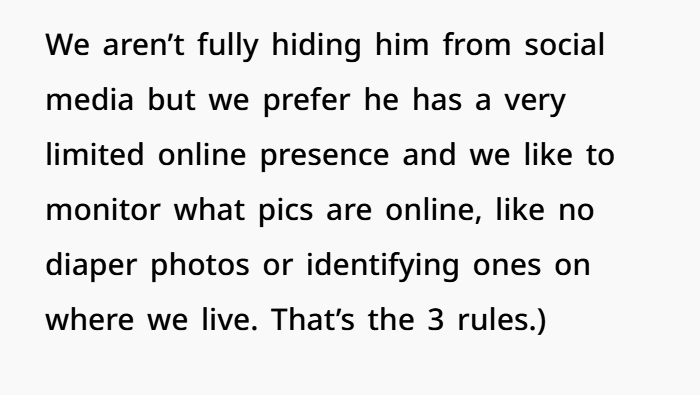
The parents wanted to approve pictures before relatives shared them online.
They weren’t banning every photo of their son.
They just wanted to make sure nothing too personal was being posted.
For example, they didn’t want pictures that showed details about their home’s location.
They also preferred not to share photos of their child wearing only a diaper.
This concern is understandable.
Once a picture is uploaded to social media, it can be saved or shared by other people.
Even deleting the original post doesn’t always mean every copy disappears.
That’s why children’s online privacy has become an important topic for many families.
Some parents also think carefully about their child’s digital footprint.
A digital footprint is the collection of photos and information that can remain connected to someone online.
Legal scholar Stacey Steinberg explored these issues in her 2017 article Sharenting: Children’s Privacy in the Age of Social Media.
For this couple, asking permission before posting pictures was a simple way to protect their son’s privacy.
It was not an attempt to stop the grandmother from sharing happy family memories.
Then the Grandmother Made a Comment That Went Too Far
The disagreement became much more personal when the grandmother spoke privately with her son.
According to the story, she suggested that she would have more access to her grandson if he were raising the baby alone.
That comment was especially hurtful.
The conversation was supposed to be about visiting arrangements and family rules.
Instead, it brought the couple’s marriage into the disagreement.
It also suggested that the daughter-in-law was the person preventing the grandmother from having the relationship she wanted.
But there was one important problem with that idea.
The husband agreed with the rules.
He wasn’t simply going along with his wife’s wishes.
They had made their parenting decisions together.
Her Son Made It Clear That He Supported His Wife
Rather than blaming his wife, the husband defended their shared choices.
He explained that the rules belonged to both parents.
He also clarified that their move had been his decision, not something his wife had forced him to do.
That mattered.
When family disagreements happen, it can be easy for relatives to assume that one person is responsible for everything they dislike.
But marriage and parenting involve shared decisions.
The couple had agreed on how they wanted to care for their son.
They had also decided how they wanted to manage visits and protect their family’s privacy.
By speaking up, the husband made it clear that criticizing his wife would not change those decisions.
It also showed that he wanted his mother to respect their household as a family unit.
The Birthday Party Wasn’t the Same After That
The tension continued after the conversation.
At the baby’s birthday party, the grandmother reportedly spoke very little to her daughter-in-law.
The mother noticed.
And it hurt.
Before all this happened, the two women had enjoyed a close relationship.
Now, even being together at a family celebration felt uncomfortable.
The grandmother may have been upset, disappointed, or unsure how to act.
Without hearing her side, it’s impossible to know exactly what she was thinking.
Still, the change in their relationship was clear to the mother.
Instead of enjoying the birthday party without worry, she was reminded of the disagreement.
That can be especially difficult when the people involved used to get along well.
Grandparents Don’t Have to Provide Childcare to Be Important
One of the biggest issues in this story is the difference between being loved and being needed.
Grandparents can be a wonderful part of a child’s life without providing daily childcare.
They can visit, read stories, celebrate birthdays, and create family traditions.
They can also offer help when the parents ask for it.
For some families, grandparents provide regular childcare while parents work.
That arrangement can be helpful, especially when families are trying to manage childcare expenses, household budgets, and busy work schedules.
But not every family needs that kind of support.
Some parents prefer to handle most of their child’s care themselves.
Others use professional childcare services or arrange their schedules so one parent can stay home.
Every family has different needs.
A grandparent’s value shouldn’t depend only on how often the parents need a babysitter.
Spending quality time together can be meaningful on its own.
Can the Mother and Grandmother Become Close Again?
The relationship may still improve.
But that will probably require more than simply pretending nothing happened.
The grandmother may need to accept that being a grandparent looks different from what she expected.
She can still be involved without making decisions about the baby’s health, visiting schedule, or social media photos.
The mother can also understand that her mother-in-law may feel disappointed.
After all, she may have spent years imagining what life with a grandchild would be like.
But feeling disappointed doesn’t automatically mean someone has been treated unfairly.
The parents are allowed to make decisions for their own child.
A calm conversation might help both sides understand each other better.
Since the grandmother made the hurtful comment directly to her son, he may be the best person to discuss it with her first.
He can explain that the family wants her involved, but the couple’s marriage and parenting decisions need to be respected.
Clear Family Boundaries Can Make Visits More Enjoyable
Family boundaries sometimes sound more serious than they really are.
Often, they are simply everyday rules that help people get along.
Calling before visiting is a boundary.
Asking before posting someone’s picture online is another.
Following a parent’s baby safety rules is also a way of showing respect.
These expectations don’t have to stop families from being close.
In fact, they can make family visits easier because everyone knows what is expected.
Grandparents can still offer parenting advice, share their experience, and spend time with their grandchildren.
But the final decisions about a child’s care belong to the parents.
When everyone understands that, there is less room for arguments and hurt feelings.
Final Thoughts
This family disagreement started with three simple rules.
The parents didn’t want anyone kissing their baby, asked for 30 minutes’ notice before visits, and wanted permission before photos were shared online.
The grandmother wanted a bigger role in her grandson’s life and felt disappointed that the parents didn’t need more help.
But being welcome to visit and being needed for childcare are not the same thing.
The grandmother’s feelings matter, but so do the parents’ decisions.
A child can have a close, loving relationship with their grandparents while the parents remain in charge of health, safety, privacy, and everyday care.
Hopefully, with time and better communication, this family can find a way to enjoy being together again without turning every parenting decision into an argument.
Comments That Say It All