I Said Yes to an Open Marriage Just to See the Truth Now He Says I Betrayed Him
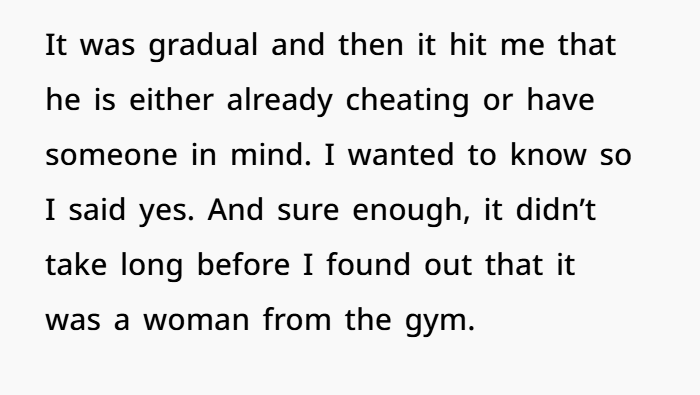
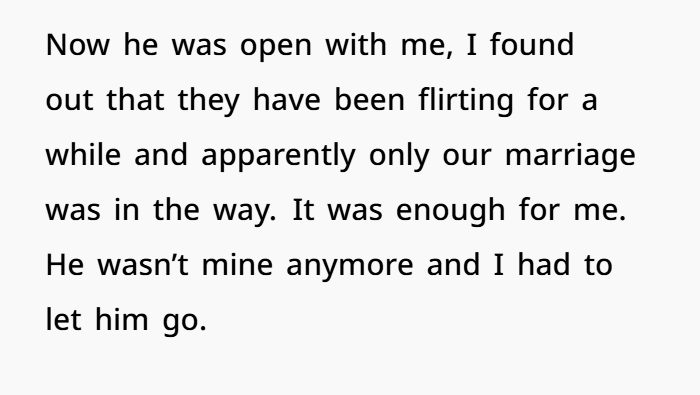
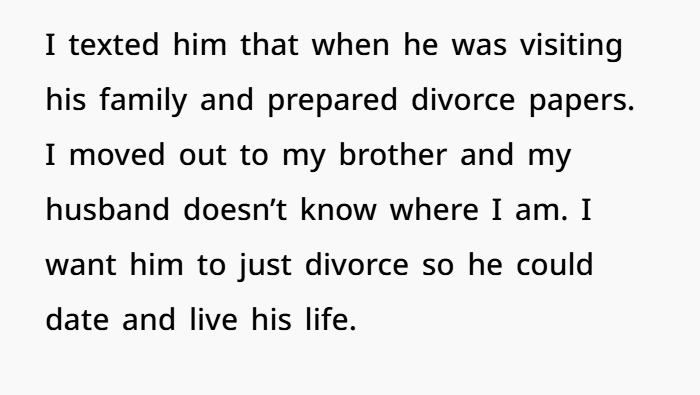
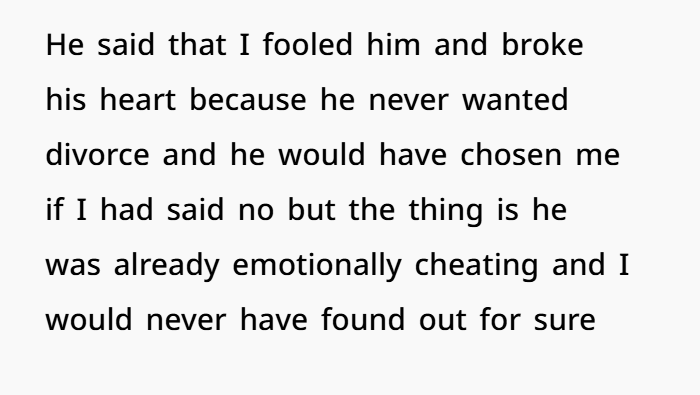
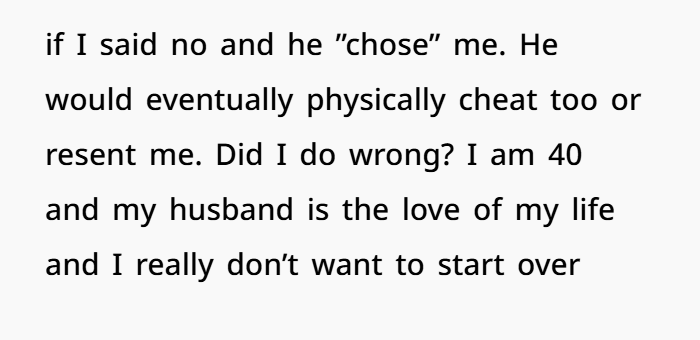
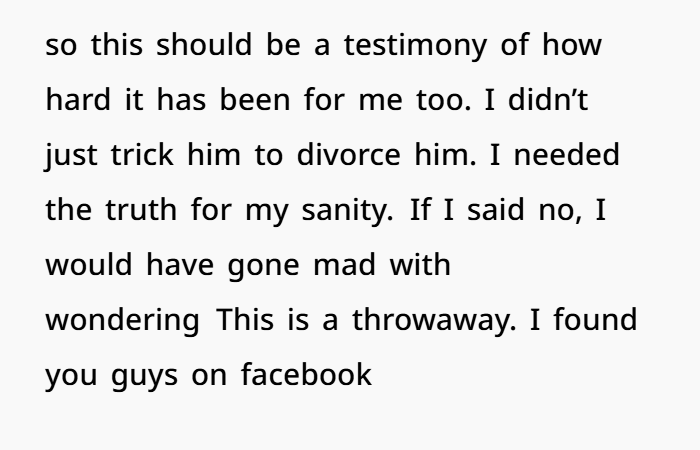
My husband and I were married 20 years. We got together at 20. Grew up together. Built our life, finances, home, everything side by side. Now we’re 40. And suddenly — not totally out of nowhere — he starts saying we “missed out” because we’ve only ever been with each other. First it was small comments. Then deeper conversations about open marriage and sexual exploration. Then he flat out asked to open the relationship. He said he loved me. Didn’t want a divorce. But wanted to “experience more.” I told him if that was the life he wanted, the honest move was filing for divorce. He knows I don’t believe in open relationships. Still, something felt calculated. Too rehearsed. So I agreed. And it didn’t take long to find out there was already a woman at his gym. They’d been flirting. Emotional cheating at minimum. He admitted our marriage was the only obstacle. That was all I needed. I contacted a divorce attorney and filed. Now he claims I manipulated the situation and broke his heart. But I needed the truth for my own peace of mind.
Suggesting an open marriage after decades together isn’t just a casual idea, it’s an idea that raises questions about love, loyalty, and personal fulfillment

After 20 years of marriage, the author’s husband suggested opening their relationship, saying they were “missing out” on life experiences

Let’s slow this down. Because this isn’t just about one couple. This touches bigger issues — emotional cheating, open marriage agreements, divorce law, marriage counseling, and what family courts define as marital misconduct in a high-conflict divorce.
First, the psychology side.
When someone in a long-term marriage suddenly pushes for an open relationship after 15–20 years, it’s usually not random curiosity. Therapists who work in consensual non-monogamy say healthy open marriages require mutual desire, strong communication, emotional safety, and clear boundaries from the beginning. Not pressure. Not fear of losing the relationship. Not one spouse persuading the other into something they don’t truly want.
There’s a real difference between ethical non-monogamy and trying to slap permission onto an already existing emotional affair.
That difference matters.
An emotional affair often includes secrecy, flirtation, private texting, hidden messages, and emotional intimacy outside the marriage. Even if it hasn’t crossed into physical infidelity, many therapists — and sometimes divorce courts — still consider it a form of cheating. The core elements are emotional attachment and concealment.
You said he was already flirting. That he admitted the only thing stopping him was the marriage. That means the emotional connection had already formed. The request to “open” the marriage wasn’t about curiosity or growth. It was about access without being labeled unfaithful.
Now let’s look at the legal side — because this is where divorce proceedings get serious.
In many U.S. states, divorce operates under no-fault divorce laws. That means you don’t have to prove adultery to file — irreconcilable differences is enough. But marital misconduct, including emotional or physical infidelity, can still influence alimony, spousal support, property division, and sometimes even child custody depending on the jurisdiction.
According to guidance from the American Bar Association, while no-fault divorce simplifies the filing process, dissipation of marital assets — like spending joint funds on an affair partner — can absolutely affect financial settlements. So if gym flirting turned into hotel stays, gifts, travel, or hidden expenses, that becomes legally relevant in asset division.
Now here’s the ethical question people keep circling back to:
Did you manipulate him by saying yes?
Or did you gather confirmation of something already happening?

There’s a real psychological concept called gaslighting-induced doubt. When you suspect emotional cheating but don’t have hard proof, your mind goes into overdrive. Anxiety. Overthinking. No sleep. Questioning your own instincts. If you had said no to opening the marriage, maybe he would’ve “chosen” you — but you probably would’ve wondered forever if he resented you. Or if he’d cheat quietly. That kind of uncertainty slowly chips away at your mental health.
And resentment inside a 20-year marriage? That’s toxic.
Couples therapists often say once a partner expresses serious interest in someone else — even hypothetically — the marriage shifts. You can’t un-hear it. You can’t unknow it. The dynamic changes.
Timing matters too. He says he would’ve picked you if you said no. But he didn’t pick you before asking. He picked possibility first. You second.
That’s not neutral.
Look at open marriage statistics. Research in the Journal of Sex & Marital Therapy suggests only about 4–5% of U.S. couples practice consensual non-monogamy. It works for some. But the success rate is much higher when both spouses genuinely want it and the marriage is already stable — not when there’s dissatisfaction, midlife confusion, or an emotional affair in the background.
Opening a struggling marriage rarely solves anything. It usually magnifies what’s already broken.
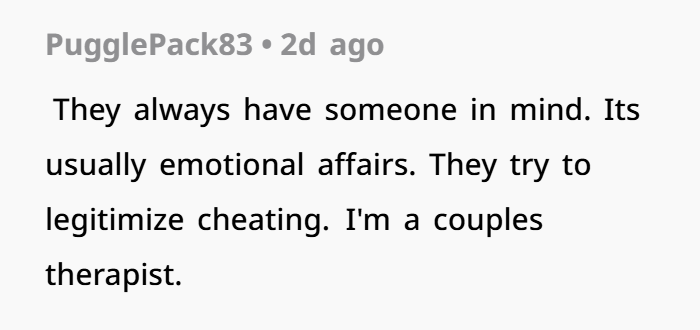
There’s also something called monkey branching — lining up a new romantic connection before fully leaving the current relationship. It’s about securing emotional backup so you’re never alone. From what you described, that pattern fits more than ethical non-monogamy does.
Legally speaking, filing for divorce and protecting your assets isn’t manipulation. It’s self-preservation. Under no-fault divorce laws, you don’t need to prove adultery to leave. You’re allowed to walk away from a marriage that no longer feels emotionally safe.
He says you tricked him. But here’s the uncomfortable part — he had already started building intimacy elsewhere. You didn’t invent that. You uncovered it.
And the grief piece matters.
You said he’s the love of your life. That starting over at 40 feels terrifying. That’s real. Divorce after a long-term marriage is ranked as one of the most stressful life events in multiple mental health studies — up there with job loss and serious illness.
But so is staying in a marriage where you feel like second choice.
Financially, divorce at 40 is different than at 25. Retirement accounts. Property division. Long-term investments. Spousal support. Asset split. A divorce attorney consultation isn’t dramatic — it’s strategic. These decisions impact your next 20 years.
Emotionally, though, this comes down to trust.
If you had said no and he “chose” you, would it have felt solid? Or would you always picture the woman at the gym? Every late workout. Every phone buzz. Every “running behind.”
Living in constant hyper-vigilance isn’t love. It’s survival mode.

Now let’s flip the moral lens.
Was saying yes a trap?
Or was it a boundary test?
You didn’t beg. You didn’t compete. You didn’t police his phone. You said, “Okay.” And watched what he did.
He moved toward her.
That action answered your question.
Some marriage counselors would say you both should’ve tried couples therapy before making a drastic decision like filing for divorce. And that’s fair. A 20-year marriage deserves at least an attempt at professional mediation or relationship counseling. But therapy only works when both partners are fully present and emotionally committed. If he was already invested in someone else, then counseling becomes damage control — not true marital repair.
There’s something powerful about clarity. It hurts. But it’s clean.
Now you know exactly where his head was. You’re not stuck replaying “what if” scenarios or questioning your instincts. That kind of hard truth can cut deep, but in the long run, it protects your mental health and emotional stability.
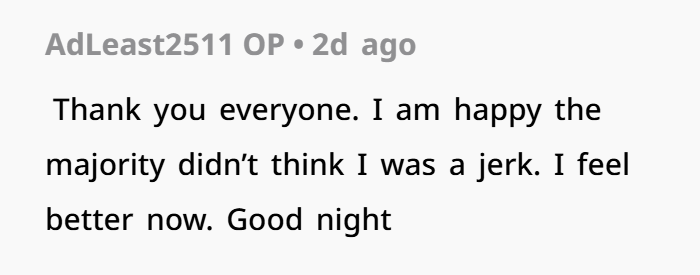
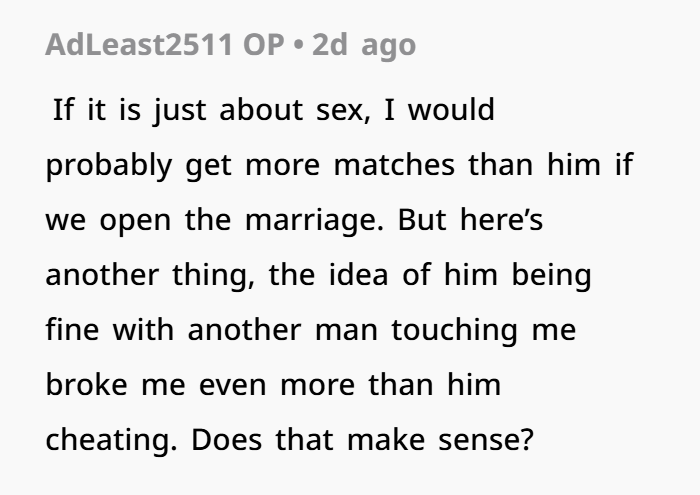
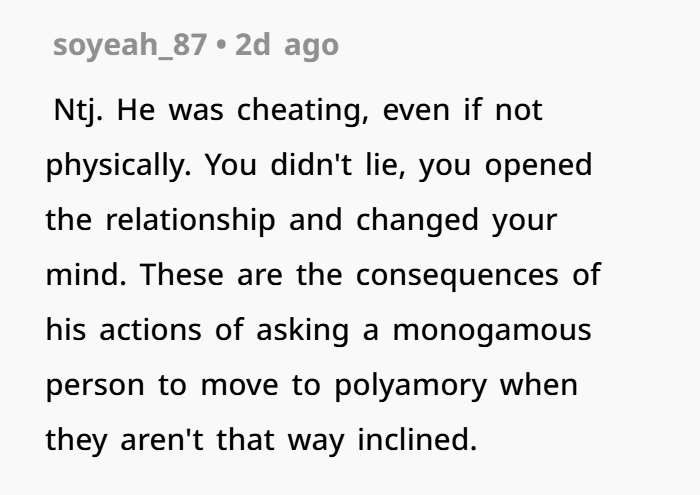
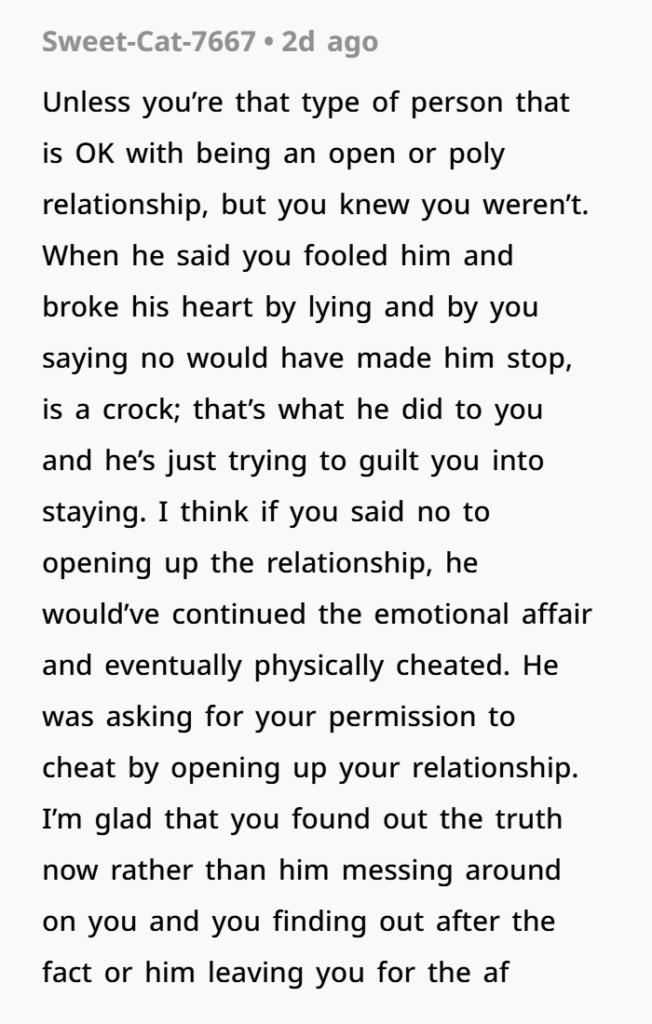
Netizens expressed sympathy for the author, suggested the open marriage proposal was less about growth and more about permission
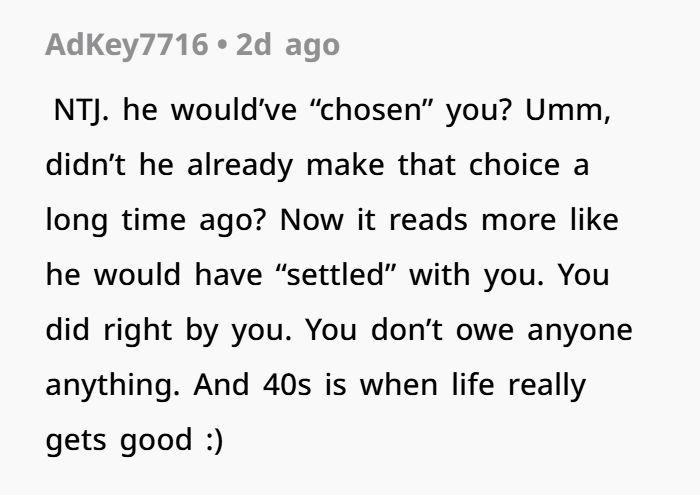
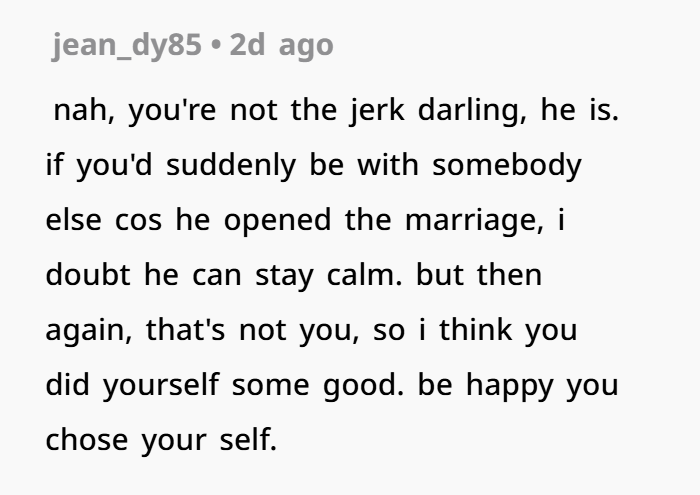
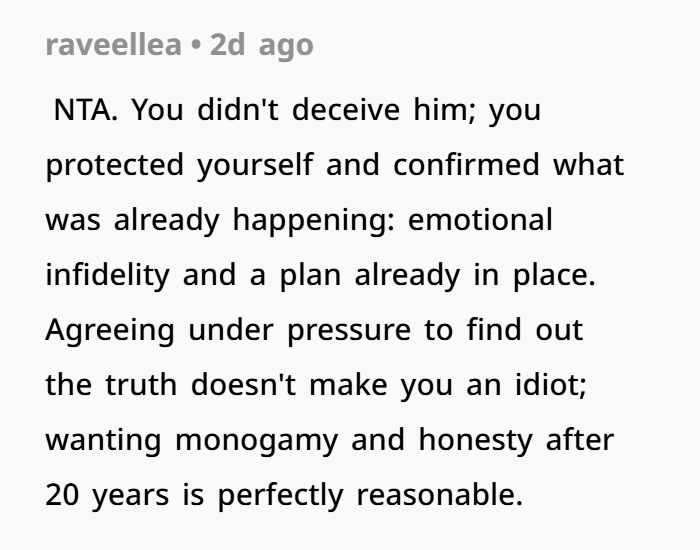

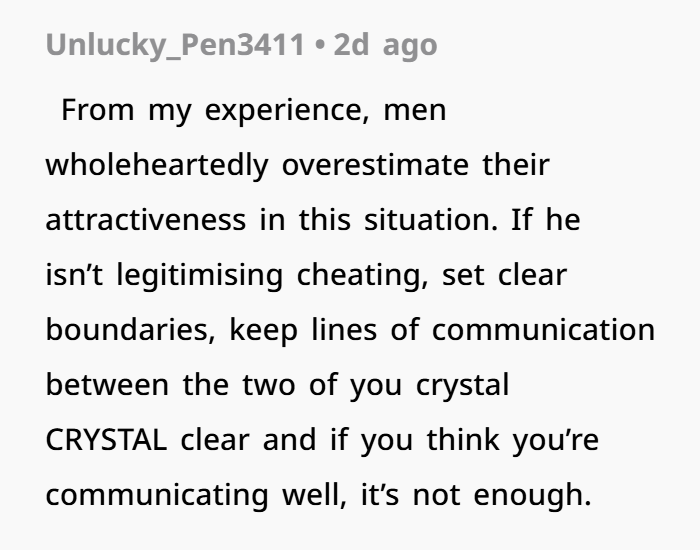
So did you do wrong?
Legally — no. You’re allowed to file for divorce.
Psychologically — you sought truth.
Morally — you reacted to emotional infidelity.
The deeper question might be this:
If he truly wanted only you, why did it take access to someone else for him to realize your value?
And would you ever feel secure again knowing he needed to test the door before choosing to stay?
At 40, starting over feels terrifying. But so does shrinking yourself to keep someone who already stepped halfway out.
Sometimes the hardest choice isn’t leaving.
It’s accepting that the marriage you loved changed before you were ready.
And that clarity — even if you had to create the moment to get it — isn’t betrayal.
It’s survival.