Woman Plays Wingwoman for Boy-Crazy Bestie, Now Facing Marriage Drama and Family Fallout
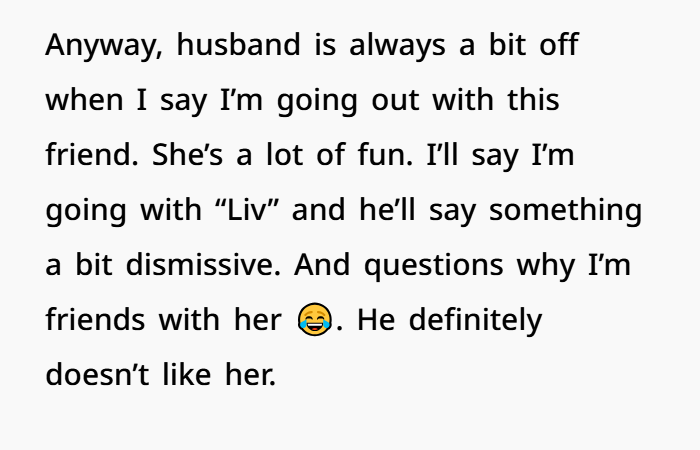
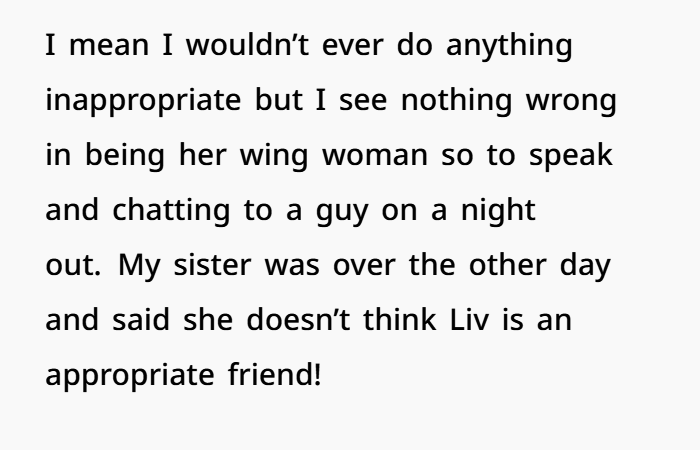
Anouke’s in her late 20s, married just a year, no kids yet, still in that early-marriage adjustment phase where you’re figuring out everything from emotional boundaries to joint bank accounts and long-term financial planning. She has one close friend — Liv — who is, in her words, completely man crazy. When they go out, Liv’s agenda is obvious: flirt hard, lock eyes with someone across the bar, say something outrageous, push a few social boundaries just for fun. It’s chaotic. A little dramatic. Sometimes borderline reckless. Anouke doesn’t exactly approve of all of it, but she brushes it off as “that’s just Liv.” She’ll play wing woman now and then, maybe make small talk with a guy to help Liv out, but she’s firm about one thing — she’s married, and she wouldn’t cross that line. Not emotionally, not physically.
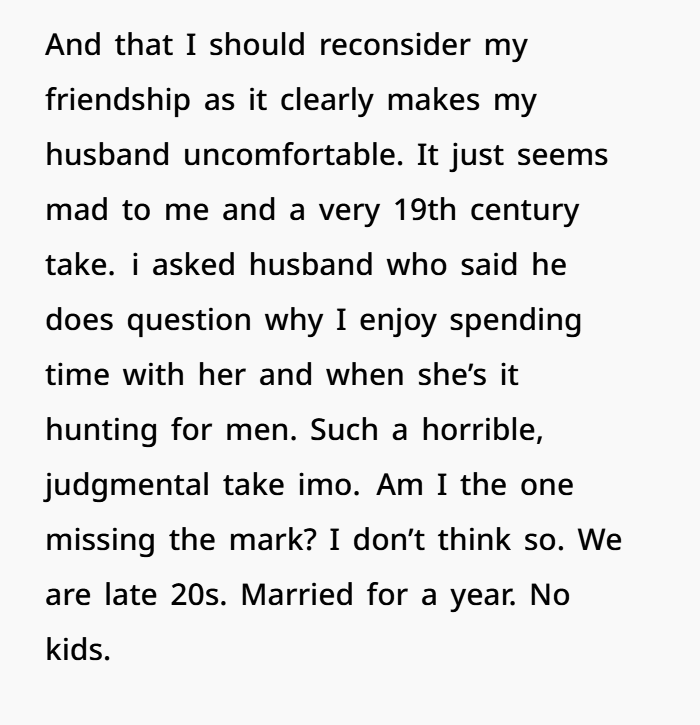
The issue is her husband clearly isn’t a fan of Liv. Every time Anouke says she’s going out with her, his energy shifts. A bit distant. A few subtle jabs. Questions about why she values that friendship so much. It’s not a full-blown argument, but it’s there. Even her sister weighed in, hinting that Liv might not be “appropriate” company for a married woman — which, to Anouke, sounds outdated and slightly controlling. She sees these nights as harmless fun, nothing that threatens her relationship or the trust they’re building. He, though, seems to see risk. Maybe reputational risk. Maybe emotional risk. Maybe just discomfort. And now she’s stuck wondering — is this just insecurity and old-school thinking… or is she overlooking something real?
A ‘man-crazy’ best friend can be a lot of fun, unless you’re the one married to her wing woman

One fun-loving newly-wed woman loves going out with her ‘dog in heat’ best friend, but her husband absolutely despises it
Okay. Let’s actually unpack this. Because this isn’t just about Liv being loud, dramatic, or flirting like she’s auditioning for a reality show. This is about trust. Optics. Social influence. And those unspoken early-marriage boundaries nobody really teaches you. These are the same themes that show up in marriage counseling sessions and, honestly, in high-conflict divorce law consultations when things go sideways. Sounds dramatic, but it’s true.
When you’re newly married, you’re still negotiating what “married life” even means. There’s no official handbook. No relationship contract template you both sign. Some couples are chill about everything. Others draw stricter emotional boundaries. A big topic that comes up in couples therapy is something therapists call “perceived risk environments.” Basically, situations that aren’t cheating… but feel like they could head in that direction. And feelings matter in long-term relationship stability.
There’s solid research in relationship psychology showing that environments heavy on alcohol, flirting, and sexual energy increase something called “opportunity perception.” Not actual opportunity. Just perception. If one partner regularly hangs out in settings that look like a singles networking event with cocktails, it can quietly trigger insecurity in the other partner. Even if nothing shady is happening. It’s less about behavior, more about how it looks and how it feels. And perception, fair or not, plays a huge role in trust building during early marriage.
Now here’s the key: perception matters almost as much as behavior in long-term relationships.

From your side, being a wing woman feels harmless. It’s social. You’re not flirting for your own ego. You’re not handing out your number. You’re not deleting texts or hiding your phone. In your head, your relationship security is solid. You know your boundaries. And honestly? That’s valid. Feeling confident in your own loyalty matters.
But from your husband’s angle? He might see you actively participating in a singles dynamic. Even if it’s indirect. Even if it’s playful. Even if you’re technically “just helping.” That doesn’t automatically make him controlling or insecure. It might just mean he’s uncomfortable with the environment itself. There’s a difference. Discomfort isn’t the same as distrust.
There’s also this thing in social psychology called “social mirroring.” Basically, we tend to absorb and reflect the energy and behavior of the people we’re around most. If Liv is constantly in man-hunting mode — loud flirting, pushing lines, chasing attention — your husband might worry that energy slowly bleeds over. Not because he thinks you’re about to commit marital infidelity. But because group dynamics influence individuals. That’s not paranoia. That’s basic human behavior science.
Now let’s zoom out for a second and talk about optics. In worst-case scenarios — like divorce lawyer consultations or messy marital disputes — social behavior patterns can sometimes get dragged into conversations about character and judgment. Again, that doesn’t mean you’re doing anything wrong. But it shows how seriously long-term relationship risk and repeated exposure to high-flirt environments can be perceived if things ever deteriorate. We’re not saying that’s where this is headed. Just acknowledging that perception carries weight in both emotional and legal frameworks.
But let’s be clear. You’re not in court. You’re in a one-year marriage.
And early marriage? It’s fragile in ways people don’t talk about enough. Research from the National Marriage Project highlights that the first couple of years are crucial for building shared norms, emotional safety, and mutual respect. If one partner feels dismissed during that stage — even over something that seems small — resentment can start stacking quietly. Not explosive. Just subtle. And subtle resentment is the stuff that compounds over time.
Here’s another angle. It might not actually be about trust. It might be about respect.

When he says he questions why you like spending time with her while she’s in full “man-hunting” mode, he might not be hinting at marital infidelity or secretly Googling divorce lawyer consultations. He could be reacting to the values he feels are on display. For some people, hyper-sexualized, attention-seeking behavior just reads as immature. Especially when you’re stepping into married life, building emotional stability, maybe even thinking about long-term commitment and shared goals. It can feel like a mismatch of life stages more than a trust issue.
And your sister’s comment? That’s interesting. When an outsider picks up on tension, it usually means the discomfort isn’t subtle. It doesn’t automatically mean they’re right. But it does mean the vibe is visible.
Now let’s be fair to you.
You’re allowed to have friends. You’re allowed to go out, laugh, socialize, exist outside your marriage. Marriage isn’t house arrest, and healthy relationship dynamics absolutely require autonomy. Isolation from friends is a serious red flag in controlling or emotionally abusive situations. That’s not what this sounds like though. He’s not banning you or issuing ultimatums. He’s reacting. There’s a difference, and that emotional nuance really matters.
There’s also something called “reputation spillover.” In social psychology, people often assume friends share similar values. If Liv acts outrageous in front of your husband — provocative jokes, loud flirting, pushing sexual boundaries — that can trigger secondhand embarrassment. He might feel protective of your shared image as a couple. Especially around mutual friends, coworkers, or professional circles where reputation actually carries weight. Once you’re married, your social image becomes somewhat shared.
You described Liv as a bit of a Samantha wannabe from Sex and the City. That comparison says a lot. Samantha was iconic, bold, unapologetic. But she was also a fictional character built for entertainment. Exaggerated sexual bravado works on television because it’s scripted and contained. In real life, especially in mixed company, that same energy can feel uncomfortable — particularly for someone more reserved or traditional in how they view commitment.
Here’s the important part though — fun, wild friendships don’t automatically destroy marriages. What strains marriages is when one partner feels unheard or dismissed.
If every time he says he’s uncomfortable you respond with “that’s judgmental” or “that’s outdated,” the conversation shuts down. He may stop expressing vulnerability altogether. And that’s where long-term resentment builds quietly. Not dramatic. Just layered over time until it shows up later in marriage counseling sessions wondering how things drifted.
There’s a big difference between:
• “You’re not allowed to go.” (control)
• “This makes me uneasy.” (vulnerability)
From what you’ve described, he sounds more like he’s expressing unease than trying to control you.
And then there’s intention vs. impact. Your intention is harmless fun. You feel secure. You know your limits. But the impact is your husband feeling unsettled. In relationship counseling, couples are often taught to prioritize impact over intent. Not because intent doesn’t matter — it does — but because impact shapes emotional safety in the marriage.
Also, on a practical level, if Liv behaves wildly in front of your husband, he may start associating her presence with chaos or discomfort. If she flirts aggressively when you’re out together as couples, that amplifies it. It’s no longer theoretical. It’s happening in his direct view. And once someone links a person with stress or embarrassment, that emotional association can stick longer than you’d expect.
Another layer? Newlywed identity shift.

When you get married, especially young, there’s often a subtle pressure to “act married.” Some people reject that idea completely. Others embrace it. If you and your husband are on different wavelengths about what married social behavior looks like, that mismatch will surface in moments like this.
It’s not 19th century to expect some level of boundary clarity in a marriage. But it’s also not modern to isolate a partner from friends without cause.
The healthiest middle ground usually looks like this:
• A real conversation. No defensiveness.
• Ask what specifically makes him uncomfortable.
• Clarify your boundaries clearly.
• Maybe adjust small things (like not actively playing wing woman).
• Reassure without dismissing.
You don’t have to drop Liv. But you may need to tweak the dynamic.
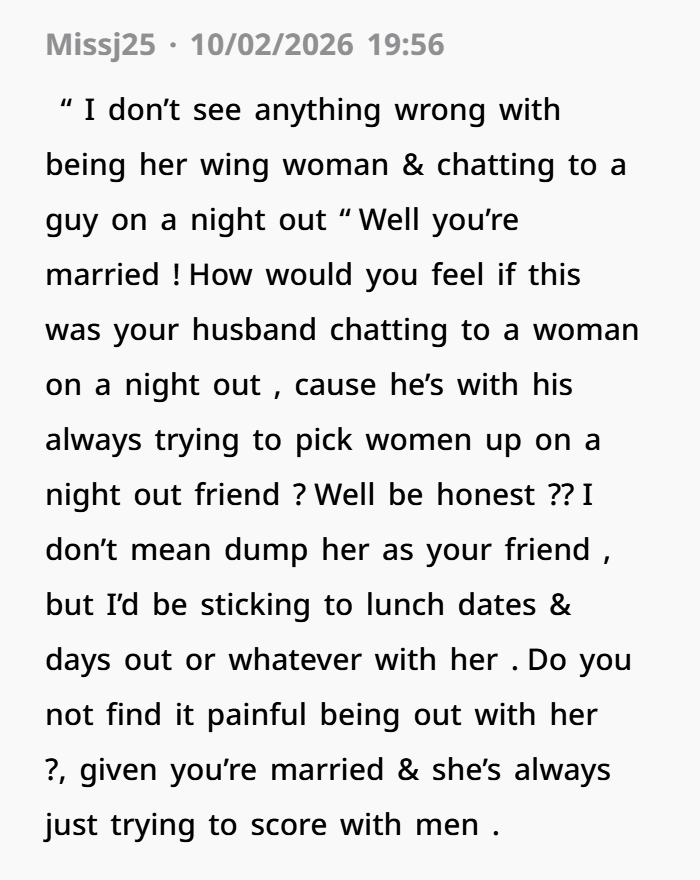
The internet, however, overwhelmingly sided with the husband, telling the wife she was ‘missing the mark’ and that she needed to see it from his perspective
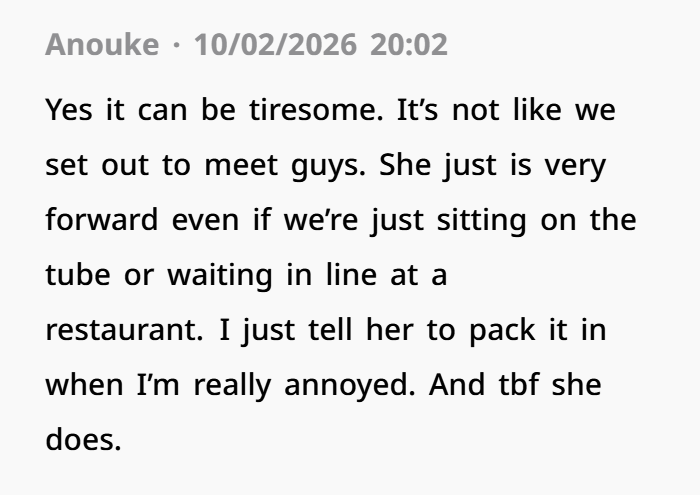
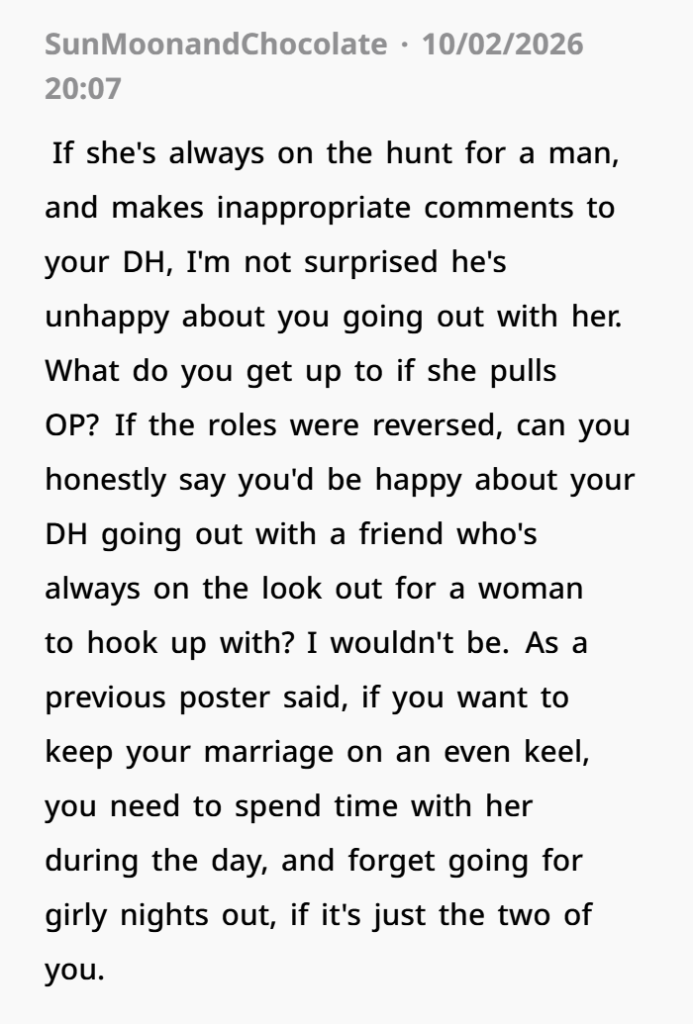

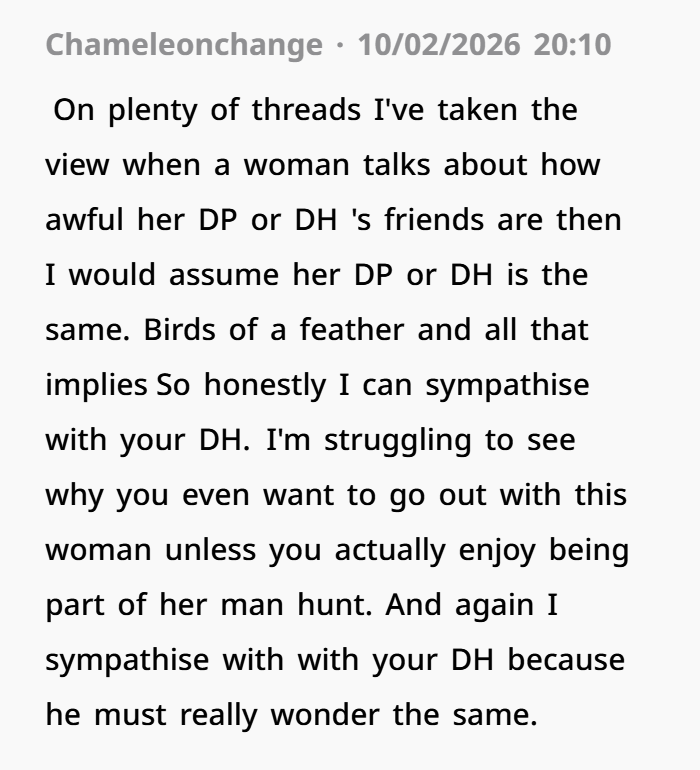
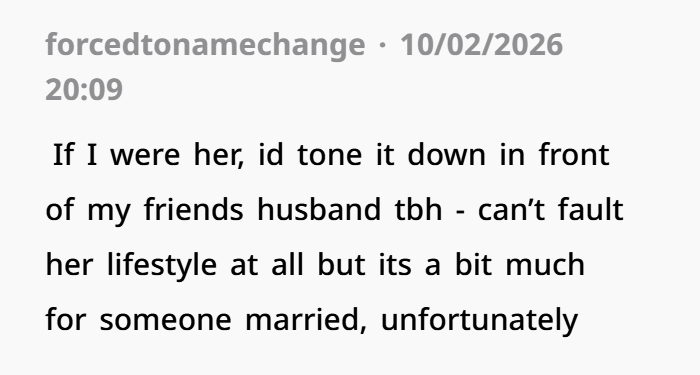
Here’s the real talk part: when a spouse keeps saying “this makes me uncomfortable” and feels like they’re not being heard, that’s when emotional distance starts sliding in. Not because of girls’ nights. Not because of one loud friend. But because feeling dismissed chips away at emotional security. And emotional distance? That’s the stuff that eventually lands couples in marriage counseling… or in serious divorce lawyer consultations when things snowball. It’s rarely the party. It’s the pattern.
So are you totally missing the mark? No. You’re not out here sabotaging your marriage or ignoring massive red flags. But you might be underestimating how sensitive early marriage really is. The first couple of years are when trust, shared values, and relationship boundaries are still settling. It’s like wet cement — strong eventually, but still forming. Small tensions matter more during this phase.
You can keep your friend.
You can keep your fun.
You can keep your independence.
But if defending that dynamic becomes more important than protecting how your husband feels in the relationship? That’s when priorities start to tangle. And once resentment builds quietly, it’s way harder to untangle later.
Marriage isn’t about control. It’s not about cutting people off or shrinking your world.
It’s about calibration. Adjusting. Listening. Tweaking small things before they turn into long-term issues.
And right now? This doesn’t sound like a crisis. It sounds like a minor alignment issue. A little recalibrating. Some honest conversation. Nothing dramatic — just intentional effort before small discomfort turns into something bigger.