Bartender Threatens to Throw Customer Out Over a $1 Tip—But He Didn’t Realize They Were About to Tip More

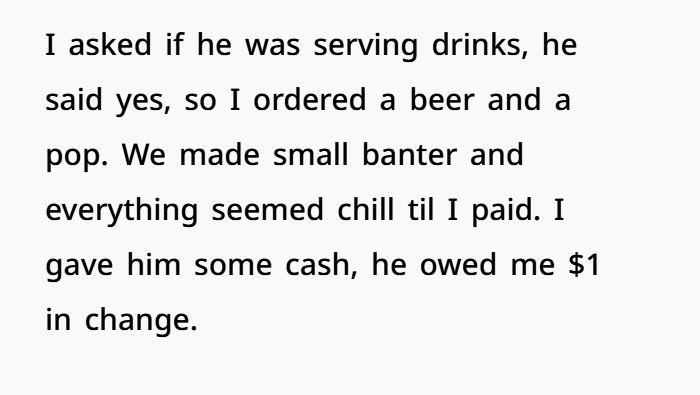
What was supposed to be a fun night at the theater took an unexpected turn for a customer and their fiancé. They had some time before the main performance, so they stopped at a small drink counter. The customer ordered a beer and a soda, chatted briefly with the bartender, and paid with cash. The bartender returned $1 in change, and the customer took it without thinking much about it. A moment later, things became uncomfortable.
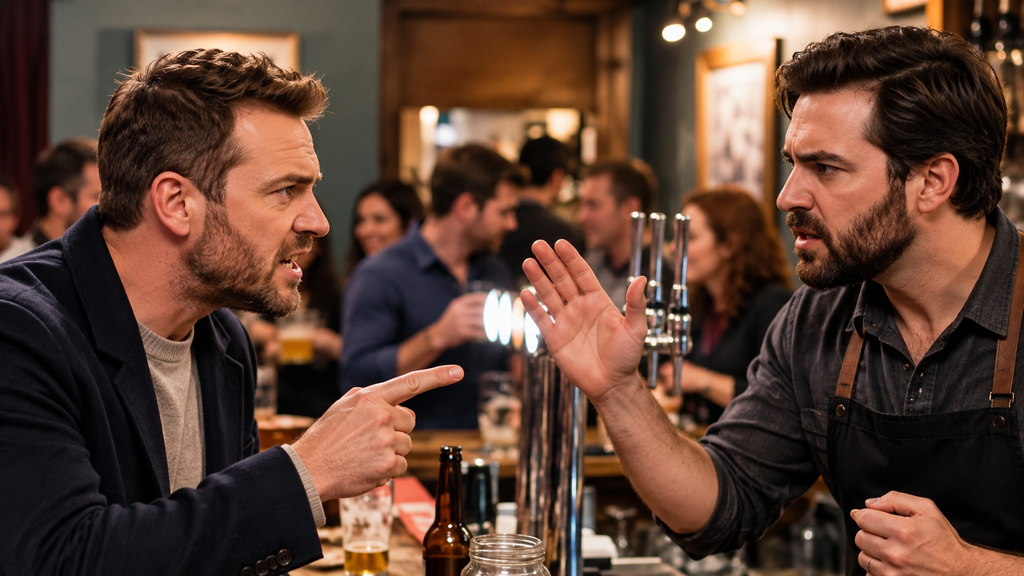
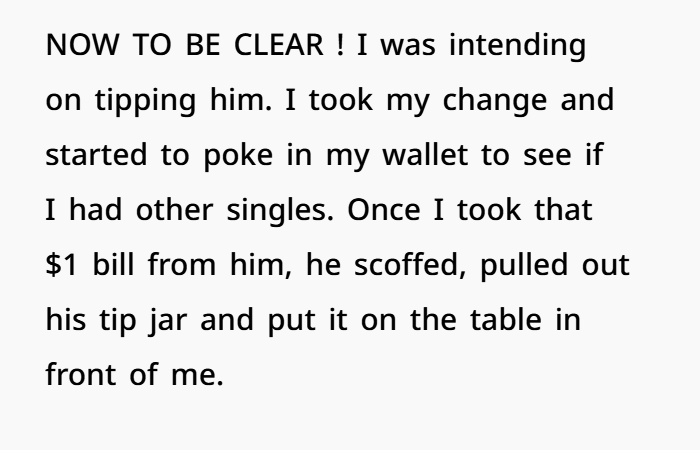
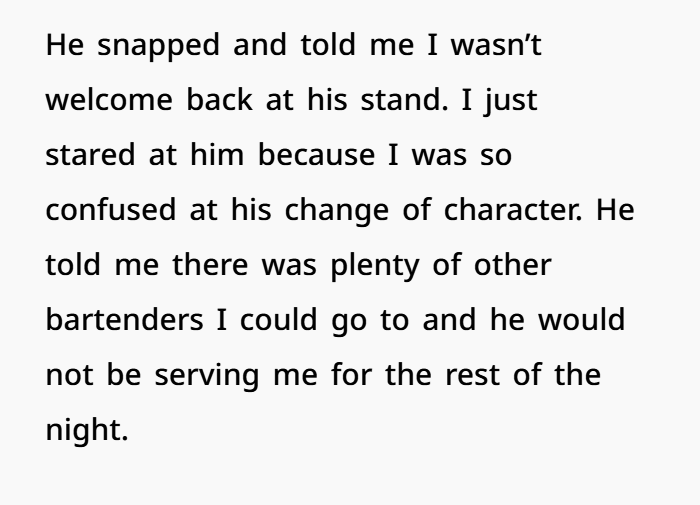
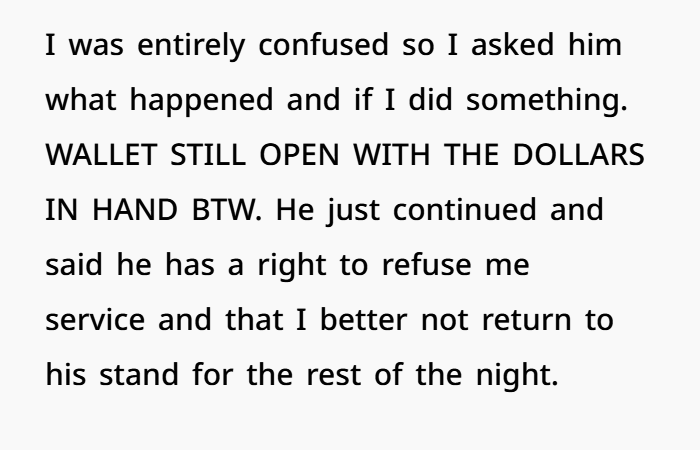
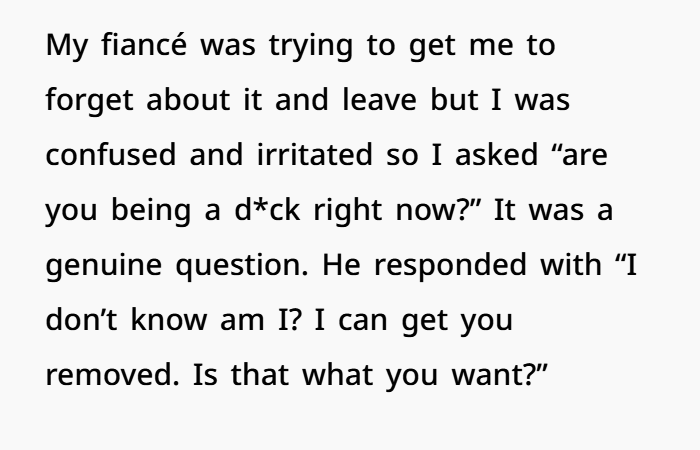
The customer was actually planning to leave a tip. They opened their wallet to find more cash, but the bartender seemed to think they were leaving without tipping. He made an annoyed sound, placed his tip jar on the counter, and told the customer he would not serve them again that evening. The customer was shocked by the sudden change in attitude. They tried to understand what had happened, but the bartender kept repeating that he could refuse service.
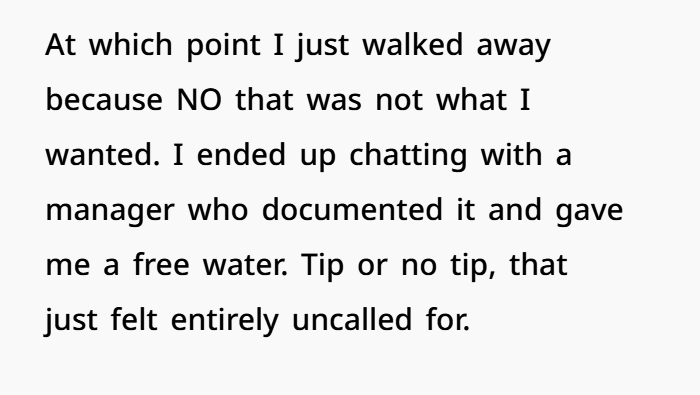
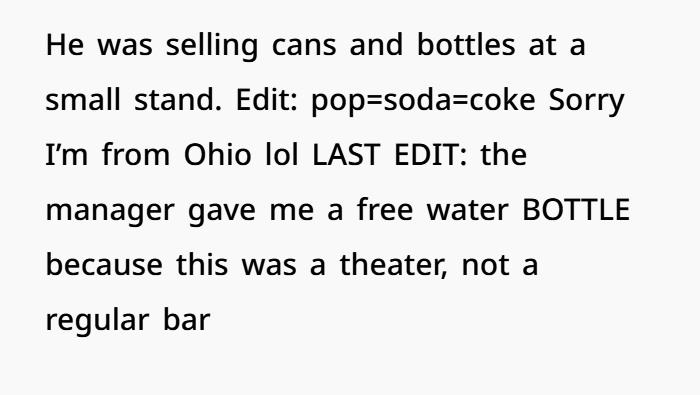
Things got worse when the customer asked why the bartender was being so unfriendly. The bartender replied that he could have them removed from the theater. The customer decided it was better to walk away than continue the disagreement. Afterward, they spoke to a manager about the experience. The manager took note of the complaint and offered a free bottle of water. It was a small gesture, but it showed that someone was willing to listen.
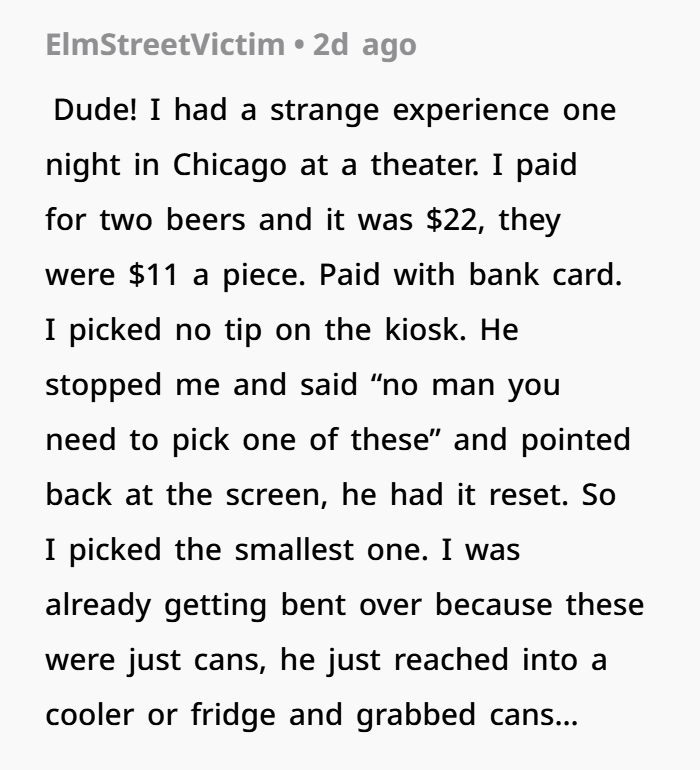
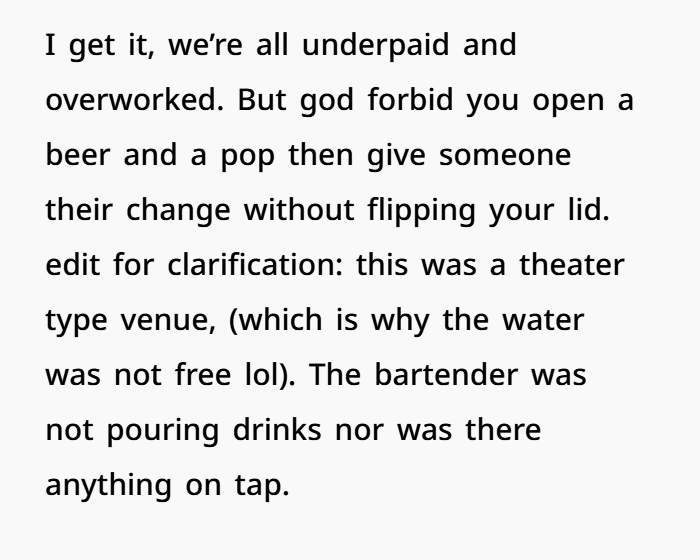
The customer later explained that the bartender was not mixing drinks or doing anything complicated. He was simply selling cans and bottles. They understood that service workers depend on tips and that tipping etiquette can sometimes be confusing. However, they felt that good customer service should include patience and basic respect. They had been ready to tip, but the bartender reacted before giving them a chance. Now, they are left wondering if accepting a single dollar in change should ever lead to such an unpleasant experience.
When Tipping Expectations Lead to an Uncomfortable Customer Experience
Tipping is a normal part of dining out in America. Most people leave a little extra money at restaurants, bars, and other places where they receive service.
But sometimes, tipping can lead to an awkward situation.
That is what happened when a customer bought two drinks at an entertainment venue.
After paying, the customer accepted their change and started looking for extra cash to leave a tip.
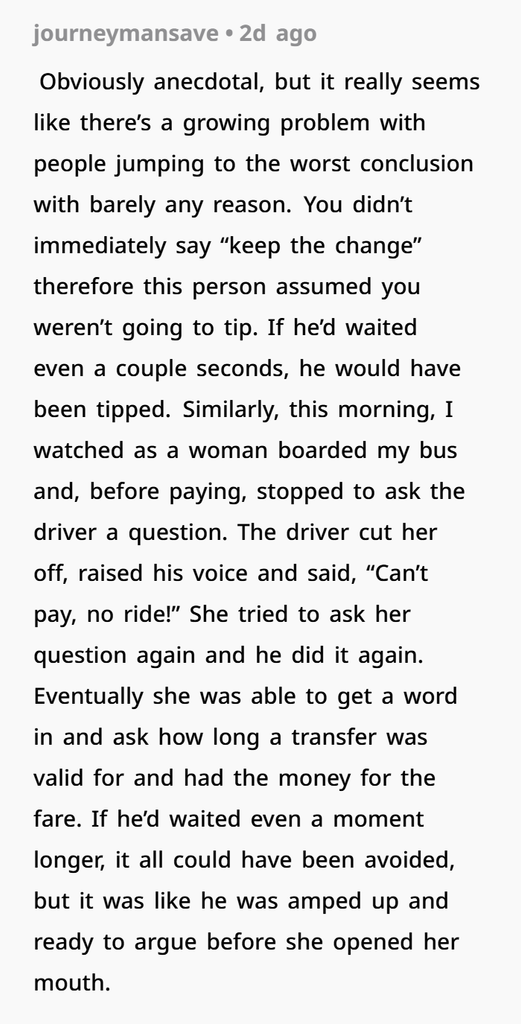
The bartender seemed to think the customer was leaving without tipping.
Instead of waiting, he told the customer they would not be served again. He also warned that they could be asked to leave the venue.
What should have been a quick and simple purchase turned into an unpleasant experience.
Why Tipping Has Become Confusing in America
Tipping has been part of American restaurant culture for a long time.
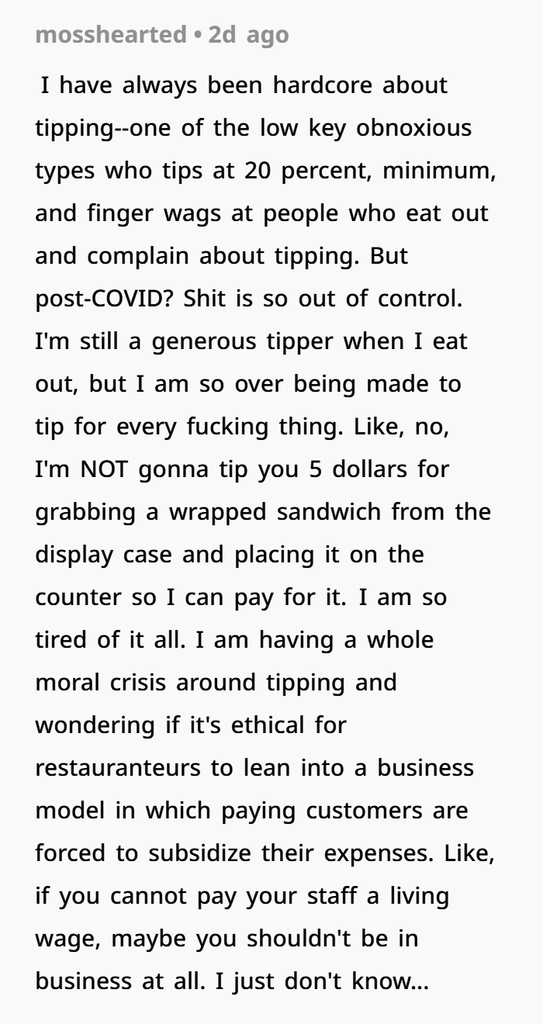
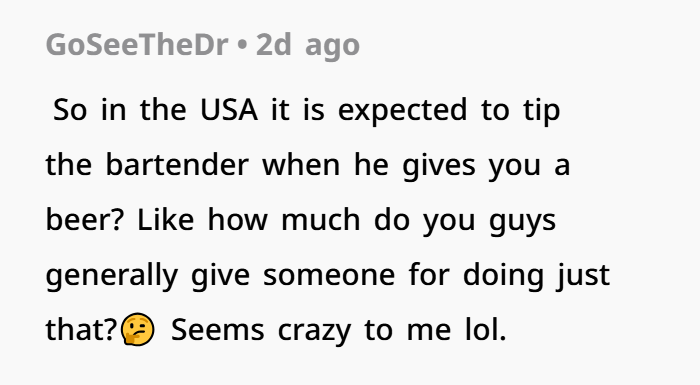
However, customers are now seeing tip requests in more places than before.
Coffee shops, food counters, entertainment venues, and other businesses often ask customers to add a tip when making a payment.
A 2023 Pew Research Center survey found that 72% of U.S. adults believed tipping was expected in more places than five years earlier.
That shows how much tipping expectations have changed.
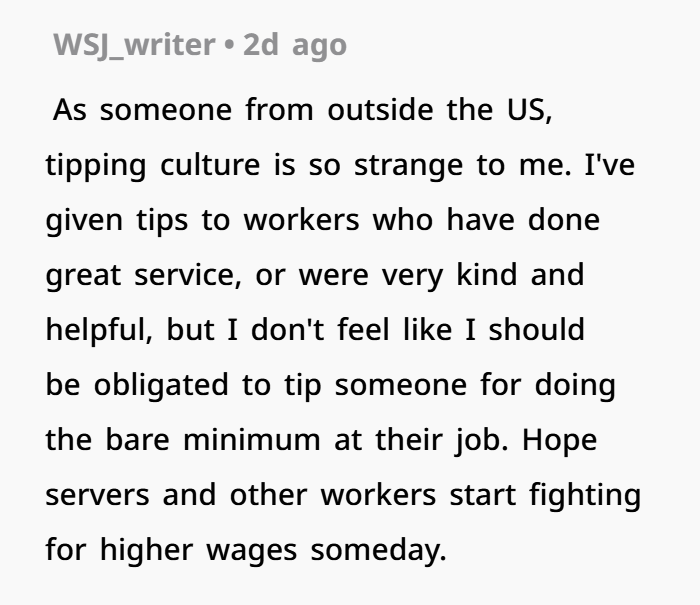
Some customers are happy to leave extra money for almost any service.
Others prefer to tip when someone prepares food, serves a meal, or provides extra help.
With so many different opinions, it is easy for customers and employees to misunderstand each other.
Is Tipping Required or Optional?
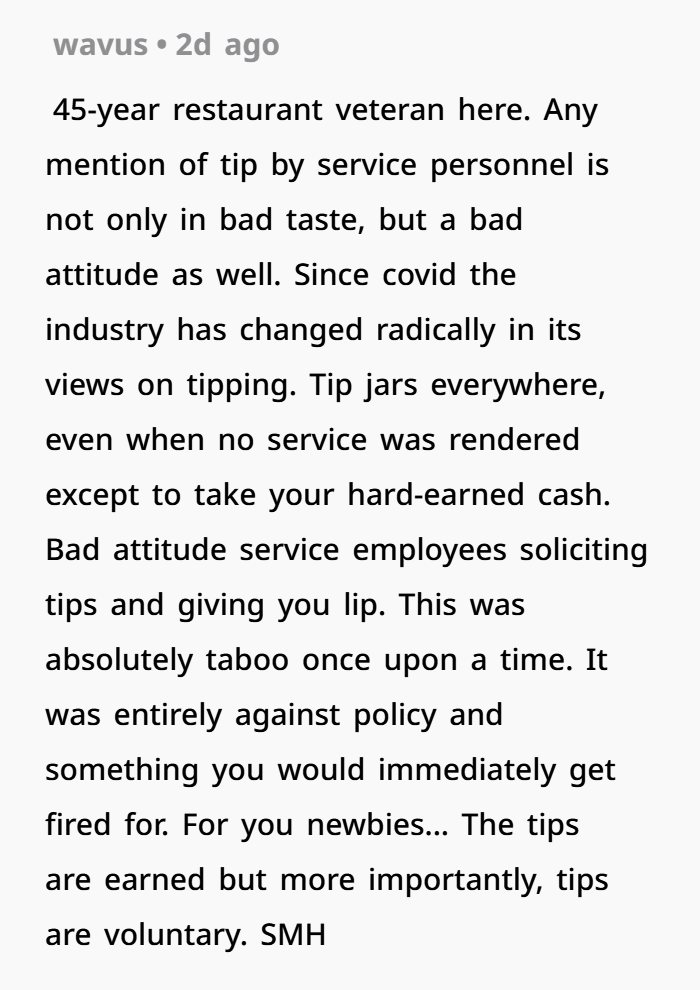
In most situations in the United States, tipping is a personal choice.
Customers can decide whether to leave a tip and how much they want to give.
The U.S. Department of Labor explains that voluntary tips are different from required service charges.
A tip is generally money that a customer chooses to give.
A service charge, on the other hand, is a fee that a business adds to the bill.
Some restaurants and entertainment venues include automatic service charges, so checking the receipt is always a good idea.
Many service workers depend on tips as part of their income.
That is important to remember.
But customers should still be treated politely, even when there is confusion about a tip.
In this case, the customer had not refused to leave anything. They were still looking for cash.
The Bartender Made an Assumption Too Quickly
The biggest problem in this story was the bartender’s quick reaction.
The customer had already paid for two packaged drinks.
After receiving their change, they began checking for more money.
The bartender apparently assumed that no tip was coming.
He then told the customer they could not return to his stand.
That seems like an unfair response based on the details shared.
The customer was not arguing about the price or refusing to pay.
They simply needed a moment to find the tip money.
A little patience could have prevented the misunderstanding.
Good Customer Service Makes a Difference
Working at a busy venue can be stressful.
Employees may have long lines, loud surroundings, and many customers waiting for help.
Even so, good customer service is important.
Customers want to feel welcome and respected when they spend money at a business.
Simple things like speaking politely, listening carefully, and staying calm can make a big difference.
In this situation, the bartender could have waited a few seconds before deciding what the customer intended to do.
Instead, the conversation became tense.
For businesses, moments like this matter.
Poor customer experiences can affect online reviews, customer satisfaction, and whether someone wants to return.
Can a Business Refuse Service?
Businesses in the United States can sometimes refuse service for valid reasons.
For example, a venue may have rules about customer behavior, safety, or payment.
However, the right to refuse service has legal limits.
Federal, state, and local laws may protect customers from certain kinds of discrimination.
Title II of the Civil Rights Act of 1964, for example, protects against specific forms of discrimination in covered public businesses.
That does not mean every refusal of service is illegal.
Based on this story alone, there is not enough information to say that the bartender broke the law.
The bigger concern is how he handled the customer.
Refusing future service because of an assumed missing tip does not seem like a reasonable way to solve a simple misunderstanding.
Should Tipping Depend on the Type of Service?
Not every service experience is the same.
At a restaurant, a server may take orders, bring food, refill drinks, and check on customers throughout their meal.
A bartender may spend time preparing cocktails or handling several orders at once.
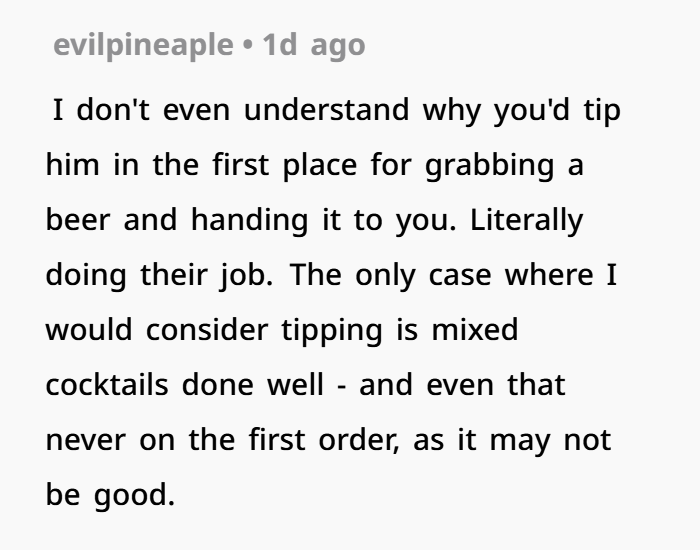
But at a concession stand, an employee might simply hand over a sealed drink or packaged snack.
Customers often consider these differences when deciding how much to tip.
Some people leave a small amount for quick counter service.
Others prefer to tip more when they receive extra attention or help.
Both workers and customers may have different expectations.
What matters is keeping the interaction respectful.
A customer should not feel pressured or embarrassed while deciding whether to leave a voluntary tip.
The Customer Could Have Responded More Calmly
The customer was understandably frustrated after being told they could not return.
During the disagreement, they used an insulting word when speaking to the bartender.
That was not the best way to handle the situation.
Even when someone feels unfairly treated, harsh words can make an argument worse.
A calmer response might have helped both people understand what happened.
Still, the bartender had already reacted before the customer finished handling their money.
That is an important part of the story.
The disagreement began with an assumption that the customer was not planning to tip.
The Manager Tried to Make Things Right
After the incident, the customer spoke with a manager.
The manager listened to the complaint, documented what happened, and offered complimentary bottled water.
It was a small gesture, but it showed that the complaint was taken seriously enough to receive a response.
We do not know whether the bartender received a warning or whether the business took any further action.
Those details were not shared.
However, listening to customer feedback is an important part of running a successful business.
When customers have a bad experience, they want to know their concerns matter.
A respectful response can help rebuild trust.
Why Customer Satisfaction Matters for Businesses
A single bad experience can affect how a customer feels about a restaurant, bar, or entertainment venue.
People may forget the price of a drink, but they often remember how an employee treated them.
That is why customer service training is so important.
Employees should know how to handle payment questions, tipping concerns, and customer complaints without creating unnecessary arguments.
Clear payment policies can also help prevent confusion.
For example, businesses can explain service charges on menus, receipts, or digital payment systems.
This allows customers to understand the total cost before paying.
Businesses that focus on customer satisfaction, employee training, and respectful communication can create better experiences for everyone.
Good service also supports customer loyalty and a positive business reputation.
A Simple Misunderstanding Became a Bigger Problem
The frustrating part of this story is that the entire situation could have been avoided.
The customer was not trying to avoid leaving a tip.
They were looking for extra cash.
The bartender assumed the customer was finished paying and reacted before giving them time to explain.
Then the conversation became more uncomfortable when both sides grew frustrated.
It is a good reminder that we do not always know what another person is planning to do.
Sometimes, waiting a few seconds and asking a polite question can prevent a much bigger problem.
Final Verdict: The Bartender Was Out of Line
Based on the customer’s account, the bartender did not handle the situation well.
The customer had paid for the drinks and was still looking for cash to leave a tip.
There was no clear reason to assume they were refusing to tip.
Telling the customer they could not return and warning that they might be removed from the venue was too strong a reaction.
The customer could have chosen better words during the disagreement, but the bartender’s assumption started the problem.
Service workers deserve fair treatment and respect. Customers deserve those same things.
The takeaway: Tipping should be a way to show appreciation for good service, not something that creates pressure or uncomfortable situations.
A little patience, kindness, and clear communication can make the experience better for everyone.
The Comments Are In