
How to Avoid Becoming “Mommy McBangmaid” When He Wants to Move In
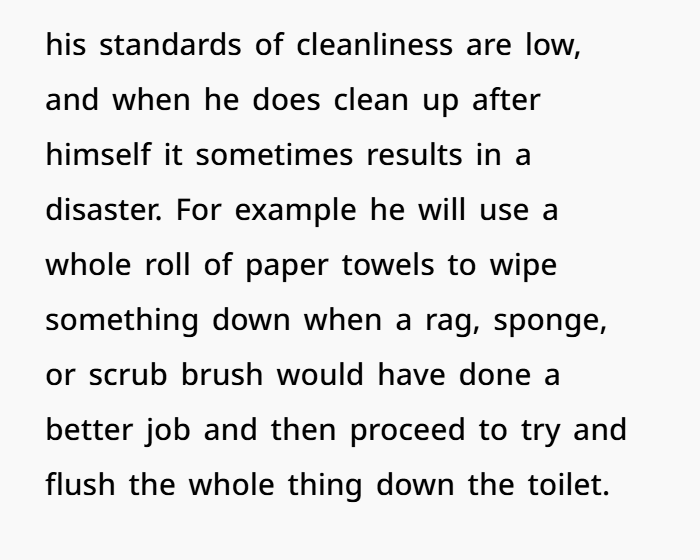
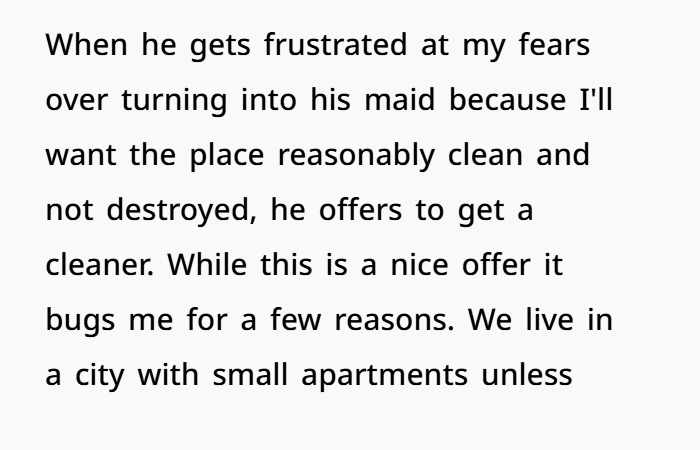
You’re in a really solid place with your boyfriend of several years (37F you / 30M him). You say things are serious and strong: he supports your career, your solo travel, your friendships. But when he brings up living together, you audibly cringe. And the reason is totally valid: you worry that because he’s never really lived on his own and his cleaning habits (or lack thereof) raise red flags, you’ll end up in the roommate/maid hybrid role you absolutely don’t want.
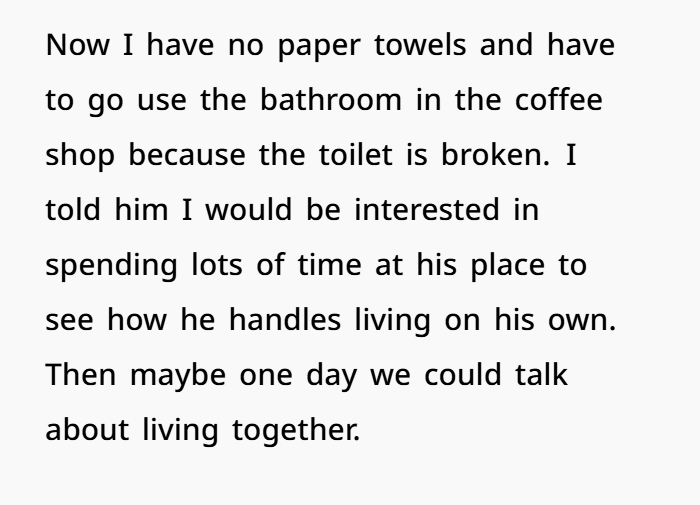
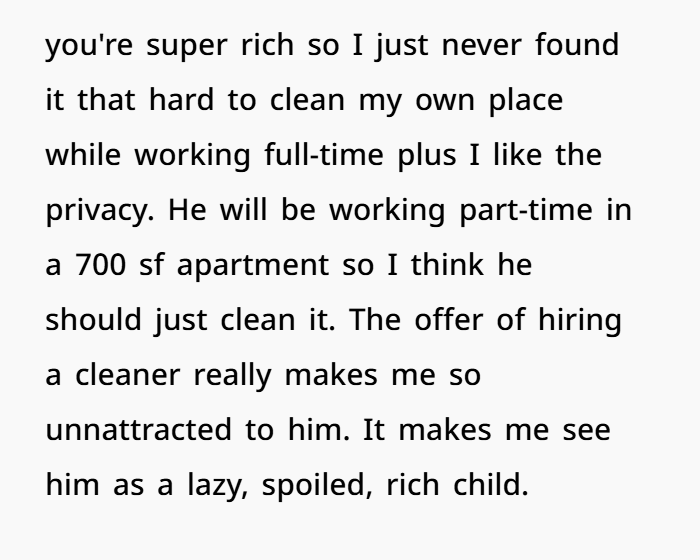
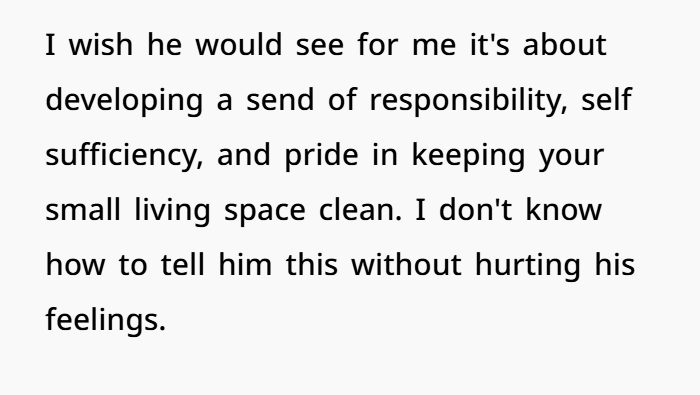
You’ve tried to propose a compromise: spend a lot of time at his place first, see how he manages living solo and his habits, then maybe talk about moving in together. Your fear is that when you do move in, you’ll wake up one day realizing you’re the one doing the maintenance and mental labour, while he relaxes in comfort and mess. He offers to hire a cleaner — which might sound thoughtful, but for you it signals “I don’t take basic responsibility for my space” and makes you feel unattracted to the dynamic. You want him to understand: it’s not about perfection, it’s about responsibility, self‑sufficiency, and pride in a shared home — not you always cleaning up after him.
People who are barely able to look after themselves can be really unattractive to others

The poster’s boyfriend comes from a very wealthy family, and he has never lived alone, so he doesn’t know how to look after himself





If you’re googling things like living together responsibilities, division of labour in relationships, mental load of cohabiting, then you’re tapping into some big‑ticket issues. Let’s unpack what’s going on, what research says, and how you can frame this talk so he understands without feeling attacked.
1. Cohabitation isn’t just “let’s live together”
Living together isn’t a simple upgrade of a relationship; it changes everything. As one article puts it, when two people move in together, they don’t just share a bed—they share space, belongings, energy, rhythms, habits. One Love Foundation+1
And this transition has been shown to bring more conflict. In one study, couples who moved in together reported more disagreements than couples who were dating but living apart. Institute for Family Studies+1
So your unease is not just nitpicking: you’re recognising a real shift in dynamic. If one partner is poorly prepared for that shift—e.g., no habit of maintaining their own space—it’s a red flag.
2. The “invisible load” and cleaning bills
You mention you fear becoming his maid. That word “maid” is strong—but what you’re really pointing at is the invisible labour: the cleaning, the mental reminders (“Did you take out the trash?”), the “I’ll just do it because you won’t” attitude. Psychologists call this the mental load of household labour. One paper shows that women often bear not only the tasks, but the planning, monitoring and emotional weight of keeping a home. arXiv
When you move in together, the division of labour becomes hugely important. One article says: division of labour is one of the top subjects couples argue about. Psychology Today
But it’s not just “who does what” — it’s whether one person ends up doing the bulk of everything, including hidden tasks like organizing, reminding, and taking responsibility for communal space. That’s exactly what you’re trying to avoid.

3. Expectations and roles: talk them out
The piece from Greater Good Science Center recommends three big topics to discuss before you live together: expectations, household roles, and communication. Greater Good
You can use that as your framework. For example:
- Expectations: Why do we want to live together? What does “living together” mean for each of us?
- Household roles: Who will take care of what? What standard do we both expect? What happens if one is off?
- Communication: How will we raise issues without blame? How will we check in if things aren’t working?
If you skip this, you’re risking “sliding” into cohabitation without a clear plan. Research suggests that when couples just “slide” into living together without reflecting on these things, they may be less satisfied later. Institute for Family Studies+1
4. Your boundary is valid: it’s about self‑respect and shared responsibility
You’re absolutely right that wanting someone’s place “reasonably clean and not destroyed” is not asking for perfection — it’s asking for basic respect. When you hear “He’ll hire a cleaner,” your brain flags: “Wait, so your baseline is messy enough you need someone else? And you’re okay with that?”
You want a partner who shows pride in his living space, even if the space is small and work‑sized; who says: “Yeah, I’ll handle taking out the trash, cleaning the bathroom, vacuuming.” That signal matters. If he doesn’t show that now, you’ll likely face the everyday grind of you managing the home and him being fine with whoever else doing the grunt work (which might be you).
5. How you talk about this matters
You don’t want the conversation to feel like “you’re lazy and disgusting”—you want it to feel like “we’re a team and I want to be sure we’re set up for us.” Use “we” language. Make it about partnership, not blame.
Here are some do’s:
- “I love what we have, and I’m excited about next steps, but can we map out how we’ll keep the place so that neither of us feels like the cleaner or the critic?”
- “What does reasonable cleaning mean to you? What standard would you want if you were living on your own?”
- “I’m not looking for a maid—I’m looking for a home we both contribute to. So I need to see you taking responsibility in your own space so I know that when we move in together it’s a shared effort.”
- “I really appreciate the offer of a cleaner. I wonder if paying someone is something we do later. But for now, I need to see you comfortable keeping your space in shape on your own.”
And don’t forget to hear his side: what’s his view of cleaning/household tasks? What background does he bring? His living arrangements until now (with a maid, or with messy roommates) influence his baseline.
6. Practical steps & checkpoints
- Your idea of spending lots of time at his place is gold. Use this as a trial run. Notice how he handles: taking out trash, cleaning up after meals, clearing clutter, making the bed, laundry.
- Set small, low‑pressure shared tasks now. Example: at his place one weekend, both of you pick a task like “wipe bathroom surfaces” or “clean stove” and see how it goes.
- Create a simple checklist of shared living expectations: e.g., “If we move in together: each person will do ___ every week (vacuum/clean bathroom), each month (wash sheets), and we’ll alternate the big clean every ___ weeks.”
- Have a check‑in after a month of this trial: “How did it feel this week when we were here? Did anything bug you? What did you like?”
- Keep your own space until you feel comfortable. It’s okay to say: “I’m not ready yet to move into a shared space permanently until we’ve seen how this goes.”

7. What happens if he resists?
If he gets frustrated or defensive, try to stay calm. His reaction probably comes from: he wants to move in because he loves you and sees it as the next step. It can feel like you’re rejecting the relationship milestone. But you’re not rejecting him, you’re asking for realistic alignment.
If he insists “I’ll hire a cleaner” and that doesn’t sit well for you, you might say: “Sure, but a cleaner doesn’t substitute for you taking basic responsibility. I need to know you’re comfortable doing that too.” If he sees it as you being unfair/unreasonable, that’s a red flag—not you. Because this is about day‑to‑day living, not romance only.
Remember: moving in together isn’t a guarantee of better relationship quality. It oftentimes exposes hidden issues. One article says: “Living together may make it harder to know if he’s the one.” Institute for Family Studies So you’re wise to slow down and not rush just because he wants it.
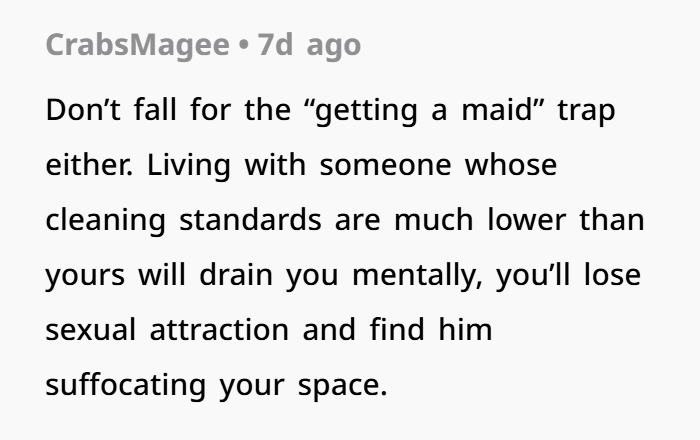
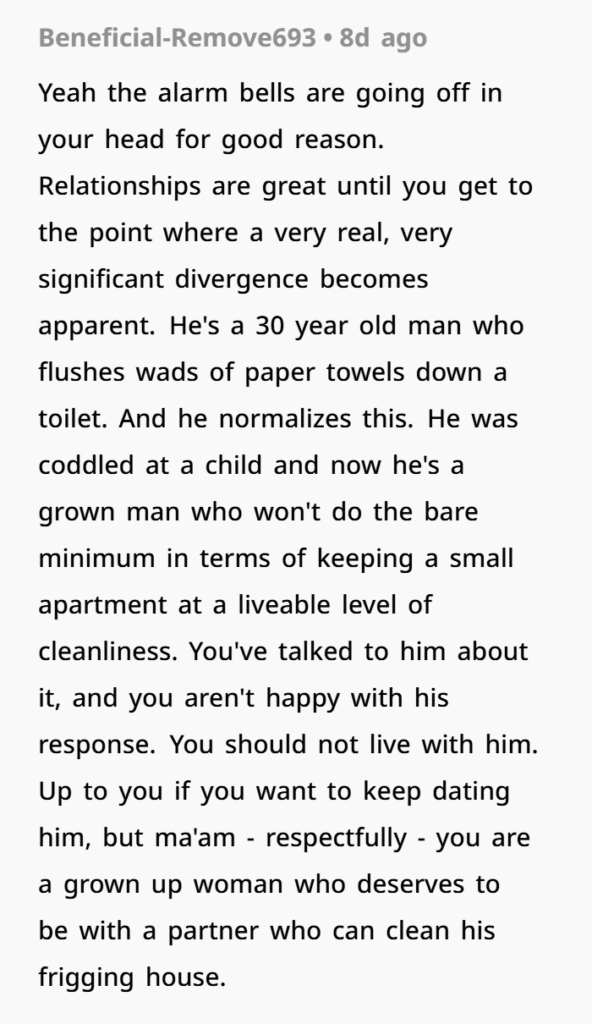
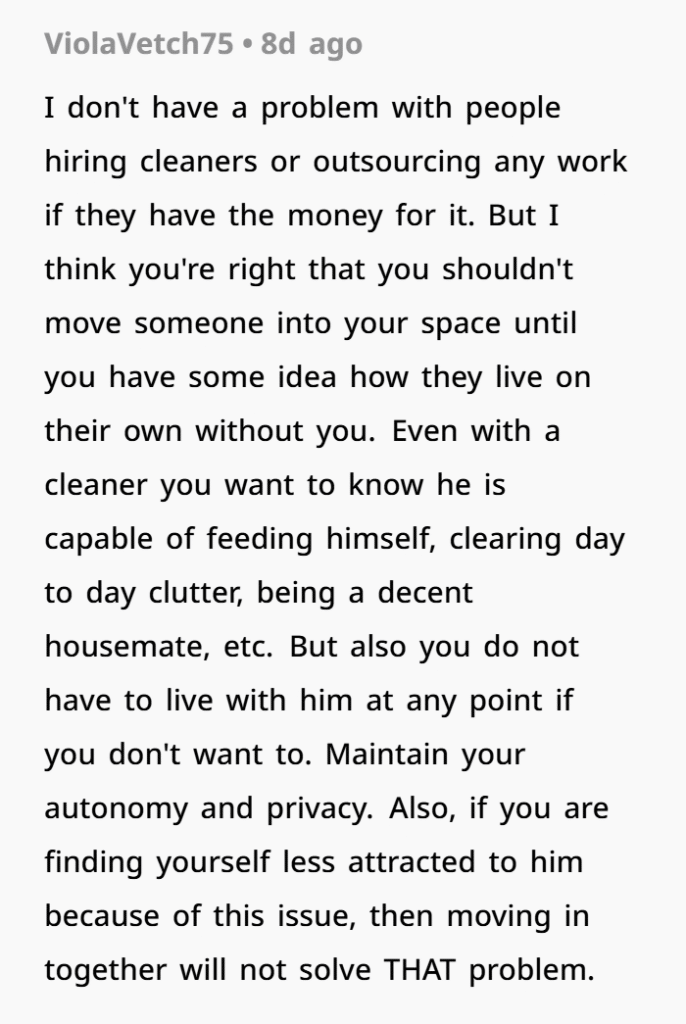
Netizens advised that if she really finds the manchild unattractive, then moving in with him will only make things worse between them



You love him. You want to move forward. But you don’t want to lose yourself—or to step into a role you’ll resent—just because the lease is signed. That’s smart.
You’re asking for something reasonable: A partner who takes shared responsibility, respects the home, and treats you as an equal—not the cleaner‑in‑chief. Use the frameworks above. Have the talk. Use experiences now (trial stays) to gather real data, not just hopes. Set your boundaries clearly. And if he’s really on the same team, he’ll step up—or at least show willingness to change. If not, you’ll know what you’re signing up for.
You don’t have to compromise your dignity for “living together” to feel like growth. It can feel like growth—but only if it’s mutual, respectful, and responsible.