20 Mind-Blowing Street Art Murals by Artez That Turn Grey Walls Into Vibrant Masterpieces

If you have ever seen a plain grey wall and wished it looked more interesting, you will love the artwork of Serbian street artist Artez. He turns simple concrete walls into beautiful pieces of art filled with color, creativity, and imagination.
Artez creates large, realistic murals that combine people, nature, and unique patterns. His street art has a peaceful feeling and often tells a story through every detail.
His murals are more than just paintings on walls. He uses the shape of buildings, including windows, corners, and ledges, to make his artwork feel connected to the space around it. A window can become part of the scene, or a wall feature can turn into a creative element of the design.
Each mural invites people to stop and look closer. Whether he paints a person surrounded by flowers or a calm portrait mixed with the city background, Artez shows how creativity can transform ordinary places.
His work is a great example of modern street art, urban murals, and outdoor design inspiration. These beautiful wall paintings remind us that even simple spaces can become special with imagination and artistic vision.
More info: Instagram | artez.bigcartel.com
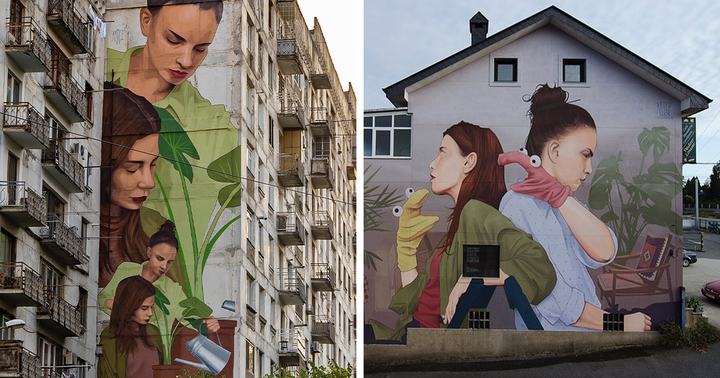
#1 “Growth”

Tbilisi, Georgia, 2022
For this mural, I wanted to show the ideas of growth, teamwork, and connection through art. The design uses repeated shapes and different sizes to create a simple story.
When we care for something together, whether it is a plant, a project, or a relationship, it can grow stronger over time. Working together and trusting each other can create something beautiful.
Just like planting seeds, growth takes patience and care. It may not happen quickly, but small steps can lead to meaningful changes.
This artwork is a reminder that both life and creativity need time, attention, and heart to grow.
#2 “Simple Acrobatics”

Boulogne Sur Mer, France, 2024
#3 “Trust Mural”

Tbilisi, Georgia, 2020
For this mural, I wanted to create two connected walls that tell one story about trust and connection. I had this idea for a long time, and when I finally created it, the result was even better than I expected.
The artwork was inspired by the famous story of William Tell and his son. I added my own creative change by replacing the apple with a pear and leaving an empty space where people can imagine what happens next.
Creating street art is different from painting on a canvas. Murals become part of the place around them. The light, weather, people, and energy of the area all become part of the artwork.
What makes this project special is that it connects one wall to another and creates a bigger story. It can inspire new ideas, creative projects, and future artwork.
This mural shows that street art is more than decoration. It is a way to share stories, inspire imagination, and create connections between people and places.
#4 “Composition With A Human Body And A Metal Chair”

Bourgoin-Jallieu, France, 2023
For this mural, I wanted to explore how different parts of an artwork can work together. Instead of making the human figure the only focus, I gave other elements an important role in telling the story.
In this piece, the chair becomes a key part of the design. It helps create balance and supports the figure while adding its own meaning to the artwork.
The chair represents ideas like stability, patience, and trust. These are things that often go unnoticed but help keep everything together.
I am happy with how this mural turned out because it allowed me to explore new ways of creating art. It helped me look deeper into balance, shapes, and storytelling through street art.
#5 “Sand Stories”

Cairo, Egypt, 2018
This mural was inspired by a simple everyday moment I noticed while visiting Egypt. While creating this artwork, I had the chance to learn more about the country’s history, culture, and traditions.
Egypt is known for famous landmarks like pyramids and ancient history, but it is also a place full of people, stories, and unique experiences.
The person in this mural helped start many conversations. People stopped to look at the artwork, share their thoughts, and tell their own stories. The wall became a way to connect with others and learn from different perspectives.
That is what makes street art special. A mural is not only a painting — it can share stories, bring people together, and create meaningful connections between art and the community.
This artwork is a reminder that creativity can help us see places and people in new ways.
#6 “Simple Acrobatics”

Cheltenham, UK, 2024
#7 “Simple Acrobatics”
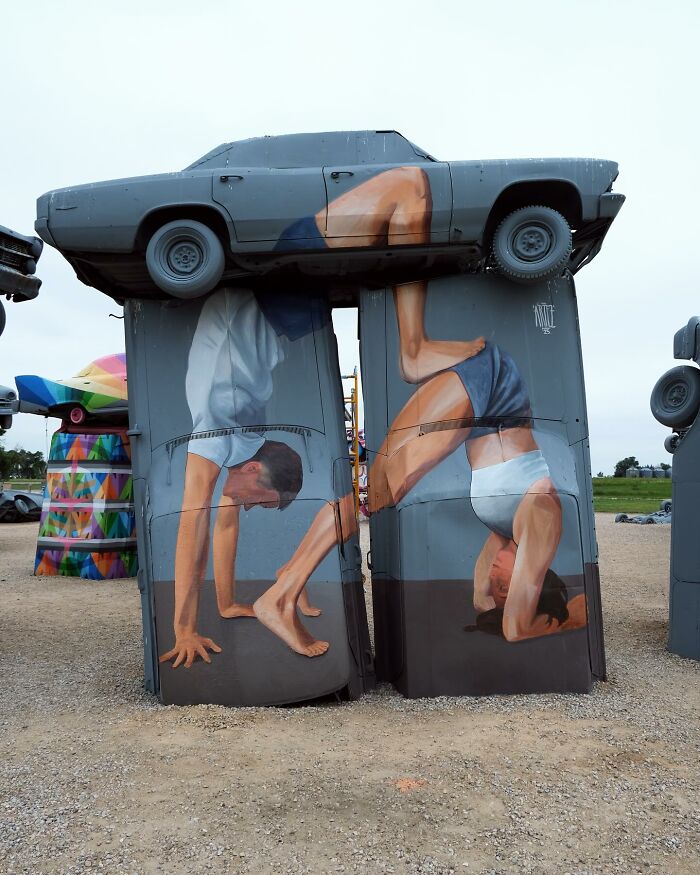
Alliance, Nebraska, 2025
#8 “The Future Is In Your Hands”

Valjevo, Serbia, 2017
#9 “My Piece Of Land”

Pozarevac, Serbia, 2017
#10 “Riding Her Horse”
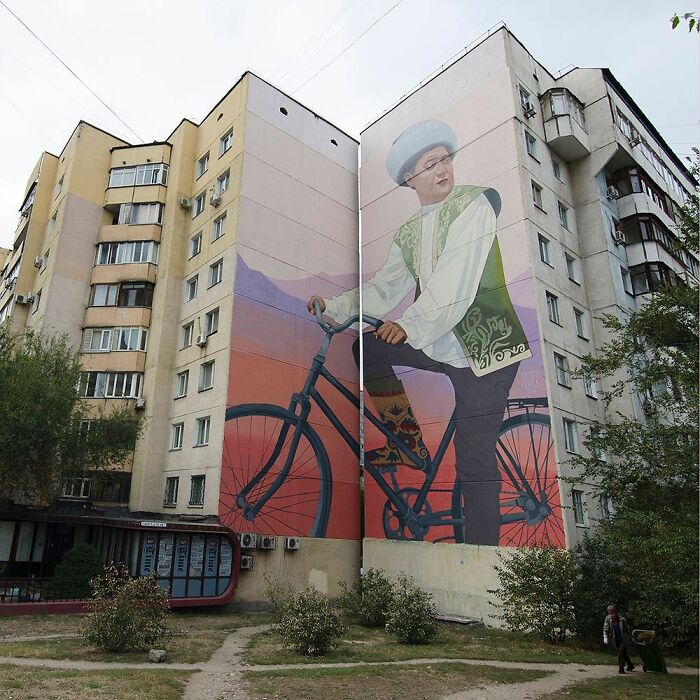
Almaty, Kazakhstan, 2018
Some art projects are more challenging than others. They test an artist’s patience, energy, and determination. This mural was one of those projects.
There were many difficulties along the way, including changing weather, tiredness, health challenges, and problems with planning. Creating a large artwork is not always easy, but the goal is to keep moving forward.
This mural covered 600 square meters and was completed in just 7 days. It was a demanding experience, but the challenges made the final artwork even more meaningful.
During my travels, I have met people who feel pressure to follow certain expectations and worry about being judged for their choices. These experiences have reminded me how important freedom and personal choice are.
Everyone should have the chance to choose their own path and create a life that feels right for them. Equality means respecting different choices and breaking old stereotypes.
Tradition can teach us about our past, but the freedom to make our own decisions helps shape the future. This mural represents creativity, courage, and the importance of being true to yourself.
#11 “Preparing For Pugnaloni”
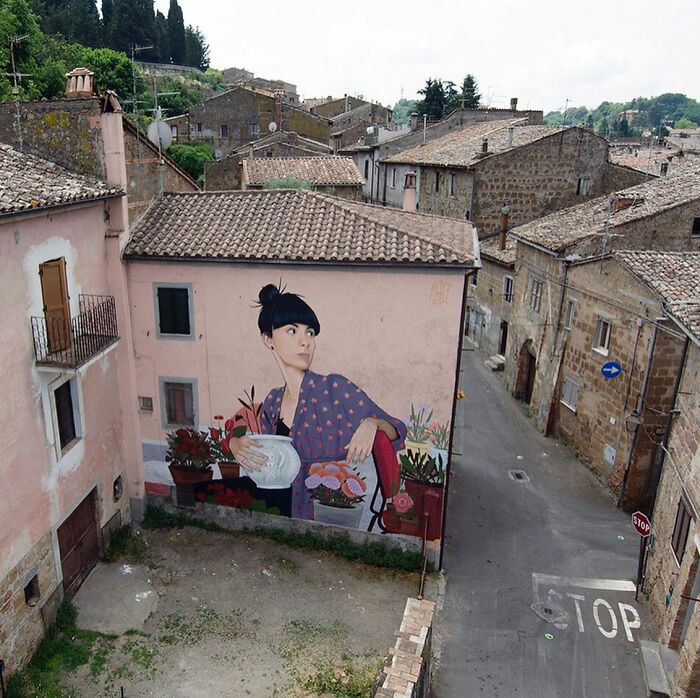
Acquapendente, Italy, 2019
This mural was inspired by the beautiful Pugnaloni, large flower and leaf mosaics created in Acquapendente, Italy. These colorful artworks are made every year to celebrate the Madonna del Fiore festival, which takes place in May.
The Pugnaloni tradition has a long history. It began in 1166 and became a symbol of freedom, unity, and creativity. Over the years, these flower mosaics have shown how art can bring people together and keep important traditions alive.
Every year, local communities work together to create these impressive floral designs. Different groups spend time preparing their artwork, sharing ideas, and celebrating their culture.
This mural is a tribute to that special tradition. It combines history, creativity, and community spirit to show how art can connect people across generations.
Muse: Chiara Carrarini
#12 “Today Is Tomorrow Of Yesterday”

Rheinberg, Germany, 2019
#13 “Silencio”

Ordes, Spain, 2019
Sometimes our feelings and body language say more than words. We all have moments when we create imaginary conversations in our minds.
We imagine what someone might say, how they might react, or how a conversation could go. These thoughts can feel very real, even though they are only happening in our imagination.
But these made-up conversations are not the same as real communication. We are creating our own version of another person instead of giving them a chance to share their true thoughts.
The next time you notice yourself having these imaginary talks, try to step back and have a little fun with your thoughts. You can laugh at yourself, be creative, or simply remember that real conversations happen when we truly listen to each other.
This mural explores the connection between emotions, thoughts, and human communication.
#14 “Aim For The Stars”
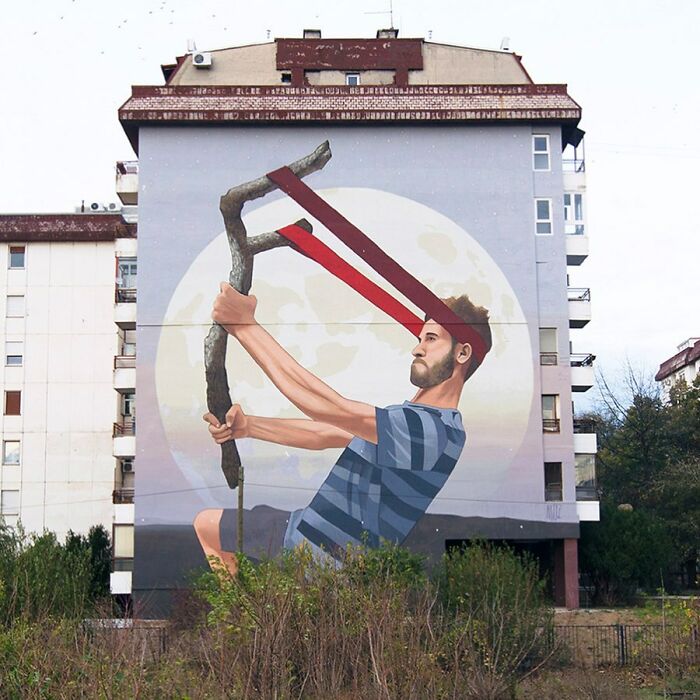
Belgrade, Serbia, 2019
#15 “Precious Things”

Minsk, Belarus, 2019
For this mural, I wanted to bring together two different ideas: tradition and technology. These themes were new for me, but that made the project more interesting.
I learned that the most important part of creating art is building a meaningful story. The goal is not only to make something look beautiful, but also to share an idea that people can understand.
For this artwork, I focused on a simple moment from everyday city life — people carrying their backpacks in front of them instead of on their backs. In many places, people do this to protect their belongings, but it also shows how we adjust to the world around us.
The backpack in the mural represents care, protection, and the things that are important to us. Inside it, there is a laptop showing modern technology, along with small symbols of Belarusian culture, including a straw owl, an old bus ticket design, and a Vasilok flower.
Together, these details show how the past and the present can exist side by side. Tradition and technology both have value, and both are worth protecting.
This mural is a reminder that the things we choose to protect can tell a story about who we are and what matters to us.
#16 “Girl With Plants”

Mostar, BIH, 2020
#17 “Flower”

Santa Sofia D’Epiro, Italy, 2021
#18 “Story Of Two Towns”
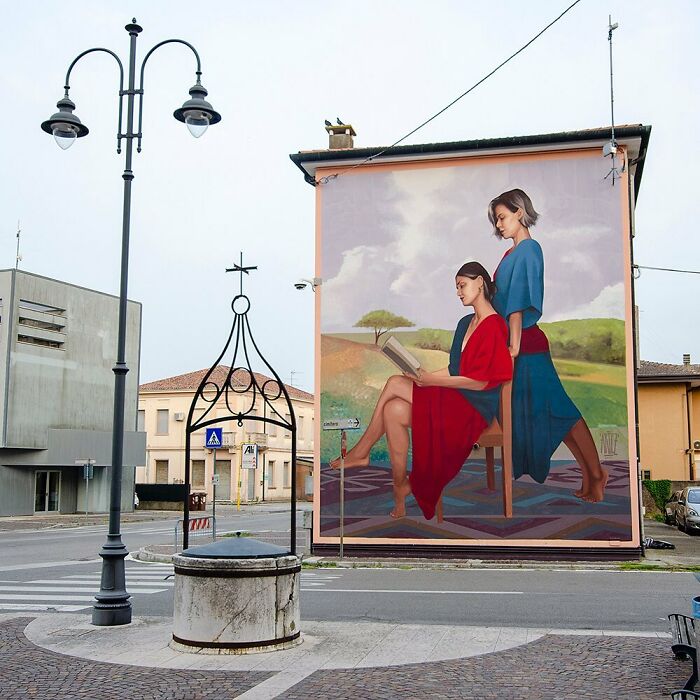
Porto Viro, Italy, 2021
“‘Story of two towns’ that became one on 1st of January 1995 when Donada and Contarina, two small communes in the Province of Rovigo, merged to become one.”
#19 “Besties And A Rubber Pig”

Stornara, Italy, 2021
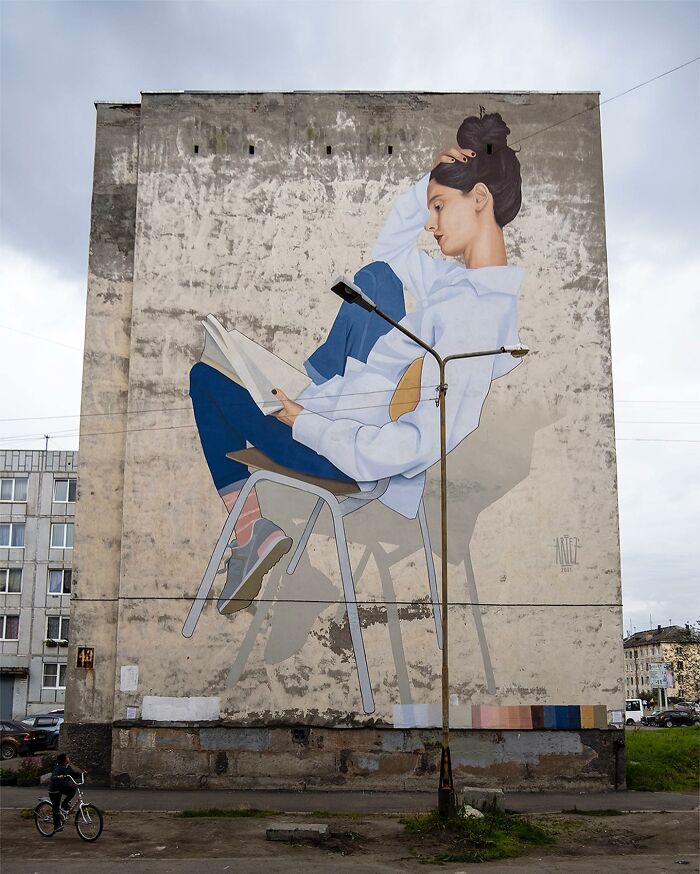
#20 “Beautiful Decay”
Serving on a submarine during World War II was straight-up one of the riskiest jobs you could have. Those steel tubes went deep under the ocean with no guarantees they’d come back up. Many WWII submarines just vanished without a trace — no wrecks, no survivors, nothing. But every once in a while, a few lucky souls made it out alive, and their survival stories sound like something out of a movie.
One of the wildest of these stories is about the USS Tang, an American submarine that met a terrifying fate in 1944. Most people have never heard of it, but it’s honestly one of the most jaw-dropping tales from the war. Out of 87 crew members, only nine survived after the sub was hit and sank off the coast of China on October 25, 1944.
Those nine didn’t just survive the sinking — they had to pull off an insane escape from the depths of the ocean, and then endure almost a year as POWs (Prisoners of War) in brutal Japanese camps. Their nightmare didn’t end when they reached the surface.
Still, the fact that anyone survived the sinking of the USS Tang is nothing short of a miracle. It’s a story packed with danger, courage, and a bit of impossible luck — the kind of stuff that reminds you just how unpredictable life was under the sea during World War II.
The Tang was the most successful U.S. submarine ever
Before its tragic end, the USS Tang was on an unbelievable winning streak. Honestly, things couldn’t have gone better for the crew. The sub kicked off its first war patrol on January 22, 1944, and from day one, these guys proved they were built different.
Even today, serving on a submarine is no easy gig — imagine living in a cramped metal tube under extreme pressure, both literally and mentally. But the Tang’s crew didn’t just handle it; they thrived. They were sharp, fearless, and ridiculously effective at their job.
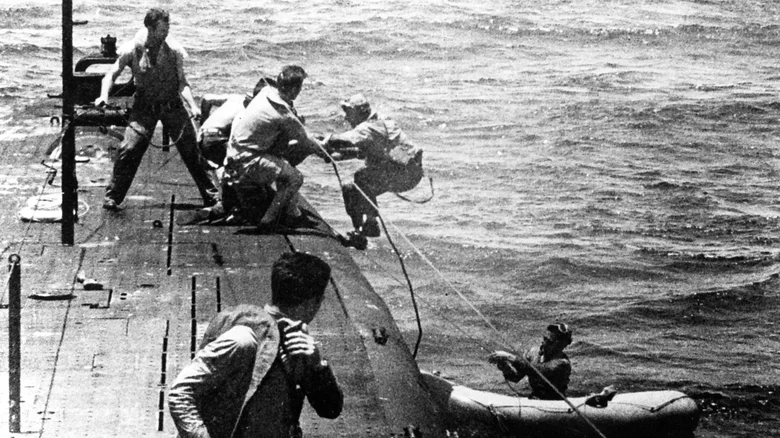
In just a short time, the USS Tang became one of the deadliest subs in World War II history. No other submarine came close to matching its record for the number and tonnage of enemy ships sunk. But here’s the thing — it wasn’t all about destruction. During its second patrol, the Tang pulled off something heroic: rescuing 22 Allied pilots who had been shot down. That’s still a record today — and it shows just how skilled and brave this crew really was.
Then came the fifth and final patrol — the one that made history for all the right and wrong reasons. According to Vice Admiral Charles Lockwood, it was “one of the greatest submarine cruises of all time.” And he wasn’t exaggerating. In just the last 24 hours before tragedy struck, the Tang sank ten enemy ships from two different Axis convoys.
The crew didn’t know it yet, but they were at the peak of their success — just moments away from the disaster that would make their story one of the most unforgettable in WWII naval history.
Then it went wrong
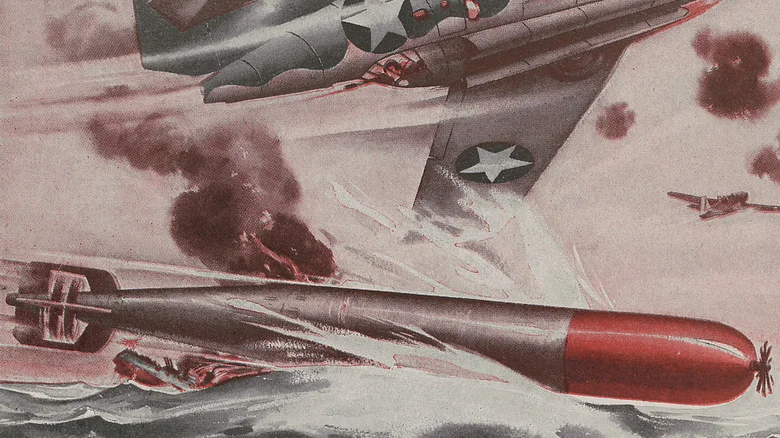
Here’s the crazy part — it wasn’t an enemy that took down the USS Tang, but one of its own torpedoes. Yeah, you read that right. The submarine that had destroyed more enemy ships than almost anyone else was sunk by its own weapon.
Sounds unbelievable, right? Almost as ironic as that German U-boat that got sunk by a toilet. But this wasn’t funny at all — it was a dark moment for the U.S. Navy during World War II. The tragic incident wasn’t about bad luck; it was about bad equipment. The Tang was armed with Mark 18 torpedoes, which were supposed to be an upgrade from the infamous Mark 14s that had been a disaster earlier in the war.
Problem was, the Mark 18s had serious flaws too — and the Navy already knew it. Other submarine crews had reported major issues, but nothing really changed. It was a deadly oversight that would end up costing lives.
On the night of the Tang’s fifth war patrol — her most successful mission ever — the crew had already sunk seven enemy ships. They were on fire, down to their last two torpedoes out of 24. The 23rd hit perfectly. But when they fired the 24th, disaster struck. The torpedo malfunctioned, looped back, and headed straight for them.
The captain tried to dodge, but there was no time. Just 20 seconds after launch, the Tang’s own torpedo slammed into her hull — a fatal hit that sent the submarine and most of her crew to the ocean floor.
After the war, Lieutenant Commander Lawrence Savadkin, one of the survivors, told an AP correspondent, “I was in the conning tower when the torpedo hit. It was like the world coming to an end.”
And honestly, for the Tang, it was.
The impact of the sub’s own torpedo was catastrophic
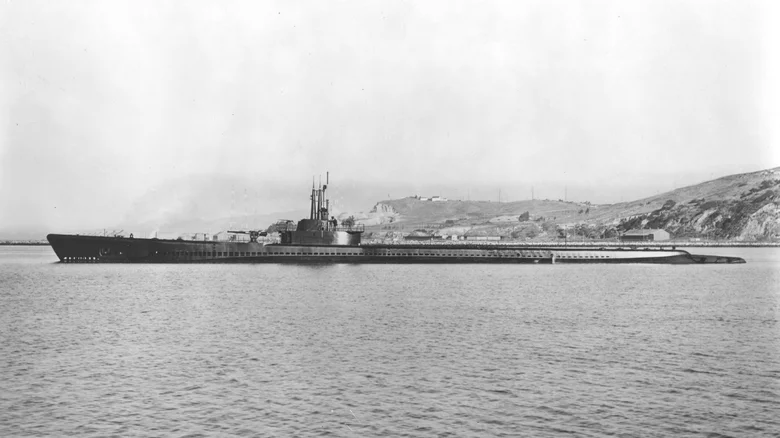
The blast from the USS Tang’s own torpedo was devastating. Some of the men were killed instantly, but dozens more were still alive as the submarine sank fast, crashing down to the ocean floor. Surviving that explosion didn’t mean they were safe — not even close. The impact had left many with broken bones, burns, and other brutal injuries. And now, they were trapped inside a flooding, burning submarine, hundreds of feet below the surface.
Three compartments filled with water almost immediately — every man inside drowned. In the chaos, a few survivors fought to stay alive. Jesse DaSilva, one of the few who made it, later told POLARIS that “water was pouring in from the open control room doorway.” With sheer strength and panic driving them, “two or three of us seized the door and with a great effort forced it shut.” That move probably bought them just a little time — but the danger was far from over.
Out of the 87 men who had started the mission, only about 30 were still alive after the explosion. And even they were trapped in a nightmare. DaSilva said, “There were about 20 of us in the crew’s quarters and the mess. We knew we couldn’t stay there long because of chlorine gas coming from the flooded batteries.”
They realized there was only one shot at survival — escaping through the forward torpedo room. But to get there, they’d have to move through the control room, which was already filling up with seawater. Every second that passed, the oxygen thinned, the pressure built, and the water kept rising.
These men weren’t just fighting for their lives — they were racing against time, trapped in the dark heart of the ocean, with death closing in from every direction.
The crew’s desperate escape attempt was delayed
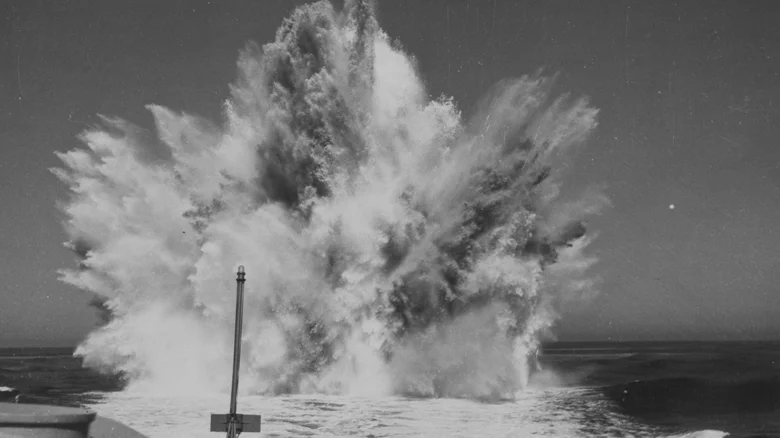
One of the USS Tang’s crew members, William Leibold, wasn’t trapped with the others when disaster hit. Against all odds, he made it to the surface. “I went down with the boat,” he later recalled. “I remember very clearly there was a distinct bump that made me start to swim back to the surface. It may have been when the stern hit the bottom.” (via Friends of the National World War II Memorial). Somehow, he survived that violent plunge — but the nightmare wasn’t over.
Once Leibold reached the surface, the ocean around him exploded with noise. Japanese ships above were dropping depth charges, trying to finish the job. Every blast shook the water, sending shockwaves deep below — and down there, his crewmates were still trapped, fighting to stay alive inside the wrecked submarine.
Inside the Tang, conditions were becoming unbearable. The air was toxic and thin, the lights were fading, and seawater was slowly claiming more of the sub. Survivor Jesse DaSilva told POLARIS, “The air worsened. The lights were getting dimmer, and we were using battle lanterns. The bulkhead near the forward battery grew so hot that the paint began to melt.” Imagine sitting in that heat, breathing in burning air, hearing explosions rumble above — and knowing one wrong hit could kill everyone left inside.
The men couldn’t even attempt to escape yet. The depth charges made it too dangerous. All they could do was wait — hoping the next explosion wouldn’t be their last. To stay busy and protect classified intel, they destroyed top-secret Navy documents and equipment, trying to make peace with the fact that their time might be running out.
Every minute dragged like an hour. Trapped at the bottom of the sea, surrounded by fire, gas, and the echo of explosions — it was pure hell.
The only known successful use of a Momsen lung
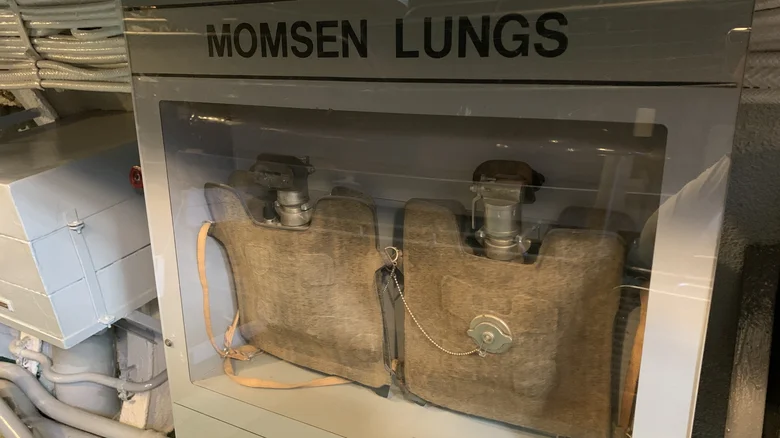
The Momsen lung — a clunky, early breathing device invented just before World War II — was never meant to be a hero’s tool. It was basically a small bag of oxygen strapped to your face, and honestly, it had never even been used successfully before. But now, at the bottom of the ocean, it was the only chance of survival for the crew of the USS Tang.
Preparing the device and making the dangerous swim to the surface wasn’t quick or easy. The men had to move painfully slow to avoid air embolisms — deadly bubbles that could form in their bloodstream if they rose too fast. It was a terrifying, hour-long climb toward the faint glimmer of light above.
Clayton O. Decker, one of the survivors, told the Oakland Tribune (via World War II On Deadline), “I was the first to go through the hatch with the lung. I floated for an hour before the others followed.”
Every inch upward was agony. Jesse DaSilva shared with POLARIS (via SS563.org), “I was the third one out. Someone had already let out the buoy line from previous escapes, and I wrapped my feet around the rope and slowly let myself up 10 feet at a time, stopping to count to 10 each time. About a third of the way up, breathing became difficult, but the problem went away as I continued up.”
Out of the 30 men trapped in the torpedo room, only 13 were physically able to even try escaping. The rest were too injured, too weak, or already gone.
A few made it out another way. Lieutenant Commander Lawrence Savadkin, who had been in the conning tower, said, “I managed to feel my way to an open hatch and was lucky enough to find a huge air bubble which helped me to surface. I must have swum 100 feet to reach the surface.” (via the AP).
Their escape wasn’t just a test of strength — it was a brutal battle against time, darkness, and the crushing pressure of the deep. Somehow, against all odds, a handful of men pulled off what no one thought possible: escaping a sunken submarine.
A total of 78 crew members died
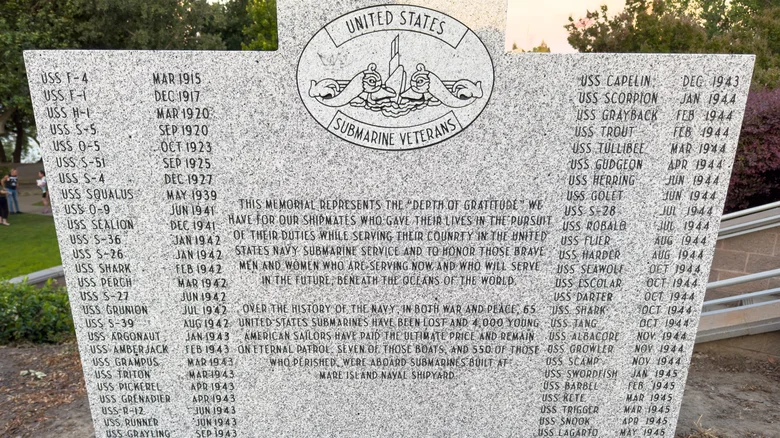
The USS Tang tragedy didn’t end quickly — it unfolded through a long, horrifying night beneath the waves. Seventy-eight men lost their lives, each in a different, terrible way. Some were killed instantly in the explosion. Others drowned as the sub filled with seawater, or were burned alive when flames tore through the compartments. A few tried to escape but never made it — their bodies simply couldn’t handle the pressure, the injuries, or the suffocating fear.
Among the dead was Rubin MacNiel Raiford, a young sailor who had lied about his age just to serve his country. He was only 15 years old, making him one of the youngest Americans ever to die in combat during World War II. His bravery, like so many others aboard, was both inspiring and heartbreaking.
Even for those who made it to the surface, the danger wasn’t over. Survivor Jesse DaSilva recalled to POLARIS (via SS563.org), “Two more men came up shortly after I did. One was our pharmacist’s mate, who surfaced nearby, but he was having difficulty breathing, so we held on to him. Another one, a steward, came up at a distance. I considered myself a good swimmer and started toward him, but he disappeared before I could reach him.”
The survivors clung desperately to a buoy in the dark ocean, surrounded by oil, wreckage, and death — hoping against hope that rescue would come before the Japanese ships found them.
When the night was finally over, only nine men from the Tang’s crew were still alive:
- Commander Richard H. O’Kane
- Lieutenant Commander Lawrence Savadkin
- Lieutenant Junior Grade Henry J. Flanagan
- Radio Technician 1st Class Floyd Caverly
- Boatswain’s Mate 1st Class William Leibold
- Motor Machinist’s Mate 2nd Class Jesse DaSilva
- Motor Machinist’s Mate 3rd Class Clayton Decker
- Torpedoman’s Mate 2nd Class Hayes Trukke
- Torpedoman’s Mate 3rd Class Pete Narowanski
Almost a year later, Lawrence Savadkin was still haunted. “Nine in all survived from a complement of 87 men,” he told a reporter. “I don’t know why more didn’t get out.”
It was a story of courage, loss, and survival — one of the darkest and most unforgettable chapters in WWII naval history.
A Black submariner who initially survived did not receive recognition
Even in the middle of war, racism didn’t take a break. One of the USS Tang’s crew members, Howard Madison Walker, was a young Black submariner who survived the initial disaster — but never got the recognition he truly deserved.
At the time, the U.S. Navy wasn’t officially segregated like the Army, but let’s be real — things weren’t fair either. Most Black sailors were only allowed to serve as steward’s mates, which basically meant cooking, cleaning, and doing menial work for white officers. In fact, a 1940 issue of the New Pittsburgh Courier, a leading Black newspaper, warned young Black men not to enlist, saying they’d end up as “seagoing bellhops.”
But Walker didn’t listen. He was just 18 when he signed up, ready to serve his country despite all the discrimination. He was assigned to the USS Tang, but in Navy records, he wasn’t even listed by name — just as “Negro steward.” That alone says a lot about the times.
When the sub went down, Walker tried to escape, but his nose had been broken in the explosion, so he couldn’t use the Momsen lung. Still, he made a desperate attempt — swimming to the surface while holding his breath. Somehow, he actually made it up, but it cost him his life. The rapid ascent likely gave him the bends, and witnesses said he was in visible distress before he died.
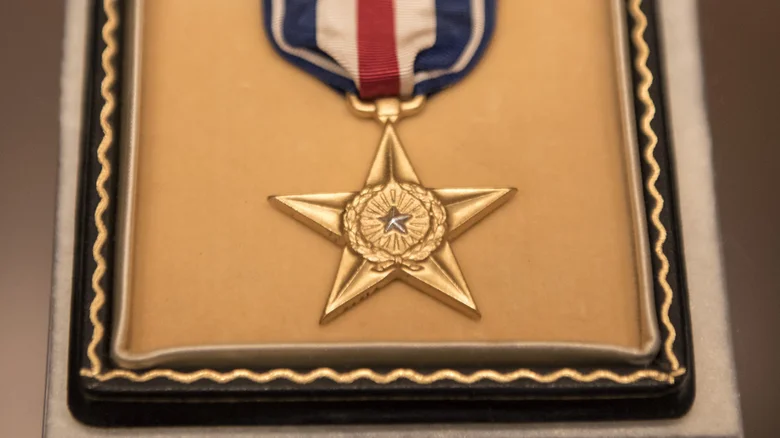
Every man who died aboard the Tang got a Purple Heart, as was standard. But those who made it to the surface alive — even if they didn’t survive afterward — were also awarded the Silver Star for gallantry. Everyone except Howard Walker. The only difference? His skin color.
Nine survivors were captured by the Japanese
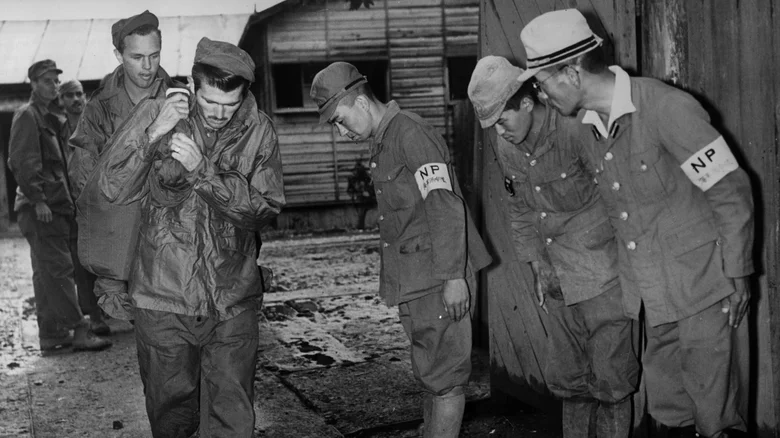
A few hours later, when daylight came, the nightmare wasn’t over. The nine surviving crew members were picked up by a Japanese destroyer — one of the same ships they had attacked the night before. Commander Richard O’Kane later wrote (via Clear the Bridge!: The War Patrols of the USS Tang), “When we realized that our clubbings and kickings were being administered by the burned, mutilated survivors of our own handiwork, we found we could take it with less prejudice.”
From there, the Tang’s survivors spent the next 10 brutal months in Japanese POW camps. They were starved, beaten, and exposed to the elements daily. Pete Narowanski, one of the survivors, said guards knocked out his dental caps during beatings — but when he tried to get help from the VA after the war, they told him it wasn’t a “service-connected injury.”
Still, against all odds, all nine men lived to see liberation when the war ended. Their courage, pain, and survival are a powerful reminder that heroism doesn’t depend on rank, race, or recognition — and that sometimes, the bravest men are the ones history almost forgot.
Families of the crew could not tell anyone what happened for months
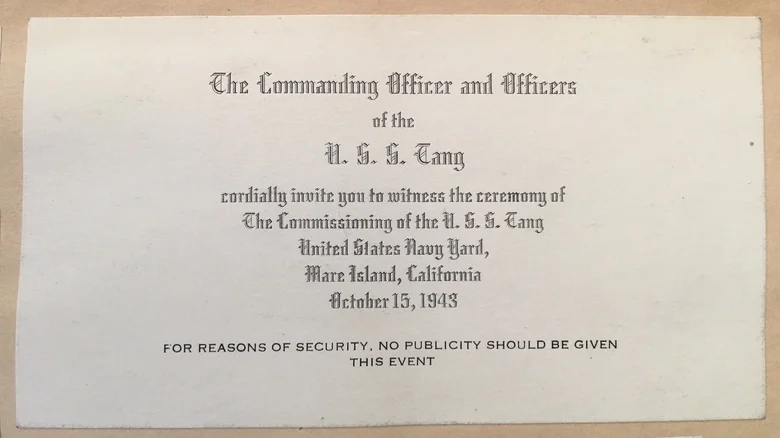
When the USS Tang went down, the tragedy didn’t just swallow 78 sailors — it also left dozens of families trapped in silence and confusion. For months, no one was allowed to know what really happened.
Even after World War II ended, the truth stayed buried. Commander Richard O’Kane, one of the nine survivors, gave a completely false account of the sinking to a Mutual Broadcasting reporter. “Suddenly, there was a terrible explosion and our stern was blown off,” he said. “It must have been a mine.” (via World War II On Deadline). Of course, he knew the truth — the Tang had sunk itself with its own faulty torpedo — but whether by choice or by orders, he kept quiet.
That silence reflected the Navy’s deep secrecy. For over three months, the U.S. government didn’t even announce the Tang’s sinking. Families waited in agony, desperate for word about their missing sons, husbands, and brothers. And even when the loss was finally made public, the real cause of the disaster stayed hidden behind classified files.
Some families didn’t learn the full story — or even basic details about their loved ones’ final moments — until decades later. Imagine living your whole life wondering what really happened beneath the waves, only to discover the truth 30 or 40 years later.
The captain was awarded the Medal of Honor
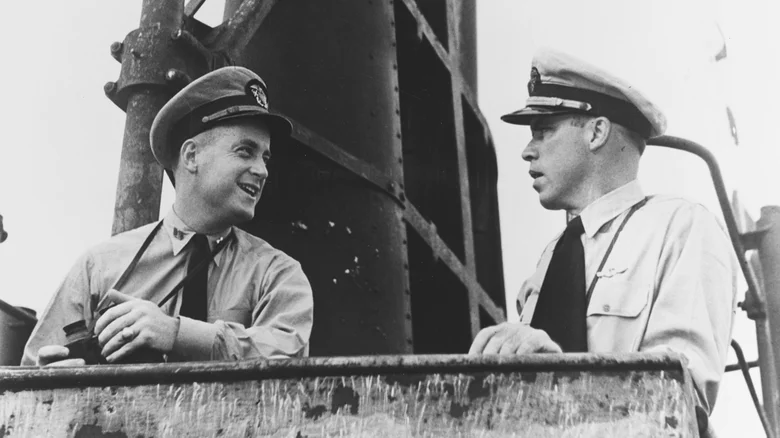
Commander Richard O’Kane, the Tang’s captain, was one of the nine men who survived. His skill and courage were legendary — his submarine’s record-breaking success made him the most successful submarine commander of World War II. For his actions during the Tang’s final patrol, he was awarded the Medal of Honor.
O’Kane later told his story in his book “Clear the Bridge!: The War Patrols of the USS Tang,” which became the definitive account of the tragedy. But behind his accomplishments was a man haunted by survivor’s guilt.
Fate seemed to follow O’Kane wherever he went. Before commanding the Tang, he had served on two other submarines — both of which were lost. He left the USS Argonaut just months before it was sunk by the Japanese, killing all 102 crew members — the deadliest U.S. submarine loss in wartime. Then, he transferred from the USS Wahoo, which was sunk a few months after his departure, taking 80 men with it.
When O’Kane’s widow, Ernestine O’Kane, spoke at the 1998 launch of a ship named in his honor, she said, “The hardest thing for him the rest of his life was that he came home and his men didn’t.” (via Maine Sunday Telegram).
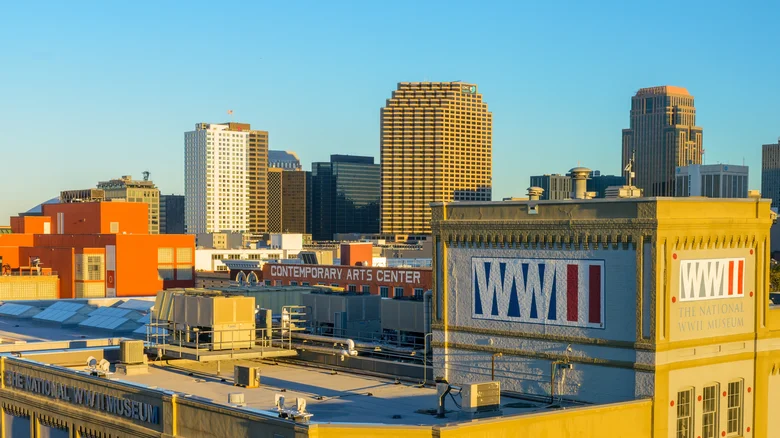
The disaster is recreated for visitors to the National World War II Museum
Seven years after the original USS Tang (SS-306) sank, the Navy honored her legacy by commissioning a new sub, the USS Tang (SS-563). During its dedication, Executive Officer W.R. Anderson paid tribute to the lost crew:
“Fate cut down your fighting submarine at the very hour you deserved the greatest laurels of victory. We cannot replace you. We can only hope to capture some of your skill, devotion, and gallantry.” (via All Hands)
Today, the Tang’s story is brought to life at the National World War II Museum in New Orleans. The immersive exhibit, “Final Mission: USS Tang Submarine Experience,” lets visitors feel what it was like to be trapped underwater during the disaster. Groups of 27 step into a realistic simulation of the submarine, complete with sounds, motion, and tension. Each participant is assigned the name of a real Tang crew member — and at the end, they find out whether their person lived or died.
With only nine survivors out of 87 men, that moment drives home the staggering cost of war — and the courage it took to face it.