Struggling to Accept My Dad’s New Family After the Divorce

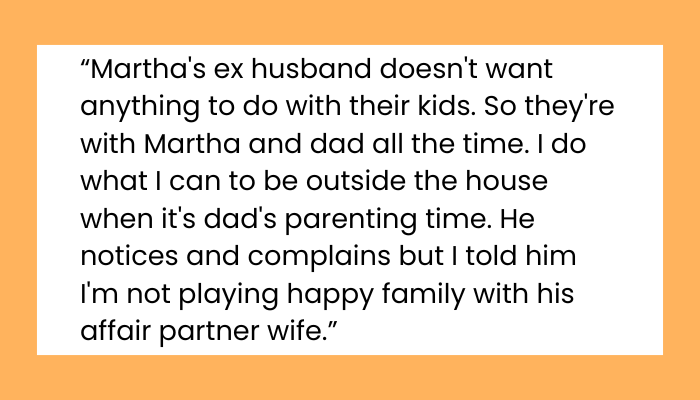
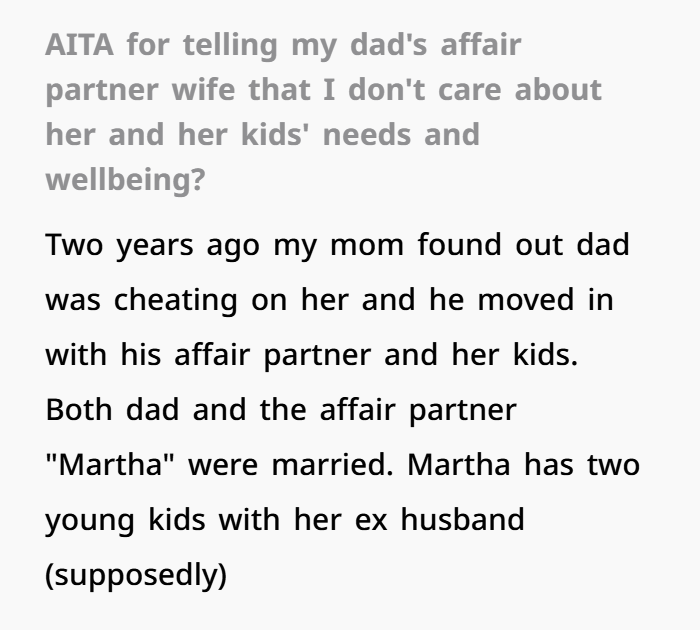
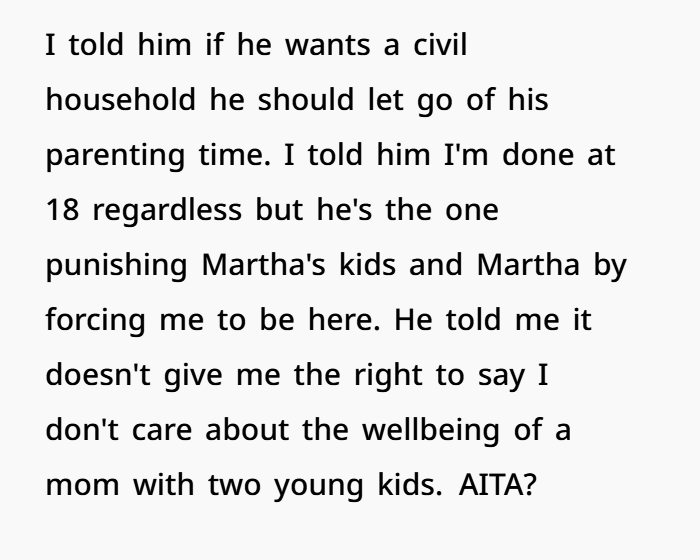
A 16-year-old girl shared her experience of dealing with a difficult family situation after her parents’ divorce. Her parents separated after her father had an affair and left the marriage. The situation became even more complicated because the woman involved was also married at the time and had children of her own.
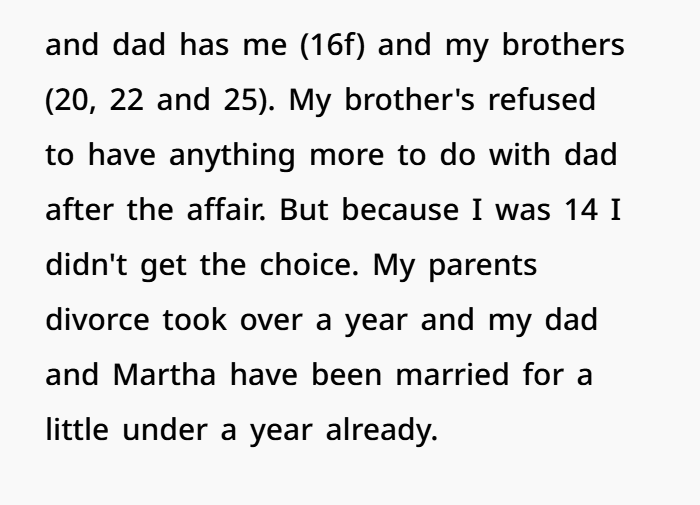
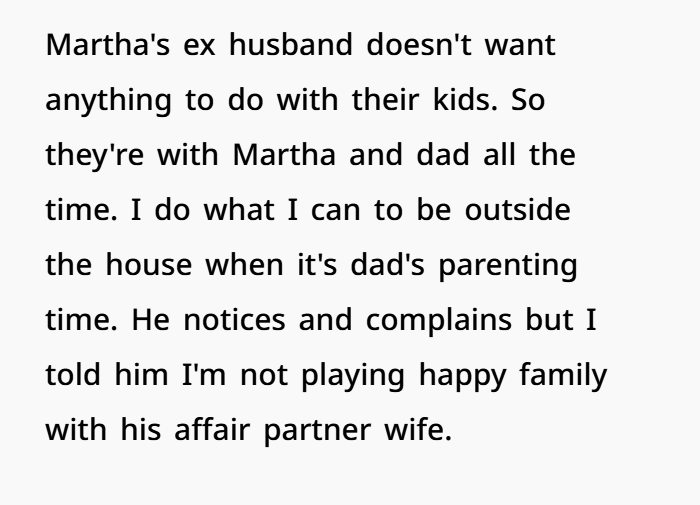
The divorce created a lot of emotional stress for the family. The girl’s older brothers decided to distance themselves from the situation, but she did not have the same option because of custody arrangements. She now has to spend time between two homes, including one where she feels uncomfortable and does not feel connected.
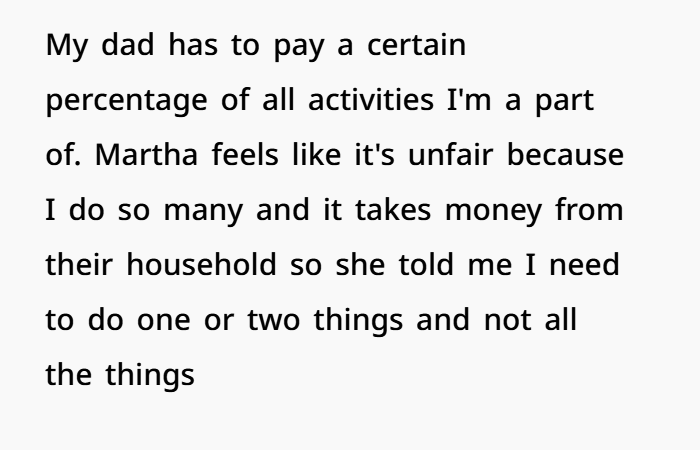
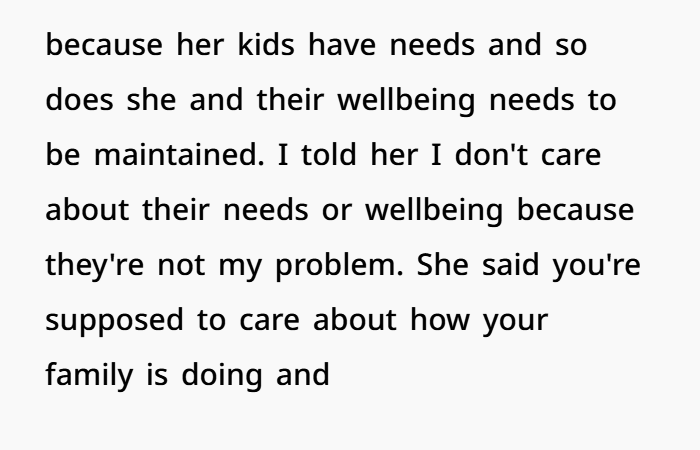
Over time, the tension became stronger, especially when financial issues came up. Her father is responsible for supporting her activities and needs as part of his parenting responsibilities. However, her father’s partner felt that these expenses affected their household budget and asked the teenager to reduce some activities.
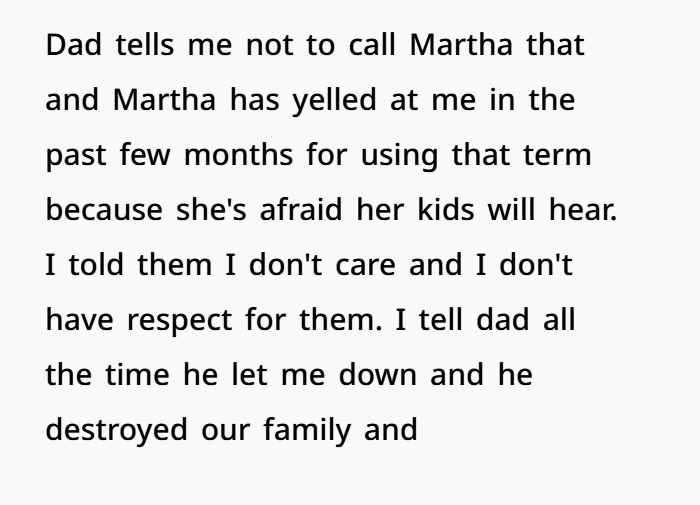
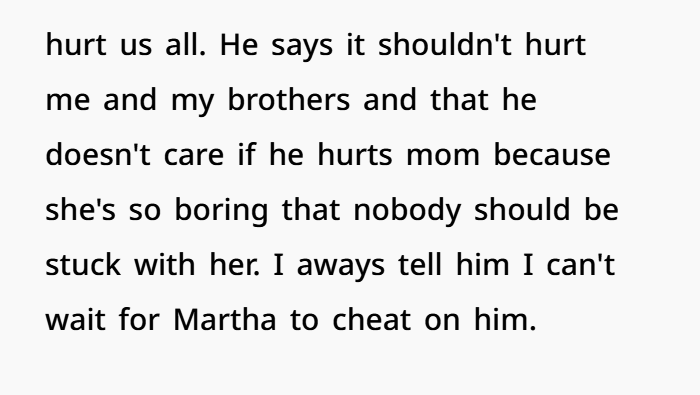
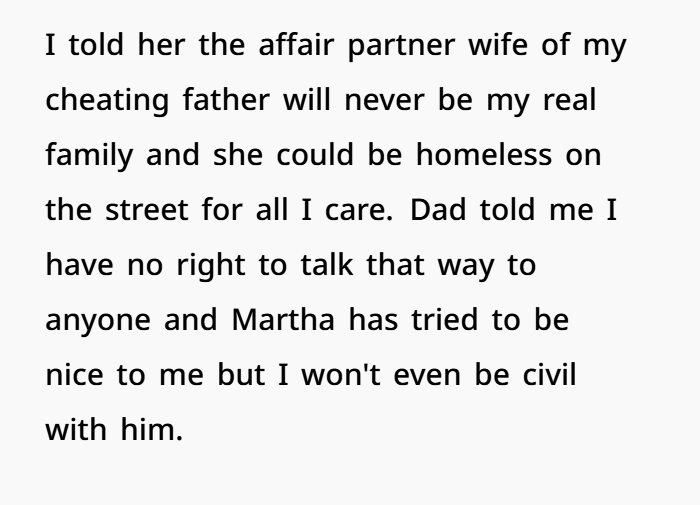
The teenager became upset because she felt that adults were making decisions about her life without understanding her feelings. She told them that she did not see her father’s partner and her children as her own family. Her father felt hurt by her words, but she believes people are not listening to the emotional pain she has been carrying.
This situation shows how difficult divorce and blended family situations can be for teenagers. Children often struggle when they feel caught between parents, new relationships, and changing family roles. Respect, patience, and open communication are important when families are trying to adjust after major life changes.

Teen Anger, Divorce, and Blended Family Problems: Understanding Both Sides
This situation is much bigger than a teenager being rude or having a bad attitude.
It involves:
- Family betrayal
- Divorce
- Step-family problems
- Money disagreements
- A teenager trying to handle painful emotions
The situation is complicated because there is hurt on all sides.
How Parental Betrayal Can Affect Children
When a parent cheats and the family breaks apart, children often feel the impact.
Many teenagers experience:
- Anger
- Confusion
- Loss of trust
- Fear about relationships
- Feeling like their family was taken away
Even if adults think the child should move on, emotions do not work that way.
For many kids, the parent who cheated may no longer feel like a safe person. They may see that parent as someone who caused pain and changed their life.
That seems to be happening here.
The Father’s Words Made Things Harder
The father saying his ex-wife was “boring” or deserved what happened can be very damaging.
When a parent speaks badly about the other parent, children often feel stuck in the middle.
The teenager may feel like she has to:
- Defend her mother
- Listen to her father criticize someone she loves
- Choose sides
This creates stress and can damage the relationship between the child and the parent.
Children need space to have their own feelings about both parents.
Blended Families Cannot Be Forced
Blended families can work, but they usually take time.
A step-parent and step-child do not become close overnight.
Trust has to be built slowly through:
- Respect
- Patience
- Understanding
- Consistent actions
In this situation, the stepmother is connected to a painful event in the teenager’s life.
To the teenager, she may not feel like just a new family member.
She may represent:
- The divorce
- The affair
- The loss of her old family life
Those feelings may not be easy to change.
Loyalty Conflicts Are Common
Family therapists often talk about loyalty conflicts.
This happens when a child feels that accepting a new step-parent means betraying their other parent.
For example, a teenager may think:
“If I become close to this person, does that mean I am okay with what happened?”
Even simple kindness can feel complicated when someone is still hurt.
That does not mean the teenager should stay angry forever.
It means healing cannot be forced.
The Money Argument Made Everything Worse
The financial issue added another layer of conflict.
The father is responsible for supporting his child.
Things like:
- School activities
- Sports
- Hobbies
- Personal development
are often included in child support agreements or divorce arrangements.
The purpose is to make sure children still have opportunities after parents separate.
So when the stepmother says the teenager should reduce activities because it affects their household budget, it creates tension.
The teenager may hear it as:
“My dad started a new family, and now I have to lose things because of it.”
Even if that was not the stepmother’s intention, that may be how it feels.
But The Teenager’s Words Went Too Far
The teenager’s feelings are understandable.
She is hurt.
She feels ignored.
She feels like adults made choices that changed her life.
However, some things said in anger can still cause harm.
Saying that you do not care if someone struggles or suffers crosses a line.
There is a difference between:
“I do not feel close to you.”
and:
“I do not care what happens to you.”
The first is a boundary.
The second is a hurtful attack.
The younger children involved did not create this situation. They did not choose the affair or the divorce.
They are also innocent.
Her Age Matters Too
The teenager is only 16.
Teenagers are still learning how to manage strong emotions and difficult conversations.
Right now, she is dealing with:
- A broken family structure
- Anger toward her father
- Pressure from a new household
- Feeling like she has no control
That is a lot for anyone.
When people feel trapped or powerless, they sometimes say things in anger that are stronger than what they truly mean.
That does not remove responsibility, but it helps explain the reaction.
The Stepmother Also Has Boundaries To Respect
The stepmother may believe she is trying to help.
She may want everyone to get along and feel like one family.
But good intentions are not always enough.
A step-parent has to understand their role.
They cannot expect instant emotional closeness.
They also should be careful when discussing decisions that belong to the biological parents.
Money decisions, parenting choices, and discipline usually need cooperation between the parents first.
The Father Has A Big Role Here
The father is an important part of this problem.
He seems to want a happy, normal family again.
But rebuilding a family after betrayal takes more than asking everyone to move on.
He needs to:
- Listen to his daughter’s feelings
- Take responsibility for past choices
- Stop dismissing her pain
- Create trust through actions
A teenager cannot be expected to show emotional maturity while the adults around her avoid difficult conversations.
The Real Issue Is Not Just The Stepmother
The deeper problem is about:
- Trust
- Fairness
- Respect
- Feeling heard
- Having control over personal boundaries
The teenager’s anger is the result of many painful experiences building up over time.
Her words were hurtful, and she should learn healthier ways to express her feelings.
But her emotions did not come from nowhere.
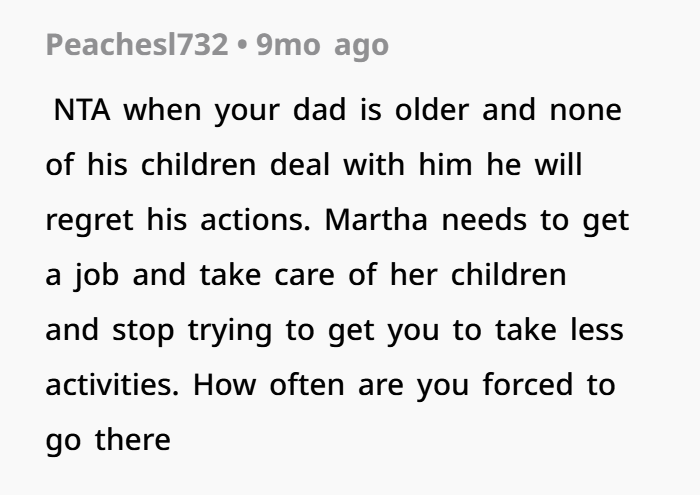
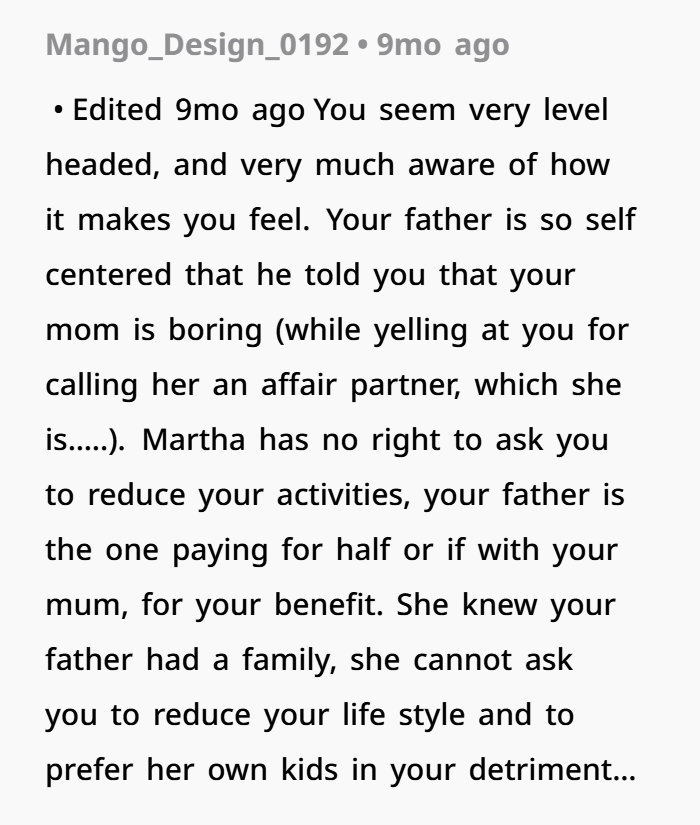
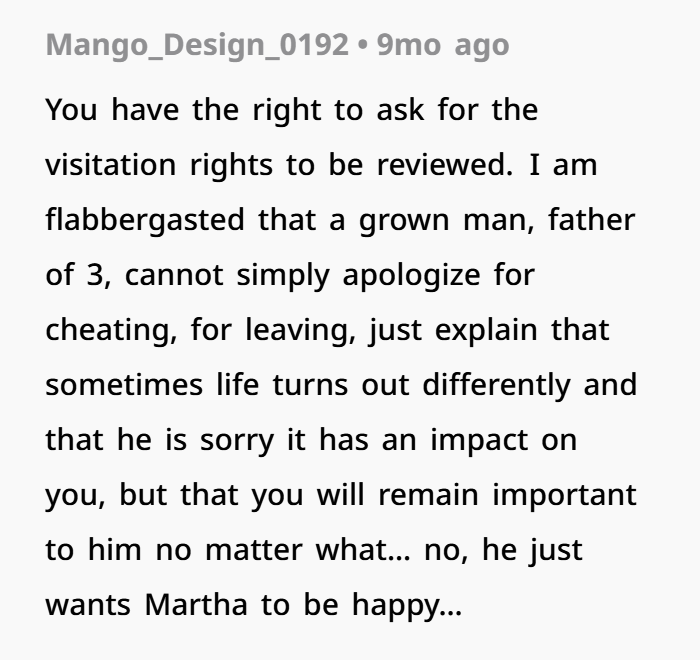
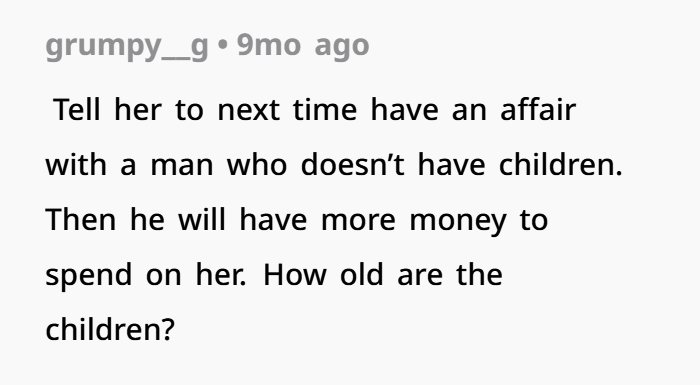
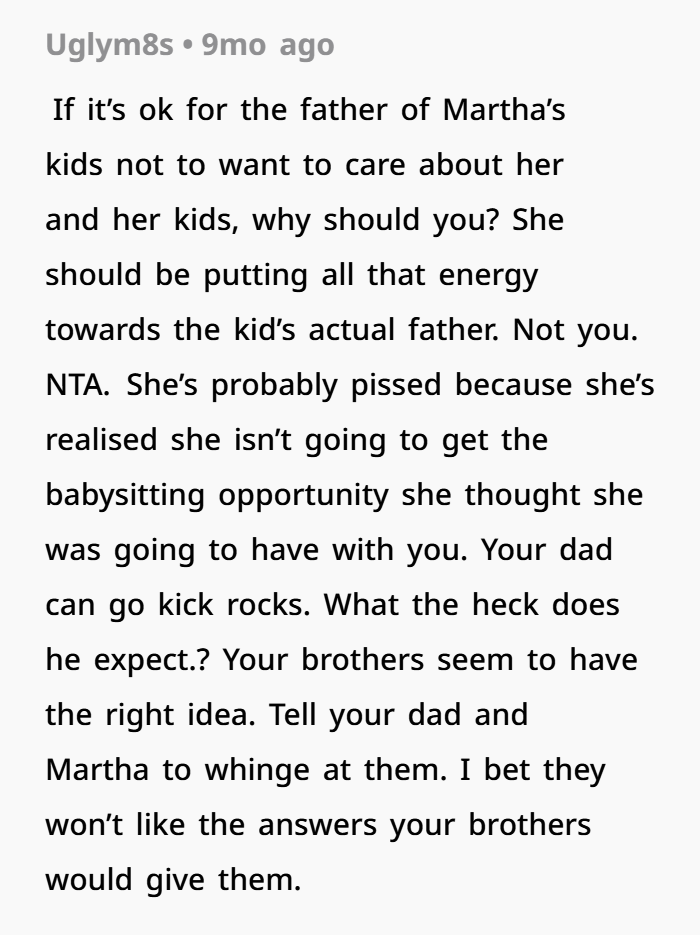
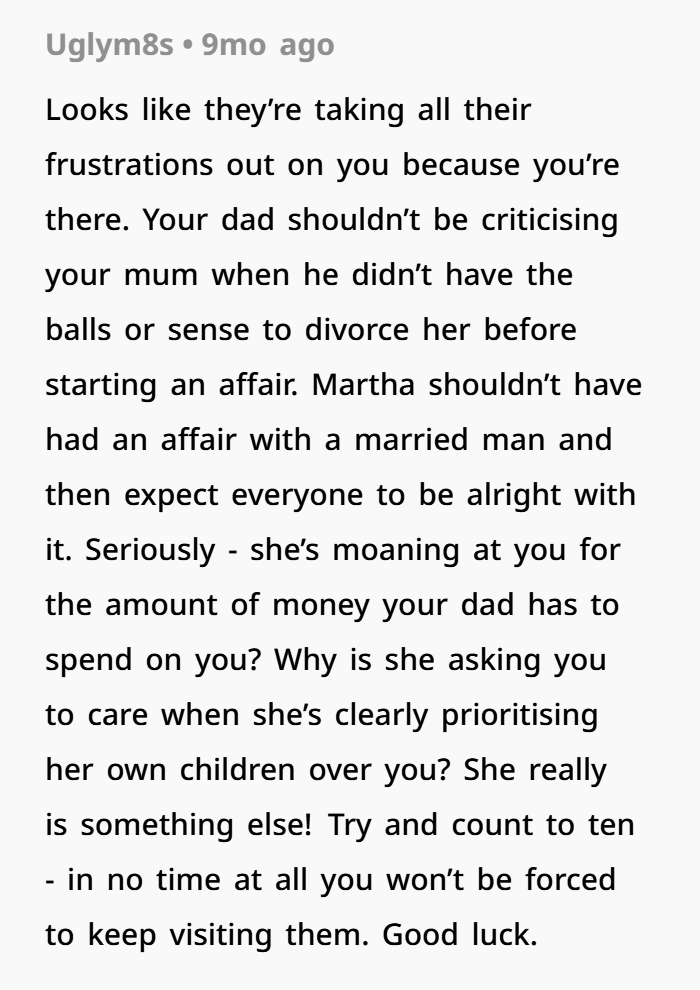
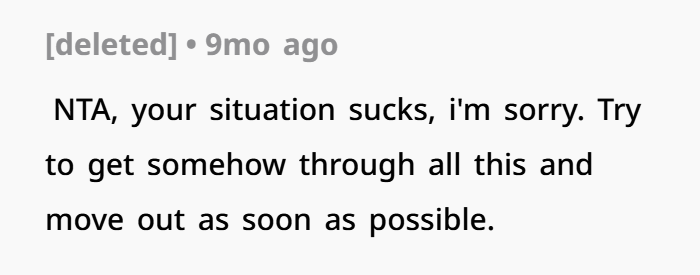
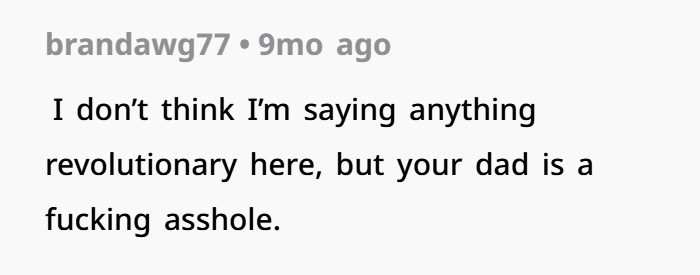
Top Comments From Readers


Final Thoughts
Is the teenager completely right?
No.
Some things she said crossed a line.
But is her anger understandable?
Yes.
This is a young person trying to deal with divorce, betrayal, and major family changes.
The best solution is not forcing everyone to pretend everything is fine.
It is creating a space where everyone can be honest, set healthy boundaries, and slowly rebuild trust.