My Sister Refused to Attend My Wedding Because I Didn’t Invite Her Boyfriend—Now My Entire Family Says I Ruined Everything

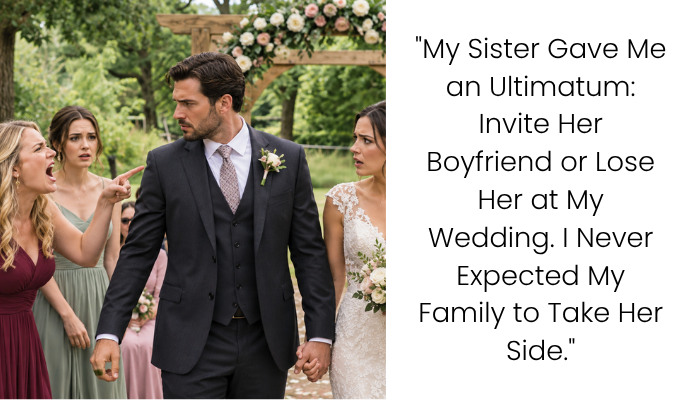
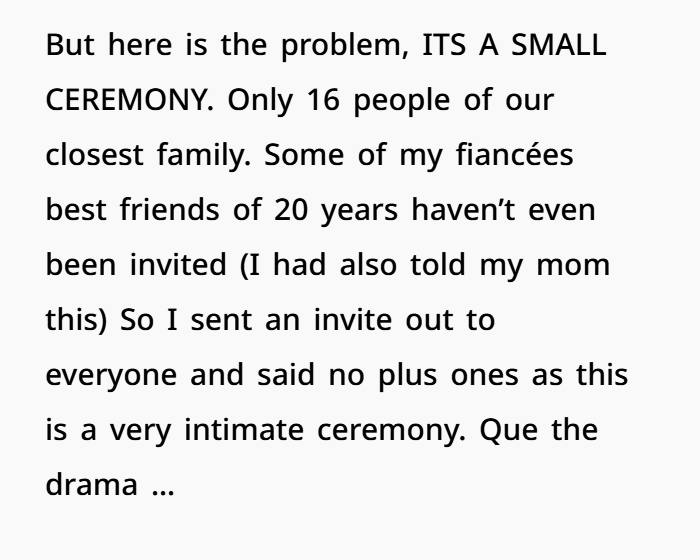
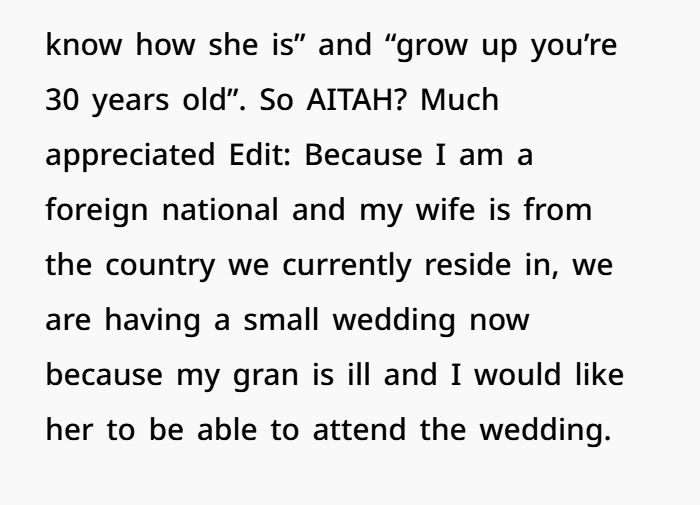
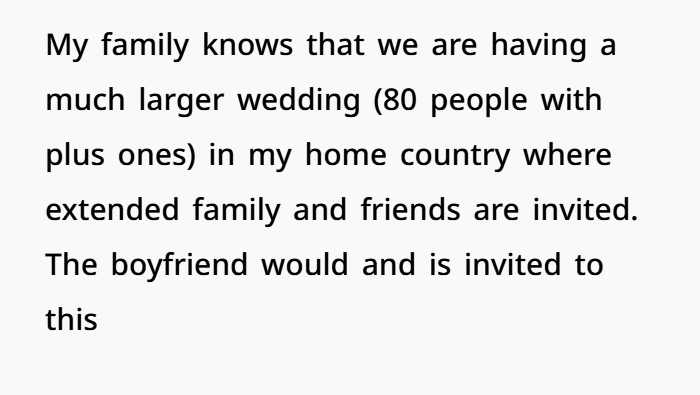
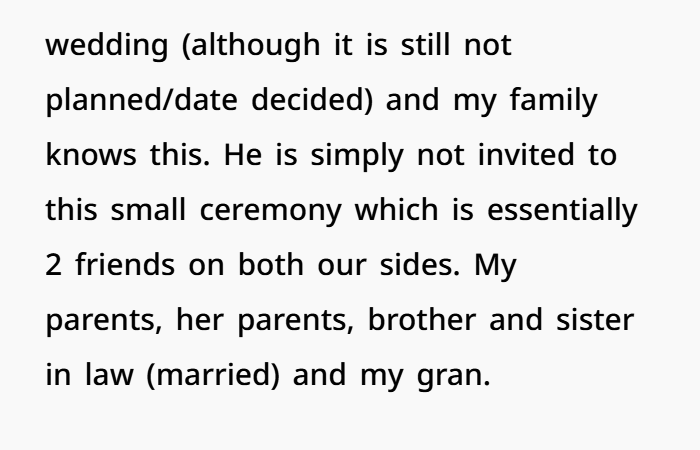
A man was excited to marry his fiancée, but a disagreement with his sister made wedding planning more stressful than he expected. The 30-year-old groom and his 38-year-old partner wanted a small and peaceful wedding with only 16 guests. His grandmother was unwell, and he hoped she could attend the ceremony. Because he lived outside his home country, the couple decided to have a private wedding first and a bigger family celebration later. This way, more relatives and friends could still celebrate with them.
Family relationships had never been easy for the groom, especially when it came to his 26-year-old sister. He explained that his parents often asked him to make peace after their disagreements. Over time, this became difficult for him. They once went 18 months without speaking, and another argument happened shortly before the wedding invitations were sent. Even so, he decided to invite her after talking things over with his fiancée and therapist. He hoped they could enjoy the wedding without bringing up old problems.
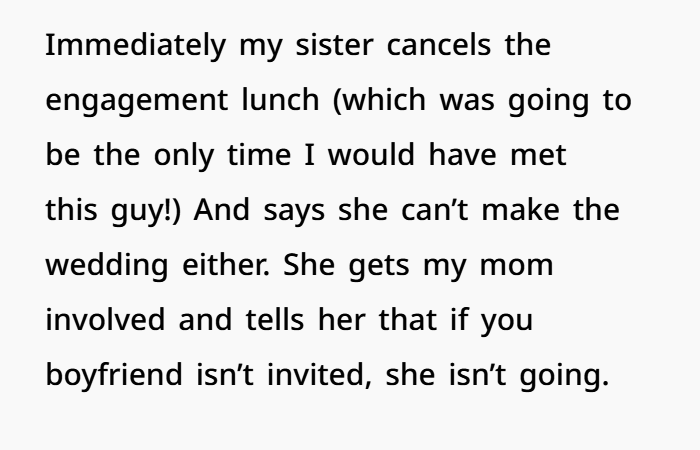
However, his sister became upset when she learned that her boyfriend was not invited. They had been together for one year, but the groom had never met him. The couple had a clear wedding guest policy because they were keeping the ceremony very small. No one was allowed to bring an extra guest, and even some close friends could not attend. It was not a personal decision against her boyfriend. He was also welcome at the larger wedding reception they were planning for the future.
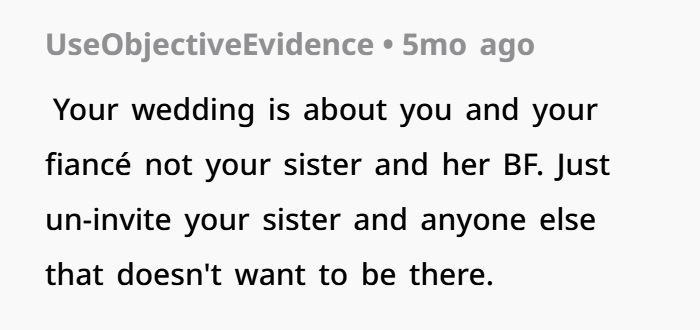
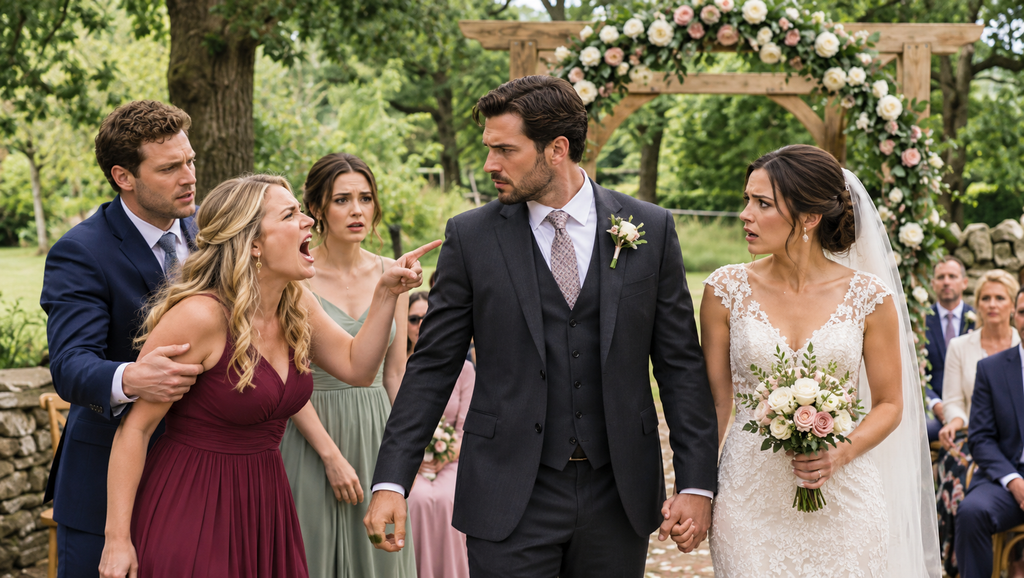
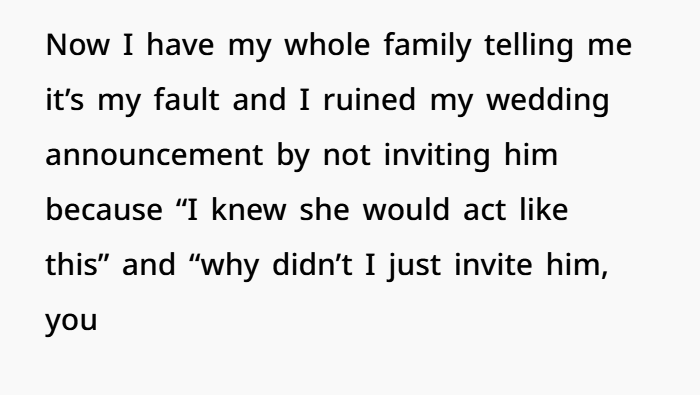
Instead of accepting the wedding arrangements, his sister decided not to attend the engagement lunch or the wedding. Their mother and other relatives then became involved, making the situation harder for the groom. He felt disappointed because he had made an effort to include his sister while keeping the same rules for everyone. The couple wanted a meaningful wedding day with the people closest to them, but the disagreement had taken away some of their excitement. Now he was questioning whether setting a fair boundary with family was the wrong choice.
Groom Refuses to Invite Sister’s Boyfriend to Small Wedding, Leaving Family Upset
Wedding planning can be exciting, but it can also bring unexpected family problems.
One groom found himself in a difficult situation after deciding to have a small wedding with only 16 guests.
He wanted a simple ceremony with his closest family members. But his sister wasn’t happy when she learned that her boyfriend wasn’t invited.
Soon, other family members became involved. They wanted the groom to change his wedding guest list to make his sister happy.
Now, the question is whether he should change his plans or stick with his decision.
Why the Groom Wanted a Small Wedding
The groom had a special reason for planning a small wedding.
His grandmother was very ill, and he wanted her to see him get married.
Instead of waiting for a big wedding, he and his partner decided to have a small ceremony with just 16 guests.
They also planned to have a larger wedding celebration later.
This would give more friends and family members a chance to celebrate with them.
Small weddings are becoming a popular choice for couples who want to keep their wedding budget under control.
They can also make wedding planning easier.
With fewer guests, couples may spend less on wedding catering, venue rental, decorations, and other wedding expenses.
But in this case, saving money wasn’t the main reason.
The groom simply wanted his grandmother to be part of his special day.
The Sister Wanted to Bring Her Boyfriend
The couple had decided not to allow extra guests at their small ceremony.
This meant that family members couldn’t bring a plus-one unless that person was already invited.
The groom’s sister wanted to bring her boyfriend.
However, the couple had never met him.
Since the wedding guest list was limited to only 16 people, the groom didn’t feel comfortable adding someone he didn’t know.
He explained that her boyfriend could attend the larger wedding celebration later.
But his sister was still unhappy.
She wanted her boyfriend to attend the small ceremony with her.
When the groom refused to change his decision, the disagreement became a family problem.
The Family Wanted Him to Make an Exception
The groom’s parents also became involved in the disagreement.
Instead of supporting his wedding plans, they wanted him to make an exception for his sister.
Their reason was simple.
“You know how she is.”
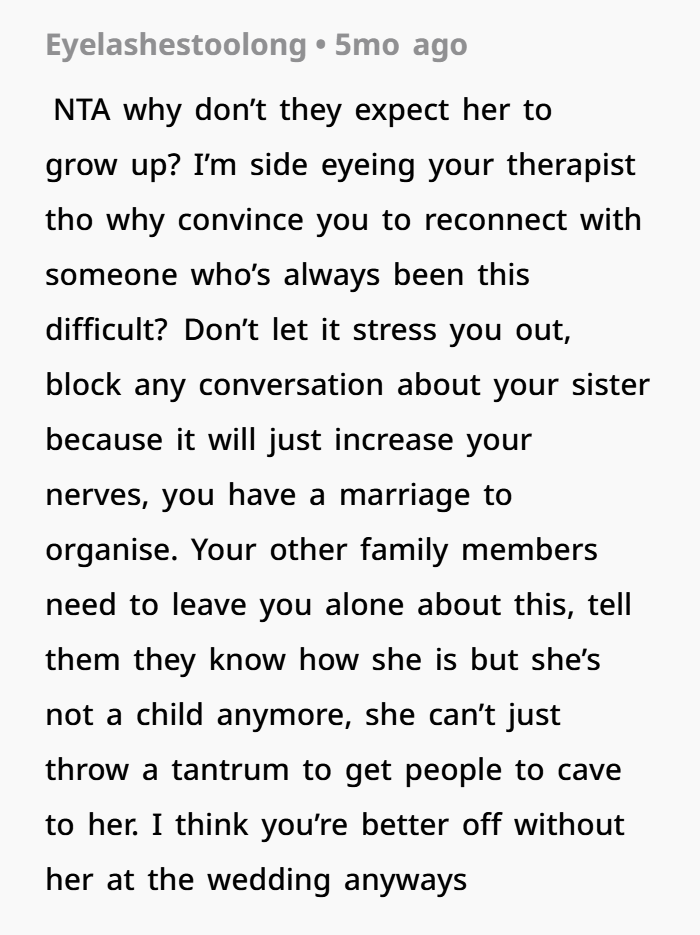
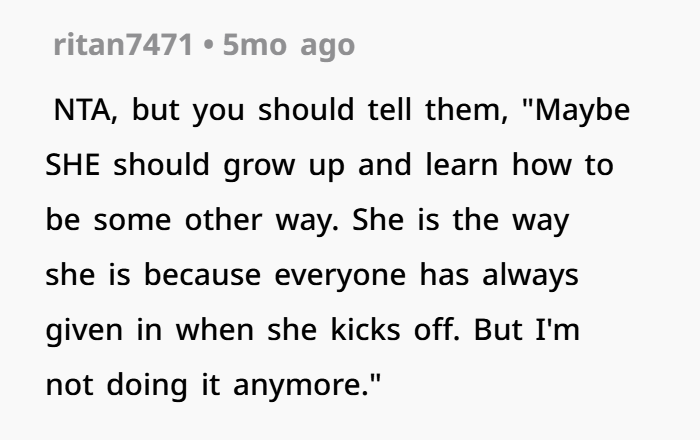
According to the groom, this wasn’t the first time his family had expected him to give in to his sister.
He felt that whenever she became upset, his parents wanted him to make things better.
This time, however, he didn’t want to change his wedding plans.
He believed that his sister should respect his decision, even if she didn’t agree with it.
After all, this was his wedding day.
Why Wedding Guest Lists Can Cause Family Problems
Creating a wedding guest list isn’t always easy.
Couples often have to think about their wedding budget, venue size, catering costs, and family relationships.
A large wedding venue may have room for hundreds of guests.
A small wedding ceremony is different.
When only 16 people are invited, adding one extra guest can be a big decision.
It may also lead other family members to ask for exceptions.
That’s why many couples create guest list rules before sending wedding invitations.
Some couples allow plus-ones for everyone. Others only invite spouses or long-term partners.
There isn’t one rule that works for every wedding.
The important thing is to make decisions that fit the couple’s plans and treat guests fairly.
In this situation, the groom said the no-plus-one rule applied to everyone.
He wasn’t trying to leave out his sister’s boyfriend.
He simply wanted to keep the ceremony small.
Was the Sister Wrong to Feel Upset?
Not necessarily.
It’s normal to feel disappointed when your partner isn’t invited to an important family event.
The sister may have wanted to share the wedding experience with her boyfriend.
She may also have felt uncomfortable attending without him.
Those feelings are understandable.
But feeling disappointed doesn’t mean someone else has to change their plans.
The sister has the right to decide whether she wants to attend.
At the same time, the groom has the right to decide who attends his wedding.
Both decisions can be respected.
The problem starts when family members try to pressure one person into changing a decision simply because someone else is unhappy.
Why His Grandmother Was an Important Part of the Decision
The groom’s grandmother was one of the biggest reasons for having the small ceremony.
He wanted her to enjoy an important family moment while she still could.
That made the wedding more personal.
The couple wasn’t trying to organize an expensive wedding reception or a large family event.
They wanted a meaningful ceremony with a few close people.
The larger celebration could happen later.
This also meant that the sister’s boyfriend wasn’t being left out of every wedding event.
He would have a chance to celebrate with the couple in the future, although the date hadn’t been decided yet.
For the groom, keeping the first ceremony small was an important part of the plan.
Why Family Boundaries Matter During Wedding Planning
Planning a wedding often means making decisions that not everyone will like.
Family members may have different opinions about wedding venues, decorations, invitations, and even the wedding budget.
Some may want a traditional wedding.
Others may prefer a simple celebration.
But the final decisions should belong to the couple getting married.
Having healthy family boundaries doesn’t mean being unkind.
It means explaining your choices clearly and respecting other people’s feelings without always changing your plans.
The groom could tell his sister that he understands her disappointment.
He could also remind her that her boyfriend is welcome at the larger celebration.
That would allow him to remain kind while keeping the same wedding guest list.
Should He Change His Plans to Keep Everyone Happy?
Changing the guest list might make his sister happy.
It could also stop the disagreement for now.
But would it solve the bigger problem?
According to the groom, his family often expects him to be the one who gives in.
If that’s true, making another exception might continue the same pattern.
Of course, compromise is an important part of family relationships.
Sometimes changing plans is the right thing to do.
But there is a difference between making a choice because you want to and making one because you feel pressured.
A wedding should be a happy moment for the couple.
They shouldn’t have to spend the entire wedding planning process worrying about pleasing every family member.
What Couples Can Learn From This Wedding Disagreement
This situation offers a few useful lessons for anyone planning a small wedding.
First, couples should discuss their wedding guest list before sending invitations.
It’s helpful to decide whether plus-ones will be allowed and how to handle requests for extra guests.
Second, clear communication can prevent confusion.
Guests should understand whether an invitation includes a partner or only the person named.
Third, wedding budget planning and venue capacity should be considered early.
Knowing how many people can attend makes it easier to explain guest limits.
Finally, couples should remember that they can’t make everyone happy.
Even a carefully planned wedding can lead to different opinions.
Being respectful and consistent is often more helpful than trying to avoid every disagreement.
Final Verdict: Was the Groom Wrong?
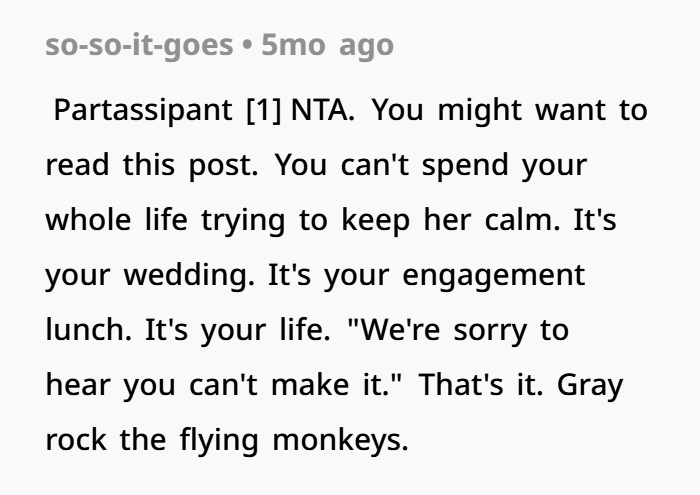
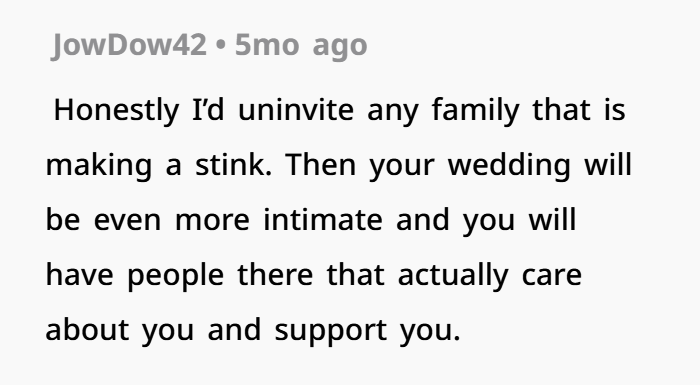
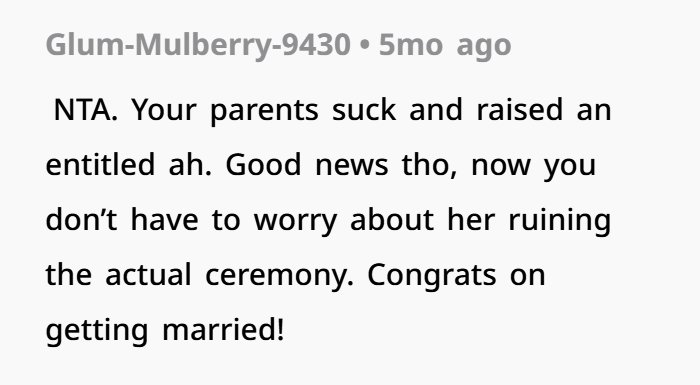
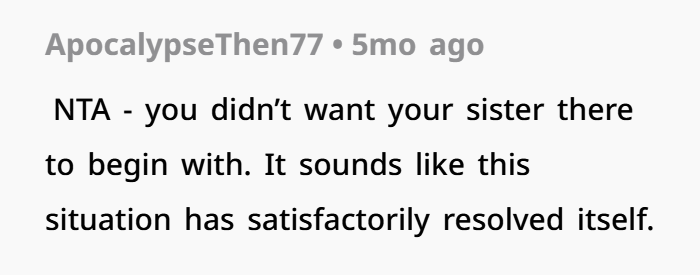
Based on the groom’s side of the story, NTA (Not the A-Hole).
He had a good reason for planning a small wedding.
He wanted his grandmother to see him get married, and he and his partner had decided to invite only 16 guests.
The no-plus-one rule applied to everyone.
He also planned to include his sister’s boyfriend in the larger wedding celebration.
His sister has every right to feel disappointed or decide not to attend.
But that doesn’t mean the groom must change his wedding plans.
The most important thing is that both sides respect each other’s decisions.
At the end of the day, this disagreement isn’t just about one wedding invitation.
It’s about family expectations, personal choices, and learning when to say no.
What do you think? Should the groom invite his sister’s boyfriend to keep the family happy, or should his sister respect the small wedding guest list?
See The Comments Below