AITA for Removing My Cousin’s Hotel Room After She Gave It to Uninvited Wedding Guests?

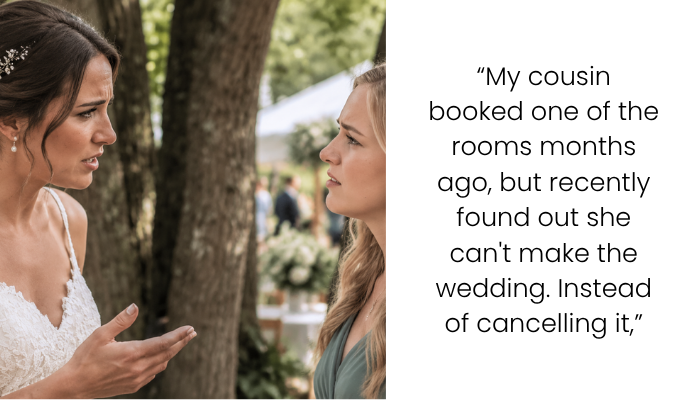
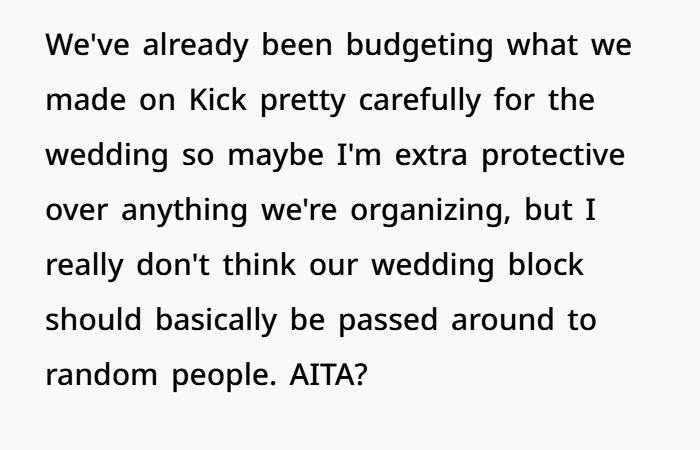
A wedding couple had a disagreement with a family member about hotel room arrangements. They had planned a hotel room block for guests because the wedding location was far from the city. The special booking rate helped guests find comfortable accommodation and made transportation planning easier.
A cousin originally reserved one of the rooms but later decided she could not attend the wedding. Instead of canceling the booking, she gave the room to two friends who were not invited to the event.
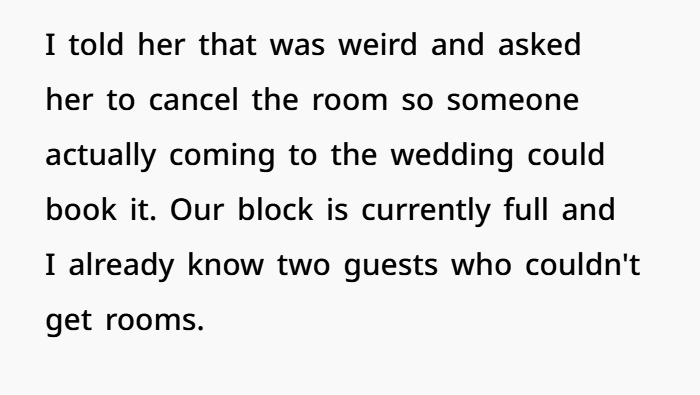
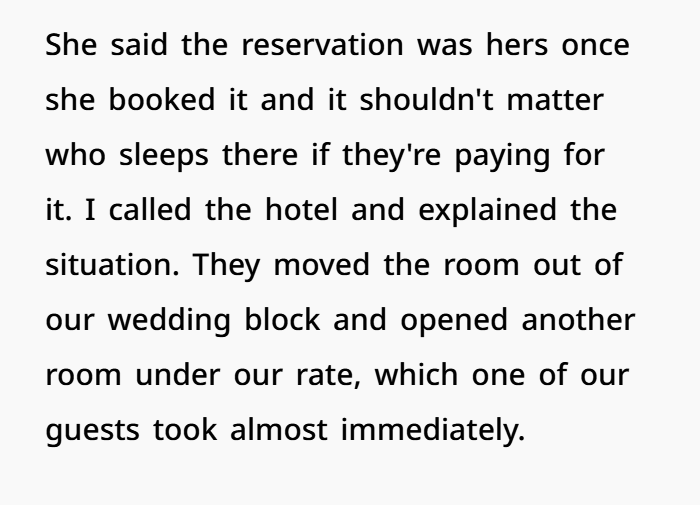
When the couple found out, they were concerned because the hotel room block was full. Some wedding guests had not been able to reserve a room, and the couple wanted the available space to go to people attending the celebration. They asked the cousin to cancel the booking, but she felt the room belonged to her because she paid for it.
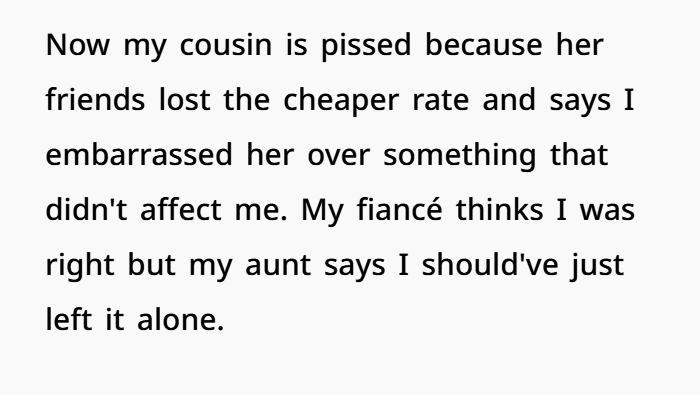
The couple worked with the hotel to move the reservation out of the wedding room block and assign it to an invited guest. The choice caused family disagreement, but it also highlighted the importance of guest planning, event organization, and setting clear expectations.

Wedding Hotel Blocks, Guest Rules, and Clear Communication
Planning a wedding involves many details. Couples do not only plan the ceremony. They also think about guest lists, hotel rooms, transportation, meals, and other arrangements.
Because so many parts of a wedding are connected, small misunderstandings can sometimes become bigger problems.
One common situation involves a wedding hotel block and who should be allowed to use those rooms.
What Is a Wedding Hotel Block?
A wedding hotel block is a group of hotel rooms reserved for wedding guests.
Couples often work with hotels to arrange these rooms so family members and friends can stay in the same area. This can make travel easier and help guests feel more connected during the wedding events.
Hotel blocks can help with:
- Guest accommodations
- Travel planning
- Transportation schedules
- Group coordination
- Special hotel rates
Even though guests usually pay for their own rooms, the hotel block is often created as part of the overall wedding plan.
Who Decides Who Can Use the Room?
A common question is whether a person who books a hotel room through a wedding block can give that room to someone else.
One person may feel that because they reserved and paid for the room, they should be able to choose who stays there.
In many normal hotel situations, transferring a reservation may be possible if the hotel allows it.
However, wedding hotel blocks can be different from regular hotel bookings.
Why Wedding Hotel Blocks Are Special
A wedding room block is usually created for a specific reason: helping invited guests attend the celebration.
Couples often estimate the number of rooms needed based on their guest list. The hotel may set aside a limited number of rooms at a special rate.
If those rooms are used by people who are not attending the wedding, some invited guests may lose the chance to use the same location or discounted rate.
This is why some couples see hotel block rooms as part of their wedding planning resources, not just personal hotel reservations.
Wedding Etiquette and Guest Boundaries
Weddings often include many planned activities besides the main ceremony.
These may include:
- Welcome events
- Group transportation
- Wedding breakfasts
- Farewell gatherings
- Reserved seating arrangements
Hosts usually create these plans based on their guest list and budget.
For example, a couple may plan a post-wedding breakfast as a small gathering for wedding guests. Inviting additional people can change the size and purpose of the event.
Why Clear Communication Matters
Many wedding disagreements happen because people have different expectations.
The couple may believe that hotel block rooms are only for invited guests.
A guest may believe that paying for the room gives them complete freedom to invite others.
Neither side may intend to create a problem. The issue is often a lack of communication.
A simple conversation before making changes can help.
For example, a guest could ask:
“Would it be okay if I transferred my room reservation to someone else?”
The couple could also explain their expectations clearly from the beginning.
Balancing Personal Choice and Shared Wedding Plans
The disagreement is not only about a hotel room.
It is about whether something connected to a wedding should be treated as a personal purchase or as part of a larger event arrangement.
The person who paid for the room may see it as their reservation.
The couple may see the hotel block as a service they arranged for their wedding guests.
Both viewpoints show why clear rules and respectful communication are important.
How Couples Can Avoid Guest Conflicts
Good wedding planning includes setting expectations early.
Couples can make things easier by explaining:
- Who the hotel block is intended for
- Whether reservations can be transferred
- Who can attend wedding-related events
- What guests should know about accommodations
Guests can also help by asking questions before making decisions that affect shared arrangements.time can help create a more enjoyable experience for everyone involved.
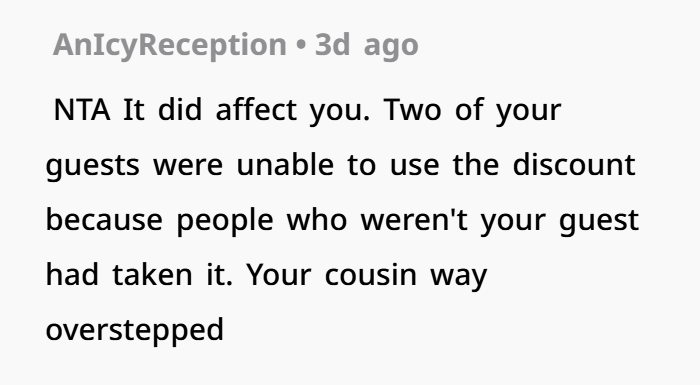
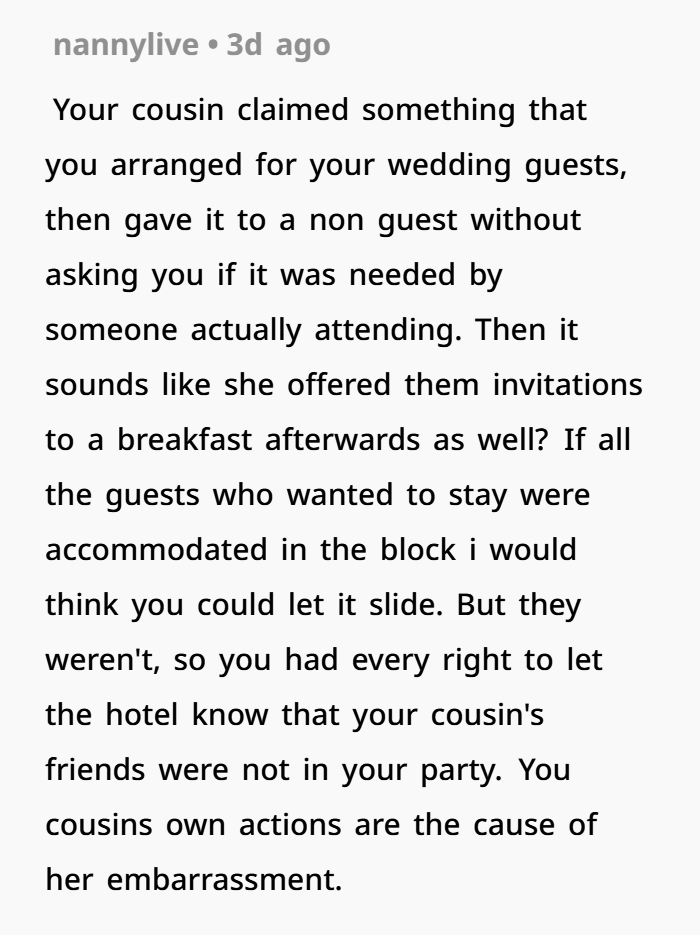
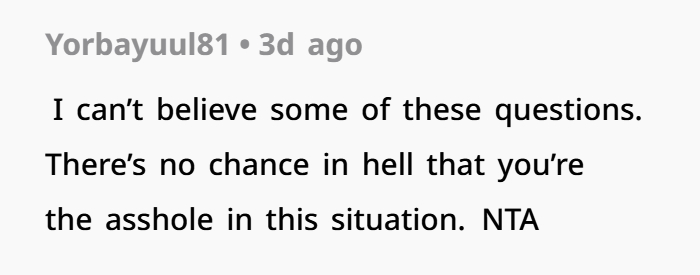
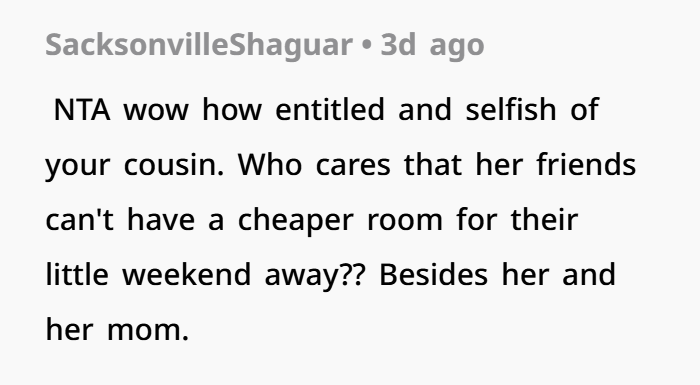
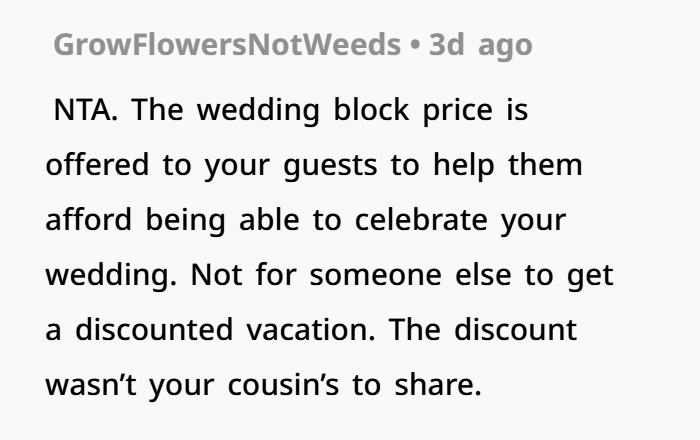
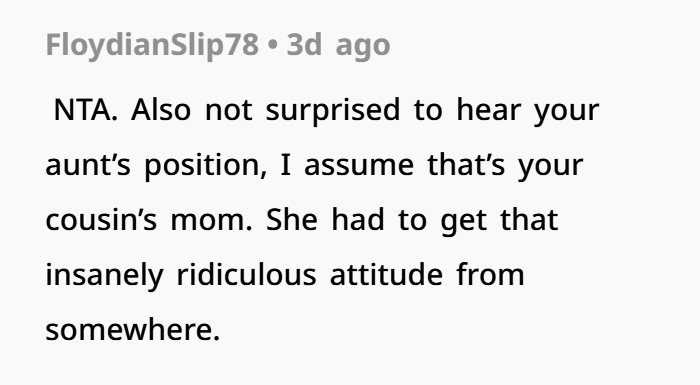
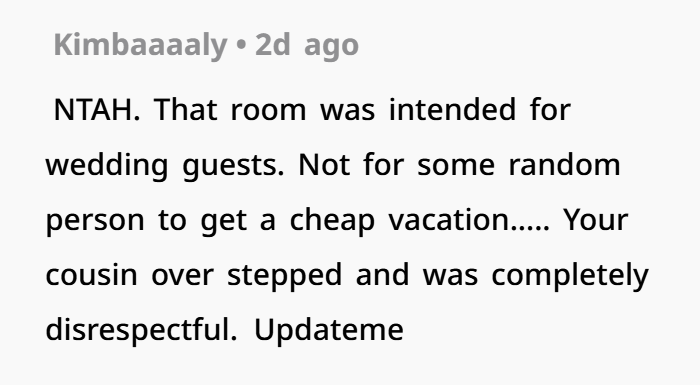
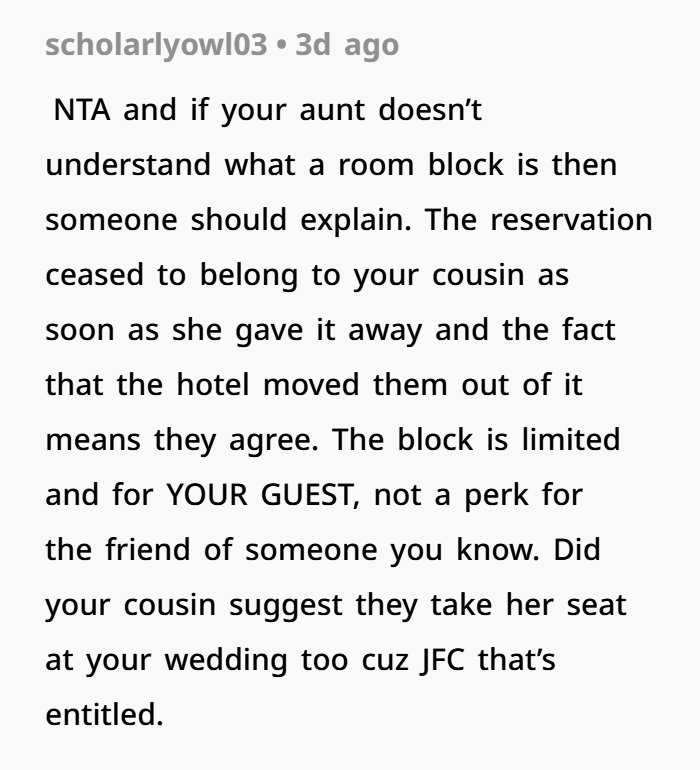
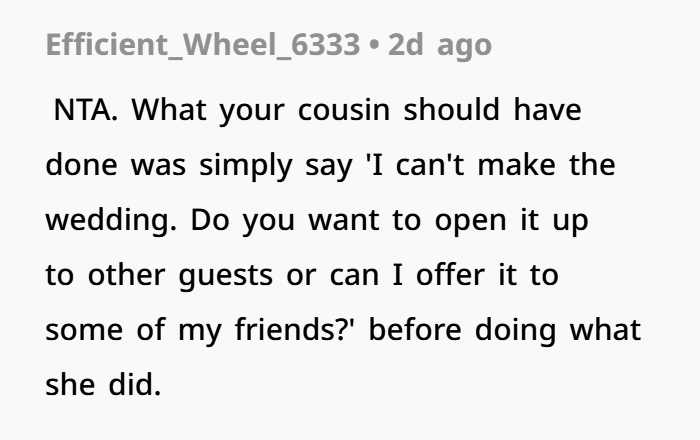
The Reactions Are In
Final Thoughts
Wedding hotel blocks are not just about booking rooms. They are often part of creating a smooth experience for guests and making the event easier to manage.
When couples and guests communicate clearly, many misunderstandings can be avoided.
Respecting wedding plans, understanding guest boundaries, and discussing expectations ahead of