She Thought She Was Helping A New Friend With Kids, Turns Out She Was Just Free Help
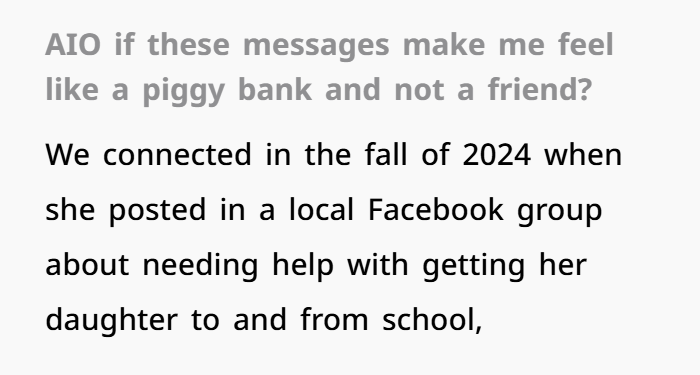
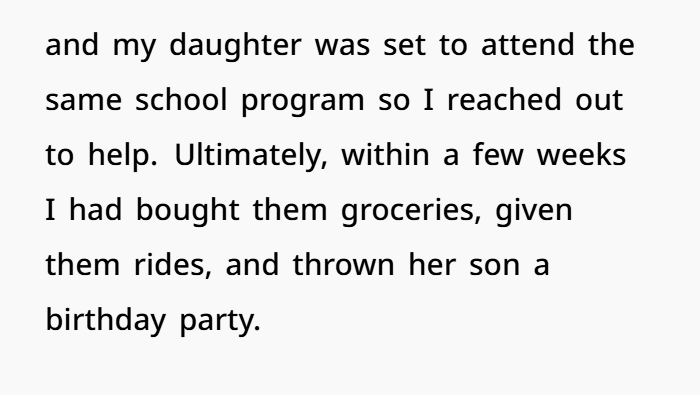
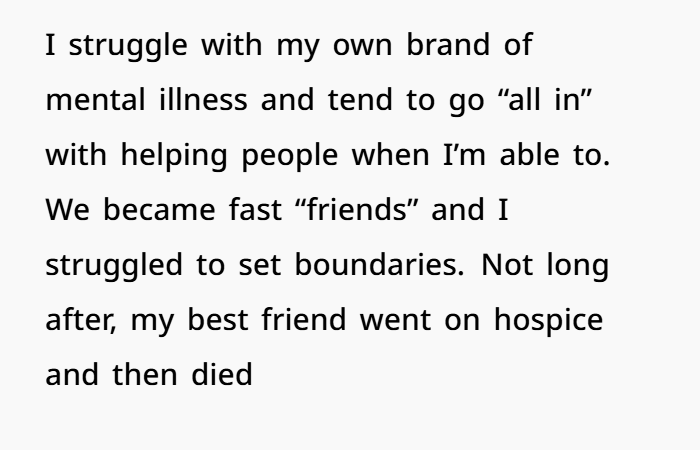
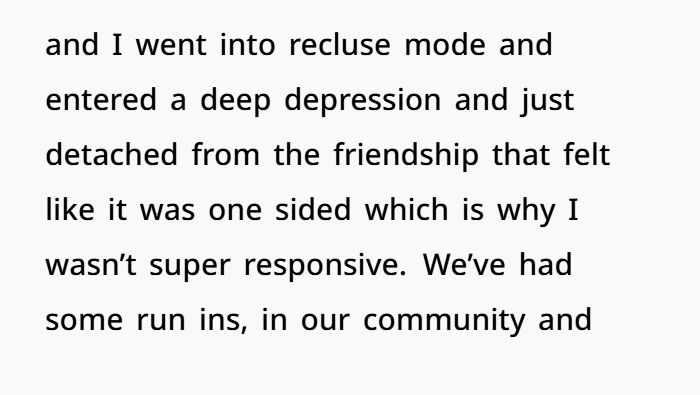
This AIO (Am I Overreacting) story centers around someone who jumped into helping a neighbor and ended up feeling used rather than valued as a friend. They met through a local Facebook group and quickly started supporting this woman with groceries, rides, even throwing her son a birthday party. It felt good at first, but after a personal loss and emerging mental health struggles, the OP began pulling back — exactly when consistent boundaries and mutual support were needed.
Now every message from this person gives them a pit in their stomach. They’re wondering if they’re overreacting for feeling like a piggy bank and not a friend and whether blocking her is justified. This situation touches on emotional boundaries, being used in friendships, and mental health triggers — and many people find themselves here when kindness gets mistaken for endless availability.
Sometimes you lend a hand, offer support, or say “yes” one time then somehow, suddenly, you’re the go-to person for everything
The author met a local mom on Facebook in fall 2024 after seeing that she needed help to take her child to school
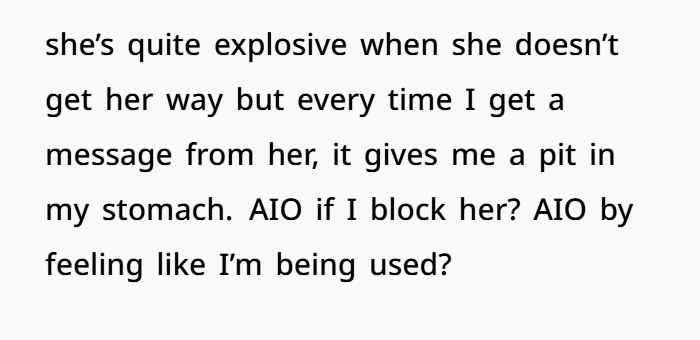
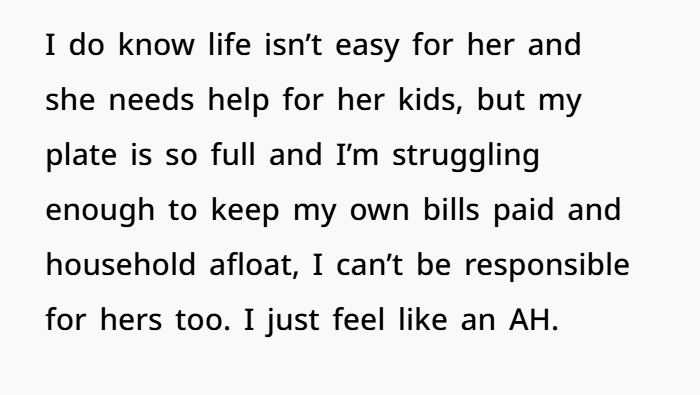
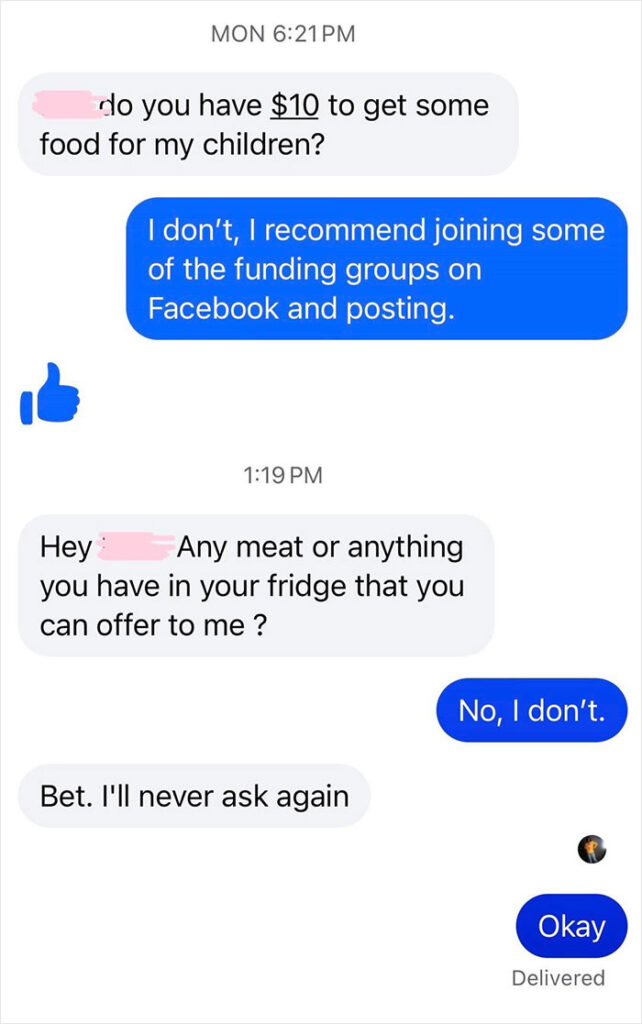
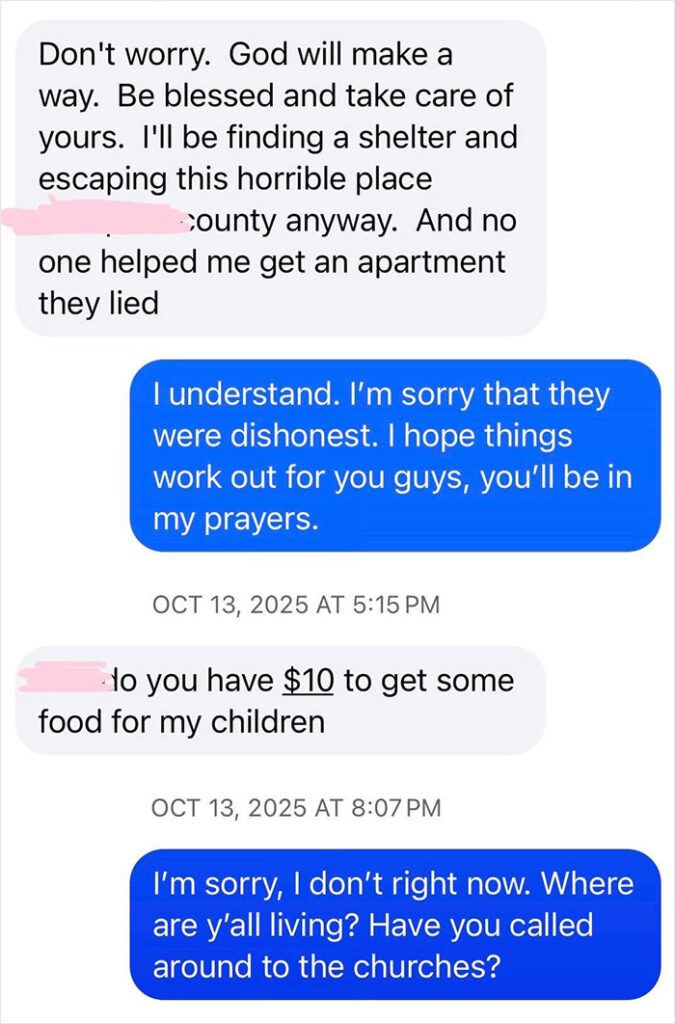
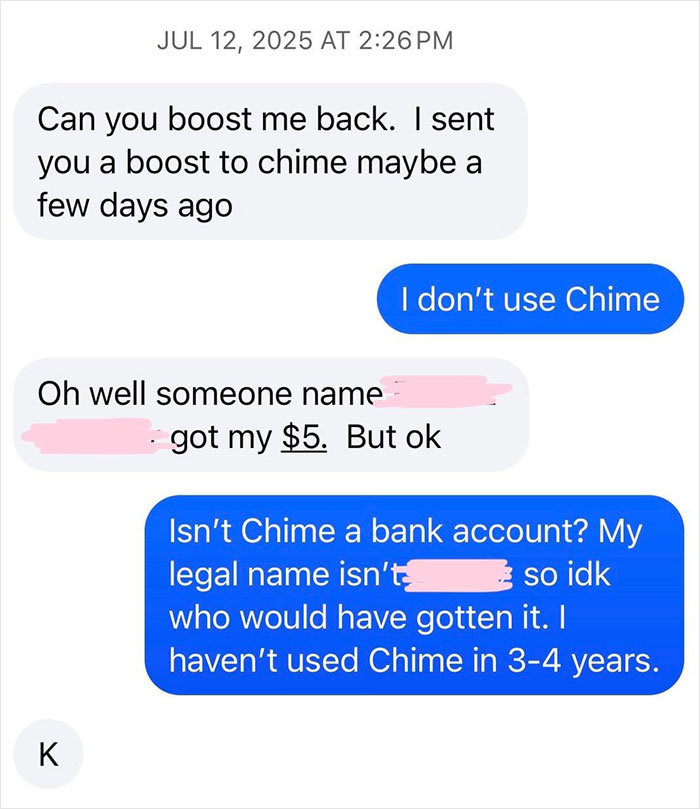
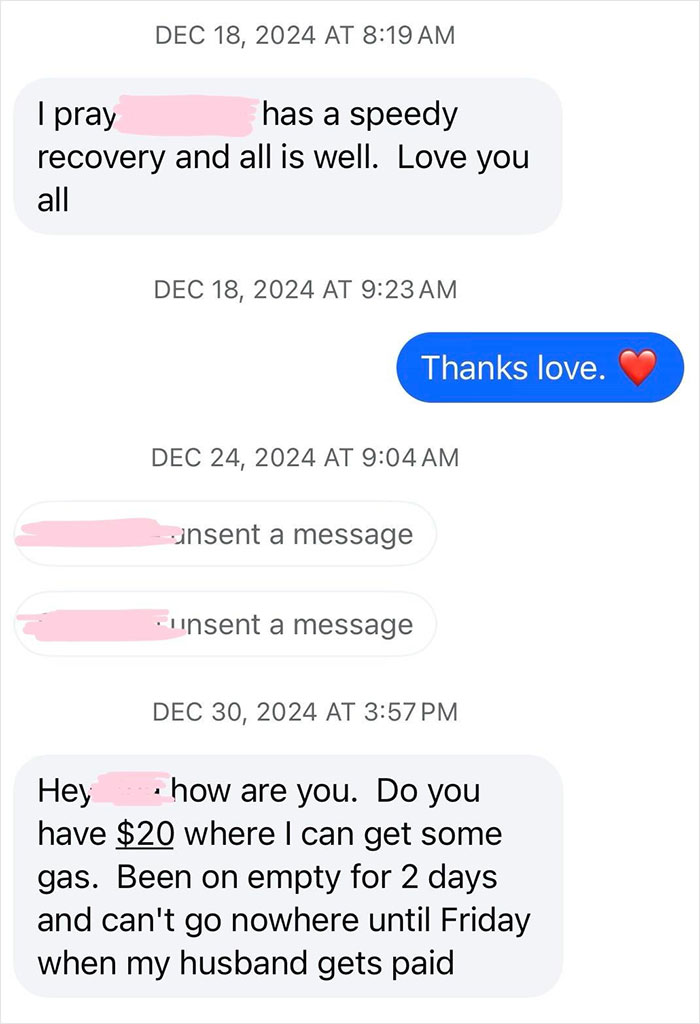
Let’s talk about this deeply. Because what you’re feeling — that pit in your stomach — isn’t random. It’s your brain’s way of saying “Something feels off.” And it doesn’t make you an overreactor or a bad person to notice that. It makes you human.
1. What Defines a Real Friend vs. Someone Using You
A real friend shows up in mutual, not transactional ways. In healthy friendships, support isn’t one‑sided. You both give, you both receive, and there’s respect. But in this scenario, from what you described, the dynamic quickly felt like:
- You giving money, time, energy, rides, groceries.
- Her expecting you to always be there.
- Minimal emotional support or backup for you when you were struggling.
That doesn’t feel like friendship. That feels like someone tapping into your kindness as a resource.
And that’s where the piggy bank feeling comes from. When someone values what you can give more than who you are, it triggers a gut response that something is emotionally imbalanced.
Friendship isn’t just about:
❤️ Being there when life is easy
🤝 Giving gifts and favors
It’s also about:
🫂 Being there when you need support
📞 Checking in when you go quiet
💬 Responding with care, not entitlement
Right now, your experience leans toward being expected to provide. Not to connect.
2. You Didn’t Ghost — You Needed Space
You mentioned you retreated when your best friend went into hospice and passed. That’s a heavy emotional load. Anyone going through grief and depression needs space. People who genuinely care would respect that.
Instead, this woman’s reaction to your silence seems tied more to her needs. She got upset when you weren’t responsive. That signals the relationship may have been less about friendship and more about your usefulness.
Think about it: a friend would say, “I’m here if you need me whenever you’re ready.” Someone who needs help might say, “Why aren’t you answering me right now?”
There’s a big emotional difference.

3. You’re Not Responsible for Her Household
You acknowledged that her life isn’t easy. Her kids need help. And yes, that’s real and valid. But your plate is already full. You’re carrying your own mental health, your own losses, your own bills and responsibilities. Taking on hers too isn’t just exhausting — it’s unsustainable.
Helping someone out now and then is noble. But when it becomes:
📌 Expected
📌 Constant
📌 Emotionally draining
…that’s not friendship anymore. That’s unpaid labor, disguised as needing help.
A good friend would look for support systems for her family, not solely rely on you. She’d accept help with appreciation, not entitlement.
4. Your Boundaries Were Loose — And She Took Advantage
You said you struggle to set boundaries. That’s something a lot of kind people deal with. When you’re someone who gives freely, others sometimes — unintentionally or intentionally — take that as a cue to push limits.
For example:
- You gave rides, groceries, party organization
- She didn’t help you when you were hurting
- The friendship felt one‑sided
- You felt guilt instead of gratitude when you pulled back
That’s a boundary issue, not a character flaw.
You weren’t rude for needing space. You weren’t unreasonable for feeling overwhelmed. You weren’t wrong to notice the imbalance.
Boundaries aren’t selfish. They protect your mental well‑being.
5. Emotional Drain Isn’t Friendship
You described that every time you see a message from her, you get a pit in your stomach. That’s your nervous system reacting to a stress trigger, not a breakdown.
Healthy friendships feel:
🙂 Warm
🙂 Welcoming
🙂 Supportive
Toxic or draining relationships feel:
😞 Heavy
😖 Obligatory
😟 Stressful
You’re allowed to pay attention to how your body reacts. Your body senses emotional patterns faster than your conscious mind.
That pit in your stomach is a sign that something’s emotionally unsafe.
6. Blocking Isn’t Cruel — It’s a Boundary
The big question you asked: AIO if I block her?
Let’s unpack that.
Blocking someone isn’t about being mean. It’s about:
🚫 Creating space
🧠 Protecting emotional health
🛑 Ending patterns that hurt you
You’re not obligated to be available to someone who doesn’t support you back — especially when you’re struggling. Blocking can be temporary or permanent. It’s a tool to maintain your peace.
And you aren’t obligated to justify it to anyone. Especially when she has shown you distress, not friendship.

7. You’re Not Overreacting — You’re Healing
You said you felt like an AH for feeling used. But here’s the truth:
You’re not an AH.
You’re not weak.
You’re not unkind for noticing an emotional imbalance.
You’re human. You’re overwhelmed. You’re protective of your stability.
That’s normal.
Feeling used hurts. It stings when someone expects more than you have. Especially when you offered kindness from a genuine place.
Feeling hurt doesn’t make you dramatic. It means you care.
And caring about your own limits is a strength — not a flaw.
8. When It’s Time To Walk Away
Signs you’re not overreacting:
✅ You feel anxious around them
✅ They rarely check in on you
✅ They react explosively when you say no
✅ You give more than you receive
✅ You dread their messages
If most of these fit, your feelings are valid.
Sometimes, walking away isn’t giving up — it’s choosing self‑respect.
9. Friends Should Uplift — Not Drain
A real friend:
✨ Respects your boundaries
✨ Offers support during your hard times
✨ Doesn’t guilt you for needing space
✨ Doesn’t treat you like a wallet
Right now, this situation looks like someone relying on your good heart, not someone honoring your whole self.
That’s not friendship.
That’s emotional labor.
And you deserve friends, not clients of kindness services.
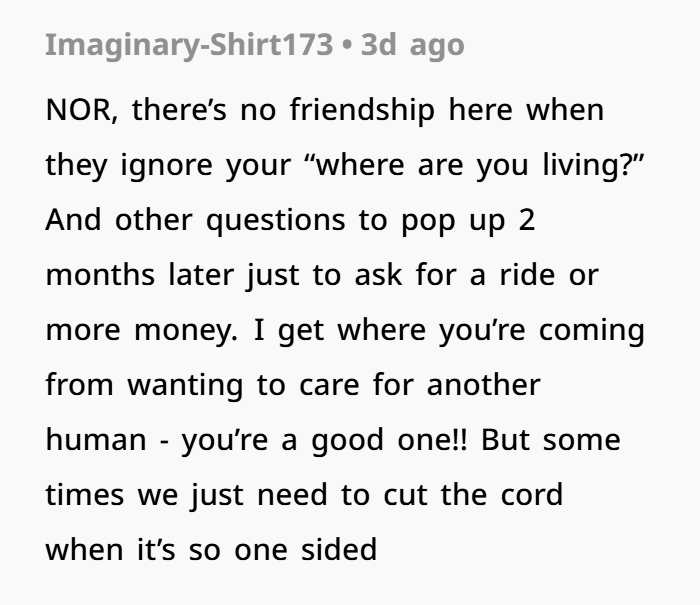
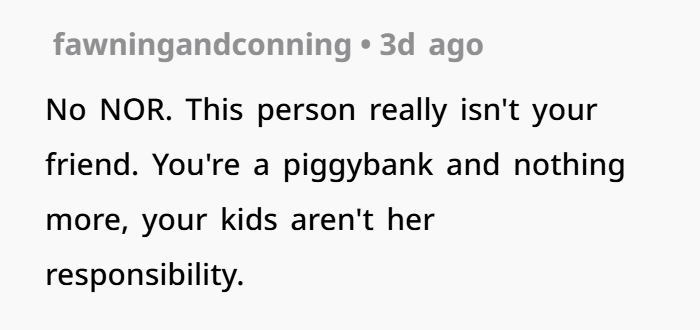
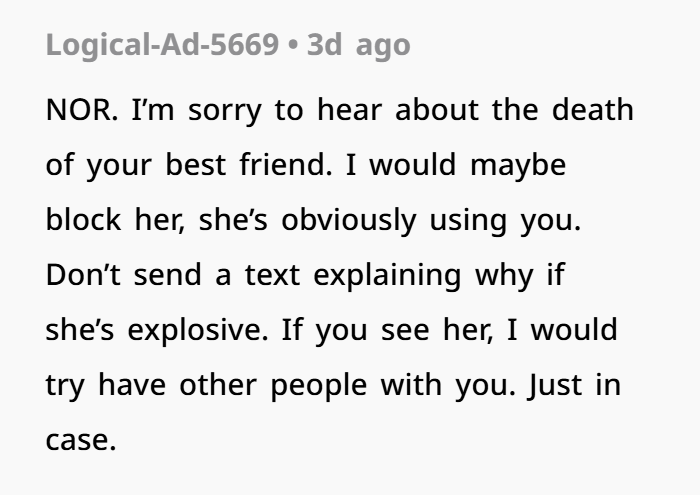
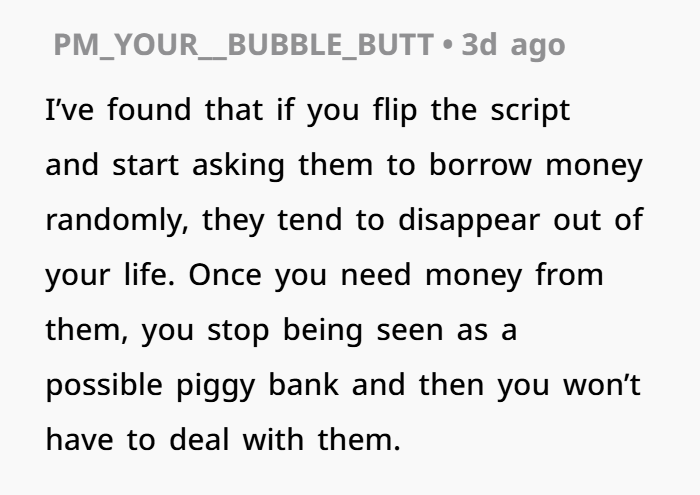
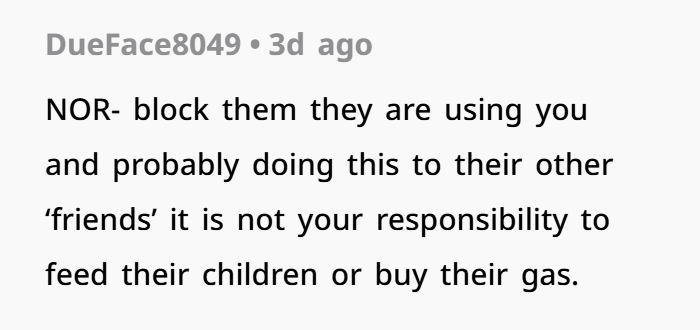
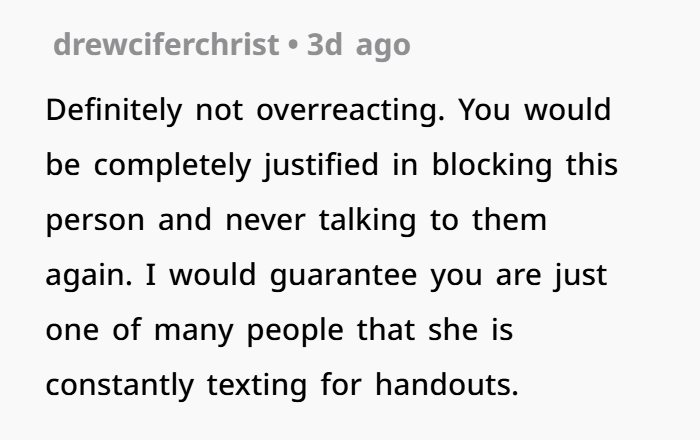
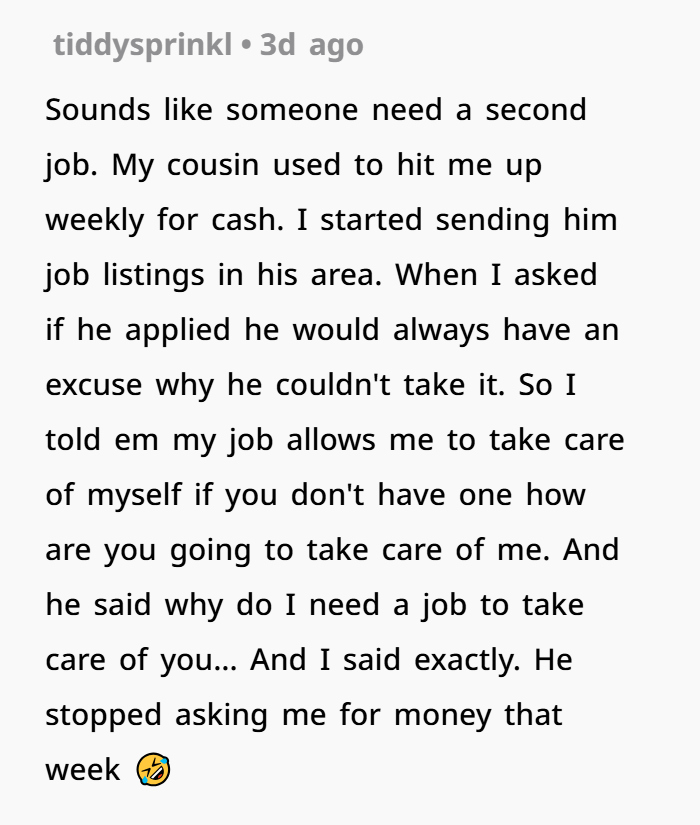
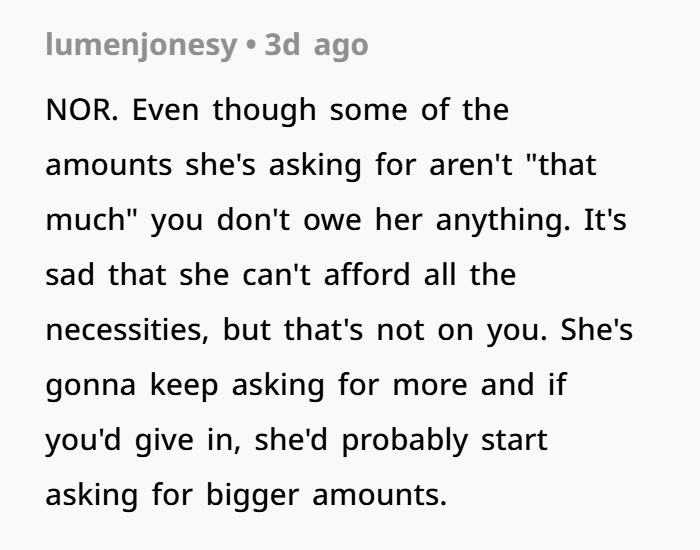
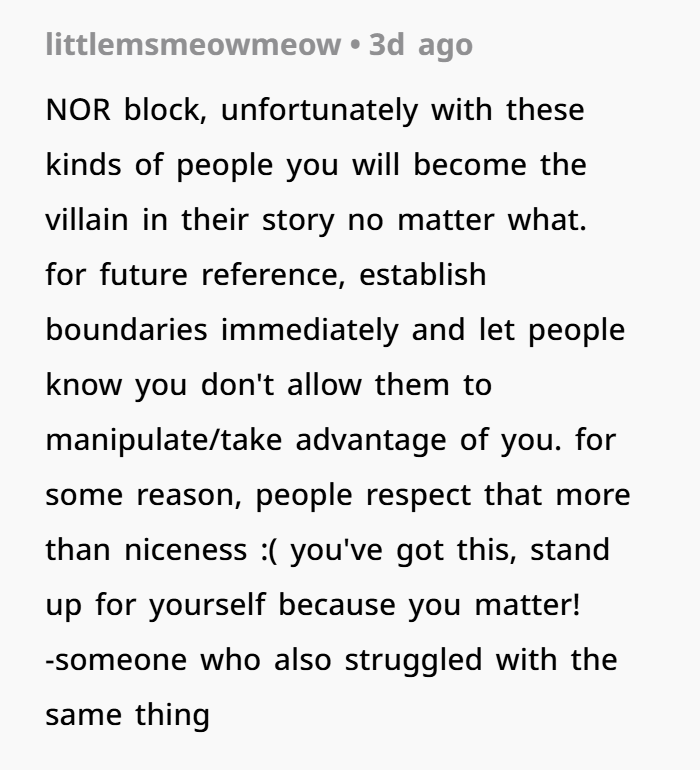
Netizens agreed that the author was completely justified in wanting to cut the woman off, highlighting that their dynamic was unhealthy anyway
So, AIO?
No — you’re not overreacting. You’re responding to how this person makes you feel. And feelings matter. They’re signals your brain sends to protect you.
Blocking someone who triggers distress and drains you isn’t cruel — it’s self‑care.
You deserve friendships that energize you, not empty you.
If you want help wording a gentle blocking message (or even a “soft close” instead of full block), I can help with that too.