Told My Sister I Won’t See Her Again If She Doesn’t Discipline Her Son for Biting Me
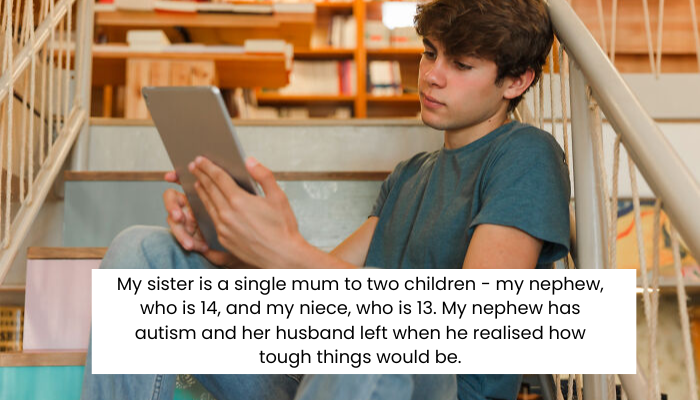
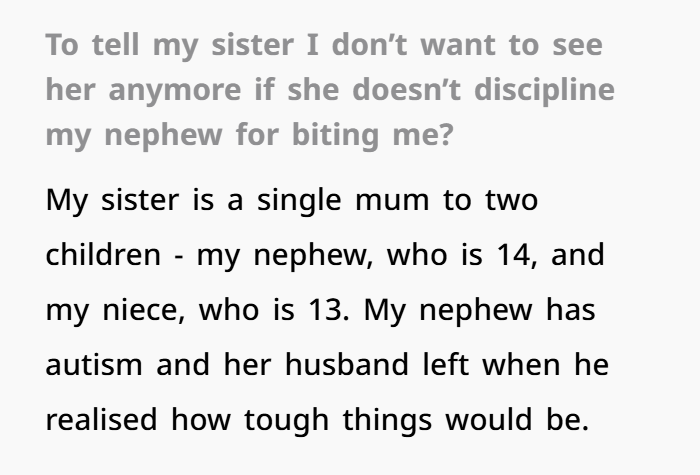
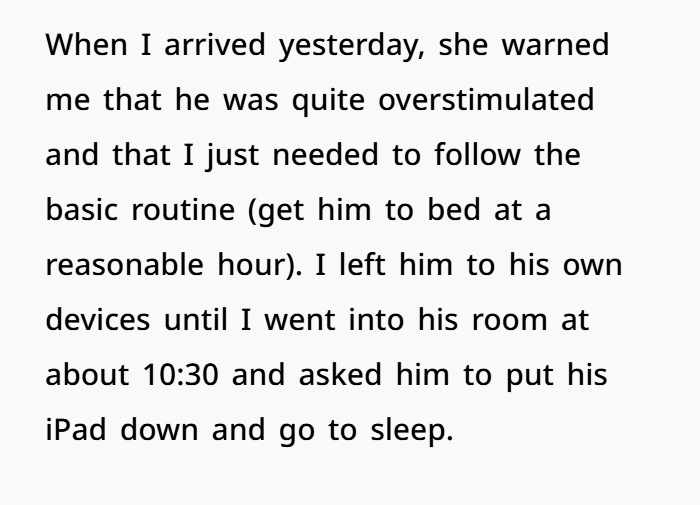
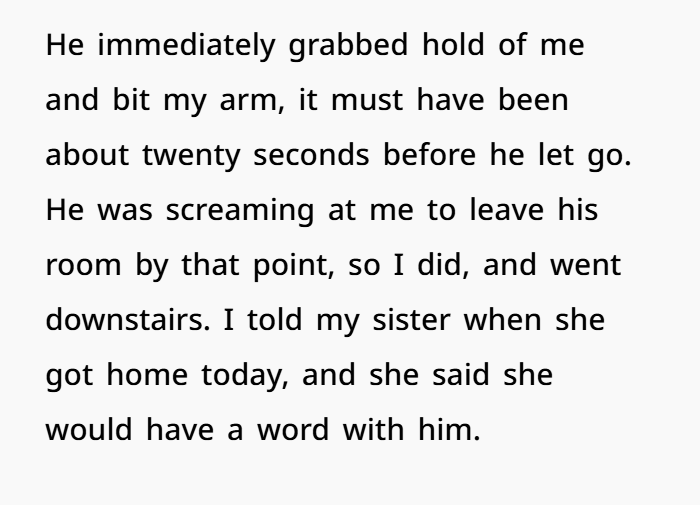
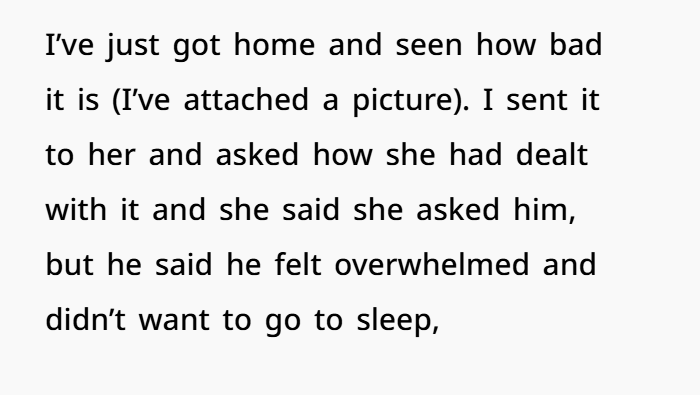
This is a story about boundaries, family guilt, and what happens when someone is pushed to their limit — literally and emotionally. The OP (original poster) had just returned from babysitting her 14-year-old nephew, who has autism. She knew he was overstimulated, and she respected the routine. But when it was time to put the iPad away and get ready for sleep, he responded by grabbing her and biting her — hard.
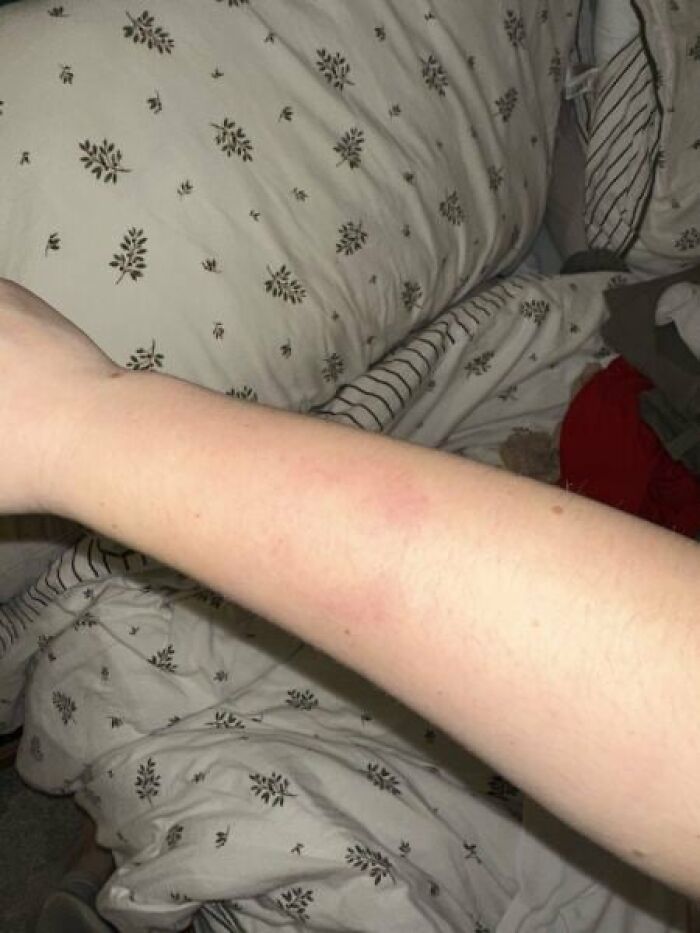
The bite lasted around twenty seconds. Long enough to cause real pain and bruising. She told her sister, expecting some level of consequence, discussion, something. Instead, her sister brushed it off, saying her son was overwhelmed and that’s “just how it is.”
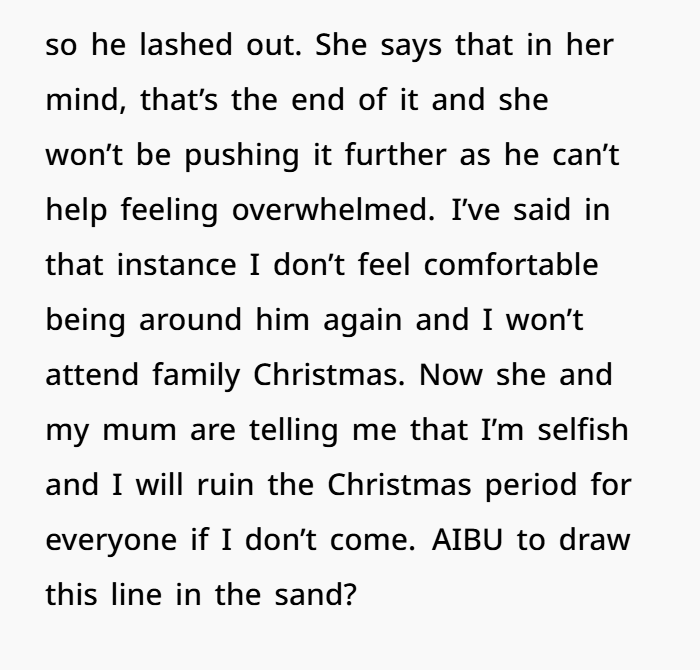
But for the OP? That was it. She told her sister she won’t be around anymore if this behavior isn’t addressed. Now her sister — and their mother — are calling her selfish. She’s being told she’ll “ruin Christmas” if she doesn’t show up. So she turned to Reddit with one question: Am I being unreasonable for setting this boundary?
Children with autism need time and space to recover when overwhelmed and might lash out in such situations

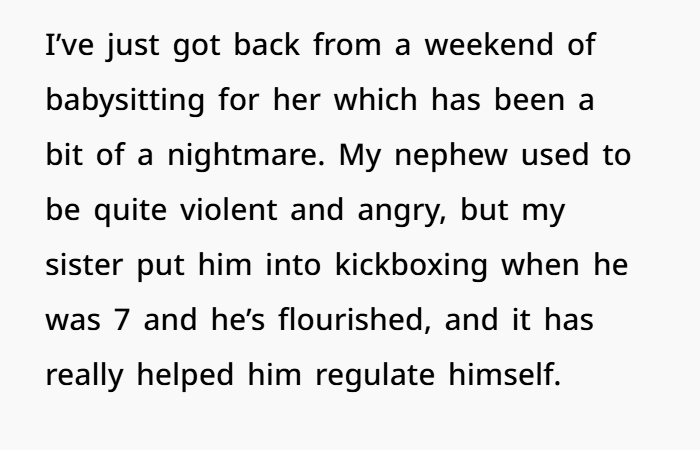
The poster shared that her sister was a single mom with two children, and that her teenage son, who had autism, sometimes got violent and angry
This post sits at a messy intersection of neurodiversity, family duty, emotional labor, and the ongoing struggle between understanding and enabling. Let’s break it down, human-to-human — no perfect grammar, no corporate speak, just real talk.
1. Autism Doesn’t Erase Accountability — It Changes the Approach
Let’s get one thing straight: autism isn’t an excuse for violence. It’s an explanation — not a free pass.
Yes, autistic kids often struggle with emotional regulation, sensory overload, and communication. Yes, they might react in ways that seem extreme. But that doesn’t mean everyone else just has to eat it, especially when it causes physical harm.
Biting someone — even when overstimulated — still deserves a serious response. Not punishment necessarily, but:
- A conversation about what happened
- An apology (verbal or non-verbal)
- A plan to prevent it next time
If none of that happens, the message is: “You can hurt people and there are no consequences.” That doesn’t help the child. And it definitely doesn’t protect the people around them.

2. You’re Not the Bad Guy for Saying ‘No More’
You got bit. For real. Twenty seconds is a long time to be in pain, especially when it’s coming from a teenager who’s physically stronger now. You were following the routine. You didn’t yell. You didn’t barge in with chaos. You were trying to help.
What you expected wasn’t revenge — it was acknowledgment.
But instead, your sister basically said, “Oh well.”
When people downplay real harm because the person who caused it is neurodivergent, they’re missing a huge piece of the puzzle. Safety matters. For you, for him, for everyone.
You’re allowed to say, “I’m not comfortable anymore.” That’s not betrayal. That’s self-protection.
3. The Guilt-Trip Olympics: How Families Weaponize the Holidays
Ah yes. The classic, “You’re ruining Christmas” guilt bomb.
Here’s the thing — you’re not ruining anything. You didn’t choose violence. You didn’t sweep it under the rug. You’re setting a boundary because you don’t feel safe. That’s not dramatic — that’s reasonable.
Family holidays shouldn’t require you to:
- Hide your pain
- Smile through bruises
- Pretend everything’s fine
Also: it’s not your job to maintain “the festive mood” by pretending trauma didn’t happen.
Let’s be real — if someone’s presence is only valued when they’re silent and compliant, that’s not family. That’s performance.
4. Mum’s Reaction: Enabling or Just Scared of Conflict?
A lot of commenters on similar posts ask: “Why does the parent always side with the problem child?” Often, it’s because they’re exhausted. Or afraid of rocking the boat. Or emotionally enmeshed. Sometimes they just don’t want to deal with another layer of conflict, so they pile all the emotional weight onto the person most likely to “keep the peace.”
You.
But here’s the kicker — people pleasers break too. You’ve clearly been supportive in the past. But the moment you said “This isn’t okay,” you became the problem. That’s not fair.
You’re allowed to step back without being called cruel.
5. Can You Love Someone and Still Step Away? Yes.
This is the heart of it. You probably do love your nephew. You’ve watched him grow up, maybe even rooted for him when things were hard. You clearly understand he has challenges.
But love without boundaries leads to resentment.
If you stay silent and keep showing up out of guilt, you’ll start resenting your sister, your nephew, and even yourself. That’s toxic. For everyone.
Saying, “I need space because this hurt me, and you won’t even talk about it seriously” is healthy. It gives you room to breathe. And it might even wake your sister up to the fact that she has work to do.
6. Neurodivergence Doesn’t Mean No Growth
The assumption that your nephew “can’t help it” may be true — in that moment. But long-term? Growth is possible. There are therapies, tools, and techniques designed exactly for helping autistic teens manage their emotions and reactions.
He’s not doomed. But if the adults in his life give up on teaching him boundaries and empathy? Then yeah — the cycle will continue. And more people will get hurt.
He needs support — not excuses.

7. Final Word: You’re Not the Villain — You’re the Wake-Up Call
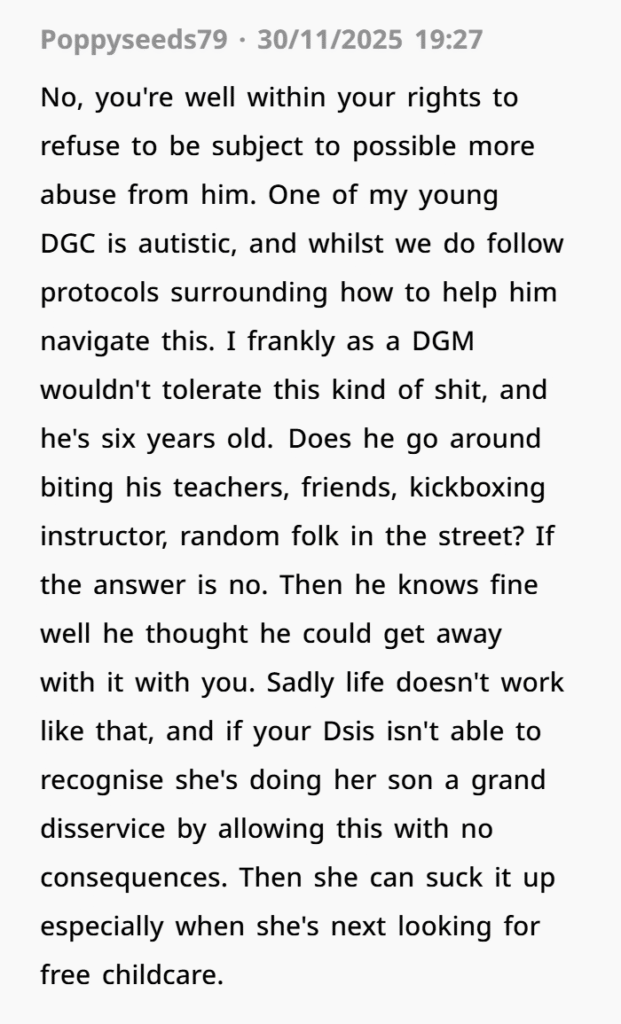
You’re not mean. You’re not overreacting. You’re not being selfish. You were bitten, disrespected, and then dismissed. And now you’re saying, “I can’t be part of this if nothing changes.”
That’s fair.
Sometimes the only thing that creates change is someone saying “enough.” Maybe your boundary is the thing that finally gets your sister to act. Maybe not. But either way, you’re protecting your peace. And that matters.
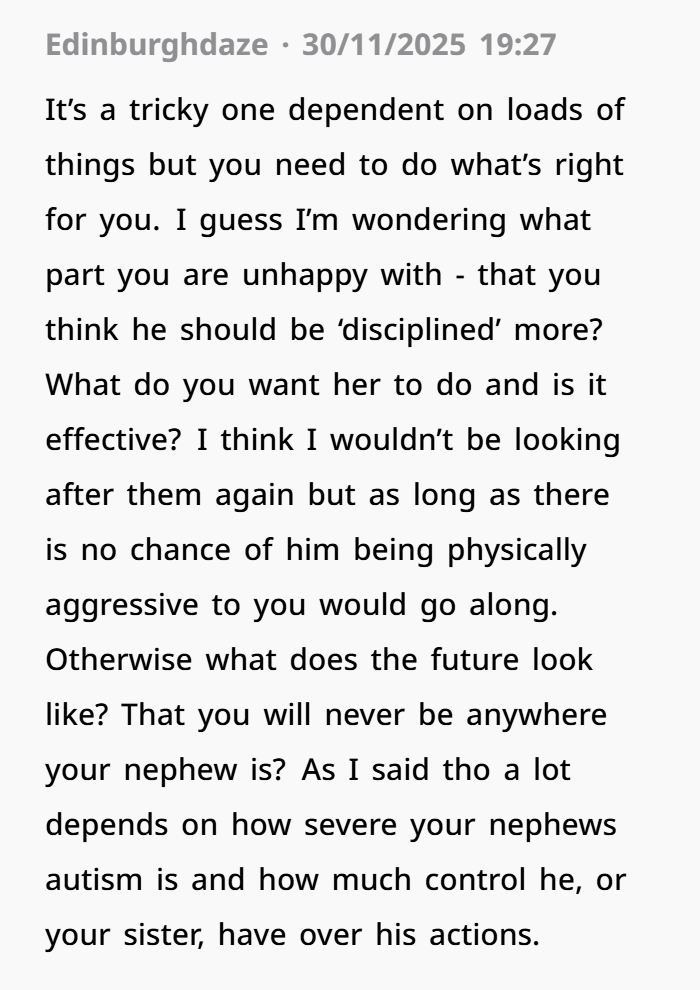
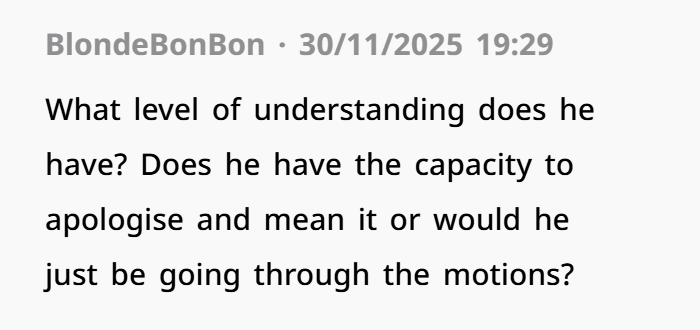
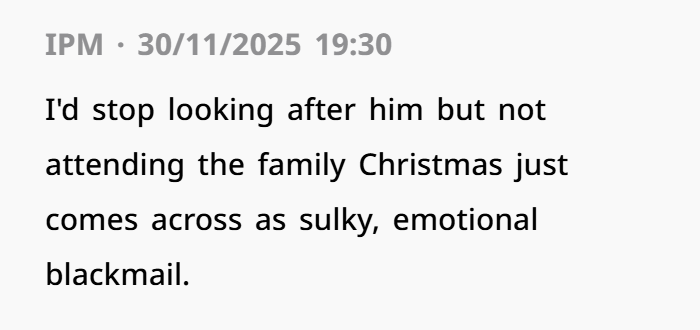
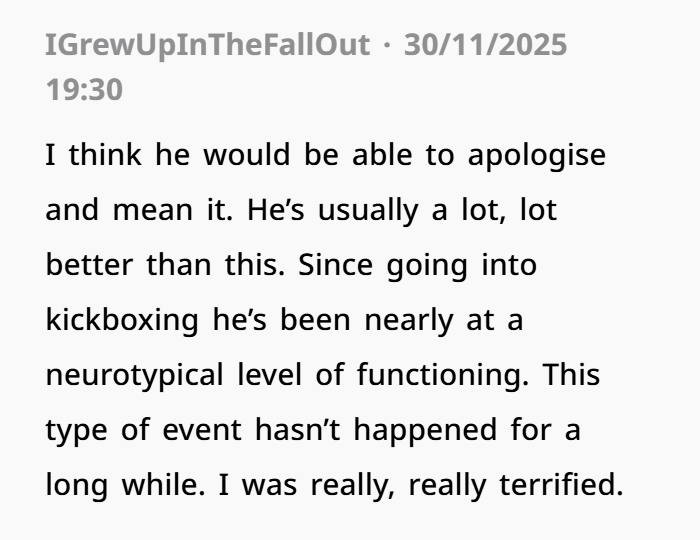
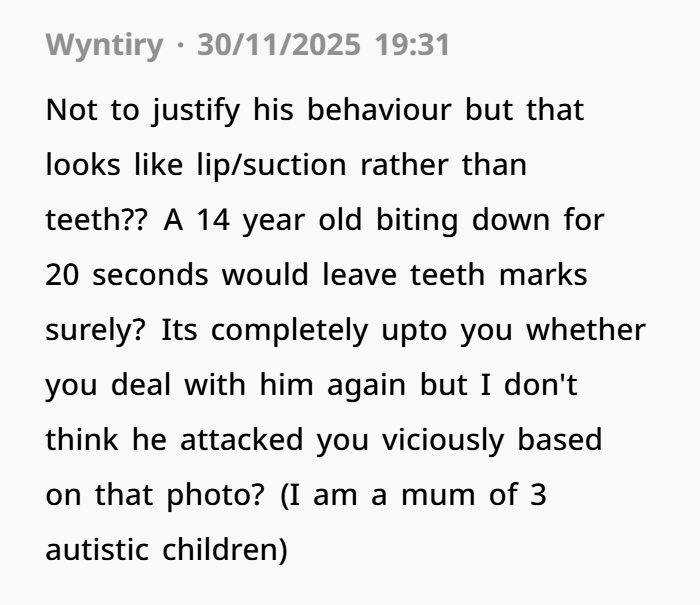
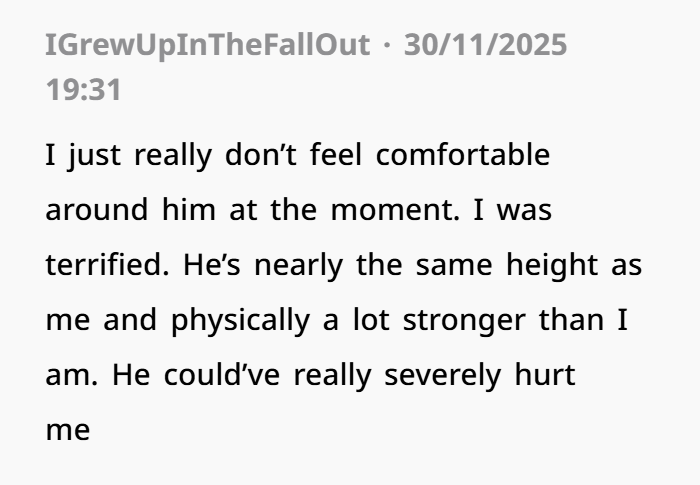
Folks were divided on the issue, with some taking the woman’s side and others feeling that she had overreacted
Summary: NTA. Sometimes “Family” Doesn’t Get a Free Pass
You’ve been put in a no-win situation. But you chose yourself. You chose safety. You chose honesty.
And if someone bites you — literally or emotionally — and the family says “It’s your fault for reacting”? You’re better off stepping away.
No Christmas dinner is worth sacrificing your dignity, safety, or emotional health.